

Searching "beard groomer near me" in 2026 reveals hundreds of options, but finding a professional who understands the biological needs of your facial hair requires more than proximity. Your beard grows at different rates across your face due to varying androgen receptor sensitivity, creating patches, uneven thickness, and distinct growth patterns that demand expert assessment. Professional groomers combine precision cutting techniques with knowledge of hair follicle biology to create styles that work with your unique growth characteristics, not against them.
Why Professional Beard Grooming Matters
Your facial hair follicles differ fundamentally from scalp hair. Each beard follicle produces thicker, more textured hair shafts because testosterone converts to dihydrotestosterone (DHT) in dermal papilla cells, triggering increased keratin production. This biological process creates coarser strands that split, curl, and tangle when neglected.
Professional beard groomers assess your growth patterns during consultation. They identify cowlicks where follicles angle differently, patches where follicle density decreases, and areas where improper trimming has damaged hair shafts. According to Healthline's beard maintenance guide, understanding these growth characteristics prevents common grooming mistakes that worsen patchiness.
The Problem: DIY Grooming Disasters
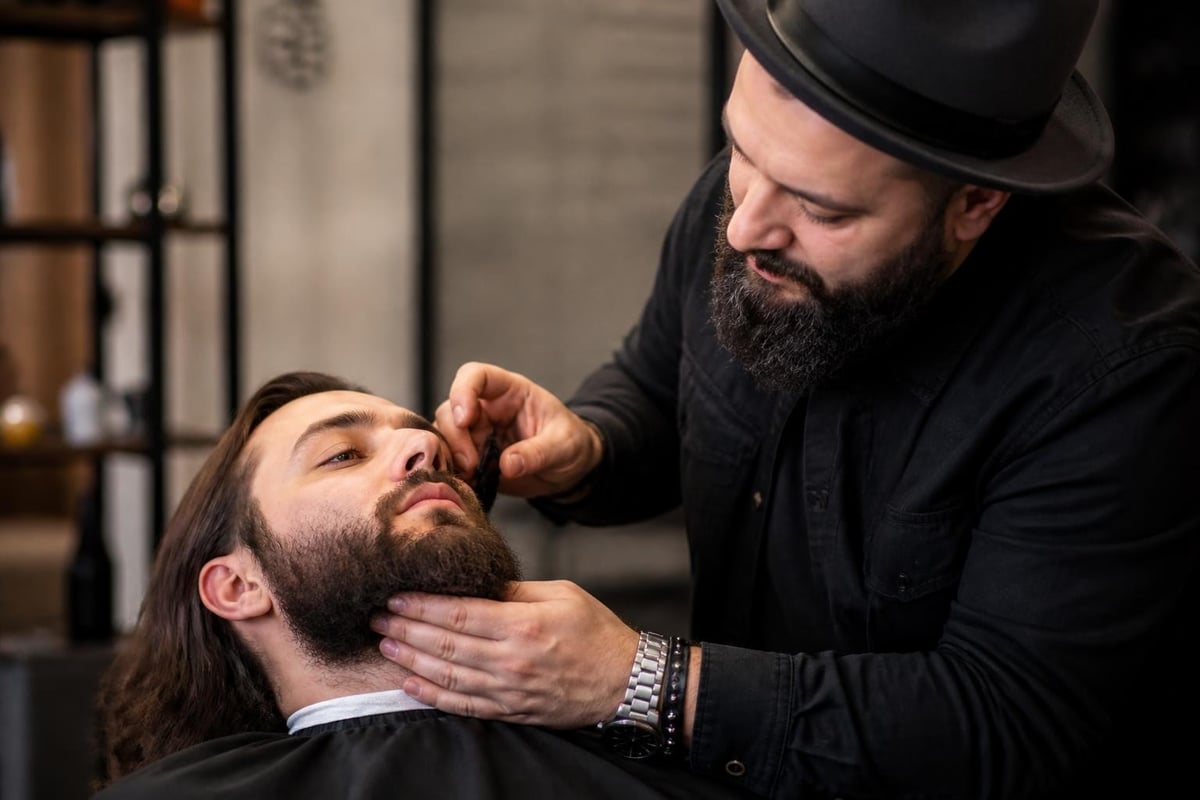
Home trimming without proper tools creates stepped edges where guard lengths change abruptly. You cut against the grain, severing hair shafts at sharp angles that fray and split. Your mirror shows only frontal perspective, leaving neck lines crooked and cheek lines asymmetrical.
The biological consequence extends beyond aesthetics. Damaged hair shafts absorb less moisture because disrupted cuticle layers cannot retain hydrating compounds. Split ends travel up the hair shaft through a process called trichoptilosis, weakening structural integrity. Your beard becomes brittle, loses shape between trims, and requires increasingly aggressive cutting to remove damaged portions.
What Professional Groomers Provide
When you search "beard groomer near me," look for professionals who offer comprehensive services:
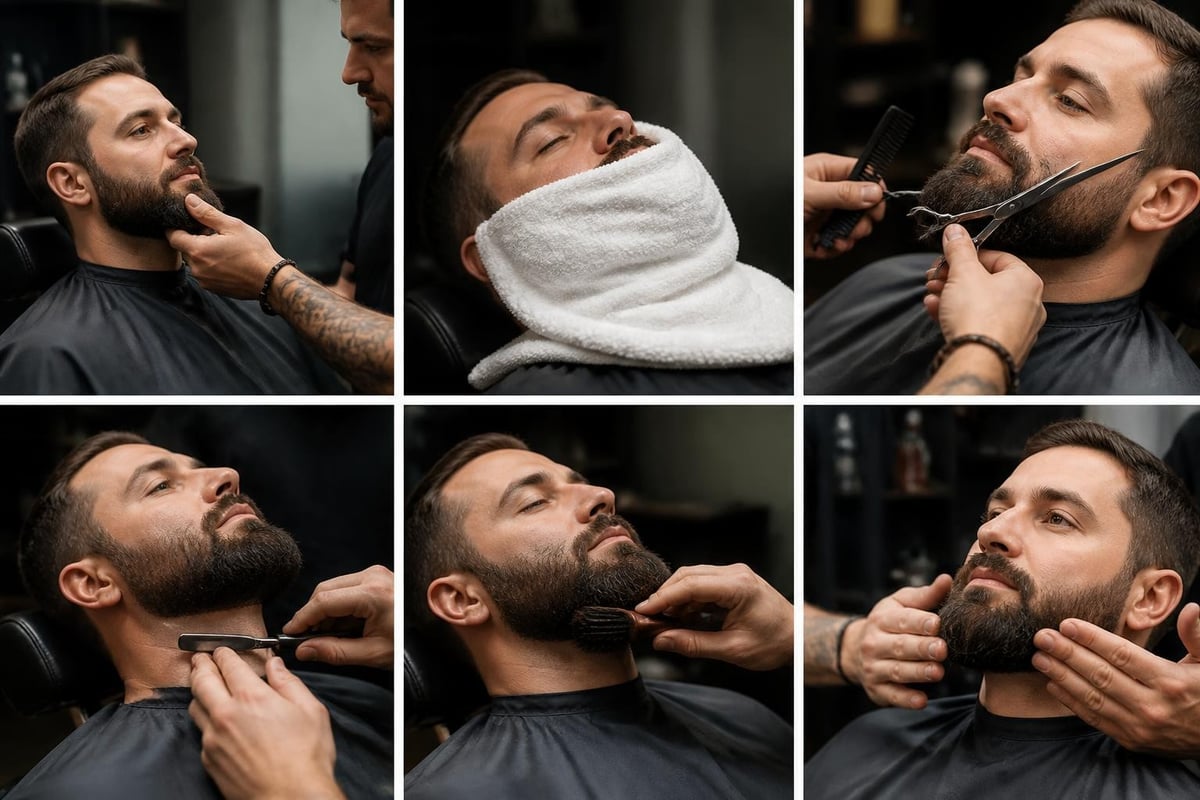
- Consultation and growth assessment: Analysing follicle patterns, density variations, and facial structure
- Precision cutting: Using professional shears and trimmers calibrated for specific hair textures
- Hot towel treatments: Opening follicles and softening hair shafts for easier cutting
- Product application: Applying oils and balms that contain emollients like jojoba oil (which mimics sebum's molecular structure)
- Style recommendations: Suggesting shapes that complement face structure and growth patterns
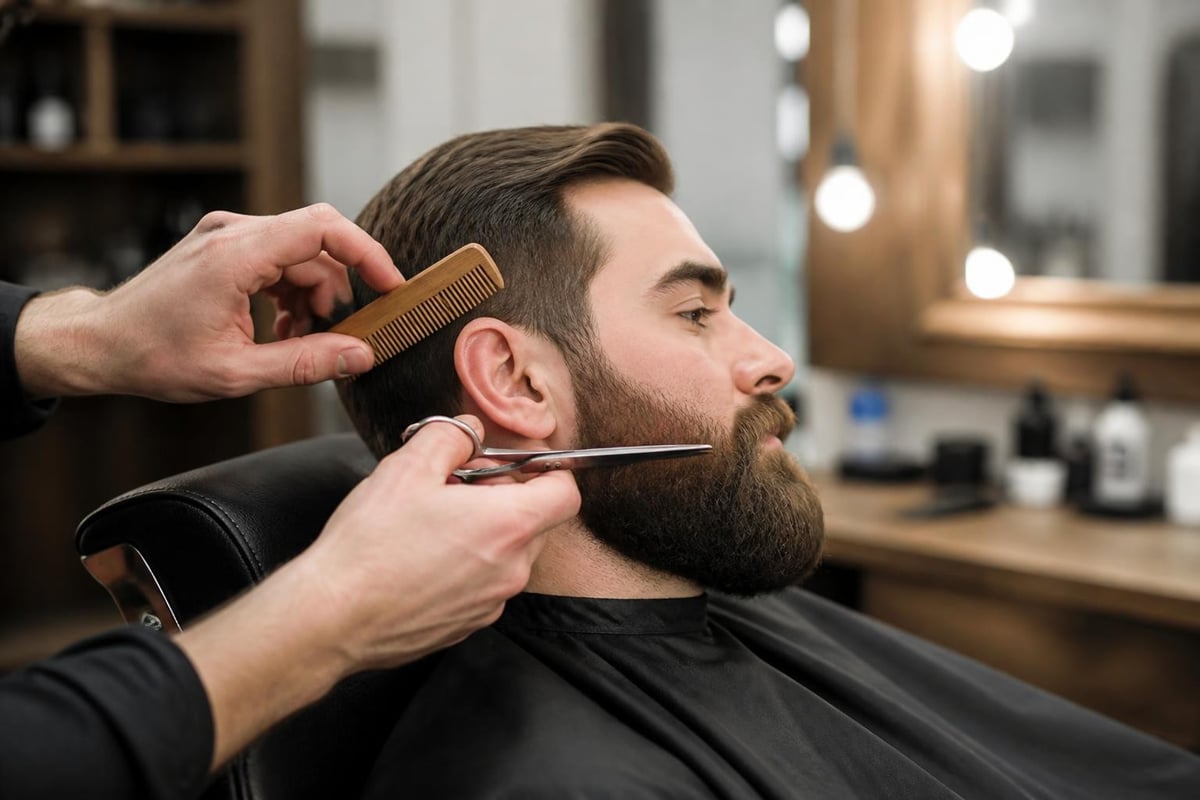
Professional groomers use techniques that home enthusiasts cannot replicate. They employ scissor-over-comb methods for gradual blending, create natural fade lines using progressive guard lengths, and shape necklines that follow your natural crease (typically two fingers above the Adam's apple).
Finding the Right Beard Groomer Near Me
Not all barbershops offer specialised beard services. Traditional barbers focus primarily on scalp hair, whilst beard specialists understand the unique challenges of facial hair grooming. Forbes' beard trimmer guide emphasises the importance of quality tools, which professional groomers invest in extensively.
Questions to Ask During Your Search
| Question | Why It Matters |
|---|---|
| What trimmer brands do you use? | Quality brands like Wahl and Andis offer precision guards and sharp blades that prevent hair pulling |
| Do you offer hot towel treatments? | Heat opens cuticles and softens hair for cleaner cuts |
| How do you assess growth patterns? | Proper assessment prevents cutting against natural growth direction |
| What products do you apply post-trim? | Quality oils and balms protect freshly cut hair shafts |
Research online reviews specifically mentioning beard services. Generic barbershop reviews rarely detail facial hair expertise. Look for comments about symmetry, blending techniques, and how long the style held between appointments.
Red Flags to Avoid
Groomers who use the same electric clipper settings for all clients ignore biological individuality. Your follicle density, hair shaft thickness, and growth rate differ from the next customer. One-size-fits-all approaches create styles that work against your natural patterns.
Avoid establishments that rush appointments. Proper beard grooming requires 30-45 minutes for thorough consultation, preparation, cutting, and product application. Rushed services skip essential steps like growth assessment and hot towel preparation.
Maintaining Professional Results at Home
Professional grooming creates the foundation, but daily maintenance preserves results. Your sebaceous glands produce natural oils (sebum) that moisturise hair shafts, but longer beards require supplemental hydration because sebum cannot travel the full shaft length.
Between professional appointments every 3-4 weeks, maintain your beard using scientifically formulated products. The Onesociety beard collection offers formulations designed to work with your hair's biological needs, not against them.
Daily Maintenance Routine
Your morning routine should address the overnight damage caused by pillow friction and moisture loss. Follow these steps:
- Rinse with lukewarm water: Hot water strips natural oils by disrupting the lipid barrier
- Apply beard oil: Focus on the skin beneath to support follicle health
- Brush with boar bristles: Natural bristles distribute oils without creating static
- Shape with balm: Use products containing beeswax for hold without synthetic polymers
Evening maintenance differs because hair growth peaks during sleep when increased blood flow delivers nutrients to follicles. Apply heavier conditioning treatments that penetrate overnight whilst cellular regeneration occurs.
The Science Behind Quality Grooming Products
Not all beard products support follicle health equally. Synthetic ingredients create short-term aesthetic improvements whilst compromising long-term hair quality. Silicones coat hair shafts, creating artificial shine but preventing moisture absorption. Sulphates strip natural oils, forcing sebaceous glands into overproduction that clogs follicles.
Natural ingredients work with your biology. Argan oil contains vitamin E (tocopherol) that neutralises free radicals damaging follicle cells. Shea butter provides fatty acids that reduce inflammation in the dermis surrounding follicles. Jojoba oil's molecular structure mirrors sebum, allowing it to regulate oil production rather than disrupt it.
Understanding Ingredient Functions
| Ingredient | Biological Function | Visible Result |
|---|---|---|
| Jojoba Oil | Mimics sebum structure, regulates production | Reduced oiliness or dryness |
| Argan Oil | Tocopherol neutralises oxidative stress | Stronger, less brittle hair |
| Shea Butter | Fatty acids reduce dermal inflammation | Less itching, healthier follicles |
| Beeswax | Creates flexible hold without blocking pores | Shape retention without buildup |
When searching "beard groomer near me," ask which products they stock. Professionals using natural formulations demonstrate commitment to long-term beard health over quick fixes. Quality establishments often retail the products they use, allowing you to maintain results at home.
Professional Services vs Home Tools
Investing in quality home tools extends professional results, but cannot fully replace expert services. L'Oréal Paris' grooming tips emphasise the importance of proper equipment, yet technique matters equally.
Professional groomers train extensively in cutting techniques. They understand how to create graduation using scissor-over-comb methods, how to blend guard transitions seamlessly, and how to shape necklines that complement facial structure. These skills require practice and feedback that home grooming cannot provide.
When to Visit Professionals
Schedule professional appointments when:
- Changing styles: Major length or shape changes require expert assessment
- Fixing mistakes: Home trimming errors need professional correction
- Special events: Important occasions deserve precision grooming
- Growth assessment: Every 8-12 weeks for pattern evaluation
Between visits, maintain the foundation professionals create. Use the same products they apply, follow the cutting patterns they establish, and preserve the necklines they define.
Building a Beard Growth Strategy
Professional grooming optimises existing hair, but follicle health determines growth potential. Your follicles require specific nutrients to produce strong hair shafts: biotin for keratin synthesis, iron for oxygen delivery, and zinc for cell division.
Topical treatments boost follicle function when formulated correctly. Caffeine increases blood flow to dermal papilla cells, delivering more nutrients. Castor oil's ricinoleic acid stimulates prostaglandin production, which extends the anagen (growth) phase of the hair cycle.
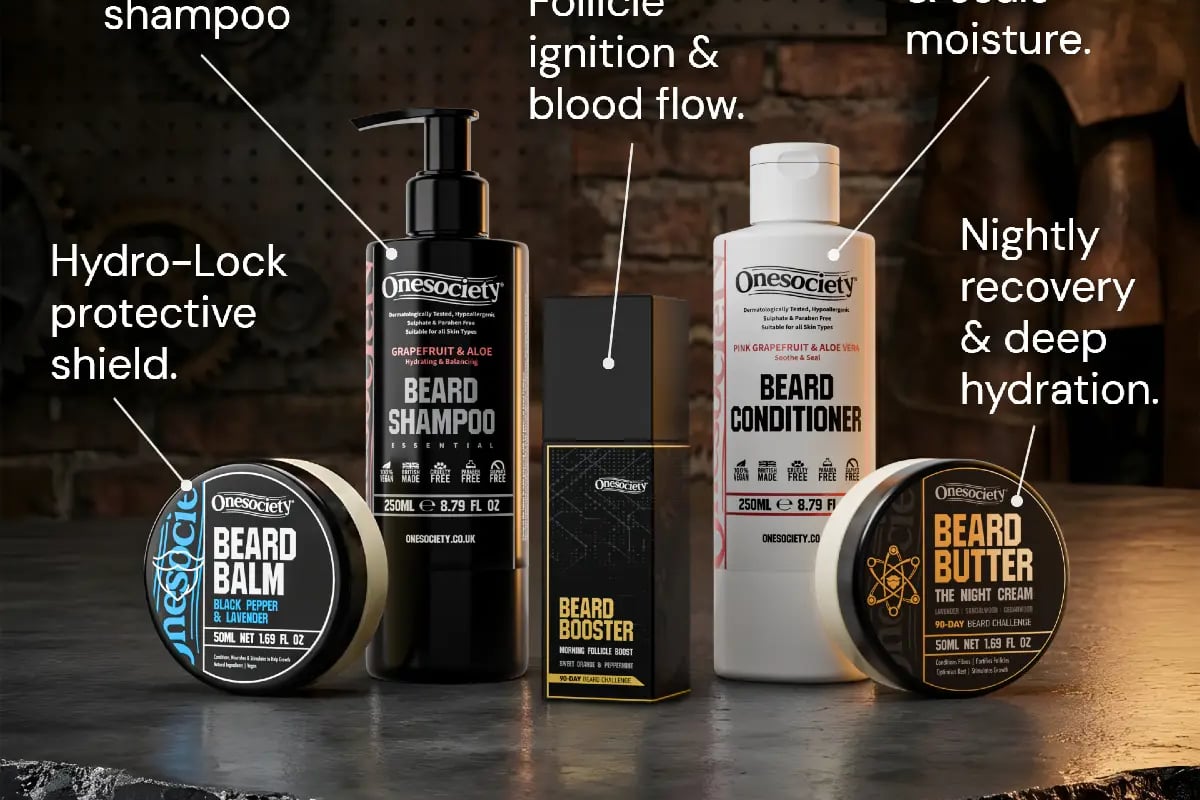
The 90-Day Beard Challenge addresses both internal and external factors affecting beard growth. This comprehensive kit combines follicle-stimulating boosters with protective balms and pH-balanced cleansers that work synergistically over 90 days.
The 90-Day Transformation Timeline
Beard growth follows a predictable pattern when supported correctly:
Days 1-30: Follicle activation phase where increased blood flow and nutrient delivery stimulate dormant follicles. Expect minimal visible changes but significant biological preparation.
Days 31-60: Active growth phase where stimulated follicles produce new hair shafts. Existing hair strengthens as improved nutrition reaches the cortex and cuticle layers.
Days 61-90: Consolidation phase where consistent care creates sustainable growth patterns. Hair shafts thicken as keratin production increases, and follicle density improves in previously patchy areas.
This scientific approach transforms beard growth from random chance to predictable results. Professional groomers can then shape increased density and length into styles previously impossible with your original growth pattern.
Common Grooming Mistakes to Avoid
Even with professional services, poor home maintenance sabotages results. Understanding these biological errors prevents regression between appointments.
Overwashing Strips Essential Oils
Your sebaceous glands produce sebum at a rate calibrated to your hair's needs. Daily shampooing signals overproduction, creating oily buildup that clogs follicles. Conversely, the stripped feeling after harsh washing represents damaged lipid barriers that cannot retain moisture.
Wash your beard 2-3 times weekly using pH-balanced cleansers. Between washes, rinse with water to remove surface debris whilst preserving natural oils. CVS Health's beard care guide recommends this approach for maintaining the skin-hair ecosystem.
Cutting Too Short Too Fast
Hair growth cycles mean your beard contains hairs at different stages. Anagen (growth) phase hairs actively lengthen, catagen (transition) phase hairs stop growing, and telogen (resting) phase hairs prepare to shed. Aggressive trimming removes anagen hairs that would have thickened your beard, leaving only shorter catagen and telogen hairs visible.
Professional groomers understand these cycles. They trim conservatively, removing only damaged ends whilst preserving length in actively growing areas. This technique maintains fullness whilst eliminating split ends that compromise hair integrity.
Ignoring Skin Health Beneath
Healthy follicles grow from healthy skin. The dermis surrounding each follicle requires hydration, exfoliation, and protection from inflammation. Neglecting skin care creates conditions where follicles cannot function optimally: clogged pores prevent new growth, dry skin causes itching that damages follicles through scratching, and inflammation restricts blood flow that delivers nutrients.
Apply beard oil directly to skin, massaging to stimulate circulation. Exfoliate weekly using gentle scrubs that remove dead skin cells without irritating follicles. This foundation supports both professional grooming and home maintenance.
Choosing Products That Support Professional Results
Your groomer creates the shape, but your products maintain it. Selecting formulations that support hair biology preserves professional work between appointments. Look for products emphasising natural ingredients with proven biological functions.
The best beard grooming products prioritise follicle health over temporary cosmetic fixes. They contain ingredients that penetrate the hair shaft to strengthen from within, rather than coating exteriors with synthetic shine.
Product Categories Explained
Oils: Lightweight hydration that mimics natural sebum. Apply daily to both hair and skin, focusing on areas where your groomer shaped edges. Oils prevent the dryness that causes shaped lines to become fuzzy and undefined.
Balms: Medium-weight products providing hold and protection. Use balms to maintain the shape your groomer created, applying after oil when hair is slightly damp. Beeswax content should be sufficient for hold without creating the stiff, unnatural appearance of synthetic polymers.
Butters: Heavy-duty conditioning for overnight treatment. Apply before sleep when increased blood flow during rest delivers nutrients to follicles. Butters should absorb fully rather than leaving residue on pillowcases.
Washes: pH-balanced cleansers that remove buildup without stripping oils. Your groomer's work depends on clean hair that holds shape, but harsh detergents create the frizz and flyaways that destroy precise lines.
Reading Labels Effectively
Ingredient lists reveal product quality. The first five ingredients constitute the majority of the formula, so natural oils and butters should appear early. Avoid products listing water as the primary ingredient followed by synthetic thickeners and preservatives.
Look for specific beneficial compounds:
- Tocopherol (Vitamin E): Antioxidant protecting follicle cells
- Biotin: B-vitamin supporting keratin synthesis
- Caffeine: Stimulates blood flow to follicles
- Essential fatty acids: From oils like argan, jojoba, and hemp
Synthetic ingredients to avoid include dimethicone (silicone coating), sodium lauryl sulphate (harsh detergent), and parabens (hormone-disrupting preservatives).
Seasonal Beard Grooming Adjustments
Your beard's needs change with weather. Winter's dry air removes moisture from hair shafts through osmosis, whilst summer's humidity causes frizz as hair shafts absorb atmospheric water. Professional groomers adjust techniques seasonally, and your home routine should follow suit.
Winter Beard Care
Cold air lacks humidity, creating a moisture gradient that pulls water from hair shafts into the atmosphere. Indoor heating exacerbates this effect, leaving beards dry and brittle. Increase oil application frequency and add heavier balms that create protective barriers against moisture loss.
Your groomer might recommend slightly longer lengths in winter because increased volume provides insulation whilst shorter styles expose skin to harsh conditions. However, length increases tangling risk, requiring more frequent brushing with boar bristle tools that distribute protective oils.
Summer Beard Maintenance
Humidity causes hair shafts to swell as they absorb atmospheric moisture, disrupting the cuticle layer and creating frizz. Lighter products work better in summer because heavy balms trap sweat against skin, clogging follicles and causing inflammation.
Professional groomers often recommend tighter trims in summer to reduce heat retention and simplify maintenance. Shorter styles require less product, dry faster after washing, and stay shaped despite humidity-induced swelling.
Maximising Time Between Professional Appointments
Strategic home maintenance extends professional results from the typical 2-3 weeks to 4-5 weeks. This approach requires discipline but saves money whilst keeping your beard looking sharp.
Edge Maintenance Techniques
Your groomer defines three critical lines: cheek line, neckline, and moustache edge. These boundaries separate shaped beard from surrounding facial hair. Maintain them between appointments using these guidelines:
- Cheek line: Remove strays above the line your groomer established, but never lower the line yourself
- Neckline: Shave below the defined curve, maintaining the two-finger-above-Adam's-apple rule
- Moustache: Trim hairs crossing the lip line using small scissors, cutting one hair at a time
Never attempt to reshape these lines. Only maintain the boundaries professionals established. Reshaping risks asymmetry that requires professional correction, often involving significant length loss.
Length Management
Between professional trims, manage length conservatively. Remove only split ends using sharp scissors, cutting individual damaged hairs rather than entire sections. This preserves the layered cutting your groomer created whilst eliminating damage that travels up hair shafts.
If you must trim length, use the longest guard setting your groomer used, and only on the areas they trimmed. Never reduce guard lengths or trim areas your groomer left longer, as these decisions reflect intentional shaping choices.
The Investment in Professional Grooming
Professional beard grooming costs £20-50 per session depending on location and service complexity. This investment pays returns through improved appearance, healthier hair growth, and reduced product waste from trial and error.
Calculate the annual cost of professional grooming versus the time and money spent on incorrect home attempts. Most men waste £200+ yearly on unsuitable products before finding effective formulations. Professional groomers recommend products suited to your specific hair type and growth pattern, eliminating expensive experimentation.
Cost Comparison Analysis
| Approach | Annual Cost | Results Quality | Time Investment |
|---|---|---|---|
| DIY Only | £150-300 (products + tools) | Inconsistent | 2-3 hours monthly |
| Professional + Maintenance | £350-500 (services + products) | Consistently high | 1 hour monthly |
| Hybrid | £250-400 (occasional services + quality products) | Good with effort | 1.5 hours monthly |
The hybrid approach combines professional shaping quarterly with quality home maintenance. This strategy provides professional foundation whilst building skills gradually. As your technique improves, extend intervals between professional visits whilst maintaining results through proper product use.
Building Your Beard Grooming Toolkit
Whether you search "beard groomer near me" for regular appointments or occasional services, quality home tools preserve professional work. T3's beard trimmer guide reviews equipment options, but understanding which tools serve which purposes prevents wasteful purchases.
Essential Tools
Boar Bristle Brush: Natural bristles distribute oils without creating static electricity that synthetic bristles generate. Brush daily to train hair growth direction and remove debris.
Quality Scissors: Sharp shears prevent the crushing and tearing that dull blades cause. Reserve scissors exclusively for beard use to maintain edge sharpness.
Wide-Tooth Comb: Detangles without pulling hairs from follicles. Use when hair is damp and product-coated for easiest detangling with minimal breakage.
Precision Trimmer: For maintaining edges between professional appointments. Choose models with sharp blades and adjustable guards for controlled cutting.
Optional Advanced Tools
Heated brushes straighten coarse, curly beard hair whilst applying heat that helps products penetrate deeper into hair shafts. However, excessive heat damages protein structures in keratin, so limit use to special occasions rather than daily styling.
Derma rollers create micro-channels in skin that theoretically improve product absorption. However, improper use damages follicles and increases infection risk. Consult professionals before incorporating derma rolling into your routine.
Finding the right beard groomer transforms facial hair from frustration to confidence, but professional results require consistent home maintenance with quality products. Between appointments, support follicle health with scientifically formulated treatments that work with your biology, not against it. Onesociety combines 100% natural ingredients with research-backed formulations, offering everything from daily maintenance oils to comprehensive growth programmes that help you achieve and maintain the beard you envision.