

Finding the right mustache barber transforms your facial hair from an afterthought into a statement of personal style. Whether you're cultivating a handlebar, chevron, or pencil style, the difference between a skilled specialist and a general barber shows in every detail. The precision required for mustache work demands not just technical skill, but an understanding of facial structure, hair growth patterns, and the science behind healthy follicle maintenance. In 2026, the resurgence of classic grooming has elevated the mustache barber from a niche specialist to an essential partner in your grooming routine.
The Science Behind Professional Mustache Grooming
Problem: Your mustache grows unevenly, with patchy spots that ruin the symmetry you're aiming for.
Agitation: You've tried trimming it yourself, but every attempt leaves you with an asymmetrical disaster that takes weeks to correct. The frustration builds as you watch other men sport perfectly shaped mustaches while yours looks unkempt.
Solution: A professional mustache barber understands follicle biology and growth cycles. When they shape your mustache, they work with your anagen phase (active growth period) to encourage uniform density. They identify areas where dormant follicles need stimulation through precise trimming techniques that redirect blood flow to weak spots.
The cutting technique matters scientifically. When a mustache barber cuts at the correct angle, they prevent split ends that weaken the hair shaft. This preserves the cuticle layer-the protective outer coating rich in keratin proteins. Damaged cuticles lead to moisture loss, making your mustache brittle and prone to breakage.
How Mustache Barbers Assess Your Facial Structure
Every face presents unique challenges for mustache styling. A skilled mustache barber doesn't just cut hair-they analyse your:
- Philtrum depth: The groove between your nose and upper lip determines optimal mustache length
- Lip line symmetry: Natural asymmetry requires compensatory cutting techniques
- Hair density patterns: Follicle concentration varies, requiring strategic shaping
- Growth direction: Hair angle affects how styles sit on your face
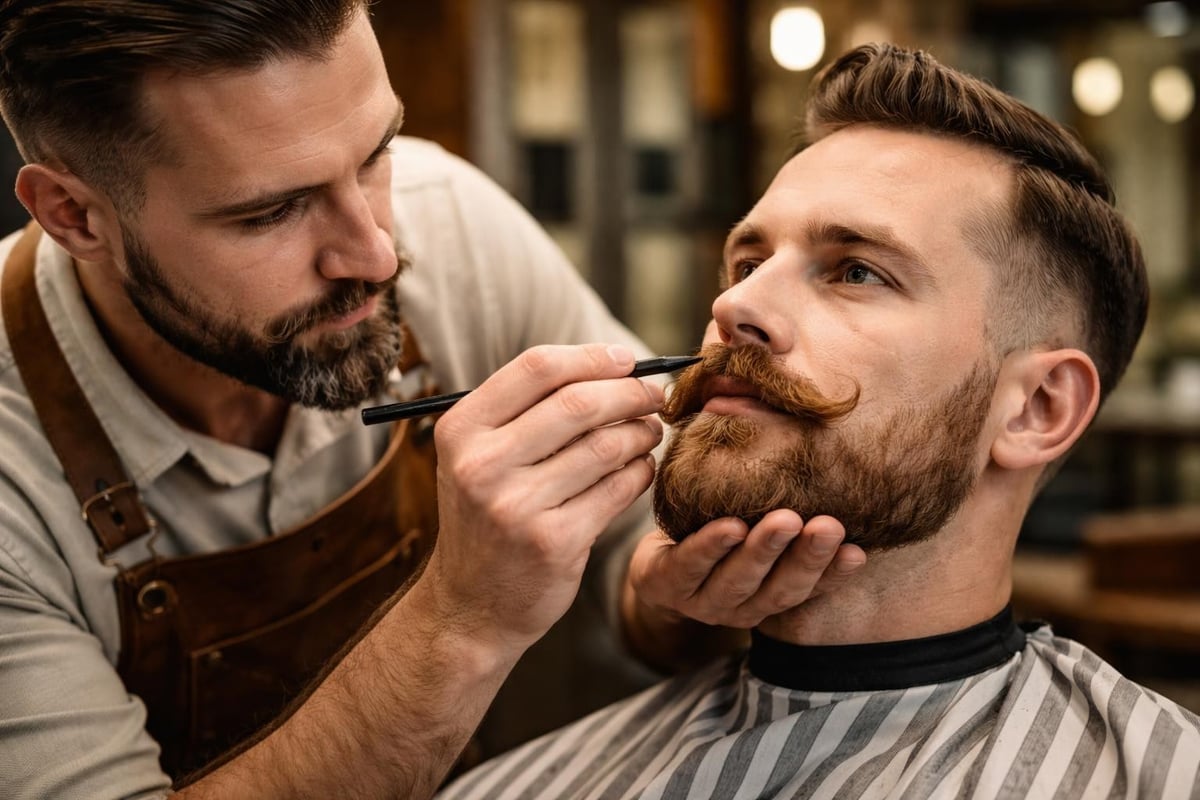
Professional barbers use this assessment to create a customized approach. They might recommend growing certain sections longer to balance facial proportions, whilst keeping other areas shorter for definition.
Essential Techniques Your Mustache Barber Uses
The tools and methods employed by a specialist mustache barber separate exceptional results from mediocre ones. Understanding these techniques helps you appreciate the craft and communicate your preferences effectively.
Precision Scissoring vs. Clipper Work
| Technique | Purpose | Scientific Benefit |
|---|---|---|
| Point cutting | Creates texture and removes bulk | Preserves hair shaft integrity by cutting at acute angles |
| Slide cutting | Blends length transitions | Maintains cuticle structure whilst reducing weight |
| Clipper-over-comb | Establishes base length | Ensures uniformity through consistent guard pressure |
| Free-hand scissoring | Defines edges and shape | Allows micro-adjustments for facial symmetry |
A mustache barber alternates between these methods based on your hair's characteristics. Coarse hair requires more aggressive clipper work to establish the foundation, whilst fine hair responds better to scissor techniques that prevent over-thinning.
The Hot Towel Treatment Science
When a mustache barber applies a hot towel before trimming, they're not just pampering you. The heat triggers vasodilation-widening of blood vessels beneath the skin. This increases blood flow to hair follicles, delivering oxygen and nutrients that support healthy growth.
The moisture from the towel also temporarily swells the hair shaft. This swelling makes each strand easier to cut cleanly without crushing the cuticle. It's why professional cuts feel smoother than home trims-the preparation optimises the hair's physical state for cutting.
Maintaining Your Mustache Between Barber Visits
Problem: Your perfectly groomed mustache loses its shape within days of leaving the barber's chair.
Agitation: You're spending money on professional cuts, but by day three, stray hairs poke out at odd angles. Food gets caught in the longer sections. The crisp lines your mustache barber created blur into an undefined mess.
Solution: Daily maintenance with science-backed products preserves your barber's work. The key lies in understanding what your mustache needs at the molecular level.
Your mustache hair differs structurally from scalp hair. It contains more medulla (the inner core) and grows at roughly 0.27mm per day. This rapid growth demands consistent nourishment to prevent the brittleness that ruins shape.
The Role of Natural Oils in Mustache Health
Quality beard oil does more than add shine. When formulated with ingredients like jojoba oil, it mimics sebum-your skin's natural moisturizer. Sebum production decreases as we age, particularly in facial skin, leaving mustache hair dry and unruly.
Onesociety's natural formulations address this gap using scientifically proven ingredients. Argan oil, rich in vitamin E and fatty acids, penetrates the hair shaft to strengthen protein bonds. This internal reinforcement maintains the shape your mustache barber created.
To combat itch beneath your mustache, you need to reduce inflammation. Shea butter contains triterpene alcohols that suppress inflammatory cytokines-the molecules that trigger skin irritation. Apply twice daily to maintain the healthy foundation your barber works with.
Daily Grooming Routine
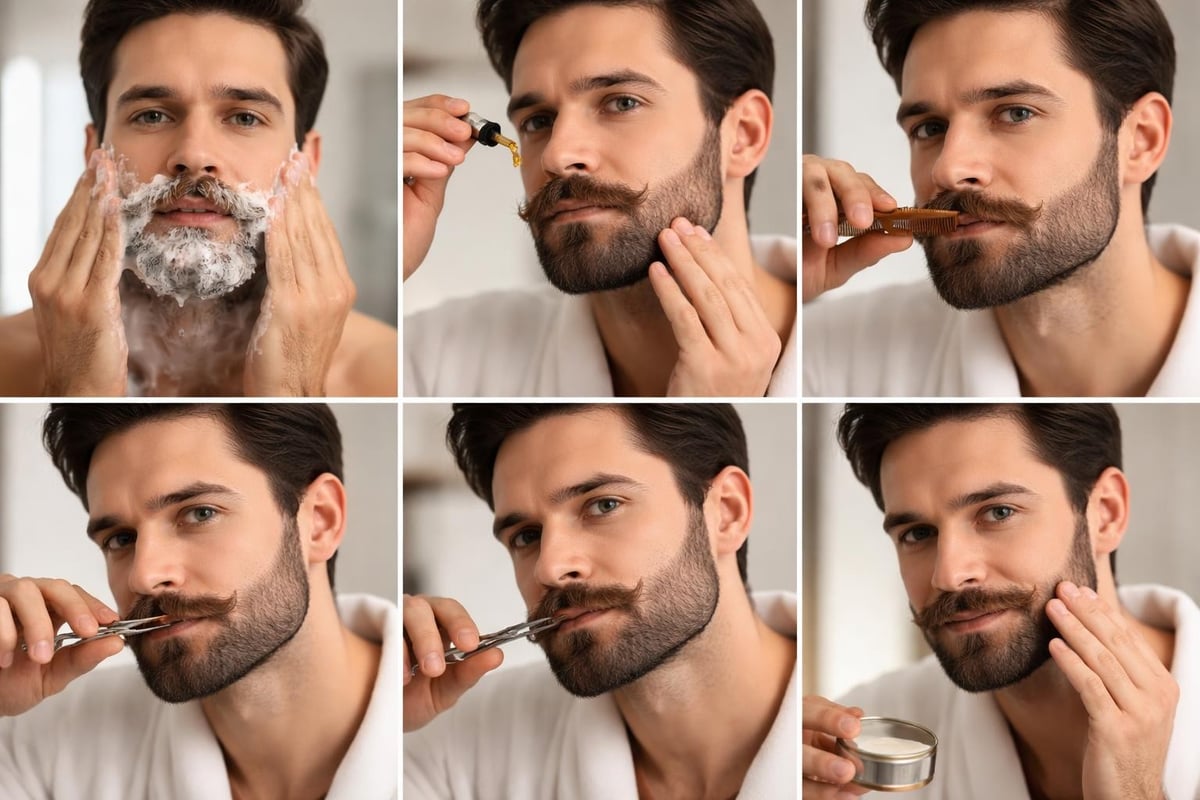
- Morning rinse: Lukewarm water removes overnight oil buildup without stripping natural moisture
- Oil application: Three drops massaged into damp hair seals in hydration
- Combing technique: Work from centre outward using a fine-toothed comb to train growth direction
- Edge trimming: Weekly maintenance of cheek and lip lines maintains barber precision
- Evening balm: Beeswax-based formulas lock in shape overnight through natural emollients
This routine works synergistically with your mustache barber's expertise. You're not replacing their skill-you're extending the life of their work through science-based care.
Different Mustache Styles Require Different Barber Expertise
Not every barber possesses the specialized skills required for intricate mustache work. Understanding various mustache styles helps you identify whether your chosen professional has the right experience.
Classic Styles and Their Technical Demands
The Handlebar: This iconic style requires your mustache barber to leave significant length in the outer sections whilst keeping the centre area trimmed close to the lip line. The upward curl depends on having enough hair length to support wax application without drooping. A skilled barber knows that handlebar success relies on preserving at least 25mm of growth at the terminal ends.
The science behind handlebar maintenance involves understanding keratin plasticity. When heated through blow-drying or wax application, keratin bonds temporarily break and reform in new positions. Your barber shapes these bonds through precise styling techniques.
The Chevron: This fuller style popularized by famous mustaches in history requires bulk management. A mustache barber must remove weight from the underside whilst preserving density on top. This creates the distinctive forward projection without overwhelming your upper lip.
The trimming angle matters critically. Cutting perpendicular to the hair shaft maintains maximum diameter for that bold, masculine appearance. Angled cuts thin the hair, defeating the chevron's purpose.
The Pencil: Perhaps the most technically demanding style, the pencil mustache requires surgical precision. Your mustache barber must create a thin line no wider than 6mm that follows your natural lip line perfectly. Any deviation becomes immediately obvious.
This style demands excellent vision and steady hands. Professional trimming techniques for pencil mustaches often involve razor work rather than scissors, as the blade creates the sharp definition required.
Comparing Maintenance Requirements
| Style | Barber Visit Frequency | Home Maintenance Level | Growth Time Required |
|---|---|---|---|
| Handlebar | Every 3-4 weeks | High (daily waxing) | 3-6 months |
| Chevron | Every 2-3 weeks | Medium (oil and comb) | 2-3 months |
| Pencil | Every 1-2 weeks | High (precise trimming) | 1-2 months |
| Walrus | Every 4-5 weeks | Low (occasional comb) | 6-12 months |
Choose your style based on realistic maintenance commitment. Even the best mustache barber cannot overcome neglect between appointments.
Finding the Right Mustache Barber for Your Needs
Problem: You've visited multiple barbers, but none seem to understand how to shape your particular mustache style correctly.
Agitation: Each visit becomes a gamble. Sometimes you leave satisfied; other times you're hiding your mustache under a face mask for a week. The inconsistency wastes your time and money whilst damaging your confidence.
Solution: Identifying a specialist mustache barber requires knowing what questions to ask and what signs indicate genuine expertise.
Red Flags vs. Green Flags
Avoid barbers who:
- Use the same technique on every client regardless of hair type
- Rush through consultations without assessing your facial structure
- Cannot explain why they recommend specific styles for your face shape
- Lack specialised mustache tools like fine-tipped scissors or heated combs
Seek barbers who:
- Ask about your lifestyle and maintenance commitment before recommending styles
- Show portfolios specifically featuring mustache work, not just general beard styling
- Discuss the science behind products they use during service
- Offer follow-up appointments to refine results as growth progresses
Top UK barbershops often employ specialists who focus exclusively on facial hair. These professionals invest in ongoing education about emerging techniques and products.
Questions to Ask During Your Consultation
- "How do you determine the optimal length for my mustache style given my hair density?"
- "What specific challenges does my facial structure present for this style?"
- "Which products do you recommend for home maintenance, and why do those ingredients work?"
- "How will my mustache's growth pattern affect this style over the next month?"
- "What adjustment timeline should I expect as my mustache matures?"
A knowledgeable mustache barber answers these questions with specific, science-based information. Vague responses about "looking good" or "feeling right" suggest insufficient expertise.
The Cultural Evolution of Mustache Barbering
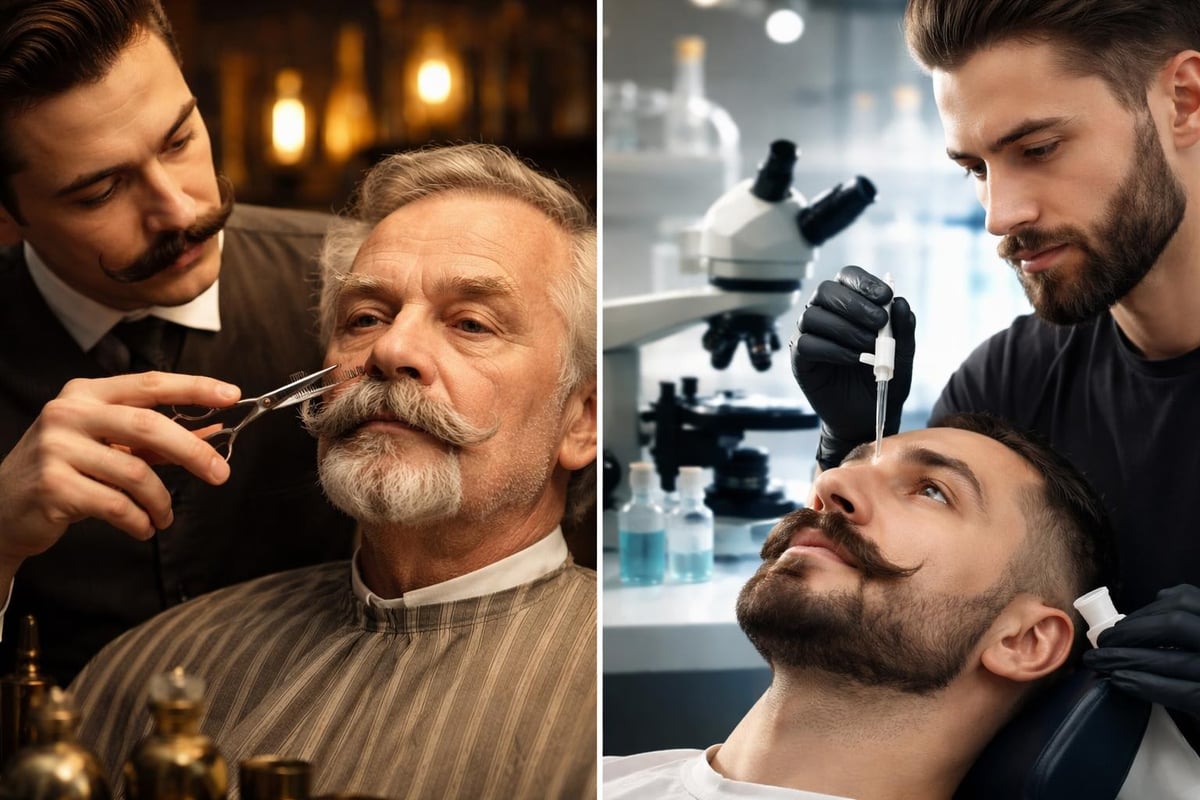
Understanding the historical significance of mustaches provides context for why specialist barbers emerged. In the 19th century, elaborate facial hair styles demanded dedicated grooming professionals. Victorian-era trends saw men visiting barbers daily for mustache maintenance, creating a service niche that persists today.
The modern mustache barber builds on these traditions whilst incorporating contemporary science. Where Victorian barbers relied on instinct and experience, today's professionals understand follicle biology, keratin chemistry, and dermatological principles that optimize results.
Why Specialist Training Matters
General barbering courses allocate minimal time to mustache-specific techniques. A dedicated mustache barber pursues additional certification focusing on:
- Facial hair anatomy: Understanding follicle distribution patterns unique to the upper lip
- Style architecture: How different cuts create optical illusions that enhance facial proportions
- Product chemistry: Why certain ingredients bond with keratin whilst others sit on the surface
- Client psychology: Managing expectations during the awkward growth phases
This specialized knowledge distinguishes competent cutting from transformative grooming. Your mustache barber becomes a consultant, not just a service provider.
Advanced Treatments Your Mustache Barber Might Offer
Modern mustache barbering extends beyond cutting. Progressive professionals incorporate treatments that address underlying follicle health.
Beard Growth Stimulation Techniques
Some mustache barbers offer derma-rolling services for patchy areas. This micro-needling technique creates controlled skin injury that triggers wound-healing responses. The body floods the area with growth factors and increases collagen production. When combined with topical serums containing peptides, this can awaken dormant follicles.
The science requires precision. Needles must penetrate to the correct dermal depth-0.25mm to 0.5mm for facial hair areas. Too shallow produces no effect; too deep causes scarring.
Hot Oil Treatments
Professional-grade hot oil treatments differ significantly from home application. Your mustache barber heats oil to the optimal 40-45°C range where ingredient penetration maximizes without degrading beneficial compounds.
Castor oil, rich in ricinoleic acid, reduces follicle inflammation when heated. This allows more nutrients to reach the hair bulb. The treatment also removes sebum plugs that block follicle openings, explaining why many clients report improved growth density after regular sessions.
Integration with Your Complete Grooming Routine
Your mustache doesn't exist in isolation. A skilled mustache barber considers how your facial hair integrates with your overall appearance, including beard growth if applicable.
Balancing Mustache and Beard Proportions
When you grow both a beard and mustache, proportion becomes critical. A dominant mustache can overwhelm a sparse beard, creating visual imbalance. Your barber should adjust lengths to create harmony.
The golden ratio (1:1.618) applies to facial hair composition. If your beard measures 20mm in length, your mustache should ideally range between 12-15mm to maintain aesthetic balance. These mathematical principles guide professional shaping decisions.
Product Coordination
Using different products on your mustache versus your beard allows targeted treatment. Mustache hair, being closer to food and drink, requires more frequent cleansing. Lightweight oils that won't feel greasy near your mouth work better than heavy balms.
Science-backed natural ingredients deliver results without synthetic additives that irritate sensitive lip skin. Grapeseed oil absorbs quickly, providing moisture without residue. Hemp seed oil contains gamma-linolenic acid, an omega-6 fatty acid that strengthens hair bonds from within.
Cost Considerations and Value Assessment
Problem: You're spending £30-40 per barber visit specifically for mustache work, questioning whether the investment justifies the results.
Agitation: DIY attempts save money initially but create costly mistakes. You've cut too much, creating gaps that take months to regrow. The frustration cycle continues as you alternate between expensive corrections and budget-damaging errors.
Solution: Calculating the true cost of professional mustache barbering requires considering time savings, product guidance, and mistake prevention.
Breaking Down the Investment
A specialist mustache barber charges premium rates because they deliver premium results. The £35 average cost includes:
- 20-30 minutes of focused attention on your facial hair
- Professional-grade products applied during service
- Expert consultation about home maintenance
- Precision tools that most people cannot justify purchasing
- Years of training and experience
Compare this to the hidden costs of DIY grooming: ruined styles requiring months to correct, products purchased based on marketing rather than science, and time spent researching techniques that professionals already master.
Frequency Optimization
Working with your mustache barber to extend time between visits maximizes value. Learning proper home maintenance techniques can stretch appointments from bi-weekly to monthly without sacrificing appearance.
Ask your barber which specific areas you can safely maintain yourself. Most professionals appreciate clients who invest in their own skills, as it demonstrates commitment to the grooming process.
The Future of Mustache Barbering
Technology integration shapes how modern mustache barbers work. Digital analysis tools now assess facial symmetry with millimetre precision, creating data-driven grooming plans. Some progressive barbers photograph clients' mustaches in standardized lighting, tracking growth patterns and density changes over time.
3D printing enables custom comb creation matched to your specific hair spacing and density. These personalised tools distribute product more evenly and train growth direction more effectively than generic combs.
Despite technological advances, the fundamental relationship between mustache barber and client remains unchanged. Trust, communication, and shared commitment to your grooming goals drive results more than any tool or technique.
Mastering mustache grooming requires partnership between your dedication and professional expertise-a mustache barber provides the technical foundation whilst you maintain daily care. Whether you're cultivating a classic chevron or daring handlebar, success depends on understanding the science behind healthy facial hair growth and the precision techniques that shape it. Onesociety supports your grooming journey with products formulated using natural ingredients that work at the molecular level to strengthen, nourish, and enhance your mustache between barber visits.