

Grooming goods are the tools and formulas you use to keep skin, hair and beard clean, comfortable and well shaped: a razor or trimmer, a comb or brush, and a short list of cleansers, oils and balms. Buy fewer, better items and match each one to a job, because a cluttered shelf fixes nothing and a dull blade creates problems.
Picture the usual morning. You drag a tired razor across dry skin, your cheeks burn, and your beard looks patchy by Wednesday. That cycle repeats for months because the wrong grooming goods sit in the wrong order. This guide fixes that, item by item, with the biology behind each choice.
What Counts as Grooming Goods?
Grooming goods fall into four groups: cutting tools, cleansing products, conditioning products and styling products. Each group solves a different problem, so skipping one leaves a gap.
- Cutting tools: razors, trimmers, scissors and combs that shape or remove hair.
- Cleansing products: shampoo, face wash and shower gels that lift sweat, sebum and debris.
- Conditioning products: oils, butters and balms that replace moisture and protect the hair shaft.
- Styling products: waxes, clays and balms that hold shape through the day.
Barber supply marketplaces list hundreds of items across these groups, which makes it easy to overbuy. Start with the problem you actually have, then pick the product that targets it.
The Problem: Why Most Grooming Routines Fail
Most routines fail for one reason: men buy products for the look they want and ignore the skin and hair biology underneath.
Take a beard. Facial hair grows from follicles fed by blood vessels in the skin. Dry, tight skin carries less nutrient delivery, and brittle hair snaps before it reaches length. Now add a blunt razor, a harsh soap that strips natural oils, and no moisturiser. The result is itch, flaking, ingrown hairs and a beard that stalls at stubble.
Does that sound familiar? You are not short on effort. You are short on a system.
Agitate: What Poor Choices Cost You
Poor choices cost you comfort first, then growth, then confidence.
Strip the skin of its oils and it overproduces sebum to compensate, which clogs pores and triggers breakouts under the beard. Skip conditioning and the hair cuticle (the overlapping outer scales of each strand) lifts, so hair tangles, splits and looks frizzy. Reuse a razor for weeks and bacteria and microscopic nicks build up on the blade edge.
The cost is practical. You buy more products to cover the damage, you shave off beards before they mature, and you quit a routine that was never built properly. Six weeks of patchy growth feels like proof your genetics failed, when the cause was often irritation and breakage.
The Solution: Build Your Kit Around Four Jobs
Build your kit around four jobs: cut cleanly, cleanse gently, condition deeply and protect daily. Every product you add should serve one of them.
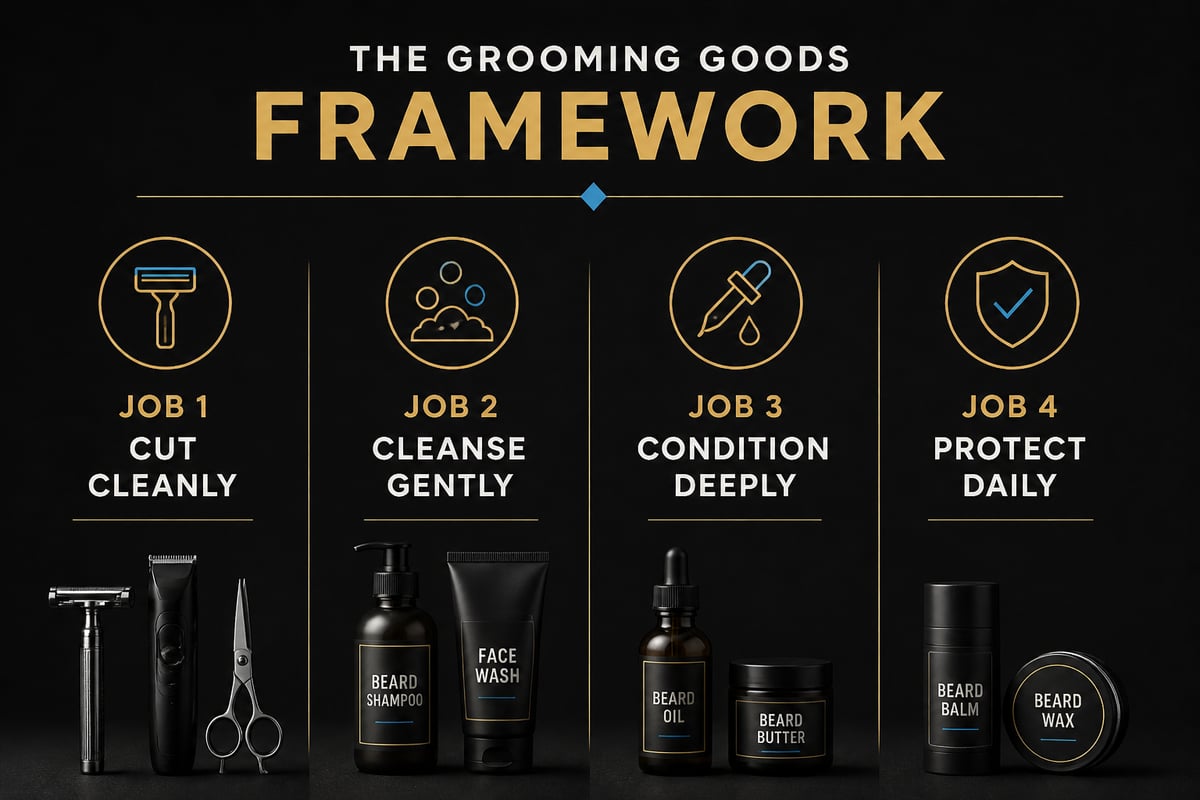
Job 1: Cut Cleanly
A sharp blade slices hair at the surface. A dull one tugs it, which pulls on the follicle and inflames the skin around it. The American Academy of Dermatology advises replacing a razor blade or disposable razor regularly to help minimise irritation, so treat blades as consumables, not heirlooms.
Prep matters as much as the blade. The same body recommends wetting skin and hair before shaving to soften them, and shaving in the direction the hair grows to help prevent razor bumps and burns. A shower first is a simple way to meet both.
Store your razor somewhere dry. The AAD says to let razors dry completely between shaves and to avoid leaving them in the shower or on a wet sink, because damp blades dull and harbour bacteria.
Job 2: Cleanse Gently
Hair and skin need cleaning, but not stripping. A pH-balanced beard shampoo removes sweat and debris while leaving the skin's acid mantle (its thin protective film) largely intact. Ordinary body wash sits at a harsher pH and often contains sulphates that dissolve the oils your beard relies on.
Hand hygiene belongs here too. Wash your hands before touching your face or applying product, because bacteria transfer easily. Good hand hygiene helps prevent the spread of bacteria, and if frequent washing leaves your hands dry, lotions and creams can help.
Job 3: Condition Deeply
Conditioning replaces what washing removes. Oils and butters coat the hair shaft, smooth the cuticle and soften the skin beneath.
The ingredient matters. Shea butter is rich in fatty acids that help soften and seal in moisture. Jojoba oil closely resembles the skin's own sebum, so the skin absorbs it readily. Argan oil contains vitamin E, an antioxidant that helps protect the hair.
A beard oil works best on damp skin after a shower, when the skin holds the most water for the oil to seal in. A butter suits night use, when the skin repairs itself.
Job 4: Protect Daily
Balms and waxes finish the routine. Beeswax forms a protective film that helps slow water loss from the hair and skin, which is why a balm can keep a beard soft through a cold, dry day. Waxes add hold for moustaches and shaping, while a styling clay gives short hair texture without a shiny finish.
Which Grooming Goods Are Worth Buying First?
Buy a quality blade or trimmer, a beard shampoo, an oil and a balm first, because those four cover all four jobs and cost far less than a full shelf of extras.
| Priority | Item | Job it does | Why it earns its place |
|---|---|---|---|
| 1 | Razor or trimmer | Cut | Clean cutting limits tugging and irritation |
| 2 | Beard shampoo | Cleanse | Removes debris without stripping oils |
| 3 | Beard oil | Condition | Softens hair and calms skin underneath |
| 4 | Beard balm | Protect | Seals moisture and adds light hold |
| 5 | Comb or brush | Style | Spreads product and trains hair direction |
| 6 | Styling clay or wax | Style | Shapes hair and moustache on demand |
Add the comb after week one. Add styling products once the base routine feels automatic. If you want a deeper look at what a starter set should hold, the Onesociety guide to a beard grooming kit breaks down each item.
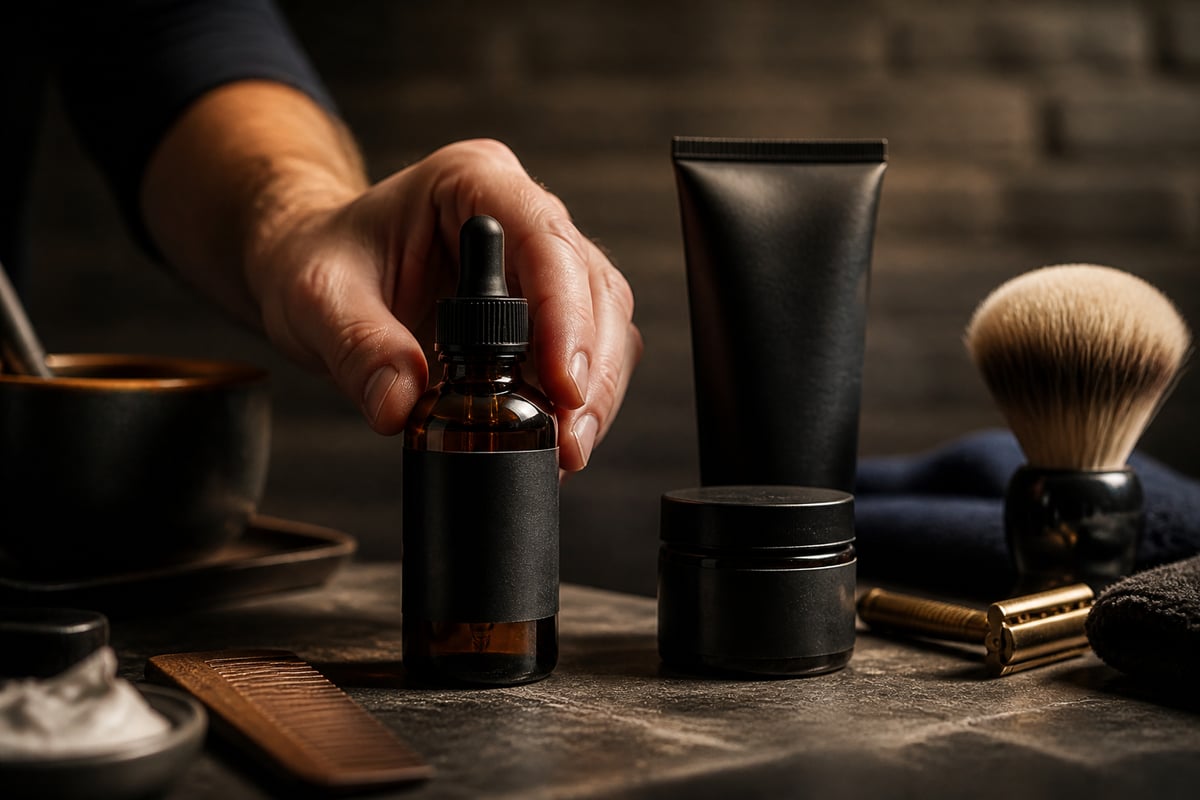
The Fix for Slow Growth: A Full System in One Box
If your real problem is a thin or slow beard, a full system beats buying products one at a time, because growth depends on skin health, nutrient delivery and breakage control working together.
The 90-Day Beard Challenge packs eight formulas into one kit, including Beard Booster, Beard Butter, Beard Balm and a pH-balanced Beard Shampoo. The range uses natural ingredients and is designed to be non-greasy. It also comes with a full refund guarantee, and Google-verified reviews include comments such as "Beard felt amazing after first wash".
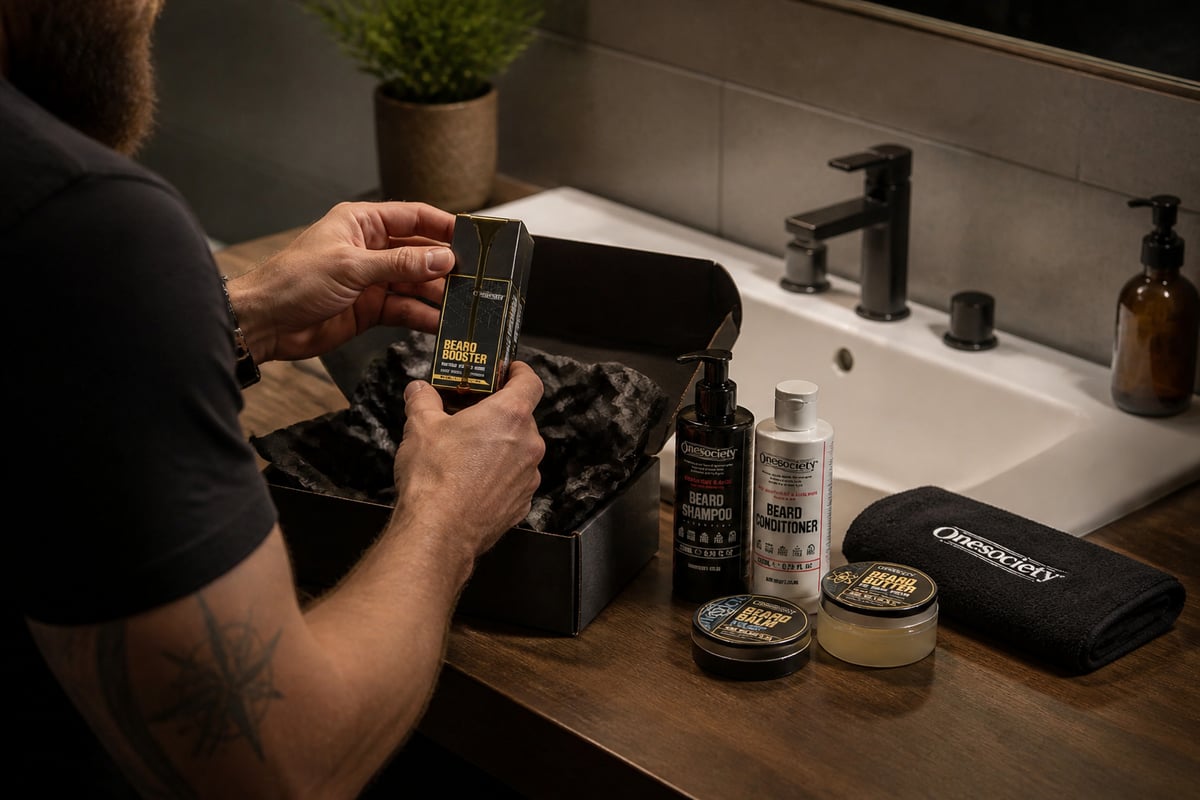
Buy the 90-Day Beard Challenge now if you want the full routine in one order, or browse the Onesociety beard collection to pick single items. You can also find Onesociety products in the OneSociety Amazon store.
Be honest with yourself before you buy. This system rewards a daily routine. If you want a one-day fix, no product delivers it, because hair grows at a fixed biological pace and consistency drives the result.
How to Match Grooming Goods to Your Beard Length
Match your products to the stage your beard has reached, because a stubble stage and a full-length beard need different tools and quantities.
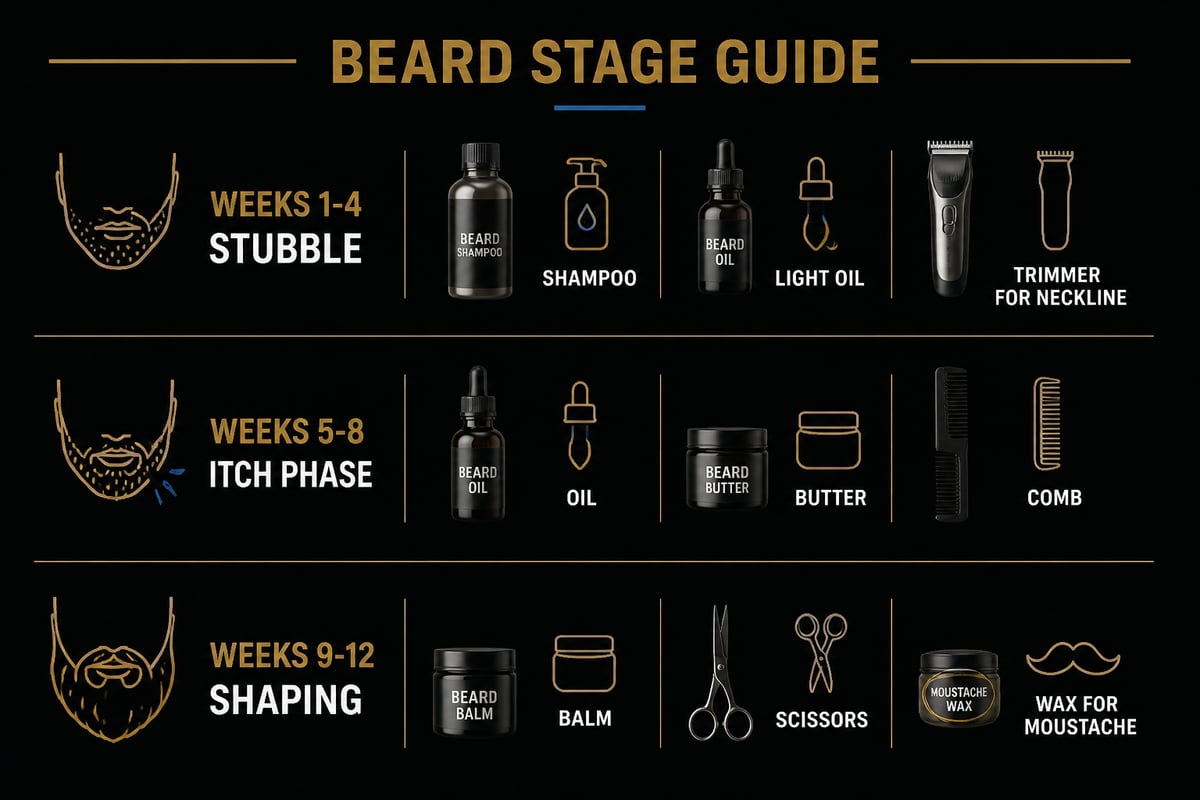
Weeks 1 to 4, the stubble stage. Short hairs are sharp-tipped and poke back into skin, which causes itch. Use a gentle cleanser and a light oil daily so the skin stays supple.
Weeks 5 to 8, the awkward stage. Hair lengthens but looks uneven. Add a butter at night and start combing to train direction. Tidy the neckline only, and leave the cheeks alone.
Weeks 9 to 12, the shaping stage. Now a balm keeps flyaways down, and scissors or a trimmer refine the outline. A moustache wax such as Bay Rum beard and moustache wax controls longer moustache hairs.
For more on timing and technique, the Onesociety beard grooming tips walk through each stage.
What to Know Before You Buy Used or Cheap Grooming Goods
Pre-owned and bargain grooming goods suit hard tools like combs, scissors and brushes, but they suit consumables and blades poorly.
A steel comb or a pair of scissors can last for decades, so second-hand stock saves money if the item is clean and undamaged. Razors and anything that touches broken skin carry a different risk. A used blade has already lost edge and may carry bacteria, and you cannot see either problem.
Check formulas on cheap oils and balms too. Mineral oil and fragrance blends sit cheaply on a shelf, but they coat hair without feeding it, and heavy synthetic fragrance can trigger irritation on sensitive facial skin. Read the ingredient list and look for named oils and butters near the top.
Quick Checks Before You Add Anything to Your Basket
Run every new product through five questions, and put it back if it fails more than one.
- Which of the four jobs does it do?
- Can you name its active ingredient and what that ingredient does for skin or hair?
- Does it duplicate something you already own?
- Will you use it daily, or does it need a routine you won't keep?
- Does the brand back it with a guarantee or verified reviews?
Those questions keep your shelf short and your results steady. For a wider survey of kits and brands, the Onesociety overview of men's grooming products compares your options.
Common Questions About Grooming Goods
How many grooming goods does a beginner need?
Four cover the basics: a razor or trimmer, a beard shampoo, an oil and a balm. Add a comb in the first week and styling products later.
Do natural ingredients work better than synthetic ones?
Natural oils and butters supply specific fatty acids and vitamins that the hair and skin recognise, such as vitamin E in argan oil. A synthetic additive often adds fragrance or texture without nourishing anything, so named natural ingredients give you a clearer reason to trust a formula.
How often should I replace my razor?
Replace the blade or disposable razor after a set number of shaves, per the AAD guidance above. Dry it fully between uses.
Can grooming goods make a beard grow faster?
Hair growth speed is set by biology, but the right products keep skin healthy, protect hair from breaking and support the conditions follicles need. A formula such as Beard Booster targets blood flow at the follicle, which supports growth you would otherwise lose to dryness and breakage.
Start tonight by counting how many shaves your current razor blade has taken; if it has been used for too long, swap it and wash your face with a pH-balanced cleanser instead of body wash. Once your basics are sorted, the 90-Day Beard Challenge gives you a complete, science-backed routine with a money-back guarantee, and you can Accept Challenge with Onesociety to commit to 90 days of consistent beard care.