

Beard maintenance comes down to four daily habits: wash gently, moisturise while the skin is damp, comb through, and trim on a schedule. Skip any one and the skin under your beard dries out, the hairs snap, and growth stalls long before your genetics set the limit.
Here is the problem. You grow a beard, and around week three it itches, flakes and looks patchy. Many men blame their genes and shave it off. The real cause is usually dry, irritated skin and brittle hair, both of which a consistent routine fixes. This guide walks you through that routine, explains the biology behind each step, and shows you where a product earns its place.
What does a daily beard maintenance routine look like?
A daily beard maintenance routine has three parts: cleanse the skin beneath the hair, moisturise it while damp, and comb the product through.
The skin under your beard produces sebum, the oily film that protects it. Facial hair traps that sebum along with dust and sweat. Leave it there and bacteria multiply, pores clog and the itch begins. The American Academy of Dermatology advises washing the face and beard daily with a gentle cleanser, massaging it into the skin beneath the hair and rinsing thoroughly.
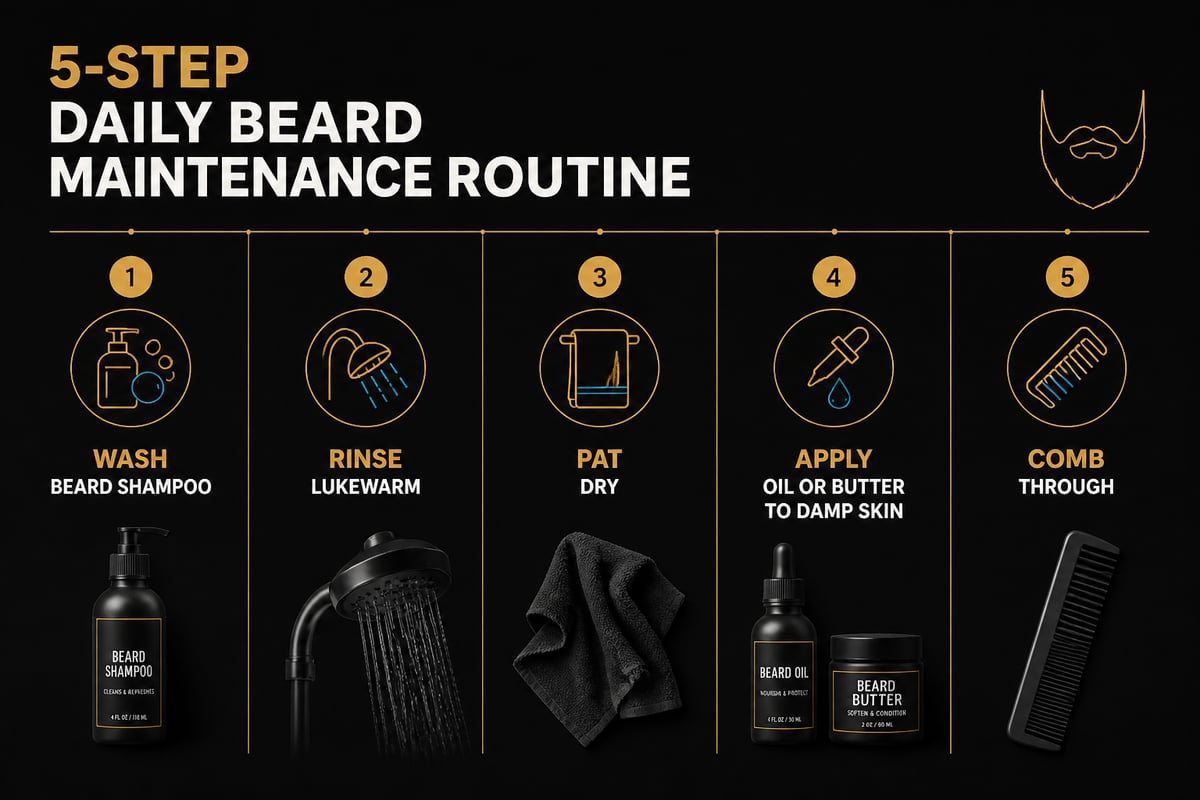
Your morning sequence, start to finish:
- Wash with a pH-balanced beard shampoo, working it down to the skin.
- Rinse with lukewarm water. Hot water strips sebum and dries the skin.
- Pat dry with a towel. Rubbing roughens the hair cuticle and causes frizz.
- Moisturise with beard oil or butter while the skin is still slightly damp.
- Comb the product through from root to tip.
That takes about three minutes. The payoff is a beard that sits flat, smells clean and grows without the itch.
Why does your beard itch, flake and look dry?
Beard itch and flaking happen when the skin loses moisture faster than it replaces it, which inflames the skin and loosens dead cells into visible dandruff.
Think about the agitation here. Each day you skip moisturising, the barrier on your skin weakens a little more. Dry skin tightens and cracks. The hairs growing through it lose their natural oil supply, so they turn coarse and curl back into the skin. That is how an ingrown hair starts. The itch then makes you scratch, and scratching breaks both skin and hair. If you have a dark beard, our guide to black beard care covers the dryness, ingrown hairs and patchiness that come with coarse, dark hair.
Common triggers include:
- Washing with bar soap or body wash, which is too alkaline for facial skin
- Over-washing, which strips sebum
- Cold, dry air and central heating
- Skipping moisturiser after a wash
- Growing out stubble, when short, sharp hair ends press into the skin
The fix is a consistent oil or butter. Beard fullness also depends on factors beyond routine, so if your growth stays sparse despite good care, that is useful context before you judge your results.
How should you wash and dry a beard?
Wash your beard once a day with a beard-specific shampoo, rinse with lukewarm water, and pat it dry rather than rubbing.
A dedicated formula matters because facial skin and facial hair need a gentler cleanser than your scalp does. A pH-balanced beard shampoo lifts dirt and excess oil without disrupting the skin's slightly acidic surface layer. That acid mantle is your first line of defence against bacteria, so keeping it intact cuts the risk of irritation.
If your skin runs very dry, wash on alternate days and rinse with water only on the days between. Always use a clean towel. A dedicated beard towel keeps product residue and bacteria off the rest of your washing, and its soft fibres cause less friction on the hair cuticle than a rough bath towel.
Which products does a beard actually need?
A beard needs four things at most: a gentle wash, a moisturiser such as oil or butter, a comb or brush, and a sealant such as balm or wax if you want styling hold.
Here is how the main options compare:
| Product | What it does | Best used |
|---|---|---|
| Beard shampoo | Cleans skin and hair without stripping oil | Daily or alternate days |
| Beard oil | Lightweight moisture that reaches the skin | After washing, daily |
| Beard butter | Richer conditioning for dry or longer beards | Evening or after washing |
| Beard balm | Seals in moisture and adds light hold | Morning, after oil |
| Beard wax | Firm hold for shaping | Styling, as needed |
The AAD recommends applying moisturiser, beard conditioner or beard oil after washing while the skin is still slightly damp, then using a beard comb to distribute the product and detangle. Damp skin absorbs more, because water in the outer layer helps carry the oils inward.
Ingredients matter more than labels. Shea butter contains fatty acids that many people find soften hair. Jojoba oil is often said to resemble human sebum, which is why it is commonly used on skin. Browse the full beard care collection to match a formula and scent to your routine.
Can you use coconut oil on your beard?
Yes, you can use coconut oil on your beard, but it sits heavy, can clog pores on acne-prone skin, and offers less balanced conditioning than a formula made for facial hair.
Coconut oil is rich in lauric acid, which some people find helps reduce breakage. The trouble is that it solidifies at cooler temperatures and rates high on the comedogenic scale, which means it can block pores and trigger breakouts under the beard. A purpose-built blend avoids this by combining lighter carrier oils with butters that absorb cleanly.
If you want a single, ready-made option, Onesociety's beard oil collection uses non-greasy formulas that clear pores and avoid the itch that heavy kitchen oils can cause.
What is the 90 day beard rule?
The 90 day beard rule says you should commit to growing your beard for three full months before judging it, because early growth looks patchy and uneven.
Facial hair grows in phases, with some follicles dormant while others are active. Some follicles sit dormant while others are active, so around weeks three to six your face looks uneven. Most men quit during this stage. By week twelve, dormant follicles often catch up and the beard fills in.
Use those three months well:
- Weeks 1 to 4: Resist trimming the shape. Focus on skin health and moisture to stop the itch.
- Weeks 5 to 8: Tidy only the neckline and cheek line. Keep conditioning.
- Weeks 9 to 12: Assess density, then shape to suit your face.
This is where a structured programme helps, because a routine you can follow beats a pile of products you use at random. The 90-Day Beard Challenge bundles eight formulas into one kit that covers every stage. It includes a Beard Booster for blood flow to the follicles, a Beard Butter for overnight recovery, a Hydro-Lock Balm to seal in moisture, and a pH-balanced shampoo for the daily reset. Onesociety offers a full refund guarantee on the challenge, and its formulas use natural ingredients.
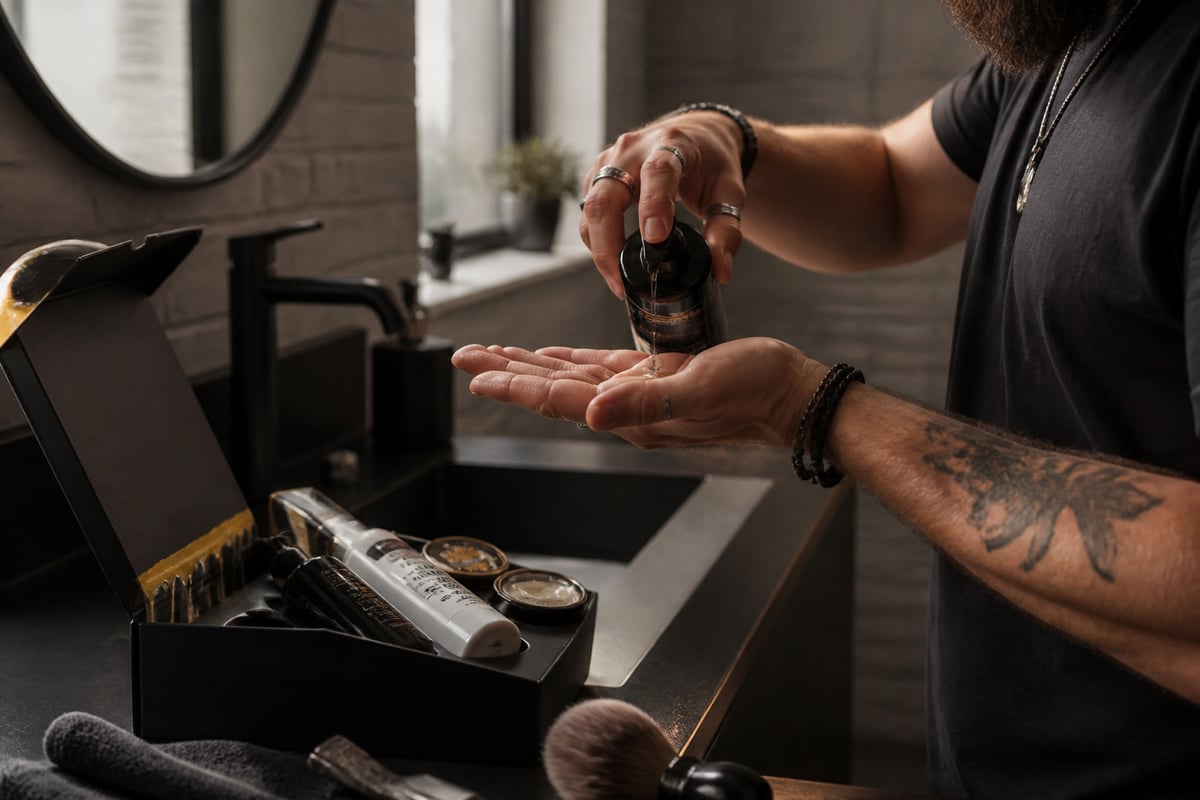
Why does the kit work as a system? Beard hair is dead keratin once it leaves the follicle, so topical products generally cannot change its genetics. What they do is keep the skin healthy and the hair shaft strong, so every hair grows to its full potential without snapping off. That is the realistic promise of any growth routine, and it is why consistency over 90 days matters more than any single bottle. Buy the 90-Day Beard Challenge here if you want the full set in one order.
You can also pick up Onesociety formulas through the OneSociety Amazon store if you prefer to order there.
Does a patchy beard mean low testosterone?
A patchy beard rarely signals low testosterone; patchiness is usually down to genetics, age and how sensitive your follicles are to dihydrotestosterone (DHT).
Beard follicles respond to DHT, a hormone made from testosterone. The key factor is how many androgen receptors your follicles carry and how strongly they react, not your total testosterone level. Two men with identical hormone levels can grow very different beards. Many men keep filling in over their twenties, so a patchy beard may look quite different later on.
Before you worry, check the basics:
- Have you allowed at least 90 days of growth without shaving?
- Is the patchy area itchy, red or scaly? Skin inflammation can stunt hair in that spot.
- Do you sleep well and eat enough protein? Hair is built from keratin, which needs dietary protein.
If patches appear suddenly, in round bald spots, or alongside other symptoms, see a GP, since conditions such as alopecia barbae need medical advice. Otherwise, healthy skin and patience give filler follicles the best chance to activate.
How do you trim and shape a beard at home?
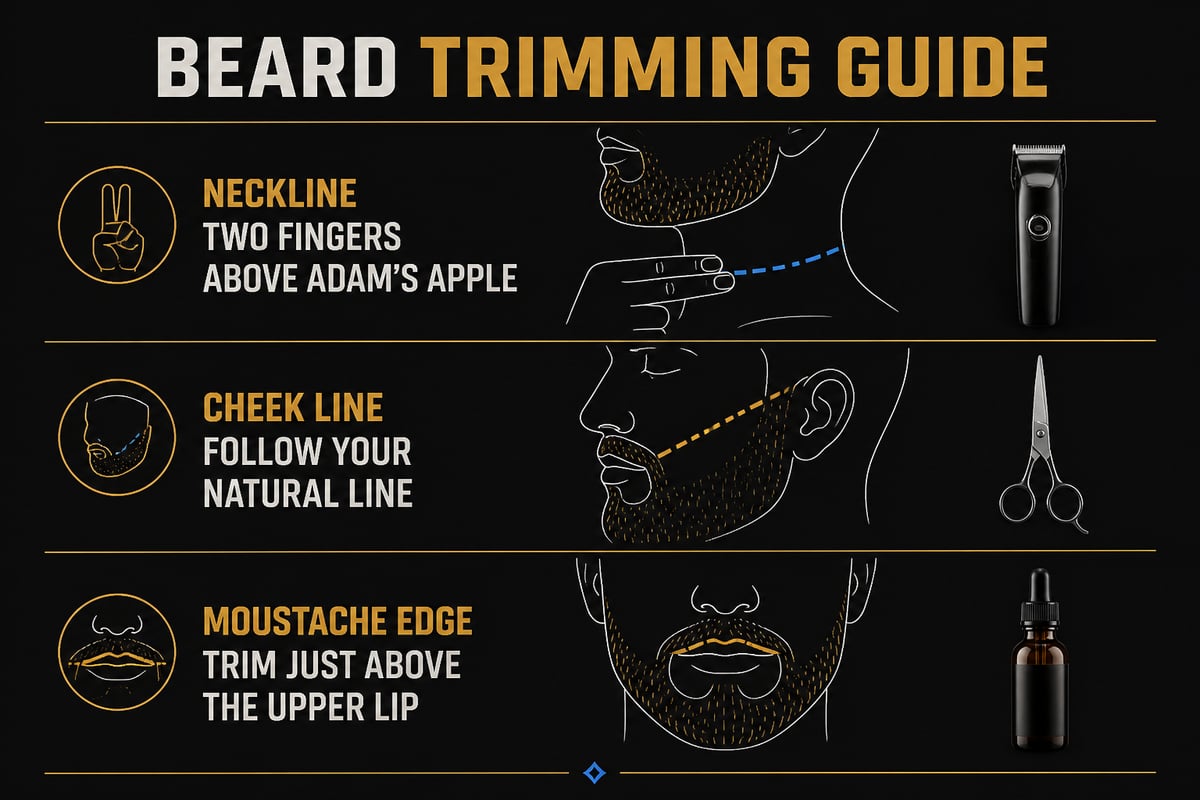
To trim a beard at home, work on dry, combed hair, trim in stages with a guard longer than you think you need, and shape the neckline and cheek line last.
Trim a little at a time because you cannot add hair back. Follow this order:
- Comb the beard downwards so every hair lies straight.
- Trim the sides and chin with a longer guard first, then step down if needed.
- Set the neckline about two fingers above your Adam's apple, curving towards the ears.
- Clean the cheek line only where hairs stray, and keep it natural.
- Trim the moustache so it clears the upper lip.
Trim regularly to remove split ends, which make the whole beard look frayed. If you shave the edges, the AAD says to reduce irritation by softening the hair with a shower, shaving in the direction of growth and rinsing the razor after each stroke. It also advises changing a razor blade every five to seven shaves and storing guards clean and dry to limit bacterial build-up.
How do you stop ingrown hairs and irritation?
Stop ingrown hairs by exfoliating gently once or twice a week, prepping the skin before shaving, and keeping the area moisturised.
Ingrown hairs form when a cut hair curls back and pierces the skin, causing inflammation. The result is a red, sore bump that gets worse if you pick it. Coarse or curly hair is most prone, particularly along the neckline.
The AAD recommends gentle exfoliation one to two times per week for stubble-prone ingrown hairs. For shaving, it suggests letting pre-shave gel sit for about 30 seconds and shaving cream for two to three minutes before you cut, so the hair softens and cuts cleanly. Afterwards, a conditioning butter calms the skin. Beard butter delivers shea butter, which many people find helps the skin settle after a trim.
How does beard maintenance change with the seasons?
Beard maintenance changes with the seasons because cold air, central heating and summer sun each dry the skin and hair in different ways.
In winter, indoor heating and wind pull moisture from the skin. Switch to a richer butter in the evening and layer a balm over oil in the morning to lock moisture in. In summer, sweat and sun become the issue. Wash daily to clear salt and sweat, and switch to a lighter oil. For stubble and shorter growth, the AAD recommends a moisturiser with broad-spectrum SPF 30 or higher, because sparse hair gives the skin little protection from UV.
Travel adds its own strain. Hard water can leave mineral residue on hair, which may make it feel rough and look dull. If you live in a hard-water area, a clarifying wash once a week clears the build-up, and a good beard comb helps redistribute oils through every strand.
Are beards out of style in 2026?
No, beards are not out of style in 2026; well-kept beards of every length remain a standard look, and the emphasis now falls on healthy, groomed growth rather than one fixed shape.
What changes is the finish. Tidy edges, soft hair and a clean neckline read as deliberate, while a dry, untamed beard reads as neglect. That is why maintenance matters more than any trend. A natural-ingredient routine gives you a beard that suits whichever length and shape you prefer.
FAQ
How often should you wash your beard?
Wash your beard once a day with a gentle beard shampoo, or on alternate days if your skin runs dry. Over-washing strips sebum and invites flaking, so rinse with water alone on off days.
Should you brush or comb your beard every day?
Yes, comb or brush it daily after applying oil or butter. This spreads product evenly, detangles the hair and exfoliates dead skin, which reduces ingrowns and flaking.
How long before you see results from a beard routine?
Many men notice softer hair and less itch within the first couple of weeks, and visible filling-in often appears by around 90 days. Growth speed depends on genetics, so measure progress over a full three months.
Start tonight by washing your beard with a gentle cleanser and applying oil while your skin is still damp, then repeat for seven days to feel the difference. If you want every step covered in one box, the 90-Day Beard Challenge pairs eight natural-ingredient formulas with a 90-day money-back guarantee, and over 20,000 customers already use Onesociety products. Put it to the test by committing to 90 days of consistent beard care.