

Your mustache refuses to cooperate. Every morning, stray hairs jut out at impossible angles, curling downward into your mouth or sticking straight out like porcupine quills. You've tried waxes that leave greasy residue, gels that flake into white dust, and pomades that simply don't hold. The problem isn't your mustache-it's your product. Mustache clay delivers the matte finish, flexible hold, and natural appearance that traditional styling products can't match, transforming rebellious facial hair into a sculpted masterpiece that stays put from morning coffee to evening pint.
What Makes Mustache Clay Different From Traditional Styling Products
Mustache clay stands apart from conventional styling products through its unique mineral-based formulation. Unlike petroleum-heavy waxes or alcohol-laden gels, mustache clay relies on naturally occurring minerals-primarily bentonite and kaolin-to create hold without shine.
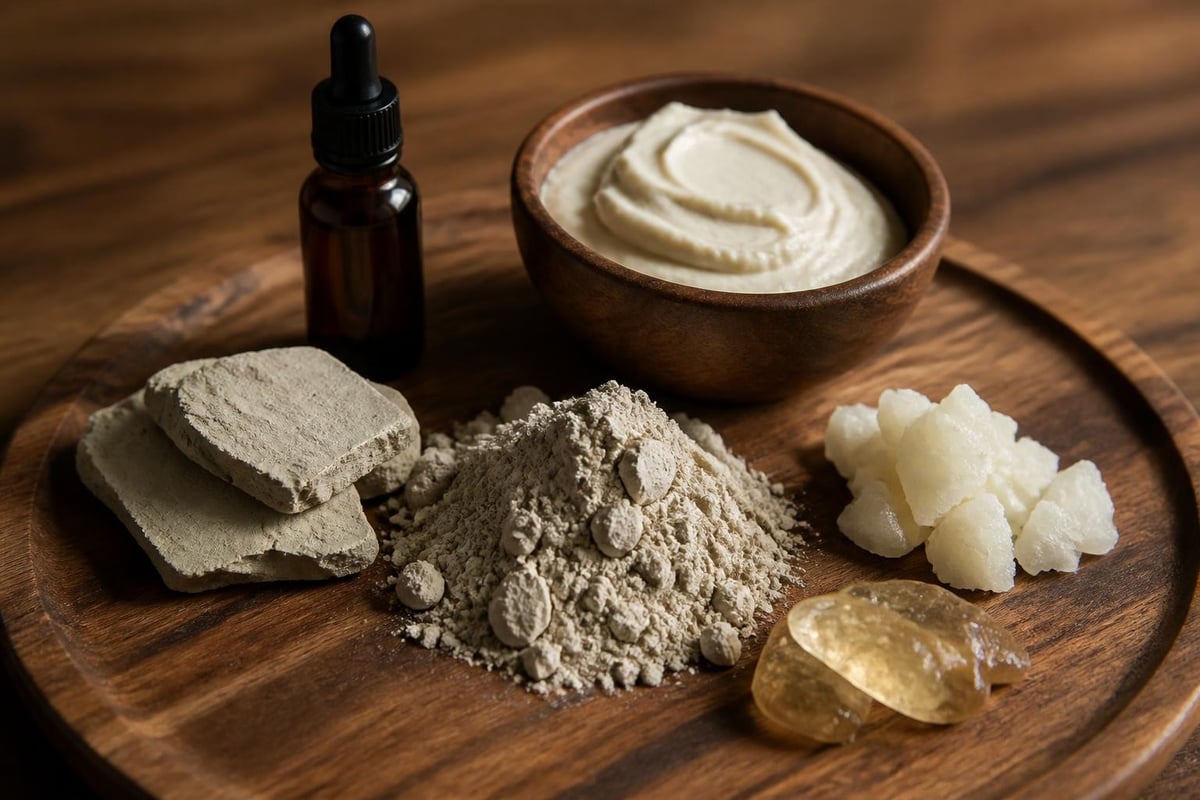
The science behind this difference lies in the clay's molecular structure. Bentonite clay, formed from volcanic ash, carries a negative electrical charge that attracts positively charged particles. Research on bentonite's cosmetic applications demonstrates how this charge enables the clay to absorb excess sebum whilst creating textural grip on hair shafts. When you apply mustache clay, these microscopic platelets interlock with individual hairs, forming a flexible matrix that holds shape without the crispy, brittle feel of traditional gels.
The Mineral Science Behind Hold and Texture
Different clay types deliver distinct styling properties:
- Bentonite clay: Expands when wet, creating maximum volume and strong hold
- Kaolin clay: Gentler absorption, ideal for sensitive skin beneath your mustache
- Rhassoul clay: Mineral-rich Moroccan clay that conditions whilst styling
The safety assessment of cosmetic clays confirms these minerals pose minimal irritation risk when properly sourced and formulated. This matters because your mustache sits against delicate facial skin all day-unlike the hair on your head, which doesn't contact sensitive tissue.
| Product Type | Hold Strength | Finish | Skin Impact | Re-workability |
|---|---|---|---|---|
| Mustache Clay | Medium-Strong | Matte | Low irritation | High |
| Traditional Wax | Very Strong | Glossy | Can clog pores | Low |
| Gel | Medium | Shiny/Wet | Alcohol dries skin | None |
| Pomade | Light-Medium | Greasy | Oil buildup | Medium |
Most men discover mustache clay after years of frustration with products that either don't hold or leave their upper lip feeling like a candle factory. The clay's ability to restyle throughout the day-simply dampen your fingers and reshape-solves the rigidity problem that plagues wax users.
How to Apply Mustache Clay for Maximum Hold
Proper application technique determines whether your mustache clay delivers professional results or disappointing limpness. The process begins before you even open the tin.
Pre-Application Preparation
Start with a freshly washed and completely dry mustache. Moisture prevents clay particles from gripping individual hairs effectively. If you've just showered, wait 10-15 minutes or use a hairdryer on the cool setting to ensure zero dampness remains.
Trimming your mustache properly before applying product eliminates split ends and uneven lengths that fight against styling. Even the strongest mustache clay can't tame hairs pointing in fundamentally different directions due to poor grooming maintenance.
Check your skin condition. The American Academy of Dermatology guidance on seborrheic dermatitis warns that flaking, redness, or irritation requires addressing the underlying skin issue before adding styling products. Mustache clay won't cause dermatitis, but applying it over inflamed skin traps moisture and bacteria against already compromised tissue.
The Four-Step Application Process
-
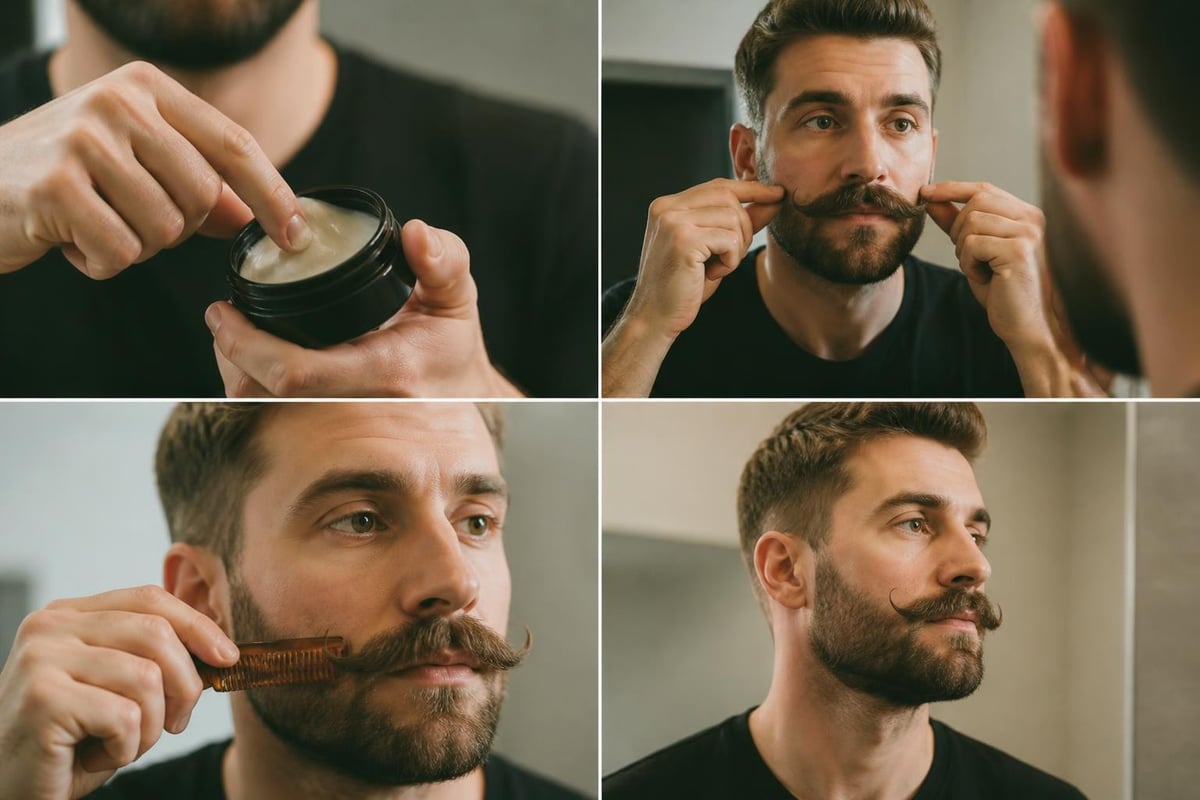
Warm the product: Scrape a pea-sized amount with your thumbnail. Rub vigorously between your palms for 15-20 seconds until the clay becomes pliable and slightly warm. This activates the binding properties.
-
Work from centre outward: Start at the centre of your upper lip, pressing the clay into your mustache from root to tip. Use your fingertips to ensure product reaches the base of each hair, not just the surface.
-
Shape with precision: Use a fine-tooth comb to distribute clay evenly, then shape with your fingers. For handlebar styles, twist the ends whilst the clay remains slightly workable. For natural looks, simply guide hairs into your preferred direction.
-
Set and forget: Allow 3-5 minutes for the clay to fully set. Resist touching during this period-your natural skin oils will prematurely break down the hold.
The beauty of mustache clay lies in its forgiveness. Made a mistake? Dampen your fingertips with water, work the clay slightly, and reshape. Traditional wax would require complete removal and reapplication.
Understanding Clay-Based Ingredient Safety
The minerals in mustache clay come from the earth, but "natural" doesn't automatically mean "safe for everyone." Understanding what goes into your product helps you choose formulations that suit your skin type and avoid potential irritants.
Mineral Purity and Sourcing
Quality mustache clay brands source their minerals from deposits tested for heavy metal contamination. The WHO monograph on bentonite and kaolin establishes acceptable limits for arsenic, lead, and other elements naturally occurring in clay deposits. Reputable manufacturers test each batch to ensure these levels fall well below safety thresholds.
When examining product labels, look for these quality indicators:
- Pharmaceutical-grade bentonite: Purified to remove impurities
- Certified organic kaolin: Sourced from contamination-free deposits
- Third-party testing certificates: Verification of purity claims
Different clay types used in cosmetics carry varying absorption rates. Bentonite absorbs more oil than kaolin, making it ideal for men with naturally oily skin but potentially too drying for those with sensitive or mature skin. If your upper lip area tends toward dryness or flaking, choose formulations with a higher kaolin ratio or added moisturising agents like shea butter.
Potential Skin Reactions and Prevention
Most men tolerate mustache clay without issue, but certain skin conditions require extra caution. The National Eczema Association's guidance on facial hair care emphasises fragrance-free formulations for anyone prone to dermatitis or eczema.
Common additives that trigger reactions include:
- Essential oils (even "natural" ones like peppermint or eucalyptus)
- Synthetic fragrances (listed as "parfum" or "fragrance")
- Preservatives (parabens, though increasingly rare)
- Beeswax alternatives (for vegan formulas, sometimes irritating)
If you experience redness, itching, or burning after applying mustache clay, remove it immediately with warm water and a gentle cleanser. The reaction typically stems from additives rather than the clay minerals themselves.
Styling Techniques for Different Mustache Shapes
Your mustache style determines how you use mustache clay. A natural, brushed look requires different application than a competition-worthy handlebar.
The Natural Business Professional
For corporate environments where subtlety matters, mustache clay tames flyaways whilst maintaining a groomed-but-not-styled appearance. Use half the standard amount of product, focusing application on problem areas rather than full coverage.
Apply clay only to the outer edges and any hairs that naturally curl downward. Leave the centre section product-free for a softer finish. This selective approach prevents the "too done" look whilst eliminating the stray hairs that make colleagues wonder if you own a mirror.
The Classic Handlebar
Handlebar mustaches demand strong, flexible hold-exactly what quality mustache clay delivers. The key lies in training your mustache over several weeks, not forcing it into position overnight.
Start with clean, dry hair. Apply slightly more product than usual, concentrating on the outer third of each side. Work the clay thoroughly into these sections, then use a small round brush or your fingers to curl the ends upward. Hold each curl for 10 seconds before releasing.
During the first week, your mustache will fight this new direction. Consistency wins-apply clay and shape daily, even on days you're staying home. Within 14-21 days, the hair follicles adapt to growing in your preferred direction, requiring less product to maintain the shape.
The Walrus and Chevron Styles
These fuller styles benefit from mustache clay's ability to add bulk without weight. Apply product from roots to tips using an upward brushing motion to create lift and volume.
The scientific principle here involves coating each hair shaft to increase its diameter slightly whilst reducing tendency to clump. This creates the appearance of density without the heavy, drooping effect that pomades cause. For general beard maintenance principles that apply equally to substantial mustaches, focus on keeping the underlying skin healthy-fuller styles trap more dead skin cells and bacteria.
Combining Mustache Clay With Complete Facial Hair Care
Mustache clay handles styling, but comprehensive facial hair care requires multiple products working together. Understanding how to layer products prevents conflicts that reduce effectiveness.
The Morning Routine Sequence
Your morning grooming order matters. Applying products in the wrong sequence creates buildup, reduces absorption, or cancels out benefits.
- Cleanse: Wash your mustache with pH-balanced shampoo to remove overnight oil accumulation
- Condition: Proper beard care items include leave-in conditioners that soften coarse facial hair
- Dry completely: Pat with a towel, then air-dry or use cool air from a hairdryer
- Nourish: Apply beard oil or butter to the skin beneath your mustache (not the hair itself)
- Style: Finish with mustache clay for hold and shape
Notice that nourishing products go on skin, whilst styling products coat the hair. This separation prevents the greasy, product-overloaded appearance that plagues men who apply everything simultaneously.
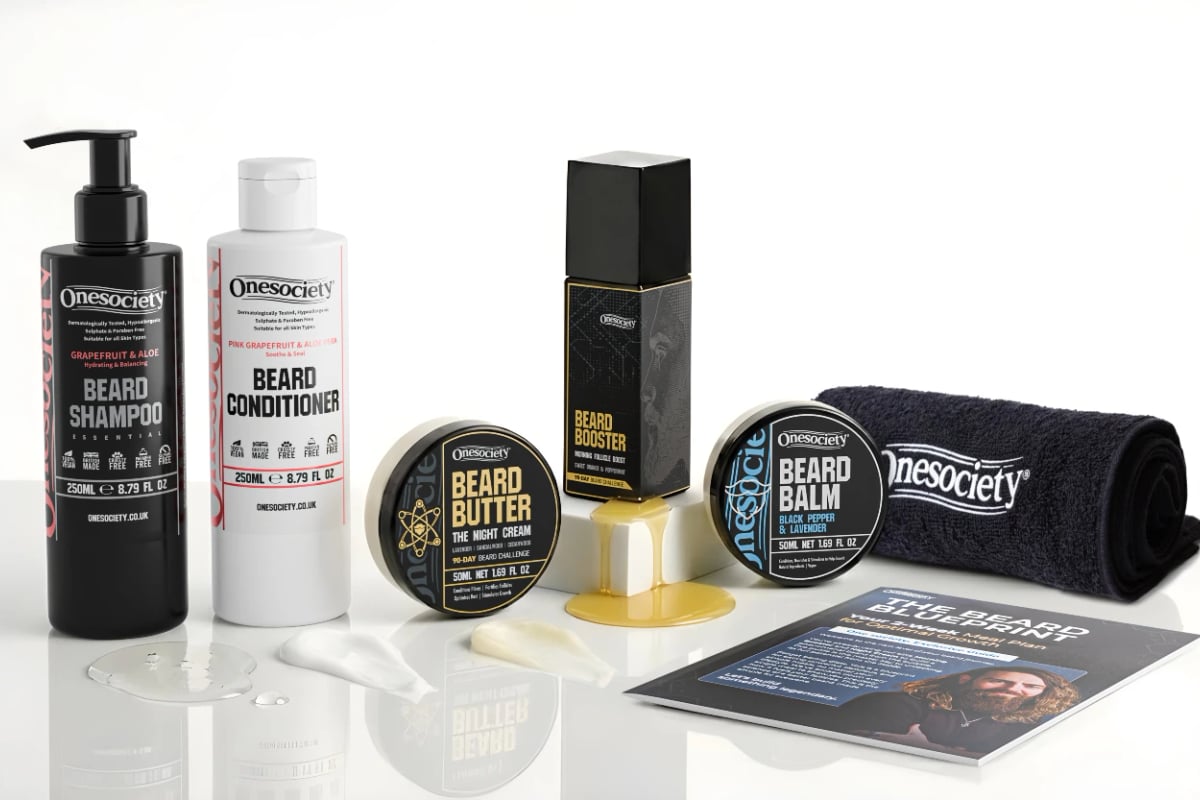
When you use a comprehensive system like the 90-Day Beard Challenge, the products work synergistically-the Beard Booster stimulates follicle health, the Beard Butter provides overnight recovery, and the Hydro-Lock Balm protects during the day. Adding mustache clay to this routine handles the styling component without interfering with the growth and conditioning benefits of the other formulations.
Evening Removal and Care
Never sleep with mustache clay still in your hair. The minerals continue absorbing oil throughout the night, leading to dry, brittle hair that breaks easily.
Wash your mustache each evening with a gentle, sulfate-free cleanser. Work the product in thoroughly to break down clay residue, then rinse with warm (not hot) water. Pat dry and apply a small amount of beard oil with nourishing ingredients to replenish moisture the clay absorbed during the day.
This cleanse-and-nourish cycle prevents the cumulative dryness that occurs when men use styling products without proper removal. Think of it like skincare-you wouldn't sleep in makeup, so don't sleep in styling clay.
Troubleshooting Common Mustache Clay Issues
Even with proper technique, you'll encounter occasional problems. These solutions address the most frequent complaints.
Problem: The Clay Won't Wash Out Completely
Scientific cause: Bentonite clay's negative charge bonds strongly with positively charged proteins in hair keratin. Water alone can't break this ionic bond.
Solution: Use an oil-based cleanser first to break down the clay, then follow with your regular shampoo. The oil disrupts the electrical attraction between clay and hair, whilst the surfactants in shampoo carry away the loosened residue. Alternatively, apply a small amount of conditioner to dry hair, work it through, then rinse-the conditioning agents encapsulate clay particles for easier removal.
Problem: Flaking and White Residue
Scientific cause: You've applied too much product, or you've applied it to slightly damp hair. Excess clay can't bond properly to the hair shaft, so it sits on the surface and eventually flakes off.
Solution: Use less product-genuinely half of what you think you need. Ensure your mustache is bone-dry before application. If flaking occurs, lightly mist your mustache with water and work the clay in again with your fingertips. The moisture reactivates the binding properties, helping the clay integrate properly.
Problem: Hold Doesn't Last All Day
| Cause | Fix | Prevention |
|---|---|---|
| Oily skin | Cleanse with astringent before application | Use oil-control products beneath mustache |
| High humidity | Apply extra-strength formulation | Carry product for midday touch-ups |
| Poor distribution | Work product to roots, not just tips | Use comb during application |
| Expired product | Replace clay (shelf life: 12-18 months) | Store in cool, dry location |
If your mustache still won't hold despite troubleshooting, examine your beard hair health overall. Damaged, brittle hair lacks the structural integrity to maintain shape regardless of product strength. Split ends and chemical damage from harsh cleansers require addressing before styling products will perform optimally.
Problem: Skin Irritation or Breakouts
This signals either a formulation mismatch for your skin type or application technique that traps product against skin rather than coating hair. Switch to a kaolin-based formula if bentonite feels too aggressive, and ensure you're applying clay to hair shafts, not rubbing it into the skin beneath.
For persistent issues, strip your routine back to basics-remove all products for 48 hours, then reintroduce items one at a time to identify the specific irritant. Often, the culprit isn't the mustache clay itself but a conflicting ingredient in another grooming product.
Choosing the Right Mustache Clay Formula
Not all mustache clays deliver identical results. Understanding formulation differences helps you select products that match your specific hair texture and styling goals.
Hold Strength Variations
Mustache clay comes in light, medium, and strong hold formulations. This classification relates to the clay-to-binder ratio and the specific minerals used.
Light hold formulas contain 15-25% clay minerals mixed with conditioning agents like shea butter or argan oil. These suit fine or sparse mustaches that need subtle control without stiffness. The trade-off? You'll need midday reapplication if your mustache is particularly unruly.
Medium hold formulations (25-40% clay content) work for most men. They provide enough structure for shaping whilst allowing some natural movement. This category offers the best balance between hold and hair health, as the lower clay concentration prevents excessive drying.
Strong hold products (40%+ clay) handle coarse, thick, or exceptionally long mustaches. The high mineral content creates near-wax-level hold with a matte finish. Only choose this strength if medium hold genuinely fails-the aggressive absorption requires diligent evening removal and conditioning.
Scented vs. Unscented Options
Fragrance preferences divide men sharply. Some want their grooming products to contribute to their overall scent profile, whilst others prefer completely neutral formulations that don't compete with cologne.
From a skin-health perspective, unscented formulas carry lower irritation risk. Every additional ingredient-even natural essential oils-increases the chance of sensitivity reactions. If your skin tends toward reactivity, or if you struggle with dermatitis beneath your mustache, choose fragrance-free variants.
For scented options, look for formulations using essential oils rather than synthetic fragrances. Cedar, sandalwood, and vetiver complement natural masculine scent profiles without smelling artificial. Avoid heavy, sweet fragrances (vanilla, caramel, chocolate notes) unless you genuinely enjoy smelling like dessert all day.
Natural vs. Synthetic Binders
The minerals in mustache clay create texture, but binders hold everything together. Natural options include:
- Beeswax: Traditional, effective, but can feel slightly tacky
- Plant waxes (candelilla, carnauba): Vegan alternatives with similar properties
- Butters (shea, cocoa): Add conditioning whilst providing mild hold
Synthetic binders like PVP (polyvinylpyrrolidone) offer stronger hold but can build up on hair over time, requiring clarifying shampoos for removal. They're not inherently harmful, but they move the product further from the "natural" category many beard enthusiasts prefer.
At Onesociety, the emphasis on 100% natural ingredients means seeking formulations that avoid synthetic polymers entirely, relying instead on the synergistic properties of mineral clays and plant-derived binders to achieve professional styling results without compromising ingredient integrity.
Advanced Styling: Training Your Mustache Over Time
Mustache clay does more than provide temporary hold-it actively trains your facial hair to grow in your preferred direction. This process leverages the malleability of hair follicles during their growth cycle.
The Biology of Hair Training
Each mustache hair grows from a follicle set at a genetically determined angle. However, consistent external force applied during the anagen (growth) phase can shift this angle by 15-30 degrees over several weeks. The mustache clay holds hairs in position for 12-16 hours daily, creating sustained directional pressure that follicles gradually accommodate.
This isn't permanent-if you stop styling for several weeks, follicles revert to their natural angle. But with consistent use, you'll need progressively less product to maintain your shape as your mustache "learns" its new direction.
The 21-Day Training Protocol
-
Days 1-7: Apply mustache clay daily and style in your target direction, even if it feels unnatural. Your mustache will resist-persist anyway.
-
Days 8-14: You'll notice reduced resistance. Hairs begin holding the shaped position for 30-60 minutes after washing out the clay. This signals follicle adaptation.
-
Days 15-21: The shape becomes semi-permanent. You can reduce product amount by roughly 30% whilst maintaining the same hold.
-
Day 22+: Maintenance phase. Your mustache naturally grows closer to your styled direction, requiring minimal product for touch-ups.
This timeline assumes daily application. Skip days, and you'll extend the training period proportionally. Consistency matters more than product quantity during training phases.
Mustache clay transforms facial hair care from daily frustration into controlled styling, using mineral science to deliver matte hold without the drawbacks of traditional waxes and gels. Whether you're training a handlebar or simply taming flyaways, the right formulation and technique turns your mustache into a deliberate style statement. When you combine proper styling with comprehensive grooming-nourishing oils, conditioning treatments, and follicle-stimulating formulas-you create the foundation for facial hair that looks as deliberate as it feels. Onesociety provides the complete natural product ecosystem to support every stage of your beard and mustache journey, from growth stimulation through daily styling, with formulations backed by ingredient science rather than marketing hype.