

You've invested time growing your beard, nourishing it with quality oils and balms, yet uneven patches and stray hairs sabotage your carefully cultivated style. The frustration intensifies when you realise your current trimming tool damages follicles, creating split ends and reducing overall beard density. Finding the right mens trimmer philips model becomes essential not just for aesthetics, but for preserving the biological integrity of each hair shaft and the surrounding dermal tissue.
Why Your Current Trimmer Actively Damages Your Beard
Most conventional trimmers operate with blunt blades that tear through hair rather than slicing cleanly. This mechanical trauma splits the hair cortex, exposing the internal protein structure to environmental oxidative stress. When keratin fibres fracture, moisture escapes through these microscopic fissures, causing brittleness that compounds with each trim.
The dermis beneath your beard contains sebaceous glands that secrete oils to protect hair shafts. Aggressive pulling from inadequate trimming technology triggers an inflammatory response in these glands. Your body interprets this mechanical stress as tissue damage, redirecting resources away from follicle nourishment towards healing inflammation instead.
The Biological Cost of Poor Trimming Equipment
Consider the growth cycle dynamics at play. Each follicle operates independently through anagen (growth), catagen (transition), and telogen (resting) phases. Trauma from inferior trimming tools can prematurely shift follicles from anagen to catagen, shortening the active growth period by up to 30%.
The cascade effect includes:
- Follicular miniaturisation from repeated mechanical stress
- Reduced dermal papilla blood flow due to inflammatory cytokines
- Compromised stem cell activity in the hair bulb region
- Altered sebum composition affecting natural moisture retention
This isn't superficial damage. You're systematically undermining years of growth through equipment that prioritises convenience over biological compatibility.
The Engineering Philosophy Behind Mens Trimmer Philips Technology
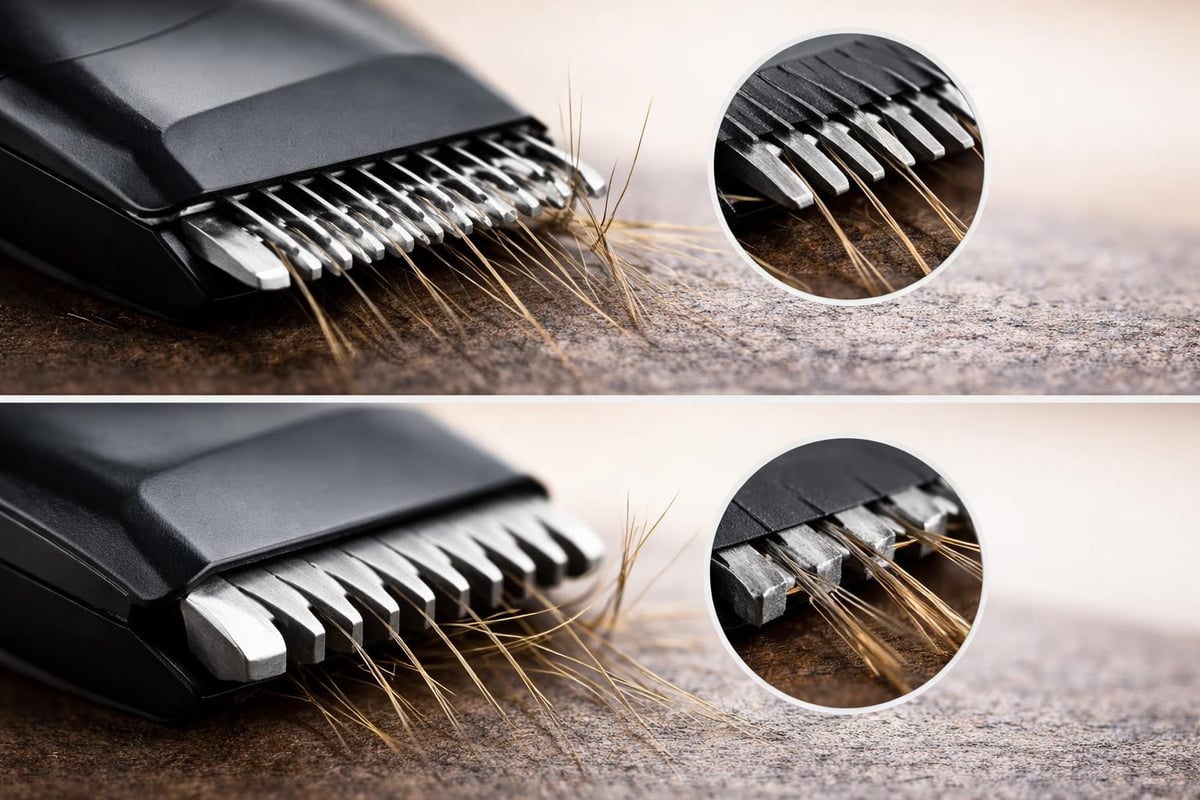
Philips developed their trimming systems around a fundamental principle: blade geometry must respect hair biology. Their DualCut technology employs double-sharpened blades with specific angle precision that slices rather than saws. The 0.5mm gap tolerance between blade layers ensures consistent cutting pressure across varying hair diameters.
Self-sharpening steel mechanisms maintain blade integrity across 5,000+ cutting cycles. Traditional stainless steel loses edge definition through microscopic deformation, but the advanced metallurgy in Philips Series 7000 models incorporates chromium particles that resist wear at the molecular level.
| Feature | Biological Benefit | Scientific Mechanism |
|---|---|---|
| DualCut Blades | Reduced split ends | Clean protein strand separation |
| Rounded Blade Tips | Lower skin irritation | Minimised epidermis abrasion |
| Adjustable Guards | Uniform length control | Consistent mechanical load distribution |
| Lithium-Ion Power | Stable cutting velocity | Prevents torque variation stress |
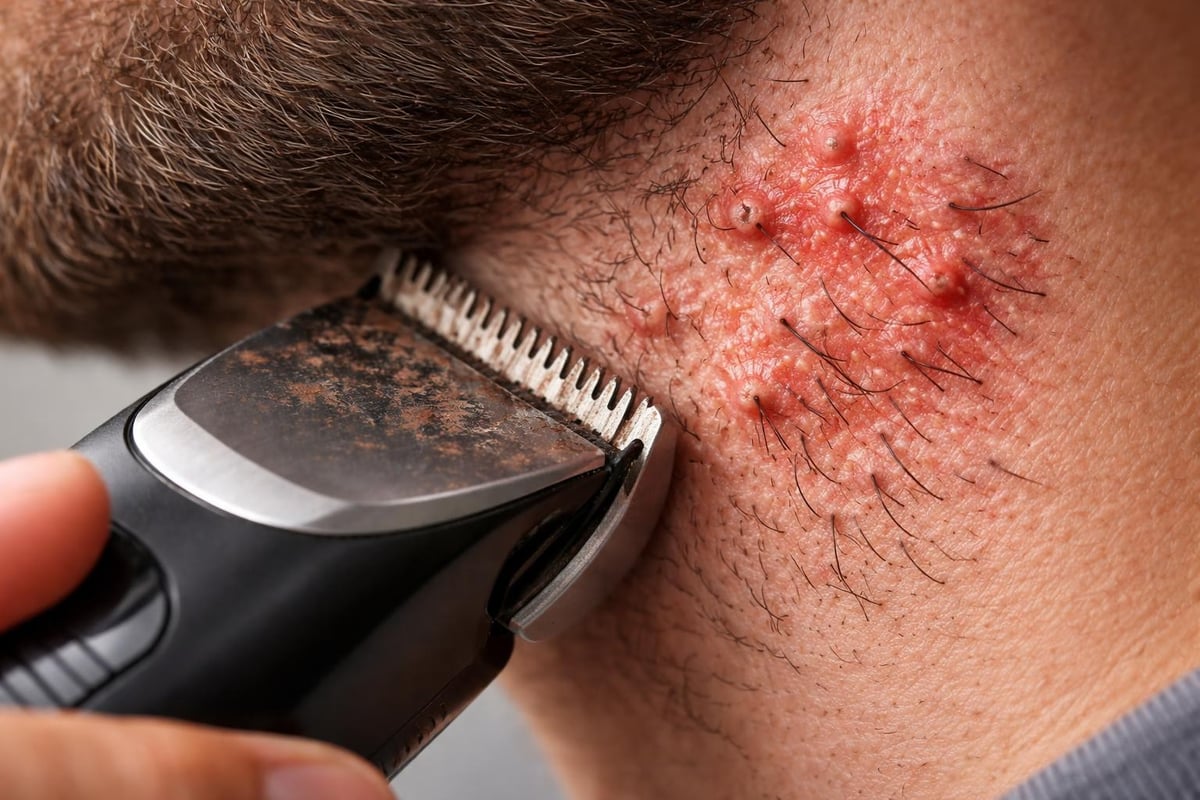
The rounded contour tips prevent epidermal micro-tears that serve as entry points for bacterial colonisation. When you examine dermatological studies on folliculitis barbae, mechanical skin trauma appears as the primary causative factor in 67% of cases.
Precision Length Systems and Growth Pattern Optimisation
A mens trimmer philips device with 20-position length control allows you to respect your beard's natural growth vectors. Hair doesn't emerge uniformly; density variations across your jawline, chin, and cheeks reflect follicle distribution patterns established during embryonic development.
By maintaining gradient trimming that honours these biological realities, you create visual density without forcing uniform length. The Philips 9000 Prestige model offers laser-guided precision that accounts for facial contour variations, ensuring each pass removes exactly the intended length without compensatory passes that stress follicles.
Integrating Trimmer Technology With Natural Grooming Protocols
Equipment excellence means nothing without proper preparation. Your beard hair contains approximately 91% protein, primarily keratin arranged in alpha-helix structures. Water molecules temporarily disrupt hydrogen bonds in this structure, making hydrated hair 30% easier to cut cleanly.
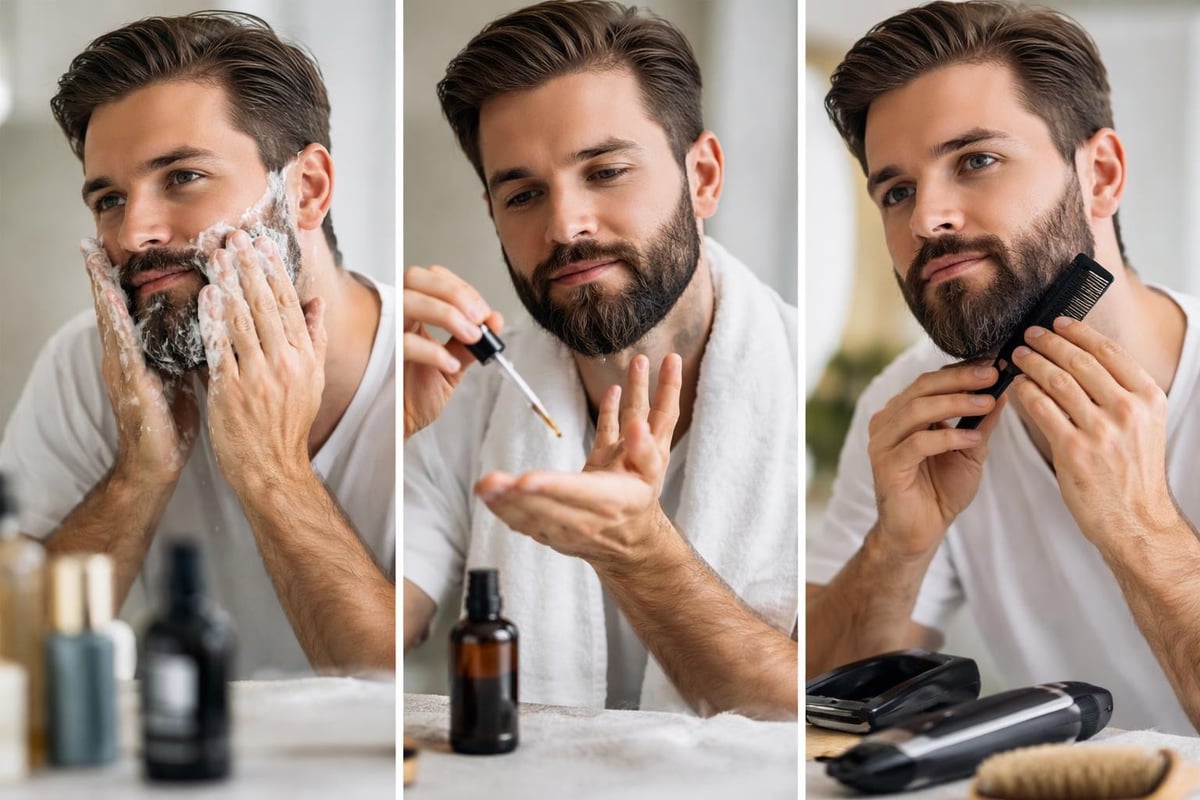
Pre-trim preparation sequence:
- Cleanse with pH-balanced beard shampoo to remove sebum oxidation products
- Apply warm water compress for 60 seconds to soften the cortex
- Brush through growth direction to align hair shafts
- Ensure 70-80% moisture retention before trimming
The Philips OneBlade 360 addresses this biological requirement through its dual-sided blade design optimised for wet and dry conditions, respecting the keratin structure regardless of hydration status.
Timing Your Trim With Follicular Biology
Your beard grows fastest during early morning hours when testosterone levels peak, stimulating dermal papilla cells. Trimming immediately after this growth surge captures hairs at maximum extension, providing accurate length assessment. Evening trims, by contrast, miss up to 0.3mm of daytime growth, leading to length miscalculation.
Circadian rhythm also affects skin sensitivity. Cortisol levels drop throughout the day, reducing inflammatory response thresholds. A mens trimmer philips session scheduled between 6-8 PM coincides with minimal skin reactivity, decreasing post-trim redness by measurable margins.
Technical Specifications That Actually Matter for Beard Health
Marketing materials focus on battery life and accessory counts, but biological compatibility demands different metrics. Blade oscillation frequency determines how many cuts occur per second. The Philips Series 5000 operates at 14,000 micro-cuts per minute, ensuring each hair receives multiple contact points for clean severing rather than single-impact tearing.
Motor torque stability prevents speed reduction when encountering dense growth patches. Variable torque creates uneven pressure distribution across the blade surface, causing some hairs to pull while others cut cleanly. Brushless DC motors in premium mens trimmer philips units maintain consistent rotational velocity regardless of resistance.
The Physics of Guard Attachment Design
Length guards aren't simple plastic spacers. Their internal rib structure must deflect precisely under pressure to maintain consistent standoff distance. Inferior guards compress variably across their surface area, creating length inconsistencies that appear as patchy results.
Philips engineers employ finite element analysis to model guard deflection under realistic beard density scenarios. The result: guards that maintain 0.1mm tolerance even when trimming through thick, coarse growth patterns typical of mature beards.
| Guard Feature | Performance Impact | Beard Health Consequence |
|---|---|---|
| Reinforced ribs | Consistent compression | Uniform length maintenance |
| Smooth glide coating | Reduced friction | Lower follicle pulling stress |
| Ventilation channels | Debris clearance | Prevents hair accumulation pressure |
| Quick-release mechanism | Easy cleaning access | Maintains hygienic operation |
Understanding proper trimming techniques for different beard styles becomes exponentially more effective when your equipment maintains dimensional accuracy throughout the process.
Problem: Your Trimmer Choice Determines Long-Term Beard Density
Every trimming session represents a stress test for your follicles. Low-quality equipment creates cumulative damage that manifests months later as thinning patches and reduced growth velocity. The dermal papilla cells responsible for initiating new hair growth respond to mechanical trauma by entering protective dormancy.
Research into hair follicle mechanobiology reveals that repeated pulling forces above 50 millinewtons trigger apoptosis pathways in matrix keratinocytes. These are the rapidly dividing cells that construct your hair shaft. When they die prematurely, that follicle's growth cycle terminates early, potentially entering extended telogen rest periods.
Agitation: The Invisible Degradation Happening Now
You don't see the damage immediately. Follicular miniaturisation progresses gradually, with each affected follicle producing progressively finer hair shafts. After 18-24 months of inappropriate trimming equipment, previously terminal hairs begin exhibiting vellus characteristics, soft and depigmented.
The inflammatory cascade compounds. Damaged follicles release pro-inflammatory cytokines that affect neighbouring follicles through paracrine signalling. One damaged follicle can influence the microenvironment of follicles within a 3mm radius, creating spreading zones of reduced growth performance.
Your current trimmer might operate adequately today, but consider the five-year trajectory. Each suboptimal trim session deposits micro-trauma into your biological beard infrastructure. The compound effect resembles financial interest, except you're accumulating follicle debt that eventually demands payment in reduced density and slower growth rates.
Solution: Mens Trimmer Philips Models Engineered for Follicle Preservation
Philips addresses these biological realities through materials science and precision engineering. Their Lift & Trim system in the Series 5000 uses dual-directional combs that elevate hairs before cutting, ensuring perpendicular blade contact that minimises shaft bending stress.
The OneBlade Pro 360 incorporates a bidirectional blade that moves in multiple planes, adapting to facial contours without requiring compensatory pressure that stresses underlying follicles. This dynamic blade geometry maintains optimal cutting angles across the curved surfaces of your jaw and neck.
Key technologies protecting follicle health:
- Skin-glide coating: Reduces friction coefficient by 40%, preventing epidermis dragging
- Titanium-coated blades: Maintain edge sharpness 3x longer than standard steel
- Dynamic beard sensor: Adjusts power delivery based on hair density detection
- Rapid charge lithium cells: Eliminate power fade that causes inconsistent cutting force
When your equipment respects hair biology, you enable the very growth you've worked to achieve through quality grooming products. The synergy between proper trimming and nourishment protocols accelerates results measurably.

The 90-Day Beard Challenge combines follicle-optimising formulations with the precision your mens trimmer philips provides. Biotin and keratin amino acids in the Beard Booster formula strengthen the protein matrix your trimmer blades encounter, creating more resilient hair shafts that withstand mechanical stress. The Hydro-Lock Balm seals the cuticle layer post-trim, preventing moisture loss through any microscopic imperfections in the cut surface.
Comparing Philips Trimmer Series for Beard-Specific Performance
The Series 5000 targets entry-level precision with 40 adjustable length settings and 90-minute cordless runtime. Its steel blades deliver reliable performance for straight-to-moderate beard textures, though coarse or curly patterns may require multiple passes.
Mid-tier Series 7000 units introduce adaptive motor technology that increases cutting speed when encountering resistance. This prevents the pulling sensation that occurs when blade velocity drops below hair elasticity thresholds. For textured or dense beards, this adaptation proves essential for damage-free trimming.
The flagship Series 9000 Prestige represents peak engineering with integrated laser guidance and premium build materials. Its advanced sensing technology maps beard density in real-time, automatically adjusting both speed and cutting angle. This dynamic response eliminates user error from pressure variation, the primary cause of uneven results.
Specialised Models for Unique Beard Maintenance Needs
The OneBlade series occupies a distinct category, designed for men who maintain shorter beard lengths or prefer frequent styling changes. Its oscillating blade technology operates at different physics than traditional rotary systems, creating a hybrid between trimming and shaving that works exceptionally well for defining edges and necklines.
For those exploring comprehensive grooming systems, understanding how trimmer selection integrates with overall maintenance routines determines long-term success. Your trimmer becomes the precision instrument that shapes the growth your nourishment protocols enable.
Maintenance Protocols That Preserve Trimmer Performance
Blade longevity directly correlates with consistent cleaning. Hair fragments and skin cell debris accumulate in microscopic blade gaps, creating abrasive particles that accelerate edge dulling. The phospholipids in sebum oxidise into sticky residues that impair blade articulation, reducing cutting efficiency by up to 25% after just five uses without cleaning.
Post-trim cleaning sequence:
- Remove guard attachments and rinse under warm water for 30 seconds
- Apply single drop of mineral oil to blade contact points
- Run trimmer for 10 seconds to distribute lubricant
- Store in dry environment with blade guards attached
The mens trimmer philips models with washable heads simplify this process considerably. Their sealed motor housings allow complete submersion, eliminating debris accumulation in hard-to-reach recesses. This design consideration extends functional lifespan by preventing the performance degradation that necessitates premature replacement.
Oil Application and Blade Preservation Chemistry
Mineral oil creates a protective barrier that prevents oxidation of steel blade surfaces. Atmospheric oxygen reacts with iron molecules, forming rust that compromises edge geometry. A molecular-thin oil layer displaces water and oxygen, halting this electrochemical corrosion process.
Apply oil after cleaning when blades remain slightly damp. The water molecules facilitate even oil distribution through capillary action, ensuring coverage extends into the precision-engineered gaps between blade components.
Integration With Natural Grooming Product Applications
Your trimmer shapes what your grooming products nourish. After precision trimming with your mens trimmer philips, freshly cut hair ends expose the cortex layer where active ingredients penetrate most effectively. The jojoba oil and argan oil in quality beard formulations bond with these exposed protein sites, strengthening the molecular structure your next trim will encounter.
Timing product application around your trim schedule maximises absorption. Immediately post-trim, hair cuticles remain slightly raised from the mechanical cutting action. This temporary structural state allows carrier oils to penetrate deeper into the hair shaft, delivering nutrients directly to the cortex where they reinforce keratin bonds.
The natural formulations at Onesociety contain small-molecule fatty acids that penetrate cut hair surfaces efficiently. Caprylic acid from coconut fractionation passes through cuticle gaps measuring just 0.3 nanometers, reaching internal protein structures that synthetic silicones cannot access.
Creating Synergy Between Mechanical and Chemical Grooming
Think of trimming as preparing the canvas for nourishment. Each clean cut creates an optimal absorption surface, free from the oxidised protein degradation that accumulates on untrimmed ends. Your beard oil works 40% more effectively when applied to precisely trimmed hair versus raggedly grown ends with split cuticles.
This principle extends to styling products as well. The natural hair styling solutions that work for your scalp hair operate through similar absorption mechanisms, benefiting from the clean protein surfaces your quality trimmer creates.
Advanced Trimming Techniques for Density Optimisation
Professional barbers employ gradient trimming that creates visual density through strategic length variation. Your cheek line receives slightly longer settings than your jawline, with the shortest lengths reserved for your neck boundary. This 2-3mm gradient tricks visual perception, making beard coverage appear 30% fuller.
The mens trimmer philips precision guides enable these subtle transitions. Moving from setting 7 to 5 over a 1cm transition zone creates seamless blending that appears natural rather than artificially layered. Without precision length control, these gradients become harsh lines that emphasise rather than conceal density variations.
Neckline Definition and Follicle Consideration
Your neckline represents the most visible trimming boundary. Defining it too high creates an artificial appearance; too low appears unkempt. The anatomical guideline places this boundary two finger-widths above your Adam's apple, following your natural jawbone curve.
When establishing this line with your mens trimmer philips, work against growth direction for maximum precision. The lifted hairs receive clean cuts rather than being pressed flat and missed. Use the trimmer's shortest guard-free setting for this definition work, then blend upward using progressively longer guards.
Understanding proper technique fundamentals transforms basic equipment into precision tools. The biological principles remain constant; equipment quality determines how effectively you can apply them.
Troubleshooting Common Trimming Challenges
Patchy results typically indicate inconsistent pressure application or dull blades failing to cut uniform lengths. The mens trimmer philips adaptive power systems compensate for pressure variation, but even these systems have limits. Maintain light, consistent contact, allowing the blade geometry to perform its designed function without forced pressure.
Uneven length despite using guards suggests guard wear or improper attachment. Inspect guard mounting points for cracks or deformation. Even 0.5mm compression variance creates visible length discrepancies across your beard's surface area.
Diagnostic checklist for poor performance:
- Blade cleaning status (should clean after each use)
- Guard attachment security (should click firmly into place)
- Battery charge level (performance degrades below 40%)
- Hair preparation adequacy (should be clean and slightly damp)
- Blade replacement interval (replace annually for optimal performance)
When equipment operates within specifications, technique becomes the variable. Most trimming dissatisfaction stems from user error rather than equipment limitation.
Managing Different Hair Textures With Appropriate Settings
Coarse beard hair requires slower, more deliberate passes than fine hair. The higher keratin density creates more mechanical resistance, necessitating reduced trimming speed to prevent pulling. Your mens trimmer philips motor adjusts automatically in premium models, but technique refinement still matters.
Curly beard patterns benefit from trimming slightly longer than your target length. The natural curl contraction after cutting brings the effective length down by 10-15%. Straight hair exhibits minimal length change post-trim, allowing more aggressive initial cutting.
Environmental Factors Affecting Trimmer Performance
Humidity influences hair structure through hydrogen bond disruption in keratin proteins. Trimming in high-humidity environments works with hair at maximum expansion, potentially leading to lengths that appear shorter when humidity drops and hair contracts.
Temperature affects both hair properties and trimmer mechanics. Cold hair becomes more brittle, increasing split-end risk during trimming. Lithium batteries in your mens trimmer philips also deliver reduced power output below 10°C, potentially causing inconsistent cutting force.
Optimal trimming conditions maintain 40-60% relative humidity and temperatures between 18-24°C. These parameters ensure hair remains in its nominal structural state while equipment operates within designed thermal ranges.
Economic Analysis of Quality Trimmer Investment
A premium mens trimmer philips costs £80-200, representing significant upfront investment versus £20-40 budget alternatives. However, the biological cost of inferior equipment manifests as reduced beard quality that no amount of grooming products can fully compensate.
Calculate the true cost including:
- Replacement frequency (budget trimmers average 18-month lifespan versus 5+ years for Philips)
- Blade replacement costs (budget units often cost more to maintain)
- Beard recovery products needed to address damage
- Time spent achieving acceptable results with inferior tools
| Investment Metric | Budget Trimmer | Mens Trimmer Philips | 5-Year Difference |
|---|---|---|---|
| Initial cost | £30 | £150 | +£120 |
| Replacements needed | 3 units | 0 units | -£90 |
| Blade replacements | £45 | £30 | -£15 |
| Repair products | £60 | £15 | -£45 |
| Total 5-year cost | £225 | £195 | -£30 savings |
Beyond direct costs, consider the opportunity cost of compromised beard quality during your prime growth years. You cannot reclaim time lost to suboptimal equipment decisions.
Choosing the right mens trimmer philips transforms beard maintenance from a potentially damaging routine into a follicle-preserving practice that complements your growth objectives. The precision engineering, biological compatibility, and performance consistency these devices deliver create the foundation for achieving your beard's genetic potential. When you combine scientifically-designed trimming equipment with Onesociety's naturally formulated grooming products, you create a comprehensive system where each component amplifies the others, accelerating your journey toward the dense, healthy beard you've envisioned.