

Your moustache speaks volumes before you utter a single word. Yet the difference between a distinguished, well-groomed moustache and a scraggly embarrassment often boils down to one essential tool: the right mens moustache trimmer. Whether you're cultivating a classic handlebar, maintaining a subtle pencil style, or shaping a bold chevron, precision grooming separates the polished gentleman from the unkempt amateur. The challenge lies not merely in owning a trimmer, but in selecting and using the correct tool that transforms daily grooming from frustrating guesswork into confident self-expression.
The Anatomy of Facial Hair Growth
Understanding how your moustache grows determines how you trim it. Hair follicles beneath the skin's surface contain papillae that receive blood supply and produce keratin proteins, which form individual hair strands. According to dermatological research on facial hair, facial hair grows at varying rates depending on genetics, testosterone levels, and follicle density.
The biological factors affecting moustache growth include:
- Androgenic hormones: Testosterone converts to dihydrotestosterone (DHT), which stimulates follicle activity and determines hair thickness
- Growth phases: Anagen (active growth), catagen (transition), and telogen (resting) cycles create uneven hair lengths
- Blood circulation: Enhanced blood flow delivers nutrients that support keratin production
- Follicle sensitivity: Individual follicles respond differently to hormonal signals, creating natural texture variations
This uneven growth pattern creates the primary problem every moustache wearer faces: maintaining symmetry and shape without professional intervention. Your facial hair doesn't grow uniformly, which means daily attention determines whether you present a sharp, intentional look or an accidental mess.
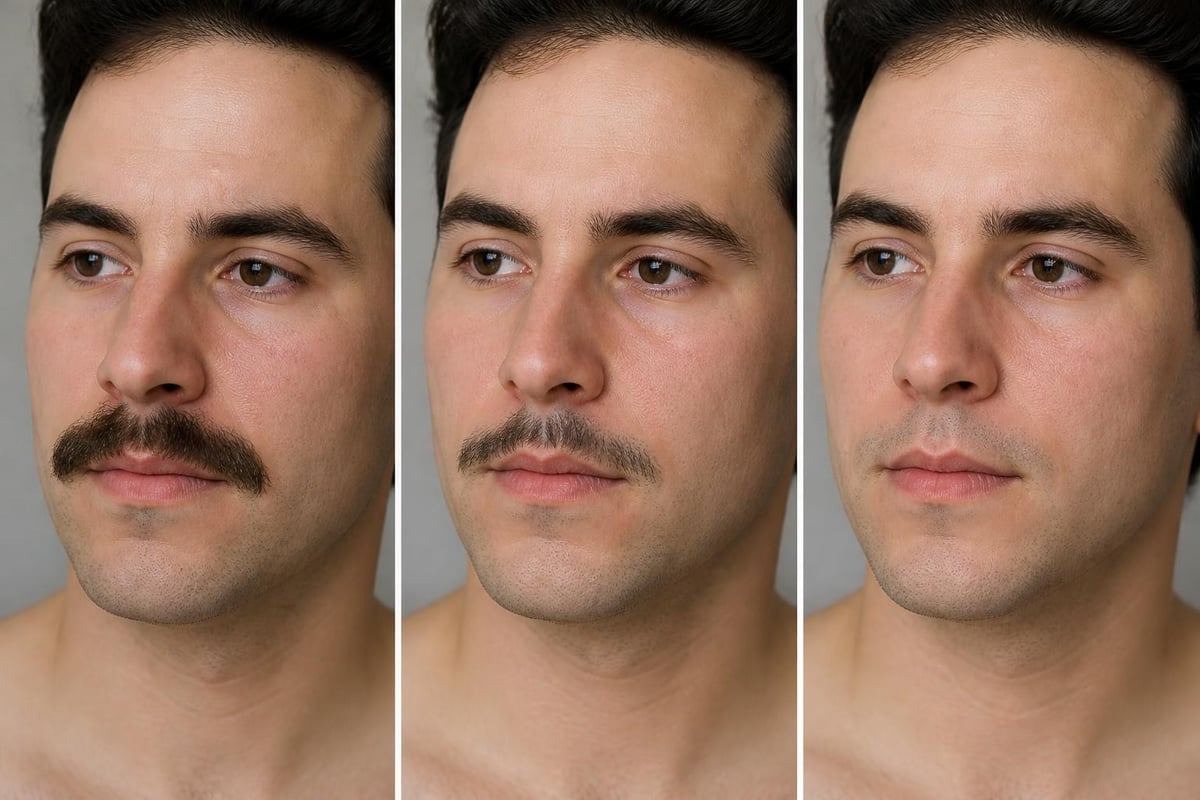
Why Standard Razors Fail Moustache Maintenance
Traditional razors remove hair completely at skin level, which fundamentally misunderstands moustache grooming goals. The American Academy of Dermatology notes that complete hair removal increases risks of ingrown hairs, folliculitis, and skin irritation, particularly in the sensitive upper lip region where hair grows in multiple directions.
Specific problems with razors for moustache grooming:
- No length control: Razors offer binary options (hair present or absent), eliminating the ability to maintain deliberate length
- Directional cutting challenges: Moustache hair grows at angles, making smooth razor passes difficult without multiple skin-stretching manoeuvres
- Increased inflammation: The mechanical action of dragging blades across skin triggers histamine responses in sensitive facial tissue
- Daily commitment requirement: Complete removal demands daily repetition, as stubble appears within 12-24 hours
A proper mens moustache trimmer solves these fundamental issues by preserving length whilst removing excess, maintaining your chosen style without constant re-starting from bare skin.
Blade Technology: Precision Engineering
The cutting mechanism separates functional mens moustache trimmer models from frustrating tools that pull, snag, and create uneven results. Professional-grade trimmers employ either oscillating blades (moving side-to-side rapidly) or rotary blades (spinning within protective guards), each using different physics to achieve clean cuts.
Oscillating blade systems feature two serrated plates: one stationary and one moving horizontally at 3,000-7,000 cycles per minute. As hair enters the gap between plates, the moving blade shears it against the stationary blade like scissors. This mechanism delivers the most precise cuts because the blade angle remains consistent throughout the cutting stroke.
Critical specifications for quality blade systems:
| Feature | Premium Standard | Budget Reality | Impact on Results |
|---|---|---|---|
| Blade material | Surgical stainless steel or titanium-coated | Standard stainless steel | Durability: 5+ years vs. 12-18 months |
| Gap tolerance | 0.05-0.1mm precision | 0.2mm+ variance | Clean cuts vs. hair pulling |
| Motor speed | 6,000+ oscillations/min | 3,000-4,000 oscillations/min | Smooth operation vs. snagging |
| Self-sharpening | Diamond-honed edges | Fixed-angle blades | Maintains precision vs. degrading performance |
The blade gap measurement determines how effectively the trimmer captures and cuts fine facial hair. Gaps exceeding 0.2mm allow thin hairs to slip through uncut, whilst gaps below 0.05mm increase friction and heat generation. Quality mens moustache trimmer models balance these factors through precision manufacturing that maintains tolerances throughout the product's lifespan.
Guard Attachments and Length Precision
Length guards transform a mens moustache trimmer from a simple cutting tool into a precision shaping instrument. These plastic or metal attachments clip onto the blade assembly, creating a fixed distance between the cutting edge and your skin. The guard's design determines how evenly you can maintain your preferred moustache length.
Understanding Guard Measurements
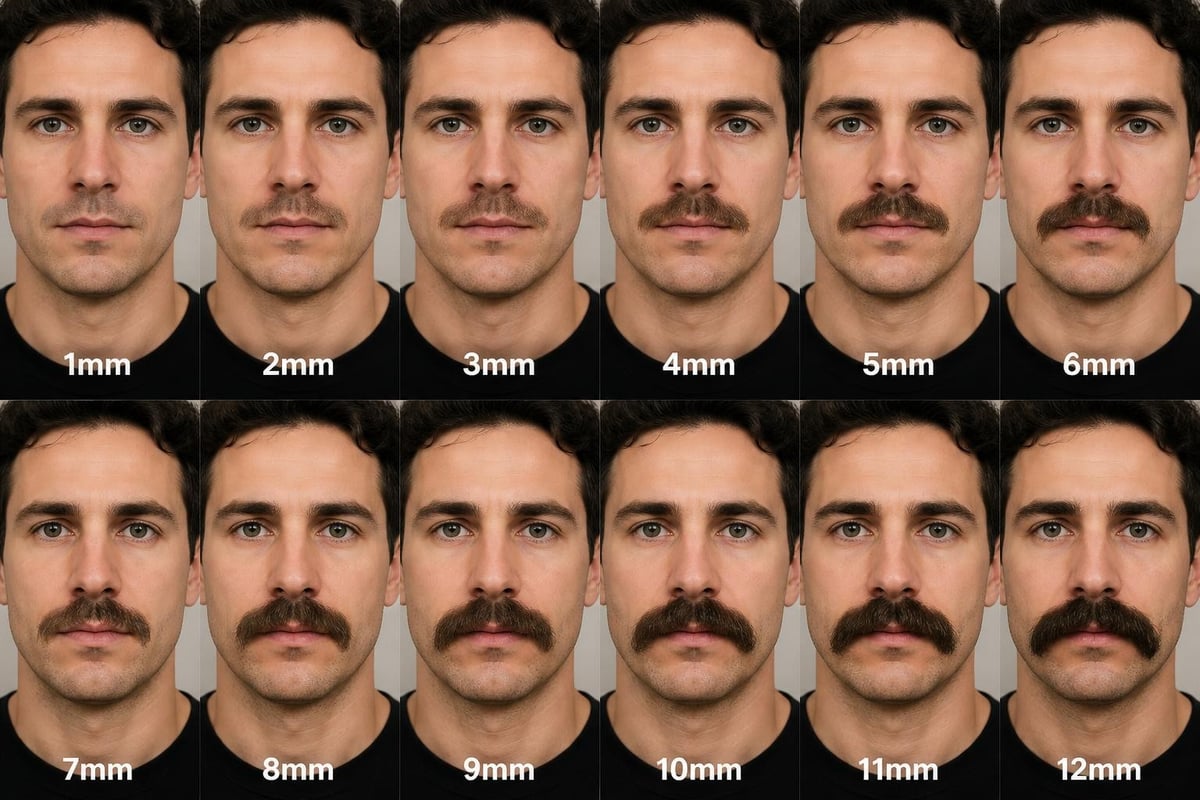
Guards use millimetre measurements that correspond to the hair length remaining after trimming. A 3mm guard leaves exactly 3mm of hair standing from the skin surface (approximately 1/8 inch). This precision allows you to maintain consistent length across your entire moustache, compensating for the natural growth variations that create uneven appearance.
Common guard ranges and their applications:
- 0.5-2mm guards: Subtle shadow effect, maintains definition without obvious length
- 3-6mm guards: Classic short-to-medium styles, provides visible texture whilst keeping neat appearance
- 7-12mm guards: Fuller, more substantial moustaches that require regular shaping to prevent wild appearance
- 13mm+ guards: Lengthy styles (handlebar, walrus) that demand careful attention to prevent overgrowth
The mechanical design of the guard matters as much as the length specification. Poorly designed guards create uneven pressure distribution, causing some sections of your moustache to receive closer cuts than others. Quality guards feature smooth, rounded edges that glide across skin contours without snagging or creating friction burns.
According to professional trimmer testing standards, guard attachment security directly impacts consistency. Loose-fitting guards shift during use, creating length variations of 1-2mm that destroy symmetry in visible moustache styles.
Power Systems: Corded Versus Cordless Performance
The power delivery system in a mens moustache trimmer determines reliability during actual grooming sessions. Corded models provide consistent power output because they draw electricity directly from mains supply, delivering uniform blade speed regardless of usage duration. Cordless models offer convenience through rechargeable batteries but face performance degradation as charge depletes.
Battery chemistry affects trimming consistency:
Lithium-ion batteries maintain voltage levels throughout most of the discharge cycle, then drop rapidly near depletion. This characteristic means your cordless trimmer performs consistently for perhaps 80% of its runtime, then suddenly loses power. Nickel-metal hydride (NiMH) batteries exhibit gradual voltage decline, resulting in progressively slower blade speeds as you use the device.
Professional barbers, as noted by the American Barber Association, prefer corded tools for client work because power consistency prevents mid-service failures. However, cordless convenience suits daily home maintenance where you can monitor charge levels and plan accordingly.
Runtime and Charging Specifications
Modern cordless mens moustache trimmer models advertise impressive runtimes, but real-world performance depends on hair thickness and trimming technique. Manufacturers typically test runtime under minimal load conditions (light beard stubble), whilst actual moustache grooming with coarse hair drains batteries faster.
| Power Type | Continuous Runtime | Charge Time | Performance Consistency |
|---|---|---|---|
| Corded | Unlimited | N/A | 100% throughout session |
| Li-ion cordless | 45-90 minutes | 1-3 hours | 95-100% for 35-70 mins, then rapid decline |
| NiMH cordless | 30-60 minutes | 8-16 hours | Gradual 100-60% decline throughout session |
| Dual (corded/cordless) | Unlimited/60+ mins | 1-2 hours | Best of both options |
The quick-charge feature in premium models addresses battery limitations by delivering 5-10 minutes of runtime from a 5-minute charge. This emergency function prevents missed grooming sessions when you forget to charge overnight.
Maintenance Requirements for Longevity
Your mens moustache trimmer accumulates hair clippings, natural skin oils (sebum), and dead skin cells with each use. This biological debris creates three specific problems: bacterial growth, blade dulling, and motor strain. Sebaceous glands in facial skin produce sebum containing fatty acids and cellular debris that, when combined with hair proteins, form a sticky residue that binds to blade surfaces.
Post-trim cleaning protocol:
- Immediate brushing: Remove loose hair clippings with the included brush whilst residue remains dry and easy to dislodge
- Blade rinsing: Run waterproof models under warm water, allowing flow to carry away sebum and trapped particles
- Alcohol sanitisation: Apply 70% isopropyl alcohol to blade surfaces to denature proteins and eliminate bacteria
- Complete drying: Ensure all moisture evaporates before storage to prevent oxidation and mineral deposits
The dermatological perspective on grooming tool hygiene emphasises that contaminated trimmer blades transfer bacteria between facial regions, potentially causing folliculitis (inflamed hair follicles) and acne mechanica (friction-induced breakouts). Regular sanitisation prevents these skin complications.
Blade Replacement Economics
Self-sharpening blades delay but don't eliminate eventual replacement needs. The diamond-honed edges that maintain sharpness gradually wear at the microscopic level, reducing cutting efficiency after 2-5 years of regular use. You'll notice performance degradation through increased pulling sensations and longer trimming sessions required to achieve desired results.
Replacement blade costs vary dramatically between brands. Some manufacturers price replacement blades at 40-60% of the original trimmer cost, effectively forcing you toward complete unit replacement. Others offer reasonably priced blade cartridges that extend the device's functional lifespan to 7-10 years. Factor this lifetime cost when selecting your mens moustache trimmer model.
Technique: The Professional Approach
Proper trimming technique starts with clean, dry facial hair. Wet hair stretches and appears longer than its true length, leading to over-trimming mistakes that require weeks to correct. The keratin proteins in hair shafts absorb water molecules, increasing diameter by up to 20% and altering the cutting angle against the blade.
Step-by-step precision trimming method:
- Comb through completely: Use a fine-toothed comb to straighten all hairs in their natural growth direction, revealing true length and identifying uneven sections
- Start with longer guards: Begin trimming with a guard 1-2mm longer than your target length to prevent irreversible over-cutting
- Follow growth patterns: Move the trimmer in the direction hair grows, not against it, to prevent pulling and skin irritation
- Use consistent pressure: Light, steady contact allows the guard to maintain proper distance without forcing blades into skin
- Check symmetry frequently: Step back from the mirror every 30 seconds to assess overall balance from normal viewing distance
According to expert technique guidance, the common mistake involves holding the trimmer at inconsistent angles across different facial areas. Your upper lip curves, meaning a flat trimmer approach creates varying effective cutting lengths. Rotate the trimmer slightly to maintain guard contact as you move across contours.
Edge Definition and Detail Work
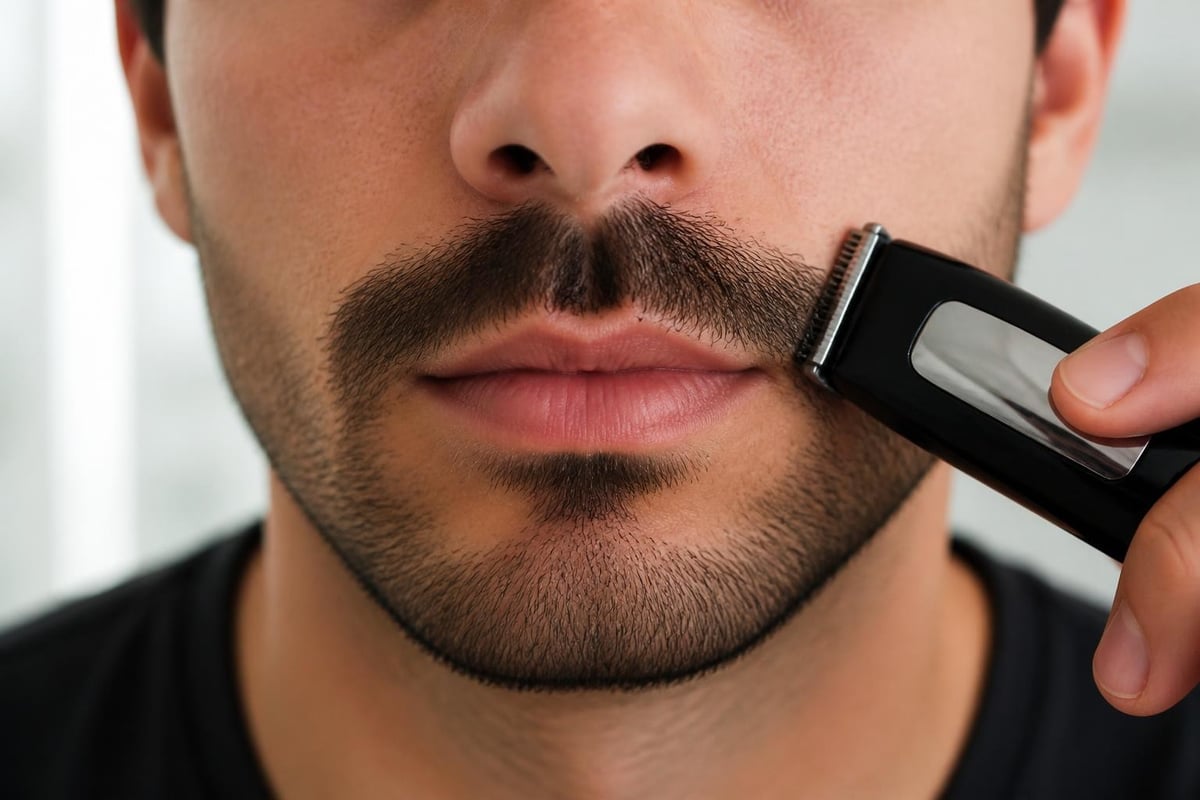
The boundary between your moustache and surrounding skin requires precision that guards cannot provide. Switch to guardless blade operation for these detail areas, using short, controlled strokes rather than continuous sweeping motions. The exposed blade cuts at skin level, so excessive pressure creates razor-burn-like irritation.
Professional detail work focuses on three specific boundaries: the upper lip line (below the nose), the lower boundary (above the upper lip), and the outer corners (where moustache meets cheek hair or bare skin). Each boundary serves a distinct aesthetic purpose in defining your moustache's intentional shape versus accidental overgrowth.
When working with a quality mens moustache trimmer, you can achieve barber-level precision at home by treating these boundaries as separate projects rather than rushing through them. Spend 60-90 seconds on each boundary, working in proper lighting that eliminates shadows and reveals every stray hair.
Skin Preparation and Post-Trim Care
The mechanical action of trimmer blades against skin creates micro-trauma at the cellular level, even when you don't experience obvious irritation. The blade's vibration and contact triggers inflammatory responses in the epidermis, causing histamine release and increased blood flow to affected areas. Proper preparation and aftercare minimize these biological responses.
Pre-trim skin conditioning:
- Warm water exposure: Opens pores and softens keratin in hair shafts, reducing the force required for clean cuts
- Gentle exfoliation: Removes dead skin cells that can clog trimmer blades and create uneven cutting surfaces
- Oil-free cleansing: Eliminates surface oils that cause hair to clump together, preventing even trimmer contact
Research from Yale Medicine's dermatology team identifies that facial hair grooming without proper skin preparation increases risks of pseudofolliculitis barbae (ingrown hairs) and contact dermatitis. The trimmer's mechanical action can force cut hair ends back into follicles when excessive skin oils create adhesion.
Post-Trim Recovery Protocol
After completing your trim, your skin requires specific care to restore barrier function and prevent inflammation. The natural acid mantle (pH 4.5-5.5) on skin's surface protects against bacterial colonisation and moisture loss. Trimming disrupts this protective layer, creating temporary vulnerability.
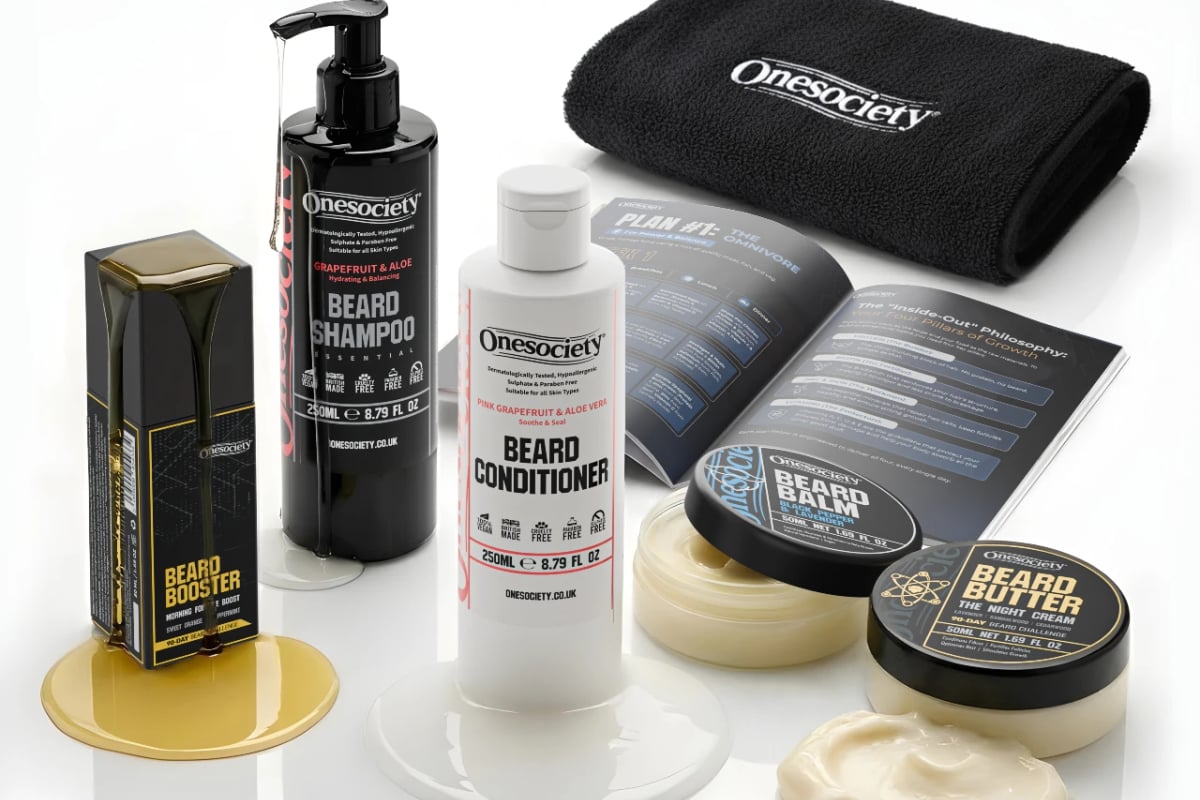
Quality beard care products support recovery through targeted ingredients. When you're committed to comprehensive facial hair maintenance, consider complete grooming systems that address both styling and skin health. The 90-Day Beard Challenge provides a science-backed approach with eight formulations designed to support healthy growth whilst protecting the skin beneath your moustache. This comprehensive kit includes pH-balanced cleansers and protective balms that work synergistically to prevent the irritation and dryness that plague improper grooming routines.
Essential post-trim recovery steps:
- Cool water rinse: Closes pores and removes loose hair fragments clinging to skin surface
- Alcohol-free aftercare: Applies soothing ingredients (allantoin, bisabolol) that reduce inflammation without disrupting pH balance
- Protective barrier: Seals moisture and creates a defensive layer against environmental irritants
Natural ingredients demonstrate specific mechanisms in post-trim care. Shea butter's fatty acid profile (stearic acid, oleic acid) mimics sebum composition, allowing rapid absorption and barrier restoration. Jojoba oil's chemical structure closely resembles human sebum, preventing the compensatory oil overproduction that leads to clogged pores and breakouts in the moustache region.
Feature Comparison: Premium Versus Budget Models
The mens moustache trimmer market spans price points from £15 budget models to £200+ professional systems. This price variation reflects genuine engineering differences, not merely brand positioning. Understanding which features justify higher costs helps you invest appropriately for your specific needs.
Value-determining features in premium models:
| Feature Category | Budget Implementation | Premium Implementation | Real-World Impact |
|---|---|---|---|
| Blade precision | ±0.3mm tolerance | ±0.05mm tolerance | Consistent vs. variable results |
| Motor torque | Stalls on coarse hair | Maintains speed under load | Smooth vs. interrupted sessions |
| Battery capacity | 400-800 mAh | 1200-2000 mAh | 30-45 min vs. 90+ min runtime |
| Waterproofing | Splash-resistant housing | Fully submersible (IPX7) | Limited vs. comprehensive cleaning |
| Guard quality | Thin plastic, loose fit | Reinforced polymer, precision lock | Inconsistent vs. reliable length |
According to independent testing by consumer electronics reviewers, the most significant performance difference appears in motor torque under load. Budget trimmers use low-torque motors that slow down or stall when encountering dense facial hair, forcing you to make multiple passes over the same area. This repeated contact increases skin irritation and extends grooming time.
Premium models employ high-torque motors that maintain consistent blade speed regardless of hair density, completing grooming sessions in single passes that minimize skin contact. The engineering difference involves motor winding density and magnetic field strength, which directly impact manufacturing costs.
Warranty and Long-Term Value
Manufacturing quality reveals itself through warranty terms. Budget models typically offer 12-month warranties that barely exceed typical product failure points. Premium manufacturers back their mens moustache trimmer models with 2-5 year warranties because superior components justify the confidence.
Calculate lifetime cost by dividing purchase price by expected lifespan. A £25 trimmer lasting 18 months costs £16.67 per year. A £120 trimmer lasting 6 years costs £20 per year but delivers superior performance throughout its lifespan. The modest annual cost difference disappears when you factor in frustration, skin irritation, and grooming time savings.
Integration with Complete Grooming Systems
Your mens moustache trimmer represents one component in comprehensive facial hair management. The trimmer maintains length and shape, but supporting products enhance both appearance and skin health beneath your moustache. This integrated approach prevents the common disconnect where men invest in quality tools but neglect the biological systems supporting facial hair growth.
The grooming routine should address three distinct needs: hair conditioning, skin health, and styling hold. Each requirement demands specific ingredients that work through different biological mechanisms.
Complete grooming system components:
- Cleansing: pH-balanced formulations (5.0-6.0) that remove debris without stripping natural oils that protect both hair and skin
- Conditioning: Emollients and humectants that penetrate the hair shaft to improve flexibility and reduce brittleness
- Styling: Natural waxes and butters that provide hold without creating stiff, unnatural appearance
- Skin nourishment: Vitamins and botanical extracts that support follicle health and prevent inflammation
When you maintain your moustache with precision trimming but ignore the underlying skin health, you eventually face problems that no mens moustache trimmer can solve. Dry, flaky skin beneath your moustache creates visible dandruff. Clogged pores lead to acne and folliculitis. Poor follicle health produces brittle, unmanageable hair that resists styling.
Natural ingredients outperform synthetic alternatives in facial hair care because they work with your skin's biology rather than against it. For comprehensive guidance on science-backed grooming approaches, explore the beard care resources at Onesociety, which detail how specific natural compounds support both hair quality and skin health.
Common Problems and Solutions
Even with quality equipment and proper technique, moustache grooming presents recurring challenges. Understanding the biological and mechanical causes behind these problems allows you to implement targeted solutions rather than accepting frustration as inevitable.
Uneven Growth Patterns
Hair follicles don't receive uniform hormonal signals, creating patches of faster and slower growth. This natural variation means your moustache never grows evenly, requiring strategic trimming approaches that create the illusion of symmetry.
Solution methodology: Trim to the length of your slowest-growing areas rather than your fastest-growing sections. This approach prevents the perpetual cycle of over-trimming fast-growth zones to match slow-growth areas, which creates progressively shorter overall length. Instead, allow slow areas to catch up whilst maintaining fast areas at your target length.
Skin Irritation and Razor Burn
The friction and vibration from mens moustache trimmer operation triggers inflammatory responses in sensitive facial skin. Men with naturally reactive skin (characterized by frequent redness, burning sensations, and visible capillaries) experience heightened responses to mechanical grooming.
Solution protocol: Reduce trimming frequency to every 2-3 days rather than daily, allowing full barrier recovery between sessions. Apply barrier-protecting balms immediately after trimming to seal moisture and prevent transepidermal water loss that exacerbates irritation. Select trimmer models with hypoallergenic blade coatings (titanium, ceramic) that minimize allergic metal reactions.
Ingrown Hairs in the Moustache Region
Curved hair follicles in the upper lip area predispose this region to ingrown hairs, where cut hair ends curl back and penetrate the skin rather than growing outward. The trimmer's cutting angle can worsen this tendency by creating sharp hair ends that more easily penetrate skin.
According to dermatological treatment guidelines, prevention focuses on exfoliation and proper cutting angles. Use gentle exfoliating acids (salicylic acid, glycolic acid) 2-3 times weekly to prevent dead skin cell accumulation that blocks proper hair emergence. Trim with the grain rather than against it to create blunt rather than sharp hair ends.
Battery Performance Degradation
Rechargeable batteries lose capacity through repeated charge cycles, eventually providing insufficient runtime for complete grooming sessions. Lithium-ion batteries retain approximately 80% of original capacity after 300-500 full charge cycles, then decline accelerates.
Prevention approach: Avoid completely draining batteries before recharging. Lithium-ion chemistry prefers partial discharge cycles (40-80% capacity range) over full depletion. Store cordless mens moustache trimmer models at 50-70% charge when not in use for extended periods (2+ weeks) to minimize capacity loss from parasitic drain and chemical degradation.
Selecting Your Optimal Model
The ideal mens moustache trimmer matches your specific hair characteristics, grooming goals, and usage patterns. No single model suits every user because facial hair varies dramatically in density, coarseness, growth rate, and styling requirements.
Decision framework by hair type:
- Fine, sparse growth: Lower-powered models with narrow blade heads provide sufficient performance whilst offering greater precision in limited-area work
- Medium density, standard texture: Mid-range models with standard blade widths and moderate motor power handle routine maintenance efficiently
- Coarse, dense growth: High-torque motors and wide blade heads reduce session time and prevent motor stalling under heavy load
- Very long styles (handlebar, walrus): Look for extended guard sets (12mm+) and powerful motors that maintain speed through substantial hair volume
Your styling commitment level determines which features deliver genuine value versus unnecessary complexity. Daily groomers benefit from quick-charge capabilities and cordless convenience. Weekly maintainers need longer battery life and precision guard sets. Monthly shapers require powerful motors and durable construction that withstands infrequent but intensive use.
Budget allocation should prioritize features that directly impact your primary grooming frustrations. If your current trimmer pulls hair, invest in blade precision. If sessions feel endless, prioritize motor power. If you travel frequently, cordless runtime matters most.
Professional Recommendations
Barbers consistently recommend models that balance precision with durability. According to guidance from leading men's grooming publications, professional-grade features in consumer models include:
- Metal housing that dissipates heat effectively during extended sessions
- Removable blade assemblies for thorough cleaning and eventual replacement
- Multiple battery indicators showing remaining charge in increments (not just low-battery warnings)
- Textured grip surfaces that maintain control during wet or oily-handed operation
Test the trimmer's ergonomics before purchase when possible. The device's weight distribution and grip comfort directly impact control during detail work. A perfectly engineered trimmer that feels awkward in your hand produces inferior results compared to a slightly less sophisticated model that you can manipulate precisely.
Mastering moustache grooming transforms your daily routine from frustrating obligation into confident self-expression, but success requires the right mens moustache trimmer paired with proper technique and comprehensive care. When you're ready to elevate your entire facial hair game beyond just trimming, Onesociety delivers science-backed, naturally-formulated grooming products that work synergistically with quality tools to support both the hair you're shaping and the skin beneath it. Explore our complete range and discover how targeted nutrition, pH-balanced cleansing, and protective conditioning create the foundation for truly distinguished facial hair.