

Black beard care comes down to four habits: wash gently, moisturise daily, prevent ingrown hairs and protect the skin underneath. Tightly coiled hair loses moisture faster than straight hair, so a beard that feels dry, itchy or patchy usually needs more hydration and less friction, not more products.
Here is the problem in plain terms. Coily beard hair grows in a spiral, and the natural oil from your skin struggles to travel down every bend of the strand. The result can be dry, brittle hair that snaps before it reaches length. Worse, those curls can turn back into the skin and trigger inflamed bumps. Skip the routine and you will fight dryness, flaking and breakage for months, and many men give up partway through, before the beard starts to fill in. This guide gives you the routine, the science behind each step and a plan to stay consistent.
Why does a black beard need a different routine?
A black beard needs a different routine because coiled hair has a curved follicle, a naturally raised cuticle and a harder time distributing scalp-style oils along the strand.
Three biological facts drive everything else in this guide:
- Curved follicles make the hair spiral as it grows, so the tip can re-enter the skin and cause irritation.
- Raised cuticle scales let moisture escape, which is why coily hair feels dry even when you wash it rarely.
- Natural sebum struggles to reach the length of the strand, because the spiral shape makes its path down the shaft harder.
That combination explains why a routine built for straight hair often leaves a coiled beard rough and sore. Hydration and gentle handling matter more than any styling trick.
Does that mean you need a long list of products? No. You need the right few, used in the right order.
What does a daily black beard care routine look like?
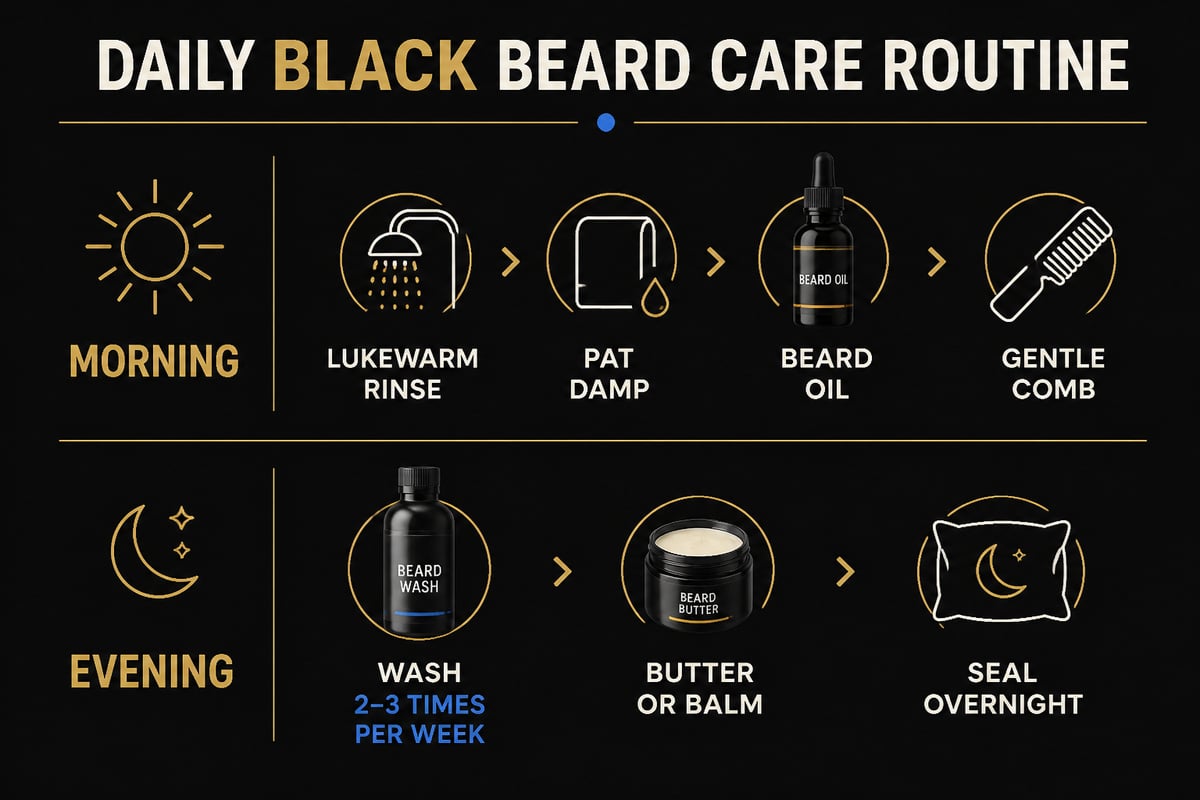
A daily routine has three steps: cleanse or rinse, moisturise while the beard is damp, then seal with a balm or butter.
Keep it short enough that you will actually do it. A routine you skip on busy mornings does nothing, however good the products.
Morning: rinse, oil, shape
- Rinse with lukewarm water. Hot water can strip oils and leave the cuticle more raised.
- Pat dry, leaving the beard slightly damp. Damp hair takes up oil more readily than dry hair.
- Apply a few drops of beard oil and work it from the roots outward. Jojoba oil is a carrier oil that closely resembles the skin's own sebum, which helps it sit on the skin without a greasy film.
- Comb or brush gently, starting at the tips and working toward the root so you do not tear coils.
Evening: moisturise and seal
At night, your beard has hours to absorb nutrients. Work a pea-sized amount of butter or balm through the beard and into the skin beneath. Shea butter contains fatty acids that can help soothe irritated skin and support the skin barrier under a coarse beard. A balm then forms a protective layer that slows moisture loss overnight.
How often should you wash a black beard?
Wash a black beard two to three times a week with a dedicated beard shampoo, and rinse with water only on the other days.
Washing daily with a regular body wash can leave a beard dry and itchy. Harsh detergents can strip the lipid layer that keeps coiled hair supple. A gentler beard shampoo cleans away dirt and product build-up while leaving enough natural oil to keep the hair flexible.
Follow every wash with a conditioner or oil. Conditioning agents can smooth down the raised cuticle, which may reduce snagging and breakage when you comb. If you only change one habit this month, make it this one.
How do you stop ingrown hairs and razor bumps?
You stop ingrown hairs by keeping the skin exfoliated, shaving only when needed with sharp blades and softening hair before every pass.
Ingrown beard hairs happen when a cut hair curls back into the skin and the body reacts to it as a foreign object. The Merck Manuals consumer guide to ingrown beard hairs explains the symptoms and prevention steps, and it is worth reading if you get recurring bumps.
Practical prevention, backed by dermatology guidance:
- Exfoliate gently. The American Academy of Dermatology suggests gentle exfoliation one to two times per week for skin prone to ingrown hairs, followed by moisturiser (American Academy of Dermatology).
- Soften before you shave. The AAD advises leaving pre-shave gel on for about 30 seconds, or shaving cream for two to three minutes, so hairs soften before the blade touches them (American Academy of Dermatology).
- Replace blades often. The same body recommends changing a razor blade every five to seven shaves to cut irritation (AAD).
- Shave with the grain and avoid stretching the skin taut, since this can make hairs more likely to grow sideways.
- Leave a little length. Clinical guidance on pseudofolliculitis barbae notes that hairs can be trimmed to roughly 0.5 cm when shaving resumes (MSD Manual).
Cutting very close can increase the chance of a coil turning into an ingrown hair. A trimmer with a guard often beats a razor for you.
Which products does a black beard actually need?
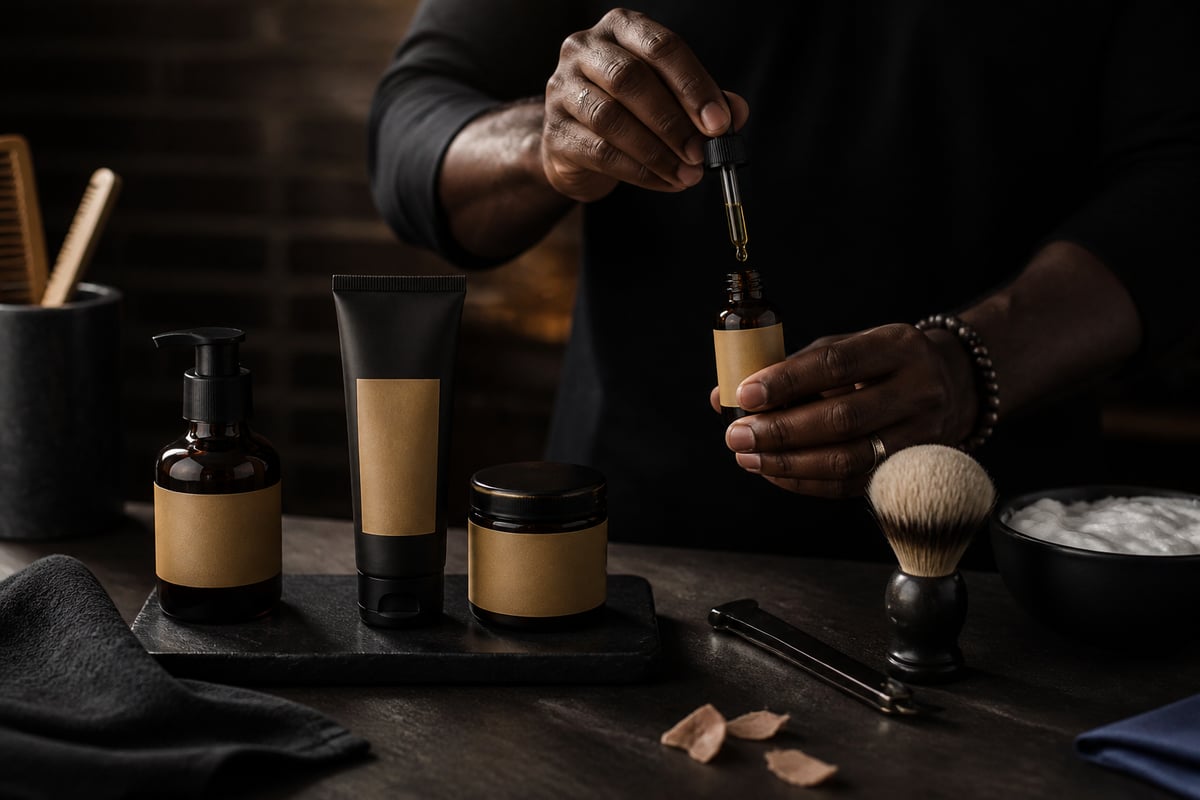
A black beard needs five products at most: a beard shampoo, a conditioning oil, a balm or butter, a wide-tooth comb and a soft brush.
Here is what each one does, and why:
| Product | Biological job | When to use |
|---|---|---|
| Beard shampoo | Removes dirt and build-up with less stripping of the lipid layer | 2 to 3 times a week |
| Beard oil | Carrier oils can help soften the cuticle and reduce moisture loss | Daily, on a damp beard |
| Beard butter | Shea and cocoa butters supply fatty acids that can support the skin barrier | Evening |
| Beard balm | Waxes and butters seal in moisture and hold shape | After oil, for styling |
| Comb and brush | Distribute oil and lift hair away from the skin | Daily |
If you want to see how oil suits your hair type, Onesociety's guide to beard oil for Black men breaks down which ingredients to look for. For a lightweight daily option, a black pepper and lavender beard oil is a good starting point, and a beard butter with lavender, black pepper, rosemary and cinnamon handles the nightly recovery step.
How do you grow a fuller beard when it looks patchy?
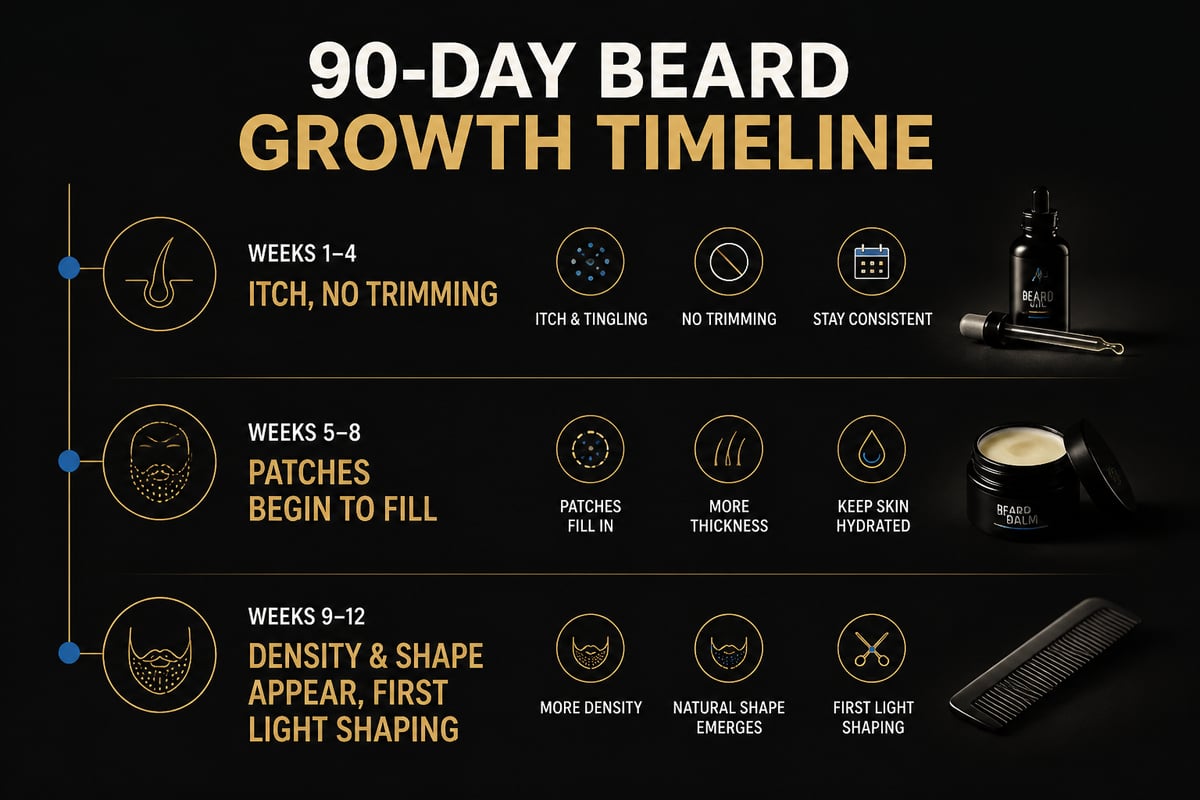
You grow a fuller beard by protecting the hair you already have, feeding the skin it grows from and giving it at least 90 days without trimming too early.
Patchiness is often a matter of patience rather than a growth problem. Beard hair grows in different phases, so neighbouring follicles do not always grow at the same speed. Some men trim too early, before slower areas have a chance to fill in.
Here is what helps:
- Stimulate circulation. A gentle daily massage can increase blood flow to the skin around the follicles.
- Eat for hair. Hair is made of keratin, a protein, so a balanced diet with enough protein supports normal growth.
- Sleep and manage stress. Good sleep and lower stress support overall hair health.
- Hold off on the razor. Resist the urge to shape the neckline and cheek line for the first eight weeks.
Which routine can take you through 90 days?
A structured 90-day routine works because it removes the daily guesswork and keeps you moving through the awkward early weeks.
The 90-Day Beard Challenge bundles eight formulas into one kit, so you follow a single plan from first wash to finished beard. It includes a Beard Booster to support blood flow to the follicles, a Beard Butter for nightly hydration, a Hydro-Lock Beard Balm to seal in moisture, and a pH-balanced Beard Shampoo, among others. Every formula uses natural ingredients, is formulated by CPSR-validated chemists and is made to stay gentle on skin and hair for daily use. The kit is non-greasy and clears pores without itch, which matters when your skin is already reactive. It also carries a 90-day money-back guarantee for growth, so you test it with the risk on Onesociety's side. Onesociety reports over 20,000 happy customers, and Google-verified reviews are available on its site.
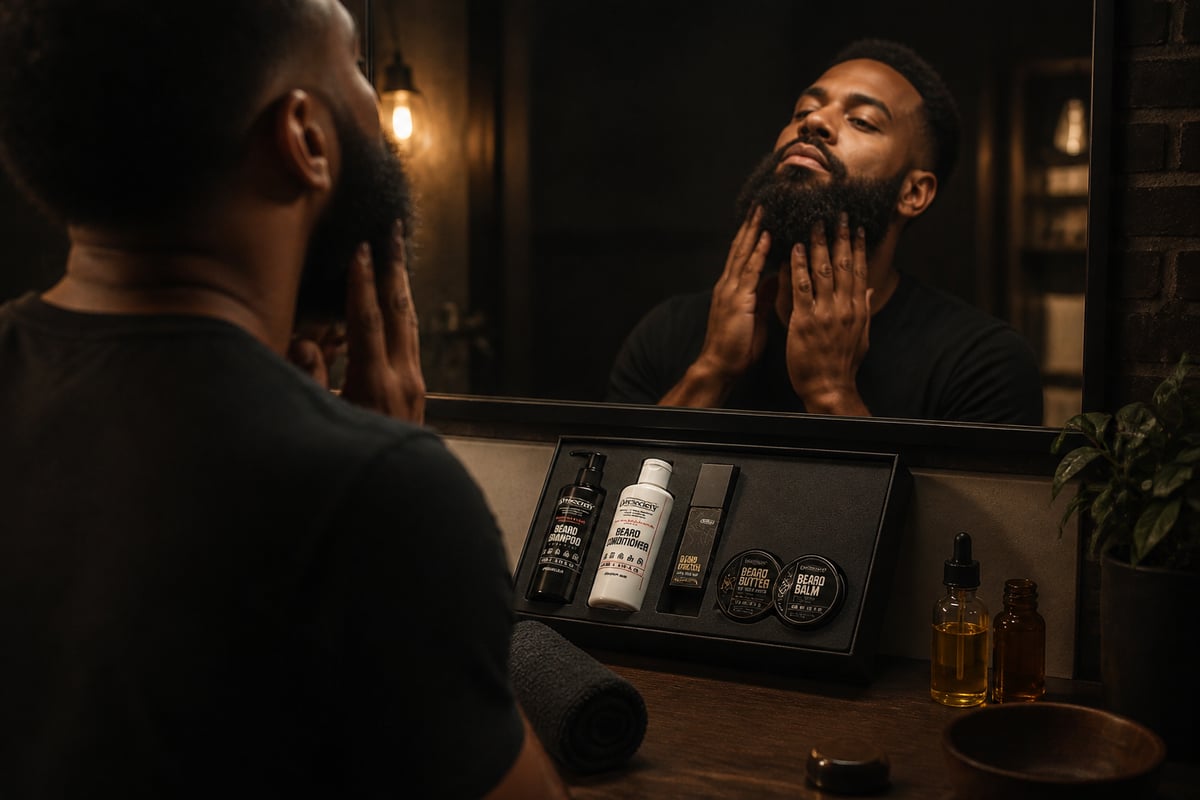
This approach suits men who commit to a daily routine. If you want a quick fix without the habit, no product will do the work for you.
How do you protect the skin under a black beard?
You protect the skin under a black beard by moisturising it, shielding it from sun and cleaning it without scrubbing hard.
Healthy skin is the soil your beard grows from. Dry, flaky skin (beardruff) can appear when the skin barrier loses water, and flakes can collect in the beard. A balm containing shea butter or similar emollients can soften the skin and help reduce flaking.
Sun matters too. In the stubble phase, the AAD recommends a moisturiser with SPF 30 or higher (American Academy of Dermatology), since short hair offers little cover. Winter sun can still reach your face on bright days, and central heating dries the air indoors, so keep moisturising through the colder months.
For more on keeping facial skin healthy under hair, see Onesociety's guide to skincare with a beard.
What mistakes damage a black beard most?
The most damaging mistakes are over-washing, combing a dry beard, using hot water and trimming too early.
Check yourself against this list:
- Washing daily with body wash. This removes protective oils and leaves hair brittle.
- Combing a dry, tangled beard. Coils snap under tension. Always apply oil first.
- Skipping conditioner. Without it, the cuticle stays raised and snags.
- Using a dull razor. More passes and more pressure mean more irritation.
- Quitting early. Itch often peaks as hairs push through the skin, and it usually eases.
- Piling on heavy products. Too much butter on a short beard clogs pores and triggers spots.
Fix one at a time. You do not need a perfect routine on day one, only a routine you repeat.
What does a weekly maintenance schedule look like?
A weekly schedule keeps every task in its slot, so nothing gets forgotten or doubled up.
| Day | Task |
|---|---|
| Daily | Lukewarm rinse, oil on damp beard, gentle comb, evening balm or butter |
| Two or three times a week | Beard shampoo and conditioner |
| Once or twice a week | Gentle exfoliation of the skin beneath, followed by moisturiser |
| Every five to seven shaves | New razor blade |
| Every four to six weeks | Light trim of split ends and line-up |
Print it, or set phone reminders. Consistency beats intensity in beard growth every single time.
Frequently asked questions
Can you use beard oil every day on a black beard?
Yes. Daily oiling suits coiled hair, since the strand dries quickly. Use a few drops on a damp beard and adjust the amount to your beard length.
How long until a black beard fills in?
Many men notice clearer changes after several weeks, though growth speed depends on genetics, age and consistency. Avoid judging the result too early.
Should you use a brush or a comb?
Use a wide-tooth comb for detangling and a soft brush to spread oil and lift the beard away from the skin. Brush after oiling, never on a dry, knotted beard.
Does beard care work for short beards and stubble?
Yes. Stubble benefits from moisturiser, SPF and gentle exfoliation, because the skin is more exposed and ingrown hairs can be more likely.
Start tonight by washing your beard with a pH-balanced shampoo, then sealing it with oil and balm while it is still damp. When you are ready to commit to a full plan, the 90-Day Beard Challenge gives you every formula in one box, and the money-back guarantee applies to your growth. If you are ready to stick to the routine, Onesociety lets you accept the challenge and put your beard to the 90-day test.