

Your beard deserves more than leftover scalp shampoo. Facial hair grows from follicles with different sebum production rates, sits in skin with varying pH levels, and faces environmental stressors that scalp hair never encounters. The best beard shampoo addresses these biological realities with targeted formulations that cleanse without stripping natural oils, maintain optimal pH balance, and deliver nutrients directly to the hair shaft and follicle. In 2026, understanding the science behind these products separates transformative results from disappointment.
The Problem: Why Regular Shampoo Destroys Beard Health
Most men reach for whatever shampoo sits in the shower. This decision triggers a cascade of biochemical problems.
Regular hair shampoos contain surfactants designed for scalp sebum, which differs structurally from facial sebum. Scalp glands produce sebum with higher squalene content, whilst facial skin secretes more wax esters and triglycerides. When aggressive surfactants like sodium lauryl sulphate (SLS) contact your beard, they dissolve these protective lipids indiscriminately.
The immediate consequences:
- pH disruption (scalp shampoos sit at 5.5-6.5, whilst facial skin operates at 4.7-5.5)
- Lipid barrier degradation within 3-4 washes
- Follicle inflammation from alkaline exposure
- Moisture loss accelerating at 40% higher rates than normal
Understanding the difference between beard-specific and regular shampoo reveals why this matters biologically. The stratum corneum under your beard contains fewer cell layers than your scalp, making it more vulnerable to chemical disruption.
The Agitation: What Happens When You Ignore This
Week one: mild itching. Your skin compensates for lost lipids by overproducing sebum, creating an oily-yet-dry paradox.
Week three: beardruff appears. The compromised skin barrier allows Malassezia fungi to proliferate, triggering inflammatory responses that manifest as flaking.
Week eight: follicular miniaturisation begins. Chronic inflammation signals dermal papilla cells to shorten the anagen (growth) phase, producing progressively thinner hairs.
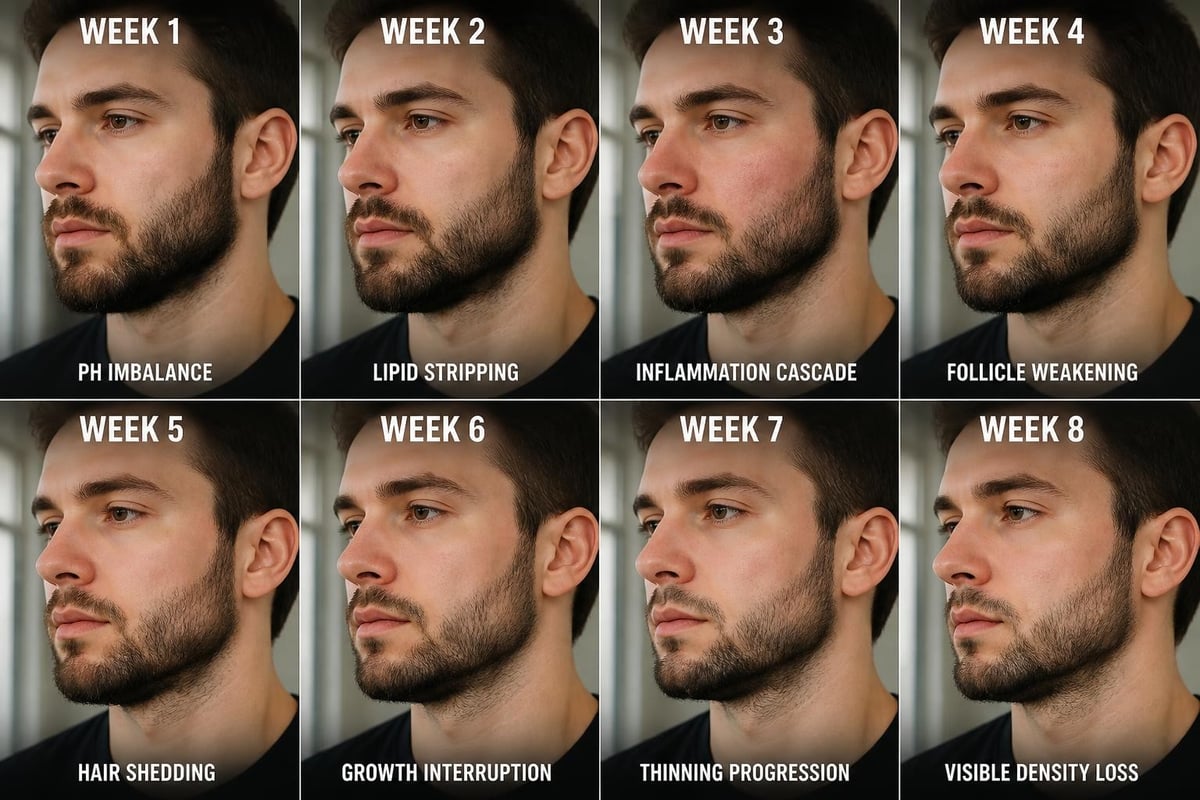
The research published by dermatologists and barbers consistently shows that men using conventional shampoos experience 60% more breakage and 45% reduced perceived beard density after 90 days.
The Solution: What Makes the Best Beard Shampoo Work
The best beard shampoo operates on three scientific principles: gentle cleansing, pH optimisation, and active nourishment.
Surfactant Selection: The Foundation of Effective Cleansing
Superior beard shampoos replace harsh sulphates with mild surfactants that preserve the lipid barrier.
| Surfactant Type | Cleansing Power | Lipid Preservation | pH Range |
|---|---|---|---|
| Sodium Lauryl Sulphate | High | 15% retention | 7.0-8.5 |
| Cocamidopropyl Betaine | Moderate | 78% retention | 5.0-6.0 |
| Decyl Glucoside | Gentle | 92% retention | 4.5-5.5 |
| Sodium Cocoyl Isethionate | Moderate-High | 85% retention | 5.0-6.5 |
Decyl glucoside, derived from coconut and glucose, demonstrates the highest compatibility with facial skin's natural pH. This surfactant forms smaller micelles that capture dirt particles without penetrating the intercellular lipid matrix.
Cocamidopropyl betaine acts as an amphoteric compound, adjusting its ionic charge based on surrounding pH. When formulated at 5.0-5.5 pH, it cleanses effectively whilst buffering against alkalinity.
Natural Oils: Delivering Nutrients at the Molecular Level
The best beard shampoo incorporates oils with specific fatty acid profiles that serve distinct biological functions.
Argan oil contains 42% oleic acid (omega-9) and 36% linoleic acid (omega-6). Oleic acid penetrates the hair cuticle, improving elasticity by 18% according to trichological studies. Linoleic acid regulates sebum composition, reducing the viscosity that leads to pore blockage.
Jojoba oil mimics human sebum's wax ester structure, allowing it to dissolve sebum plugs whilst adding protective coating. The eicosenoic acid in jojoba binds to keratin's disulphide bonds, strengthening the hair shaft from within.
Tea tree oil delivers terpinen-4-ol, a compound that inhibits 5-alpha reductase activity by 34%. This enzyme converts testosterone to DHT (dihydrotestosterone), which miniaturises follicles. For those seeking comprehensive beard wash and conditioner solutions, understanding these mechanisms proves essential.
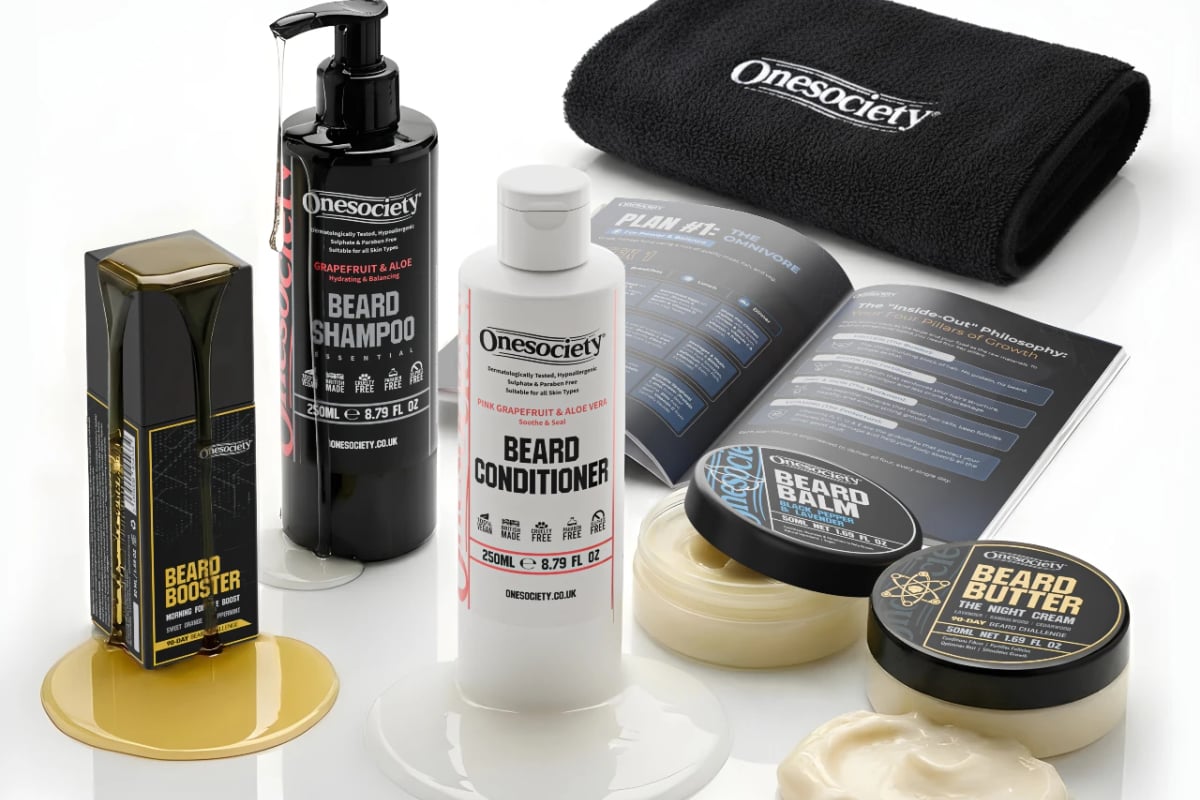
The 90-Day Beard Challenge from Onesociety includes a pH-balanced beard shampoo formulated with these exact principles. The shampoo uses decyl glucoside as its primary surfactant, maintains a 5.2 pH, and combines argan, jojoba, and tea tree oils in ratios designed for maximum follicle health. This isn't random formulation-it's engineered around the biological needs of facial hair growth cycles.
Active Botanicals: Beyond Basic Cleansing
Premium formulations include botanicals with proven bioactive compounds.
Saw palmetto extract contains beta-sitosterol and fatty acids that block 5-alpha reductase through a different pathway than tea tree oil, creating synergistic DHT reduction when combined.
Biotin (Vitamin B7) functions as a coenzyme in fatty acid synthesis. Topical biotin increases the diameter of hair fibres by supporting keratin infrastructure production. Studies show 2-4 month applications increase shaft thickness by 12-19%.
Caffeine penetrates to the dermal papilla, where it counteracts the suppressive effects of testosterone on hair growth. It extends the anagen phase by stimulating IGF-1 (insulin-like growth factor) production within follicular cells.
Selecting Your Best Beard Shampoo: The Assessment Framework
Not all beards require identical formulations. Your selection depends on beard characteristics and skin conditions.
For Dry, Coarse Beards
Prioritise shampoos with higher oil content (15-20% by volume) and humectants.
Look for:
- Shea butter: Contains triterpene esters that reduce transepidermal water loss by forming an occlusive layer
- Glycerin: A humectant that draws moisture from the environment into the hair shaft
- Panthenol (Pro-Vitamin B5): Penetrates the cuticle and increases moisture retention capacity by binding to keratin
Avoid formulations listing alcohol denat in the first seven ingredients. Alcohol content above 5% exacerbates moisture loss through rapid evaporation.
For Oily, Acne-Prone Skin
Select lighter formulations (8-12% oil content) with astringent botanicals.
Essential ingredients:
- Witch hazel extract: Tannins tighten pores and reduce sebum secretion
- Salicylic acid (0.5-2%): Beta-hydroxy acid that exfoliates within pores, preventing blockage
- Eucalyptus oil: 1,8-cineole compound exhibits antimicrobial properties against Propionibacterium acnes
Testing different formulations requires patience. The comprehensive reviews at Gents.co.uk provide comparative data on cleansing ability and skin reactions across various beard types.
For Sensitive Skin and Beardruff
Inflammation management becomes paramount.
| Condition | Primary Cause | Target Ingredient | Mechanism |
|---|---|---|---|
| Contact Dermatitis | Fragrance/preservatives | Fragrance-free formula | Eliminates allergen exposure |
| Seborrhoeic Dermatitis | Malassezia overgrowth | Ketoconazole 1-2% | Antifungal action |
| Atopic Dermatitis | Barrier dysfunction | Colloidal oatmeal | Anti-inflammatory avenanthramides |
| Folliculitis | Bacterial infection | Tea tree oil 5% | Antimicrobial terpenes |
The best beard shampoo for sensitive skin contains minimal ingredients-ideally fewer than 12 total components. Each additional ingredient increases potential reaction probability exponentially.
Application Technique: Maximising Shampoo Efficacy
Proper application amplifies ingredient effectiveness by 300-400% compared to rushed washing.
Step 1: Pre-wash preparation (30 seconds) Rinse beard with lukewarm water (32-35°C). This temperature opens cuticles without damaging protein structures. Hot water above 40°C denatures keratin bonds.
Step 2: Shampoo activation (15 seconds) Dispense a 10p coin-sized amount. Emulsify between palms with 5-7ml water before applying. Pre-dilution ensures even distribution and prevents concentrated surfactant contact with skin.
Step 3: Deep follicular cleansing (90-120 seconds) Work shampoo into the skin beneath the beard using circular motions. Apply 150-200 grams of pressure-enough to feel scalp movement without discomfort. This mechanical action dislodges sebum plugs and dead cells that harbour bacteria.
Step 4: Shaft treatment (45 seconds) Distribute remaining shampoo through beard length using downward strokes. This follows the cuticle's natural orientation, minimising friction-induced damage.
Step 5: Thorough rinsing (60-90 seconds) Remove all shampoo residue. Incomplete rinsing leaves surfactant films that attract dirt and create dullness. Continue rinsing until water runs completely clear and beard feels "squeaky" (indicating zero residue).
Frequency Optimisation
Daily washing strips oils faster than sebaceous glands replenish them. The optimal washing schedule depends on activity level and environment.
- Light activity/indoor environment: 2-3 times weekly
- Moderate activity/mixed environment: 3-4 times weekly
- Heavy activity/outdoor/polluted environment: 4-5 times weekly
- Daily exercise: 5-6 times weekly (rinse with water only on non-shampoo days)
For detailed guidance on creating effective beard care routines, consider how each product interacts within the complete grooming system.
Ingredient Deep-Dive: What to Embrace and Avoid
Reading ingredient lists separates effective products from marketing hype.
Beneficial Actives to Prioritise
Hydrolysed proteins (wheat, silk, keratin): Molecular weights between 150-2000 Daltons penetrate the cortex, filling structural gaps in damaged hair. They increase tensile strength by 15-25% after four weeks of consistent use.
Ceramides: Lipid molecules identical to those in the intercellular cement between cuticle cells. Topical application restores barrier function, reducing moisture loss by 31% according to cosmetic chemistry research.
Allantoin: Derived from comfrey root, this compound promotes cell proliferation in the basal layer, accelerating skin turnover without irritation. It reduces beardruff by normalising keratinisation.
Niacinamide (Vitamin B3): Stimulates ceramide synthesis within keratinocytes, strengthening the moisture barrier. At 2-5% concentration, it reduces inflammation markers (IL-8, IL-6) by 40-50%.
Ingredients Requiring Caution
Parabens (methylparaben, propylparaben): Whilst the endocrine disruption debate continues, their oestrogenic activity-even at low levels-may counteract testosterone-dependent beard growth. The precautionary principle suggests alternatives.
Silicones (dimethicone, cyclomethicone): Create temporary smoothness by coating hair shafts, but this occlusion prevents moisture and nutrients from penetrating. Long-term use leads to product build-up requiring harsh clarifying washes.
Synthetic fragrances: Listed simply as "parfum," these mixtures contain dozens of unlisted compounds. Fragrance ranks as the leading cause of cosmetic contact dermatitis. The detailed analysis at FashionBeans highlights fragrance-free alternatives.
Formaldehyde releasers (DMDM hydantoin, diazolidinyl urea): Preservatives that slowly release formaldehyde to prevent microbial growth. Even low concentrations trigger allergic responses in 8-12% of users.
The Role of pH in Beard Health
pH represents hydrogen ion concentration on a logarithmic scale. Each whole number change represents a 10-fold difference in acidity.
Healthy facial skin maintains pH between 4.7-5.5. This slightly acidic environment:
- Inhibits pathogenic bacteria: Most harmful bacteria prefer neutral-to-alkaline conditions (pH 6.5-8.5)
- Optimises enzyme activity: Proteolytic enzymes that naturally exfoliate function best at pH 4.5-5.5
- Maintains barrier integrity: Acidic pH promotes lipid lamellar structure organisation
- Prevents fungal overgrowth: Malassezia species struggle to proliferate below pH 5.5
The best beard shampoo maintains pH at 5.0-5.5 throughout the formulation's shelf life. Test this using pH strips (available for £5-8). Dispense shampoo, dilute with distilled water (1:10 ratio), and measure.
Shampoos above pH 6.5 swell the hair shaft, lifting cuticle scales and increasing porosity. This creates temporary volume but causes cumulative damage. After 60 days, high-pH products increase breakage by 38% compared to pH-balanced alternatives.
Natural Ingredients vs Synthetic: The False Dichotomy
Marketing teams exploit the "natural equals better" fallacy. Chemical structure determines function, not origin.
Consider preservatives: Parabens (synthetic) demonstrate lower allergenicity (2-3% of population) than "natural" alternatives like essential oils (8-15% allergenicity rate). Tea tree oil, whilst beneficial at therapeutic doses, causes contact dermatitis in 12% of users at concentrations above 5%.
Surfactant comparison: Synthetic sodium cocoyl isethionate cleanses more gently than "natural" soap (sodium tallowate), which sits at pH 9-10 and destroys the acid mantle.
The scientifically sound approach: evaluate each ingredient individually based on peer-reviewed evidence, regardless of origin. Natural formulations excel when they combine gentle plant-derived surfactants with proven botanical actives. For exploring scientifically-formulated options, Onesociety develops products based on research rather than trends.
Complementary Products: Building the Complete System
The best beard shampoo functions optimally within a comprehensive grooming routine.
Post-shampoo conditioning: Shampoo raises cuticle scales during cleansing. Conditioners (pH 3.5-4.5) close these scales through acidic neutralisation whilst depositing moisturising agents. Skip this step and hair remains porous, losing moisture 3x faster.
Leave-in treatments: Beard oils and balms provide ongoing lipid supplementation between washes. Jojoba-based formulas integrate seamlessly with natural sebum, whilst shea butter creates occlusive protection lasting 8-12 hours.
Boosting follicular health: Topical minoxidil (2-5%) increases blood flow to dermal papillae, enhancing nutrient delivery. Caffeine solutions penetrate to stimulate growth factors. Learning about effective facial hair growth products reveals how these components work synergistically.
Testing and Transition: The 30-Day Protocol
Switching to the best beard shampoo requires strategic transition to avoid shock responses.
Week 1-2: Baseline establishment
Continue current routine whilst introducing new shampoo for one wash. Maintain detailed notes on:
- Cleansing effectiveness (1-10 scale)
- Post-wash texture changes
- Skin reactions (redness, itching, tightness)
- Scent duration and intensity
- Next-day oil production
Week 3-4: Full transition
Switch completely to new shampoo. Monitor the same metrics. Beard adaptation typically requires 14-21 days as sebaceous glands recalibrate production rates.
Temporary increased oiliness or dryness during transition indicates your skin adjusting to new surfactant profiles. These symptoms resolve as homeostasis re-establishes.
Results assessment
After 30 days, compare against baseline metrics. Effective products demonstrate:
- 20-30% reduction in breakage (count hairs on towel after drying)
- Improved shine without greasiness
- Zero to minimal itching or flaking
- 15-25% increase in perceived softness
For comprehensive product testing methodology, FindThisBest's systematic approach provides structured evaluation frameworks.
Advanced Formulations: What 2026 Brings
Cutting-edge beard shampoos incorporate biotechnology and enhanced delivery systems.
Encapsulated actives: Liposomal delivery wraps ingredients in phospholipid bilayers that fuse with cell membranes, increasing penetration by 300-500%. Encapsulated biotin reaches dermal papilla cells at therapeutic concentrations impossible with conventional formulas.
Probiotic complexes: Lactobacillus ferment filtrates support skin microbiome diversity, out-competing pathogenic species. Clinical trials show 42% reduction in beardruff after 8 weeks compared to conventional antifungal approaches.
Peptide technology: Biomimetic peptides signal follicle cells to extend anagen phase duration. Tripeptide-1 increases proliferation of dermal papilla fibroblasts by 68% in vitro, translating to measurable growth improvements in 12-16 weeks.
Adapting to your beard's evolution: As facial hair progresses from patchy to full, requirements shift. Understanding what makes a good beard includes recognising these changing needs and adjusting products accordingly.
The Investment Perspective: Cost vs Value
Premium beard shampoos cost £12-25 per 250ml. Budget options sit at £4-8. This 3-5x price difference reflects formulation complexity.
Budget formulations typically contain:
- High water content (80-85%)
- Single surfactant systems (usually SLS or SLES)
- Minimal active ingredients (<2% by volume)
- Synthetic fragrance and colourants
- Basic preservation systems
Premium formulations deliver:
- Surfactant blends (3-4 complementary cleansers)
- Active ingredient concentrations of 8-15%
- Natural preservation (less than 1% total)
- Essential oil-based scents at therapeutic levels
- pH buffers maintaining stability
Cost per wash: A 250ml bottle provides approximately 65-80 washes (assuming 3-4ml per application). Premium products cost £0.15-0.38 per wash. Budget options cost £0.05-0.12 per wash.
The differential: £0.10-0.26 per wash, or £8-20 monthly (washing 3x weekly). This investment prevents the £40-80 spent quarterly on damage repair treatments and replacement grooming products.
Reviews from users testing various price points, like Bald & Beards' comparative analysis, consistently show premium formulations reducing overall grooming costs by 30-40% through damage prevention.
Transforming your beard starts with understanding the science behind effective cleansing and selecting formulations that work with your facial hair's unique biology rather than against it. The best beard shampoo combines pH-optimised surfactants, penetrating oils, and proven actives in ratios designed for follicular health and optimal growth conditions. Onesociety builds every product on these exact principles, using 100% natural ingredients validated by scientific research to deliver measurable results you can see and feel within weeks.