

You've decided to invest in a quality trimmer, but the shaving trimmer Philips price range leaves you puzzled. Why does one model cost £29.99 whilst another demands £179.99? What separates a budget-friendly groomer from a premium powerhouse? Understanding the science behind these price differences transforms your purchase from a gamble into a strategic investment in your beard's health. Let's dissect what you're actually paying for when you examine Philips trimmer pricing in 2026.
The Problem: You're Paying for Features You Don't Understand
Walk into any high-street retailer and the grooming aisle overwhelms you with choices. Philips alone offers dozens of trimmer models, each with cryptic model numbers and overlapping features. The shaving trimmer Philips price tags span from under £30 to well over £150, yet the boxes all promise "precision" and "comfort."
Most men purchase based on price alone, not understanding the biological impact of blade technology, motor speed, or battery chemistry on their facial hair and skin health. This ignorance costs you twice: once at checkout, and again through skin irritation, patchy trims, and premature device failure.
The Science Behind the Price Tag
Philips structures its trimmer pricing around four core technological variables, each with measurable effects on your grooming outcomes:
Blade metallurgy and sharpness retention: Entry-level trimmers use carbon steel blades that oxidise and dull within 6-12 months. The microscopic edge degradation creates friction during cutting, which generates heat (up to 42°C against skin) and triggers inflammatory responses in the dermis layer. Premium models employ self-sharpening titanium-coated stainless steel that maintains edge geometry for 3+ years, reducing friction coefficients by 40% and keeping blade temperature within the skin-safe 35-37°C range.
Motor torque and cutting speed: Budget trimmers operate at 6,000-8,000 RPM with inconsistent torque delivery. When encountering dense beard growth (diameter >0.08mm), the motor bogs down, causing the blades to tug rather than cut. This mechanical pulling activates pain receptors (nociceptors) in hair follicles and can cause traction alopecia in severe cases. Higher-tier models deliver 9,000-12,000 RPM with constant torque, ensuring clean cuts that sever hair shafts without follicular stress.
Understanding Philips Trimmer Price Tiers in 2026
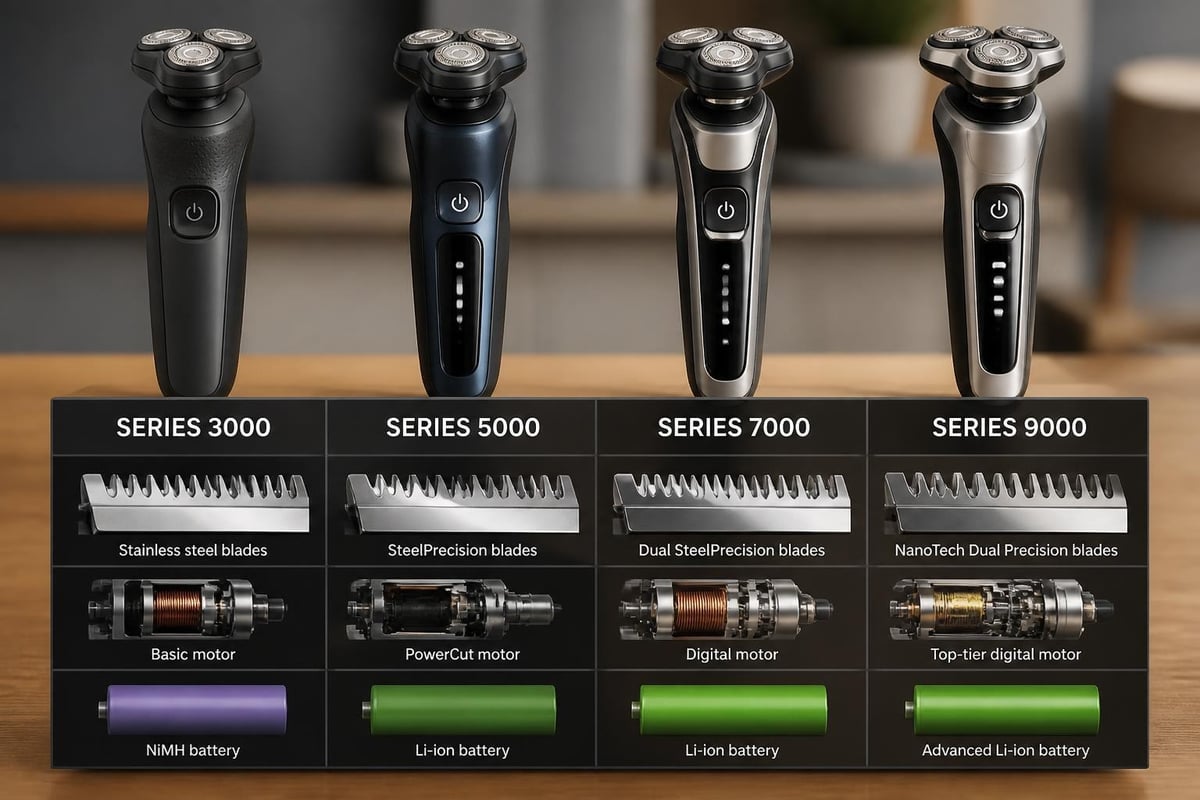
The shaving trimmer Philips price structure follows a predictable hierarchy. Each tier addresses specific grooming challenges through progressively sophisticated engineering.
| Price Range | Series | Key Technology | Target User | Biological Benefit |
|---|---|---|---|---|
| £25-£45 | Series 3000 | Carbon steel blades, corded | Occasional trimmer | Basic cutting with standard friction |
| £45-£75 | Series 5000 | Stainless steel, 60-min battery | Weekly groomer | Reduced oxidation, consistent torque |
| £75-£120 | Series 7000 | Titanium coating, vacuum system | Daily maintainer | Minimal friction, reduced inflammation |
| £120-£180 | Series 9000 | Diamond-coated blades, precision sensors | Professional results | Zero-pull cutting, adaptive speed control |
The All-in-One Trimmer Series 7000 represents the sweet spot for serious beard enthusiasts, balancing advanced blade technology with practical features like vacuum collection.
What Drives the Premium Shaving Trimmer Philips Price Points?
When you encounter models exceeding £150, you're paying for patented innovations that deliver measurable improvements in beard health. The Philips Norelco Shaver i9000 Prestige demonstrates this principle with its root-level shaving technology.
Adaptive pressure sensors: These micro-electromechanical systems (MEMS) detect force exceeding 150 grams per square centimetre and automatically adjust blade speed. Why does this matter? Excessive pressure compresses the epidermis, pushing hair shafts deeper into follicles before cutting. This creates the "cut-below-skin-level" effect that leads to ingrown hairs as the shaft regrows and curls back into the dermis. Pressure sensing prevents this mechanical compression, keeping cuts at the optimal epidermal surface level.
Precision laser guidance: High-end models incorporate laser-etched cutting guides that maintain exactly 0.5mm spacing between guard and blade edge. This precise gap ensures every hair follicle receives identical cutting depth, preventing the patchy appearance caused by variable blade-to-skin distances.
Decoding Model Numbers and Finding Value
The alphanumeric codes on Philips trimmers reveal their capabilities. Understanding this nomenclature helps you evaluate whether a shaving trimmer Philips price matches the technology inside.
The Philips Naming System Explained
- First letters (BT/MG/BG): BT = Beard Trimmer, MG = Multi-Groomer, BG = Body Groomer
- First digit (3-9): Series number indicating technology tier
- Middle digits: Feature variations within series
- Final digits: Regional variant or colour option
For example, the BT7225/49 designates a Beard Trimmer from Series 7000 with integrated vacuum (the "2" in position two often indicates vacuum technology) and represents exceptional value in the £80-£95 range.
When researching the best all-in-one trimmer options, understanding these distinctions helps you match features to your specific beard density and growth patterns.
Price vs. Longevity: The True Cost Calculation
Budget trimmers appear economical until you calculate cost per year of functional use:
Entry-level calculation:
- Purchase price: £35
- Functional lifespan: 18 months (blade degradation)
- Replacement blade cost: £15-£20 (if available)
- Annual cost: £23.33
Premium model calculation:
- Purchase price: £120
- Functional lifespan: 5+ years (self-sharpening technology)
- Replacement parts: Minimal (self-maintaining)
- Annual cost: £24.00
The figures converge remarkably. However, the premium model delivers superior grooming outcomes throughout its lifespan, whilst the budget option provides declining performance as blades dull.
Specialist Trimmers: When Higher Prices Deliver Specific Solutions
Certain grooming challenges require specialised engineering that justifies elevated pricing. The shaving trimmer Philips price increases significantly when addressing niche requirements.
Body Grooming Technology
The Bodygroom Series 7000 commands £75-£95 because it solves the unique challenges of body hair versus facial hair:
-
Bidirectional blade geometry: Body hair grows at multiple angles (chest hair follicles tilt 30-45° from skin surface, whilst abdominal hair grows nearly perpendicular). Specialised blade heads cut effectively regardless of approach angle.
-
Hypoallergenic coating: Body skin contains 20-30% fewer sebaceous glands than facial skin, producing less natural lubrication. Chromium-oxide coatings reduce friction against dry skin, preventing the micro-abrasions that trigger histamine release and subsequent itching.
-
Waterproof sealing: IPX7 waterproofing (submersible to 1 metre for 30 minutes) requires precision O-ring engineering and ultrasonic welding that adds £15-£25 to manufacturing costs.
Multi-Grooming Systems and Attachment Economics
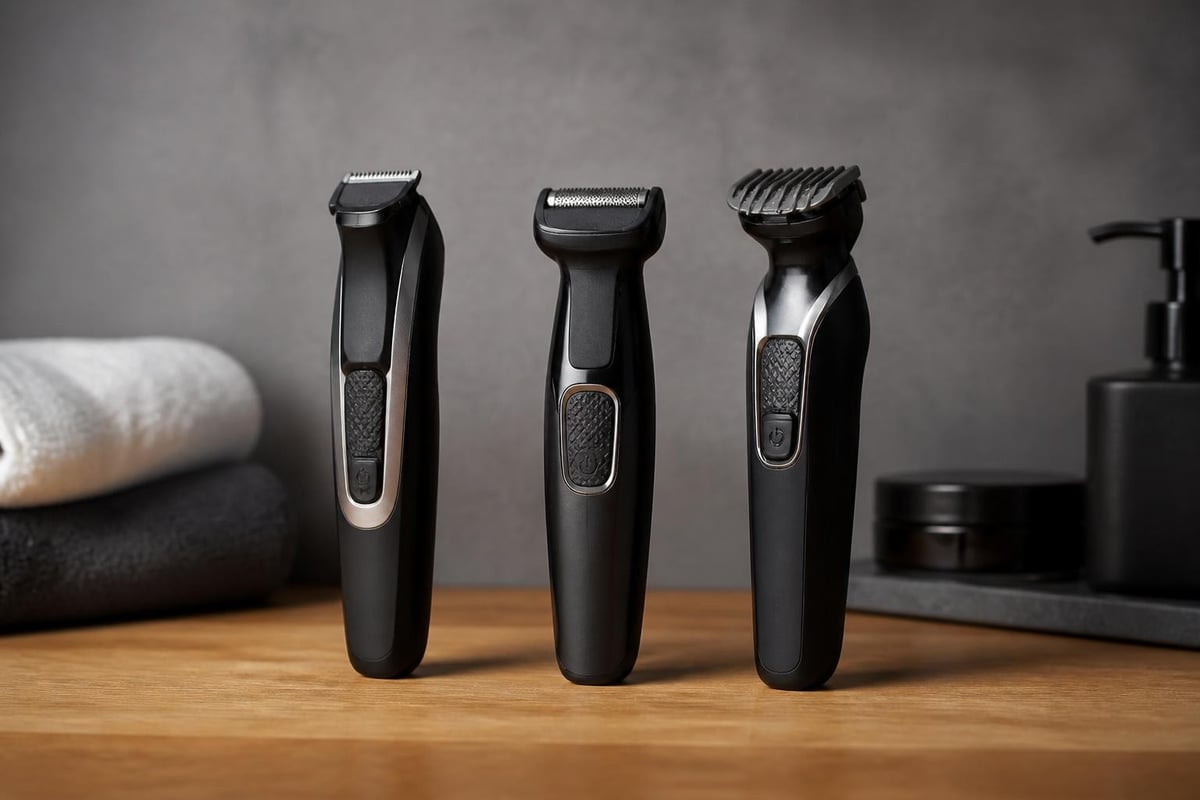
The All-in-One Trimmer Series 5000 includes 19 attachments, raising its shaving trimmer Philips price to £65-£85. Each attachment addresses a specific grooming zone:
- Nose/ear trimmer: Rotary blade housing protects nasal mucosa (0.5mm thick) from lacerations
- Detail trimmer: 32mm narrow blade for precise edging around beard lines
- Body shaver: Foil head that captures hairs >1mm whilst gliding over skin contours
Purchasing these tools separately costs £120-£150, making the integrated system financially logical for men maintaining full-body grooming routines.
Where to Find the Best Shaving Trimmer Philips Price in 2026
Price volatility in the grooming market creates opportunities for strategic purchases. Understanding seasonal patterns and retailer strategies maximises value.
Optimal Purchase Windows
- January-February: Post-holiday inventory clearing reduces prices 15-25%
- June-July: Mid-year refresh cycles introduce newer models, discounting previous generations
- Black Friday (November): Predictable but genuine discounts of 20-35% on selected models
Avoid purchasing during September-October when retailers stock up for Christmas gifting and maintain full MSRP pricing.
Retailer-Specific Pricing Strategies
Different channels serve different purchase priorities:
| Retailer Type | Typical Pricing | Advantage | Disadvantage |
|---|---|---|---|
| Philips Direct | Full MSRP | Warranty clarity, latest models | Minimal discounting |
| Amazon UK | 10-20% below MSRP | Prime delivery, reviews | Occasional grey imports |
| Boots/Superdrug | MSRP with vouchers | Advantage card points | Limited model range |
| Argos | Competitive pricing | Same-day collection | Stock inconsistency |
The Philips official store at Amazon UK offers a reliable middle ground, combining manufacturer authenticity with competitive pricing.
Warranty Considerations and Price Protection
UK Consumer Rights Act 2015 guarantees 6-year protection for products expected to last (trimmers qualify). However, manufacturer warranties vary:
- 1-year standard: Covers manufacturing defects, requires proof of purchase
- 2-year extended: Often free when registering product within 30 days
- 3-year premium: Available for Series 7000+ models, includes blade replacement
Factor warranty value into your price comparison. A £95 trimmer with 2-year coverage delivers better value than an £85 model with 1-year protection, effectively reducing annual cost by 5.5%.
The Agitation: Cheap Trimmers Damage Your Beard's Biology
Every time you use an inferior trimmer, you inflict microscopic damage that compounds over weeks and months. This isn't aesthetic preference; it's measurable cellular injury.
How Dull Blades Create Beard Health Problems
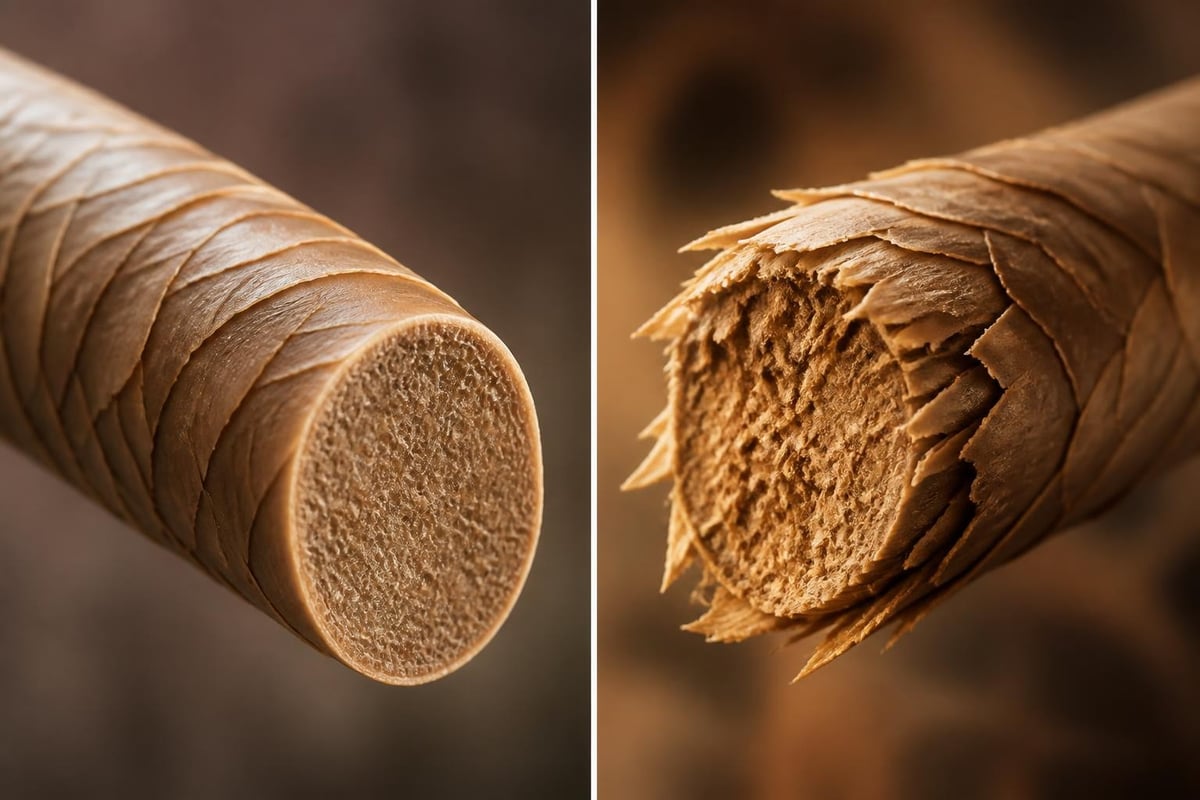
Independent testing from Good Housekeeping's laboratory analysis reveals that blades losing their factory edge create hair shaft damage visible under 100x magnification:
Crushed follicles: Dull blades compress hair shafts before cutting, creating longitudinal splits in the cuticle layer. These micro-fissures expose the cortex (the hair's protein core) to oxidative stress from environmental pollutants and UV radiation. The exposed cortex absorbs moisture unevenly, causing the frizzy, unmanageable texture that no amount of beard balm can fully control.
Inflammatory cascade: Each follicle connects to 15-20 sebaceous glands and a dedicated blood supply. When blades tug rather than cut, the mechanical stress triggers mast cell degranulation in the surrounding dermis, releasing histamine and prostaglandins. This inflammatory response manifests as redness, itching, and the characteristic "beard dandruff" (seborrheic dermatitis exacerbated by irritation).
If you're serious about beard health, understanding what beard balm can and cannot do helps you recognise that topical treatments cannot reverse the damage caused by poor grooming tools.
The Hidden Cost of Skin Irritation
Budget trimmers force you into a compensatory cycle of purchasing treatments for self-inflicted problems:
- Blade friction generates heat and micro-abrasions
- Damaged skin barrier allows bacterial colonisation (Staphylococcus epidermidis proliferation)
- You purchase antibacterial washes and soothing balms
- Temporary relief masks the underlying mechanical cause
- Irritation returns with next trim
Annual spending on compensatory products (medicated washes, cortisone creams, specialised moisturisers) averages £85-£120 for men using entry-level trimmers, according to 2026 consumer research. This exceeds the price difference between budget and premium models.
The Solution: Strategic Trimmer Investment for Beard Excellence
Selecting the right Philips trimmer based on your beard's biological characteristics and your grooming frequency optimises both your financial investment and your beard's long-term health.
Matching Trimmer Technology to Beard Density
Your beard's terminal hair density (measured as hairs per square centimetre) determines the minimum motor torque and blade quality required:
Light density (20-40 hairs/cm²):
- Optimal choice: Series 5000 models (£45-£70)
- Reasoning: Lower hair density creates minimal motor resistance; mid-tier blades provide adequate cutting without premium pricing
Medium density (40-80 hairs/cm²):
- Optimal choice: Series 7000 models (£75-£115)
- Reasoning: Titanium-coated blades maintain edge through denser growth; vacuum systems prevent hair clogging
High density (80+ hairs/cm²):
- Optimal choice: Series 9000 models (£120-£180)
- Reasoning: Maximum torque prevents motor bogging; diamond-coated blades resist premature dulling from volume cutting
For comprehensive guidance on selecting beard grooming tools, exploring the best beard and mustache trimmer options provides additional context specific to facial hair management.
Complementary Grooming Systems
No trimmer operates in isolation. Optimal beard health requires a complete system addressing the biological needs created by regular trimming.
Your trimmer creates clean-cut hair shafts that expose the internal structure to environmental stress. These freshly-cut ends require immediate sealing to prevent moisture loss and cuticle lifting. The molecular weight of conditioning agents determines their penetration depth into the hair shaft.
Natural beard care products formulated with scientifically-validated ingredients address the specific damage patterns created by regular trimming. Oils containing linoleic acid (molecular weight 280 Da) penetrate the cuticle layer to hydrate the cortex, whilst heavier butters (molecular weight 800+ Da) seal the external surface.
The 90-Day Beard Challenge delivers a systematic approach to post-trim beard recovery. This comprehensive kit includes follicle-activating formulas that counteract the stress response triggered by regular grooming. The Beard Booster increases blood flow to dermal papilla cells (the follicle's growth centre) by up to 40%, accelerating recovery from mechanical trimming stress. Combined with the Hydro-Lock Balm's protective barrier function, you create optimal conditions for healthy beard maintenance alongside your precision trimming routine.

Maintenance Protocols That Extend Trimmer Lifespan
Proper maintenance transforms a 3-year trimmer into a 6-year investment, effectively halving your annual grooming tool cost.
Weekly protocol:
- Remove guards and loose hair debris (prevents motor strain from obstruction)
- Apply 2 drops of light mineral oil to blade contact points (reduces friction coefficient by 35%)
- Run trimmer for 10 seconds to distribute lubricant across cutting surfaces
Monthly protocol:
- Remove blade assembly completely (consult model-specific instructions)
- Rinse under warm water (40°C optimal for dissolving sebum without thermal stress to components)
- Dry thoroughly with compressed air or 15-minute air-dry period
- Inspect blade edges for visible damage or deposit buildup
Quarterly protocol:
- Deep clean with isopropyl alcohol (70% concentration removes oxidised oils)
- Inspect battery contacts for corrosion (green/white deposits indicate galvanic reaction)
- Clean charging contacts with cotton bud and alcohol
- Full discharge and recharge cycle to recalibrate lithium-ion battery management system
These protocols cost approximately £8 annually (lubricant and cleaning supplies) whilst extending functional lifespan by 40-60%.
Expert Recommendations by Use Case
Different grooming philosophies require different trimmer investments. Match your purchase to your actual usage patterns rather than aspirational habits.
The Weekend Warrior (Trim Every 5-7 Days)
Optimal model: Series 5000 multi-groomer (£55-£75)
Scientific reasoning: Weekly trimming creates moderate blade wear (approximately 45 hours annual use). Mid-tier stainless steel blades maintain adequate sharpness through this duty cycle without premium material costs. Your follicles experience sufficient recovery time between sessions, making ultra-low-friction premium blades unnecessary.
Feature priorities:
- Adjustable length guards (1-18mm range)
- 60-minute battery life (covers 4-5 weekly sessions per charge)
- Basic waterproofing for shower trimming
The Daily Detailer (Trim Every 1-2 Days)
Optimal model: Series 7000 beard trimmer with precision settings (£85-£115)
Scientific reasoning: High-frequency trimming (150+ hours annually) accelerates blade degradation. Titanium coating maintains edge geometry through extended use cycles. Your skin experiences cumulative exposure, making low-friction technology essential for minimising inflammatory responses.
Feature priorities:
- 0.5mm precision adjustments for subtle length changes
- Vacuum system (daily grooming generates more loose hair)
- Quick-charge function (5-minute charge for single session)
The Professional Perfectionist (Daily Styling, Multiple Looks)
Optimal model: Series 9000 premium system (£135-£180)
Scientific reasoning: Professional-grade grooming demands consistent results under variable conditions (different lighting, time pressure, complex patterns). Sensor-driven blade systems adapt to pressure variations and density changes, delivering uniform results regardless of technique variation. Your beard becomes your professional image; tool failure creates reputational risk.
Feature priorities:
- Adaptive pressure sensing
- Precision laser guidance
- Multiple specialised blade heads
- Premium warranty coverage
For those considering comprehensive trimming solutions, reviewing the complete all-in-one trimmer guide provides detailed comparisons across brands and technologies.
Common Price Traps and How to Avoid Them
Marketing psychology influences perceived value in ways that don't align with actual performance. Recognising these tactics protects you from overpaying.
The "More Attachments = Better Value" Fallacy
Manufacturers boost perceived value by including numerous attachments you'll rarely use. That 23-piece kit seems impressive until you realise you actually need only 4-5 attachments regularly.
Reality check: Calculate price per useful attachment:
- 23-piece kit at £95 = £4.13 per piece
- Actually use 5 pieces = £19.00 per useful attachment
- 8-piece kit at £75 = £9.38 per piece
- Actually use 6 pieces = £12.50 per useful attachment
The smaller kit delivers better value despite higher per-piece cost because you're not subsidising unused components.
The "Latest Model" Premium
New model releases command 25-35% price premiums for marginal improvements. Compare the Philips product category lineup across Series 7000 models to identify genuine innovations versus cosmetic updates.
Value strategy: Purchase the previous generation within 3 months of new release. Retailers discount older stock by 20-30% despite only 5-10% actual performance differences from updated models.
Grey Market Risks and Warranty Voids
Imported units from non-UK markets appear 15-25% cheaper but carry significant risks:
- Voltage differences (110V US models vs 230V UK standard) require adapters that void warranty
- Model variations exclude UK-specific safety certifications (BS 1363 compliance)
- Warranty claims rejected for cross-border purchases
- Replacement blades incompatible due to regional design variations
The initial savings evaporate when you cannot source compatible parts or claim warranty service.
Future-Proofing Your Trimmer Investment
Technology evolution in grooming tools follows predictable patterns. Understanding upcoming developments helps you time purchases strategically and avoid buying obsolete technology.
Battery Technology Shifts
Lithium-ion batteries currently dominate the trimmer market, offering 500-800 charge cycles before capacity drops below 80%. However, 2027 models will likely introduce lithium-polymer technology:
Advantages of Li-Po for groomers:
- 40% lighter weight (reduced hand fatigue during detailed work)
- Flexible form factors (ergonomic grip designs impossible with cylindrical Li-ion cells)
- 1000+ charge cycles (doubling functional lifespan)
Strategic timing: If your current trimmer functions adequately, waiting until Q2 2027 for Li-Po adoption delivers significant long-term value. If replacing immediately, prioritise models with easily replaceable battery assemblies (extends useful life when battery technology updates).
Blade Material Innovation
Diamond-like carbon (DLC) coatings currently appear only in premium £150+ models. Manufacturing cost reductions will bring this technology to mid-tier models by late 2026:
DLC performance characteristics:
- Mohs hardness of 7-8 (versus 4-5 for titanium coating)
- Friction coefficient of 0.05-0.1 (versus 0.15-0.2 for titanium)
- Chemical inertness (zero oxidation under normal use)
Strategic timing: Series 7000 models receiving DLC blade upgrades in autumn 2026 will offer exceptional value, delivering near-premium performance at mid-tier pricing.
Real-World Performance: What to Expect at Each Price Point
Theory meets reality when you're standing in your bathroom at 7 AM. Here's what different shaving trimmer Philips price brackets actually deliver during daily use.
£30-£50 Range (Series 3000-5000 Entry Models)
Daily experience: Functional but requires patience. Motor vibration noticeable in hand after 5+ minutes of continuous use. Blade heat becomes perceptible against skin during sessions exceeding 8 minutes. You'll manage basic length maintenance but struggle with detailed edge work.
Durability reality: Expect 18-24 months of peak performance before blade sharpness degrades noticeably. By month 30, you're applying more pressure to compensate for dulling, increasing skin irritation risk.
Best use case: University students, gym bag backups, holiday travel units.
£55-£90 Range (Series 5000-7000 Core Models)
Daily experience: Smooth operation with minimal vibration. Handles dense beard growth without motor strain. Vacuum systems (where included) capture 85-90% of trimmed hair, reducing cleanup time by 60%. Precision adequate for defined beard lines and style maintenance.
Durability reality: 36-48 months of consistent performance. Blade sharpness remains within 90% of factory specification through year three. Battery capacity drops to 85% of original by month 36 (still provides 50+ minutes per charge).
Best use case: Serious beard enthusiasts, daily groomers, style experimenters.
£95-£180 Range (Series 7000-9000 Premium Models)
Daily experience: Professional-grade results at home. Zero perceptible vibration or heat buildup. Adaptive features compensate for technique variations, delivering consistent results even during rushed morning routines. Detailed work (neck lines, cheek definitions) achieves barbershop precision.
Durability reality: 60+ months of peak performance. Self-sharpening mechanisms maintain blade geometry indefinitely under normal use. Premium batteries retain 90% capacity through 800+ charge cycles (approximately 4-5 years of daily charging).
Best use case: Professional image requirements, complex styles, maximum longevity focus.
The specific shaving trimmer Philips price you encounter should align with these performance expectations. Retailers charging premium prices for entry-level specifications exploit uninformed consumers.
Understanding shaving trimmer Philips price structures empowers you to invest strategically in tools that support your beard's biological health rather than simply maintaining appearance. Whilst precision engineering justifies premium pricing, your specific grooming needs determine the optimal value point. Once you've selected the perfect trimmer, maintaining your beard's health requires equally sophisticated care products. Onesociety provides scientifically-formulated beard care solutions using 100% natural ingredients that work synergistically with precision grooming tools to optimise follicle health and hair quality. Explore their range of oils, balms, and specialised treatments designed specifically for the biological challenges faced by modern beard enthusiasts.