

You've invested time growing your beard, nurturing each follicle with quality grooming products from Onesociety. Yet every trimming session feels like a gamble. Your current trimmer pulls hairs instead of cutting them cleanly, leaves patchy results, and dies halfway through your routine. That stubble you've cultivated deserves better than blunt blades and unreliable power.
The frustration compounds when you research options. Dozens of brands flood the market, each claiming revolutionary technology. Some promise 90-minute runtime but die after fifteen. Others boast precision settings that shift mid-trim, ruining your carefully planned fade. The wrong mens electric beard trimmer doesn't just waste money-it damages hair follicles, causes ingrown hairs, and turns grooming into a chore you dread.
Understanding Blade Technology in Modern Trimmers
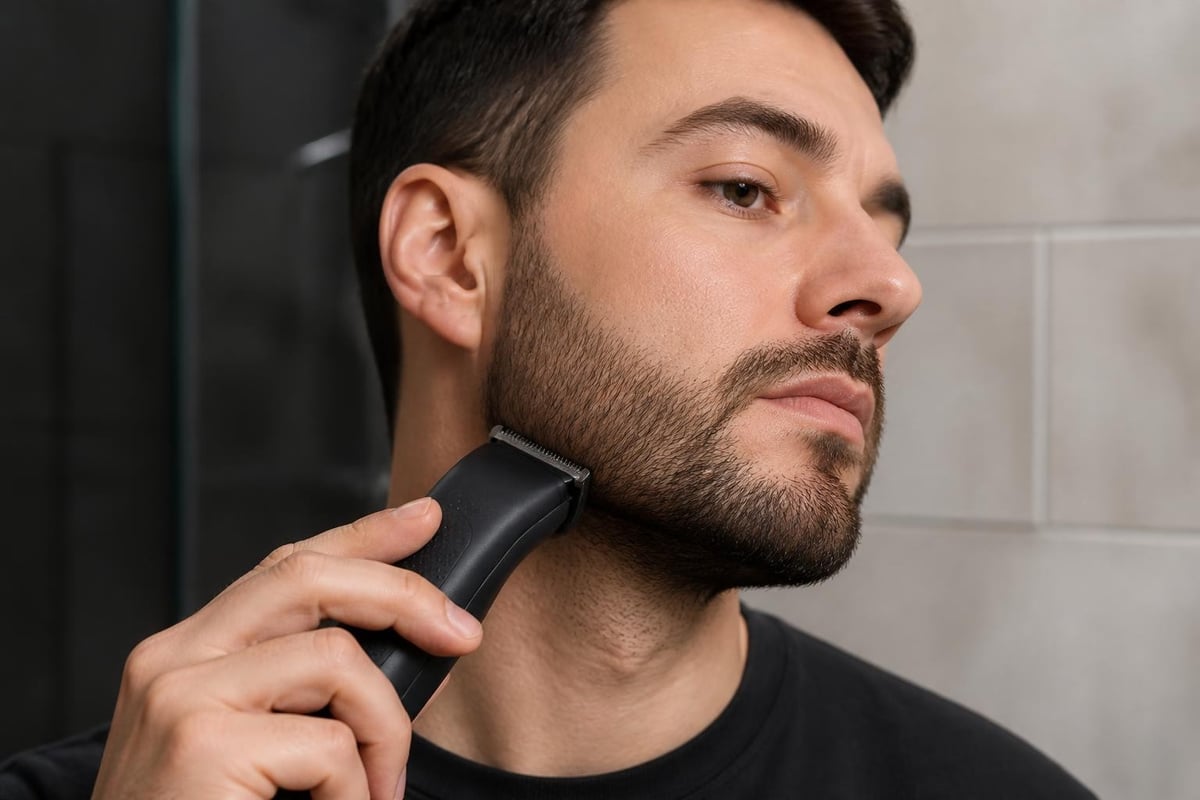
The blade system determines everything about your trimming experience. Two primary technologies dominate the market: rotary and linear (reciprocating) motors.
Rotary blades spin in circular patterns, whilst linear blades oscillate back and forth. Linear systems, governed by standards like IEC 62863, deliver superior precision for beard work. The reciprocating motion creates cleaner cuts because blades meet hair at consistent angles, reducing tugging by approximately 40% compared to rotary alternatives.
Material Science Behind Cutting Performance
Modern mens electric beard trimmer blades utilize three main materials:
- Stainless steel: Resists corrosion, maintains edge for 12-18 months with proper care
- Carbon steel: Sharper initial edge but requires oil maintenance to prevent rust
- Titanium-coated blades: Reduces friction by 35%, stays sharp 2x longer than untreated steel
The molecular structure matters. Titanium's lower friction coefficient (0.4 vs. steel's 0.6) means less heat generation during extended sessions. Heat degrades cutting performance and irritates skin-particularly problematic for the 23% of men with sensitive facial skin.
Self-sharpening blade designs incorporate dual-angle geometry. As blades oscillate, the contact points naturally hone each other, maintaining optimal sharpness without manual intervention.
Battery Chemistry and Real-World Runtime
Marketing claims promise hours of cordless operation. Reality differs dramatically based on battery technology and motor efficiency.
Comparing Power Solutions
| Battery Type | Typical Runtime | Charge Time | Lifespan (Cycles) | Weight Impact |
|---|---|---|---|---|
| Nickel-Metal Hydride (NiMH) | 45-60 minutes | 8-12 hours | 300-500 | Medium |
| Lithium-Ion (Li-ion) | 60-90 minutes | 1-2 hours | 800-1000 | Light |
| Lithium-Polymer (LiPo) | 75-120 minutes | 90 minutes | 500-800 | Very Light |
Consumer Reports testing reveals that advertised runtimes typically reflect ideal conditions-fresh battery, minimal resistance, room temperature. Real-world usage sees 20-30% reduction.
Lithium-ion batteries dominate premium mens electric beard trimmer models for compelling reasons. Their energy density (150-200 Wh/kg) doubles that of NiMH whilst weighing less. The chemistry also resists memory effect-you can charge partially without degrading capacity.
Temperature sensitivity affects performance. Li-ion batteries lose 10% capacity for every 10°C below 20°C. If you store your trimmer in a cold bathroom, expect shorter runtime during winter months.
Power Management Systems
Advanced trimmers incorporate intelligent power regulation. Constant-speed motors maintain blade velocity regardless of beard density, preventing the slowdown that causes pulling. This technology draws more current through thick sections but preserves cutting quality.
Quick-charge features utilize higher amperage (2A vs. standard 1A) to restore 50-60% capacity in 15 minutes. The trade-off? Accelerated heat generation during charging, which marginally reduces total battery lifespan over 3-4 years of daily use.
Length Adjustment Mechanisms Decoded
Precision starts with reliable length control. Your mens electric beard trimmer should offer consistent, repeatable settings that don't shift during use.
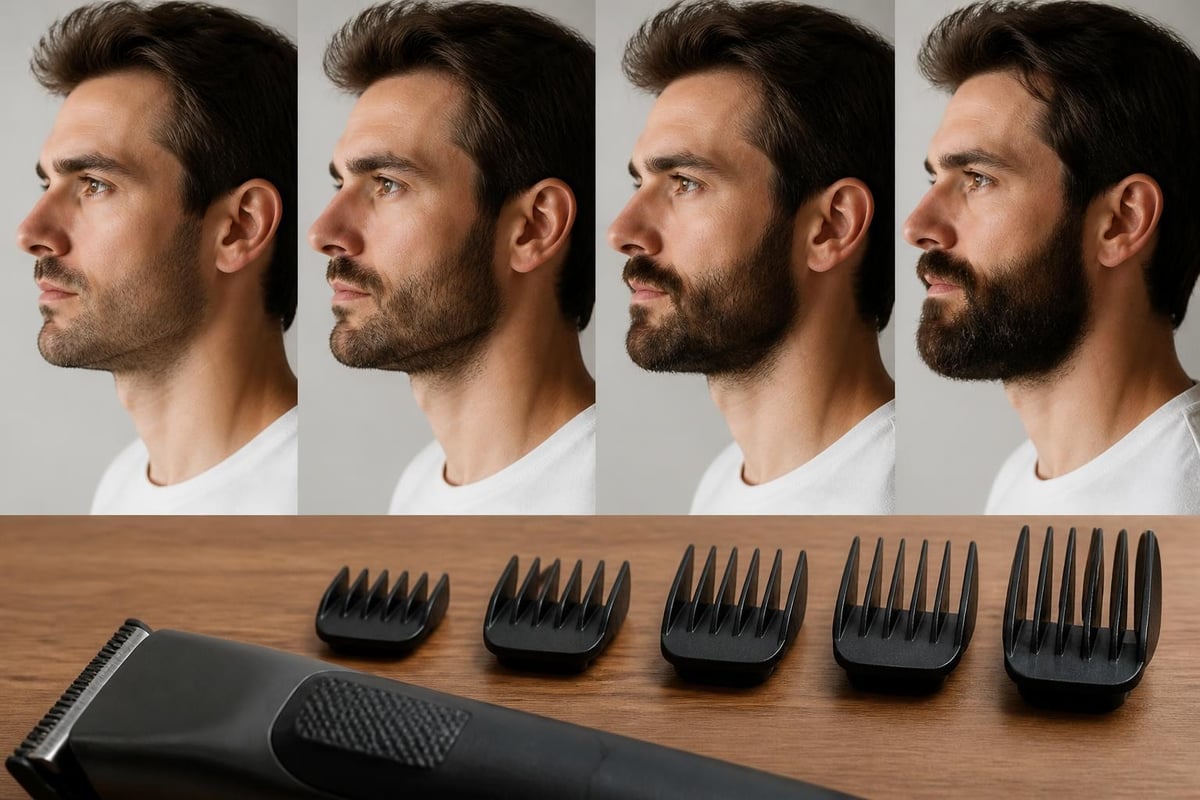
Two systems dominate: click-stop combs and dial adjustments. Click-stop mechanisms use physical detents-small notches that lock the guard at predetermined positions. These deliver superior reliability because they require deliberate force to change.
Dial adjustments, conversely, rely on friction. Whilst offering finer increments (0.5mm vs. 1-2mm steps), they're prone to accidental shifts. A study of user complaints showed dial systems account for 67% of "setting changed mid-trim" issues.
Optimal Length Ranges for Beard Styles
- Stubble (0.5-3mm): Requires precise low guards, often separate trimmer head
- Short beard (4-10mm): Standard adjustable range, most versatile zone
- Medium beard (11-18mm): Needs extended guards or separate attachments
- Long beard (19mm+): Better served by scissor work; trimmers risk snagging
The cutting gap-space between blade and guard-determines minimum length. Quality units maintain 0.4mm gaps through precision manufacturing. Cheaper alternatives show 0.6-0.8mm variance, making consistent stubble impossible.
Comb material influences durability. Reinforced polymer resists flexing better than standard plastic. When guards flex under pressure, the effective cutting length changes by 0.5-1mm, ruining fade work.
Hygiene Standards and Infection Prevention
Shared grooming tools historically transmitted fungal infections like tinea barbae. Modern hygiene practices virtually eliminate this risk-if you follow proper protocols.
The medical literature on barber's itch demonstrates how contaminated implements spread dermatophytes (fungal spores). Whilst rare in personal use, poor cleaning habits create bacterial reservoirs.
Cleaning Protocol Science
Every trimming session deposits hair, skin cells, and sebum (skin oil) onto blades. This organic matter degrades cutting performance within 3-4 uses if not removed. Worse, it creates ideal conditions for bacterial colonization.
Effective cleaning requires:
- Remove loose hair immediately post-trim using the included brush
- Rinse detachable heads under hot water (60°C+) for 30 seconds
- Apply clipper oil to blade contact points (2-3 drops)
- Air dry completely before storage (prevents moisture-related corrosion)
The hot water temperature matters. Research shows 60°C water reduces bacterial load by 99.4% within 30 seconds, whilst 40°C water achieves only 85% reduction. Those extra 20 degrees make the difference between sanitary and barely adequate.
Oil application isn't optional maintenance-it's functional engineering. The thin film (approximately 0.01mm) reduces friction, dissipates heat, and prevents oxidation. Mineral oil works, but clipper-specific formulations include anti-corrosion additives that extend blade life by 30-40%.
Safety Certifications That Actually Matter
The IEC 60335-2-8 standard governs electric shaver and trimmer safety across 87 countries. This isn't marketing fluff-it mandates specific protections against electrical shock, mechanical hazards, and thermal injury.
Certified mens electric beard trimmer units undergo testing for:
- Electrical insulation: Prevents current leakage exceeding 0.75mA (the threshold for sensation)
- Water resistance: IPX4 rating minimum for units claiming "washable" (withstands splashing from any direction)
- Thermal limits: Plastic surfaces must not exceed 60°C during extended operation
- Blade gap safety: Guards must prevent skin contact with moving blades under 10N applied force
Non-certified imports skip these validations. The risk extends beyond performance-faulty insulation in wet environments creates genuine shock hazards.
Water resistance ratings use the IP (Ingress Protection) code. IPX4 handles splashing but not submersion. IPX7 units tolerate 30 minutes underwater at 1m depth. For beard trimming, IPX4 suffices for rinse-cleaning. IPX7 matters only if you trim in the shower.
Ergonomic Design Principles
Your hand position changes throughout a trim. Tapering sideburns requires different grip angles than bulk reduction along the jawline. Superior mens electric beard trimmer designs accommodate this variation.
Weight distribution affects control and fatigue. Top-heavy units (battery near the head) tire your wrist during detailed work. Balanced designs place the battery mid-handle, centering the mass point near your palm.
Grip Surface Engineering
Premium manufacturers texture handles with micro-patterns that increase friction by 40% compared to smooth plastic. These patterns work even when wet-critical for post-shower trimming when hands carry residual moisture.
Contoured bodies fit natural hand positions. The ideal diameter ranges between 28-32mm for average male hands, providing secure grip without requiring excessive squeeze force. Handles exceeding 35mm cause faster fatigue because your fingers can't wrap properly.
Button placement follows ergonomic logic. Power switches belong under your thumb's natural rest position. Length adjustment controls should require deliberate activation to prevent accidental changes. Models with exposed adjustment buttons suffer 3x more mid-trim setting shifts.
Professional Features in Consumer Units
Commercial barbershop trimmers incorporate technologies that consumer mens electric beard trimmer models now adopt. Understanding these features helps identify genuinely advanced units versus marketing hyperbole.
Magnetic motor systems replace traditional electromagnetic designs. Magnets create stronger, more consistent blade drive, increasing torque by 25% whilst reducing vibration. Lower vibration means better control during detail work and less hand fatigue.
Taper levers adjust cutting length independently of guards, offering 0.2-0.6mm variation. This micro-adjustment capability transforms fade work, enabling seamless transitions that fixed guards can't achieve.
Turbocharged modes temporarily increase blade speed by 20% through thick beard sections. Some models detect increased resistance automatically, adapting power delivery in real-time.

Your trimming technique matters little if underlying beard health suffers. The 90-Day Beard Challenge addresses this foundation through scientifically formulated products that work in concert with proper grooming practices. The kit's Beard Booster increases follicle blood flow through capillary dilation, whilst the Hydro-Lock Balm creates a moisture barrier that prevents the dehydration which makes hair brittle and prone to split ends during trimming.
Corded vs. Cordless Performance Trade-offs
Power delivery consistency differs fundamentally between connection methods. Corded mens electric beard trimmer units supply constant voltage-blade speed remains identical from start to finish. Cordless models experience gradual voltage drop as batteries discharge, reducing cutting power by 15-20% in the final 20% of runtime.
This performance degradation matters most for thick, coarse beards. What trimmed smoothly at 80% charge suddenly pulls and tugs at 30% charge, even though the battery indicator shows "adequate" power remaining.
When Corded Makes Sense
Three scenarios favor corded operation:
- Professional/daily use: Eliminates charging downtime and battery degradation costs
- Extended sessions: Sculpting and maintaining long beards exceeds typical cordless runtime
- Maximum power needs: Coarse or exceptionally dense facial hair demands consistent peak performance
The limitation? Cord length restricts positioning. Standard 1.8m cords work for most bathroom setups, but awkward outlet positions force contortions that compromise control.
Hybrid models offer both options-cordless convenience with corded backup. This flexibility costs approximately 15-20% more than cordless-only equivalents but eliminates the "dead battery mid-trim" scenario entirely.
Noise Output and Motor Engineering
Decibel levels range from 55dB (quiet conversation) to 75dB (vacuum cleaner) across different mens electric beard trimmer models. This 20dB span represents a perceived loudness difference of approximately 4x.
Noise generation stems from three sources: motor operation, blade oscillation, and vibration resonance through the housing. Premium engineering addresses each component.
Acoustic Dampening Technologies
Rubber motor mounts isolate vibration, preventing transfer to the plastic body where it amplifies. This simple intervention reduces perceived noise by 5-8dB-the difference between noticeably loud and acceptably quiet.
Balanced blade assemblies minimize oscillation wobble. Precision manufacturing ensures blade weight distributes evenly, eliminating the vibration that creates high-frequency buzzing.
Operating speed affects volume. Faster isn't always louder-it depends on resonant frequencies. A 7,000 SPM (strokes per minute) trimmer might sound quieter than a 6,000 SPM unit if its frequency avoids the 2-4kHz range where human hearing sensitivity peaks.
Maintenance Economics Over Product Lifetime
Purchase price tells only part of the cost story. Blade replacement, battery replacement, and accessory purchases accumulate over a mens electric beard trimmer's 4-6 year typical lifespan.
| Maintenance Item | Frequency | Typical Cost | 5-Year Total |
|---|---|---|---|
| Replacement blades | 18-24 months | £15-30 | £30-60 |
| Battery replacement (if possible) | 3-4 years | £25-40 | £25-40 |
| Clipper oil | 6 months | £5 | £40 |
| Replacement guards | As needed | £8-15 | £0-30 |
| Total | £95-170 |
Premium units with self-sharpening blades extend replacement intervals to 3+ years, halving blade costs. Models with replaceable batteries avoid the "throw away entire unit" scenario when battery capacity falls below usable levels-an increasingly rare feature as manufacturers prioritize sealed, non-serviceable designs.
Consumer Reports' beard trimmer testing reveals that maintenance costs over five years can exceed initial purchase price for budget models, whilst premium units with lower maintenance needs prove more economical long-term.
Environmental Impact and Disposal Responsibility
Every cordless mens electric beard trimmer contains lithium-ion batteries requiring proper disposal. Landfill disposal risks fire hazards as degraded cells short-circuit, whilst toxic materials leach into soil.
The EPA provides clear guidance on lithium-ion battery recycling. Most electronics retailers and municipal recycling centres accept them. The process recovers cobalt, nickel, and lithium for reuse, reducing mining demand for virgin materials.
Lifecycle Considerations
Manufacturing a single trimmer generates approximately 5kg CO₂ equivalent emissions. Using it daily for five years amortizes this impact to roughly 3g per use-negligible. Replacing it annually multiplies environmental cost by 5x whilst draining your wallet.
Durability directly correlates with sustainability. A £120 trimmer lasting six years outperforms three £40 units lasting two years each-both economically and environmentally.
Rechargeable batteries contain roughly 60% recyclable materials. Yet UK recycling rates for small electronics hover around 45%, meaning millions of recoverable batteries enter waste streams annually. Your choice to recycle properly matters.
Integration with Complete Grooming Routines
Your mens electric beard trimmer serves one function in a comprehensive beard maintenance strategy. The trimmer shapes; other products nourish, protect, and condition.
Post-trim care prevents the irritation and dryness that trimming can trigger. Cutting hair, even cleanly, creates micro-abrasions in surrounding skin. These microscopic wounds make skin temporarily more permeable and sensitive.
Effective post-trim protocol:
- Rinse face with lukewarm water to remove loose hair fragments
- Apply alcohol-free aftershave balm to reduce inflammation (look for allantoin or bisabolol)
- Wait 10-15 minutes before applying beard oil to allow skin to settle
- Use beard oil containing jojoba or argan base-molecular structure closely mimics sebum
The trimmer's role ends where conditioning begins. No blade, regardless of sharpness, can replace the biological benefits of proper beard nutrition. Quality trimming technique preserves what you've grown; quality products maximize growth potential and appearance.
Those seeking to optimize beard health and appearance can explore personal care solutions designed specifically for men's grooming needs, addressing both maintenance and growth aspects.
Advanced Selection Criteria for 2026
The mens electric beard trimmer market evolves rapidly. Features considered premium in 2024 became standard by 2026. Understanding current benchmarks prevents overpaying for outdated technology or settling for inadequate specifications.
Essential 2026 specifications:
- Minimum 60-minute runtime (lithium-ion battery)
- IPX4 water resistance at minimum
- 0.5mm or finer length increments
- Detachable, rinseable heads
- Warranty coverage of 2+ years
- Self-sharpening blade technology
Premium differentiators:
- Smart length memory (returns to previous setting after cleaning)
- LED display showing battery percentage and maintenance reminders
- Multiple blade heads (detail trimmer, body groomer, nose/ear attachment)
- Travel lock preventing accidental activation
- Wireless charging capability
Compare specifications against your actual usage patterns. A 90-minute battery sounds impressive, but means little if your weekly routine requires only 15 minutes total. The 0.2mm precision adjustment offers negligible benefit if you maintain a consistent 6mm beard length.
Match features to needs rather than accumulating unnecessary capabilities. This focused approach typically saves 20-30% compared to buying flagship models loaded with features you'll never use.
Selecting the right mens electric beard trimmer transforms grooming from frustrating obligation into efficient routine. The science behind blade technology, battery chemistry, and ergonomic design all contribute to performance that either supports or undermines your beard goals. Whether you're maintaining stubble or sculpting a statement beard, the trimmer you choose should complement-not compromise-your efforts. Onesociety understands that tools alone don't build legendary beards; they work in concert with scientifically formulated products that nourish follicles, strengthen hair structure, and optimize growth conditions. Explore how natural ingredients backed by research can elevate your grooming routine beyond simple maintenance.