

Your beard feels rough. The skin underneath itches relentlessly. You've tried regular shampoo, hoping it would solve the problem, but the discomfort persists. This scenario plays out for thousands of men who don't understand that facial hair requires specialised care. The solution lies in understanding what beard wash for men actually does at a biological level and why your current routine fails.
The Problem: Why Regular Shampoo Destroys Your Beard
Regular hair shampoo contains harsh surfactants like sodium lauryl sulphate (SLS) that strip your beard of sebum. Sebum is the natural oil your sebaceous glands produce to protect and moisturise both hair follicles and skin. When you remove this protective layer, your skin compensates by overproducing oil, creating a cycle of greasiness and dryness.
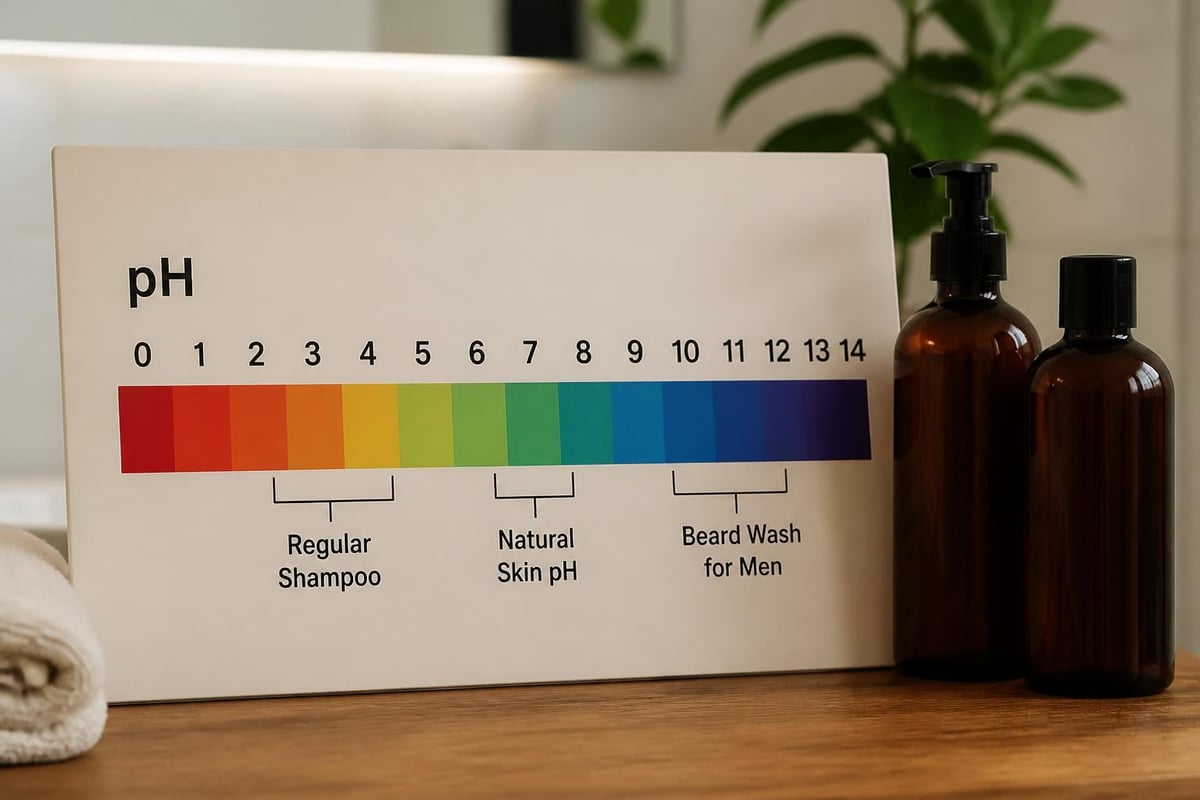
Facial hair grows from follicles embedded in skin that's thinner and more sensitive than your scalp. The pH level of regular shampoo sits between 7 and 9, whilst healthy skin maintains a pH of 4.5 to 5.5. This alkaline assault disrupts your skin's acid mantle, the protective barrier that prevents bacterial growth and moisture loss.
The Biological Consequences
The damage extends beyond surface-level discomfort. When your skin's pH balance shifts, the microbiome that lives on your face changes composition. Harmful bacteria proliferate whilst beneficial microorganisms die off. This imbalance manifests as:
- Beardruff (seborrhoeic dermatitis specific to facial hair)
- Folliculitis (inflamed hair follicles that create red bumps)
- Brittle hair shafts that split and break
- Ingrown hairs from damaged follicle openings
Your beard becomes a breeding ground for problems rather than a symbol of masculinity. Understanding the right facial hair products transforms this trajectory completely.
The Agitation: What You're Losing Every Day
Each morning you wash your beard with the wrong product, you're actively sabotaging months of growth. Beard hair grows at approximately 0.4 millimetres per day. When regular shampoo weakens the hair shaft, it creates microscopic fractures along the cuticle. These fractures accumulate over weeks, eventually causing the hair to snap off before reaching its full potential length.
The financial cost compounds over time. You're replacing products that don't work, purchasing beard oils to compensate for dryness, and potentially buying separate treatments for dandruff or irritation. Meanwhile, the root cause remains unaddressed.
The Hidden Social Impact
An unkempt, flaky beard affects how others perceive you. Research in evolutionary psychology demonstrates that facial hair signals dominance and maturity, but only when properly maintained. A beard riddled with white flakes or appearing coarse and neglected sends the opposite message.
You've invested time growing your beard. Why undermine that investment with products formulated for entirely different hair and skin conditions? The solution requires understanding what proper beard washing achieves at a chemical level.
The Solution: How Beard Wash for Men Actually Works
Proper beard wash for men contains gentle surfactants derived from coconut oil or other plant sources. These cleansing agents, such as cocamidopropyl betaine, remove dirt and excess oil without destroying your skin's protective barrier. The molecular structure of these surfactants allows them to bind with impurities whilst leaving beneficial sebum intact.
The pH formulation matters enormously. Quality beard washes maintain a pH between 4.5 and 5.5, matching your skin's natural acidity. This preservation of the acid mantle supports the microbiome that protects against infection and inflammation.
Key Ingredients and Their Mechanisms
| Ingredient | Biological Function | Benefit |
|---|---|---|
| Jojoba Oil | Mimics sebum molecularly | Moisturises without greasiness |
| Tea Tree Oil | Terpinen-4-ol disrupts bacterial membranes | Prevents folliculitis and dandruff |
| Argan Oil | Vitamin E repairs oxidative damage | Strengthens hair cuticles |
| Aloe Vera | Polysaccharides retain moisture | Soothes inflammation |
These components work synergistically. Jojoba oil's chemical similarity to sebum means your skin recognises it as natural, reducing the compensatory oil production that creates greasiness. Tea tree oil's antimicrobial properties specifically target Malassezia, the yeast responsible for seborrhoeic dermatitis.
When you use properly formulated beard wash, you're not just cleaning surface dirt. You're creating an environment where follicles can function optimally, producing strong, healthy hair from the root.
Application Technique: Maximising Biological Effectiveness
The method you use to apply beard wash for men determines how effectively the active ingredients penetrate your skin and coat each hair shaft. Random scrubbing wastes product and misses problem areas.
The Step-by-Step Process
- Rinse with warm water for 30 seconds – This opens hair cuticles and pores, allowing better ingredient absorption
- Dispense a 10p-sized amount – More product doesn't equal better results; it just wastes expensive formulations
- Emulsify in palms for 5 seconds – Creating foam activates surfactants before application
- Massage into skin beneath the beard – The follicles and sebaceous glands live here, not on the hair surface
- Work through to the tips – Ensures even distribution and removes environmental pollutants
- Leave for 60-90 seconds – Gives active ingredients time to work
- Rinse thoroughly with cool water – Closes cuticles and pores, sealing in benefits
Water temperature affects cuticle openness. Hot water swells the hair shaft, making it vulnerable to damage. Cool water seals the cuticle flat, creating the smooth texture you want.
The 60-90 second contact time allows ingredients like tea tree oil to penetrate the follicle opening and reach the sebaceous gland. This timing isn't arbitrary; it's based on the diffusion rate of terpenes through keratin structures.
Frequency: Balancing Cleanliness and Natural Protection
How often should you use beard wash for men? The answer depends on your sebum production rate, environmental exposure, and activity level. Most men benefit from washing 2-3 times weekly, but this varies significantly.
Your sebaceous glands produce sebum at rates influenced by testosterone levels, age, and genetics. Men with higher androgen activity produce more sebum, requiring more frequent washing. Conversely, men with naturally dry skin risk over-washing, which removes protective oils faster than glands can replace them.
Environmental Factors
- Urban environments – Pollution particles adhere to sebum, requiring more frequent removal
- Physical labour – Sweat and dirt accumulation necessitates daily washing
- Office work – Less exposure to contaminants allows for less frequent washing
- Climate – Humid conditions increase bacterial growth; dry climates reduce it
Pay attention to how your beard feels. If it becomes greasy within 24 hours, increase washing frequency. If skin feels tight or itchy after washing, reduce frequency and ensure you're using a proper beard moisturising routine.
Comparing Formulations: What to Look For
Not all beard wash for men products deliver equal results. The ingredient list reveals whether a product supports healthy growth or simply removes dirt without addressing underlying biological needs.
Red Flags in Ingredient Lists
Avoid products containing:
- Sulphates (SLS/SLES) – Strip natural oils and disrupt pH
- Parabens – Endocrine disruptors that may affect hormone balance
- Synthetic fragrances – Often contain phthalates that irritate sensitive facial skin
- Alcohol (SD Alcohol 40) – Dries out both hair and skin
- Silicones – Create temporary smoothness whilst preventing moisture penetration
These ingredients might produce immediate cosmetic effects (foam, fragrance, shine), but they undermine long-term beard health. Your follicles need genuine nourishment, not chemical illusions.
Premium Ingredient Markers
Look for formulations featuring:
- Plant-derived surfactants – Gentler cleansing that preserves sebum
- Essential oils – Provide antimicrobial benefits and natural fragrance
- Vitamins E and B5 – Support keratin production and cellular repair
- Natural moisturisers – Shea butter, cocoa butter, or plant oils
- pH-balancing agents – Citric acid or other mild acids
The order matters. Ingredients appear in descending concentration. If water is first (it usually is) and the next five ingredients are beneficial oils and extracts, you're holding a quality product. If cheap fillers dominate the list, you're paying for marketing rather than efficacy.
The Science of Growth Enhancement
Can beard wash for men actually accelerate growth? The direct answer is no. The indirect answer reveals a more nuanced truth. No topical product makes follicles produce hair faster than your genetics dictate. However, creating optimal conditions for growth prevents the slowdowns and damage that make beards appear to grow poorly.
Follicles require specific nutrients and conditions to function efficiently. When inflammation occurs, your body diverts resources to healing rather than hair production. When follicles become blocked with sebum and dead skin cells, new hair struggles to emerge, creating patchy appearance.
Creating Optimal Follicle Conditions
Quality beard wash addresses growth obstacles:
- Removes DHT buildup – Dihydrotestosterone accumulation around follicles can miniaturise them over time
- Reduces inflammation – Anti-inflammatory ingredients like aloe vera keep follicles functioning
- Prevents follicle blockage – Regular cleansing stops keratin plugs from forming
- Improves blood flow – Massage during application increases circulation to follicles
Think of it as removing roadblocks rather than pressing the accelerator. Your genetics determine maximum growth rate, but poor care prevents you from reaching that potential.
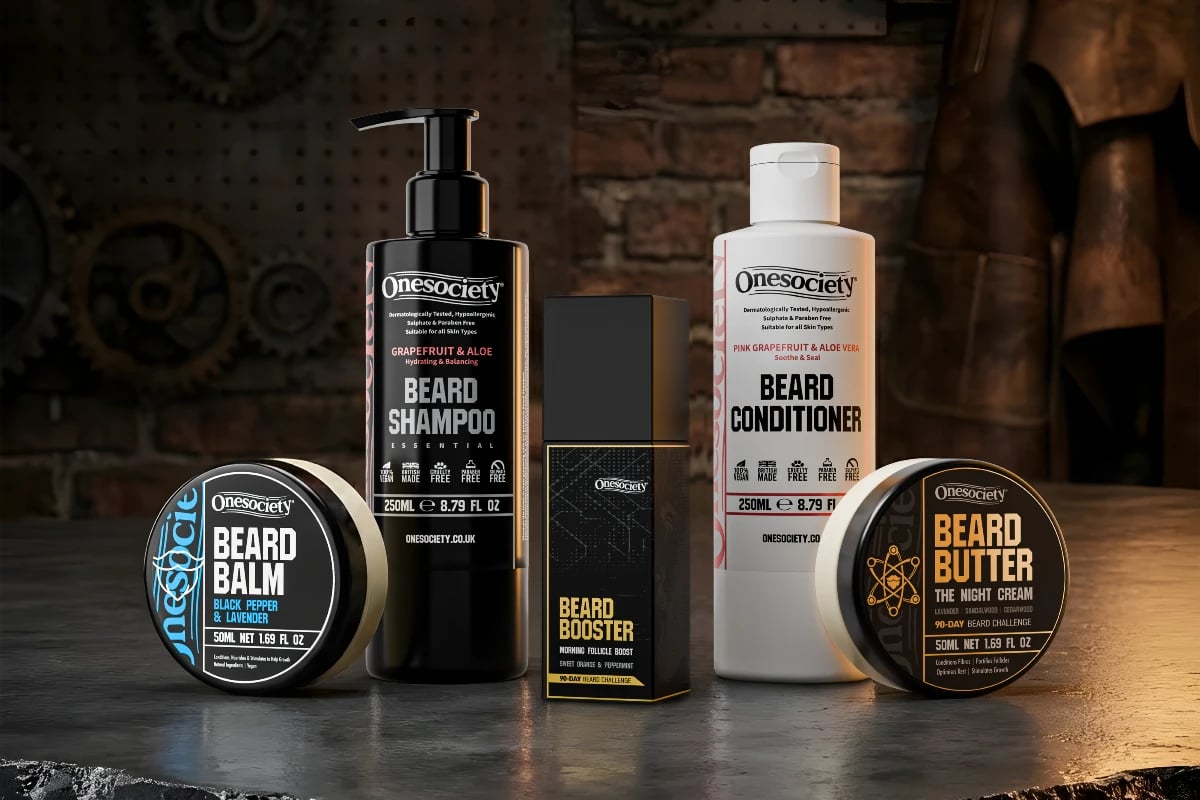
The 90-Day Beard Challenge takes this principle further by combining pH-balanced beard shampoo with targeted growth boosters that increase blood flow to follicles. The Beard Booster formula contains ingredients that stimulate circulation, whilst the shampoo maintains the clean, balanced environment follicles need to capitalise on that increased nutrient delivery. This systematic approach addresses both the cleansing and growth-support aspects simultaneously.
Pairing with Other Products: The Complete System
Beard wash for men functions as one component in a comprehensive grooming system. Understanding how products interact prevents you from undermining one benefit with another product's drawbacks.
After washing, your beard cuticles remain open for approximately 10-15 minutes. This window represents prime time for applying nutrient-dense products that can penetrate the hair shaft. Beard oils and butters applied during this period deliver fatty acids and vitamins directly into the hair structure.
The Layering Sequence
The molecular size of products determines application order:
| Step | Product | Purpose | Wait Time |
|---|---|---|---|
| 1 | Beard Wash | Cleanse and balance pH | Rinse after 90 seconds |
| 2 | Conditioner (optional) | Repair damage, add slip | 2-3 minutes |
| 3 | Beard Oil | Penetrate shaft, moisturise skin | 5 minutes to absorb |
| 4 | Beard Balm | Lock in moisture, provide hold | Immediate styling |
Each product serves a distinct biological function. Washing cleanses. Oil penetrates. Balm protects. Skipping steps or applying in the wrong order reduces each product's effectiveness.
Consider how hair styling products work in this sequence as well. If you're someone who styles both head hair and beard, products from The Pixie Garden demonstrate how professional-grade styling requires clean, prepared hair as a foundation. The same principle applies to facial hair-you can't style effectively on a foundation of buildup and debris.
Troubleshooting Common Issues
Even with proper beard wash for men, you might encounter persistent problems. These issues typically stem from technique errors or underlying conditions that require additional intervention.
Persistent Itchiness
If itching continues after switching to proper beard wash, examine these factors:
- Rinsing duration – Residual product causes irritation; rinse for at least 45 seconds
- Water hardness – Mineral deposits coat hair; consider a shower filter
- Underlying dermatitis – May require antifungal treatment beyond standard washing
- New growth phase – Hair emerging from skin naturally itches for 2-3 weeks
The transition period from poor to proper care takes 2-4 weeks as your skin's pH rebalances and the microbiome adjusts. Don't abandon effective products during this adjustment phase.
Excessive Dryness
Dry, brittle beard hair after washing indicates either product formulation issues or over-washing:
- Check ingredients for alcohol and sulphates
- Reduce washing frequency to every 2-3 days
- Apply beard oil while hair is still slightly damp
- Increase water intake to support internal hydration
Remember that hair is dead keratin. It can't regenerate or "drink" moisture. When we discuss moisturising hair, we're actually filling gaps in the cuticle with oils and humectants that prevent moisture loss from within.
Lack of Softness
If your beard remains coarse despite consistent washing, the issue likely involves water temperature or follow-up care. Hot water damages the cuticle structure, creating a rough texture. Additionally, allowing your beard to air-dry without applying oil leaves cuticles open and vulnerable.
The solution combines technique and product selection. Wash with warm (not hot) water, apply oil to damp beard, and gently pat dry with a microfibre towel rather than rubbing vigorously.
Natural Ingredients vs Synthetic: The Evidence
The debate between natural and synthetic ingredients in beard wash for men centres on efficacy and safety. Science demonstrates that both categories contain effective and ineffective options. The key lies in understanding specific compounds rather than broad categories.
Natural doesn't automatically mean safe. Poison ivy is natural. Synthetic doesn't automatically mean harmful. Many synthetic ingredients undergo rigorous safety testing that natural extracts avoid.
Evidence-Based Natural Ingredients
Certain plant-derived compounds demonstrate proven benefits:
- Argan oil – Studies show tocopherols repair oxidative damage to keratin
- Jojoba oil – Molecular similarity to sebum confirmed through lipid analysis
- Tea tree oil – Antimicrobial effects documented against multiple bacterial and fungal species
- Shea butter – Triterpene content reduces inflammation markers in dermal tissue
These ingredients work because specific molecules interact with biological targets. The "natural" aspect is secondary to the chemical mechanism.
Effective Synthetic Ingredients
Some lab-created compounds outperform natural alternatives:
- Panthenol (Provitamin B5) – Penetrates hair shaft better than most natural moisturisers
- Hydrolysed proteins – Fills cuticle gaps more effectively than whole plant proteins
- Synthetic ceramides – Replicate skin's natural barrier components
The critical factor isn't origin but function. Does the ingredient address a specific biological need with documented efficacy? That's what separates effective beard wash for men from marketing hype.
Investment vs Results: Economic Reality
Premium beard wash for men costs more than regular shampoo. A 200ml bottle might run £15-25 compared to £3-5 for standard shampoo. This price difference causes hesitation, but the economics shift when you examine actual usage.
You use less product per wash because beard wash concentrates active ingredients. A pea-sized amount suffices, whilst regular shampoo requires significantly more volume to create adequate lather. Additionally, washing frequency drops from daily to 2-3 times weekly.
Cost Breakdown Over 90 Days
| Product Type | Cost | Uses per Bottle | Cost per Use | Uses in 90 Days | Total Cost |
|---|---|---|---|---|---|
| Regular Shampoo | £5 | 40 | £0.13 | 90 | £11.70 |
| Beard Wash | £20 | 60 | £0.33 | 26 | £8.58 |
The actual cost over three months favours specialised products when you account for reduced frequency and concentrated formulations. Factor in the eliminated need for dandruff treatments and additional moisturisers, and the economic advantage becomes clear.
You're not spending more. You're allocating resources efficiently toward products that address root causes rather than symptoms. This approach aligns with understanding why dedicated beard care matters for long-term results.
The Microbiome Factor: Emerging Research
Recent dermatological research reveals that skin microbiome health directly affects beard quality. Your face hosts millions of bacteria, fungi, and other microorganisms that influence inflammation, sebum production, and follicle health.
Harsh cleansers indiscriminately kill both beneficial and harmful microorganisms. This scorched-earth approach creates an opportunity for pathogenic species to colonise before beneficial ones recover. The result manifests as increased acidity, inflammation, and irregular sebum production.
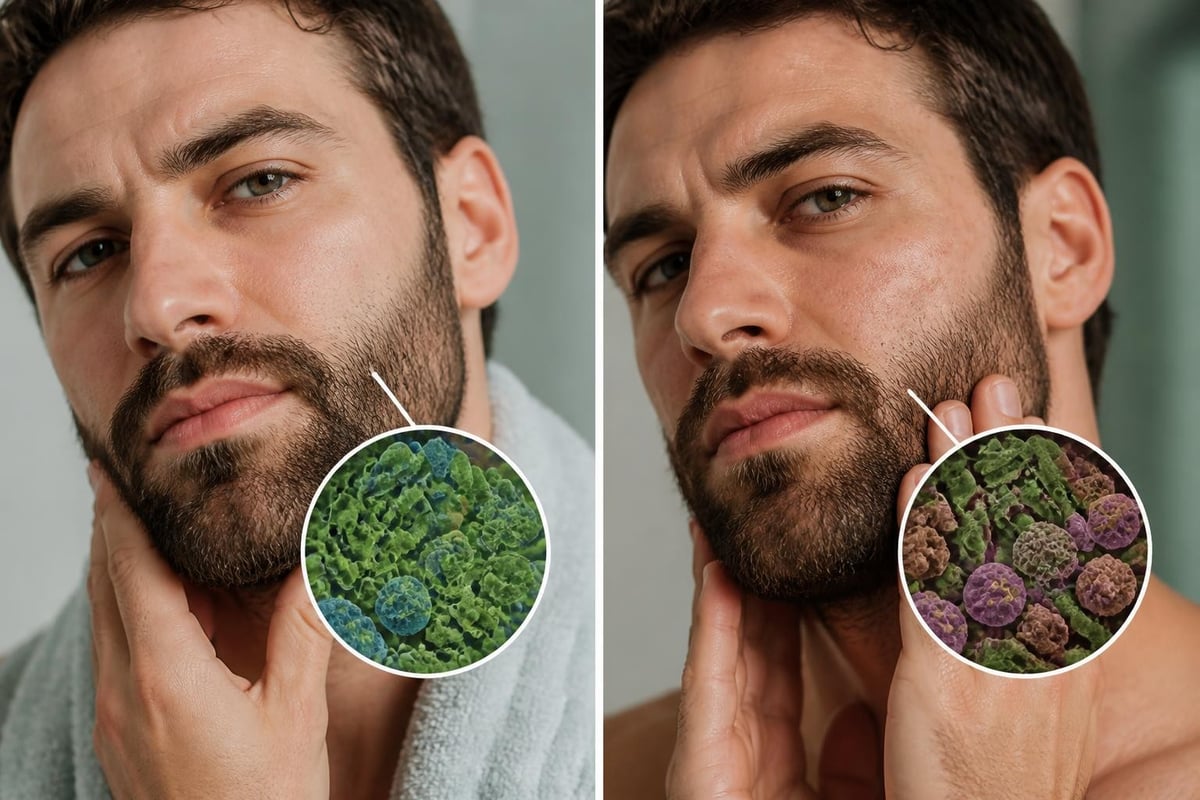
Quality beard wash for men preserves microbiome diversity. Plant-derived surfactants clean without sterilising. Antimicrobial ingredients like tea tree oil specifically target problematic species whilst allowing beneficial bacteria to thrive.
Supporting Your Beard's Ecosystem
Think of your beard care routine as gardening rather than cleaning. You're cultivating an environment where beneficial organisms flourish:
- Maintain stable pH – Beneficial bacteria prefer slightly acidic conditions
- Avoid antibacterial overkill – Preserve helpful species
- Feed the microbiome – Some ingredients serve as prebiotics for skin bacteria
- Rinse thoroughly – Product residue disrupts bacterial balance
This ecological approach to beard care represents the cutting edge of dermatological science. Products formulated with microbiome preservation in mind deliver superior long-term results compared to traditional formulations focused solely on cleaning.
Hard Water Challenges and Solutions
Your water quality affects how well beard wash for men performs. Hard water contains high concentrations of calcium and magnesium ions that interfere with surfactant function. These minerals bind with cleansing agents, reducing their effectiveness and leaving deposits on your beard.
The visible result appears as dullness, stiffness, and white residue. Chemically, you're coating each hair shaft with mineral scale that prevents moisture absorption and creates roughness.
Identifying Hard Water
Signs your water affects beard care:
- White buildup on taps and showerheads
- Difficulty creating lather with soap
- Beard feels stiff after washing
- Products seem less effective than reviews suggest
UK water hardness varies dramatically by region. Southern England experiences significantly harder water than Scotland or Wales. Check your local water company's hardness report to understand what you're working with.
Mitigation Strategies
You can overcome hard water challenges:
- Install a shower filter – Removes minerals before water contacts your beard
- Use chelating shampoos occasionally – Strips mineral buildup (use sparingly)
- Rinse with distilled water – Keep a bottle for final rinse after washing
- Add citric acid – Slightly acidic rinse helps remove mineral deposits
The investment in water treatment pays dividends across all grooming activities. Soft water improves how every product performs, from beard care to hair styling.
Seasonal Adjustments: Adapting Your Routine
Your beard's needs change with seasons. Winter's dry air and indoor heating strip moisture differently than summer's humidity and sun exposure. Effective beard wash for men accommodates these variations.
Winter demands richer formulations and less frequent washing. Cold air reduces sebum production whilst indoor heating evaporates surface moisture. Your washing frequency might drop to twice weekly, with increased emphasis on moisturising products post-wash.
Summer's heat increases sebum output and sweat production. Bacteria flourish in warm, moist environments, raising the risk of folliculitis and odour. Washing frequency increases to 3-4 times weekly, potentially incorporating lighter, more frequent conditioning.
Seasonal Product Rotation
| Season | Washing Frequency | Product Focus | Key Adjustments |
|---|---|---|---|
| Winter | 2x weekly | Heavy moisturisers | Longer conditioning time |
| Spring | 2-3x weekly | Balanced formulas | Standard routine |
| Summer | 3-4x weekly | Light, antimicrobial | Increased rinse duration |
| Autumn | 2-3x weekly | Transition to richer | Gradual adjustment |
These adjustments prevent your beard from suffering seasonal stress. Maintaining optimal condition year-round requires observation and flexibility rather than rigid adherence to a single routine.
Professional vs DIY: What Works
The market offers ready-made beard wash for men alongside countless DIY recipes promising equivalent results at lower cost. The reality lies somewhere between marketing claims and homemade enthusiasm.
Professional formulations benefit from stability testing, preservation systems, and controlled pH. When you create a DIY beard wash, you're mixing ingredients with varying pH levels and no built-in preservation. The result might work initially but degrades quickly and risks bacterial contamination.
That said, simple DIY approaches can supplement (not replace) professional products. A weekly apple cider vinegar rinse (diluted 1:4 with water) helps remove buildup and rebalance pH. This doesn't replace proper washing but enhances results between washes.
When DIY Makes Sense
Limited circumstances favour homemade solutions:
- Travel – Creating single-use sachets from known ingredients
- Experimentation – Testing ingredient tolerance before buying full products
- Emergency situations – When proper products aren't available
For regular use, professional formulations deliver consistency and safety that DIY can't match. The quality control, testing, and formulation expertise justify the cost difference.
Reading Labels: Decoding Marketing Claims
Beard wash for men packaging overflows with compelling claims. "Natural," "organic," "clinically tested," and "dermatologist approved" adorn bottles, but these terms often lack meaningful definition or verification.
"Natural" has no legal standard in cosmetics. A product can contain 1% natural ingredients alongside 99% synthetic compounds and still claim natural status. Similarly, "dermatologist approved" might mean a single dermatologist reviewed the formula without conducting actual testing.
Meaningful Certifications
Focus on verifiable standards:
- Cosmos Organic/Natural – EU standard with defined criteria
- Soil Association Organic – UK certification with rigorous requirements
- Leaping Bunny – Cruelty-free verification
- Vegan Society – Animal-ingredient screening
These certifications require compliance with specific, auditable standards. They carry more weight than marketing language unsupported by verification.
Additionally, examine clinical claims critically. "Clinically tested" doesn't specify results. Did the testing show benefits or merely establish safety? "Reduces dryness by 50%" means nothing without methodology details. Proper studies specify participant numbers, timeframes, and measurement methods.
The most reliable indicator remains the ingredient list. If the first ingredients are beneficial oils, extracts, and gentle surfactants, the product likely performs regardless of marketing claims. If water, cheap fillers, and harsh detergents dominate, no amount of marketing changes the reality.
Integration with Overall Grooming
Beard wash for men exists within a broader personal care context. Your facial care routine, hair care, and even diet affect beard health through interconnected biological systems.
Skin health depends on cellular nutrition. Vitamins A, C, and E support collagen production and cellular repair. Omega-3 fatty acids reduce inflammation systemically, including in hair follicles. Hydration affects sebum consistency and skin elasticity.
Your overall grooming routine should align:
- Facial cleansers – Match pH and avoid harsh actives that might irritate beard area
- Moisturisers – Apply to skin beneath beard, not just surrounding areas
- Dietary choices – Support hair health from within through protein and micronutrients
- Sleep quality – Growth hormone release during deep sleep affects follicle function
This holistic view recognises that no single product creates optimal results. Beard wash addresses external cleansing, but internal health, stress management, and complementary skincare all contribute to the final outcome.
Understanding why specific beard treatments work requires viewing your beard as an integrated system rather than isolated hair strands requiring cleaning.
Proper beard care transforms facial hair from a source of frustration into a genuine asset. The science behind beard wash for men reveals that specialised formulations aren't marketing gimmicks but biological necessities based on pH balance, microbiome preservation, and targeted ingredient delivery. When you're ready to experience the difference that scientifically-formulated, naturally-derived products make, explore how Onesociety combines evidence-based formulations with premium natural ingredients to support your beard's full potential. Their commitment to ingredient transparency and proven results ensures you're investing in products that actually work rather than marketing promises that disappoint.