

Growing and maintaining a beard should be straightforward, yet thousands of men face daily frustrations that undermine their confidence. Whether it's the relentless itch that strikes during the first few weeks, the patchy gaps that refuse to fill in, or the persistent dandruff that appears despite your best efforts, these challenges aren't just cosmetic annoyances. They represent complex interactions between your skin biology, follicle health, and environmental factors. Understanding the science behind these beard struggles transforms them from insurmountable problems into solvable puzzles with clear, actionable solutions.
The Biology Behind Patchy Growth
Struggling with uneven beard coverage? You're not alone.
Patchy growth ranks amongst the most common beard struggles, affecting men across all age groups and ethnicities. The frustration intensifies when you've committed months to growth, only to discover stubborn gaps that refuse to cooperate.
Why Follicles Behave Differently
Your facial hair grows from thousands of individual follicles, each operating on its own genetic programming. Some follicles possess high sensitivity to dihydrotestosterone (DHT), the androgen hormone responsible for converting soft vellus hairs into thick, terminal beard hairs. When certain follicles lack sufficient DHT receptors, they remain dormant or produce only weak, thin strands.
Blood circulation plays an equally critical role. Follicles require consistent nutrient delivery through capillaries to sustain growth cycles. Poor microcirculation in specific facial zones creates nutritional deserts where follicles struggle to produce robust hair shafts.
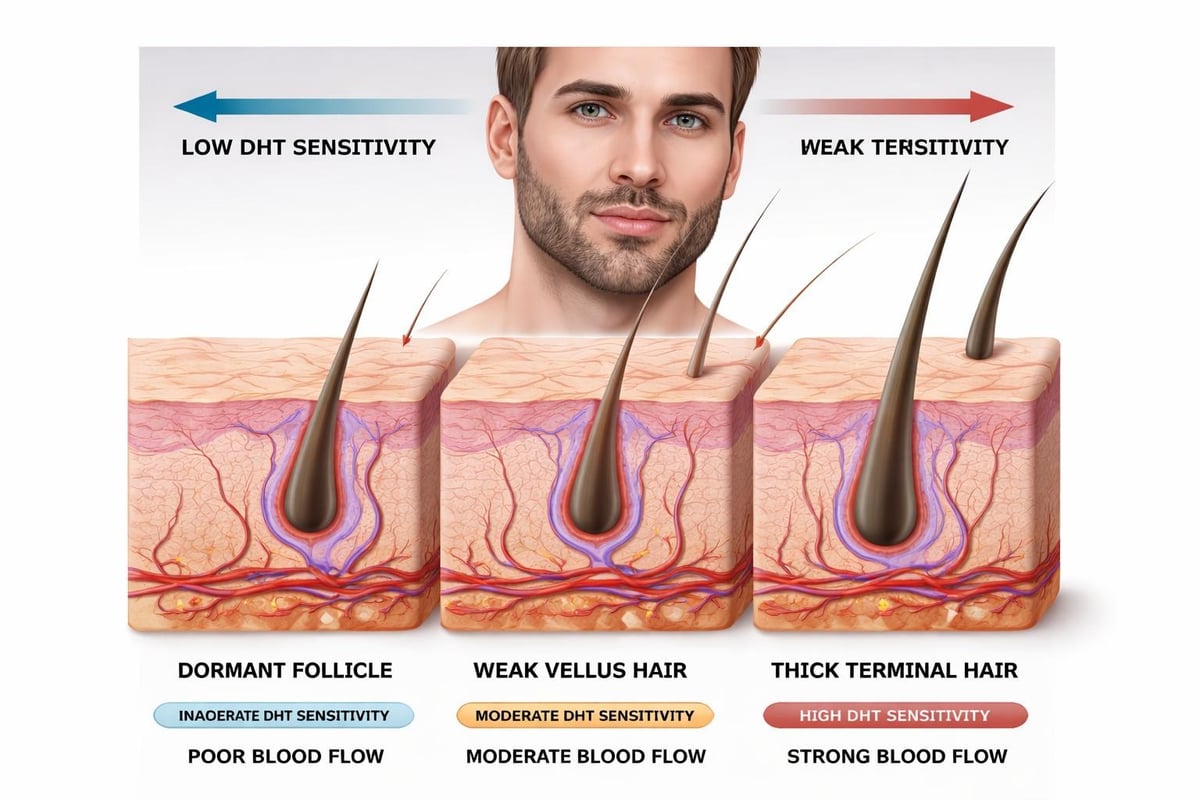
Key factors influencing patchy growth:
- DHT receptor density varies significantly across facial zones
- Microcirculation efficiency determines nutrient delivery to follicles
- Genetic programming sets individual follicle growth cycles
- Inflammation can suppress follicle activity in affected areas
- Nutritional deficiencies impact keratin production
The science behind patchy beard growth reveals that patience combined with targeted intervention yields the best results. Follicles require time to transition from resting (telogen) phase through growth (anagen) phase, a process that can extend 90 days or longer.
Activating Dormant Follicles
To combat patchy areas, you need ingredients that stimulate blood flow and support follicle health. Jojoba oil closely mimics your skin's natural sebum, allowing it to penetrate deeply without clogging pores. Its molecular structure enables it to deliver vitamins and minerals directly to follicle roots, essentially feeding them from the outside.
Argan oil brings essential fatty acids and vitamin E that reduce oxidative stress around follicles. This antioxidant protection prevents free radical damage that can impair follicle function, creating an environment where dormant follicles can activate and sustain growth.
Check our complete range of scientifically formulated products designed specifically to address patchy growth through natural activation mechanisms.
Conquering the Itch That Never Ends
The infamous beard itch strikes without mercy.
During the first two to four weeks of growth, many men abandon their beard aspirations entirely because the itching becomes unbearable. This isn't a minor inconvenience - it's a legitimate inflammatory response that your body generates as newly growing hairs emerge from follicles.
The Inflammation Cycle
As beard hairs push through your skin, they create micro-inflammation around each follicle opening. Your body interprets these emerging hairs as potential irritants, triggering an immune response that releases histamines and inflammatory cytokines. These chemical messengers cause the sensation of itching whilst also promoting redness and sensitivity.
Simultaneously, sebaceous glands struggle to produce sufficient oils to coat the rapidly multiplying hairs. This oil deficit leaves both skin and beard hair dehydrated, creating a rough texture that physically irritates the epidermis with every movement.
| Itch Trigger | Scientific Mechanism | Natural Solution |
|---|---|---|
| Follicle inflammation | Histamine release during hair emergence | Shea butter's triterpenes reduce inflammatory response |
| Dehydrated skin | Insufficient sebum production | Hemp seed oil's gamma-linolenic acid hydrates deeply |
| Rough hair texture | Lack of natural conditioning | Argan oil's vitamin E smooths hair cuticles |
| Bacterial overgrowth | Trapped moisture creates biofilms | Tea tree oil's antimicrobial properties control bacteria |
The American Academy of Dermatology provides expert guidance on treating common beard problems including persistent itchiness.
Breaking the Scratch Cycle
To eliminate itch, you must address inflammation whilst restoring moisture balance. Shea butter contains lupeol, a triterpene that inhibits inflammatory enzyme activity. By blocking these enzymes, shea butter prevents the cascade of chemical signals that create the itch sensation.
Hemp seed oil delivers gamma-linolenic acid (GLA), an omega-6 fatty acid that strengthens the skin's lipid barrier. This reinforced barrier retains moisture more effectively, preventing the dehydration that exacerbates itching. GLA also possesses inherent anti-inflammatory properties that calm irritated skin from within.
Dandruff and Flaking Decoded
White flakes scattered across your shirt destroy your professional image.
Beard dandruff differs fundamentally from scalp dandruff, though both stem from similar causes. The fungus Malassezia feeds on sebum oils, producing oleic acid as a metabolic byproduct. For individuals with sensitivity to oleic acid, this triggers rapid skin cell turnover, creating visible flakes that shed continuously.
The Fungal Connection
Your beard creates a warm, moist environment where Malassezia thrives. Unlike your scalp, facial skin experiences constant environmental exposure, temperature fluctuations, and contact with hands, all of which stress the skin barrier and promote fungal overgrowth.
Dead skin cells accumulate faster than your body can naturally shed them. These cells clump together with sebum, forming the characteristic white or yellow flakes that appear throughout your beard. The dermatologist-approved approach emphasises controlling both fungal populations and inflammation.
Effective anti-dandruff strategies:
- Control Malassezia populations using antimicrobial natural ingredients
- Exfoliate gently to remove accumulated dead cells
- Reduce inflammation that accelerates cell turnover
- Moisturise to prevent compensatory oil overproduction
- Maintain consistent grooming routines
Natural Antifungal Solutions
Tea tree oil contains terpinen-4-ol, a compound that disrupts fungal cell membranes. By compromising membrane integrity, tea tree oil prevents Malassezia from maintaining its cellular structure, effectively controlling population levels without harsh chemicals.
Coconut oil brings both lauric acid and capric acid, medium-chain fatty acids that exhibit potent antimicrobial activity. These acids integrate into fungal cell walls, causing structural breakdown whilst simultaneously moisturising your skin to prevent the dryness that triggers excessive flaking.
Our naturally formulated beard care range harnesses these botanical powerhouses to eliminate dandruff at its source.
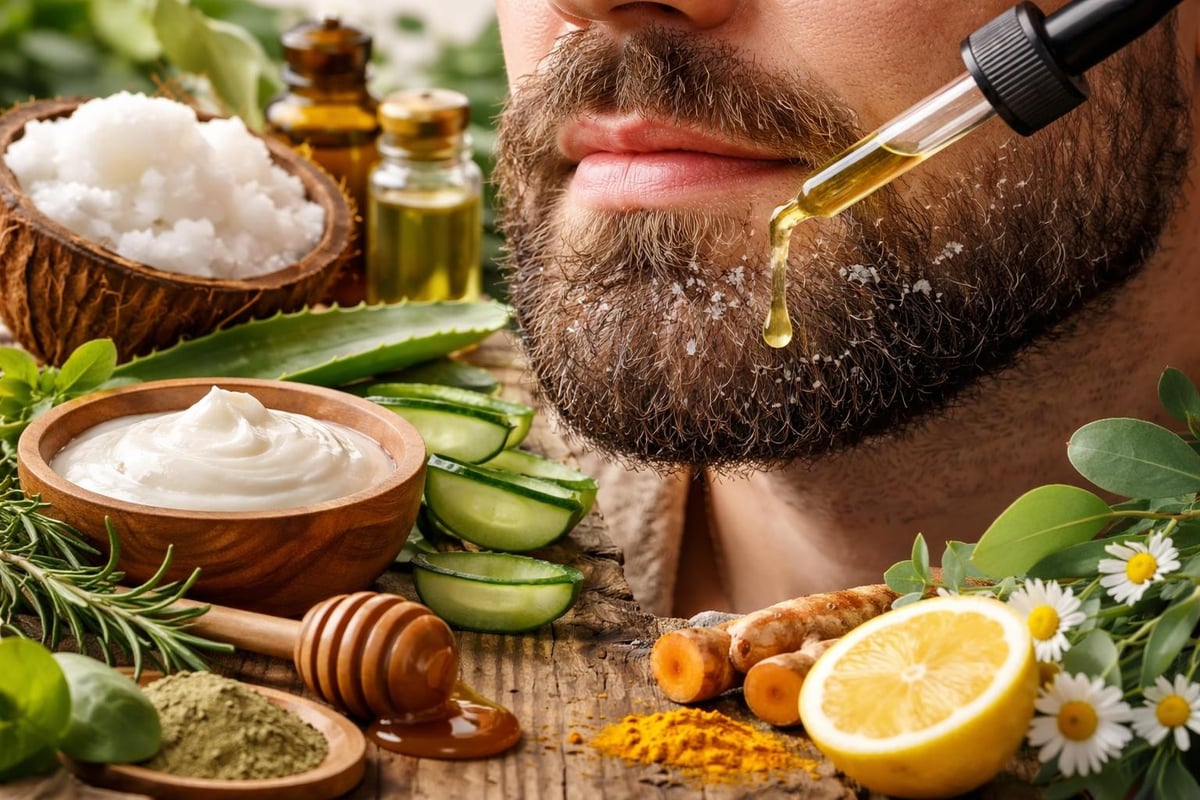
Wiry, Unmanageable Texture
Your beard feels like steel wool instead of soft, manageable hair.
Coarse texture represents one of the most frustrating beard struggles because it affects both appearance and comfort. Unlike scalp hair, facial hair grows with a flattened, elliptical cross-section that naturally creates curl and stiffness. This structural difference means beard hair lacks the smooth, cylindrical shape that allows easy styling.
Hair Shaft Structure
Each beard hair consists of three layers: the medulla (core), cortex (middle), and cuticle (outer). The cuticle comprises overlapping protein scales, similar to roof tiles. When these scales lie flat, light reflects uniformly, creating shine and softness. When scales lift and separate, the hair feels rough and tangled whilst appearing dull.
Environmental damage accelerates cuticle degradation. UV radiation breaks down keratin bonds, hot water strips protective oils, and physical friction from towels or brushes lifts scales. Without intervention, the cumulative damage transforms even moderately coarse beards into unmanageable wire.
Penetrating Conditioners
To soften coarse hair, you need ingredients that penetrate the cortex layer whilst smoothing the cuticle. Argan oil's low molecular weight allows it to slip between cuticle scales, delivering vitamin E and essential fatty acids directly into the hair shaft. This internal conditioning strengthens keratin bonds whilst adding flexibility.
Sweet almond oil contains high concentrations of oleic acid and linoleic acid, both of which smooth cuticle scales by filling microscopic gaps in the hair's surface. As these oils coat each hair, they create a protective layer that reflects light uniformly, transforming dull, wiry beards into soft, manageable growth.
Slow Growth and Stunted Length
Months pass, yet your beard barely extends beyond stubble.
Growth rate frustration intensifies when you've invested time and effort, only to watch your beard plateau at an unsatisfying length. While genetics ultimately dictate maximum growth potential, numerous controllable factors influence whether your beard reaches its full capacity.
The Growth Cycle Reality
Beard hairs follow a predetermined growth cycle consisting of anagen (active growth), catagen (transition), and telogen (resting) phases. Your genetic programming determines how long each phase lasts. Men with lengthy anagen phases can grow beards extending 30 centimetres or more, whilst those with shorter anagen phases may plateau at 7-10 centimetres.
However, premature phase transitions often result from correctable issues. Nutritional deficiencies force follicles into telogen phase prematurely, as your body prioritises essential functions over cosmetic hair growth. Inflammation similarly triggers early dormancy, as stressed follicles shut down to conserve resources.
| Growth Inhibitor | Biological Impact | Scientific Intervention |
|---|---|---|
| Poor nutrition | Insufficient amino acids for keratin synthesis | B-vitamins in carrier oils support protein production |
| Chronic stress | Elevated cortisol shortens anagen phase | Lavender oil's adaptogenic compounds reduce stress hormones |
| Damaged follicles | Inflammation prevents optimal function | Castor oil's ricinoleic acid reduces follicle inflammation |
| Breakage | Physical damage mimics slow growth | Conditioning oils strengthen hair shaft integrity |
Understanding common mistakes that hinder beard growth helps you avoid self-sabotage during your growth journey.
Maximising Anagen Duration
Castor oil stands out for growth support due to its unique ricinoleic acid content. This omega-9 fatty acid improves blood circulation to follicles whilst reducing prostaglandin D2, a compound that shortens anagen phase. By inhibiting this growth suppressor, castor oil helps follicles maintain active growth for extended periods.
Vitamin E, abundant in wheat germ oil and argan oil, protects follicles from oxidative damage that can trigger premature phase transitions. This antioxidant shield maintains the cellular environment follicles need to sustain lengthy growth cycles.
Browse our targeted growth solutions formulated to extend anagen phase naturally.
Ingrown Hairs and Folliculitis
Painful bumps transform your beard line into an inflamed battlefield.
Ingrown hairs occur when curved beard hairs curl back and penetrate the skin instead of growing outward. Your immune system identifies these re-entered hairs as foreign objects, mounting an inflammatory response that creates red, painful bumps. Left untreated, bacterial infection can develop, escalating into folliculitis.
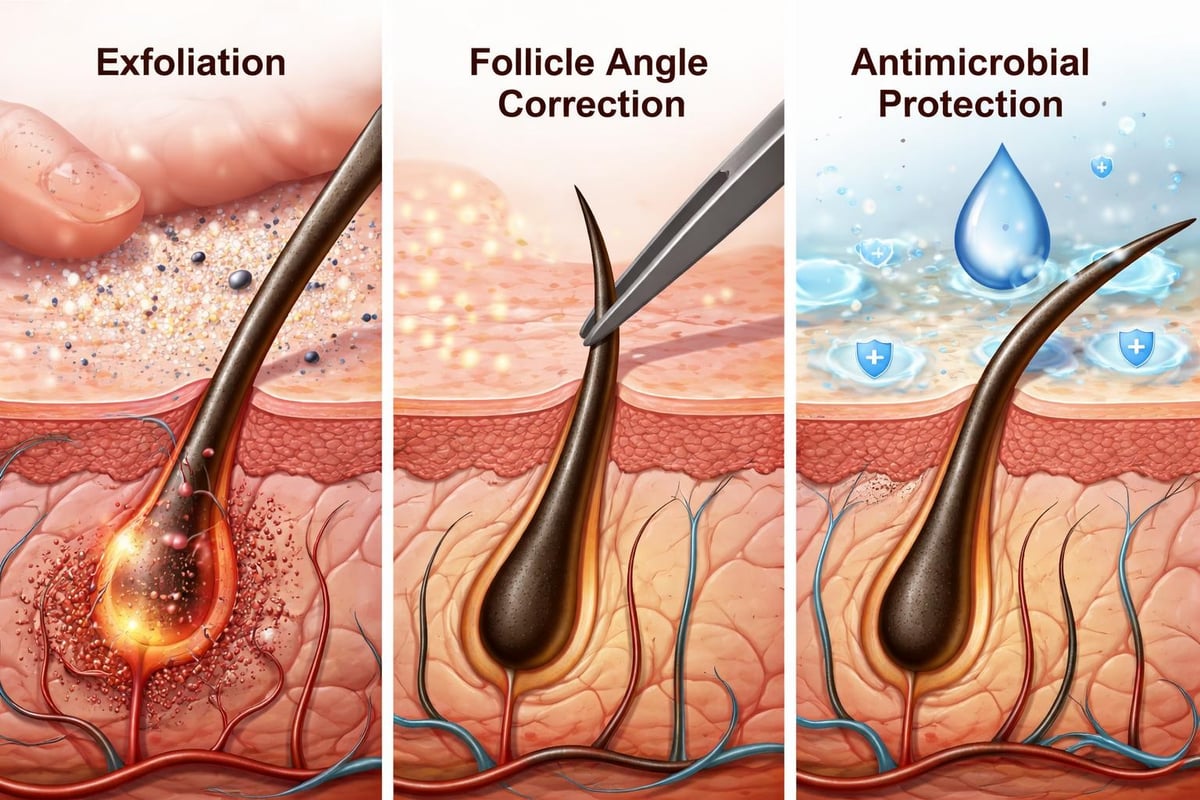
Why Beards Grow Inward
Men with naturally curly or coarse facial hair face higher ingrown hair risk because their hairs naturally spiral as they emerge. When combined with dead skin cell accumulation that blocks follicle openings, these curved hairs find the path of least resistance leads back into the skin rather than outward.
Improper shaving or trimming techniques exacerbate the problem. Cutting hairs at sharp angles creates pointed tips that easily pierce skin. Dry shaving increases this risk further by pulling hairs before cutting, causing them to retract below the skin surface where they're more likely to grow sideways.
Prevention strategies that work:
- Regular gentle exfoliation removes dead cells blocking follicle openings
- Proper beard oil softens hair, reducing sharp angles
- Growth direction training through brushing guides hairs outward
- Antimicrobial ingredients prevent secondary bacterial infection
- Anti-inflammatory compounds calm existing irritation
Soothing Inflamed Follicles
Jojoba oil's anti-inflammatory properties calm irritated follicles whilst its antibacterial components prevent infection in compromised areas. Its similarity to natural sebum means it doesn't trigger additional immune responses, making it ideal for sensitive, inflamed skin.
Tea tree oil's antimicrobial activity becomes crucial when folliculitis develops. By controlling bacterial populations, it prevents minor ingrown hairs from escalating into painful, pus-filled cysts that may require medical intervention.
Explore how proper beard care routines prevent ingrown hairs before they start.
Colour and Grey Management
Premature greying undermines your youthful appearance.
Grey beard hairs appear when melanocytes, the cells producing hair pigment, decrease melanin production or die entirely. While genetics primarily determine greying timelines, oxidative stress accelerates the process by damaging melanocyte DNA. This is one of those beard struggles where prevention proves far more effective than reversal.
The Oxidative Stress Factor
Free radicals generated by UV exposure, pollution, and metabolic processes attack cellular structures throughout your body, including melanocytes in hair follicles. As these cells accumulate damage, their ability to produce melanin diminishes, resulting in grey, white, or silver hairs that lack pigment entirely.
Nutritional deficiencies compound oxidative damage. Melanin synthesis requires copper, vitamin B12, and specific amino acids. Without adequate supplies, melanocytes cannot maintain pigment production even when structurally healthy. The combination of oxidative stress and nutritional gaps creates the perfect environment for accelerated greying.
Antioxidant Protection
Argan oil delivers powerful antioxidants including vitamin E and polyphenols that neutralise free radicals before they damage melanocytes. By creating an antioxidant-rich environment around follicles, argan oil helps preserve melanocyte function and may slow the greying process.
Rosehip oil contributes vitamin A (retinol) and vitamin C, both essential for collagen production and cellular repair. These nutrients support the structural integrity of follicles whilst promoting healthy melanocyte function. Though no natural ingredient reverses existing grey hairs, these compounds help preserve pigment production in still-active follicles.
Environmental Damage and Protection
Urban pollution and harsh weather wage constant war against your beard.
Your beard functions as a filter, trapping particulate matter, pollutants, and environmental toxins throughout the day. This protective function benefits your respiratory system but subjects your beard to continuous assault from damaging substances. Without proper protection and cleansing, these accumulated toxins degrade hair quality and irritate underlying skin.
Particulate Matter Accumulation
Studies demonstrate that beards trap fine particulate matter (PM2.5) from vehicle emissions, industrial pollutants, and even cigarette smoke. These microscopic particles embed between hair shafts and against skin, creating a toxic layer that promotes inflammation and oxidative damage.
UV radiation adds another dimension of environmental beard struggles. Just as sun exposure damages scalp hair, it degrades beard hair proteins and breaks down natural oils. The result appears as dry, brittle hair that splits easily and loses its natural colour vibrancy. Dermatologists emphasise the importance of maintaining a healthy beard through protective measures.
Environmental protection essentials:
- Daily cleansing removes accumulated pollutants and particulates
- Antioxidant-rich oils neutralise free radical damage
- UV-protective ingredients shield against solar radiation
- Barrier-strengthening compounds prevent toxin penetration
- Regular conditioning repairs environmental damage
Building a Protective Barrier
Natural oils create a physical barrier that prevents pollutants from directly contacting hair shafts and skin. Jojoba oil's waxy composition forms a protective coating that repels water-soluble pollutants whilst allowing skin to breathe normally.
Vitamin E in carrier oils acts as a sacrificial antioxidant, meaning it oxidises in place of hair proteins and skin lipids. This protective sacrifice preserves the structural integrity of your beard even when exposed to high pollution levels or intense UV radiation.
Discover our science-backed formulations designed to shield your beard from environmental assault.
Skin Health Beneath the Beard
The skin underneath determines overall beard health.
Many men focus exclusively on visible beard hair whilst neglecting the foundation supporting all growth: facial skin. Beneath your beard, skin cells continually renew themselves, follicles cycle through growth phases, and sebaceous glands produce protective oils. When this underlying ecosystem becomes compromised, every aspect of your beard suffers.
The Hidden Dermatological Landscape
Beard hair creates a microclimate against your face, trapping heat and moisture whilst blocking airflow. This environment can promote bacterial and fungal overgrowth if left unmanaged. Simultaneously, the barrier formed by dense beard growth prevents your regular facial cleansers from reaching skin effectively, allowing dead cells, sebum, and debris to accumulate.
Sebaceous glands work overtime trying to moisturise both skin and the dramatically increased surface area created by thousands of beard hairs. This often leads to either insufficient oil production, resulting in dry, flaky skin, or overproduction, causing acne and clogged pores. Finding the balance requires understanding your skin's specific needs.
Nourishing From Beneath
Successful beard care addresses skin health directly. Hemp seed oil penetrates easily due to its composition of small fatty acid molecules, delivering moisture deep into the epidermis without leaving surface residue. This internal hydration supports healthy cell turnover whilst maintaining the skin barrier integrity that prevents irritation and infection.
Grapeseed oil brings astringent properties that help regulate sebum production in overactive glands. Its linoleic acid content also reduces inflammation and supports skin healing, making it valuable for men dealing with acne or irritation beneath their beards. Learn about comprehensive grooming approaches that prioritise skin health.
Styling Challenges and Product Build-up
Your beard refuses to hold the shape you desire.
Even with healthy growth, many men struggle to style their beards into polished, professional shapes. Stubborn hairs sprout at odd angles, entire sections refuse to lay flat, and by midday, carefully crafted styles collapse into chaos. These styling beard struggles often stem from product misuse, poor technique, or fundamental misunderstanding of beard hair behaviour.
Why Beards Resist Styling
Beard hair possesses significantly more tensile strength than scalp hair due to its elliptical cross-section and higher keratin density. This natural rigidity means each hair maintains its genetically programmed growth direction unless properly trained. Simply applying product and hoping for compliance yields disappointing results.
Product build-up compounds styling challenges. Many conventional beard products contain waxes, silicones, or petroleum derivatives that accumulate with repeated use. These residues coat hair shafts, making them stiff and unresponsive whilst preventing moisture penetration. The result feels crunchy, looks unnatural, and ultimately damages hair health.
| Styling Challenge | Root Cause | Natural Solution |
|---|---|---|
| Flyaway hairs | Insufficient weight and moisture | Argan oil adds manageable weight without greasiness |
| Shape collapse | Weak hold from water-based products | Beeswax provides flexible, lasting hold |
| Unnatural stiffness | Synthetic polymers and silicones | Natural ingredients maintain movement |
| Product residue | Non-water-soluble compounds | Plant-based oils wash cleanly |
Training and Shaping Naturally
Beeswax offers adjustable hold that firms as it cools but remains workable throughout the day. Unlike synthetic styling agents, beeswax doesn't create a rigid cast. Instead, it allows natural movement whilst maintaining your desired shape, delivering a polished appearance that doesn't look artificially stiff.
Regular brushing with proper technique trains hairs to grow in preferred directions. Combined with conditioning oils that add pliability, this physical training gradually adjusts growth patterns. Over weeks, previously unruly beards become naturally more cooperative, requiring less aggressive styling intervention.
Check our complete product range featuring natural styling solutions that work with your beard's biology.
Dietary and Lifestyle Factors
What you eat and how you live directly impacts beard quality.
Your beard represents a visible expression of internal health. Follicles require consistent supplies of amino acids, vitamins, and minerals to produce strong, healthy hair shafts. When dietary intake falls short, your body redirects limited resources toward essential functions, leaving beard growth as a low priority that suffers accordingly.
Nutritional Requirements for Optimal Growth
Protein provides the amino acids your body assembles into keratin, the structural protein forming hair shafts. Without adequate protein intake, particularly the essential amino acids your body cannot synthesise, follicles produce weak, thin hairs that break easily and grow slowly.
B-vitamins, particularly biotin (B7), niacin (B3), and cobalamin (B12), serve as cofactors in numerous metabolic processes supporting hair growth. Biotin specifically assists in keratin infrastructure production, whilst niacin improves blood circulation to follicles. Deficiencies in these vitamins manifest as slow growth, brittleness, and premature phase transitions.
Essential nutrients for beard health:
- Protein: Building blocks for keratin synthesis
- Biotin: Supports keratin production infrastructure
- Vitamin A: Regulates sebum production
- Vitamin E: Protects follicles from oxidative damage
- Iron: Enables oxygen delivery to follicles
- Zinc: Supports protein synthesis and hormone regulation
- Omega-3 fatty acids: Reduce inflammation and nourish follicles
Lifestyle Modifications That Matter
Sleep quality directly influences growth hormone release, which peaks during deep sleep phases. Growth hormone stimulates cell reproduction and regeneration, including the rapid cell division occurring in active hair follicles. Chronic sleep deprivation suppresses this nightly growth hormone surge, slowing beard development.
Stress management proves equally crucial. Elevated cortisol from chronic stress shortens anagen phase whilst potentially triggering telogen effluvium, a condition causing widespread follicle dormancy. Implementing stress reduction techniques supports healthier hormone balance that favours sustained growth.
Understanding common beard problems and their solutions helps you identify whether your beard struggles stem from external care practices or internal health factors.
The beard struggles you face aren't permanent obstacles but solvable challenges rooted in biology, chemistry, and environmental factors. By understanding the scientific mechanisms behind each issue, you can implement targeted solutions that address root causes rather than merely masking symptoms. Onesociety formulates every product using 100% natural ingredients selected for their proven biological effects, ensuring you receive genuine solutions backed by scientific research rather than marketing hype. Our 90-Day Beard Challenge provides the structured approach and premium formulations you need to transform your beard from frustrating struggle into confident success.