

You need a dedicated beard shampoo and conditioner, because the skin under a beard and the coarse hair above it behave differently from the hair on your head. Regular head shampoo strips the oils your face relies on, and the result is itchy skin, brittle hair and a beard that grows in patchy and dull. Use a gentle beard wash to clean the skin, then a conditioner to soften and seal each hair.
Here is the problem in plain terms. Your beard collects sweat, sebum, food and city grime every day. Skip the wash and that film clogs follicles. Over-wash with a harsh product and you strip the skin barrier. Either way, the itch starts, and an itchy beard rarely grows to its full length.
Can I Put Shampoo and Conditioner in My Beard?
You can, but the shampoo and conditioner from your bathroom shelf will probably do more harm than good. Head shampoos use strong surfactants (cleansing agents) designed to strip heavy scalp oil. Facial skin produces less sebum than your scalp, so the same surfactants leave it tight, flaky and inflamed.
Think about what happens next. Dry skin sheds cells faster, and those cells collect at the base of your beard hair as visible flakes. You scratch, the skin breaks, and the irritation spirals. The American Academy of Dermatology recommends washing the face and beard daily with a gentle cleanser suited to your skin type, massaging it in, rinsing with lukewarm water and patting dry. "Gentle" is the operative word.
A purpose-made beard shampoo conditioner pairing solves this in two steps. The wash lifts dirt without removing every trace of oil. The conditioner then replaces moisture and smooths the hair shaft. If you want the full product pairing in one go, the Onesociety beard shampoo and conditioner set covers both steps.
Why Beard Hair and Skin Need Different Care
Beard hair is thicker and coarser than scalp hair, and the skin beneath it is more sensitive, so both need products formulated for the face. Each follicle sits in a thin layer of facial skin that reacts quickly to harsh detergents and heavy, pore-blocking oils.
Coarse hair also bends and curls as it grows. Those bends create friction points where the outer cuticle lifts, and a lifted cuticle means frizz, split ends and breakage. Breakage matters because snapped hairs at 2 cm never become hairs at 6 cm.
Here is the biological chain that matters:
- Sebum production: Facial glands produce oil that travels down the hair. A beard shampoo cleans without stripping it all, so the hair keeps its natural lubrication.
- Skin barrier: The outer skin layer holds in water. Harsh cleansers dissolve the lipids that bind it together, which is why skin feels tight after the wrong wash.
- Cuticle alignment: Conditioners deposit a thin film that lays the cuticle flat, which cuts friction and reduces breakage.
What to Look for in a Beard Shampoo
Look for a mild, pH-balanced cleanser with a humectant, because that combination cleans without breaking the skin barrier. Skin sits around a mildly acidic pH, and cleansers far from that range disturb the protective acid mantle that blocks bacteria.
Check the label for these ingredients and what each one does:
- Glycerin: A humectant that pulls water into the outer skin layer, which counters the dryness cleansing can cause.
- Vitamin B5 (panthenol): It converts to pantothenic acid in the skin, which supports barrier repair and helps hair hold moisture.
- Tea tree oil: Its terpinen-4-ol content has antimicrobial activity, which helps control the bacteria and yeast that feed on trapped sebum.
- Mild plant-derived cleansers: They lift oil and dirt with less disruption to skin lipids than harsh sulphates.
Avoid heavy synthetic fragrance and strong sulphates if your skin flares easily. Onesociety builds its formulas from natural ingredients, backed by scientific research. The Onesociety beard shampoo is formulated to be gentle enough for daily use, and its formula pairs a cleansing base with those skin-supporting ingredients.
How to Wash Your Beard Step by Step
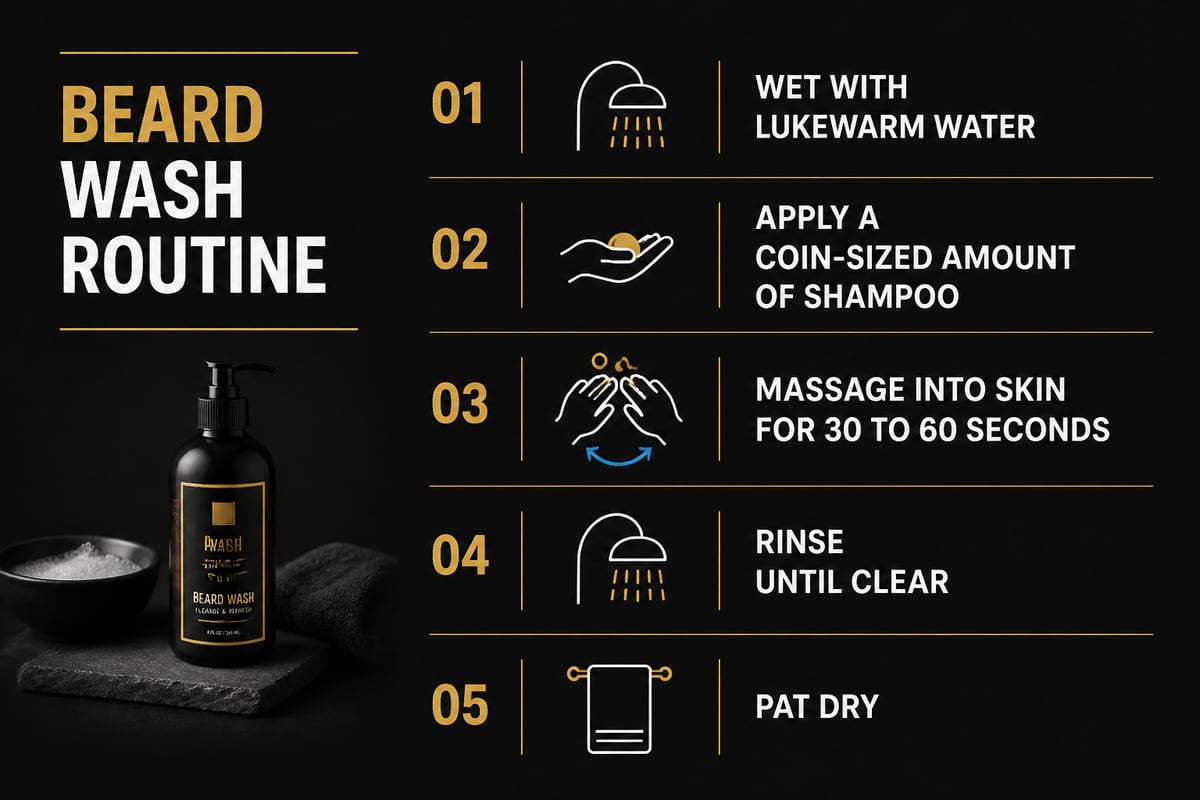
Wash your beard with lukewarm water, a small amount of shampoo massaged into the skin, and a thorough rinse. WebMD recommends exactly this: lukewarm water, cleanser worked into both beard and skin, and a rinse that removes all residue.
- Wet your beard fully. Lukewarm water softens the hair and opens the surface so cleanser spreads evenly. Hot water strips oil and inflames skin.
- Use a coin-sized amount. More lather does not mean more clean. Excess shampoo is harder to rinse and leaves residue.
- Massage into the skin, not just the hair. Use your fingertips in small circles for 30 to 60 seconds. This loosens dead skin cells and boosts circulation at the follicle.
- Rinse until the water runs clear. Leftover cleanser dries on the skin and causes the very itch you want to avoid.
- Pat dry with a towel. Rubbing roughens the cuticle, so press the water out instead.
How Often Should a Beard Be Washed?
Many men do well washing their beard two to three times a week, and more often if they sweat heavily or work in dusty conditions. A dermatologist quoted by Healthline suggests two to three washes per week for many people, adjusted for dirt exposure and skin type. The AAD recommends washing the face and beard daily with a gentle cleanser, so the right answer sits on a spectrum.
Use this as a guide:
| Your situation | Suggested wash frequency |
|---|---|
| Dry or sensitive skin, desk-based work | 2 to 3 times a week |
| Normal skin, moderate activity | Every other day |
| Oily or acne-prone skin, heavy sweating or dusty work | Daily with a gentle formula |
| Beard dandruff flare-up | Follow the treatment plan below |
Between washes, rinse with plain water so you remove surface dirt without removing oil. If your skin feels tight an hour after washing, wash less often. If it feels greasy and your beard smells stale, wash more.
What Does Beard Conditioner Actually Do?
Beard conditioner coats each hair with a thin layer of lipids and cationic (positively charged) ingredients that smooth the cuticle, trap moisture and cut friction. Wet hair carries a slight negative charge, and conditioning agents cling to it, which is why the hair feels softer and detangles easily.
Now agitate the problem. A beard that goes unconditioned stays rough. Each hair snags on its neighbour, you drag a comb through it, and tiny breaks add up until the beard looks thin at the ends. Dry hair also pulls moisture from the skin beneath, so the itch returns within a day.
The AAD advises applying moisturiser while skin and beard are still damp, and points acne-prone men toward beard conditioner rather than oil. The reason is straightforward. Damp skin holds more water, so a conditioner or moisturiser seals that water in. Oils are heavier and can clog pores on skin that already breaks out.
The Onesociety Soothe and Seal beard conditioner targets this step. Shea butter supplies fatty acids that reduce skin inflammation, and the lipid film it leaves on the hair shaft cuts friction. The range also comes in nourishing coconut and pink grapefruit scents.
Which Is the Best Beard Conditioner and Shampoo for Your Skin?
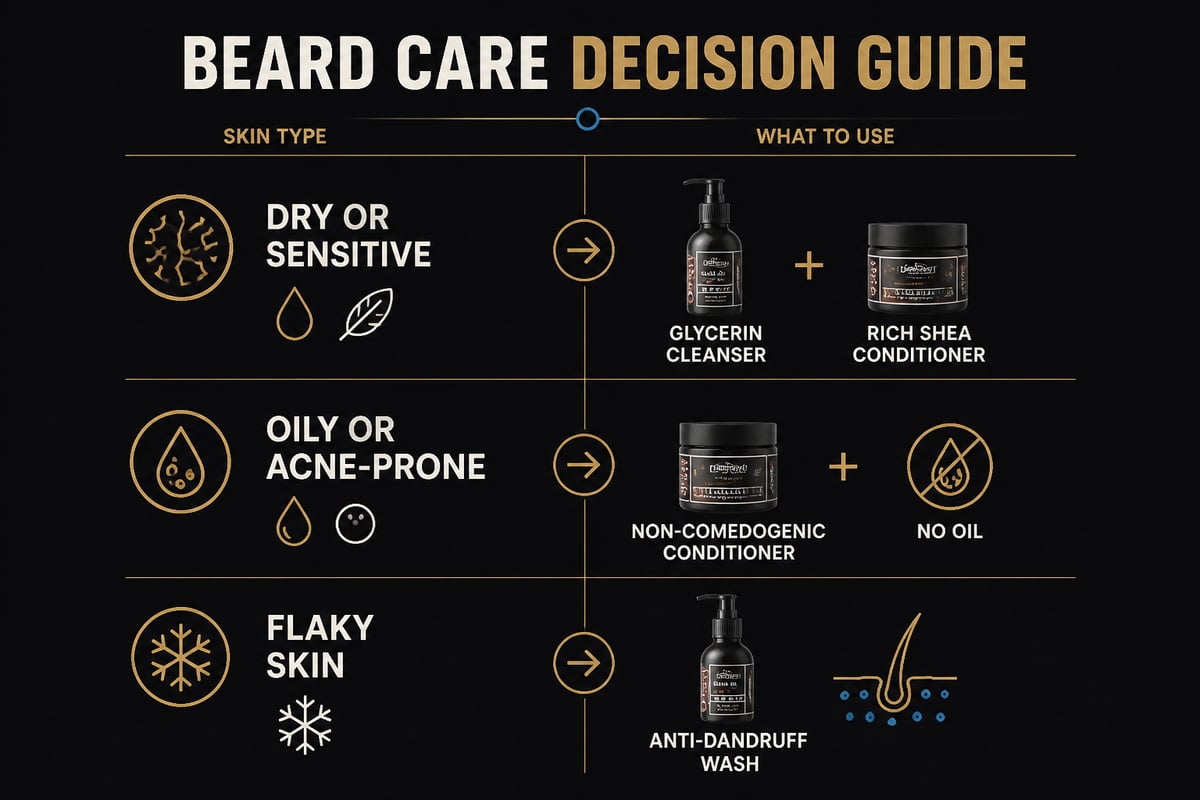
The best beard shampoo and conditioner depends on your skin type, so match the formula to what your skin does rather than to a label. The AAD and Healthline guidance both point to skin type as the deciding factor.
- Dry or sensitive skin: Choose a fragrance-light cleanser with glycerin, followed by a rich conditioner. Shea butter and plant lipids restore the barrier the wash loosens.
- Oily or acne-prone skin: The AAD recommends a small amount of non-comedogenic beard conditioner and avoiding beard oil. Non-comedogenic means formulated not to block pores.
- Normal skin: A balanced cleanser with a light conditioner works for most routines.
- Flaky skin that does not respond to moisture: This may be beard dandruff, covered below.
Your beard length matters too. Short stubble needs mostly skin care, so prioritise the shampoo. Longer beards need more conditioner because the ends are older and more worn.
How to Treat Beard Dandruff Without Drying Out Your Skin
Beard dandruff comes from an overgrowth of a skin yeast that feeds on sebum, and you treat it with an antifungal wash used weekly alongside gentle daily care. The flakes are not dry skin alone, so extra moisturiser rarely fixes them.
The AAD advises shampooing the beard and scalp at least weekly with a dandruff shampoo containing an active such as 2% zinc pyrithione or 1% selenium sulphide. WebMD notes that products with at least 1% ketoconazole may ease symptoms. These actives slow yeast growth, which reduces the inflammation that makes skin shed in clumps.
Leave the antifungal on for the time the label states, rinse well and follow with conditioner, because medicated washes can dry the hair. If redness, pus or painful bumps appear, see a doctor. Yale Medicine explains common beard and moustache skin problems and when treatment is worth seeking.
A Simple Beard Routine That Supports Growth
A growth routine runs in four steps: cleanse, condition, moisturise, and protect, and consistency matters more than any single product. A beard grows roughly the same speed for everyone, but healthy skin and unbroken hair let you keep every millimetre you grow.
Here is the sequence. Wash with a gentle shampoo two to three times a week. Apply conditioner to damp hair, leave it for a minute or two, then rinse. Seal with a butter or balm, since butter's fatty acids soften hair, while balm's wax layer holds moisture and shields against wind and cold. Comb through with a wide-toothed comb to spread product and untangle without snapping hairs.
This routine takes five minutes. If you want a quick fix with no daily effort, a beard will not reward you, because follicles respond to steady skin health over weeks.
Onesociety built its 90-Day Beard Challenge around that principle. The kit pairs a pH-balanced beard shampoo with conditioner, Beard Butter for nightly recovery, a Hydro-Lock Balm and a Beard Booster that targets the follicle. Because every formula works inside one system, you do not guess which products clash. Onesociety backs the challenge with a full refund guarantee, and it has served many customers. One Google-verified review reads, "Beard felt amazing after first wash."
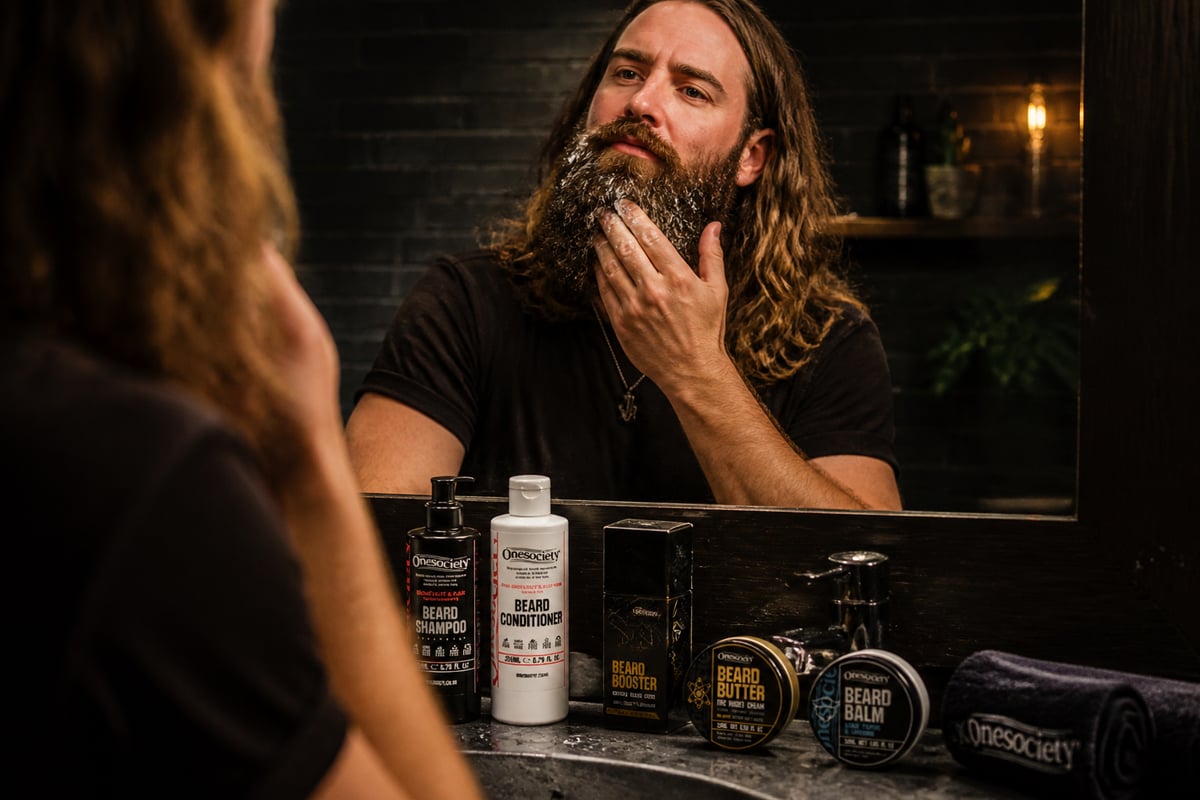
Why this solves the problem: the shampoo cleans without stripping, the conditioner and butter replace lost lipids, and the balm locks them in. You can buy the 90-Day Beard Challenge here, or browse the OneSociety range on Amazon UK if you prefer to order there.
Mistakes That Undo Your Beard Care
Most beard problems trace back to a handful of avoidable habits, and fixing them takes less effort than buying new products. Each one damages either the skin barrier or the hair shaft.
- Washing with hot water. Heat dissolves skin lipids and leaves the face tight and red. Stay lukewarm.
- Using head shampoo daily. Strong surfactants strip protective oils, so skin overproduces sebum or flakes.
- Skipping conditioner on longer beards. Older hair has had more wear, so it needs more lipid protection.
- Applying oil to breakout-prone skin. The AAD advises acne-prone men to avoid beard oil and choose a non-comedogenic conditioner.
- Towel-rubbing. Friction lifts the cuticle and snaps fragile hairs.
- Leaving shampoo residue behind. Film left on the skin irritates follicles and attracts dirt.
FAQ
Is beard shampoo different from regular shampoo?
Yes. Beard shampoo uses milder cleansers and skin-supporting ingredients such as glycerin and vitamin B5, because facial skin is thinner and produces less oil than the scalp. Regular shampoo cleans harder, which tends to dry and irritate the skin under a beard.
Can I use beard conditioner as a leave-in?
Some conditioners suit leave-in use and others need rinsing, so follow the label on your product. Leave-in formulas are lighter and absorb into damp hair to soften it through the day.
How long does it take to see results from a beard routine?
You should notice softer hair and less itch within the first few weeks, because moisture and barrier repair work quickly. Visible length retention takes longer, since beard hair grows slowly and you only see the benefit once unbroken hairs accumulate over several weeks.
Tonight, wash your beard with lukewarm water, condition it while damp and note how your skin feels the next morning. If you want a full system rather than piecing one together, Onesociety packs a shampoo, conditioner, butter, balm and booster into the 90-Day Beard Challenge, made from natural ingredients and backed by a money-back guarantee for growth. A steady daily routine decides how full your beard grows, so Accept Challenge and give your beard the 90 days it needs to show what it can do.