

Struggling with a patchy or slow-growing beard? You’re not alone. For many, beard growth is more than just a style choice—it’s a journey shaped by science and biology.
This guide is your roadmap to understanding beard growth in 2025. We’ll reveal the latest evidence-based tips, from how hormones and genetics influence results, to proven routines, nutrition, and grooming breakthroughs.
Ready to unlock your beard’s full potential? Dive in for science-backed solutions and step-by-step advice designed to help you achieve a fuller, healthier beard.
Understanding Beard Growth: The Science Explained
Struggling with patchy, uneven beard growth? You’re not alone. For many men, that dream of a full, healthy beard feels just out of reach. But what if you could decode the science behind it and finally understand what makes beards grow—or stall? Let’s peel back the skin and look at what’s really happening beneath the surface.
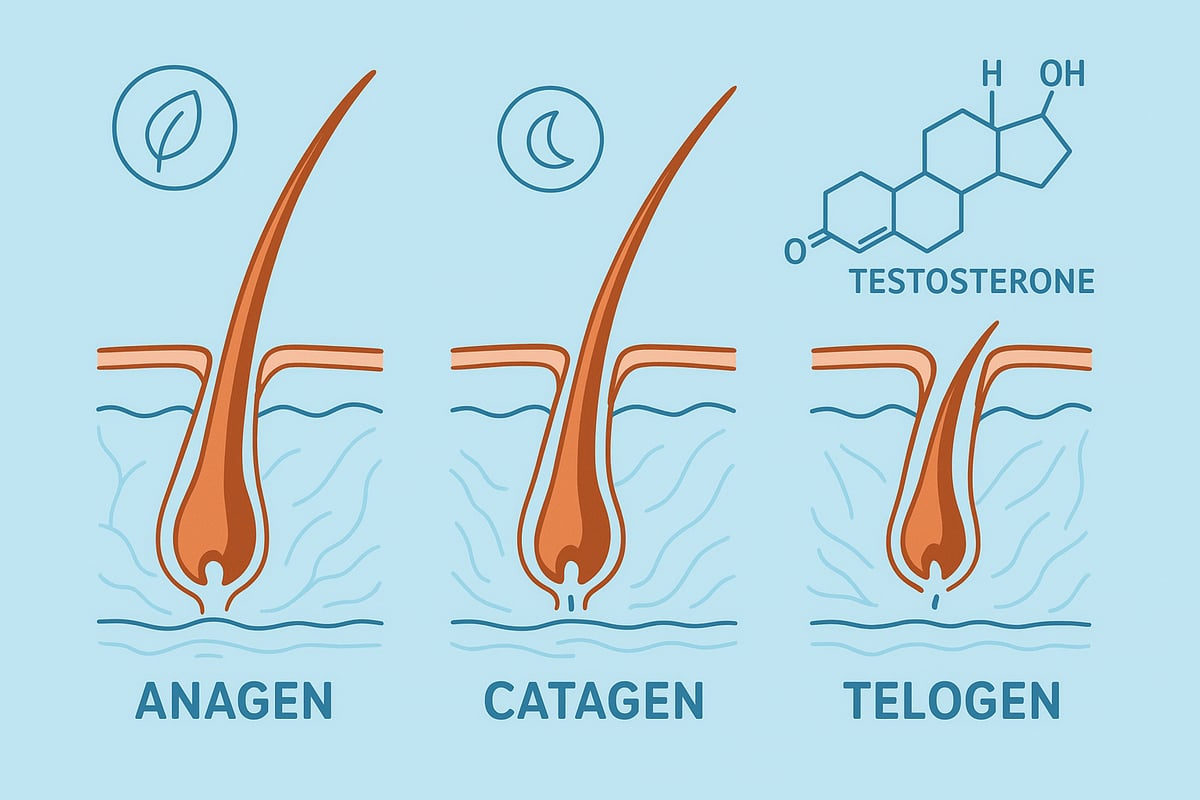
The Science of Beard Growth: Follicles and Phases
Every strand of your beard starts life deep inside a follicle. These tiny structures anchor each hair to your face. The journey of beard growth happens in three main phases: anagen (growth), catagen (transition), and telogen (rest).
- Anagen: This is the active growth phase. Most beard hairs stay here for 2–7 years, which explains why some men can grow longer, fuller beards.
- Catagen: A short, transitional phase where growth slows and follicles shrink.
- Telogen: The resting phase. Old hairs fall out, making room for new ones.
Here’s a quick snapshot:
| Growth Phase | Duration | What Happens |
|---|---|---|
| Anagen | 2–7 years | Active growth |
| Catagen | 2–3 weeks | Transition, slowdown |
| Telogen | 3–4 months | Rest, shedding |
On average, beard growth is about 1.25 cm per month. But don’t be fooled by numbers alone—your unique biology plays a massive role.
Hormones and Genetics: Why Beards Differ
Ever noticed some men sprout thick beards effortlessly, while others struggle with patchiness? The secret lies in androgenic hormones, mainly testosterone and dihydrotestosterone (DHT). These hormones bind to receptors in your hair follicles, triggering beard growth.
Problem: Low hormone levels or poor receptor sensitivity can limit beard growth.
Agitation: It’s frustrating to do everything right and still see gaps or slow progress.
Solution: Support natural hormone health through regular exercise, quality sleep, and a balanced diet. If you’re curious about optimising your beard growth further, explore Beard Growth Optimization Strategies for evidence-based approaches.
Patchiness and Slow Growth: Root Causes
Patchy beard growth isn’t just a cosmetic issue—it’s a biological puzzle. Dormant follicles, uneven hormone receptors, and poor blood flow all contribute.
Common causes include:
- Genetics: Some follicles are simply less responsive.
- Inflammation: Skin irritation can disrupt growth cycles.
- Nutrition: Deficiencies in protein, zinc, or vitamins stall follicle activity.
- Stress: High cortisol levels slow beard growth at the cellular level.
The solution? Address each root cause. For example, using peppermint oil stimulates blood flow by widening capillaries, delivering more nutrients to sluggish follicles.
Nature vs. Nurture: What Influences Growth
You inherit your beard growth potential from your family, but lifestyle factors can tip the scales. Environmental influences like diet, stress, and sleep directly affect follicular health.
Problem: Modern life makes it easy to neglect these basics.
Agitation: Even with the best products, ignoring health fundamentals limits your progress.
Solution: Prioritise nutrient-rich foods, manage stress, and aim for 7–9 hours of sleep to support optimal beard growth.
Age, Lifestyle and Beard Growth Myths
Did you know most men’s beards become thicker in their late 20s and 30s? That’s because androgen levels and follicle maturity hit their stride with age. Don’t fall for the myth that shaving speeds up beard growth—science shows it only affects hair tips, not the follicle’s cycle.
Instant results are also a myth. True beard growth takes time, patience, and a commitment to science-backed routines. Focus on what you can control, and remember: every beard is unique, shaped by both genetics and lifestyle.
The Beard Growth Timeline: What to Expect Week by Week
Growing a beard is not just about waiting and hoping for results. Each week brings its own challenges, changes, and opportunities for science-backed improvement. Understanding what happens beneath the surface during each stage of beard growth helps you take control of your progress, avoid common pitfalls, and stay committed for the long haul.
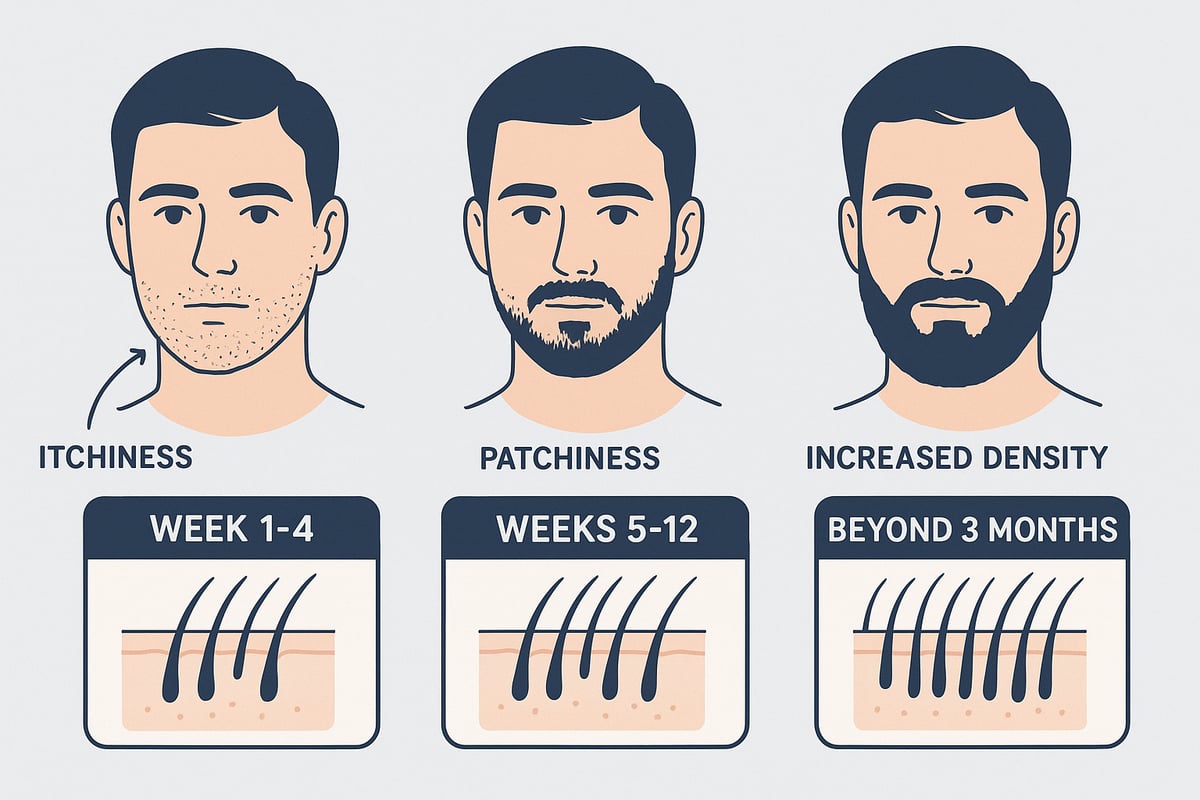
The First 4 Weeks: Laying the Foundation
The first month of beard growth is all about activating dormant follicles and setting the stage for future density. At this early stage, androgenic hormones like testosterone trigger the anagen (growth) phase, pushing new hairs to the surface. Most men notice hair first on the upper lip, chin, and sideburns, while cheeks and neck may lag behind.
Problem: Many experience intense itchiness by week two. This is not just surface irritation—new hairs push through the skin, causing micro-inflammation. Dead skin builds up, clogging follicles, which can further slow beard growth.
Agitation: The discomfort can be so persistent that many give up before real progress appears. Early patchiness is also common, leading to frustration and doubt.
Solution: Combat inflammation and dryness by using natural, fatty acid-rich ingredients like shea butter and jojoba oil. These ingredients soothe skin, reduce redness, and create an optimal environment for beard growth. For example, a science-backed formula using argan oil can mimic sebum, supporting hydration and follicle health. For more details on how specific oils support beard growth at this stage, see the Beard Growth Oil Guide.
Myth-busting: Shaving does not increase beard growth rate. Growth is determined by genetics and the hair cycle, not by cutting hair at the surface.
Early patchiness is completely normal. Follicles activate at different times, and expectations should be set for gradual improvement.
Weeks 5–12: Filling In and Overcoming Plateaus
As you enter weeks 5 to 12, beard growth shifts gears. The initial burst slows as some follicles move into the catagen (transition) and telogen (resting) phases. Patchiness often persists, especially on the cheeks and neck, due to uneven hormone receptor distribution and variable blood flow to follicles.
Problem: Progress can feel stagnant. You may be tempted to trim or shape too early, risking setbacks in length and fullness. Frustration mounts as areas remain thin or slow to fill in.
Agitation: Without visible results, motivation can dip. Over-trimming or aggressive grooming can damage new hairs, leading to breakage and even more patchiness.
Solution: Focus on stimulating circulation. Daily massage increases blood flow, delivering nutrients and oxygen that support beard growth. Topical vasodilators, such as peppermint oil, have been shown to enhance microcirculation, awakening dormant follicles. Consistent care—hydration, gentle cleansing, and massage—encourages more follicles to stay in the anagen phase, promoting fuller coverage.
Track your journey with weekly photos. Even subtle changes are easier to spot over time, helping you stay motivated and adjust your routine as needed. Remember, patience is essential for successful beard growth.
Beyond 3 Months: Achieving Density and Shape
After three months, most men notice a marked increase in density and coverage. This is when beard growth enters the maintenance phase, and new challenges arise.
Problem: Split ends, dryness, and unruly growth can compromise your beard’s health and appearance. Without intervention, hair becomes brittle and prone to breakage.
Solution: Introduce conditioners rich in fatty acids, like argan oil, to deeply hydrate and protect each strand. Regular, careful trimming removes split ends without sacrificing length, and shaping your beard along natural lines enhances fullness. Data shows beard growth can continue to improve well into your 30s, so consistent care and patience pay off.
Key Factors Affecting Beard Growth in 2025
What really shapes your beard growth journey? It's not just luck or a magic product. Several core factors work together behind the scenes, affecting how thick, healthy, or even how patchy your beard becomes. In 2025, understanding these influences can help you take targeted, evidence-based action for real results.
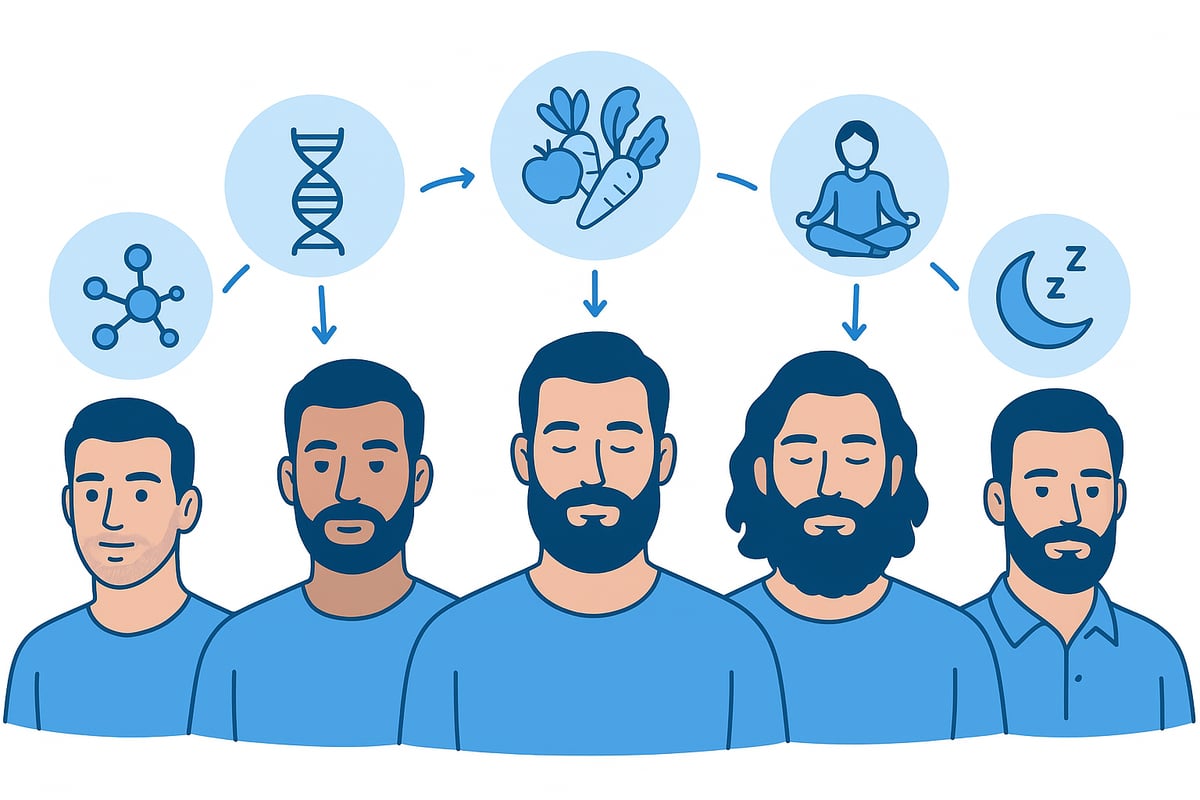
Genetics and Hormones: What You Can and Can’t Change
Problem: You might notice that some men enjoy effortless beard growth, while others struggle with patchiness. The root of this is genetics. If your father or grandfather had a full beard, your chances are higher. Genes determine how many follicles you have and how sensitive they are to androgens, the hormones responsible for facial hair.
Agitate: It can be discouraging if your beard growth seems slow or uneven, especially when you see others growing thick beards in months. This often comes down to how your follicles respond to testosterone and DHT. Low hormone levels or poor receptor sensitivity mean your beard might stay thin, even with the best care.
Solution: While you can't rewrite your DNA, you can support your body's natural hormone production. Regular exercise, plenty of sleep, and a balanced diet all help maintain optimal androgen levels, which directly impact beard growth. Medical treatments are available for severe cases, but these come with risks and should only be considered with expert advice. Remember, beard growth often continues to improve into your 30s as your hormone profile matures.
Nutrition and Diet: Feeding Your Follicles
Problem: Even if your genetics are solid, poor nutrition can sabotage beard growth. Hair follicles need a steady supply of building blocks to produce strong, healthy strands.
Agitate: Many modern diets lack key micronutrients like biotin, zinc, and omega-3s. This can lead to weak, brittle hair that breaks easily or grows slowly, leaving you frustrated.
Solution: Focus on foods rich in proteins, healthy fats, and essential vitamins. Eggs, nuts, leafy greens, and fatty fish are all beard-friendly. Biotin, in particular, supports keratin infrastructure, giving your beard strength.
| Nutrient | Function for Beard Growth | Best Sources |
|---|---|---|
| Protein | Builds hair structure | Eggs, fish, lean meats |
| Biotin | Supports keratin | Nuts, seeds, eggs |
| Zinc | Aids hormone production | Shellfish, legumes |
| Omega-3s | Reduces inflammation | Salmon, chia seeds |
| Vitamin D | Stimulates follicle activity | Sunlight, mushrooms |
For added support, consider using a Beard Conditioner for Growth that is formulated with nutrients specifically to nourish and fortify facial hair.
Lifestyle, Stress, and Sleep
Problem: Stress is a silent thief of beard growth progress. High cortisol disrupts the delicate balance of hormones needed for healthy hair.
Agitate: You might notice increased shedding or stalled growth during periods of chronic stress or poor sleep. This is because stress hormones can push follicles into a resting phase, halting new beard growth.
Solution: Prioritise stress management through meditation or exercise, and aim for 7 to 9 hours of sleep each night. Studies show that men with lower stress levels and consistent sleep patterns experience less hair loss and more robust beard growth over time.
Skincare and Environment
Problem: Dirty, clogged skin can choke out beard growth before it even starts. Environmental factors like pollution, harsh weather, and UV rays further stress follicles and slow their cycle.
Agitate: If you skip cleansing or use harsh chemicals, you might face ingrown hairs, irritation, or stunted beard growth. These issues can make progress feel impossible.
Solution: Keep your skin clean with gentle cleansers, exfoliate weekly to clear dead cells, and always use SPF if you spend time outdoors. Avoid sulphates and parabens, which can strip away natural oils and damage your beard's protective barrier. Healthy skin is the foundation for optimal beard growth.
Proven Beard Growth Routines and Techniques
Building a fuller, healthier beard takes more than patience—it takes science-backed routines. If you have struggled with patchiness or slow results, you are not alone. Let us break down proven steps that transform beard growth from guesswork into a reliable process.
Daily Beard Care Routine: Step-by-Step
Problem: Many men wash their faces but neglect the specialised needs of facial hair. This leads to dryness, itch, and blocked follicles, all of which slow beard growth.
Agitate: It feels unfair when your routine leaves you with brittle, patchy hair. Why does it seem like others achieve thicker results with ease?
Solution: A dedicated beard growth routine targets the root causes. Start by cleansing with a sulphate-free beard shampoo—this removes dirt without stripping natural oils that nourish follicles.
Next, exfoliate weekly. Dead skin and clogged pores block hair emergence and can cause ingrown hairs. A gentle scrub keeps skin clear, supporting healthy beard growth.
Hydration is crucial. Apply a natural beard oil rich in argan or jojoba. These oils mimic your skin's sebum, locking in moisture and soothing inflammation. For the best results, distribute oil evenly with a beard comb, which also stimulates blood flow.
Finish with a daily massage. Spend 2–3 minutes working your fingertips in circular motions. This boosts circulation, delivering nutrients to each follicle and helping awaken dormant ones.
Consistency is everything. Small daily actions add up to visible beard growth over weeks. For those looking for an all-in-one solution, Complete Beard Care Kits make it easy to maintain every step of your routine.
Advanced Stimulation: Science-Backed Methods
Problem: You follow every tip, but stubborn patches remain. Dormant follicles resist even the best products, leaving your beard looking incomplete.
Agitate: It is frustrating to invest time and money, only to see little change. Could there be a missing scientific link?
Solution: Advanced stimulation techniques address beard growth at the cellular level. Microneedling, or derma rolling, uses tiny needles to create micro-injuries in the skin. This process triggers healing and increases growth factors and collagen production, which can wake up dormant follicles.
Topical vasodilators, like peppermint oil, increase blood flow to the area. More blood means more nutrients reach the follicle root, supporting stronger beard growth. Some opt for minoxidil, but always consult a professional before starting medicated treatments.
Red light therapy is another innovative tool. By increasing mitochondrial activity in follicle cells, it encourages healthier, faster growth. Studies have shown up to a 15 percent improvement in density with regular microneedling.
Always patch-test new methods and seek advice from a dermatologist to avoid irritation or unwanted side effects. Science is your ally in achieving consistent beard growth.
Grooming for Growth: Trimming, Shaping, and Maintenance
Problem: Split ends, uneven lines, and poor hygiene can stunt beard growth. Over-trimming or using dirty tools risks breakage and infection.
Agitate: It is disheartening when maintenance efforts sabotage your progress. How do you keep your beard neat without sacrificing length or health?
Solution: Early trimming should focus on removing split ends, not cutting back new length. Healthy ends prevent breakage, allowing for steady beard growth. Shape your beard by carefully defining the neckline and cheek lines. This gives a fuller appearance by following natural growth patterns.
Avoid over-trimming, as this can set back months of effort. Instead, use precision trimmers for targeted shaping. Clean your tools before every use—bacteria or fungi can cause folliculitis, leading to patchy loss.
Monthly trims maintain health and shape without sacrificing progress. For those serious about their beard growth journey, Natural Beard Oils and Balms support optimal hydration and follicle health, preventing split ends and dryness.
Why Choose Natural, Science-Backed Beard Care?
Problem: Many commercial products contain harsh chemicals that strip away natural oils, leaving skin irritated and hair weak. This can stunt beard growth and cause allergic reactions.

Agitate: You invest in your beard, only to see itch, flaking, or slow results. Synthetic ingredients sabotage your progress from the start.
Solution: Onesociety offers 100 percent natural, science-backed beard oils, balms, and conditioners—free from parabens and sulphates. Their 90-Day Beard Challenge combines nutrition, expert coaching, and a results guarantee. Natural oils like argan and jojoba mimic your skin's sebum, reducing inflammation and supporting optimal follicle function. With a customer-centric approach and a full refund guarantee, you can trust the results.
Latest Breakthroughs & Beard Growth Myths Debunked for 2025
The world of beard growth is evolving rapidly, with scientific discoveries and clever technology reshaping what’s possible. If you’re tired of patchy results or stuck in a rut, these 2025 breakthroughs may be the game-changer you need.
2025 Innovations: What’s New in Beard Science?
Problem: Many men struggle with slow or uneven beard growth despite following routines. Traditional oils or supplements often plateau in effectiveness, leading to frustration.
Agitate: It’s disheartening when you invest time and money, but your beard growth seems to stall. You’re not imagining things — older products may not address the real scientific roadblocks.
Solution: Enter the science-led innovations of 2025. The latest peptide-based serums use bioactive molecules that signal hair follicles to prolong their growth phase. This is crucial, as a longer anagen phase means more time for hair to thicken and fill in.
Clinical studies now show peptide serums can boost beard density by up to 20 percent. At the same time, microbiome research reveals that healthy skin flora reduce inflammation, allowing beard growth to flourish. If you’re looking for a holistic approach, maintaining a balanced skin microbiome is as important as the products you apply.
Smart grooming devices are also making an impact. LED combs emit specific wavelengths that energise follicle cells, while connected apps allow you to track progress with precision. For a deeper dive into these trends, see the Beard Care Industry Trends 2025 for a look at how science and technology are driving the industry forward.
If you want to take your beard growth to the next level, these innovations are worth exploring. Remember, the science is clear: targeted, evidence-based interventions are outperforming old myths and guesswork.
Common Myths and Mistakes to Avoid
Problem: Outdated advice and persistent myths can sabotage your beard growth journey. Misinformation is everywhere, and following the wrong routine can waste months.
Agitate: Have you ever heard that shaving will make your beard grow faster? Or that any oil will do the trick? These misconceptions can hold you back, leaving you frustrated and stuck at square one.
Solution: Let’s set the record straight with science.
- Myth: Shaving increases beard growth speed. In reality, hair growth is governed by follicle cycles, not shaving frequency.
- Myth: All beard oils are equal. Only oils rich in natural emollients and antioxidants, like argan or jojoba, support follicle health by mimicking sebum and reducing inflammation.
- Mistake: Over-washing. Stripping natural oils with harsh cleansers makes hair brittle and slows beard growth. Use gentle, sulphate-free cleansers.
- Mistake: Ignoring nutrition and sleep. Growth depends on protein, vitamins, and hormone cycles, so lifestyle matters as much as products.
- Mistake: Relying on products alone. Evidence shows that combining topical care with proper diet, stress management, and rest delivers the best beard growth results.
Stick to routines backed by clinical data, and avoid shortcuts. Trusting science over hearsay is your best route to a fuller, healthier beard.
FAQs: Expert Answers to Your Top Beard Growth Questions
- How fast should my beard grow? On average, beard growth is about 1.25 cm per month, but it varies with genetics and age.
- Can I fix a patchy beard? With patience, targeted care, and science-backed products, most men see improvement in patchiness.
- Does shaving help? No, beard growth rate depends on the follicle’s natural cycle, not how often you shave.
- What’s the best way to care for my beard while growing? Prioritise hydration, gentle cleansing, and balanced nutrition for optimal results.
- Are beard growth treatments safe? Stick to natural, clinically tested products for the safest experience, and avoid unproven chemicals.
You’ve made it this far, so you clearly care about giving your beard its best shot in 2025 – and now you know the science, routines, and proven techniques that actually work. But here’s the real secret: it’s not just about patience or genetics, it’s about choosing products with real, natural ingredients that support your journey from day one. Onesociety’s 90 Day Beard Challenge is your chance to experience real transformation, guided by expert advice and backed by a full refund guarantee. Ready to see what your beard is truly capable of? Join the adventure here: 90 DAY BEARD CHALLENGE