

Every man who's ever watched his carefully grown facial hair transform into a patchy disaster after one wrong trimmer stroke knows the frustration. You've invested weeks into growing that beard, researched the right beard care products, and then one slip with the trimmer undoes everything. The problem isn't just aesthetic-it's biological. When you cut facial hair incorrectly, you disrupt the hair shaft structure, trigger inflammation in follicles, and potentially damage the delicate skin beneath. A quality beard and mustache trimmer isn't optional kit; it's essential equipment for maintaining facial hair health whilst avoiding dermatological complications that plague amateur groomers.
Understanding Beard and Mustache Trimmer Technology
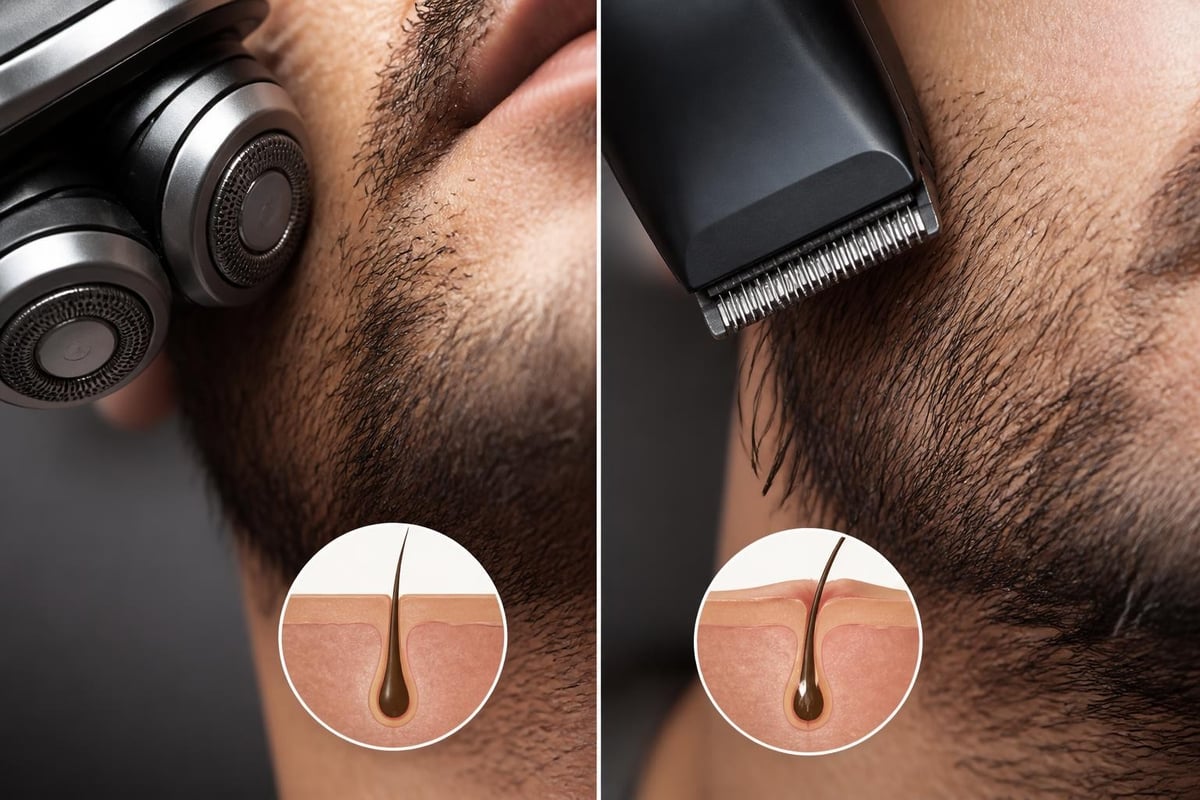
The blade mechanism in your beard and mustache trimmer determines whether you achieve clean cuts or rip through hair shafts like a blunt lawnmower. Modern trimmers use either rotary or oscillating blade systems, each with distinct biological effects.
Oscillating blades move side-to-side at speeds between 6,000-14,000 strokes per minute. This rapid movement creates a scissor-like cutting action that severs hair cleanly at the follicle opening without pulling. The precision matters because pulled hair triggers an inflammatory response in the follicle-your skin's defensive mechanism against perceived trauma.
Rotary systems spin circular blades beneath protective guards. They excel at bulk reduction but often miss fine detail work around moustache edges. Research on facial hair structure shows that terminal beard hairs have a medulla (inner core) surrounded by cortex cells-and rotary blades can crush this structure rather than cut it cleanly.
Blade Material Science
- Stainless steel: Resists corrosion but dulls faster with regular use
- Titanium-coated: Reduces friction by 40%, minimizing heat buildup and skin irritation
- Ceramic: Stays sharper longer and remains cool during extended trimming sessions
- Carbon steel: Sharpest edge but requires meticulous maintenance to prevent rust
Self-sharpening blade systems grind against each other during operation, maintaining edge geometry. This feature prevents the microscopic burrs that develop on dull blades-burrs that snag hair and tear follicles rather than cutting cleanly.
Selecting the Right Guard Lengths
Guard attachments control cutting depth by creating distance between blades and skin. The spacing isn't arbitrary-it's calibrated to specific hair lengths and facial contours.
| Guard Length | Hair Length Result | Best Application | Skin Contact Risk |
|---|---|---|---|
| 0.5-1mm | Stubble definition | Neckline cleanup | High (requires steady hand) |
| 3-6mm | Short beard maintenance | Overall length control | Medium |
| 9-12mm | Medium beard shaping | Bulk removal | Low |
| 15-25mm | Long beard trimming | Length preservation | Very low |
Your facial hair density affects which guards work best. Clinical observations show that men with thick, coarse terminal hairs need wider guard spacing to prevent clogging, whilst those with finer vellus-like facial hair achieve better results with narrower guards.
The geometry of your face dictates guard selection too. Angular jawlines handle shorter guards well because the trimmer maintains consistent skin contact. Rounded face shapes need adjustable guards that flex with contours-rigid guards skip areas and create uneven patches.
Guard Maintenance Protocol
Trapped hair fragments between guard teeth act as wedges, pushing the guard away from its calibrated position. This spacing error compounds across your trimming session. After each use, disassemble guards and flush them under running water whilst brushing with a stiff-bristled tool to dislodge embedded hairs and dead skin cells.
Trimming Techniques for Different Facial Hair Patterns
Facial hair doesn't grow uniformly. Dermatologist-reviewed guidance confirms that growth rates vary by facial zone-cheek hair grows 0.27mm daily whilst chin hair reaches 0.38mm. This disparity requires zone-specific trimming approaches.
Against-the-grain trimming cuts closer but increases ingrown hair risk by 35%. The blade catches hairs before they exit the follicle fully, slicing them at an angle that creates sharp points. These points curl back into surrounding skin as they grow, triggering pseudofolliculitis barbae-the clinical term for razor bumps.
With-the-grain passes reduce skin contact and inflammation but require multiple passes for desired length. The trade-off balances speed against skin health.
Mustache Precision Work
Moustache hairs grow from follicles positioned closer together than beard follicles-averaging 65 follicles per square centimeter versus 45 for cheek areas. This density demands a beard and mustache trimmer with narrower blade heads.
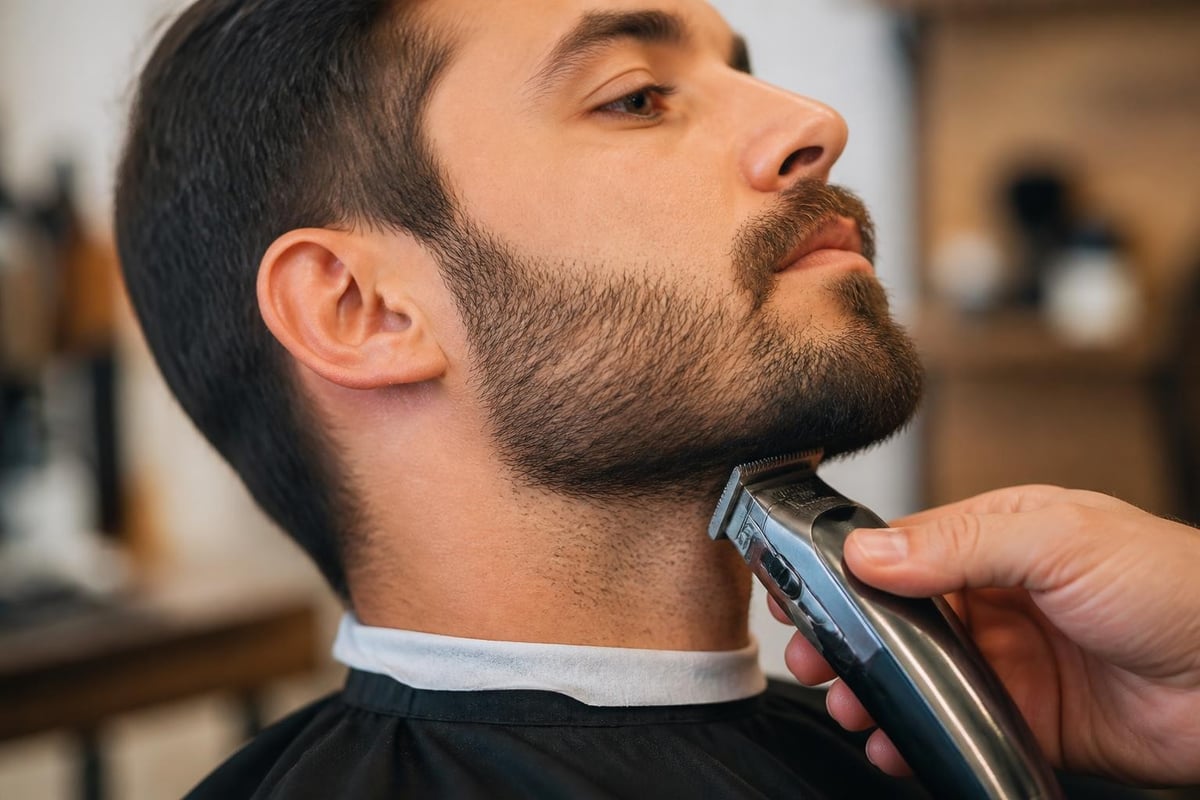
The philtrum (the groove between nose and upper lip) presents unique challenges. Hairs here grow at oblique angles, not perpendicular to skin. Approach this area with the trimmer angled to match hair direction, using short 1-2cm strokes rather than long sweeps.
Power Systems and Performance
Corded trimmers deliver consistent power output-typically 10-12 watts-throughout your session. The voltage remains stable, maintaining blade speed even through dense patches.
Battery-powered models offer portability but their performance degrades as charge depletes. Lithium-ion batteries maintain voltage longer than nickel-metal hydride, but both eventually slow blade oscillation speed, creating uneven cuts in your final trimming zones.
Motor torque determines how effectively the trimmer handles thick hair. High-torque motors (8,000+ RPM) power through coarse terminal hairs without stalling. Low-torque alternatives (4,000-6,000 RPM) work for fine hair but bog down in dense growth, pulling rather than cutting.
Quick-charge technology now delivers 60 minutes of runtime from 5-minute charging bursts. This feature salvages forgotten pre-event grooming sessions but shouldn't replace regular charging-rapid charging cycles degrade battery capacity over time.
Hygiene and Skin Health Considerations
Your beard and mustache trimmer contacts sebum, dead skin cells, and bacteria with every use. Common skin problems associated with facial hair include folliculitis (inflamed follicles) and fungal infections-both exacerbated by contaminated grooming tools.
Detachable blade systems allow thorough cleaning. Remove blades after each session and rinse under hot water (60°C minimum) to dissolve sebum whilst flushing debris. Monthly deep cleaning with 70% isopropyl alcohol eliminates bacteria that water alone misses.
Oil accumulation on blades creates friction, generating heat that irritates skin. The heat also oxidizes natural oils in your beard, breaking down the lipid barrier that protects hair shafts from environmental damage. Apply one drop of mineral-based trimmer oil to blades after cleaning-the oil reduces friction by 30% whilst preventing rust formation.
Pre-Trim Skin Preparation
- Wash facial hair with lukewarm water to soften hair shafts (cold water causes hair to contract and stand rigid)
- Pat partially dry-slightly damp hair cuts more cleanly than bone-dry or soaking wet
- Brush in the direction of growth to separate hairs and reveal natural length
- Check for skin irritation or active breakouts; delay trimming inflamed areas
Trimming over active acne lesions or dermatitis patches spreads bacteria across your face. University health guidance recommends treating skin conditions before introducing mechanical irritation from trimmer blades.
Advanced Features Worth the Investment
Vacuum systems integrated into trimmer heads capture 90% of cut hairs during use. This feature prevents hairs from falling into sink drains (where they combine with soap to create blockages) and reduces cleanup time by 15 minutes per session.
Adjustable taper levers shift blade positions in 0.1mm increments without changing guards. Professional barbers use this feature to create graduated fades-smooth transitions between different hair lengths. For home users, it allows micro-adjustments when you've trimmed slightly too short in one area.
Waterproof housing (IPX7-rated) enables shower trimming. Wet trimming offers advantages: water weight straightens curly hairs, revealing true length, and steam opens pores, reducing follicle resistance. The downside? You sacrifice visual precision in steamy bathroom mirrors.
Digital length displays remove guesswork. LCD screens show exact cutting length in millimeters, ensuring consistency across multiple sessions. This precision matters for beard competitions and professional settings where facial hair presentation follows strict guidelines.
Troubleshooting Common Trimmer Problems
Uneven cutting patterns indicate blade misalignment. The upper and lower blades must overlap precisely-gaps as small as 0.2mm cause the trimmer to skip hairs. Realign blades by loosening adjustment screws, pressing blades together firmly, and retightening whilst maintaining pressure.
Battery drain accelerates when you trim wet hair or use maximum length settings. Water adds resistance, forcing the motor to work harder and consume more power. Thick hair accumulation between blades creates similar drag. Consumer testing methodologies demonstrate that regular cleaning extends battery life by 25% compared to neglected trimmers.
Pulling sensations during trimming signal dull blades. Hair shafts contain a protein called keratin-blades must be sharp enough to sever keratin bonds cleanly. Dull edges crush and tear instead. Replace blade assemblies every 18-24 months with regular use, sooner if you trim daily.
Heat buildup after 10+ minutes of continuous use isn't abnormal but indicates you're overworking the motor. Break trimming sessions into 5-minute intervals with 2-minute cooling periods. Excessive heat damages lithium-ion batteries and degrades the lubricating oil on blades.
Coordinating Trimmer Use with Beard Care Products
Your beard and mustache trimmer shapes facial hair structure, but growth quality depends on follicle health. The cutting action removes dead ends and splits, but it doesn't address the nutritional needs of hair follicles or the skin beneath.
After trimming, your beard needs moisture restoration. The mechanical action of trimming strips natural oils from hair shafts-oils that normally coat each hair from root to tip, protecting against breakage and environmental damage. This is where a comprehensive approach to beard care makes the difference between a well-maintained beard and a truly healthy one.
The 90-Day Beard Challenge addresses this gap by combining follicle-stimulating ingredients with deep hydration formulas. The Beard Booster increases blood flow to follicles, delivering oxygen and nutrients that support keratin production-the protein your beard comprises. Meanwhile, Beard Butter provides overnight recovery with fatty acids that penetrate the hair cortex, reinforcing internal structure that trimming can't affect. This systematic approach transforms trimming from maintenance to growth optimization.


Specialty Trimmer Types for Specific Needs
Detail trimmers feature blade heads narrower than 15mm-designed for precision edging around moustache curves and sideburn angles. The compact size allows visibility of the cutting line, preventing over-trimming in critical areas.
Body groomers share similar motor technology but use wider guards and rounded blade tips to navigate body contours safely. Don't substitute a body groomer for facial work-the blade geometry lacks the precision facial hair demands.
Nose and ear trimmers use rotary blades positioned perpendicular to the handle. These trimmers cut protruding hairs whilst protecting delicate nasal and ear canal skin. Never insert a standard beard and mustache trimmer into nostrils or ears-the blade exposure risks lacerations to mucous membranes.
Professional-grade trimmers deliver higher torque and offer modular blade systems. Barbers swap blade types mid-session: cutting blades for bulk removal, then finishing blades for detail work. Home users rarely need this versatility unless maintaining complex beard styles that combine multiple length zones.
Trimmer Ergonomics and Grip Design
Weight distribution affects control precision. Top-heavy trimmers (motor positioned near blade head) tire your wrist during extended sessions. Balanced designs place the motor mid-handle, allowing relaxed grip without compensating for pull.
Rubberized grips prevent slippage when hands are damp from pre-trim washing. Textured patterns create friction points that maintain contact even with wet palms. Smooth plastic handles slip easily-a problem when working near sensitive areas like the upper lip.
Timing Your Trimming Sessions
Facial hair grows fastest between 10 AM and 2 PM when testosterone levels peak. Trimming during this window means you're cutting hair at its most active growth phase, but the difference is marginal-roughly 0.02mm over four hours.
More important: trim when you're alert and unhurried. Rushed trimming sessions lead to uneven results that take weeks to correct. Allow 15-20 minutes for thorough work, 30+ minutes if you're maintaining a complex style with multiple length zones.
Post-workout trimming seems convenient but sweat residue clogs trimmer blades rapidly. The salt content in sweat also accelerates metal corrosion. If you must trim after exercise, shower first and allow facial hair to dry partially before starting.
Evening trimming offers advantages for those with sensitive skin. Any minor irritation from blade contact has overnight to calm before you face the public. Morning trimming leaves redness visible throughout your day.
Storage and Maintenance Best Practices
Humidity degrades trimmer components. Store your beard and mustache trimmer in a dry location-not bathroom cabinets where shower steam condenses on metal parts. Moisture initiates rust formation on blades and corrodes electrical contacts in battery compartments.
Blade guards protect cutting edges during storage. Without guards, blades contact other objects in drawers, creating microscopic nicks that dull the edge. These tiny imperfections multiply across the blade length, degrading cutting performance significantly.
Charging habits affect battery longevity. Lithium-ion batteries last longest when maintained between 20-80% charge. Draining to zero or charging to 100% repeatedly stresses battery chemistry, reducing total cycle life by up to 40%. For trimmers you use weekly, charge to 80% after each session rather than leaving plugged in continuously.
Professional servicing every 24 months recalibrates blade alignment and replaces worn motor bearings. This maintenance costs £20-40 but extends trimmer lifespan by 3-5 years compared to unserviced units.
Navigating Beard Trimming Challenges by Hair Type
Coarse, wiry facial hair resists cutting. The thick hair shaft requires more force to sever, which lower-powered trimmers can't generate. These hair types need high-torque motors and sharp, aggressive blade angles-typically 30-35 degrees from perpendicular.
Fine, soft facial hair lies flat against skin, making it difficult for trimmer blades to catch individual hairs. Shorter guards (3mm or less) work better because they force hair to stand before cutting. Pre-trim brushing in the opposite direction of growth also helps separate and lift fine hairs.
Curly facial hair creates unique problems. The natural curl pattern means hairs of identical length appear different lengths because some coil tightly whilst others relax. Trim curly beards slightly longer than your target length-the hair will spring back shorter after cutting, and the coil tightens as it dries.
Patchy growth patterns demand strategic trimming. Rather than maintaining uniform length everywhere, trim denser areas shorter and leave sparse patches slightly longer. This optical illusion creates perceived fullness across the entire beard.
Mastering your beard and mustache trimmer transforms facial hair maintenance from guesswork into precision grooming backed by biological understanding. When you combine proper trimming technique with follicle-supporting nutrition and hydration, you're not just maintaining your beard-you're optimizing its growth potential. Onesociety builds on this foundation with scientifically formulated products that address every stage of beard development, from initial growth stimulation through daily maintenance. Explore how natural ingredients and evidence-based formulations can elevate your grooming routine beyond what trimming alone achieves.