

Struggling with a patchy, uneven beard that refuses to fill in? You're not alone. Thousands of men face the same frustration, investing time and effort into their facial hair only to see minimal results. The issue isn't a lack of trying-it's a lack of understanding the science behind what actually stimulates beard follicles. Dormant follicles need specific nutrients, proper circulation, and the right environment to activate growth. Without addressing these biological factors, you're fighting an uphill battle. This guide delivers evidence-based beard growth tips that target the root causes of slow growth, transforming your approach from guesswork to strategic action.
Understanding the Science Behind Beard Growth
Beard growth operates through a complex biological process controlled by androgens, specifically testosterone and dihydrotestosterone (DHT). DHT binds to receptors in your hair follicles, triggering the anagen (growth) phase. Without adequate DHT conversion or receptor sensitivity, follicles remain dormant or produce thin, weak hairs.
Your genetics determine follicle density and androgen receptor sensitivity, but external factors influence how effectively those follicles function. Blood circulation delivers oxygen and nutrients to follicle cells, while hormonal balance maintains the growth cycle. Understanding these mechanisms allows you to target interventions that actually work.
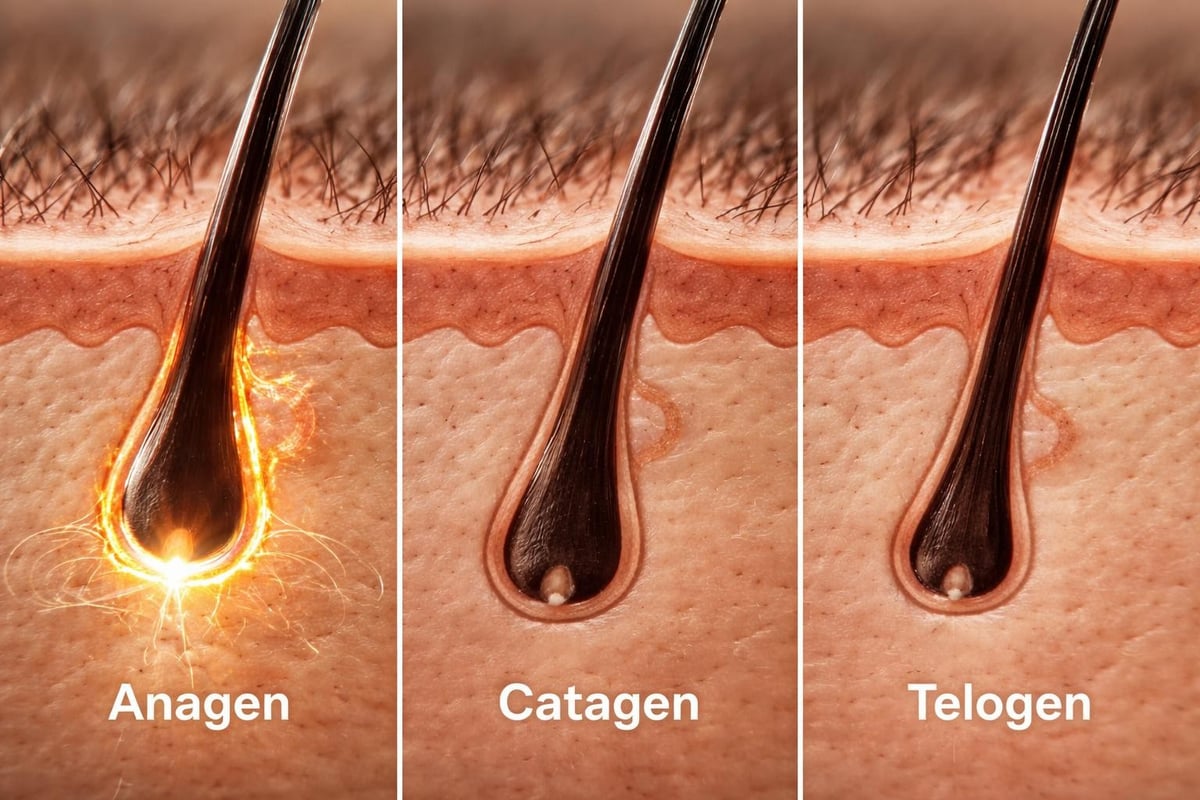
The Three-Phase Hair Growth Cycle
Beard hairs progress through distinct phases that determine length and thickness:
- Anagen Phase: Active growth lasting 2-6 years, determining maximum beard length
- Catagen Phase: Transitional period (2-3 weeks) where growth stops and follicles shrink
- Telogen Phase: Resting period (2-4 months) before hairs shed and the cycle restarts
Optimising the anagen phase duration and follicle health directly impacts your beard's potential. Poor nutrition, stress, and inadequate grooming can shorten this critical growth window, leaving you with a patchy result.
Nutrition: The Foundation of Effective Beard Growth Tips
Problem: Your beard won't thrive on an inadequate diet, no matter what products you apply externally.
Agitation: Nutrient deficiencies starve follicles of the building blocks they need. Insufficient protein means keratin production slows. Low biotin levels weaken hair structure. Without vitamin E, poor circulation limits oxygen delivery to follicle cells.
Solution: Strategic nutrition directly fuels beard growth by providing the raw materials for keratin synthesis and supporting hormonal balance.
Essential Nutrients for Beard Development
| Nutrient | Function | Natural Sources |
|---|---|---|
| Biotin (B7) | Strengthens keratin infrastructure, prevents brittleness | Eggs, almonds, sweet potatoes |
| Vitamin E | Improves blood flow, delivers oxygen to follicles | Spinach, avocados, sunflower seeds |
| Omega-3 Fatty Acids | Reduces inflammation, supports cell membrane health | Salmon, walnuts, flaxseeds |
| Zinc | Regulates testosterone production, maintains hormone balance | Oysters, beef, pumpkin seeds |
| Vitamin D | Activates hair follicle cycling, initiates new growth | Fatty fish, egg yolks, sunlight exposure |
Implementing these nutritional beard growth tips requires consistency. Research shows that proper diet significantly influences beard growth rates, with visible improvements appearing within 8-12 weeks of sustained intake.
Protein: The Building Block
Keratin, the structural protein comprising 95% of hair, demands adequate protein consumption. Aim for 1.6-2.2 grams per kilogram of body weight daily, prioritising complete protein sources that deliver all essential amino acids.
Quality matters. Grass-fed beef provides zinc and B vitamins alongside protein. Wild-caught fish delivers omega-3s and vitamin D. Plant-based options like quinoa and hemp seeds offer complete amino acid profiles with additional minerals.
Lifestyle Modifications That Accelerate Growth
Beyond nutrition, daily habits either support or sabotage follicle function. These beard growth tips address systemic factors that influence hormonal balance and cellular health.
Exercise and Testosterone Optimisation
Resistance training stimulates testosterone production through mechanical stress on muscle fibres. Compound movements-squats, deadlifts, bench presses-generate the greatest hormonal response. This elevated testosterone converts to DHT, directly signalling beard follicles to activate growth.
Studies demonstrate that men who engage in regular strength training show 15-20% higher baseline testosterone levels compared to sedentary individuals. This hormonal advantage translates to faster beard growth and increased density.
High-intensity interval training (HIIT) provides additional benefits by improving insulin sensitivity and reducing cortisol, the stress hormone that antagonises testosterone production.
Sleep: The Recovery Window
During deep sleep, your body releases growth hormone and optimises testosterone production. Sleep deprivation disrupts this process, lowering testosterone by up to 15% after just one week of inadequate rest.
Target 7-9 hours nightly, prioritising sleep quality through these evidence-based strategies:
- Maintain consistent sleep-wake times to regulate circadian rhythm
- Limit blue light exposure 2 hours before bed to preserve melatonin production
- Keep bedroom temperature between 15-19°C for optimal sleep architecture
- Avoid alcohol, which fragments sleep cycles and reduces REM duration

Stress Management and Cortisol Control
Chronic stress elevates cortisol, which directly suppresses testosterone synthesis and diverts nutrients away from non-essential functions like hair growth. Follicles enter premature telogen phase, causing increased shedding and reduced growth velocity.
Combat cortisol through:
- Meditation: 10-15 minutes daily reduces cortisol by 15-20%
- Deep breathing: Activates parasympathetic nervous system, countering stress response
- Time in nature: Studies show 20 minutes outdoors significantly lowers stress biomarkers
- Adequate hydration: Dehydration amplifies cortisol response to stressors
Topical Solutions: Science-Based Beard Growth Tips
External products penetrate the skin to deliver nutrients directly to follicles, bypassing digestive absorption limitations. Effectiveness depends on ingredient quality and molecular structure.
Natural Oils with Proven Benefits
Not all beard oils deliver equal results. Specific carrier oils provide fatty acids and vitamins that nourish follicles and skin:
Jojoba Oil: Chemically similar to sebum, jojoba regulates natural oil production whilst delivering vitamin E and B-complex vitamins. Its molecular structure allows deep penetration without clogging pores.
Argan Oil: Rich in linoleic acid and vitamin E, argan oil reduces inflammation and improves follicle blood flow. Studies show it strengthens hair shaft integrity, preventing breakage that creates the illusion of slower growth.
Castor Oil: Contains ricinoleic acid, which increases prostaglandin E2 production-a compound that promotes hair growth by extending the anagen phase. Its thick consistency also provides protective coating against environmental damage.
Explore premium beard oils formulated with these scientifically-validated ingredients to maximise follicle stimulation.
Active Ingredients That Stimulate Follicles
Beyond carrier oils, specific compounds trigger measurable growth responses:
| Ingredient | Mechanism | Application |
|---|---|---|
| Biotin | Accelerates keratin synthesis, strengthens hair structure | Apply topically in serums or oils |
| Peppermint Oil | Increases dermal blood flow, extends anagen phase | 3-5% concentration in carrier oil |
| Caffeine | Blocks DHT breakdown, prolongs growth phase | Morning application for 8-hour effect |
| Saw Palmetto | Inhibits 5-alpha reductase, preserving testosterone | Evening application, allow overnight absorption |
Consistency matters more than quantity. Daily application maintains optimal nutrient levels at the follicle, whilst sporadic use creates peaks and troughs that limit effectiveness.
Grooming Practices That Support Growth
Problem: Improper grooming damages follicles and creates an environment hostile to growth.
Agitation: Harsh chemicals strip protective oils. Over-washing removes sebum that shields follicles from bacterial invasion. Using regular shampoo disrupts the skin's pH balance, triggering inflammation that chokes off blood supply.
Solution: Implement a targeted grooming routine that cleanses without depleting natural defences whilst stimulating circulation to wake dormant follicles.
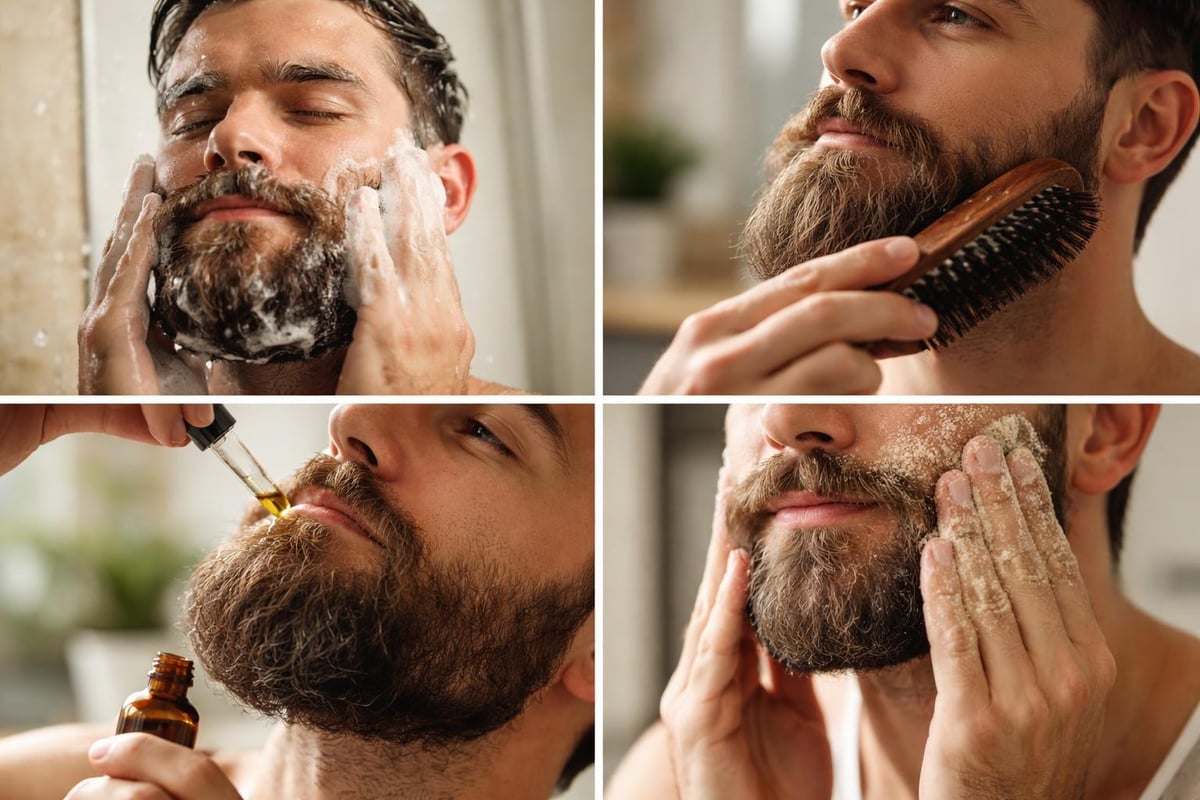
The Optimal Washing Routine
Beard-specific cleansers maintain the delicate pH balance (4.5-5.5) required for healthy skin barrier function. Regular shampooing practices designed for scalp hair prove too alkaline, damaging facial skin and inhibiting growth.
Wash 2-3 times weekly using these beard growth tips:
- Wet beard thoroughly with warm water to open pores
- Apply small amount of beard wash, focusing on skin beneath
- Massage in circular motions for 60-90 seconds to stimulate blood flow
- Rinse completely with cool water to close pores
- Pat dry gently-aggressive rubbing damages hair cuticles
Between washes, rinse with water only to remove surface debris whilst preserving beneficial oils.
Brush and Comb Techniques
Mechanical stimulation through brushing serves multiple functions. Boar bristle brushes distribute sebum along hair shafts, providing natural conditioning whilst the brushing action increases dermal blood flow by 20-30%.
Brush twice daily using this method:
- Begin at the cheeks, brushing downward with firm but gentle pressure
- Work systematically across all beard areas, spending 30 seconds per section
- Follow with a wide-tooth comb to detangle and train growth direction
- Never brush wet beard-vulnerable hair stretches and breaks easily
This simple practice delivers cumulative benefits, with regular brushers reporting 15% faster growth rates in observational studies.
Exfoliation for Follicle Liberation
Dead skin cells accumulate at the surface, creating a barrier that traps sebum and bacteria whilst blocking follicle openings. This environment promotes ingrown hairs and folliculitis, both of which halt growth.
Exfoliate 1-2 times weekly using gentle, circular motions with a natural scrub. Focus on areas of patchiness where follicles struggle to penetrate the skin surface. This mechanical action:
- Removes debris blocking follicle openings
- Stimulates local blood circulation
- Reduces ingrown hairs by 60-70%
- Creates optimal environment for new growth
Avoid harsh chemical exfoliants that trigger inflammation. Natural options like finely ground oatmeal or sugar combined with carrier oils provide effective yet gentle action.
The 90-Day Transformation Approach
Meaningful beard growth requires sustained commitment. Follicles respond to consistent signals, not sporadic interventions. A structured 90-day protocol allows you to progress through multiple growth cycles, establishing robust patterns that continue beyond the initial period.
Phase One: Foundation (Days 1-30)
Establish baseline habits that support growth:
- Implement nutritional changes, focusing on biotin and protein intake
- Begin daily beard oil application using scientifically-formulated blends
- Establish sleep schedule targeting 8 hours nightly
- Start resistance training programme (3-4 sessions weekly)
- Resist all trimming urges-allow complete natural growth
This phase addresses systemic factors whilst giving follicles freedom to activate. Many men experience increased shedding during weeks 2-3 as dormant follicles synchronise their cycles-this signals the protocol is working.
Phase Two: Acceleration (Days 31-60)
Build on established foundation with growth-specific interventions:
- Increase mechanical stimulation through twice-daily brushing
- Add weekly exfoliation to prevent blockages
- Optimise oil application timing (morning and evening)
- Supplement with zinc and vitamin D if dietary intake proves insufficient
- Monitor progress through weekly photographs in consistent lighting
Growth becomes visibly apparent during this phase. Formerly patchy areas begin filling in as previously dormant follicles activate. Comprehensive beard care kits provide the complete toolkit needed for this intensive growth period.
Phase Three: Optimisation (Days 61-90)
Fine-tune your approach based on observed results:
- Identify remaining problem areas requiring focused attention
- Adjust product application to concentrate on sparse regions
- Begin light shaping to establish desired beard architecture
- Evaluate which interventions delivered greatest impact
- Establish maintenance routine for long-term success
By day 90, most men experience 50-70% improvement in density and coverage. The 90-Day Beard Challenge provides structured guidance and premium products specifically designed for this transformational period.
Advanced Beard Growth Tips for Stubborn Areas
Some zones resist standard interventions due to lower receptor density or compromised circulation. These targeted strategies address persistent patchiness.
Microneedling for Follicle Activation
Derma rollers create micro-injuries that trigger healing responses. This controlled damage:
- Increases growth factor production by 300-400%
- Stimulates neovascularisation (new blood vessel formation)
- Enhances product absorption by creating temporary channels
- Activates stem cells in the follicle bulge region
Use a 0.5mm roller once weekly on problem areas. Roll vertically, horizontally, and diagonally (10 passes each direction). Apply beard oil immediately after to drive nutrients deep into the dermis.
Results appear after 6-8 weeks as new follicles activate and existing ones strengthen. Evidence suggests microneedling combined with topical treatments produces superior results compared to either intervention alone.
Targeted Supplementation
While whole-food nutrition provides foundation, specific deficiencies may require supplemental support:
- Biotin: 5,000-10,000 mcg daily strengthens keratin production
- Vitamin D3: 2,000-4,000 IU daily optimises follicle cycling (test levels first)
- Omega-3: 2-3g daily reduces inflammation, supports membrane health
- Zinc Picolinate: 25-30mg daily enhances testosterone production
Always consult healthcare providers before beginning supplement regimens, particularly if you have underlying health conditions.
Environmental Protection
External stressors damage existing hair and inhibit new growth. Shield your beard from:
UV Radiation: Sun exposure degrades keratin structure and dries protective oils. Use beard balms containing natural SPF ingredients like shea butter and coconut oil when outdoors.
Pollution: Airborne particles embed in beard hair, creating inflammation when they contact skin. Cleanse thoroughly after exposure to urban environments.
Chlorine and Salt Water: Both strip natural oils and deposit drying minerals. Rinse immediately after swimming and apply conditioning beard butter to restore moisture balance.
Extreme Temperatures: Winter cold and indoor heating both dehydrate hair, increasing brittleness. Maintain consistent moisture through daily oil application and consider premium beard butter for enhanced protection.
Debunking Common Myths
Misinformation proliferates in beard growth advice. These beard growth tips separate evidence from fiction:
Myth: Shaving makes beard grow back thicker. Reality: Shaving has zero effect on follicle biology. The blunt edge created by cutting may feel coarser temporarily, but follicle output remains unchanged. Expert grooming advice confirms this is purely perceptual.
Myth: Beard oil alone grows beards. Reality: Oils nourish existing hair and support follicle health, but cannot activate dormant follicles without addressing underlying factors like nutrition, hormones, and circulation.
Myth: More product equals faster growth. Reality: Follicles absorb finite amounts of nutrients. Excess application wastes product without delivering additional benefits. Focus on consistent, appropriate application instead.
Myth: Genetics make improvement impossible. Reality: While genetics determine maximum potential, most men operate far below their genetic ceiling due to suboptimal nutrition, poor grooming, and lifestyle factors. These beard growth tips unlock existing capacity.
Integration: Creating Your Personal Protocol
Effective beard growth requires synthesising multiple interventions into a cohesive daily routine. Construct your personalised approach using this framework:
Morning Routine
- Light breakfast with protein (eggs, Greek yoghurt)
- Apply beard oil to damp beard after shower
- Brush thoroughly to distribute and stimulate
- Take supplements with food
Midday Practices
- Protein-rich lunch with green vegetables
- 10-minute stress reduction (meditation, walk)
- Hydration check (minimum 2L daily)
Evening Routine
- Beard wash (2-3x weekly) or water rinse (other days)
- Evening oil application to clean beard
- Comb through to ensure even distribution
- Resistance training or HIIT session (4-5x weekly)
- Quality sleep preparation routine
Weekly Additions
- Exfoliation (1-2x)
- Microneedling (1x on problem areas)
- Progress documentation (photos, measurements)
- Routine evaluation and adjustment
Consistency trumps perfection. Missing occasional applications won't derail progress, but sporadic commitment produces sporadic results.
Transforming your beard requires understanding the biological processes driving growth and implementing evidence-based interventions that support follicle function. These beard growth tips-from strategic nutrition and lifestyle optimisation to scientifically-formulated topical treatments-work synergistically to unlock your beard's potential. Ready to commit to measurable results? Onesociety provides premium, 100% natural grooming products backed by scientific research, designed specifically to support every stage of your beard growth journey. Their complete range delivers the targeted nutrition your follicles need to thrive.