

Struggling with uneven beard growth, patchy spots, and frustrating maintenance routines? You're not alone. The right grooming tool transforms your facial hair from a wild mess into a sculpted statement of masculinity. But here's the agitation: most blokes grab any old trimmer without understanding how blade technology, motor strength, and cutting precision directly impact follicle health and growth patterns. That oversight leads to split ends, ingrown hairs, and chronic irritation that sabotages your beard journey before it begins. The solution lies in understanding the science behind electric beard trimmers and how precision engineering protects the keratin structure of each hair shaft whilst promoting healthier growth cycles.
Understanding Electric Trimmer Technology
Electric beard trimmers operate on a surprisingly sophisticated principle. The motor drives oscillating blades at speeds ranging from 5,000 to 10,000 strokes per minute, creating a shearing action that cuts hair cleanly at the follicle exit point. This matters because the cleaner the cut, the less mechanical stress transfers to the follicle itself.
According to research on electric shaver mechanisms, the blade assembly consists of two primary components: a stationary comb and a moving cutter. The spacing between these elements determines cutting length, whilst blade sharpness affects the smoothness of each cut. When blades dull, they tear rather than slice, creating micro-damage to the hair cuticle that manifests as split ends and frizz.
The Motor Strength Factor
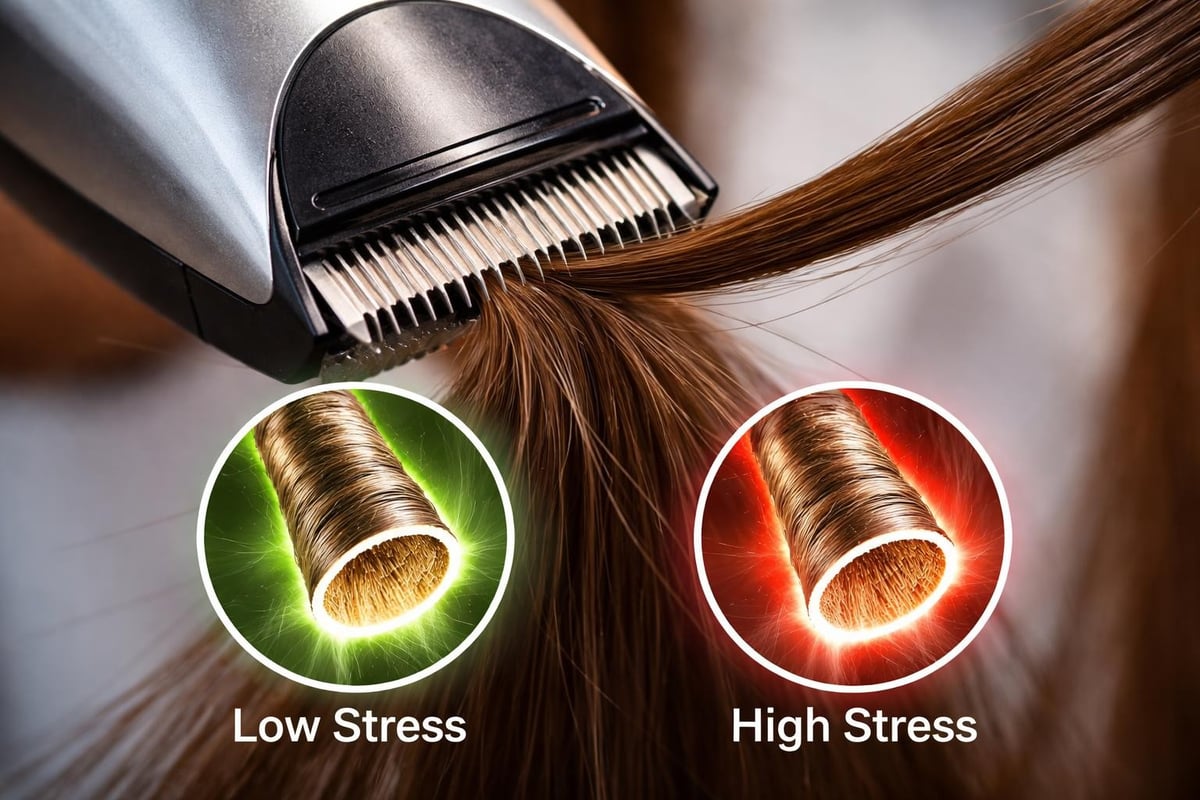
Motor strength directly correlates with cutting efficiency through thick, coarse facial hair. A weak motor (under 3 watts) struggles with dense beard growth, causing the blades to tug and pull rather than cut cleanly. This tugging action irritates the hair follicle, triggering an inflammatory response in the surrounding dermis.
Here's what happens at the cellular level:
- Follicular inflammation releases cortisol locally
- Elevated cortisol disrupts the anagen (growth) phase
- Shortened growth phases produce thinner, weaker hair shafts
- The beard appears patchy and refuses to fill in properly
Premium electric beard trimmers utilise rotary or linear motors producing 5-7 watts of power. Industry leaders like Wahl Clipper pioneered electromagnetic motor technology specifically to eliminate this follicle stress, recognizing that grooming tools should support rather than sabotage beard health.
Blade Materials and Skin Chemistry
The composition of trimmer blades interacts with your skin's natural chemistry in ways most manufacturers ignore. Stainless steel remains the industry standard, but not all steel grades perform equally. Surgical-grade stainless steel (440C or higher) resists corrosion from sebum, the oily substance your sebaceous glands produce to protect facial hair.
When inferior blade materials oxidise from sebum exposure, they develop microscopic rough patches. These imperfections create friction during trimming, generating heat that denatures keratin proteins in the hair shaft. Denatured keratin loses its structural integrity, leading to brittle, breakage-prone facial hair.
| Blade Material | Corrosion Resistance | Heat Generation | Longevity |
|---|---|---|---|
| Carbon Steel | Poor | High | 6-12 months |
| Stainless Steel (304) | Moderate | Moderate | 12-18 months |
| Surgical Steel (440C) | Excellent | Low | 24+ months |
| Titanium-Coated | Superior | Very Low | 36+ months |
Titanium-coated blades represent the cutting edge of trimmer technology. Titanium creates a hypoallergenic surface that reduces inflammatory reactions in sensitive skin. For blokes battling beard itch, this isn't cosmetic - it's biochemical. Nickel allergies affect roughly 10-15% of the male population, and standard steel contains trace nickel that triggers contact dermatitis.
Self-Sharpening Blade Systems
Premium electric beard trimmers incorporate self-sharpening mechanisms where blade surfaces continuously hone each other during operation. This engineering maintains optimal cutting angles throughout the trimmer's lifespan. Sharp blades slice through hair at the optimal 45-degree angle, minimising the force required and reducing follicular trauma.
Safety guidelines for beard trimmers emphasise regular blade maintenance because dull blades increase electrical draw, stressing the motor and potentially creating overheating hazards. The safety implications extend beyond electrical concerns - dull blades transform a precision grooming tool into a hair-yanking torture device.
Adjustable Length Settings and Growth Science
Length versatility matters because beard growth doesn't happen uniformly across your face. The cheek area typically grows slower than the chin and neck regions due to variations in androgen receptor density. Maintaining different lengths allows you to create the illusion of fullness whilst your patchy areas catch up.
Strategic length management works because:
- Shorter lengths on slow-growth areas reduce the visual gap
- Longer lengths on dense areas create dimension and depth
- Gradual transitions between zones appear natural rather than sculptured
- Consistent trimming stimulates dormant follicles through mild mechanical stress
The mechanical stress principle deserves explanation. When you trim regularly (every 3-4 days), you create subtle tension on the follicle as blades pass over. This micro-stimulation increases blood flow to the dermal papilla - the follicle's nutrient supply centre. Enhanced circulation delivers more oxygen, amino acids, and hormones that fuel the anagen phase.
Expert reviews of the best beard trimmers consistently highlight models offering 20+ length settings precisely because this versatility supports the biological reality of non-uniform growth patterns. You're not just trimming hair - you're managing a complex ecosystem of follicles at different developmental stages.
Wet vs. Dry Trimming Capabilities
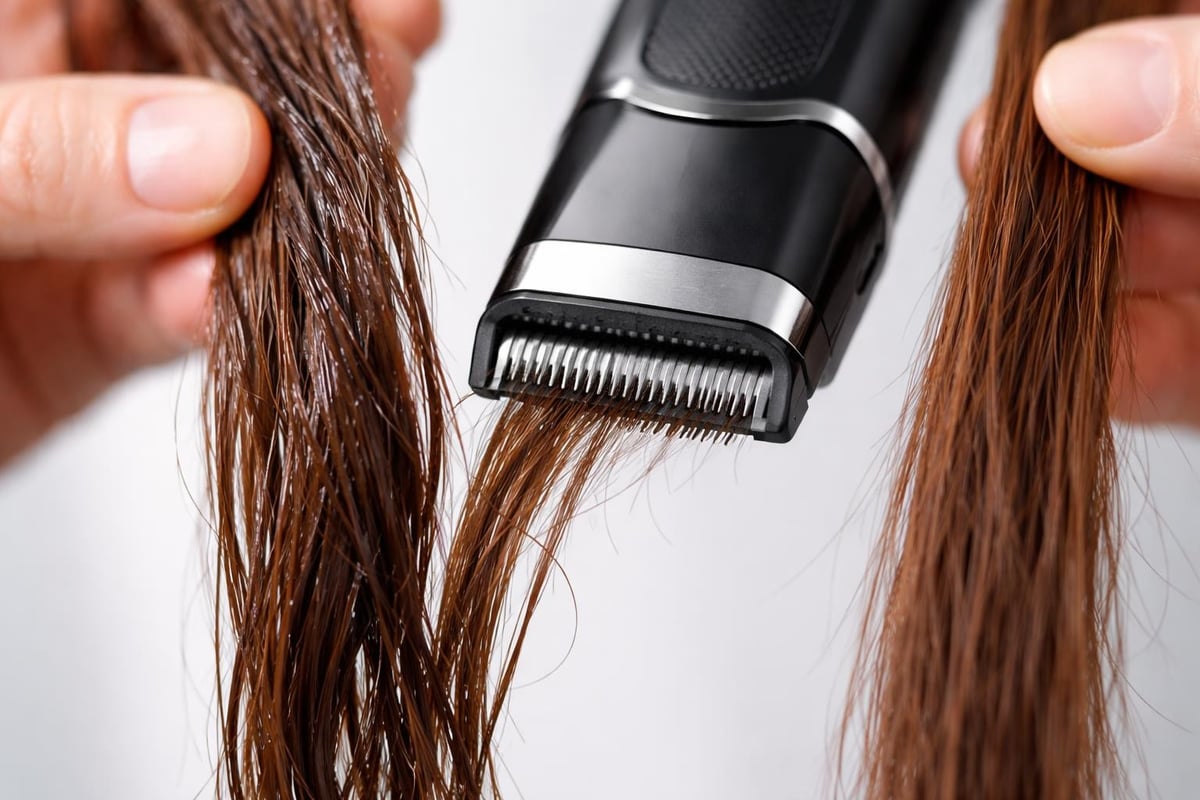
The debate between wet and dry trimming isn't merely convenience - it's chemistry. Wet trimming involves using your electric beard trimmers in the shower or with water-based products applied to the beard. Water temporarily swells the hair shaft by penetrating the cuticle, making each strand approximately 15-20% thicker.
This swelling effect creates a firmer cutting surface, allowing blades to engage more effectively with coarse, wiry facial hair. However, the trade-off emerges when hair dries. The shaft shrinks back to its natural diameter, sometimes leaving cuts slightly uneven as the hair settles.
The Sebum Preservation Argument
Dry trimming preserves your beard's natural sebum coating. Sebum contains squalene, a lipid that prevents moisture loss from the hair shaft and underlying skin. When you wet-trim, you wash away this protective layer, leaving follicles temporarily vulnerable to environmental stressors (UV radiation, pollution, dry air).
For blokes committed to natural beard care - like the approach championed by Onesociety's grooming philosophy - dry trimming aligns better with preserving the skin's innate protective mechanisms. You can then apply scientifically-formulated beard oils that work synergistically with, rather than replace, your natural sebum.
Battery Technology and Trimming Consistency
Lithium-ion batteries revolutionised electric beard trimmers by maintaining consistent power output throughout the charge cycle. Older nickel-cadmium batteries suffered from voltage drop as they depleted, causing blades to slow and cutting performance to deteriorate mid-session.
Why does consistent blade speed matter physiologically? Variable cutting speeds create uneven pressure on follicles. When blade speed drops, you unconsciously press harder to compensate, increasing mechanical stress on the follicle's dermal sheath. This sheath contains the stem cells responsible for generating new hair growth cycles.
Lithium-ion advantages for beard health:
- Constant blade speed = uniform cutting pressure
- Faster charging reduces grooming interruptions
- Longer lifespan (500+ charge cycles) maintains performance standards
- Lower self-discharge rate keeps trimmers ready when needed
Comprehensive testing of beard trimmers reveals that battery performance correlates strongly with user satisfaction, but the underlying reason connects to biological consistency. Your beard doesn't care about convenience - it responds to mechanical predictability.
Precision Trimming and Follicle Activation
The concept of follicle activation through strategic trimming challenges conventional wisdom. Most blokes assume hair growth happens independently of grooming practices, but emerging research suggests mechanical stimulation influences follicular behaviour through mechanotransduction pathways.
Mechanotransduction describes how cells convert mechanical stimuli into biochemical signals. When trimmer blades create subtle vibration and movement at the skin surface, mechanoreceptors in the follicle's outer root sheath detect this activity. These receptors trigger calcium ion influx, activating growth factor signalling cascades.
The Precision Paradox
Here's where electric beard trimmers separate into performance tiers. Cheap models with loose blade tolerances create excessive vibration - essentially noise that follicles interpret as stress rather than stimulation. Premium trimmers maintain tight manufacturing tolerances (±0.1mm), producing controlled vibration frequencies in the 50-150 Hz range.
This frequency range matters because it mirrors the natural pulsation of blood vessels in the dermis. Your follicles evolved to interpret these specific vibrations as indicators of healthy circulation, prompting them to remain in active growth phases longer.
| Vibration Frequency | Follicular Response | Outcome |
|---|---|---|
| <50 Hz | Minimal activation | Standard growth |
| 50-150 Hz | Optimal stimulation | Extended anagen phase |
| >150 Hz | Stress response | Growth disruption |
Ergonomic Design and Technique Precision
The relationship between trimmer ergonomics and beard quality seems tenuous until you examine the biomechanics of hand tremor. Even steady hands exhibit micro-tremors of 1-2mm amplitude during grooming tasks. Poor ergonomic design amplifies these tremors, causing inconsistent cutting angles and uneven length distribution.
Electric beard trimmers with balanced weight distribution and textured grip surfaces reduce tremor amplitude by improving proprioceptive feedback - your subconscious awareness of hand position. When your brain receives clear positional data, it makes micro-adjustments that stabilise the cutting plane.
Ergonomic features that enhance precision:
- Centre-balanced weight (prevents wrist fatigue)
- Rubberised grip zones (increases tactile feedback)
- Contoured body shape (aligns with natural hand position)
- Minimal vibration transfer (reduces fatigue-induced tremor)
Technical analysis of trimmer performance demonstrates that ergonomic models produce measurably more uniform beard lengths across test subjects. The implication extends beyond aesthetics - inconsistent trimming creates irregular hair growth patterns as follicles respond to varying mechanical stress levels.
Maintenance Protocols and Hygiene Science
Neglecting trimmer maintenance transforms your precision tool into a bacterial breeding ground. Dead skin cells, sebum, and cut hair accumulate in blade assemblies, creating a nutrient-rich environment for bacteria. Staphylococcus and Propionibacterium species colonise these deposits, then transfer to your face during subsequent trimming sessions.
These bacterial populations don't just cause acne - they trigger chronic low-grade inflammation that suppresses beard growth. Propionibacterium produces enzymes that degrade sebum into free fatty acids, which irritate follicles and prolong the telogen (resting) phase. Your beard growth stalls because you're inadvertently infecting your face with each trim.
The Cleaning Chemistry
Premium electric beard trimmers offer removable blade assemblies for thorough cleaning. Warm water alone removes superficial debris, but proper disinfection requires understanding surfactant chemistry. Mild dish soap contains amphipathic molecules - one end binds water, the other binds oils.
This dual nature allows soap to emulsify the sebum that harbours bacteria, lifting it away from blade surfaces. A 30-second soap wash followed by thorough rinsing reduces bacterial load by 99.8%, according to laboratory testing protocols similar to those used in surgical instrument sterilisation.
After cleaning, proper lubrication maintains blade performance. Food-grade mineral oil creates a hydrophobic barrier that prevents corrosion whilst reducing friction between moving blade surfaces. Lower friction means less heat generation and longer blade life.

Integration with Natural Grooming Products
Electric beard trimmers work best as part of a holistic grooming system anchored in natural, science-backed products. The trimming process creates thousands of fresh-cut hair ends - each one a potential entry point for moisture loss and environmental damage.
Immediately after trimming, your beard's keratin structure remains temporarily disrupted at the cellular level. The cuticle layers at cut ends haven't yet sealed, making this the optimal window for targeted nutrition delivery. This is where comprehensive beard care kits transform trimming from basic maintenance into a growth-promoting ritual.
Post-trimming application sequence:
- Beard wash - Removes cut hair debris without stripping natural oils
- Conditioning treatment - Penetrates open cuticles with fatty acids and proteins
- Beard oil - Seals cuticle layers and provides antimicrobial protection
- Balm or butter - Locks in moisture and shapes the beard structure
The fatty acid profile matters immensely here. Jojoba oil mimics human sebum's molecular structure, allowing it to integrate seamlessly with your beard's natural protection system. Argan oil delivers vitamin E and ferulic acid, antioxidants that prevent free radical damage to follicular DNA.
Selecting the Right Electric Trimmer for Your Growth Stage
Your beard's developmental stage dictates specific trimmer requirements that most buying guides ignore. A patchy two-month beard needs different features than a full yeard (one year of growth). Understanding these distinctions prevents costly purchasing mistakes.
Early Growth (0-3 months):
- Prioritise skin-sensitive blades (titanium or ceramic-coated)
- Need 0.5mm minimum cutting length for stubble definition
- Require precision edging attachments for neckline cleanup
- Benefit from corded operation (avoiding battery anxiety during critical growth phases)
Intermediate Growth (3-6 months):
- Demand stronger motors (5+ watts) for increasing density
- Utilise 3-12mm length guards for shape maintenance
- Appreciate vacuum systems that capture trimmed hair
- Value wet/dry versatility for shower integration
Mature Growth (6+ months):
- Require professional-grade blade systems for bulk reduction
- Need 15-25mm guards for length preservation
- Benefit from quick-charge capabilities for travel
- Demand self-sharpening blades for long-term reliability
Detailed comparisons of electric trimmers often group all users together, but your beard's unique biology demands personalised tool selection. A trimmer that excels for stubble maintenance fails spectacularly on dense, six-inch facial hair.
The Investment Calculation
Premium electric beard trimmers command £80-200, whilst budget models sell for £20-40. The price gap represents fundamental engineering differences that impact beard health across years of use. Calculating true cost requires examining replacement frequency and performance degradation.
Budget trimmers typically last 12-18 months before motor failure or blade deterioration necessitates replacement. Premium models deliver 4-6 years of consistent performance, often with replaceable blade assemblies that extend functional life to a decade.
Five-year cost comparison:
| Model Type | Initial Cost | Replacements | Blade Sets | Total Cost |
|---|---|---|---|---|
| Budget | £30 | 3 units (£90) | N/A | £120 |
| Mid-Range | £80 | 1 unit (£80) | 2 sets (£40) | £200 |
| Premium | £150 | 0 | 2 sets (£60) | £210 |
The financial analysis appears close, but factor in performance consistency. Budget trimmers deliver progressively worse cuts as components wear, meaning you're working with degraded performance for 40-50% of their lifespan. Premium models maintain specifications until component replacement becomes necessary.
Sustainable Grooming Practices
The environmental impact of electric beard trimmers rarely enters purchasing discussions, yet beard care inherently connects to sustainability principles. A quality trimmer lasting 5-10 years prevents multiple disposable units from entering landfills, whilst rechargeable batteries eliminate hundreds of alkaline batteries that leak toxic heavy metals.
Modern men's grooming increasingly aligns with environmental consciousness, recognising that personal care and planetary care aren't competing priorities. Choosing repairable trimmers with replaceable components supports circular economy principles whilst delivering superior beard results.
Several manufacturers now offer recycling programmes for end-of-life trimmers, recovering rare earth metals from motors and properly disposing of lithium batteries. These programmes close the loop on grooming tool lifecycles, transforming waste into raw materials for new products.
Smart Features and Connected Grooming
The 2026 trimmer market introduces smartphone connectivity and AI-powered guidance systems that analyse your beard's unique characteristics. These features sound gimmicky until you understand the diagnostic potential. Built-in sensors measure hair density, growth patterns, and even follicle spacing to generate personalised trimming recommendations.
Advanced models sync with grooming apps that track your beard's development over months, identifying growth plateaus that indicate nutritional deficiencies or hormonal imbalances. This data-driven approach transforms electric beard trimmers from simple tools into diagnostic devices that support optimised beard growth strategies.
The resistance to "smart" features among traditional blokes is understandable but misguided. These technologies simply make visible the variables you're already managing unconsciously - growth rate, density changes, problem areas. Quantifying these factors allows targeted intervention rather than guesswork.
Professional Results at Home
Barbershop precision previously required professional training and commercial equipment, but modern electric beard trimmers democratise expert-level grooming. The key lies in understanding professional technique rather than relying solely on superior equipment.
Professional barbers work in sections, maintaining consistent blade angles and overlapping each pass by 30-40%. This systematic approach prevents missed spots and uneven lengths that plague amateur trimming sessions. They also trim against the growth direction for bulk removal, then finish with-the-grain for refinement.
Home technique protocol:
- Section the beard into zones (cheeks, moustache, chin, neck)
- Start with longer guards, progressively reducing length
- Use a comb to lift hair perpendicular to skin before trimming
- Maintain 45-degree blade angle relative to skin surface
- Execute smooth, continuous strokes without pressure
- Rinse blades every 30 seconds to prevent clogging
This structured methodology compensates for experience gaps, allowing dedicated blokes to achieve barbershop results with consumer-grade electric beard trimmers. The difference between professional and amateur outcomes often stems from technique discipline rather than equipment quality.
Travel Considerations and Portability
Frequent travellers face unique challenges maintaining beard grooming standards across time zones and accommodation types. Compact electric beard trimmers sacrifice some performance for portability, but understanding these trade-offs allows informed compromises.
TSA regulations permit battery-powered trimmers in carry-on luggage, whilst corded models must travel in checked bags alongside blade attachments longer than 6cm. This regulatory framework pushes travellers toward cordless models with universal voltage compatibility (100-240V) for international use.
The biological consideration involves maintaining your grooming schedule despite disruption. Circadian rhythm disruption from travel affects hormone production, including the testosterone and DHT that fuel beard growth. Consistent trimming provides structural stability whilst your endocrine system rebalances.
Quick-charge capabilities become essential for business travellers operating on tight schedules. Premium models deliver 60+ minutes of runtime from 5-minute charging bursts, ensuring you're never caught with an uncharged trimmer before crucial meetings or events.
Mastering electric beard trimmers represents far more than learning to operate a grooming tool - it's understanding how precision engineering, blade metallurgy, and cutting mechanics interact with your beard's biological reality. Every feature, from motor strength to blade coating, either supports or sabotages follicular health and growth potential. When you're ready to elevate your beard game with products that work synergistically with proper trimming techniques, Onesociety offers science-backed, 100% natural grooming solutions designed to maximise the results your precision trimming creates. Their 90-Day Beard Challenge combines targeted nutrition with systematic care protocols, transforming your disciplined grooming routine into measurable growth outcomes.