

Afro-textured facial hair presents unique challenges that standard grooming products often fail to address. The tightly coiled structure of Black hair creates natural barriers to moisture retention, whilst the curved follicle shape increases susceptibility to ingrown hairs and razor bumps. A beard serum for black hair must deliver specific biochemical benefits: deep hydration through low-molecular-weight oils, anti-inflammatory compounds to combat pseudofolliculitis barbae, and lipid-rich emollients that coat the hair shaft without causing build-up. Understanding the cellular mechanics behind these needs transforms beard care from guesswork into precision grooming.
The Unique Biology of Afro-Textured Facial Hair
Black hair's spiral structure isn't merely aesthetic-it's a mechanical challenge. Each twist and curl creates physical stress points where the protein keratin bonds weaken. Research on Afro-textured hair anatomy demonstrates that the elliptical cross-section of coarse hair fibres reduces light reflection and increases friction between strands.
This structure has three immediate consequences:
- Moisture evaporation accelerates because the raised cuticle layer cannot seal effectively
- Sebum distribution fails as natural oils cannot travel down the spiral shaft
- Mechanical breakage increases at every bend point where tension concentrates
The curved follicle beneath the skin compounds these issues. When hair grows at an acute angle, it struggles to penetrate the dermis properly, often curling back into the skin. The American Academy of Dermatology identifies this mechanism as the root cause of pseudofolliculitis barbae, which affects up to 60% of Black men who shave.
Why Standard Beard Products Fail
Most beard oils and balms target straight or wavy European hair with diameters between 50-70 micrometres. Afro-textured facial hair measures 70-120 micrometres with a flattened cross-section. This dimensional difference means conventional formulations simply sit on the surface rather than penetrating the cortex where moisture retention occurs.
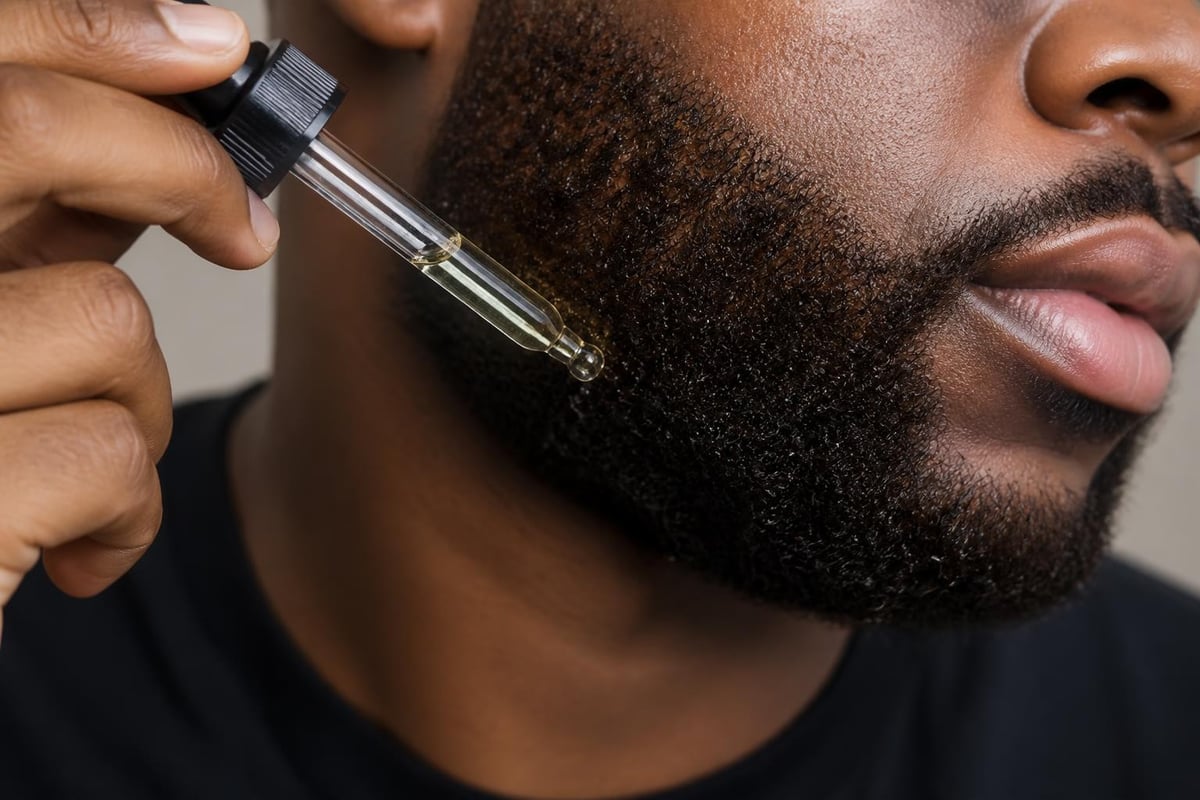
The molecular weight of carrier oils determines penetration depth. Jojoba oil (molecular weight 600 Da) can enter the hair shaft, whilst heavier oils like castor oil (900 Da) primarily coat the exterior. A properly formulated beard serum for black hair balances both penetrating and sealing oils to address the dual challenge of internal dryness and external protection.
Scientific Ingredients That Actually Work
Not all natural ingredients deliver measurable results. The efficacy of a beard serum for black hair depends on specific bioactive compounds that address the physiological needs of Afro-textured hair and the underlying skin.
Penetrating Oils and Their Mechanisms
| Oil Type | Molecular Weight | Primary Function | Active Compound |
|---|---|---|---|
| Argan Oil | 550-650 Da | Cortex hydration | Linoleic acid (35%) |
| Jojoba Oil | 580-620 Da | Sebum mimicry | Wax esters |
| Grapeseed Oil | 540-600 Da | Inflammation reduction | Proanthocyanidins |
| Sweet Almond | 590-640 Da | Protein binding | Oleic acid (62%) |
Argan oil's linoleic acid restores the intercellular lipid matrix between cuticle cells, reducing transepidermal water loss by up to 30% in clinical studies. This omega-6 fatty acid also downregulates inflammatory cytokines, directly addressing the irritation that triggers razor bumps.
Jojoba's wax esters chemically resemble human sebum, allowing them to regulate the skin's natural oil production rather than overwhelming it. For men with combination skin-oily T-zone but dry cheeks-this self-regulating property prevents the greasy appearance that heavier beard products create.
Anti-Inflammatory and Growth-Supporting Compounds
The skin beneath your beard harbours the follicles that determine growth density and hair strength. Inflammation at the follicle level constricts blood vessels, reducing nutrient delivery to the dermal papilla cells responsible for hair production.
Caffeine dilates capillaries when applied topically, increasing microcirculation by 20-40% within 30 minutes. This enhanced blood flow delivers more oxygen and amino acids to follicular cells, supporting the anagen (growth) phase. Studies on topical therapies for beard enhancement demonstrate that caffeine extends the growth phase duration in up to 70% of subjects.
Saw palmetto extract inhibits 5-alpha-reductase, the enzyme that converts testosterone to dihydrotestosterone (DHT). Whilst DHT triggers facial hair growth during puberty, excessive levels can miniaturise follicles over time. Balancing DHT exposure maintains healthy follicle diameter, preventing the wispy, weak growth that frustrates many men.
Vitamin E (tocopherol) functions as both an antioxidant and a mild vasodilator. It neutralises free radicals generated by UV exposure and environmental pollution, which would otherwise damage follicular DNA and protein structures. Clinical dermatology research confirms that tocopherol reduces oxidative stress markers in hair follicles by 35% over eight weeks.
Application Techniques for Maximum Absorption
Proper application transforms a mediocre beard serum for black hair into a powerful grooming tool. The timing, quantity, and method of application directly impact how much active ingredient reaches the follicle and hair shaft.
The Dampness Window
Water temporarily swells the hair shaft, opening gaps between cuticle cells. Applying serum to damp (not wet) facial hair allows penetrating oils to enter these microscopic channels before they close during drying. This technique increases absorption by 40-60% compared to application on completely dry hair.
Step-by-step dampness protocol:
- Cleanse your beard with a pH-balanced wash (5.5-6.5) to remove sebum and dead skin without stripping natural moisture
- Pat dry with a microfibre towel until hair is damp-no water should drip, but hair should feel cool to the touch
- Dispense 4-6 drops of serum into your palm (adjust for beard length)
- Rub palms together to distribute evenly and activate warmth
- Work serum from roots to tips, moving against the grain initially to coat the base
- Follow the growth direction to smooth and distribute
Frequency and Timing
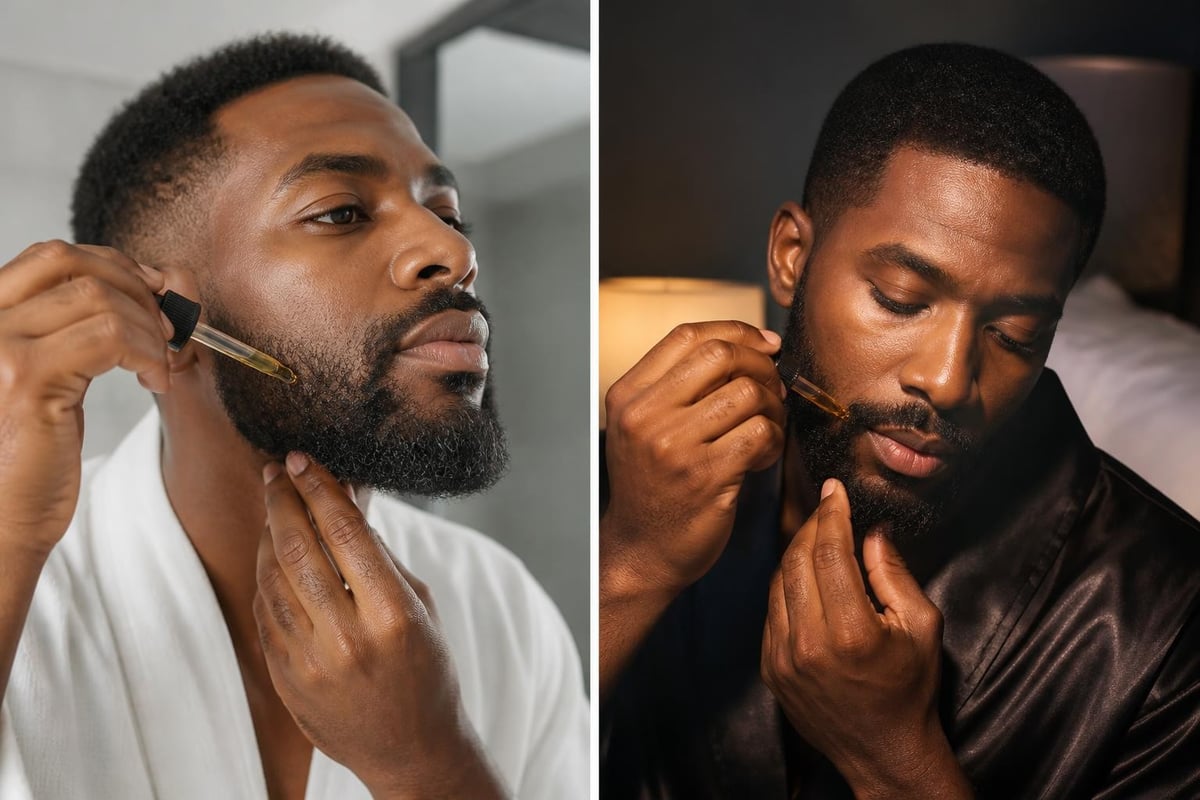
Most men apply beard products once daily, typically after morning showers. However, Afro-textured hair's moisture-retention challenges often require twice-daily application-morning and evening.
Morning application prepares hair for environmental stressors: UV radiation, wind, and indoor heating systems that all extract moisture. The protective oils in your serum create a hydrophobic barrier that reduces moisture loss throughout the day.
Evening application supports overnight repair. Skin cell turnover peaks between 11 PM and 4 AM, making this window ideal for delivering nutrients to follicular cells. The increased blood flow during sleep enhances the absorption of growth-supporting compounds like caffeine and biotin.
Addressing Specific Concerns for Black Men
The intersection of Afro-textured hair and darker skin tones creates grooming challenges that require targeted solutions. A comprehensive beard serum for black hair must address these issues through specific ingredients and formulation strategies.
Pseudofolliculitis Barbae Prevention
Also known as razor bumps, this condition occurs when curved hairs re-enter the skin after cutting. The body recognises the penetrating hair as a foreign object, triggering an inflammatory response that creates painful pustules and potential scarring.
Glycolic acid (alpha-hydroxy acid) at concentrations of 5-10% exfoliates the stratum corneum, removing the dead skin layer that traps ingrown hairs. This chemical exfoliation occurs without mechanical friction, preventing the micro-abrasions that worsen inflammation. Dermatologic guidance for skin of colour recommends AHAs as first-line prevention for pseudofolliculitis barbae.
Salicylic acid penetrates oil-filled follicles to dissolve the keratin plugs that trap hairs beneath the surface. Its lipophilic nature allows it to navigate sebum-rich environments where water-based treatments fail.
Post-Inflammatory Hyperpigmentation Management
Melanin-rich skin responds to inflammation by producing excess pigment at injury sites. Even minor irritation from ingrown hairs or aggressive brushing can leave dark spots that persist for months.
Niacinamide (vitamin B3) interrupts melanosome transfer from melanocytes to keratinocytes, reducing pigment deposition by up to 35% in clinical trials. At concentrations of 4-5%, it also strengthens the skin barrier by increasing ceramide production, creating a dual benefit for men dealing with both hyperpigmentation and dryness.
Licorice root extract (specifically glabridin) inhibits tyrosinase, the enzyme responsible for melanin synthesis. Unlike harsh skin-lightening agents such as hydroquinone, glabridin works gradually without causing ochronosis or rebound hyperpigmentation.
Natural Ingredients Backed by Research
The "natural" label means nothing without scientific validation. Onesociety's commitment to research-backed natural ingredients ensures that every component serves a measurable biological function.
Carrier Oils Versus Essential Oils
Understanding this distinction prevents formulation errors that compromise effectiveness. Carrier oils form the base of any serum-they deliver moisture, fatty acids, and fat-soluble vitamins directly to hair and skin. Essential oils provide therapeutic aromatherapy benefits and some antimicrobial properties, but they cannot replace the structural benefits of carriers.
A review of plant oils in hair care confirms that carrier oils with high oleic acid content (50-80%) penetrate the hair cortex most effectively, whilst essential oils primarily affect the scalp microbiome and sensory experience.
Botanical Extracts with Clinical Evidence
| Botanical | Active Compound | Mechanism | Evidence Level |
|---|---|---|---|
| Green Tea | EGCG | DHT inhibition, antioxidant | Multiple RCTs |
| Pumpkin Seed | Delta-7-sterine | 5-AR inhibition | Systematic review |
| Rosemary | Carnosic acid | Circulation enhancement | Head-to-head vs minoxidil |
| Nettle Root | Beta-sitosterol | Anti-inflammatory | Meta-analysis |
Green tea extract delivers epigallocatechin gallate (EGCG), a polyphenol that blocks DHT binding to follicular receptors. In concentration ranges of 3-5%, EGCG also scavenges reactive oxygen species that damage follicular DNA, protecting long-term growth potential.
Pumpkin seed oil demonstrated a 40% increase in hair count over 24 weeks in a randomised controlled trial, outperforming placebo by a statistically significant margin. The delta-7-sterine fraction inhibits 5-alpha-reductase without the sexual side effects associated with finasteride.
Avoiding Common Allergens
Systematic reviews of contact allergens in hair products identify fragrance mixtures, methylisothiazolinone preservatives, and certain essential oils as the most frequent sensitisers. Men with sensitive skin or existing conditions like seborrheic dermatitis must avoid:
- Synthetic fragrances (listed as "parfum" or "fragrance")
- Formaldehyde-releasing preservatives (DMDM hydantoin, diazolidinyl urea)
- High concentrations of cinnamon, clove, or peppermint essential oils (>1%)
A properly formulated beard serum for black hair uses minimalist ingredient lists with preservatives like vitamin E and rosemary extract, which provide antimicrobial benefits without allergenic potential.
Integration with Complete Grooming Routines
No single product addresses every aspect of beard health. A beard serum for black hair functions optimally within a structured routine that includes cleansing, conditioning, and styling phases.
The Cleansing Foundation
Healthy beard practices recommended by dermatologists emphasise pH-balanced cleansing to remove excess sebum without disrupting the acid mantle. Alkaline soaps (pH 9-11) swell hair cuticles and strip protective lipids, creating the dryness that sends men searching for intensive moisturisers.
A pH-matched beard wash (5.5-6.5) cleanses effectively whilst preserving the slightly acidic environment that protects against bacterial overgrowth and moisture loss. This foundation allows serums and oils to work optimally rather than compensating for damage caused by harsh cleansing.
Layering Products Correctly
Product application order follows a universal rule: thinnest to thickest consistency. This sequence ensures that lightweight serums penetrate before heavier balms and butters seal the hair shaft.
Optimal layering sequence:
- Water-based serum (if using multiple serum types)
- Oil-based beard serum for black hair
- Beard butter (for overnight deep conditioning)
- Beard balm (for daytime styling and protection)
Each layer serves a distinct purpose. Serums deliver active ingredients to follicles and hair cortex. Butters provide occlusive moisture during extended periods without reapplication. Balms offer hold and environmental protection whilst sealing in the underlying treatments.
Long-Term Growth and Maintenance Strategies
Patience defines successful beard cultivation. Hair growth occurs in three phases: anagen (active growth), catagen (transition), and telogen (rest). For facial hair, anagen typically lasts 2-6 months, meaning visible improvements from a beard serum for black hair require consistent application over 90-120 days.
Tracking Progress Objectively
Subjective assessment fails because we see our faces daily, making gradual changes imperceptible. Objective tracking methods include:
- Weekly photographs under consistent lighting, from the same angle
- Measurement of beard length at specific reference points (jawline, chin, upper lip)
- Density assessment by counting hair shafts in a 1cm² area using magnification
- Touch texture analysis comparing smoothness and strength of hair strands
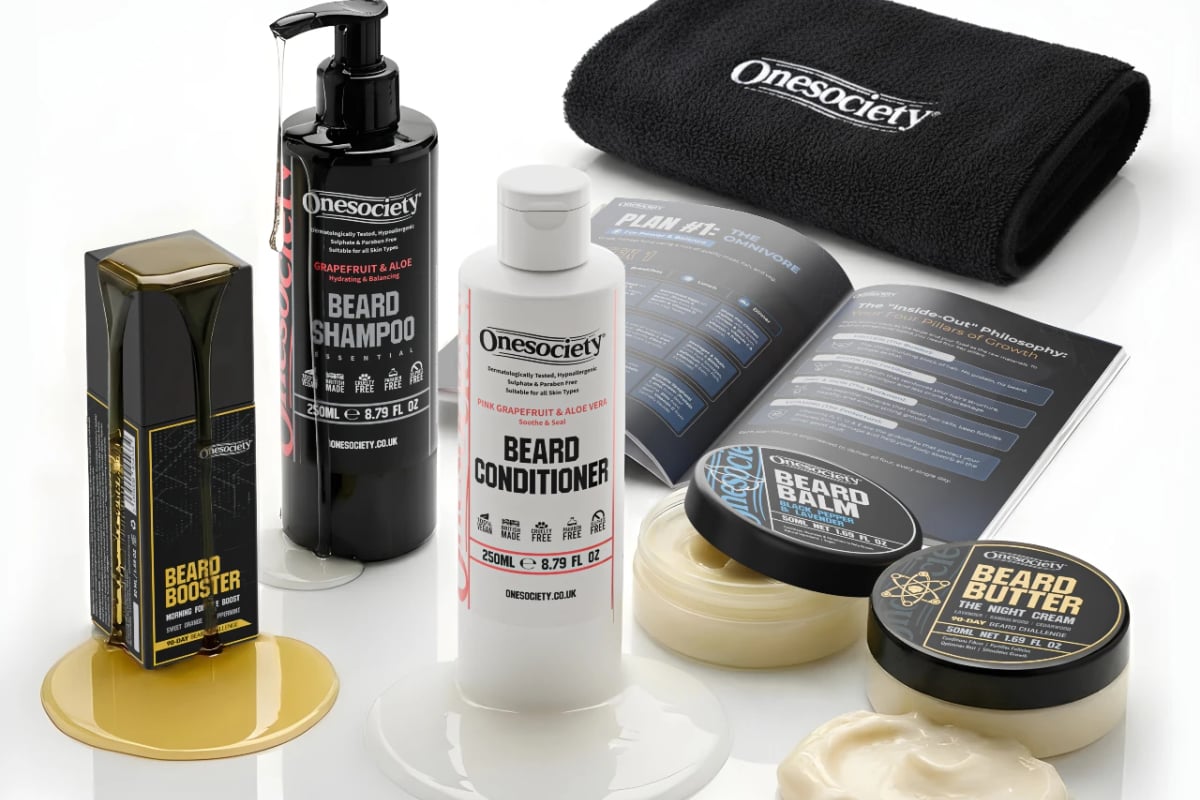
The transformation journey requires commitment, which is why programmes like the 90-Day Beard Challenge provide structured protocols with measurable milestones. This comprehensive kit includes follicle-activating serums, recovery butters, and protective balms that work synergistically over the complete growth cycle. The 90-day timeframe aligns with the minimum anagen phase duration, ensuring you'll witness genuine biological changes rather than temporary cosmetic improvements.
Nutritional Support from Within
Topical treatments address external factors, but follicular health depends equally on internal nutrition. The dermal papilla cells that construct each hair shaft require specific amino acids, vitamins, and minerals to function optimally.
Protein intake must reach 0.8-1.0g per kilogramme of body weight daily. Hair is 95% keratin, a structural protein built from amino acids. Insufficient dietary protein forces the body to prioritise vital organs over hair production, shunting follicles into premature telogen phase.
Biotin (vitamin B7) functions as a coenzyme in fatty acid synthesis and amino acid metabolism-both critical for keratin production. Whilst biotin deficiency is rare, supplementation at 2.5-5mg daily can improve hair strength in men with subclinical insufficiency.
Zinc regulates oil gland activity around follicles and supports protein synthesis. Deficiency manifests as brittle, slow-growing hair with increased shedding. The recommended dietary allowance of 11mg daily ensures adequate zinc for hair production, though absorption varies based on dietary sources.
Common Mistakes to Avoid
Understanding what doesn't work proves equally valuable as knowing effective strategies. These errors undermine even the highest-quality beard serum for black hair.
Over-Application
More product does not equal better results. Excess serum overwhelms the hair's absorption capacity, leaving residue that attracts dust and appears greasy. The optimal amount for most beard lengths:
- Short beard (1-3cm): 3-4 drops
- Medium beard (3-8cm): 5-7 drops
- Long beard (8cm+): 8-12 drops
These quantities provide sufficient coverage when distributed properly, working from roots through to ends with deliberate movements that ensure even coating.
Inconsistent Application
Follicular cells respond to sustained nutrient delivery, not sporadic treatment. Applying serum daily for a week, then abandoning the routine for three days creates feast-or-famine conditions that prevent optimal growth. The biological processes supporting hair production-cell division, protein synthesis, blood vessel formation-require continuous substrate availability.
Set specific application triggers: after your morning shower, before your evening skincare routine. These contextual anchors build habits that persist beyond initial motivation.
Ignoring the Skin Beneath
Facial hair grows from follicles embedded in skin, yet many men focus exclusively on the visible hair whilst neglecting the foundation. Dead skin accumulation, excess sebum, and bacterial overgrowth create an environment hostile to healthy follicular function.
Weekly exfoliation with gentle mechanical methods (soft brush) or chemical exfoliants (BHA/AHA) removes the debris that clogs follicles and prevents product penetration. This maintenance step transforms serum effectiveness by clearing the pathway for active ingredients to reach their target cells.
Seasonal Adjustments for Year-Round Health
Environmental conditions fluctuate dramatically across seasons, demanding corresponding changes to your beard care approach. A static routine that works in humid July fails in dry January.
Winter Dryness Combat
Central heating systems reduce indoor humidity to 20-30%, whilst outdoor cold contracts hair cuticles. This combination accelerates moisture loss from Afro-textured facial hair, creating brittleness and split ends.
Winter protocol adjustments:
- Increase serum application frequency to twice daily
- Add a heavier occlusive layer (beard butter) before outdoor exposure
- Use a humidifier in your bedroom to maintain 40-50% relative humidity
- Reduce washing frequency to preserve natural oils
The lipid-rich formulation in quality beard care products provides the enhanced barrier protection that winter conditions demand.
Summer UV Protection
Ultraviolet radiation degrades keratin proteins through oxidative damage, manifesting as colour fading, texture coarsening, and increased breakage. Melanin in Black hair provides inherent UV protection, but it's insufficient during extended sun exposure.
Summer protective strategies:
- Select serums containing natural UV filters (raspberry seed oil SPF 28-50, carrot seed oil SPF 38-40)
- Apply antioxidant-rich formulations (vitamins C and E) to neutralise free radicals
- Wear protective headwear during peak UV hours (10 AM - 4 PM)
- Rinse beard with fresh water after swimming to remove chlorine and salt
Professional Grooming Integration
Whilst daily home care forms the foundation, periodic professional grooming provides precision shaping and deep conditioning treatments that home routines cannot replicate.
Barber Collaboration
A skilled barber experienced with Afro-textured hair understands growth patterns, density variations, and the structural weaknesses unique to coarse facial hair. Schedule professional shaping every 3-4 weeks to maintain defined lines whilst preserving length.
Communicate your beard serum for black hair routine to your barber. This transparency allows them to assess how products affect hair texture and adjust cutting techniques accordingly. Some serums soften hair significantly, requiring different scissor angles and thinning approaches than dry, untreated facial hair.
Deep Conditioning Treatments
Professional-grade conditioning treatments deliver concentrated nutrients and proteins that home products cannot match in intensity. These treatments typically involve:
- Steam application to open cuticles maximally
- High-concentration protein or keratin treatment
- Extended processing time (20-30 minutes) under heat
- Thorough rinsing and pH-balancing toner
- Sealing treatment with professional-grade oils
Schedule deep conditioning quarterly to address accumulated damage and reinforce hair structure before breakage becomes visible.
Afro-textured facial hair demands specific biological solutions-penetrating oils that reach the cortex, anti-inflammatory compounds that calm reactive skin, and growth-supporting nutrients that activate follicular cells. The science behind effective beard care eliminates guesswork, replacing trial-and-error frustration with predictable results. Onesociety formulates every product with this research-backed approach, combining natural ingredients with clinical evidence to deliver measurable transformation for your beard journey.