

Growing a beard transforms more than your appearance. It changes the entire ecosystem of your facial skin. The sebaceous glands work overtime, producing more sebum to coat those new hair shafts. Dead skin cells accumulate beneath the canopy of facial hair. Food particles, environmental pollutants, and bacteria find refuge in the dense forest above your jawline. Your regular face wash? It wasn't designed for this new terrain. A dedicated beard and face wash becomes essential when you want to maintain both skin health and beard vitality without stripping away the natural oils that keep everything functioning properly.
Why Your Regular Face Wash Fails Your Beard
Standard facial cleansers contain surfactants formulated for bare skin. They target oil removal with aggressive efficiency, which works when you're clean-shaven. Add a beard to the equation, and these same formulas create problems rather than solving them.
The pH problem sits at the core of this issue. Healthy skin maintains a pH between 4.5 and 5.5, creating what dermatologists call the acid mantle. This slightly acidic environment protects against pathogenic bacteria and fungi. Most commercial soaps and face washes clock in at pH 9-10, alkaline enough to disrupt this protective barrier. According to research on the skin microbiome, disrupting the acid mantle allows harmful microorganisms to colonise the skin surface, potentially triggering inflammation, acne, and seborrhoeic dermatitis.
Beard hair differs structurally from scalp hair. The follicles sit deeper, the diameter runs thicker, and the texture feels coarser. When you apply a regular face wash to your beard:
- Harsh surfactants strip sebum from both skin and hair shafts
- The beard becomes brittle, leading to breakage and split ends
- Skin beneath produces excess oil to compensate, creating a greasy rebound effect
- Natural antimicrobial peptides get washed away, leaving skin vulnerable
- The disrupted moisture barrier allows irritants to penetrate more easily
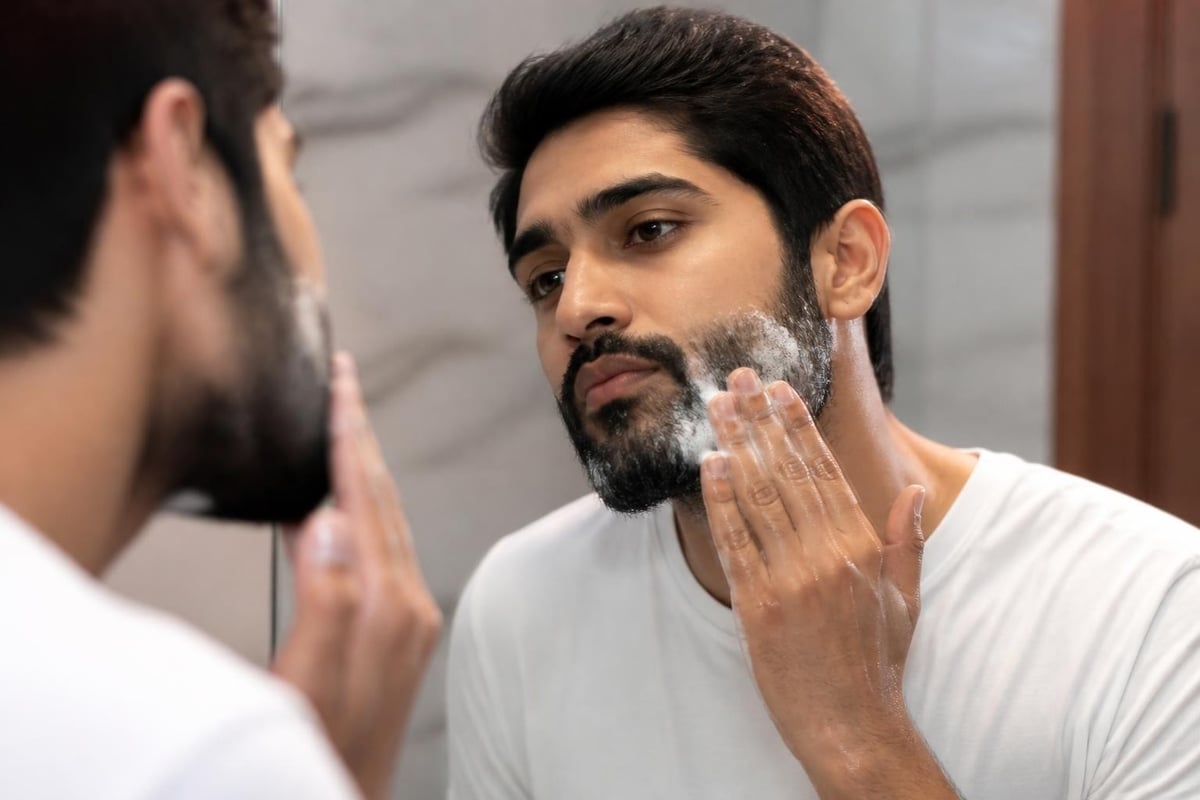
The Sebum Preservation Principle
Sebum gets a bad reputation, but this waxy substance serves crucial functions. The sebaceous glands attached to each beard follicle secrete a complex mixture of triglycerides, wax esters, squalene, and fatty acids. This lipid cocktail:
- Waterproofs the hair shaft, preventing moisture loss
- Creates an antimicrobial barrier through lauric acid and sapienic acid
- Delivers fat-soluble vitamins (A, D, E, K) to the follicle
- Lubricates the hair, reducing friction and mechanical damage
A proper beard and face wash removes dirt, dead cells, and excess sebum without completely degreasing your facial hair. The formulation should contain mild surfactants derived from coconut oil or sugar molecules. These cleanse effectively at skin-compatible pH levels whilst preserving enough natural oil to keep your beard supple.
Choosing the Right Beard and Face Wash Formula
Not all beard and face wash products deliver what their labels promise. Understanding ingredient science helps you distinguish between effective formulations and marketing hype.
| Ingredient Type | Function | Scientific Mechanism | What to Look For |
|---|---|---|---|
| Gentle Surfactants | Cleanse without stripping | Form micelles that trap dirt whilst preserving lipid barrier | Decyl glucoside, coco-glucoside, sodium cocoyl isethionate |
| Humectants | Attract moisture to skin | Bind water molecules through hydrogen bonding | Glycerin, hyaluronic acid, aloe vera extract |
| Emollients | Soften beard hair | Fill gaps in hair cuticle with fatty acids | Shea butter, jojoba oil, argan oil |
| pH Adjusters | Maintain acid mantle | Buffer the formula to skin's natural pH | Citric acid, lactic acid |
The Cosmetic Ingredient Review provides independent safety assessments for thousands of cosmetic ingredients. When selecting a beard and face wash, prioritise products that disclose their full ingredient list and avoid synthetic fragrances, which can trigger contact dermatitis in sensitive individuals.
Natural ingredients backed by research deliver the most reliable results. Tea tree oil, for instance, exhibits documented antimicrobial activity against both bacteria and fungi. A concentration of 2-5% in a beard and face wash helps prevent folliculitis (inflammation of the hair follicles) without the harsh effects of synthetic antibacterials. Similarly, chamomile extract contains bisabolol, which reduces inflammation through COX-2 inhibition, the same pathway targeted by anti-inflammatory medications.
Reading Between the Marketing Lines
Brands often highlight buzzwords without substance. Here's what actually matters:
- pH-balanced should mean pH 4.5-5.5, not just "gentle"
- Natural requires predominantly plant-derived ingredients, not just one botanical extract in a synthetic base
- Sulphate-free matters because sodium lauryl sulphate (SLS) damages the skin barrier
- Paraben-free addresses preservative concerns, but check what replaced them
The ingredient order reveals concentration. Ingredients appear in descending order by weight, so the first five components make up the bulk of the formula. If water, then gentle surfactants, then moisturisers appear first, you've found a properly formulated product. If synthetic fragrances or harsh detergents dominate the top five, keep searching.
The Science of Proper Washing Technique
Owning the right beard and face wash represents only half the equation. Application technique determines whether you'll reap the benefits or trigger problems.
Temperature matters more than most men realise. Hot water feels satisfying, especially after a long day, but it damages both skin and hair. Water above 37°C (body temperature) disrupts the lipid barrier, causing trans-epidermal water loss (TEWL). The cuticle layer of each beard hair swells in hot water, making the shaft vulnerable to damage. Cold water, conversely, doesn't remove oil-based debris effectively.
The ideal approach uses lukewarm water (30-35°C) for the entire washing process. This temperature:
- Opens pores sufficiently for deep cleaning
- Removes sebum without completely stripping it
- Preserves the hair cuticle structure
- Maintains skin barrier integrity
The Four-Step Cleansing Protocol
Professional barbers and dermatologists recommend this evidence-based sequence for using beard and face wash:
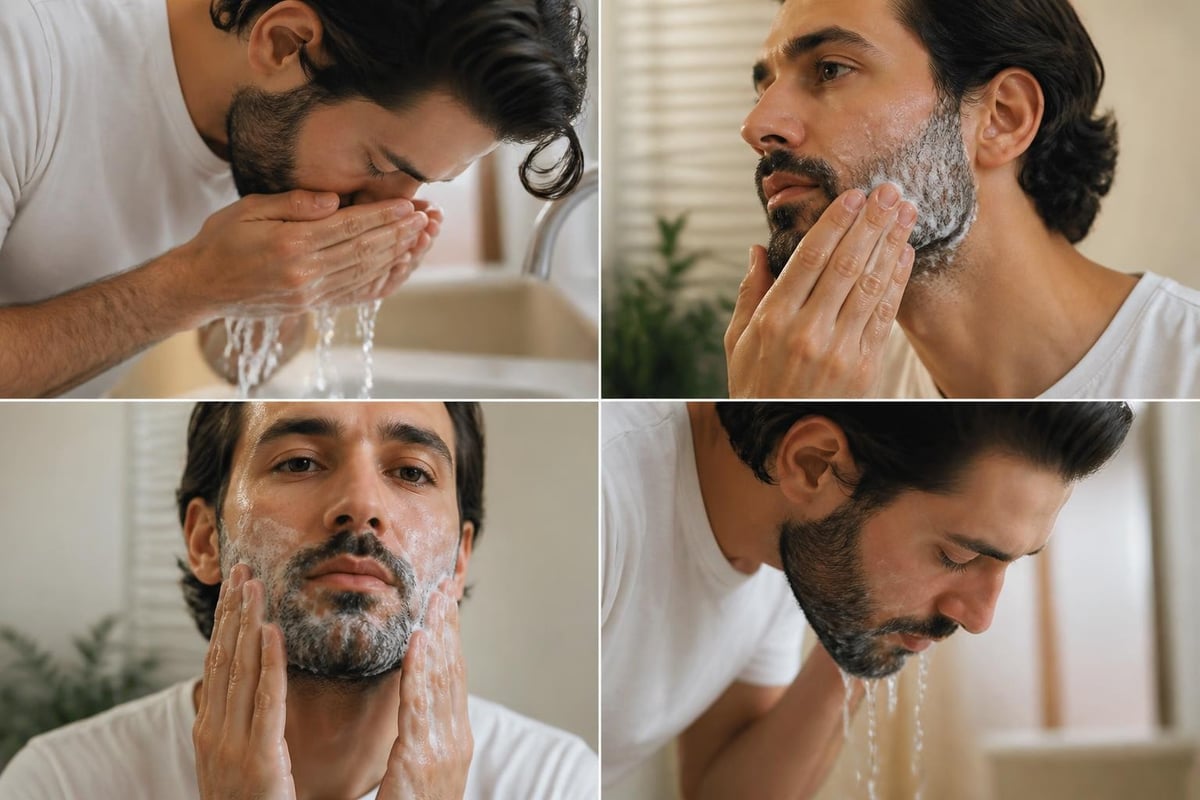
- Pre-rinse for 30 seconds – Saturate the beard completely with lukewarm water, working fingers through to the skin beneath
- Apply a coin-sized amount – Dispense the beard and face wash into your palm, then emulsify with a few drops of water before application
- Massage in circular motions for 60 seconds – Work the cleanser through the beard and onto the skin, focusing on the follicle roots where sebum accumulates
- Rinse thoroughly for 45 seconds – Remove all cleanser residue, as leftover surfactants will dry out your skin
The massage step deserves special attention. Gentle circular motions with your fingertips (not nails) stimulate blood flow to the follicles. This increased microcirculation delivers oxygen and nutrients essential for healthy beard growth. Research shows that follicular blood flow directly correlates with hair shaft diameter and growth rate.
Addressing Common Beard Skin Conditions
Beards create a unique environment that can harbour specific dermatological issues. A targeted beard and face wash helps prevent and manage these conditions when formulated with appropriate active ingredients.
Seborrhoeic Dermatitis and Beard Dandruff
Those white flakes snowing onto your shirt don't always indicate dry skin. Seborrhoeic dermatitis stems from an overgrowth of Malassezia yeasts that naturally inhabit skin. These fungi metabolise skin oils into inflammatory byproducts, triggering redness, itching, and flaking.
The beard area provides ideal conditions for Malassezia proliferation: warmth, moisture, and abundant sebum. A beard and face wash containing antifungal ingredients controls this overgrowth:
- Ketoconazole (1-2%) – Disrupts fungal cell membrane synthesis
- Zinc pyrithione – Exhibits both antifungal and antibacterial activity
- Selenium sulphide – Reduces Malassezia populations through cytotoxic effects
- Tea tree oil (5%) – Natural antifungal with comparable efficacy to synthetic options
For persistent seborrhoeic dermatitis, the NHS recommends emollients and soap substitutes to avoid further barrier disruption whilst treating the underlying yeast overgrowth. A specialised anti-dandruff approach often proves necessary when standard beard and face wash products don't resolve flaking.
Folliculitis Barbae: When Follicles Become Infected
Bacterial infections of beard follicles create painful, pus-filled bumps that can scar if left untreated. According to the British Association of Dermatologists, folliculitis barbae typically results from Staphylococcus aureus bacteria entering damaged follicles.
Prevention centres on maintaining follicle health through proper cleansing. A beard and face wash with these characteristics reduces folliculitis risk:
- Antibacterial ingredients (tea tree oil, eucalyptus oil) that don't disrupt beneficial skin flora
- Anti-inflammatory compounds (chamomile, calendula) to reduce follicle irritation
- Non-comedogenic formulation that won't clog follicle openings
- pH balance that preserves the skin's antimicrobial properties
If you develop tender, red bumps that persist despite improved hygiene, consult a dermatologist. Chronic folliculitis may require prescription antibiotics or culture testing to identify the specific bacterial strain.
Tinea Barbae: The Fungal Beard Infection
Less common but more serious than seborrhoeic dermatitis, tinea barbae represents a dermatophyte infection of the beard area. These fungi invade the hair shaft itself, causing inflammation, pustules, and potential permanent hair loss.
Tinea barbae requires systemic antifungal treatment, not just topical therapy. However, using a beard and face wash with antifungal properties during and after treatment prevents recurrence. Look for formulations containing:
- Ketoconazole or miconazole for direct antifungal action
- Salicylic acid to exfoliate and prevent fungal adherence
- Moisturisers to repair the damaged skin barrier
The key difference between tinea barbae and common beard dandruff lies in the pattern and severity. Tinea creates circular patches of inflammation with broken hairs, whilst seborrhoeic dermatitis produces diffuse flaking and redness.
Building a Complete Beard Washing Routine
A beard and face wash functions optimally when integrated into a comprehensive grooming system. Cleansing represents one component of beard health, not the entire solution.
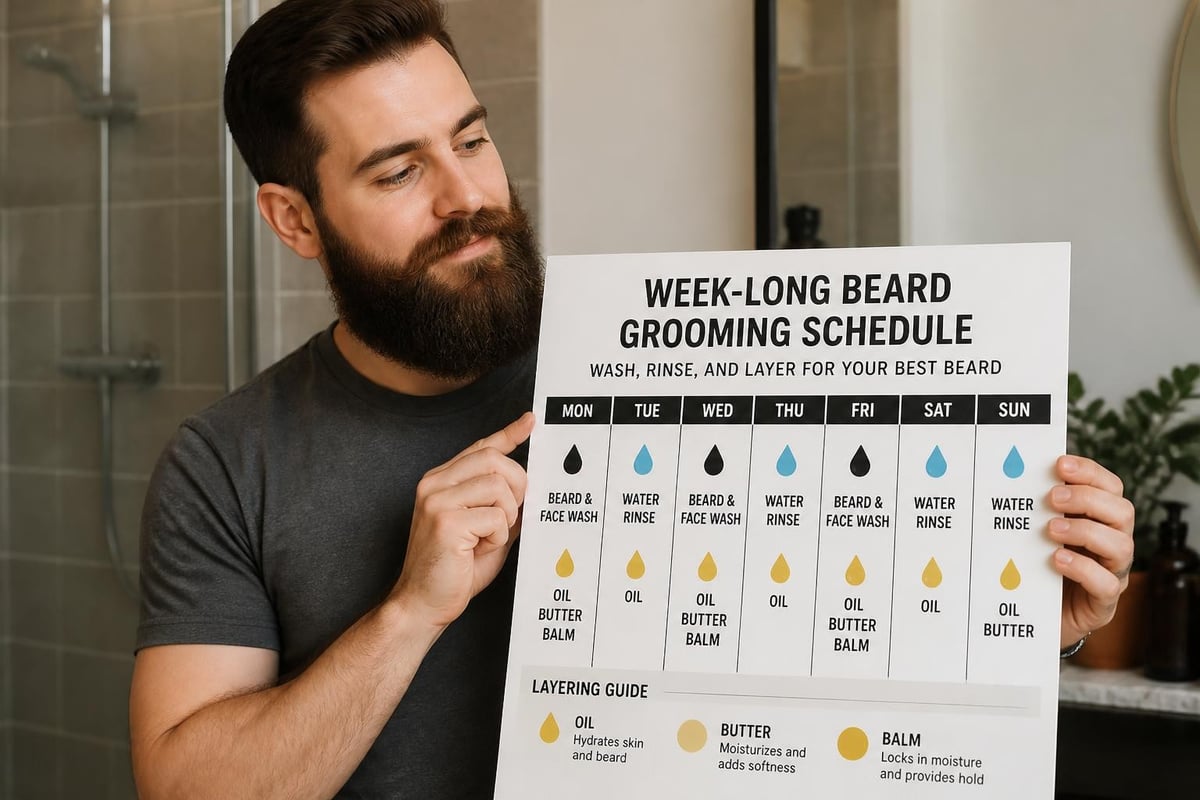
Frequency determines success or failure. Over-washing strips protective oils, triggering rebound sebum production. Under-washing allows debris accumulation and bacterial overgrowth. Most beard experts recommend washing with a dedicated beard and face wash 3-4 times per week, with water-only rinses on alternate days.
Your daily routine should follow this sequence:
Morning Protocol
- Rinse beard with lukewarm water
- Apply a nourishing beard oil whilst hair remains slightly damp
- Distribute evenly with a boar bristle brush to stimulate follicles
Evening Protocol (Wash Days)
- Use beard and face wash as described in the four-step protocol
- Pat dry with a dedicated beard towel – rubbing causes frizz and breakage
- Apply beard butter for overnight conditioning
Evening Protocol (Non-Wash Days)
- Rinse thoroughly with water only
- Apply a small amount of beard balm for light conditioning
- Brush to distribute natural oils from root to tip
This approach maintains cleanliness without compromising the skin's protective mechanisms. The alternating pattern allows your sebaceous glands to regulate output naturally rather than constantly compensating for over-cleansing.
Natural Ingredients That Actually Work
The grooming industry saturates marketing with exotic botanicals and trendy superfoods. Most deliver negligible benefits. A scientifically formulated beard and face wash focuses on proven ingredients with documented mechanisms of action.
Shea butter's fatty acid profile makes it indispensable for beard care. This extract from African shea nuts contains 40-50% oleic acid, 5-10% stearic acid, and unique triterpene esters. The oleic acid penetrates the hair shaft, repairing damage from within. Stearic acid forms a protective coating on the hair surface. The triterpenes reduce inflammation in the underlying skin through inhibition of pro-inflammatory cytokines.
Research demonstrates that shea butter application increases skin elasticity and improves barrier function. When included in a beard and face wash at 2-5% concentration, it conditions whilst cleansing, preventing the tight, dry feeling associated with conventional face washes.
| Natural Ingredient | Active Compounds | Biological Effect | Optimal Concentration in Wash |
|---|---|---|---|
| Argan Oil | Tocopherols, essential fatty acids | Antioxidant protection, moisture retention | 1-3% |
| Jojoba Oil | Wax esters mimicking sebum | Sebum regulation, non-comedogenic moisture | 2-5% |
| Aloe Vera | Polysaccharides, gibberellins | Anti-inflammatory, wound healing | 5-10% |
| Chamomile | Bisabolol, apigenin | COX-2 inhibition, soothing | 1-2% |
| Tea Tree Oil | Terpinen-4-ol | Antimicrobial, antifungal | 2-5% |
The Carrier Oil Controversy
Some beard and face wash products incorporate heavy carrier oils like castor or coconut oil. Whilst these oils benefit beard conditioning treatments, they present problems in cleansing formulas.
Coconut oil, despite its popularity, has a comedogenic rating of 4 out of 5. It readily clogs pores, potentially causing acne breakouts on the face beneath your beard. Castor oil's extreme viscosity makes it difficult to rinse completely, leaving residue that attracts dirt.
Superior formulations use these oils in leave-in products (oils, balms, butters) rather than wash-off formulas. Your beard and face wash should contain lighter oils that rinse clean whilst delivering fatty acids during the contact time.
The 90-Day Transformation: Complete System Approach
Individual products deliver individual results. A coordinated system amplifies benefits through synergistic interactions between complementary formulas.
Consider how professional beard transformation occurs. It's not one product working in isolation. It's a carefully sequenced protocol where each component enhances the others. A properly formulated beard and face wash prepares your skin and hair to absorb subsequent treatments. Think of it as tilling soil before planting: you're creating optimal conditions for growth and health.
The 90-Day Beard Challenge exemplifies this system approach. It combines pH-balanced cleansing with follicle-stimulating serums, overnight conditioning treatments, and protective balms. Each formula addresses a specific biological need:
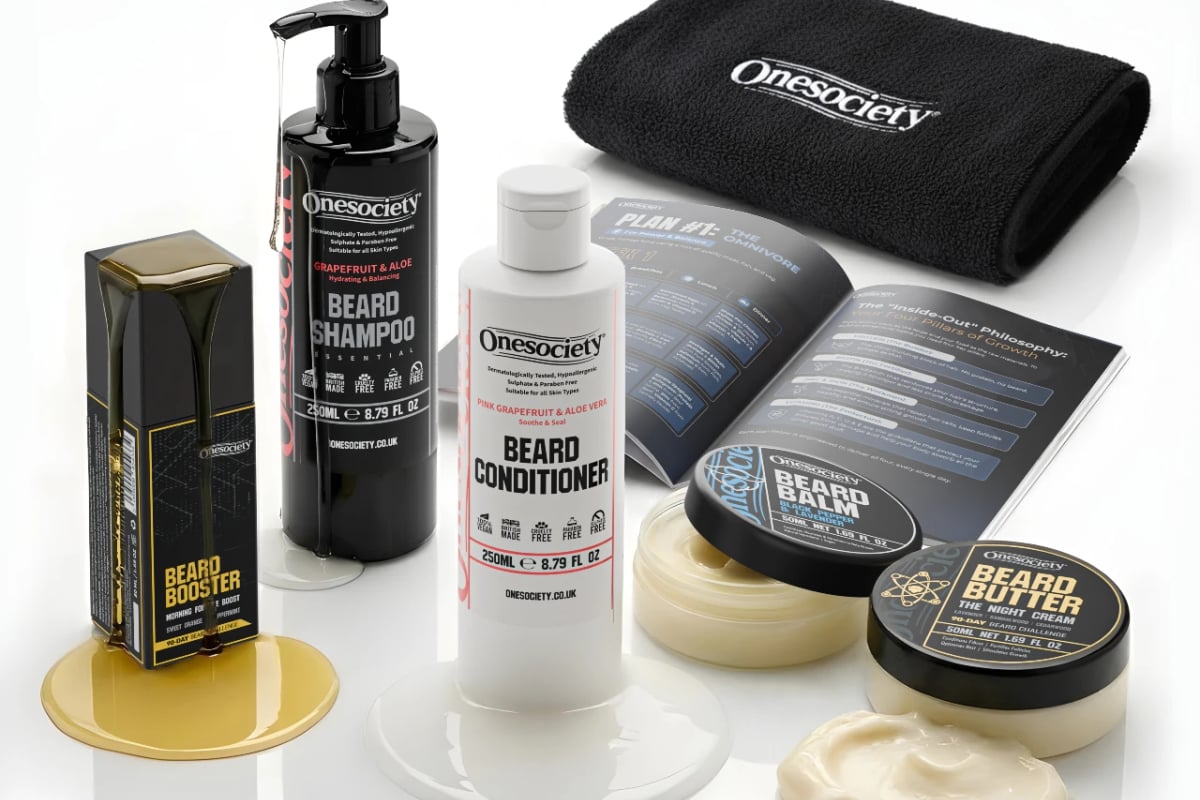
- Beard Booster increases follicular blood flow through vasodilating compounds, delivering oxygen and nutrients to support keratin synthesis
- Beard Butter provides overnight deep conditioning with plant ceramides that repair damaged cuticles
- Hydro-Lock Balm creates a semi-occlusive barrier that prevents moisture loss whilst allowing skin respiration
- pH-Balanced Shampoo cleanses without disrupting the acid mantle, maintaining antimicrobial protection
This systematic approach produces measurable results because it addresses beard health from multiple angles simultaneously. You're not just washing away dirt; you're optimising the entire follicular environment.
Common Mistakes That Sabotage Your Results
Even with the right beard and face wash, poor technique undermines your efforts. These errors appear frequently in beard care routines:
Mistake 1: Washing with body wash or hand soap These formulas contain harsh surfactants designed for body skin, which has a thicker stratum corneum than facial skin. The detergent concentration that works on your chest devastates the delicate skin beneath your beard.
Mistake 2: Scrubbing aggressively Vigorous scrubbing doesn't improve cleansing. It damages hair cuticles and irritates follicles. The American Academy of Dermatology emphasises gentle circular motions rather than aggressive scrubbing for effective beard washing.
Mistake 3: Skipping the pre-rinse Applying beard and face wash to a dry beard prevents proper distribution. The cleanser can't form micelles effectively without adequate water, reducing cleaning efficacy by 40-60%.
Mistake 4: Using scalp shampoo on your beard Scalp skin tolerates stronger surfactants due to its robust sebum production and thicker epidermis. Facial skin lacks these protections. A dedicated beard shampoo formulated for facial skin pH proves essential.
Mistake 5: Ignoring water quality Hard water contains calcium and magnesium ions that bind to surfactants, reducing lather and leaving mineral deposits on hair shafts. If you live in a hard water area, consider using filtered water for your final rinse or adding a chelating agent (like citric acid) to your beard and face wash.
The Towel Technique That Prevents Damage
How you dry matters as much as how you wash. Hair reaches maximum fragility when wet, as water swells the cuticle layer and weakens hydrogen bonds within the keratin structure.
Never rub your beard vigorously with a towel. This friction causes:
- Cuticle abrasion, leading to split ends and frizz
- Mechanical stress on follicles, potentially disrupting the growth cycle
- Static electricity buildup, making hair unmanageable
Instead, use the "press and squeeze" method:
- Gently press a clean towel against your beard
- Squeeze sections of beard hair within the towel
- Allow the towel to absorb water through capillary action
- Repeat until the beard feels damp, not wet
- Allow air drying for the final 20-30% of moisture
This approach preserves cuticle integrity and prevents the mechanical damage that accumulates over months of daily washing.
Seasonal Adjustments to Your Washing Routine
Your skin's needs change with environmental conditions. A static beard and face wash routine works against these natural variations rather than adapting to them.
Winter demands more moisture preservation. Cold air holds less humidity, and indoor heating further desiccates the environment. Your sebaceous glands slow production in cold temperatures, reducing natural protection. During winter months:
- Reduce washing frequency to 2-3 times weekly
- Choose a beard and face wash with higher emollient content
- Follow immediately with a heavy moisturiser or beard butter
- Consider using lukewarm water rather than warm
Summer requires different adaptations. Heat stimulates sebum production, whilst sweat carries salt that can irritate skin and dry hair. Swimming in chlorinated or salt water strips oils aggressively. Summer modifications include:
- Increasing washing frequency to 4-5 times weekly
- Selecting a beard and face wash with stronger cleansing power but maintained pH balance
- Rinsing with fresh water immediately after swimming
- Applying lighter conditioning products that won't feel heavy in humidity
Spring and autumn represent transition periods. Monitor your skin's response and adjust gradually rather than making abrupt changes that shock the system.
The Investment: What Quality Actually Costs
Cheap beard and face wash products save money initially but cost more long-term. Low-quality formulations cause problems that require correction through additional products or professional treatments.
A 200ml bottle of properly formulated beard and face wash typically costs £12-20. At the recommended usage (coin-sized amount, 3-4 times weekly), this provides 8-12 weeks of cleansing. That's roughly £0.30-0.50 per wash.
Compare this to the hidden costs of using inadequate products:
- Beard oil consumption doubles when harsh cleansers strip natural oils (£8-15 monthly increase)
- Dermatologist visits for folliculitis, dermatitis, or persistent irritation (£60-150 per consultation)
- Professional beard treatments to repair damage from improper care (£30-80 per session)
- Replacement costs when poor-quality products deliver no results (£10-30 wasted per failed purchase)
The mathematics favour investing in quality from the start. A beard and face wash formulated with research-backed ingredients and proper pH balance prevents problems rather than requiring their correction.
Evaluating Value Beyond Price
Price doesn't automatically indicate quality, but extremely cheap products reveal their shortcuts through ingredient lists. Look for these value indicators:
- Concentration of active ingredients: A product with 5% active botanicals outperforms one with 0.5%, even if it costs twice as much
- Ingredient sourcing: Cold-pressed oils retain more beneficial compounds than heat-extracted versions
- Formulation complexity: Multiple complementary ingredients create synergistic effects
- Company transparency: Brands that explain their ingredient choices and concentrations demonstrate confidence in their formulations
Onesociety exemplifies this transparency approach, publishing detailed ingredient information and scientific justifications for formula components. This openness allows informed decisions rather than marketing-driven purchases.
Integration with Your Complete Grooming System
Your beard and face wash exists within an ecosystem of grooming products. Each component should complement the others, creating a coherent approach to facial hair and skin health.
Morning routines focus on protection and styling. After water-only rinsing (on non-wash days), apply products in this order:
- Leave-in conditioning spray (if used) on damp hair
- Beard oil distributed through beard and onto skin
- Beard balm for hold and shape (if desired)
- Moustache wax for handlebar styles (if applicable)
Evening routines emphasise cleansing and recovery. On washing days:
- Beard and face wash using the four-step protocol
- Pat dry with appropriate technique
- Beard butter for intensive overnight conditioning
- Face moisturiser on exposed skin areas
This layering sequence ensures each product absorbs properly without interference. Oil-based products applied to wet hair seal in moisture. Water-based products applied first allow oils to lock them in place.
The key lies in selecting compatible formulations. Products from the same line typically share pH ranges and complementary ingredient profiles. Mixing drastically different formulas can cause:
- pH conflicts that disrupt skin balance
- Ingredient interactions that reduce efficacy
- Texture issues where products don't layer smoothly
- Fragrance clashes creating unpleasant scents
Beyond Cleansing: The Broader Health Picture
Your beard reflects your overall health status. The finest beard and face wash cannot compensate for nutritional deficiencies, chronic stress, or systemic health issues.
Protein intake directly determines hair quality. Each beard hair consists of keratin, a structural protein synthesised from amino acids. Insufficient protein consumption (less than 0.8g per kg body weight daily) limits keratin production, resulting in weak, brittle facial hair that breaks easily.
Biotin (vitamin B7) serves as a cofactor in keratin synthesis. Whilst deficiency is rare in developed countries, suboptimal levels can reduce beard quality. Foods rich in biotin include eggs, nuts, seeds, and organ meats.
Hydration affects both skin and hair. Dehydrated skin produces insufficient sebum, whilst dehydrated hair loses elasticity and becomes prone to breakage. Aim for 35ml water per kg body weight daily, adjusting for activity level and climate.
Sleep quality influences beard growth. Growth hormone, which stimulates follicular activity, peaks during deep sleep stages. Chronic sleep deprivation reduces growth hormone secretion by 30-50%, slowing beard development regardless of topical care.
These factors create the foundation upon which your beard and face wash routine builds. External care optimises what internal health provides.
Choosing the right beard and face wash transforms your facial hair from a grooming challenge into an asset that enhances your appearance and confidence. The science behind pH-balanced formulations, natural ingredients, and proper technique isn't complicated, but it does require attention to detail and consistency in application.
Onesociety delivers scientifically formulated beard care products that address these principles directly. Their commitment to 100% natural ingredients backed by research ensures you're investing in formulations that work with your biology rather than against it. Whether you're just starting your beard journey or refining an established routine, their range provides the tools needed for genuine transformation, backed by their full refund guarantee on the 90-Day Beard Challenge.