

You've watched your beard grow in patches. You've waited months for those stubborn areas to fill in. You've wondered if your genetics have sentenced you to a lifetime of sparse facial hair. The frustration of slow or uneven beard growth affects thousands of men across the UK, and the misinformation floating around online only makes matters worse. Let's cut through the nonsense and explore what actually works when it comes to stimulating beard growth, backed by science and real-world results.
The Biology Behind Beard Growth
Understanding how facial hair actually grows transforms your approach to stimulating beard growth. Your beard follicles respond to dihydrotestosterone (DHT), a hormone derived from testosterone that binds to androgen receptors in hair follicles. This binding triggers the follicle to transition from the dormant telogen phase into the active anagen phase, where actual hair production occurs.
The Three-Phase Growth Cycle
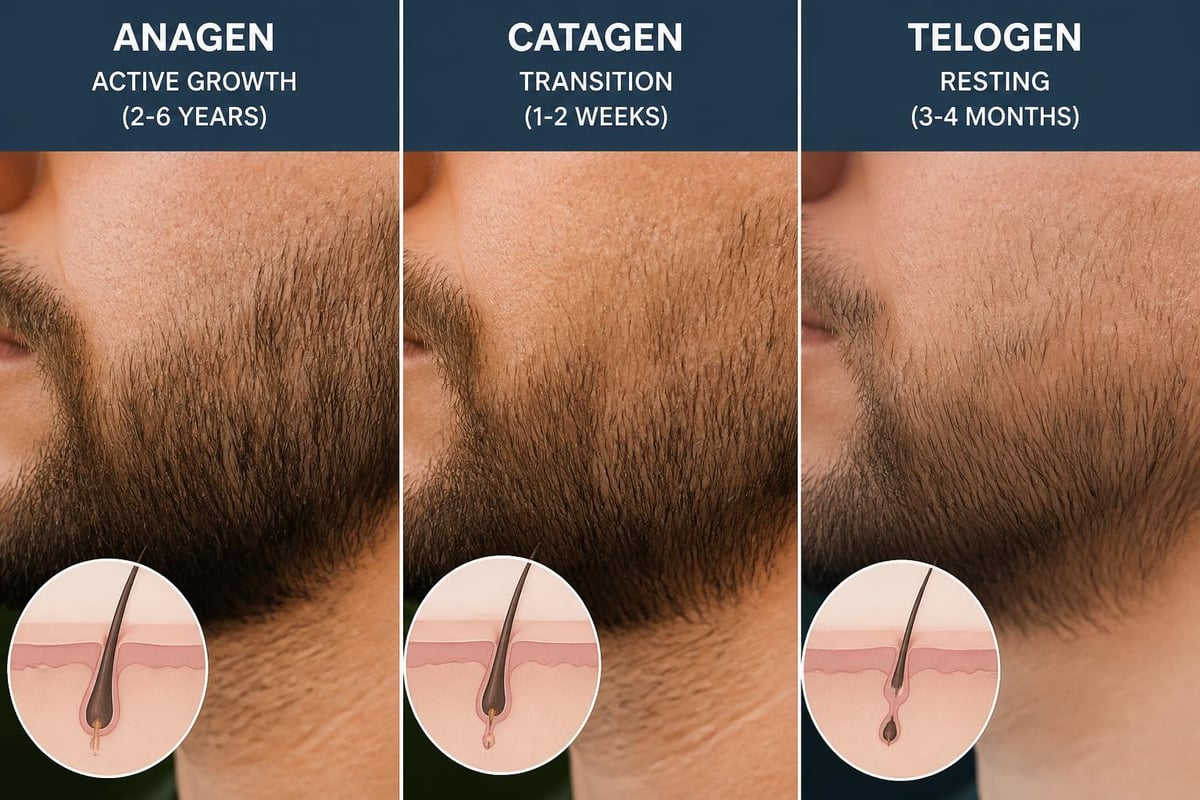
Your beard doesn't grow continuously. Each follicle cycles through distinct phases:
- Anagen phase: Active growth lasting 2-6 years, determining maximum beard length
- Catagen phase: Transitional period lasting 2-3 weeks where growth stops
- Telogen phase: Resting period lasting 2-4 months before the hair sheds
The percentage of follicles in each phase determines your beard's density and appearance. Genetic factors heavily influence how your follicles respond to androgens, which explains why some men grow thick beards effortlessly whilst others struggle despite identical testosterone levels.
Blood circulation delivers oxygen and nutrients to follicle cells. When circulation improves, follicles receive more resources to produce keratin, the protein that forms hair shafts. This principle underpins many effective strategies for stimulating beard growth.
Natural Ingredients That Activate Follicles
Problem: Your follicles need specific nutrients and compounds to shift into active growth mode, but most grooming products use synthetic fillers that coat hair without penetrating follicles.
Agitation: Those cheap oils sitting on your bathroom shelf? They're suffocating your follicles with mineral oil and silicones, creating a barrier that blocks the very nutrients your beard needs. Meanwhile, your follicles remain dormant, starved of the bioactive compounds that trigger growth.
Solution: Natural ingredients with proven biological activity target follicle function directly.
Scientifically-Validated Growth Promoters
| Ingredient | Biological Function | Application Method |
|---|---|---|
| Jojoba Oil | Mimics sebum; dissolves DHT buildup around follicles | Daily topical application |
| Castor Oil | Ricinoleic acid increases prostaglandin E2, stimulating growth | 2-3 times weekly massage |
| Biotin (B7) | Cofactor for keratin synthesis enzymes | Oral supplement + topical |
| Peppermint Oil | Increases follicle depth and count through IGF-1 stimulation | Diluted topical application |
Jojoba oil's molecular structure closely resembles human sebum, allowing it to penetrate follicles and dissolve accumulated DHT that can miniaturise follicles. When you apply quality beard growth oil containing jojoba, you're not just moisturising-you're clearing follicle pathways for growth.
Castor oil's ricinoleic acid content reaches 90%, making it exceptionally effective at stimulating prostaglandin E2 production. This prostaglandin extends the anagen phase, keeping more follicles in active growth for longer periods.
The Hydration-Growth Connection
Dehydrated follicles cannot produce healthy hair shafts. Hyaluronic acid and aloe vera deliver moisture at the cellular level, whilst shea butter's fatty acids reduce inflammation that disrupts the growth cycle. The combination creates an optimal environment for stimulating beard growth.
Lifestyle Factors That Accelerate Growth
Your daily habits influence follicle activity more than you might think. Sleep deprivation reduces testosterone production by up to 15% after just one week of inadequate rest. Since testosterone converts to DHT, the primary driver of beard growth, chronic sleep debt directly undermines your facial hair potential.
Optimise These Daily Practices
- Sleep 7-9 hours nightly: Growth hormone peaks during deep sleep, repairing and building follicle tissue
- Manage cortisol levels: Chronic stress diverts resources from hair production to survival functions
- Exercise with resistance training: Compound movements boost testosterone naturally
- Maintain protein intake: Aim for 1.6-2.2g per kg bodyweight to supply amino acids for keratin synthesis
Research suggests testosterone levels influence beard density, but optimising natural production through lifestyle beats risky hormone supplementation for most men.
Nutrition targets for follicle health:
- Zinc (11mg daily): Cofactor for 5α-reductase, converting testosterone to DHT
- Vitamin D (2000-4000 IU): Activates hair follicle cycling genes
- Omega-3 fatty acids (2-3g daily): Reduces inflammation that disrupts growth
- Iron (8-18mg): Ensures adequate oxygen delivery to follicles
Dehydration thickens blood, reducing nutrient delivery to peripheral tissues including facial follicles. Drinking 2-3 litres of water daily maintains optimal circulation for stimulating beard growth.

Advanced Techniques for Stubborn Growth
When natural methods plateau, specific interventions can push stubborn follicles into action. These approaches require consistency and realistic expectations, but deliver measurable results when applied correctly.
Microneedling: Mechanical Follicle Activation
Microneedling involves rolling tiny needles across your skin, creating controlled micro-injuries that trigger healing responses. Clinical evidence shows this process stimulates collagen production and increases growth factor expression around follicles.
How it works: The micro-injuries create channels that enhance absorption of topical growth promoters whilst triggering platelet-derived growth factor (PDGF) and vascular endothelial growth factor (VEGF) release. These growth factors increase blood vessel formation around follicles, improving nutrient delivery.
Protocol for stimulating beard growth:
- Use 0.5-1.0mm needle length for facial application
- Roll in four directions (vertical, horizontal, diagonal both ways)
- Apply growth oil immediately after to maximise absorption
- Perform once weekly, allowing 7 days for healing
- Maintain strict hygiene to prevent infection
Minoxidil: The Evidence-Based Accelerator
Originally developed for hypertension, minoxidil's hair growth properties emerged as an unexpected side effect. Topical minoxidil applications have demonstrated effectiveness in stimulating beard growth, though it remains an off-label use.
Minoxidil works by opening potassium channels in follicle cells, which triggers several growth-promoting effects:
- Extends anagen phase duration
- Increases follicle size
- Stimulates VEGF production for improved blood flow
- Activates dormant follicles
The 5% minoxidil formulation shows superior results compared to 2% solutions, but requires twice-daily application for 4-6 months before visible improvement. Discontinuation often leads to gradual hair loss, making this a long-term commitment.
The Complete Growth System Approach
Isolated tactics produce limited results. Combining multiple stimulating beard growth strategies creates synergistic effects that maximise follicle activation.
Morning routine essentials:
- Cleanse with a pH-balanced beard shampoo to remove sebum buildup without stripping natural oils
- Apply growth-promoting oil whilst follicles remain receptive
- Massage for 2-3 minutes using circular motions to boost circulation
- Allow complete absorption before applying styling products
Evening maintenance protocol:
- Gentle cleansing to remove environmental pollutants
- Apply beard butter for deep overnight conditioning-shea butter's triterpenes reduce inflammation whilst jojoba penetrates follicles
- Optional: Apply diluted minoxidil if using pharmaceutical intervention
- Sleep on a silk pillowcase to reduce friction damage
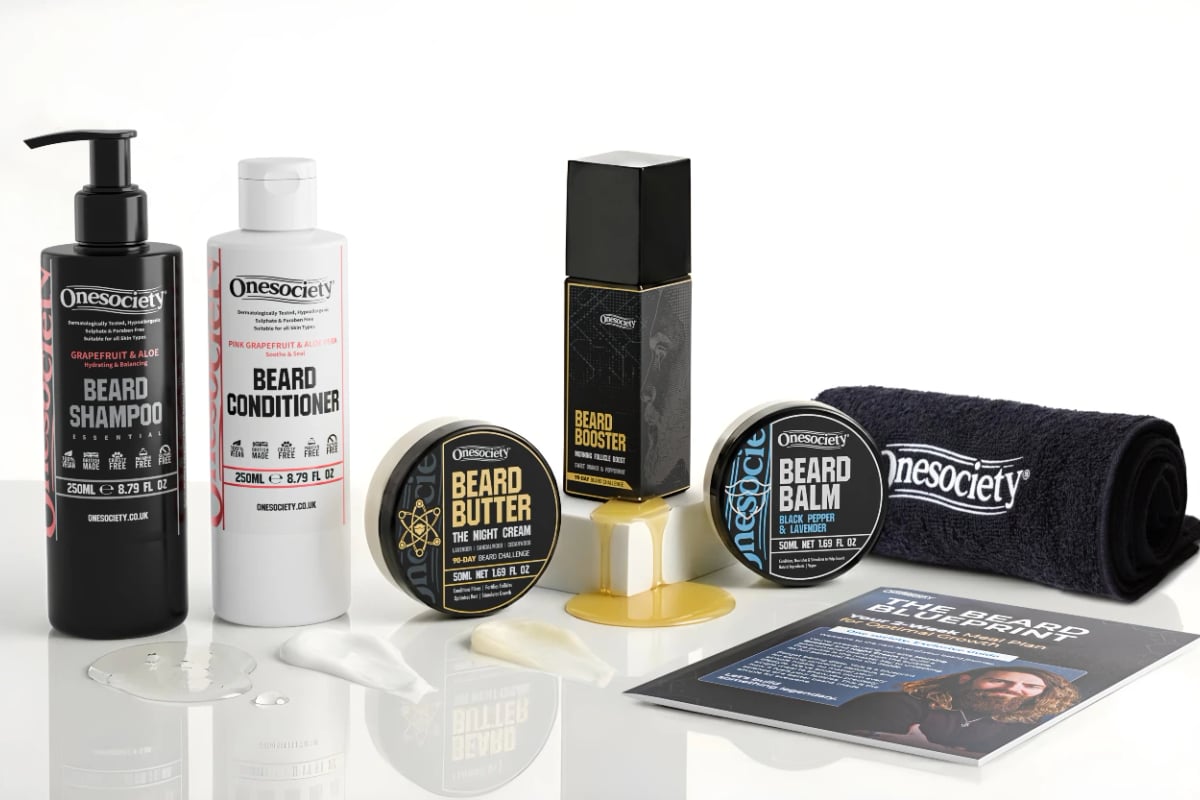
The 90-Day Beard Challenge from Onesociety packages this systematic approach into a comprehensive kit designed specifically for stimulating beard growth. The programme combines a Beard Booster formulation that enhances follicle blood flow with a Beard Butter providing nightly recovery through ceramides and essential fatty acids. The Hydro-Lock Balm creates a protective barrier that retains moisture whilst the pH-balanced shampoo resets follicle environment without harsh sulphates. This isn't random product stacking-it's a scientifically-sequenced system where each formula amplifies the others.
Weekly Enhancement Activities
| Activity | Frequency | Purpose |
|---|---|---|
| Microneedling | Once weekly | Trigger growth factor release |
| Exfoliation | Twice weekly | Remove dead cells blocking follicles |
| Deep conditioning mask | Once weekly | Repair damage, strengthen shafts |
| Derma-rolling + oil combo | Once weekly | Enhanced absorption |
The exfoliation step deserves special attention. Dead skin cell accumulation creates a physical barrier preventing growth oils from reaching follicles. A gentle scrub containing jojoba beads or sugar physically lifts these cells whilst natural oils condition simultaneously.
Troubleshooting Patchy Growth Patterns
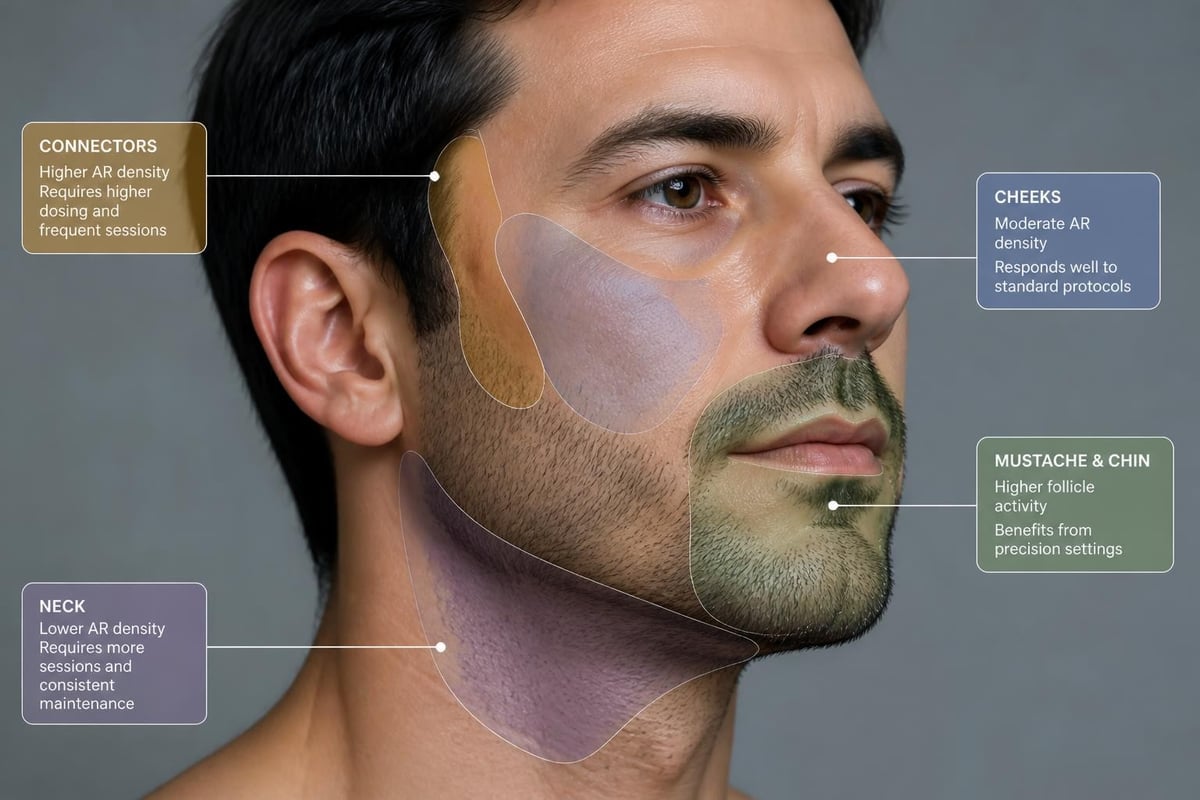
Uneven beard development frustrates men more than slow overall growth. Patches typically result from varying androgen receptor density across facial zones, not poor grooming habits.
Zone-Specific Strategies
Cheek patches: This area contains fewer androgen receptors naturally. Concentrate microneedling efforts here, and apply castor oil specifically to these zones twice daily. The increased prostaglandin stimulation can coax reluctant follicles into activity.
Connectors (between moustache and beard): These transitional areas lag behind in many men. Target them with peppermint oil applications-studies show peppermint increases follicle count and depth more than minoxidil in some cases.
Neck coverage: Often overlooked during grooming routines, the neck requires equal attention. Extend all treatments below the jawline, as inconsistent application creates artificial patches.
Managing Expectations Realistically
Genetics set your maximum potential. If your father and grandfather grew sparse beards, you're fighting against powerful hereditary programming. Focus on optimising what your genetics allow rather than chasing unrealistic standards.
Most men see initial results within 4-6 weeks of consistent effort. Terminal (full) results typically require 3-4 months as follicles complete their growth cycles. Patience isn't optional-it's fundamental to success in stimulating beard growth.
Professional Interventions When Natural Methods Plateau
Some men exhaust natural options without achieving desired density. Surgical and clinical interventions offer solutions when genetics impose hard limits.
Beard Transplantation: Permanent Follicle Relocation
Hair transplant procedures adapted for beards extract follicles from the scalp (typically the back of the head) and implant them in facial zones. These transplanted follicles retain their original growth characteristics, producing permanent facial hair.
The follicular unit extraction (FUE) method removes individual follicles, leaving minimal scarring. Surgeons strategically place 1,000-3,000 grafts to create natural-looking density and patterns. Choosing a qualified surgeon proves critical-facial hair requires artistic skill to match natural growth angles and distribution.
Considerations before surgery:
- Cost ranges from £3,000-£8,000 in the UK
- Recovery requires 7-10 days with visible redness
- Transplanted hairs shed initially, then regrow after 3-4 months
- Results appear fully mature after 12-18 months
- Requires sufficient donor hair on the scalp
Platelet-Rich Plasma (PRP) Injections
PRP therapy concentrates growth factors from your own blood and injects them into beard zones. The platelets release proteins that stimulate follicle stem cells, potentially reactivating dormant follicles.
Clinical results vary considerably. Some men experience noticeable improvement after 3-4 monthly sessions, whilst others see minimal change. The therapy works best for men with existing follicles that have miniaturised rather than completely absent follicles.
Common Mistakes That Sabotage Progress
Over-washing strips natural sebum: Your sebum contains protective compounds and mild antimicrobials. Washing more than once daily removes this protective layer, forcing follicles to overproduce oil and creating an inflammatory cycle. Use a gentle beard balm to maintain moisture balance without triggering excess sebum production.
Inconsistent application patterns: Your follicles need consistent signals to shift into growth mode. Applying growth oils sporadically confuses follicle cycling. Establish a fixed routine and maintain it for at least 90 days before evaluating results.
Ignoring underlying health issues: Thyroid dysfunction, nutritional deficiencies, and autoimmune conditions disrupt hair growth cycles. If you've optimised all controllable factors without results, consult your GP for bloodwork checking thyroid function, iron levels, vitamin D, and testosterone.
Trimming too frequently during growth phases: Constant trimming doesn't affect growth rate (a persistent myth), but it prevents you from accurately assessing progress. Allow 4-6 weeks between significant trims during the initial growth phase.
Product Quality Matters Dramatically
Synthetic fragrances and mineral oil derivatives in cheap grooming products actively work against stimulating beard growth. Mineral oil sits on the surface, creating a barrier that blocks beneficial ingredients from penetrating follicles. Synthetic fragrances contain phthalates that disrupt hormone signalling.
Natural alternatives from providers like Onesociety use plant-based ingredients that work with your biology rather than against it. The difference lies in bioavailability-natural compounds penetrate follicles and trigger biological responses, whilst synthetic alternatives merely coat hair temporarily.
Measuring and Tracking Your Progress
Subjective assessment fails to capture gradual improvements. Implement objective tracking methods:
Monthly photography protocol:
- Use identical lighting and camera position
- Photograph from front, both sides, and below jaw
- Take shots immediately after washing and drying
- Compare monthly sets to identify growth patterns
Keep a written log documenting:
- Daily product applications
- Weekly measurements of beard length at set points
- Changes in texture or thickness
- Dietary and lifestyle modifications
- Sleep quality and stress levels
The correlation between variables and results becomes visible over time. You might discover that weeks with consistent 8-hour sleep patterns show better growth than months with disrupted sleep, validating the lifestyle-growth connection.
Setting Realistic Milestones
| Timeline | Expected Progress | Focus Areas |
|---|---|---|
| Weeks 1-4 | Reduced irritation, softer texture | Establish routine consistency |
| Weeks 5-8 | Slightly increased density, fewer patches | Continue all protocols |
| Weeks 9-12 | Noticeable length increase, improved coverage | Assess and adjust approach |
| Months 4-6 | Significant density improvements | Maintain successful strategies |
Progress never follows a linear path. Some weeks bring visible improvements whilst others plateau. The cumulative effect matters more than week-to-week fluctuations when stimulating beard growth.
Stimulating beard growth requires understanding your follicle biology, applying scientifically-validated ingredients, maintaining consistency, and managing realistic expectations based on your genetic blueprint. Whether you're targeting patchy zones or seeking overall density improvements, the principles remain constant: optimise follicle environment, support with proper nutrition and lifestyle habits, and give your biology time to respond. Onesociety provides science-backed, natural formulations designed specifically for men committed to maximising their beard potential through ingredients that actually penetrate follicles and trigger biological growth responses.