

Choosing the right shave beard style transforms your face, but most men struggle with the gap between what they want and what their facial hair delivers. Uneven growth, patchy spots, and unclear necklines plague even dedicated groomers. The good news? Understanding the science behind facial hair and mastering precise shaping techniques lets you work with what you have, creating a polished shave beard style that suits your face shape, growth pattern, and lifestyle.
Understanding Facial Hair Growth Patterns
Before you touch a trimmer, you need to map your growth. Facial hair doesn't grow uniformly across your face. Follicle density varies between the chin, cheeks, and neck, whilst growth rates differ dramatically from person to person.
The Biology Behind Your Beard
Testosterone converts to dihydrotestosterone (DHT) through the enzyme 5-alpha reductase. DHT binds to androgen receptors in your facial hair follicles, triggering growth. Higher receptor sensitivity means thicker growth, explaining why some areas flourish whilst others remain sparse.
Your genetics determine:
- Follicle density per square centimetre
- Androgen receptor sensitivity in different facial zones
- Growth cycle duration (anagen phase length)
- Terminal hair thickness and colour
This biological reality means you can't force follicles where none exist, but you can optimise what you have. Research on beard alopecia identifies various patterns of facial hair loss and thinning that affect styling choices.
Common Problems with Achieving Your Ideal Shave Beard Style
Most men face predictable challenges when attempting to create a defined shave beard style. These obstacles stem from both biological factors and technique errors.
Patchy Growth and Uneven Density
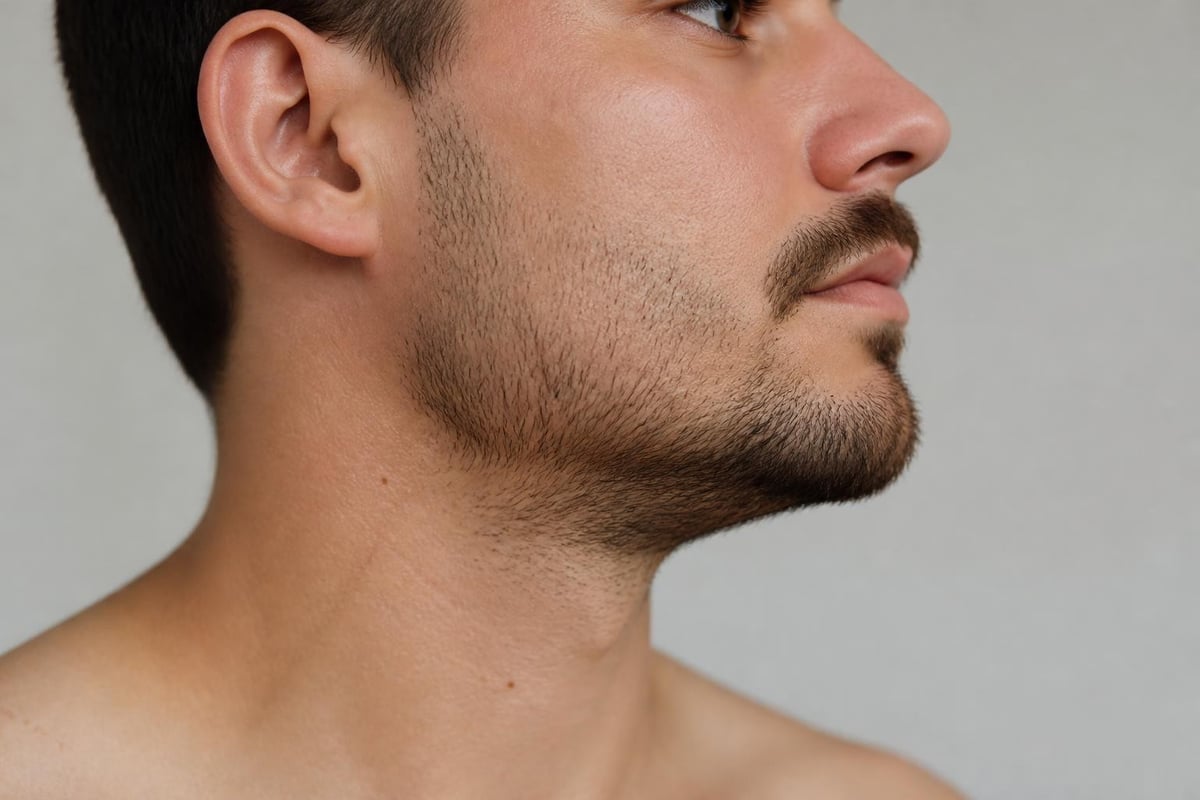
Patchy beards create the biggest styling headache. You've got thick growth on your chin but sparse coverage on your cheeks. Your neck grows like a forest whilst your moustache barely registers.
Why this happens:
| Growth Zone | Common Issue | Biological Cause |
|---|---|---|
| Cheeks | Sparse follicles | Lower androgen receptor density |
| Neck | Uncontrolled thickness | High follicle concentration |
| Under-lip | Slow growth | Reduced blood flow to area |
| Jawline | Uneven sides | Genetic asymmetry |
The American Academy of Dermatology emphasises that understanding your natural growth pattern dictates realistic styling choices. Fighting your biology creates frustration.
Ingrown Hairs and Razor Bumps
Aggressive shaving to achieve clean lines often triggers pseudofolliculitis barbae. Your curved hair shaft grows back into the skin, causing inflammation, bumps, and sometimes infection.
The clinical research on pseudofolliculitis barbae identifies several risk factors:
- Curly or coarse hair texture
- Too-close shaving against growth direction
- Multiple blade passes over the same area
- Dry shaving without proper preparation
Men with tightly coiled facial hair face significantly higher risk. Each ingrown hair creates a raised bump that disrupts your shave beard style's clean aesthetic.
Unclear Definition and Poor Neckline Placement
Your neckline makes or breaks your shave beard style. Too high creates a chinstrap appearance. Too low gives you a neckbeard. Most men default to removing everything below their jawbone, which actually shortens the face visually.
The proper neckline sits approximately two finger-widths above your Adam's apple, following the natural curve where your neck meets your jaw. This placement maintains facial proportion whilst preventing the "floating beard" effect.
Selecting the Right Shave Beard Style for Your Face Shape
Your bone structure determines which shave beard style enhances your features versus fighting them. Match style to shape, not trends.
Face Shape Analysis
Oval faces suit virtually any shave beard style. Your balanced proportions provide a neutral canvas. Consider a full beard with defined edges or a classic goatee.
Round faces benefit from vertical emphasis. Grow length on your chin whilst keeping sides shorter. This creates the illusion of length, counteracting width.
Square faces already possess strong angles. Soften harsh lines with slightly rounded edges on your shave beard style. Avoid sharp, geometric shapes that amplify squareness.
Oblong faces need width, not length. Keep your beard shorter vertically whilst maintaining fuller sides. This balances your face's natural elongation.
Triangle faces (wide jaw, narrow forehead) should add volume to the moustache and upper beard areas whilst keeping the chin trimmer. This balances your proportions.
Popular Shave Beard Style Categories
Different styles require different maintenance commitments and growth capabilities:
- The Corporate Beard - 3-7mm length, sharply defined edges, immaculate neckline
- The Extended Goatee - Chin and moustache connected, clean-shaved cheeks
- The Van Dyke - Disconnected moustache and goatee, requiring precise shaping
- The Short Boxed Beard - Even length throughout, geometric edge definition
- The Balbo - No sideburns, disconnected moustache, sculpted chin patch
GQ's comprehensive shaping guide demonstrates how these styles translate across different face shapes with visual examples.
Essential Tools and Products for Precision Shaping
Your shave beard style requires specific tools. Generic equipment produces generic results.
The Complete Toolkit
Adjustable beard trimmer - Select one with 0.5mm increment adjustments. You need precision control, not broad jumps between guard sizes.
Detailing trimmer - A narrow-headed trimmer reaches tight spaces around your philtrum and creates sharp cheek lines. Standard trimmers can't achieve these details.
Quality razor or shaver - For defining edges and removing unwanted growth. Choose based on your skin sensitivity and hair coarseness.
Scissors - Professional barber scissors control stray hairs and fine-tune moustache shape. Standard household scissors lack the necessary sharpness.
Beard brush and comb - Boar bristle brushes distribute natural oils and styling products. Wide-tooth combs detangle without pulling.
| Tool | Purpose | Key Feature |
|---|---|---|
| Trimmer (main) | Overall length control | 0.5mm adjustments |
| Detail trimmer | Edge definition | Narrow head |
| Scissors | Precision cutting | Barber-grade sharpness |
| Brush | Product distribution | Natural bristles |
| Mirror (handheld) | Angle checking | Dual-sided magnification |
The Science Behind Effective Beard Products
Quality grooming products enhance your shave beard style by addressing the biological needs of facial hair and underlying skin.
Beard oils deliver essential fatty acids that facial sebum alone can't provide in sufficient quantity. Jojoba oil closely mimics natural sebum, whilst argan oil's vitamin E reduces oxidative stress on follicles. These components penetrate the hair shaft's cuticle layer, improving flexibility and reducing brittleness.
For those serious about transforming their facial hair, investing in a comprehensive grooming system makes measurable difference. The science-backed formulations target every stage of beard development from follicle stimulation through daily maintenance.
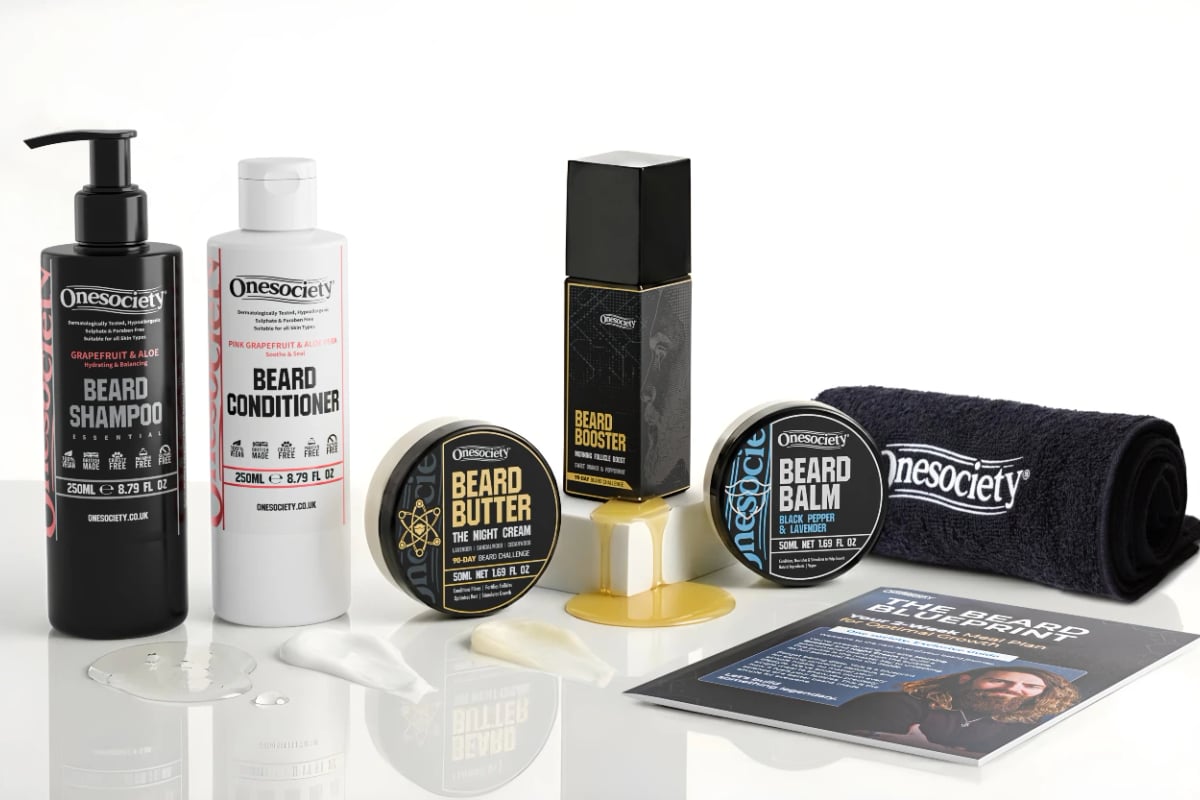
Beard balms combine carrier oils with beeswax or plant-based waxes. The wax creates a physical barrier that locks moisture into the hair shaft whilst providing hold for styling. Shea butter's fatty acid profile (stearic and oleic acids) reduces inflammation in the follicle, creating healthier growth conditions.
Specialised shampoos maintain the pH balance necessary for healthy facial skin. Your face requires different pH than your scalp (approximately 4.5-5.5 versus 5.5-6.5). Using head hair shampoo disrupts this balance, triggering dryness and irritation that undermines your shave beard style.
Understanding what beard oil actually does helps you select formulations matched to your specific needs rather than marketing claims.

Step-by-Step Shaping Techniques
Creating a defined shave beard style requires systematic approach, not random trimming.
Pre-Shaping Preparation
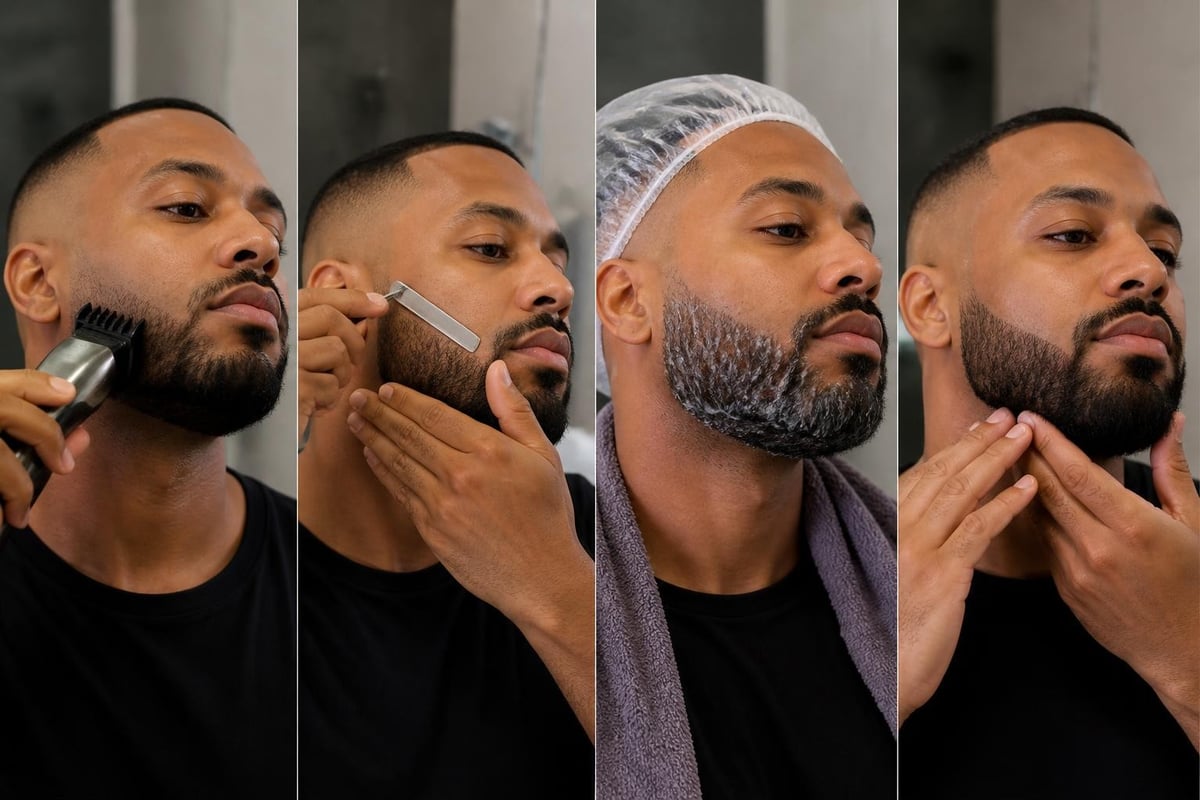
Wash your beard with lukewarm water and beard-specific cleanser. This removes debris, softens the hair shaft, and lifts hairs from the skin for more accurate cutting.
Completely dry your beard before trimming. Wet hair appears longer and lies flatter. Cutting wet creates unexpected shortness once dry.
Brush thoroughly in the direction of growth. This reveals your true length and identifies stray hairs requiring attention.
Creating Your Baseline Length
Start longer than your target length. You can always remove more, but you can't add back what you've cut.
The systematic approach:
- Begin with the longest guard setting on your trimmer
- Pass through your entire beard in the direction of growth
- Reduce guard length by one increment
- Make another complete pass
- Continue until you reach your desired base length
- Never skip guard sizes trying to speed the process
This incremental method prevents the "oops, too short" disaster most men experience.
Defining Your Neckline
The neckline creates visual foundation for your entire shave beard style. Professional barbers use specific landmarks to ensure symmetry.
Place your index and middle fingers horizontally above your Adam's apple. The top of your middle finger marks your neckline base. Visualise a U-shaped curve connecting points approximately one inch behind your jawline on each side.
Remove guard from your trimmer and carefully follow this curve. The Merck Manual's guidance on preventing ingrown hairs recommends shaving with growth direction for this initial pass, then against growth only if you need sharper definition.
Sculpting Your Cheek Line
Your natural upper boundary sits where facial hair transitions from dense to sparse. Most men should follow this natural line rather than creating artificial geometric shapes.
For a classic look, imagine a straight line from your sideburn to approximately 1-2cm above your mouth corner. This creates clean definition without appearing forced.
Use your detail trimmer to trace this line, removing stray hairs above it. Resist the temptation to go too low. Removing too much cheek hair creates a disconnected appearance.
Advanced Refinement Techniques
Once you've established your basic shave beard style, refinement separates acceptable from exceptional.
Tapering and Blending
Professional results require graduated transitions, not harsh lines. Your beard should seamlessly flow into clean-shaven areas.
The fade technique:
- Use your trimmer without guard for the definitive edge
- Switch to a 1-2mm guard and blend upward 3-5mm
- Progress to a 3-4mm guard and blend further 5-8mm
- This creates a subtle gradient that appears natural
The same principle applies to your neckline, preventing the "beard stamped onto face" effect.
Managing Moustache Integration
Your moustache connects to or separates from your beard depending on your chosen shave beard style. Connected styles require careful trimming of the philtrum (the groove between nose and upper lip).
Trim your moustache slightly shorter than your beard or keep it the same length. Never let it extend significantly longer, which creates visual imbalance. Use scissors to trim hairs that cross your upper lip line, improving comfort and appearance.
Addressing Asymmetry
No face is perfectly symmetrical. Your beard reflects this reality. Minor adjustments create the illusion of balance.
If one side grows thicker, trim it slightly shorter to match visual density. If one cheek line naturally sits higher, carefully lower it to match the other side. Use a handheld mirror to check your profile from both sides.
Maintenance Schedules for Different Styles
Your shave beard style dictates maintenance frequency. Short, defined styles require more frequent attention than longer, natural styles.
Daily Maintenance Tasks
Every morning:
- Apply beard oil to damp beard after washing your face
- Brush thoroughly to distribute products and train growth direction
- Check for stray hairs around your defined edges
- Use detail trimmer for quick edge touch-ups if needed
This five-minute routine maintains your shave beard style between major trimming sessions.
Weekly Shaping Sessions
Set aside 15-20 minutes weekly for comprehensive maintenance:
- Trim back to baseline length with your main trimmer
- Redefine neckline and cheek lines
- Scissor-trim moustache and stray hairs
- Apply conditioning treatment (beard butter or balm)
- Assess overall shape and make minor adjustments
Exploring what beard balm is used for helps you understand when to use different products within this routine.
Monthly Professional Check-ins
Even skilled home groomers benefit from professional perspective. Visit a qualified barber monthly for:
- Symmetry assessment and correction
- Professional edge definition
- Technique refinement advice
- Style adaptation recommendations
Learning from experienced beard barbers accelerates your skill development and prevents ingrained bad habits.
Troubleshooting Common Shaping Mistakes
Every man makes these errors. Recognising them quickly limits the damage.
Cutting Too Much Too Fast
You've removed more than intended. Your shave beard style looks patchy or unbalanced.
Solution: Let it grow. Resist the urge to "fix" it by cutting more. Use beard oil daily to accelerate growth. Style remaining hair to minimise the mistake's visibility. Learn patience.
Crooked Lines and Asymmetry
Your cheek line curves unexpectedly or your neckline tilts.
Solution: Don't try correcting immediately. Wait 24 hours, then reassess with fresh eyes. Often, perceived asymmetry looks less severe after a day. If genuinely crooked, carefully lower the higher side in tiny increments. Never raise the lower side by shaving upward.
Over-Defined Edges
Your lines look drawn with a ruler. Your shave beard style appears artificial.
Solution: Grow your edges out slightly. Use a longer guard setting (2-3mm) to blend harsh lines. Let natural hair growth soften the effect over one to two weeks. Future trimming should use graduated blending.
Inconsistent Length Throughout
Your beard has random long patches mixed with short areas.
Solution: Start fresh with your longest guard setting and establish a new baseline. Make slow, overlapping passes in multiple directions. Check your guard hasn't loosened during use. Replace dull blades that pull rather than cut cleanly.
Product Selection for Style-Specific Needs
Different shave beard styles demand different product formulations. Match your arsenal to your aesthetic.
Short, Defined Styles (Under 10mm)
Short beards require lightweight products that won't weigh down or clump sparse growth.
Optimal formula characteristics:
- Liquid or light oil consistency
- Fast absorption rate
- Minimal hold (you're trimming frequently anyway)
- Emphasis on skin conditioning beneath the beard
Browse specialised beard oil collections formulated for different beard lengths and densities.
Medium-Length Styled Beards (10-25mm)
These shave beard styles benefit from products offering both conditioning and hold.
Key ingredients to seek:
- Beeswax or plant waxes for natural hold
- Carrier oils for shaft conditioning
- Essential oils for skin health beneath
- Balm consistency that melts with body heat
Long, Flowing Styles (25mm+)
Longer beards prioritise deep conditioning and taming without stiffness.
Product priorities:
- Rich butter formulations
- Deep conditioning oils (argan, jojoba, sweet almond)
- Detangling properties
- Heat protection if you use styling tools
Understanding what beard butters do helps you select the right consistency for your length and styling needs.
Environmental and Lifestyle Factors
Your shave beard style doesn't exist in a vacuum. External factors constantly affect its appearance and health.
Weather Adaptation
Cold, dry winter air strips moisture from facial hair. Increase beard oil application frequency. Consider adding a protective balm layer before outdoor exposure. The fatty acids create a barrier against harsh wind.
Hot, humid summer conditions trigger increased sebum production. Reduce heavy product use. Switch to lighter oil formulations. Increase washing frequency to prevent accumulation and clogged follicles.
Seasonal shedding occurs naturally in spring and autumn as your body responds to changing daylight. Your shave beard style may thin temporarily. Maintain consistent grooming routines through these periods.
Activity-Based Adjustments
Intense physical training increases sweat and sebum production. Wash your beard immediately post-workout to prevent follicle irritation. Research on proper beard washing confirms that specialised cleansers maintain the pH balance disrupted by sweat.
Swimming in chlorinated pools damages hair protein structure. Apply beard oil before swimming to create a protective barrier. Rinse thoroughly with fresh water immediately after. Use deep conditioning treatments weekly if you swim regularly.
Professional environments may dictate conservative shave beard styles. Prioritise sharp edge definition and immaculate maintenance. Keep a detail trimmer at work for midday touch-ups.
Health Considerations and Skin Care
The skin beneath your shave beard style requires attention. Neglecting it creates problems that undermine your grooming efforts.
Preventing and Managing Irritation
Beard dandruff (seborrhoeic dermatitis) results from yeast overgrowth feeding on excess sebum. Your skin produces white flakes that mar your shave beard style's appearance.
Treatment approach:
- Use antifungal beard washes containing ketoconazole or zinc pyrithione
- Reduce styling product buildup through thorough rinsing
- Exfoliate weekly to remove dead skin cells
- Apply lightweight, non-comedogenic moisturiser beneath your beard
Harvard Health Publishing's analysis of facial skin procedures emphasises that aggressive treatments beneath beards increase infection risk.
Nutrition and Hydration Impact
Your facial hair is dead keratin, but the follicles producing it are very much alive. They require specific nutrients for optimal function.
Critical nutrients for beard health:
| Nutrient | Function | Food Sources |
|---|---|---|
| Biotin (B7) | Keratin synthesis | Eggs, nuts, sweet potatoes |
| Vitamin E | Follicle circulation | Almonds, spinach, avocados |
| Vitamin A | Sebum production | Carrots, liver, sweet potato |
| Protein | Hair structure | Lean meat, fish, legumes |
| Omega-3 fatty acids | Inflammation reduction | Salmon, walnuts, flaxseed |
Hydration affects hair shaft flexibility. Dehydrated facial hair becomes brittle and prone to breakage. Drink adequate water (approximately 2-3 litres daily for active men) to maintain cellular hydration that translates to your beard.
Professional Versus Home Maintenance
Should you maintain your shave beard style entirely at home or regularly visit professionals?
When Professional Services Add Value
Complex geometric styles requiring precision beyond typical home equipment benefit from professional expertise. Van Dykes, chevron moustaches, and sculptural designs justify the investment.
Initial style establishment is worth professional handling. A skilled barber creates the template you maintain at home. They can assess your face shape objectively and recommend complementary styles you might not consider.
Correcting home mistakes requires professional assessment. When you've created asymmetry or removed too much, a barber can salvage the situation and create a practical interim style whilst you grow out.
Learning proper technique accelerates through professional demonstration. Many barbers offer consultations where they explain their methods whilst working. This education pays dividends in improved home maintenance.
Home Maintenance Capabilities
Routine edge definition becomes straightforward once you've established your template. Weekly touch-ups preserve your shave beard style between professional visits.
Length maintenance requires only basic trimmer skills. Following the systematic approach outlined earlier prevents common mistakes.
Product application is entirely manageable at home. Understanding product science lets you select and use formulations effectively without professional guidance.
| Task | Professional | Home |
|---|---|---|
| Initial style creation | Recommended | Possible with research |
| Weekly edge touch-ups | Unnecessary | Ideal |
| Major style changes | Recommended | Risky |
| Length maintenance | Optional | Efficient |
| Problem correction | Recommended | Limited |
Style Evolution and Adaptation
Your shave beard style shouldn't remain static throughout your life. Adaptation reflects maturity and changing circumstances.
Age-Appropriate Adjustments
In your 20s, experimentation makes sense. Try various styles to discover what suits your features and lifestyle. Mistakes recover quickly with youthful growth rates.
Through your 30s and 40s, refinement supersedes experimentation. You've identified your optimal style family. Focus shifts to perfecting execution and maintaining consistency.
Beyond 50, greying changes your beard's texture and appearance. Silver facial hair often grows coarser. Your shave beard style may need slightly different product formulations and potentially shorter lengths to maintain polished appearance.
Responding to Growth Pattern Changes
Hormonal shifts, medication changes, and health conditions alter facial hair growth. Your established shave beard style may no longer suit your current growth reality.
Thinning coverage calls for transitioning to styles that work with reduced density. A full beard might become a styled goatee. Embrace your current biology rather than fighting it.
Increased patchiness requires strategic style selection that emphasises your strongest growth areas whilst minimising weak zones. This might mean shifting from full coverage to defined shapes.
The comprehensive review of beard alopecia causes helps identify whether your changes reflect natural variation or underlying medical conditions requiring treatment.
Mastering your shave beard style combines understanding facial hair biology, developing precise technique, and selecting products that address your specific needs. The transformation from patchy, undefined growth to a polished, intentional style doesn't happen overnight, but systematic application of these principles delivers consistent results. Onesociety provides scientifically formulated grooming products using 100% natural ingredients that support every stage of this journey, from follicle stimulation through daily maintenance, helping you achieve and sustain the shave beard style that enhances your best features.