

The best scented beard oil pairs a skin-friendly carrier oil with a fragrance strong enough to notice but gentle enough to wear all day, and it should come from a formula that lists its ingredients plainly. Pick the carrier first, the scent second, and test both on your skin before you commit.
Here is the problem. A beard that smells of stale sweat, last night's takeaway or a harsh synthetic cologne announces itself before you do. Worse, a badly chosen oil can leave the skin underneath itchy, flaky and blocked, and a dry, brittle beard breaks long before it reaches the length you want. You spend weeks growing it, then lose the gains to the wrong bottle.
The fix takes about ten minutes of reading. This guide shows you what to look for in the oil itself, how scent families behave on skin, and how to apply it so the fragrance lasts.
Why the Oil Matters More Than the Scent
The carrier oil decides how your beard feels, so choose it before you sniff a single fragrance. Fragrance sits on top of that base, and a poor base makes even a lovely scent turn sour.
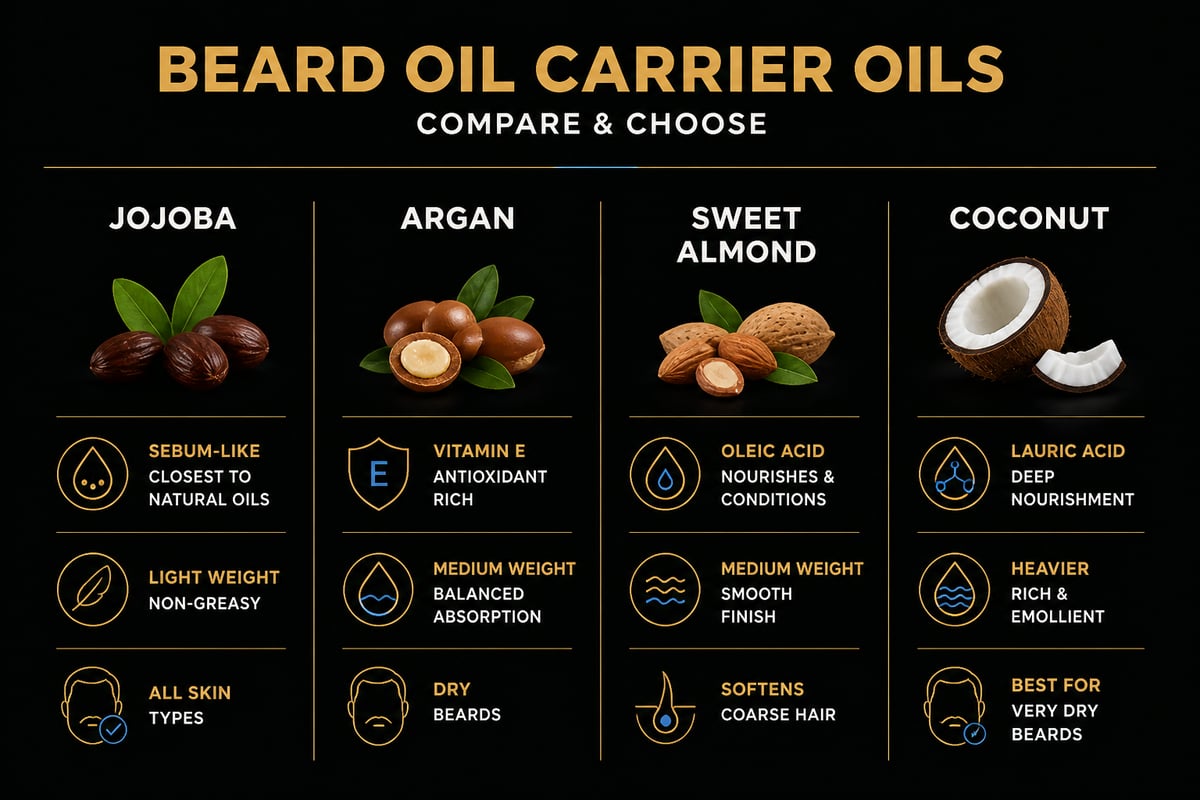
Here is how the common carriers compare:
- Jojoba oil closely resembles sebum, the natural oil your skin produces. Because of that similarity, it absorbs without leaving a heavy film and helps the skin barrier hold moisture.
- Argan oil contains oleic and linoleic fatty acids plus vitamin E, a tocopherol that helps protect the lipids in hair from oxidative damage.
- Sweet almond oil is rich in oleic acid, which softens coarse hair by smoothing the outer cuticle layer.
- Coconut oil contains lauric acid, which penetrates the hair shaft more readily than most oils. It suits dry beards, but it can feel heavy on oily or acne-prone skin.
Heavy, greasy oils can sit on the skin, trap dead cells and aggravate bumps and itch. A lighter, fast-absorbing blend is less likely to do this.
The American Academy of Dermatology recommends beard oil for normal-to-dry skin, and advises applying it sparingly after washing. For sensitive skin, it suggests a fragrance-free, non-comedogenic moisturiser instead. That point should shape your shopping decision.
How Do You Make Your Beard Smell Good?
You make a beard smell good by washing it with a pH-balanced beard shampoo, then applying a few drops of scented oil to a damp, towel-dried beard so the fragrance binds to clean hair. Scent clings to hair far better when the hair is free of sweat, smoke and food residue.
A beard acts like a sponge for odours. Coffee, cooking oil, cigarette smoke and sweat all settle into the strands. Layering a fragrance over those smells simply creates a muddier mix, which is why a regular wash matters as much as the oil itself.
Follow this sequence:
- Wash your beard two to three times a week with a gentle beard shampoo.
- Pat it until it is damp, not dripping.
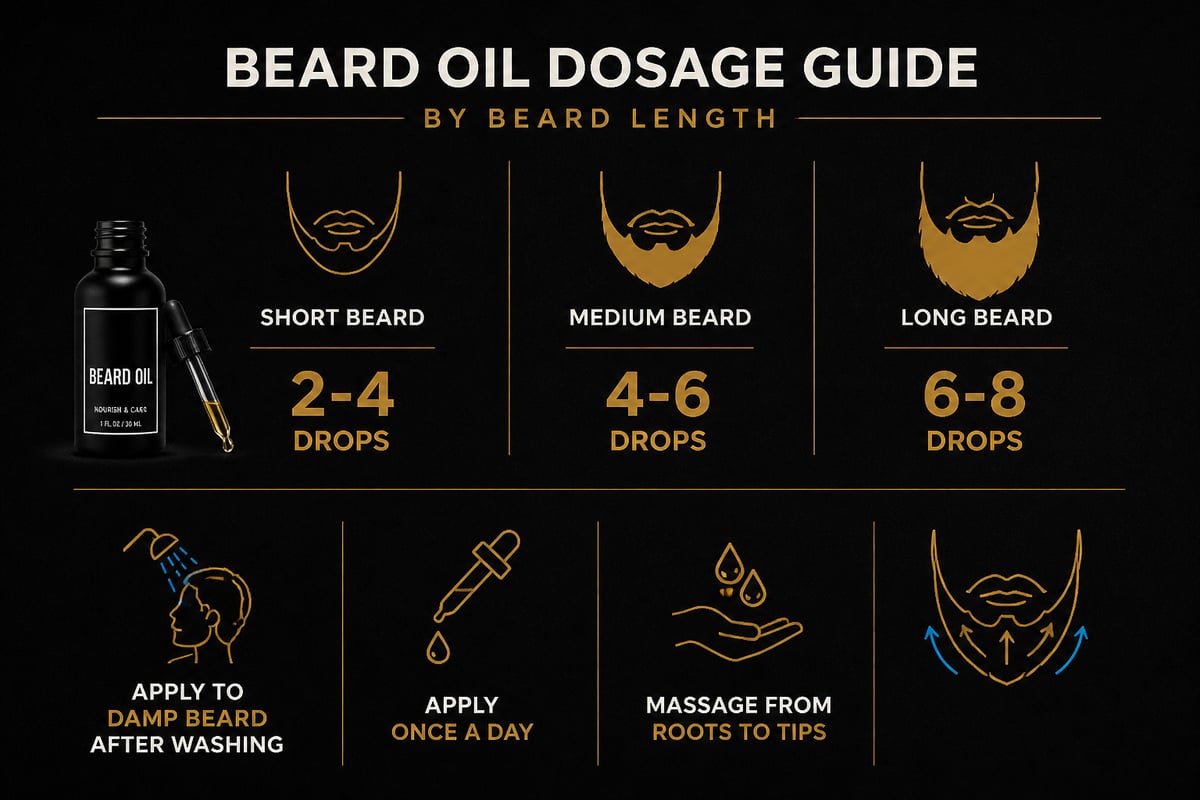
- Warm two to four drops between your palms.
- Work the oil through from the roots to the tips, then comb it through.
- Reapply a drop or two midweek if the scent fades.
Skip the shortcut of spraying cologne into a beard. Alcohol-based sprays dry the hair and the skin beneath it, which brings the flakes and brittleness straight back.
Which Scent Families Suit a Beard?
Woody, citrus, spice and herbal scents suit a beard best because they sit close to the skin and wear well through a working day. Sweet and gourmand scents are a fun alternative, but they suit short bursts better than all-day wear.
Match the family to how you live:
- Woody and smoky (cedarwood, sandalwood, pine): calm, grounded and easy to pair with aftershave. Cedarwood oil contains cedrol, a compound that gives that dry, resinous warmth.
- Citrus (bergamot, lime, orange): bright and clean, but citrus oils fade quickly, so expect to reapply.
- Spice and rum (bay, black pepper, cardamom): warm and slightly sweet. Bay rum remains a classic for good reason.
- Herbal and floral (lavender, rosemary, lemongrass): lavender's linalool gives a soft, calming note, and these blends suit office wear.
- Sweet and playful (vanilla, rhubarb, berry): memorable, but they tend to dominate a room.
If you want to browse a range, Onesociety sells scented oils in several of these families, including bay rum, black pepper and lavender and pine. Check each product page for ingredients and sizes before you order.
Natural Fragrance or Synthetic: What Should You Choose?
Choose a natural, essential-oil-based fragrance when your skin is reactive, because fewer unknown blended compounds means fewer chances of a reaction. Synthetic perfumes often hide dozens of undisclosed components behind the single word "fragrance".
That does not make natural oils harmless. Essential oils carry their own allergens, such as limonene in citrus and linalool in lavender. The International Fragrance Association explains that skin sensitisation is an allergic reaction that can develop after repeated exposure, and its risk assessment weighs ingredient potency, exposure level and conditions of use. You can feel fine for months, then react in month four.
IFRA also publishes fragrance standards, and notes that leave-on beard-care products may fall under IFRA category 5B. In plain terms, reputable makers formulate scent levels against recognised safety limits rather than guessing.
Onesociety describes its formulas as natural and built on scientific research. Check each product's ingredient list for synthetic additives before you buy.
Patch Test First: How to Avoid an Itchy Surprise
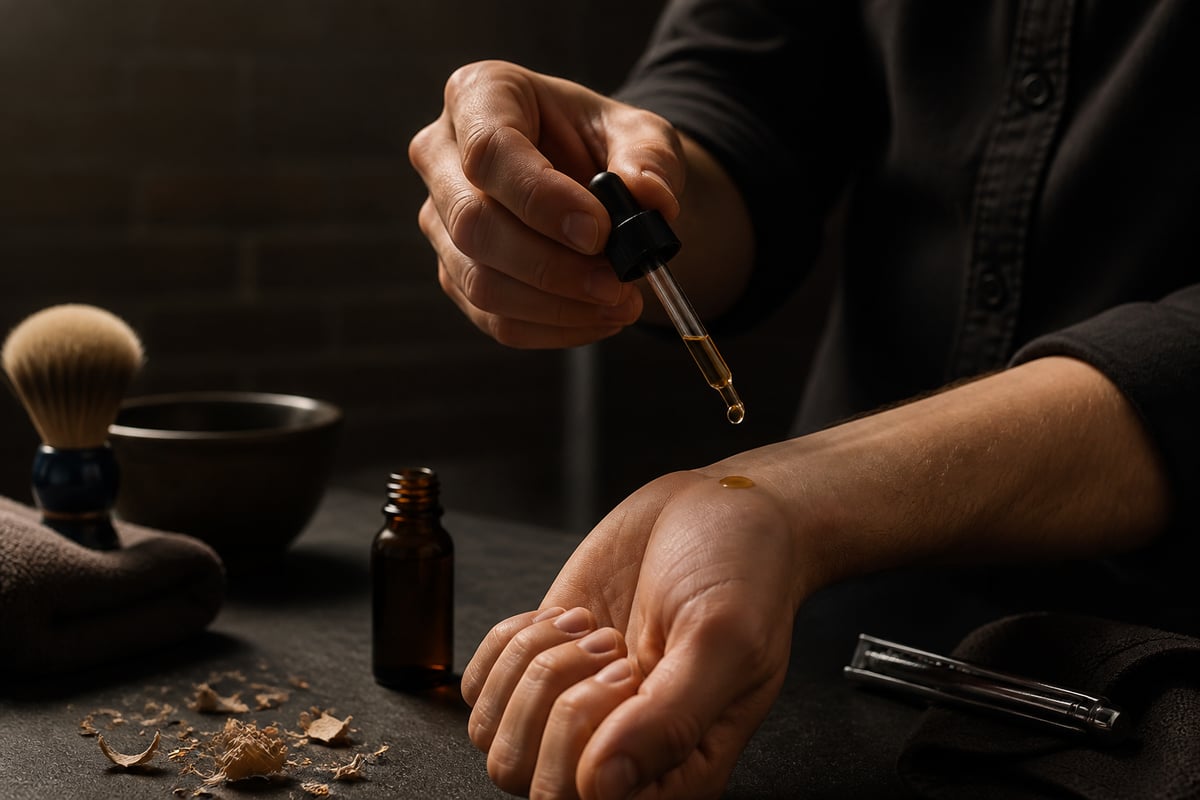
Always patch test a new scented oil on a small area of skin 24 to 48 hours before applying it to your whole beard. Contact dermatitis from fragrance shows up as redness, burning or an itchy rash, and it takes far longer to calm than it takes to prevent.
A simple home test works like this:
- Dab one drop on the inside of your forearm or just below your ear.
- Leave it for 24 to 48 hours without washing the spot.
- Look for redness, swelling, bumps or itching.
- Wash it off straight away and stop using the oil if any of those appear.
Persistent reactions deserve a professional opinion. A clinical patch test, such as the one described by Royal Free London NHS Foundation Trust, checks for the 50 most common contact allergens, including fragrances, metals, preservatives, rubber and plants. It takes three appointments over a week, so ask your GP if a scent keeps triggering problems.
If your skin is genuinely sensitive, go back to the dermatologist-backed advice above and choose an unscented formula. The AAD also publishes guidance on common beard skin problems, including dry, itchy skin and acne-prone skin beneath facial hair.
What Is the Best Kind of Oil for Your Beard?
The best kind of oil for your beard is a lightweight blend of jojoba and argan, because both mimic or support your skin's own lipids without clogging pores. Your skin type then fine-tunes the choice.
| Your skin and beard | Best base oils | Why it works |
|---|---|---|
| Oily or acne-prone | Jojoba, grapeseed | Light, fast-absorbing, low pore-blocking risk |
| Normal | Jojoba, argan | Balanced moisture and vitamin E protection |
| Dry or coarse | Argan, sweet almond, coconut | Fatty acids soften the hair and cut flaking |
| Sensitive | Unscented jojoba | Fewer allergens, gentler on the skin barrier |
Notice what the table leaves out: heavy mineral oil and petroleum-based fillers. They coat the hair without feeding it, and they trap debris against the skin.
For readers who want the fuller picture of oils that support growth, Onesociety's guide to the best beard oil for growth breaks down the active ingredients in more detail.
What Is the 3 Month Beard Rule?
The 3 month beard rule says you should give a beard roughly three months of growth before judging it or reshaping it. The first four weeks bring itch and patchiness, weeks five to eight show the true growth pattern, and by week twelve the beard has enough length to style.
This rule explains why so many men quit early. Itch peaks in the first weeks as the sharp, freshly cut hair tips push against the skin. A good oil softens those tips and cuts the irritation, which keeps you committed through the rough stage.
Here is where a routine pays off. Hair grows at a rate set largely by genetics, and no oil changes that, but a consistent routine can help protect the length you do grow from breakage. That protection decides whether your beard looks full or ragged at the three-month mark.
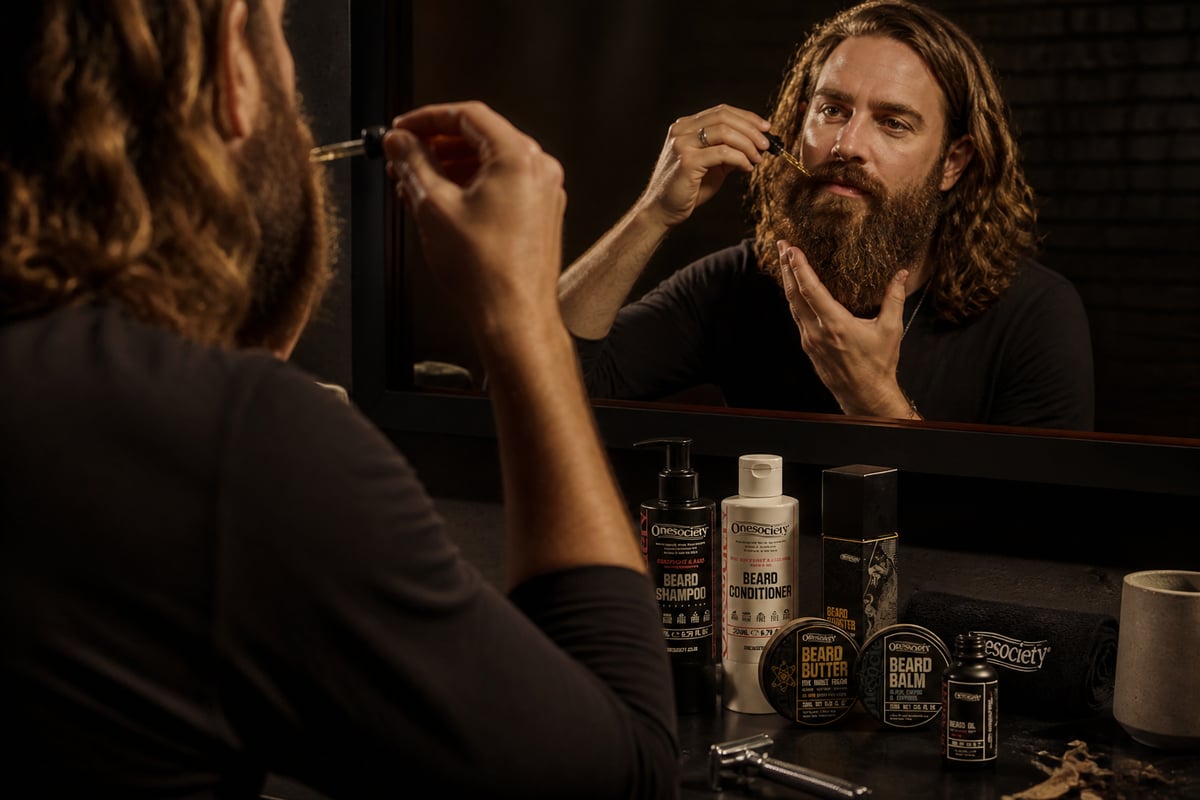
If you want that routine mapped out for you, the 90-Day Beard Challenge fits this exact problem. It bundles eight formulas into one kit: Beard Booster for follicle stimulation and blood flow, Beard Butter for nightly hydration, Beard Balm as a protective shield, and a pH-balanced Beard Shampoo, among others. Each step does a specific job. The shampoo clears the buildup that dulls scent, the oil and balm lock in moisture, and the kit comes with a 90-day money-back guarantee for growth. More than 20,000 customers have used Onesociety products, and Google-verified reviews include comments such as "Beard felt amazing after first wash". It suits men ready to follow a daily routine, so if you want a one-bottle shortcut, it will not suit you. You can also browse Onesociety's Amazon store for individual products.
How Much Beard Oil Should You Use?
Start with a few drops and adjust to your beard length and how it feels, applied after washing. Start low, because you can always add a drop but you cannot take one back.
Too much oil creates the greasy shine and the pillowcase stains that put men off oil altogether. It also overpowers the scent, so everyone around you smells it before they see you. The AAD advises applying beard oil sparingly after washing.
Store the bottle away from heat and sunlight. Light and warmth degrade the fatty acids in the carrier oil, which turns the blend rancid and sour. A tidy storage option is a dedicated beard oil holder, which keeps your bottle upright and within reach on the bathroom shelf.
How to Spot the Best Scented Beard Oil Before You Buy
The best scented beard oil shows its full ingredient list, names its carrier oils, and explains where its scent comes from. A label that says only "fragrance" or "parfum" gives you nothing to judge.
Run every bottle through this checklist:
- Carrier oils listed first. Jojoba, argan or almond should lead the ingredients, not a filler.
- Scent source named. Look for specific essential oils rather than a vague "fragrance".
- No mineral oil or petrolatum. These coat the hair without nourishing it.
- Dark glass and a dropper. Dark glass shields the oils from light, and a dropper controls the dose.
- Verified reviews. Look for comments that mention itch, absorption and how long the scent lasts, not just "smells nice".
- A guarantee. A maker who backs growth with a money-back promise stands behind the formula.
Price tells you little on its own. A well-formulated oil with simple natural ingredients often outperforms an expensive bottle built around a trendy scent.
One more practical point: scent strength varies between people. Skin chemistry, diet and even the temperature of your day change how a fragrance develops, so a scent that smells sharp on a friend can turn soft and warm on you. Buy a small size first, wear it for a week, then decide.
FAQ
What is the best brand for beard growth?
No brand can change your genetics, so look for a formula with active ingredients that support the skin and hair, a transparent ingredient list and a fair guarantee. Onesociety backs its growth routine with a 90-day money-back guarantee and science-validated, natural formulas, which lets you test the claim at low risk.
Can I wear beard oil and cologne together?
Yes, but choose a beard oil that complements your cologne or runs unscented, so two strong fragrances do not clash. Apply the oil first, then spray cologne on your neck and wrists rather than into the beard, since alcohol dries out the hair.
How long does a scented beard oil last on the beard?
Scent duration varies by person and formula, and woody and spice notes often last longer than citrus. Applying oil to a clean, damp beard makes the fragrance hold longer.