

Your facial hair deserves better than head shampoo. The harsh surfactants in regular hair products strip away sebum oils that your beard desperately needs, leaving follicles brittle and skin underneath flaking like parchment. Beard wash and conditioner formulations account for the fundamental biological differences between scalp hair and facial hair, delivering pH-balanced cleansing that respects your skin's natural barrier whilst softening coarse keratin structures. Understanding how these specialised products function at a molecular level transforms your grooming routine from guesswork into targeted care.
Why Your Beard Needs Dedicated Cleansing Products
Facial hair grows from follicles surrounded by more sebaceous glands than your scalp possesses. These glands produce sebum at an accelerated rate, creating an environment where dirt, food particles, and environmental pollutants accumulate rapidly.
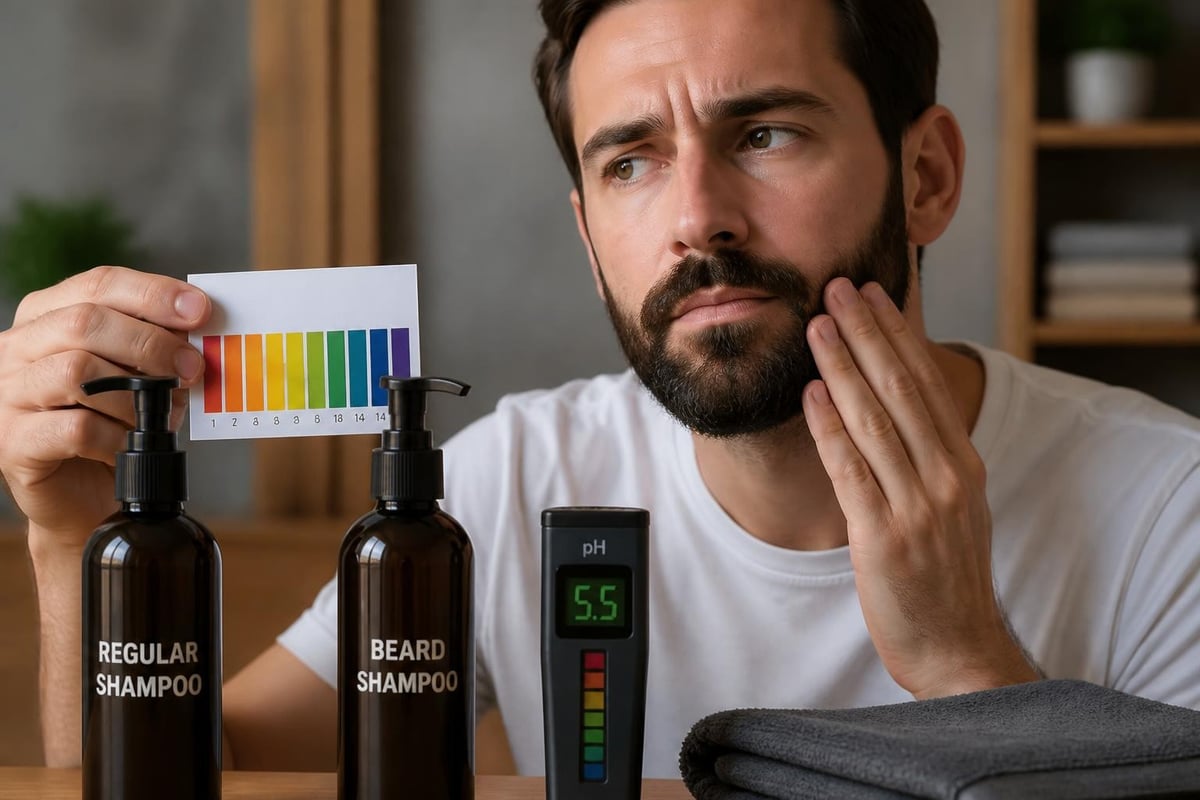
Regular shampoos contain sodium lauryl sulphate (SLS) concentrations between 10-25%, designed to strip oils from fine scalp hair. When applied to facial hair, this aggressive surfactant disrupts your skin's pH balance (which sits naturally around 5.5) and removes the protective lipid barrier.
The consequences manifest quickly:
- Increased trans-epidermal water loss leading to dehydration
- Inflammatory response from damaged skin cells
- Brittle hair shafts prone to breakage
- Follicular irritation that impedes growth
Beard-specific wash formulations employ gentler cleansing agents like cocamidopropyl betaine, which maintains surface tension without compromising sebum production. This amphoteric surfactant carries both positive and negative charges, allowing it to bind with dirt particles whilst leaving beneficial oils intact.
The Keratin Structure Difference
Your beard hair contains more keratin protein per strand than scalp hair, resulting in a thicker diameter and more rigid structure. This density creates unique challenges that standard conditioners cannot address.
The cuticle layer (outer shell) of facial hair features more overlapping scales, requiring smaller molecular weights in conditioning agents to penetrate effectively. Hydrolysed wheat proteins (molecular weight under 1000 Daltons) slip between these scales, strengthening internal disulphide bonds that maintain structural integrity.
| Hair Type | Average Diameter | Cuticle Layers | Growth Rate |
|---|---|---|---|
| Scalp Hair | 50-70 microns | 5-7 layers | 1.25 cm/month |
| Facial Hair | 70-120 microns | 7-10 layers | 1.5 cm/month |
| Body Hair | 30-50 microns | 3-5 layers | 0.3 cm/month |
This structural variance explains why your beard feels wiry when you use products designed for your head. The conditioner molecules simply cannot access the cortex (middle layer) where hydration occurs.
How Beard Wash and Conditioner Function at a Molecular Level
The cleansing mechanism begins when surfactant molecules arrange themselves into micelles-spherical structures with hydrophobic tails pointing inward and hydrophilic heads facing outward. These micelles encapsulate oil-based debris, suspending it in water for rinsing.
Quality beard wash maintains micelle formation without excessive foaming. High foam indicates excess surfactant concentration, which correlates with increased sebum removal. Formulations targeting facial hair aim for minimal lather whilst maximising dirt binding.
Key active ingredients and their biological functions:
- Jojoba esters: Mimic sebum composition, preventing moisture loss through biomimetic film formation
- Coconut-derived surfactants: Provide gentle cleansing through low critical micelle concentration
- Aloe barbadensis extract: Contains polysaccharides that stimulate fibroblast activity, promoting collagen synthesis in underlying skin
- Panthenol (Pro-Vitamin B5): Penetrates hair shaft, swelling the cortex to increase diameter by up to 10%
After cleansing, your hair cuticles remain open (scales lifted). This state creates optimal conditions for conditioning agents to penetrate. Proper conditioner application follows immediately, whilst cuticles remain raised.
The Conditioning Mechanism Explained
Conditioning agents work through three primary mechanisms: substantivity, film formation, and moisture retention.
Substantivity refers to a molecule's ability to adhere to keratin surfaces. Cationic polymers (positively charged) bind to negatively charged damaged areas on hair shafts, filling gaps in the cuticle layer. This process smooths the surface, reducing friction between hairs that causes tangling.
Shea butter's fatty acid profile (stearic acid 40%, oleic acid 48%) creates a semi-occlusive barrier that reduces moisture evaporation by 72% over 8 hours. Unlike petroleum-based occlusives, these plant lipids remain breathable, allowing cellular respiration whilst preventing dehydration.
The hydration cascade begins when humectants like glycerine draw water molecules from the atmosphere into hair shafts. Each glycerine molecule can bind up to 10 water molecules through hydrogen bonding, increasing shaft diameter and improving flexibility.
For those interested in comprehensive solutions, what beard butters do provides insight into leave-in conditioning alternatives that extend these benefits throughout the day.
Optimising Your Washing Frequency
The question of how often to use beard wash and conditioner depends on sebum production rates, environmental exposure, and lifestyle factors.
Your sebaceous glands produce approximately 1-2 grams of sebum daily. In clean environments with minimal physical activity, this natural oil provides sufficient protection for 48-72 hours. However, urban pollution, cigarette smoke, and cooking fumes create oxidative stress that degrades sebum quality.
Environmental and Lifestyle Factors
| Condition | Recommended Frequency | Rationale |
|---|---|---|
| Office environment, minimal outdoor exposure | 2-3 times weekly | Preserves natural oils whilst removing accumulated dead skin cells |
| Manual labour, high dust exposure | Daily | Prevents particle embedding in follicles |
| Athletic training, heavy perspiration | Post-workout | Removes salt crystals that dehydrate hair shafts |
| Cold climate, low humidity | 2 times weekly | Maintains lipid barrier against environmental moisture loss |
When you wash daily, reduce contact time to 30-45 seconds. Extended washing (beyond 2 minutes) disrupts the acid mantle-your skin's protective pH layer composed of sebum and amino acids.
Morning washing suits those with oily skin, as sebum production peaks during REM sleep cycles (between 2-4 AM). Evening washing benefits individuals exposed to airborne pollutants, preventing overnight oxidative damage to follicles.
If you're curious about whether beard wash works effectively, the answer lies in matching formulation to your specific physiological needs rather than following generic schedules.
The Conditioning Duration Controversy
Leave-in time affects penetration depth. The hair shaft's cortex (where conditioning truly occurs) sits beneath the cuticle layer. Conditioning agents require 2-3 minutes to traverse this barrier through passive diffusion.
The science of absorption timing:
- 0-30 seconds: Surface coating only-cationic polymers bind to cuticle exterior
- 30-90 seconds: Cuticle layer penetration begins as molecules slip between raised scales
- 90-180 seconds: Cortex access achieved-humectants begin hydration cascade
- Beyond 3 minutes: Diminishing returns-maximum binding sites occupied
Heat accelerates this process. Warm water (around 37°C) increases cuticle flexibility by 40%, allowing faster ingredient migration. However, temperatures exceeding 40°C denature keratin proteins, causing irreversible damage.
The comprehensive guide to beard wash and conditioner details application techniques that maximise these time-dependent benefits.
Rinsing Temperature Matters
Final rinse temperature controls cuticle positioning. Cold water (15-20°C) causes cuticle scales to contract and lie flat, sealing in conditioning agents whilst creating a smoother surface that reflects light (improving visual appearance).
The thermal shock also stimulates blood flow to follicles through vasoconstriction followed by reactive vasodilation. This increased circulation delivers oxygen and nutrients that support the anagen (growth) phase of the hair cycle.
Ingredient Synergies to Seek
Individual ingredients provide benefits, but strategic combinations create multiplicative effects through biochemical synergies.
Argan oil + Vitamin E: Argan oil's high linoleic acid content (36%) enhances cell membrane permeability, allowing tocopherol (Vitamin E) to penetrate deeper. Once inside cells, tocopherol neutralises free radicals that damage DNA in follicle stem cells.
Biotin + Keratin hydrolysates: Biotin (Vitamin B7) acts as a coenzyme in fatty acid synthesis, the metabolic pathway producing sebum. Keratin fragments provide amino acids (particularly cysteine) that serve as building blocks for new hair protein synthesis. Together, they support both the growth machinery and structural components simultaneously.
When selecting products, examine the ingredient order. Formulations list components by descending concentration. Active ingredients appearing after the fifth position typically contribute less than 1% to the total formula-insufficient for biological activity.
Natural formulations from companies like Onesociety prioritise these evidence-based combinations, ensuring active ingredients appear in therapeutically relevant concentrations.
Common Application Errors That Sabotage Results
Even premium beard wash and conditioner fails when applied incorrectly. These technical mistakes undermine product performance:
Applying to dry facial hair: Water swells the hair shaft by 15-20%, creating space for ingredient penetration. Dry application leaves products sitting on the surface, where they oxidise and rinse away without benefit. Always saturate your beard thoroughly before applying wash.
Scrubbing the hair instead of the skin: The primary target isn't your hair-it's the skin underneath. Dead skin cells (shed every 28 days) accumulate between hairs, creating an inflammatory environment. Massage wash products into the skin using circular motions, stimulating blood flow whilst dislodging cellular debris.
Insufficient rinsing: Residual surfactants continue their cleansing action after you leave the shower, progressively stripping sebum throughout the day. This delayed action explains why your beard feels dry hours after washing. Rinse for 45-60 seconds, ensuring no slick feeling remains.
Conditioning the roots: Conditioner belongs on the mid-lengths to ends-the oldest, most damaged portions of your hair. Applying near follicles can clog pores (particularly if you're prone to folliculitis) and create a heavy, greasy appearance. Start conditioning 2-3 cm from the skin.
Understanding proper beard grooming techniques helps you avoid these pitfalls whilst maximising product efficacy.
The 2-in-1 Product Debate
Combination wash and conditioner products promise convenience but deliver compromised results due to incompatible chemistry. Cleansing requires anionic or amphoteric surfactants (negatively charged or neutral), whilst conditioning depends on cationic molecules (positively charged).
When formulated together, these opposing charges neutralise each other through ionic bonding. The resulting complexes possess neither cleansing nor conditioning properties-they simply coat hair without penetrating or removing debris effectively.
The suspension paradox: To prevent this neutralisation, manufacturers must suspend conditioning agents in silicone matrices that only release after surfactants rinse away. However, this delayed release means conditioning occurs during rinsing rather than during the designated conditioning period, severely limiting penetration time.
Separate formulations allow each product to function optimally within its intended pH range. Quality washes operate at pH 5.0-5.5 (matching skin), whilst conditioners work best at pH 3.5-4.5 (promoting cuticle closure).
Investing in dedicated products isn't about marketing hype-it reflects fundamental chemistry. The difference between wash and conditioner becomes apparent when you compare structural integrity and shine over 4-6 weeks of consistent use.
Pairing Your Washing Routine With Style Maintenance
Your grooming doesn't exist in isolation from your broader appearance. Quality beard care complements personal style across all aspects of presentation.
For those who value sartorial excellence, beard maintenance pairs naturally with attention to wardrobe details. Just as beard wash and conditioner address the specific needs of facial hair, bespoke tailoring ensures your clothing fits your unique proportions. Both represent investments in presenting your authentic self with intention and care.
Similarly, coordinating your facial hair grooming with overall hair styling creates visual cohesion. When your beard receives proper conditioning, it softens to match the texture and movement of well-maintained scalp hair. Accessories from specialists like The Pixie Garden can help maintain that polished, intentional appearance from head to beard.
This holistic approach-treating grooming as interconnected rather than isolated-produces results that exceed the sum of individual efforts.
Building a Science-Based Routine
Transform theoretical knowledge into practical application through systematic implementation. This evidence-based protocol optimises the biological mechanisms previously discussed.
Pre-wash preparation (30 seconds): Brush your beard using a boar bristle brush. The mechanical action distributes existing sebum from roots to ends whilst removing loose dead skin cells. This preparation reduces the cleansing burden, allowing gentler surfactant concentrations to achieve thorough cleaning.
Washing phase (60-90 seconds):
- Saturate beard completely with warm water (35-38°C)
- Dispense 1-2 ml of beard wash (approximately almond-sized)
- Apply directly to skin beneath the beard
- Massage in circular motions for 30 seconds, focusing on the skin rather than hair
- Work outward through the beard length
- Rinse thoroughly for 45-60 seconds until water runs clear
Conditioning phase (3-4 minutes):
- Squeeze excess water from beard (reduces dilution)
- Apply conditioner from 2 cm below skin through to ends
- Use a wide-tooth comb to distribute evenly
- Allow 2-3 minutes for penetration
- Rinse with progressively cooler water, ending at 18-20°C
Post-wash care (ongoing): Pat dry gently-rubbing creates friction that damages raised cuticles. Apply beard oil whilst hair remains slightly damp (40-50% moisture). The water creates emulsification, allowing oil to spread more evenly and penetrate deeper than application to fully dry hair.
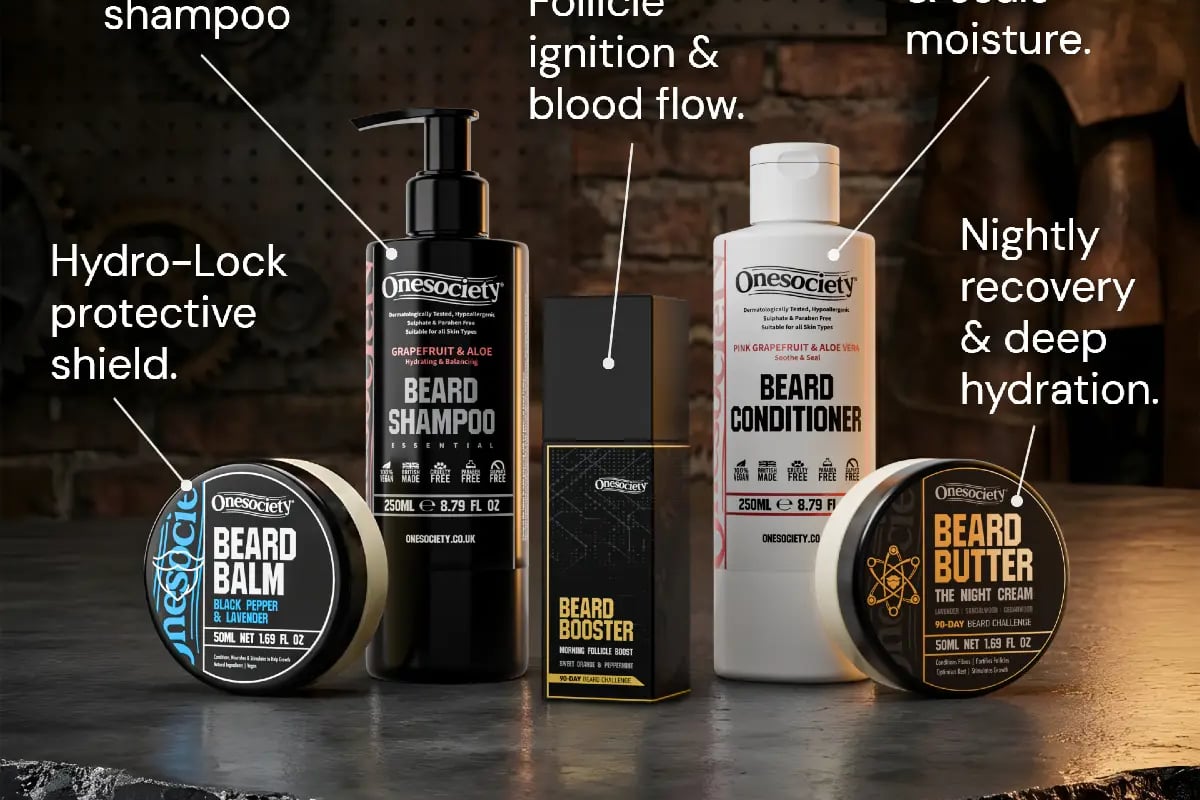
For a comprehensive transformation that addresses every aspect of this routine, the 90-Day Beard Challenge provides all necessary formulations in scientifically sequenced protocols. This kit includes pH-balanced shampoo and hydrating conditioner alongside complementary products that support follicle health from multiple angles.
Troubleshooting Persistent Issues
When standard routines fail to resolve chronic problems, investigate underlying causes rather than simply increasing product usage.
Persistent dryness despite regular conditioning: Check your water hardness. Calcium and magnesium ions (>120 mg/L concentration) bind with surfactants, creating insoluble soap scum that coats hair shafts. Install a shower filter with ion-exchange resin, or perform a final rinse with distilled water to remove mineral deposits.
Increased breakage after switching products: Your previous routine may have created silicone buildup (if using conventional products). These synthetic polymers accumulate over months, creating a false appearance of health whilst actually preventing moisture penetration. Perform a clarifying wash using a higher-concentration surfactant (once only) to strip this buildup before resuming your natural product routine.
Itching that worsens after washing: This suggests contact dermatitis from specific ingredients. Common culprits include synthetic fragrances (particularly limonene oxidation products) and preservatives like methylisothiazolinone. Switch to fragrance-free formulations and patch-test new products on your inner forearm 48 hours before facial application.
Uneven texture or patchy appearance: This often reflects inconsistent application rather than product failure. Use a mirror to ensure even distribution, paying particular attention to areas beneath the jawline and near the ears where products tend to miss.
Understanding what beard oil does provides additional troubleshooting options for persistent dryness, as leave-in treatments address moisture retention between washes.
Seasonal Adjustments for Optimal Year-Round Results
Your sebaceous glands respond to environmental conditions, necessitating routine modifications across seasons. Static protocols ignore these physiological adaptations.
Winter considerations (November-February): Indoor heating reduces relative humidity to 15-25%, accelerating trans-epidermal water loss. Increase conditioning frequency to 4-5 times weekly whilst reducing washing to twice weekly. The lower cleansing frequency preserves the lipid barrier that combats environmental dehydration.
Incorporate heavier occlusives like shea butter (melting point 32-38°C) that remain semi-solid at room temperature, creating a more substantial barrier against moisture loss. Water-based products freeze when stepping outdoors in sub-zero temperatures, causing physical damage to hair shafts. Switch to oil-based formulations during extreme cold.
Summer modifications (June-August): Elevated temperatures (25-30°C) increase sebum fluidity, causing faster distribution through the beard. This creates a greasier appearance whilst actually providing better natural protection. Reduce conditioning frequency to 2-3 times weekly, allowing your natural oils to perform their biological function.
However, UV exposure peaks during summer months. Ultraviolet radiation denatures keratin proteins through oxidative stress. Seek conditioners containing UV-protective compounds like benzophenone-4 or titanium dioxide nanoparticles (20-30 nm diameter) that scatter harmful wavelengths whilst remaining invisible to the eye.
Spring/Autumn transitions: These periods create the greatest challenge, as temperature swings of 10-15°C between morning and evening confuse sebaceous gland regulation. Maintain moderate washing (3 times weekly) whilst adjusting conditioning density based on daily weather rather than season.
Advanced Techniques for Targeted Concerns
Standard protocols address general maintenance, but specific issues require focused interventions.
Accelerating Growth Through Wash Selection
While no product forces follicles into anagen phase prematurely, certain ingredients support the metabolic processes underlying growth. Caffeine (0.2-0.5% concentration) inhibits phosphodiesterase, the enzyme that breaks down cyclic AMP-a molecule that stimulates follicle cell division.
Niacin (Vitamin B3) dilates blood vessels through prostaglandin D2 suppression, increasing nutrient delivery to follicular papilla cells where growth occurs. Look for wash formulations listing niacinamide within the first five ingredients (indicating >2% concentration).
Damage Repair Protocols
Split ends (trichoptilosis) occur when the cuticle degrades completely, allowing the cortex to fray. No product reverses this structural failure-trimming remains the only solution. However, you can prevent progression through intensive conditioning.
Protein treatments temporarily bond split fibres together. Hydrolysed keratin (molecular weight 500-1000 Daltons) penetrates damaged areas, cross-linking through disulphide bond formation. Apply weekly for 4-6 weeks, then reduce to monthly maintenance once splitting ceases.
Addressing Coarseness
Coarse texture reflects dehydration rather than inherent hair characteristics. The cortex contains bound water (structural water held by hydrogen bonds) and free water (mobile molecules between protein chains). Conditioning increases free water content, improving flexibility.
Deep conditioning treatments work through extended contact time (10-15 minutes) under mild heat. Wrap your conditioned beard in a warm, damp towel. The heat increases cuticle permeability by 60%, allowing humectants to penetrate fully into the cortex. Perform this intensive treatment weekly until texture softens, then monthly for maintenance.
Experts at Zeus Beard recommend this approach for transforming even the most stubborn, wire-like facial hair into manageable softness within 3-4 weeks.
The Investment Perspective
Quality beard wash and conditioner represents an investment in long-term follicle health rather than immediate aesthetic gratification. Calculate cost per use rather than upfront price.
A 200ml bottle providing 1.5ml per application delivers approximately 133 uses. At £18 per bottle, that's £0.13 per wash-less than a single coffee. Compare this to the cumulative damage from inappropriate products, which manifests as:
- Increased trimming frequency to remove split ends (losing 6-8 weeks of growth annually)
- Follicular inflammation that extends telogen (resting) phase duration
- Premature greying from oxidative stress to melanocytes
- Skin conditions (seborrheic dermatitis, folliculitis) requiring medical treatment
The hidden costs of inadequate care:
| Issue | Average Annual Cost | Prevention Cost |
|---|---|---|
| Professional beard treatments | £240-360 | £90 (quality products) |
| Additional trimming/styling | £180-240 | £0 (growth preservation) |
| Dermatological consultation | £85-150 | £0 (preventive care) |
| Total | £505-750 | £90 |
This economic analysis excludes intangible costs: the confidence impact of a healthy beard, time savings from reduced maintenance needs, and the compounding benefits of consistent care protocols.
Forbes' analysis of beard conditioners reinforces this perspective, noting that premium formulations deliver measurably better outcomes across all metrics when compared to budget alternatives over 12-week trials.
Ingredient Transparency and Formulation Quality
The natural products movement addresses legitimate concerns about synthetic ingredients, but not all "natural" formulations deliver superior results. Evaluate products through evidence rather than marketing claims.
Red flags indicating low-quality formulations:
- Fragrance listed in top 3 ingredients (indicates filler over function)
- Multiple silicone variants (dimethicone, cyclomethicone, amodimethicone)
- Alcohol denat within first 5 ingredients (causes progressive dehydration)
- Lack of preservatives in water-based formulas (microbial contamination risk)
- Vague terms like "botanical extracts" without specific plant identification
Quality indicators:
- Specific ingredient concentrations listed
- Active compounds identified by INCI (International Nomenclature of Cosmetic Ingredients) names
- pH level disclosed (should match 5.0-5.5 for wash, 3.5-4.5 for conditioner)
- Third-party testing verification
- Batch numbers enabling traceability
Companies committed to transparency, like Onesociety, provide detailed ingredient justifications explaining each component's biological function. This educational approach reflects confidence in formulation quality rather than reliance on marketing mystique.
When evaluating what makes a quality beard company, ingredient transparency serves as the primary differentiator between evidence-based products and those relying on perception over performance.
Transforming your facial hair from dry and unruly to soft and manageable requires understanding the biological mechanisms behind beard wash and conditioner rather than blindly following generic advice. The science demonstrates that dedicated formulations address the unique structural and environmental challenges facial hair faces, delivering measurable improvements in hydration, strength, and appearance when applied correctly. Whether you're starting your beard journey or optimising years of growth, Onesociety provides scientifically formulated products backed by natural ingredients that support every stage of beard development. Start your transformation today with formulations designed for real results, not empty promises.