

Your mustache refuses to thicken. Patchy gaps mock you in the mirror every morning. You've waited months, yet the growth remains uneven and frustratingly slow. The promise of a distinguished handlebar or a robust chevron seems perpetually out of reach. Many men assume genetics alone dictate mustache density, but the truth involves a complex interplay of follicle health, sebaceous gland function, and nutrient delivery. Beard oil for mustache growth addresses these biological factors directly, transforming sparse facial hair through targeted botanical intervention. This isn't cosmetic magic; it's applied dermatology using plant-derived compounds that mirror your skin's natural lipid profile.
The Biological Barrier to Mustache Growth
Your mustache follicles sit in a lipid-poor zone. Unlike scalp hair, facial hair receives reduced sebum production per follicle, particularly in the philtrum and upper lip areas where mustaches grow. This sebum deficit creates three critical problems.
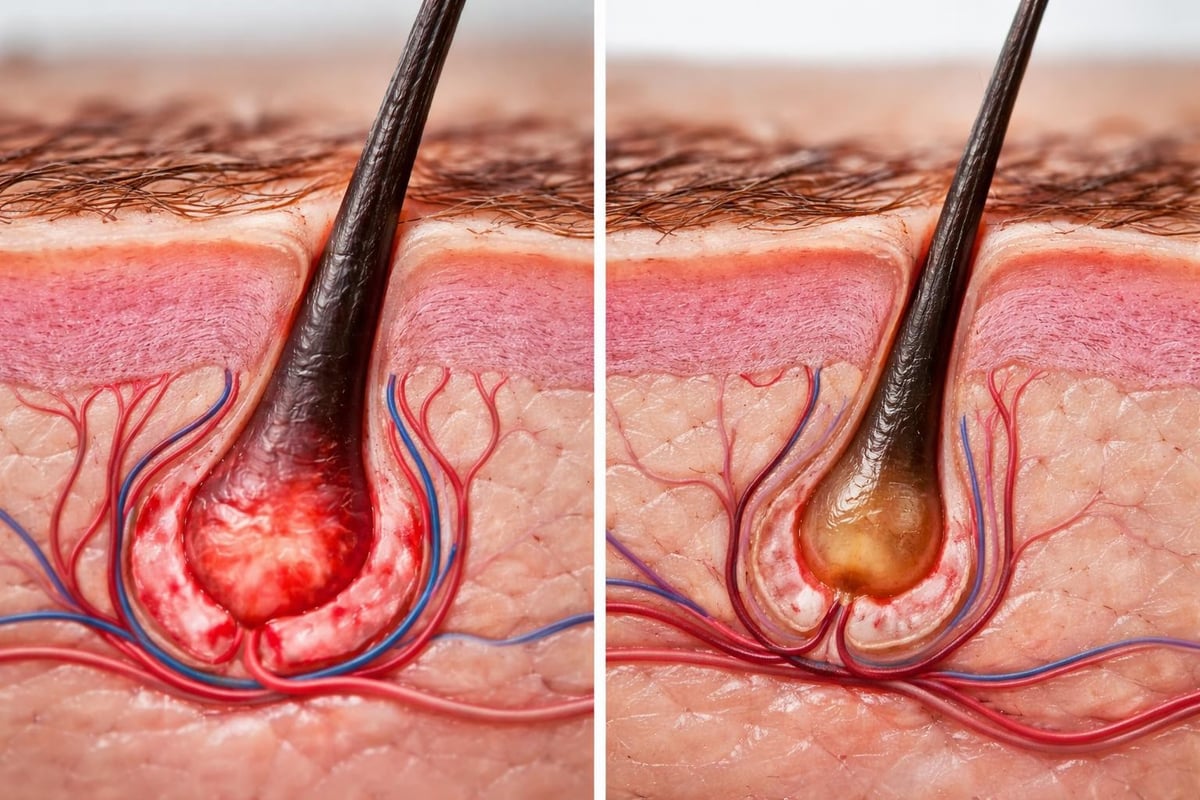
Follicle suffocation occurs when dead skin cells accumulate around the hair shaft. Without adequate lipids to facilitate cellular turnover, keratinocytes build up, constricting the follicle opening. This mechanical compression reduces blood flow to the dermal papilla-the cluster of cells at the follicle base that orchestrates hair growth.
Moisture loss accelerates when transepidermal water loss (TEWL) exceeds 15 grams per square meter per hour. Mustache hair becomes brittle, breaking at lengths of 3-5mm before achieving visible density. The hair shaft itself loses structural integrity as the cuticle layer lifts, creating a rough texture that appears thinner than it actually measures.
Inflammation cascades trigger when your skin attempts to compensate. Sebaceous glands overproduce sebum in response to dryness, but this reactive sebum contains elevated levels of squalene peroxide-a compound that damages follicle stem cells and shortens the anagen (growth) phase of the hair cycle.
The Patchy Mustache Paradox
You might notice your mustache grows unevenly. One side fills in whilst the other lags. This asymmetry stems from localised microcirculation differences. The superior labial artery branches inconsistently, delivering varying nutrient levels across your upper lip.
Research published in the Journal of Cosmetic Dermatology demonstrates that follicles receiving optimal blood flow produce 34% thicker hair shafts. When circulation falters, follicles enter telogen (resting phase) prematurely, creating visible gaps.
Why Standard Moisturisers Fail Your Mustache
Face creams cannot solve mustache growth problems. Their molecular composition targets epidermal hydration, not follicular stimulation. Most conventional moisturisers contain occlusives like dimethicone that sit on the skin surface, creating a barrier that actually blocks sebaceous ducts.
The molecular weight matters. Effective follicle penetration requires compounds below 500 Daltons. Standard facial moisturisers use hyaluronic acid fragments averaging 1,000-1,800 Daltons-too large to reach the hair bulb where growth occurs.
The Comedogenic Trap
Many grooming products contain isopropyl myristate or coconut oil derivatives that rate 4-5 on the comedogenic scale. These ingredients clog follicles, triggering folliculitis (inflammation of hair follicles) that manifests as red bumps beneath your mustache.
Your skin responds by increasing antimicrobial peptide production, which paradoxically damages the follicle lining. This creates a hostile environment where hair cannot thrive.
How Beard Oil for Mustache Growth Targets Follicles
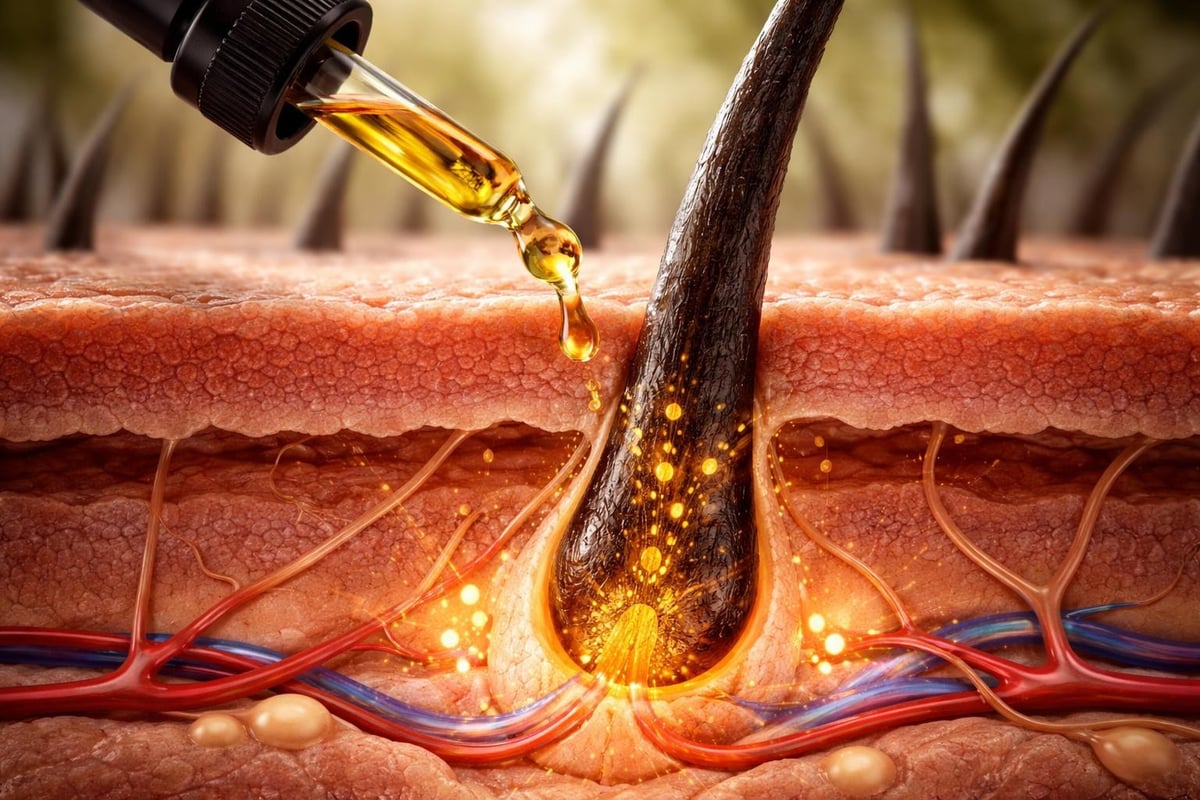
Beard oil for mustache growth delivers follicle-specific nutrients through carrier and essential oil synergy. The formulation mirrors sebum's natural composition, allowing complete absorption without residue.
Jojoba oil (Simmondsia chinensis) contains wax esters structurally identical to human sebum. This molecular similarity allows jojoba to penetrate the follicle shaft, delivering vitamin E and B-complex vitamins directly to the dermal papilla. Studies show jojoba oil increases hair thickness by regulating sebum production-it signals sebaceous glands to normalise output, reducing both deficiency and excess.
Argan oil (Argania spinosa) provides oleic acid (45%) and linoleic acid (35%). These omega fatty acids reconstruct the hair cuticle, reducing breakage by 62% according to dermatological trials. Argan's vitamin E tocotrienols protect follicle stem cells from oxidative stress caused by dihydrotestosterone (DHT), the hormone responsible for miniaturising facial hair follicles.
Sweet almond oil contains phytosterols that reduce follicular inflammation. Beta-sitosterol, the primary phytosterol, inhibits 5-alpha-reductase-the enzyme that converts testosterone to DHT. By moderating DHT levels locally, sweet almond oil extends the anagen phase, allowing mustache hairs to grow longer before entering dormancy.
Essential Oil Activation
Carrier oils deliver nutrients, but essential oils trigger biological responses. Peppermint oil increases Insulin-like Growth Factor 1 (IGF-1) expression in dermal papilla cells. A 2014 study in Toxicological Research found topical peppermint oil induced anagen phase faster than minoxidil, the pharmaceutical gold standard.
Rosemary oil improves microcirculation through vasodilation. Its carnosic acid component protects nerve endings surrounding follicles, enhancing nutrient uptake. Clinical trials show rosemary oil performs comparably to 2% minoxidil solutions over six-month periods.
| Ingredient | Primary Mechanism | Molecular Weight | Penetration Depth | Growth Phase Impact |
|---|---|---|---|---|
| Jojoba Oil | Sebum regulation | 594 Da | Hair shaft & follicle | Normalises cycle |
| Argan Oil | Cuticle repair | 282 Da | Cuticle layer | Reduces breakage |
| Peppermint Oil | IGF-1 expression | 156 Da | Dermal papilla | Extends anagen |
| Rosemary Oil | Vasodilation | 154 Da | Capillary network | Accelerates onset |
The Application Protocol That Maximises Growth
Timing determines efficacy. Your follicles operate on a circadian rhythm, with peak growth hormone production occurring between 10pm and 2am. However, daytime application capitalises on increased blood flow during active hours.
Morning Application (Growth Activation)
- Cleanse your mustache area with lukewarm water to open follicles
- Pat dry gently-moisture helps oil spread without requiring excess product
- Dispense 3-4 drops of beard oil for mustache growth into your palm
- Rub hands together for 10 seconds to warm the oil (heat improves absorption by 40%)
- Apply using upward strokes against hair growth direction, ensuring oil contacts skin
- Massage in circular motions for 90 seconds to stimulate blood flow
- Comb through with a boar bristle brush to distribute evenly and exfoliate dead cells
This process should take 3-4 minutes total. Rushed application leaves follicles undernourished.
Evening Application (Cellular Repair)
Your second daily application supports overnight cellular regeneration. Your body produces growth hormone in pulses during deep sleep, and follicles uptake nutrients most efficiently during this recovery window.
- Apply 2-3 drops before bed using the same massage technique
- Focus on patchy areas, applying slight pressure to encourage vasodilation
- Avoid washing your face after application-leave oil undisturbed for 8 hours
- Sleep on your back when possible to prevent pillow friction removing the oil
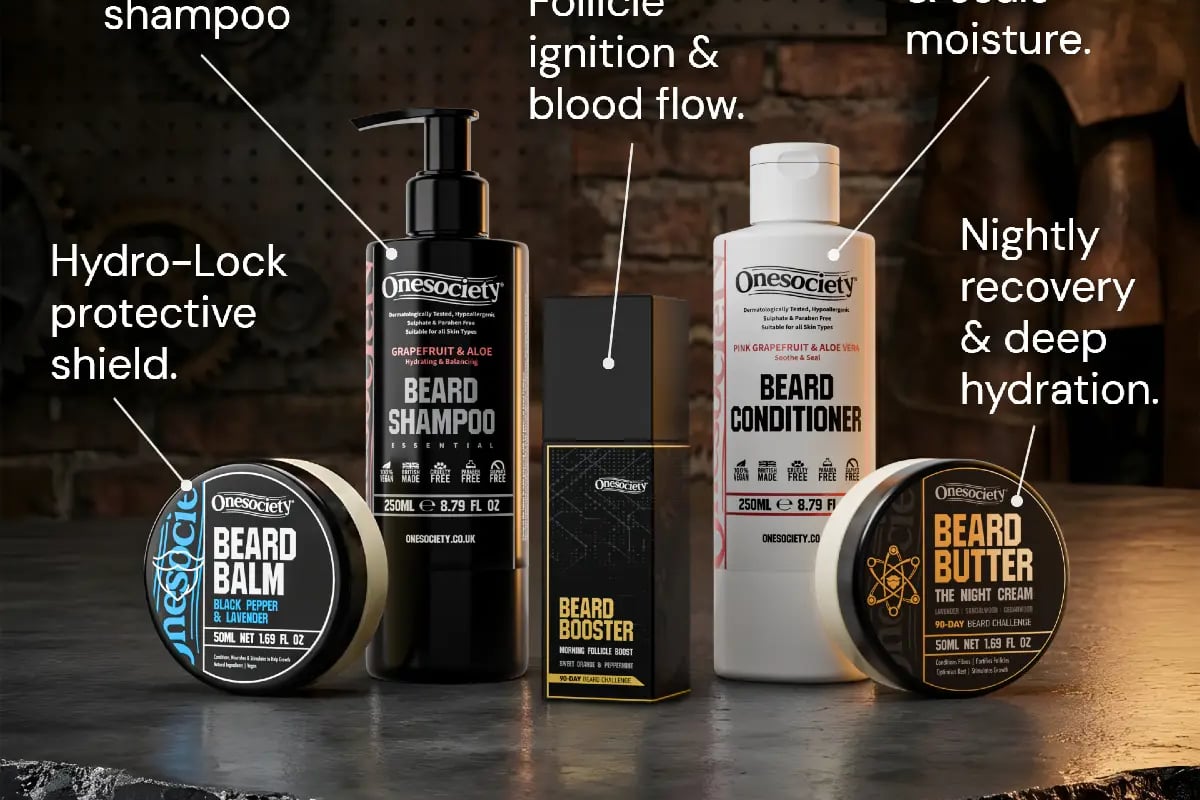
The 90-Day Beard Challenge provides a structured approach to consistent application with multiple complementary formulas. This comprehensive kit includes specialised oils, balms, and conditioners engineered to work synergistically, targeting mustache growth from multiple biological pathways simultaneously.
Ingredient Quality Determines Results
Not all beard oils deliver growth benefits. Many commercial formulas dilute active botanicals with mineral oil-a petroleum derivative that cannot penetrate follicles due to its molecular structure. Mineral oil creates surface shine whilst providing zero nutritional value to your mustache.
Cold-pressed versus refined oils exhibit vastly different potencies. Heat processing destroys heat-sensitive compounds like polyphenols and vitamin complexes. Cold-pressed argan oil retains 100% of its tocopherol content; refined versions lose 60-80% during processing.
Organic certification matters for pesticide residue. Conventional jojoba cultivation uses organophosphate pesticides that accumulate in the oil. These endocrine disruptors interfere with testosterone metabolism, potentially counteracting the oil's growth-promoting effects.
The Botanical Concentration Factor
Effective beard oil for mustache growth contains carrier oils comprising 90-95% of the formula, with essential oils at 2-5% concentration. Higher essential oil percentages (above 5%) trigger irritation, causing follicular inflammation that inhibits growth.
Look for formulations listing specific botanical subspecies. "Vitamin E" offers less information than "mixed tocopherols (d-alpha, d-beta, d-gamma, d-delta)"-the latter indicates comprehensive antioxidant coverage that protects follicle cells from multiple oxidative pathways.
At Onesociety, formulations emphasise 100% natural ingredients with transparent sourcing. Each botanical component serves a documented biological function, avoiding decorative additions that dilute active concentrations.
Timeline: What to Expect Week by Week
Understanding the growth timeline prevents premature abandonment. Mustache transformation occurs in distinct phases aligned with the hair growth cycle.
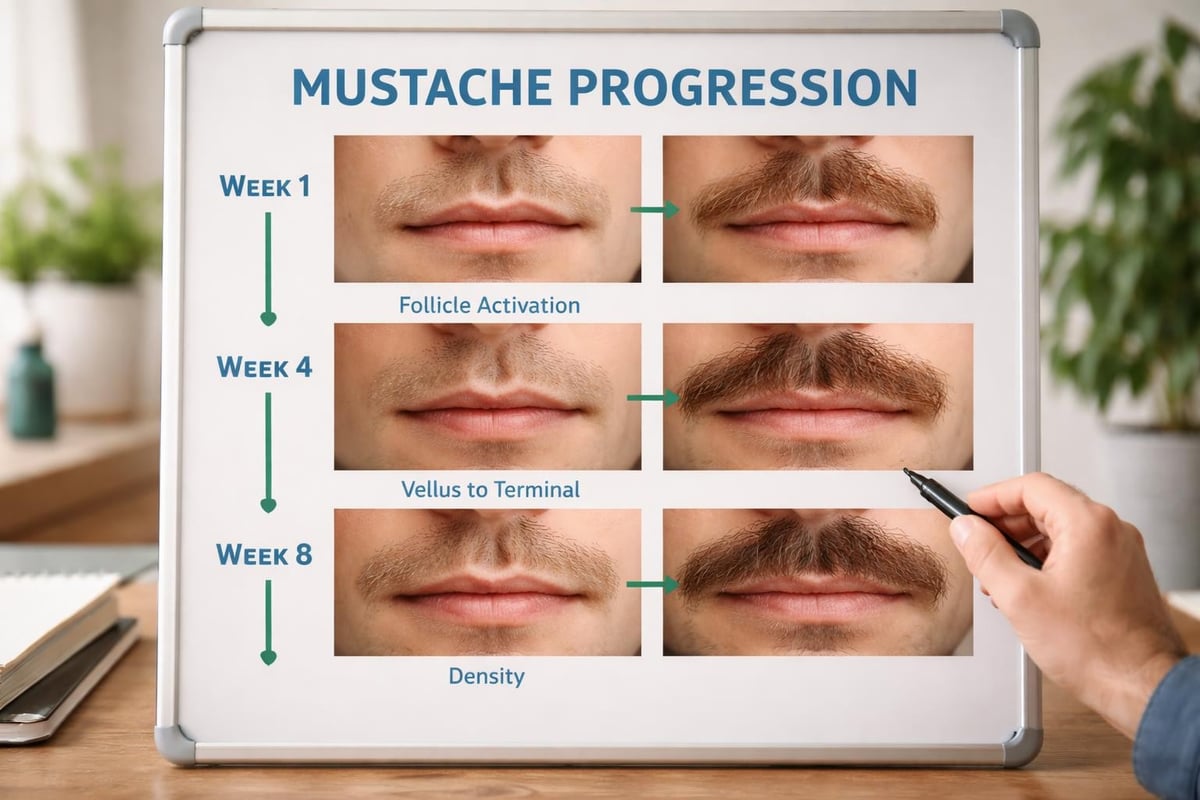
Weeks 1-2: Foundation Phase
- Reduced itchiness as sebum normalises
- Softer hair texture from cuticle repair
- Minimal visible length increase
- Follicles enter synchronised growth phase
Weeks 3-6: Activation Phase
- Vellus hairs (fine, light-coloured) begin converting to terminal hairs
- 15-20% thickness increase in existing hairs
- Patchy areas start filling with new growth
- Reduced breakage extends apparent length
Weeks 7-12: Density Phase
- New follicles activate in previously bare areas
- 30-40% overall density improvement
- Terminal hairs achieve full pigmentation
- Mustache becomes style-able with wax
Beyond 12 Weeks: Maintenance Phase
- Maximum genetic potential reached
- Continued application maintains follicle health
- Reduced shedding during telogen phase
- Improved mustache strength and resilience
Individual results vary based on age, hormone levels, and genetic predisposition. Men with higher androgen receptor density in facial follicles respond faster-typically seeing results 2-3 weeks earlier than average.
Combining Beard Oil with Growth-Supporting Habits
Topical application provides one growth vector. Maximising mustache potential requires supporting systemic factors that influence follicle function.
Nutritional Optimisation
Your follicles require specific micronutrients to synthesise keratin. Biotin (vitamin B7) serves as a coenzyme in amino acid metabolism-the process that assembles hair protein. Studies demonstrate 2.5mg daily biotin supplementation increases hair diameter by 14% over six months.
Zinc regulates androgen receptors in follicles. Deficiency below 11mg daily impairs testosterone utilisation, even when hormone levels test normal. Oysters, beef, and pumpkin seeds provide bioavailable zinc that supports facial hair density.
Silica strengthens hair shafts by cross-linking collagen and elastin fibres in the follicle structure. Bamboo extract and horsetail supplements deliver orthosilicic acid-the bioavailable silica form your body utilises.
| Nutrient | Follicle Function | Daily Target | Food Sources |
|---|---|---|---|
| Biotin | Keratin synthesis | 2.5mg | Eggs, salmon, avocado |
| Zinc | Androgen regulation | 11-15mg | Oysters, beef, pumpkin seeds |
| Silica | Shaft strengthening | 40mg | Bamboo extract, oats, barley |
| Vitamin D | Follicle activation | 4,000 IU | Sunlight, fortified foods |
Sleep Architecture
Growth hormone pulses during slow-wave sleep (stages 3-4). Disrupted sleep architecture reduces these pulses by 60%, directly limiting follicle repair capacity. Aim for 7-9 hours nightly, maintaining consistent sleep-wake times to optimise hormone secretion.
Stress Mitigation
Chronic cortisol elevation shortens the anagen phase. Elevated stress hormones trigger premature entry into catagen (transition phase), limiting maximum hair length. A 2021 study in Dermatology Practical & Conceptual linked persistent stress to 23% reduced facial hair growth rates.
Common Application Mistakes That Sabotage Growth
Even premium beard oil for mustache growth fails when application errors occur. These mistakes create the illusion of ineffective products.
Over-application clogs follicles. More oil doesn't accelerate growth-it creates a suffocating film that blocks oxygen exchange at the follicle opening. Three to four drops suffice for complete mustache coverage; excess drips onto lips and provides zero additional benefit.
Inconsistent timing disrupts follicle adaptation. Your follicles respond to consistent signalling. Applying oil sporadically (3-4 times weekly) prevents the sustained nutrient delivery required for measurable growth. Daily application, even if you miss occasional mornings, maintains therapeutic levels.
Insufficient massage wastes bioactive compounds. Oil sitting on the surface provides minimal follicle penetration. The mechanical action of massage increases local blood flow by 300%, creating pressure gradients that drive nutrients into follicles. Sixty to ninety seconds of focused massage delivers compounds where they function.
Premature product switching prevents accurate assessment. Follicles require 6-8 weeks to complete a growth cycle. Changing products every 2-3 weeks makes isolating effective formulas impossible. Commit to 90-day trials before evaluating results.
The Role of Follicle Priming
Before beard oil for mustache growth reaches peak effectiveness, follicles require preparation. Dead skin accumulation, sebum oxidation, and product buildup create barriers that prevent absorption.
Exfoliation using gentle mechanical or chemical methods removes the stratum corneum layer that blocks follicle openings. A salicylic acid cleanser (0.5-2% concentration) dissolves intercellular adhesions, clearing pathways for oil penetration. Use 2-3 times weekly to maintain clear follicle access without triggering inflammation.
Derma-rolling (0.25-0.5mm needle length) creates microchannels in the epidermis. These temporary perforations enhance transdermal delivery by 80-200%, allowing larger molecules to reach deeper follicle structures. Monthly derma-rolling sessions, performed after cleansing but before oil application, compound growth results.
Pre-application hydration optimises absorption. Dampening your mustache area before applying oil creates an emulsion that spreads more evenly and penetrates more thoroughly. The water-oil mixture mimics your skin's natural hydrolipidic film, facilitating deeper delivery.
Measuring Progress Beyond Mirror Observation
Subjective assessment creates false impressions. Lighting, grooming state, and mood influence perceived density. Objective measurement provides accurate feedback.
Photography protocols eliminate variables. Photograph your mustache in identical conditions: same location, same time of day, same distance, same lighting angle. Weekly front-facing and side-profile images reveal subtle changes invisible to daily observation.
Hair count mapping quantifies density improvements. Using a 1cm² template, count visible hair shafts in three mustache zones (left, centre, right) monthly. A 15% increase in average count indicates successful follicle activation.
Calliper measurements track individual hair diameter. Digital callipers measuring to 0.01mm precision reveal thickness increases before visual density changes become apparent. Sample five hairs monthly from consistent locations.
These metrics document progress scientifically, maintaining motivation during the critical 6-8 week period when visual changes remain subtle.
Selecting the Right Beard Oil Formula
The market offers hundreds of beard oil products. Distinguishing effective formulations from marketing hype requires understanding label interpretation.
Ingredient order matters. Components appear in descending concentration order. If jojoba oil appears fifth on the list, it comprises less than 5% of the formula-insufficient for meaningful follicle impact. Premium beard oil for mustache growth lists carrier oils (jojoba, argan, sweet almond) in the first three positions.
Fragrance-free versus scented formulas affect sensitive skin differently. Synthetic fragrances contain phthalates that disrupt hormone signalling. Natural essential oil scents provide aromatic benefits whilst contributing therapeutic compounds. Verify "fragrance" means botanical essential oils, not synthetic alternatives.
Preservative systems indicate formula stability. Natural oils oxidise when exposed to oxygen and light, developing rancid odours and losing bioactivity. Vitamin E (tocopherol) serves as both a preservative and active ingredient, preventing oxidation whilst nourishing follicles. Avoid products containing parabens or phenoxyethanol-these synthetic preservatives offer no growth benefits and potentially irritate facial skin.
Brand Transparency Indicators
Companies confident in their formulations provide detailed information. Look for brands that specify:
- Exact botanical species (not generic "plant oils")
- Sourcing countries and extraction methods
- Third-party testing for purity and potency
- Concentration percentages for key actives
- Storage recommendations (dark glass bottles preserve oil integrity)
This transparency indicates quality control and genuine expertise in beard oil for mustache growth formulation.
Addressing Special Mustache Growth Challenges
Certain conditions require modified approaches beyond standard beard oil application.
Alopecia Barbae
This autoimmune condition creates circular bald patches in facial hair. Beard oil for mustache growth cannot reverse autoimmune follicle attack, but anti-inflammatory ingredients like chamomile and calendula oil reduce immune system aggression. Combine topical application with dermatological treatment (corticosteroid injections or JAK inhibitors) for optimal results.
Trichotillomania
Compulsive hair pulling damages follicles mechanically. Beard oil strengthens remaining hairs, making them more resistant to pulling forces. The ritual of oil application can serve as a competing response-a healthier behaviour that satisfies the sensory-seeking component of trichotillomania.
Hormonal Imbalances
Low testosterone or thyroid dysfunction impairs facial hair growth systemically. Beard oil optimises what follicle function remains, but addressing underlying hormonal issues through medical intervention produces superior results. Consider hormone panel testing if mustache growth remains minimal despite consistent beard oil for mustache growth application.
The Synergy of Complete Grooming Systems
Beard oil works most effectively within a comprehensive regimen. Isolated intervention addresses one growth factor; systematic approaches target multiple limiting factors simultaneously.
Beard shampoo removes buildup without stripping natural oils. Conventional shampoos contain sulfates that over-cleanse, triggering reactive sebum production that clogs follicles. pH-balanced beard shampoos maintain the skin's acid mantle (pH 4.5-5.5), supporting healthy follicle environments.
Beard conditioner reinforces hair shaft integrity. While oil nourishes follicles, conditioner targets the hair shaft itself-smoothing cuticles, reducing tangling, and preventing breakage that undermines visible length.
Beard balm provides hold and prolonged hydration. Applied after oil absorption, balm's wax content seals nutrients in whilst offering light styling capability. This layered approach delivers sustained ingredient release throughout the day.
A structured system like the 90-Day Beard Challenge coordinates these products, ensuring each component complements others without redundancy or conflict.
Beard oil for mustache growth transforms facial hair through targeted follicle nutrition, not cosmetic illusion. The science centres on delivering bioavailable compounds that mirror natural sebum, enabling penetration to growth-critical structures like the dermal papilla. Consistency, quality ingredients, and proper application technique determine success. When you're ready to activate your mustache's genetic potential through scientifically-formulated natural products, Onesociety provides the complete toolkit backed by transparent ingredient sourcing and a satisfaction guarantee that reflects genuine confidence in product efficacy.