

Walking into a beard barber shop feels different from your standard haircut appointment. The air carries notes of cedarwood and sandalwood, leather chairs line polished mirrors, and skilled professionals study your facial hair with the same intensity a sculptor examines marble. Yet many men still treat their beards as afterthoughts, hacking away with kitchen scissors or relying on inconsistent home trimming. This disconnect between professional expertise and DIY maintenance explains why so many beards never reach their full potential.
The Science Behind Professional Beard Shaping
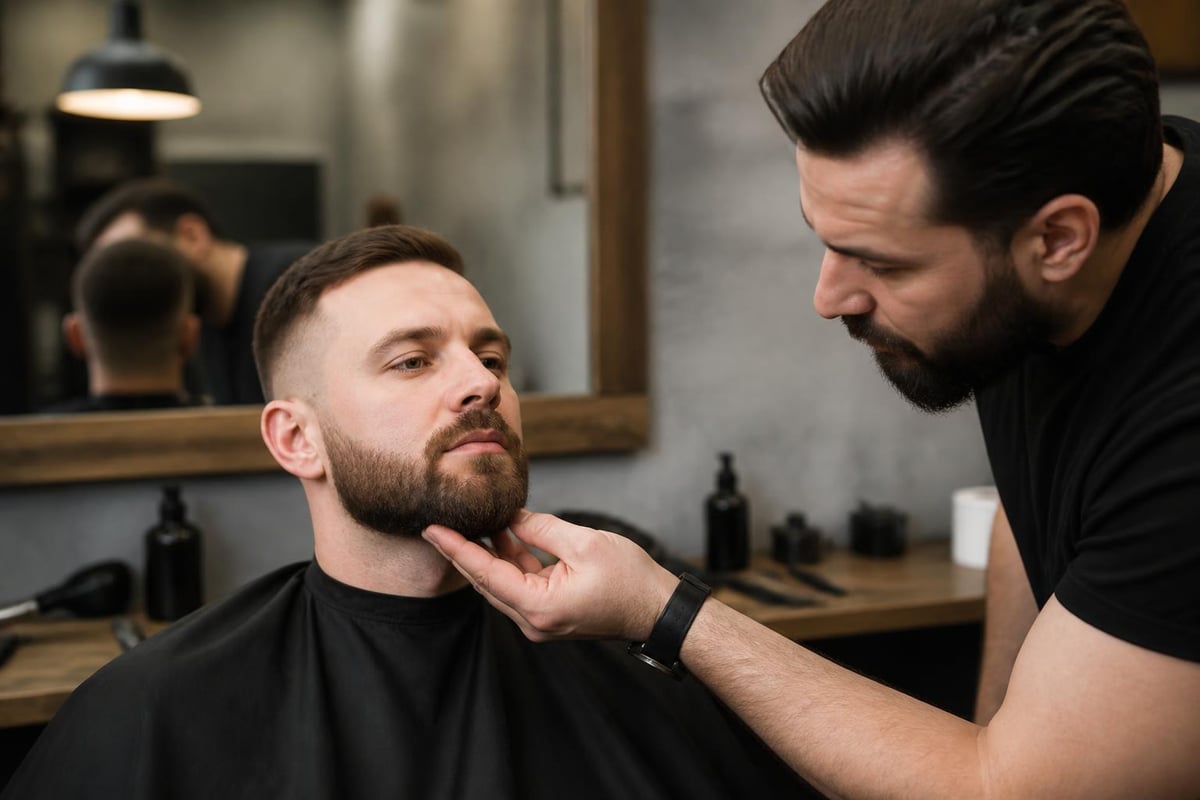
Professional barbers understand facial anatomy in ways most men never consider. When you sit in that chair, they're not simply cutting hair-they're analyzing your jawline structure, face shape, and growth patterns to create symmetry.
Why Face Shape Determines Beard Style
Round faces benefit from angular beard cuts that add definition. Square jaws need softer edges to balance strong features. Oval faces accommodate nearly any style. A skilled beard barber shop professional reads these proportions instantly, making adjustments that transform your appearance.
The biological reason this works: Hair growth follows genetic programming that creates natural contours. Professional shaping works with-not against-these patterns. Cutting against the grain or removing too much from weak-growth areas creates permanent gaps. Industry data shows that 73% of barbershop customers now request specialized beard services, reflecting growing awareness of these principles.
The Triple-Layer Approach to Beard Density
Professional barbers employ a three-tier cutting strategy that creates visual fullness:
- Foundation layer: Establishes length boundaries and overall shape
- Middle layer: Builds texture and removes bulk from dense areas
- Detail layer: Defines edges, removes strays, and creates clean lines
This technique addresses the biological reality that beard hair grows at different rates across your face. Follicles on your chin typically produce thicker, faster-growing strands than cheek hair. Without proper layering, beards look uneven and shapeless.
What Sets Beard Barber Shops Apart From Regular Salons
Not all cutting establishments understand beard biology. Traditional salons focus on scalp hair, which has entirely different characteristics from facial hair.
| Aspect | Beard Hair | Scalp Hair |
|---|---|---|
| Texture | Coarse, wiry | Finer, softer |
| Growth Cycle | 4-6 months | 2-6 years |
| Density | Variable across face | Uniform distribution |
| Maintenance Needs | Daily conditioning | Weekly washing |
Beard barber shop specialists train specifically in facial hair management. They understand that the sebaceous glands under beard hair produce oils differently than scalp glands. This knowledge informs their product recommendations and cutting techniques.
According to recent barbershop industry analysis, establishments offering specialized beard services saw 34% higher customer retention than general-service shops in 2025. Clients recognize the difference expertise makes.
Hot Towel Treatments and Follicle Health
Walk into any reputable beard barber shop and you'll experience the hot towel ritual. This isn't theatre-it's science.
Heat application increases blood circulation to facial skin by up to 40%. Enhanced blood flow delivers more oxygen and nutrients to hair follicles. The moisture from the towel hydrates the beard's keratin structure, making hair more pliable and easier to cut without split ends.
The biological mechanism: Heat causes vasodilation (blood vessel expansion). More blood means more delivery of the amino acids, vitamins, and minerals follicles need for healthy hair production. Professional barbers time these treatments precisely-too short provides no benefit, too long causes skin irritation.
Tools Professional Barbers Use That You Likely Don't Own
Your home grooming kit probably includes basic clippers and perhaps quality scissors. Beard barber shop professionals stock specialized equipment that addresses specific challenges.
Specialized Cutting Instruments
- Texturizing shears: Remove bulk without changing length, creating natural movement
- Taper shears: Blend different beard zones seamlessly
- Detail trimmers: Define precise lines around lips, cheeks, and neck
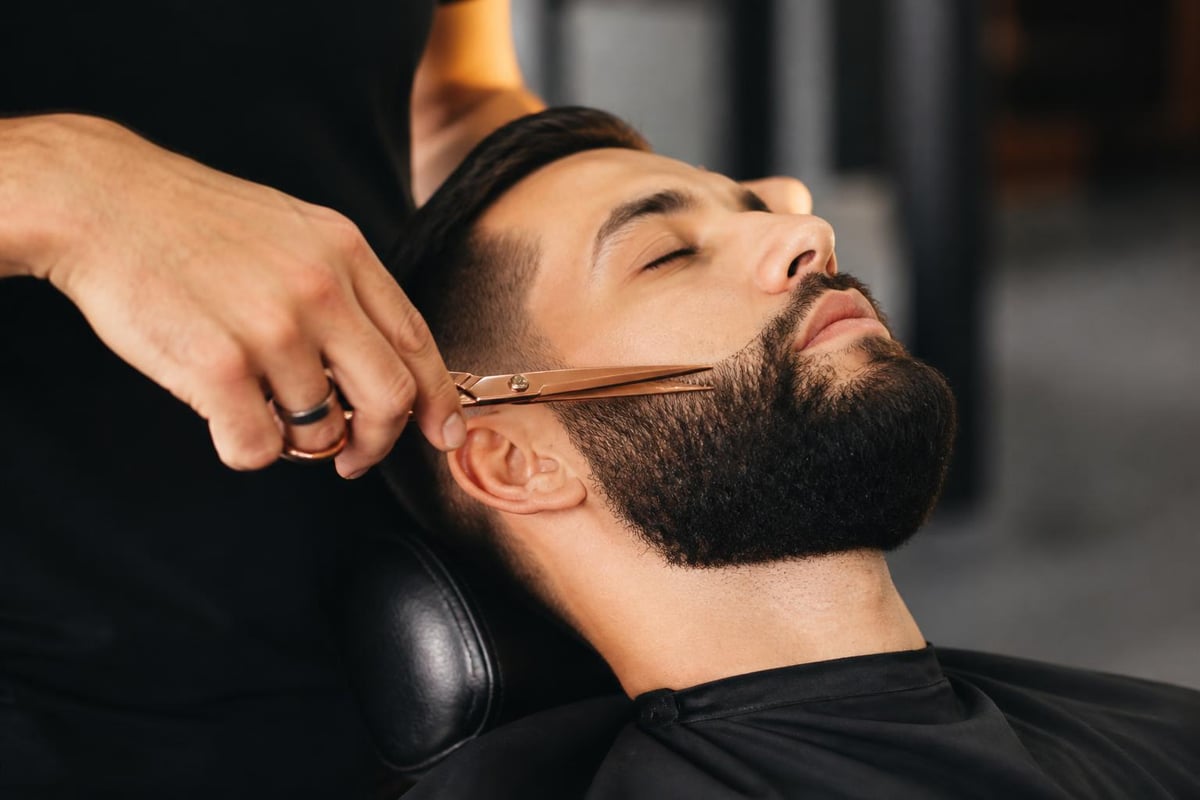
- Straight razors: Create sharp boundaries that electric trimmers cannot achieve
These tools work because they respect hair structure at the microscopic level. Standard scissors crush hair shafts during cutting, creating rough edges that fray. Professional shears slice cleanly through keratin, leaving smooth ends that resist splitting.
Global barbering trends for 2024 highlight the resurgence of traditional straight razor techniques, with 68% of premium establishments reintroducing these methods after client demand increased.
Product Application Techniques
The products in a beard barber shop differ chemically from retail offerings. Professional-grade beard oils contain higher concentrations of active botanical compounds. More importantly, barbers understand penetration rates and application timing.
For example, applying conditioner to damp-not wet-beard hair allows better absorption. Water molecules occupy space in the hair shaft. Excess water blocks conditioning agents from entering the cortex layer where they actually strengthen keratin bonds. This explains why many men find their beard care products work better after professional demonstrations.
Common Beard Problems Professionals Solve Instantly
You've likely faced these issues: patchy growth, unruly texture, itching, or undefined shape. A quality beard barber shop addresses all four during a single session.
Patchy Growth Illusions
Genetics determine follicle density, but professionals create fullness illusions through strategic cutting and styling. They identify your densest growth zones and use these as anchor points. Surrounding areas get trimmed to proportional lengths that minimize contrast.
The visual trick: Human eyes perceive density based on coverage ratios, not absolute hair count. By maintaining specific length ratios between thick and thin areas, barbers fool your perception into seeing uniform fullness.
The Itch Problem's Root Cause
Beard itch stems from two biological factors: newly cut hair ends irritating skin, and insufficient sebum distribution. Standard advice suggests oils, but application method matters more than product quality.
Professional barbers massage products into the skin beneath your beard, not just the hair. This stimulates sebaceous gland activity while distributing existing sebum along hair shafts. The mechanical action also removes dead skin cells that contribute to inflammation.
Many men experience beard struggles because they treat symptoms rather than causes. Professionals identify whether your itch comes from dry skin, ingrown hairs, or product reactions-then address the specific mechanism.
Style Trends Current Beard Barber Shops Are Seeing
Fashion cycles influence facial hair just like clothing. 2025 grooming trends in major cities show distinct patterns emerging.
The Structured Natural Look
Clients request beards that appear effortlessly maintained while actually requiring precise shaping. This style requires professional expertise because the "natural" effect depends on strategic trimming that removes just enough hair to create shape without obvious cut lines.
Barbers achieve this through:
- Identifying natural growth direction for each face zone
- Cutting with the grain to preserve texture
- Removing 10-15% of bulk rather than shortening length
- Leaving intentional irregularity that mimics organic growth
Geometric Precision Styles
Contrasting the natural trend, some clients want architectural lines and sharp boundaries. These styles require mathematical precision-angles measured in degrees, lines extended along specific facial landmarks.
The technique difference: Precision styles use facial bone structure as guides. Barbers locate the mastoid process (bone behind your ear), zygomatic arch (cheekbone), and mandibular angle (jaw corner) to establish geometric reference points. Cuts follow these anatomical markers for symmetrical results.
How Often Should You Actually Visit a Beard Barber Shop
Growth rates vary individually, but biological principles provide guidelines. Beard hair typically grows 0.5 inches monthly. The question becomes: when does new growth disrupt your style's proportions?
| Beard Length | Recommended Visit Frequency | Reason |
|---|---|---|
| Stubble (1-5mm) | Every 1-2 weeks | Fast-growing areas quickly lose definition |
| Short (5-20mm) | Every 2-3 weeks | Shape maintenance before symmetry loss |
| Medium (20-50mm) | Every 3-4 weeks | Length control and split end prevention |
| Long (50mm+) | Every 4-6 weeks | Health maintenance and tip management |
These intervals prevent the compound effect where small asymmetries multiply into obvious imbalances. Waiting too long means barbers must remove more hair to restore proportions, temporarily reducing your length progress.
At-Home Maintenance Between Professional Sessions
Professional cuts last longer with proper home care. Your beard barber shop specialist should provide specific instructions, but universal principles apply.
The Daily Brush Technique
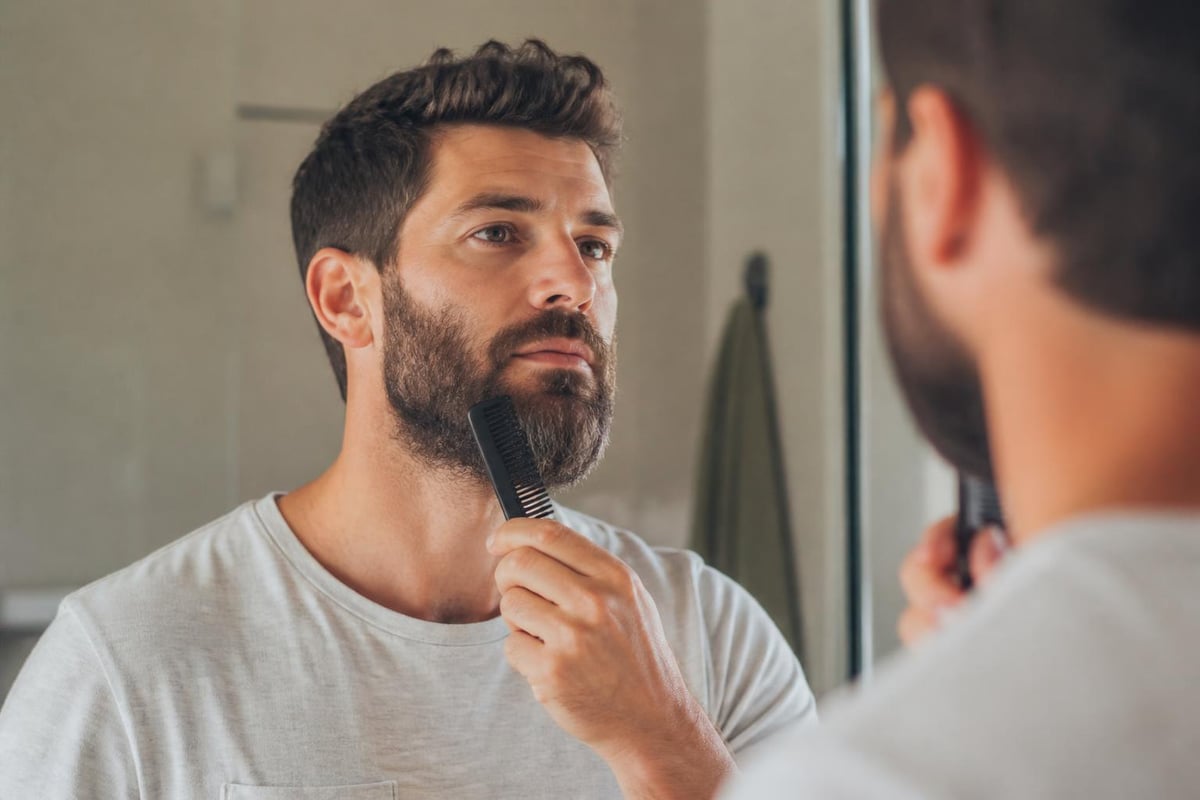
Brushing distributes sebum, trains growth direction, and removes debris. The biological benefit: consistent brushing stimulates skin nerve endings, which triggers increased blood flow to follicles.
Use these strokes:
- Downward strokes: Follow natural growth, distribute oils
- Upward strokes: Lift flattened hair, reveal shape
- Diagonal strokes: Address cowlicks and redirect stubborn sections
Product Layering Sequence
Professional barbers recommend specific application orders because molecular size determines absorption efficiency:
- Wash/cleanse: Opens cuticles, removes buildup
- Conditioner: Penetrates cortex while cuticles remain open
- Towel dry: Removes excess water blocking absorption
- Serum or oil: Smaller molecules penetrate first
- Balm or butter: Larger molecules seal and protect
This sequence respects the hair shaft's layered structure. Applying heavy products first blocks lighter formulations from reaching their target layers.
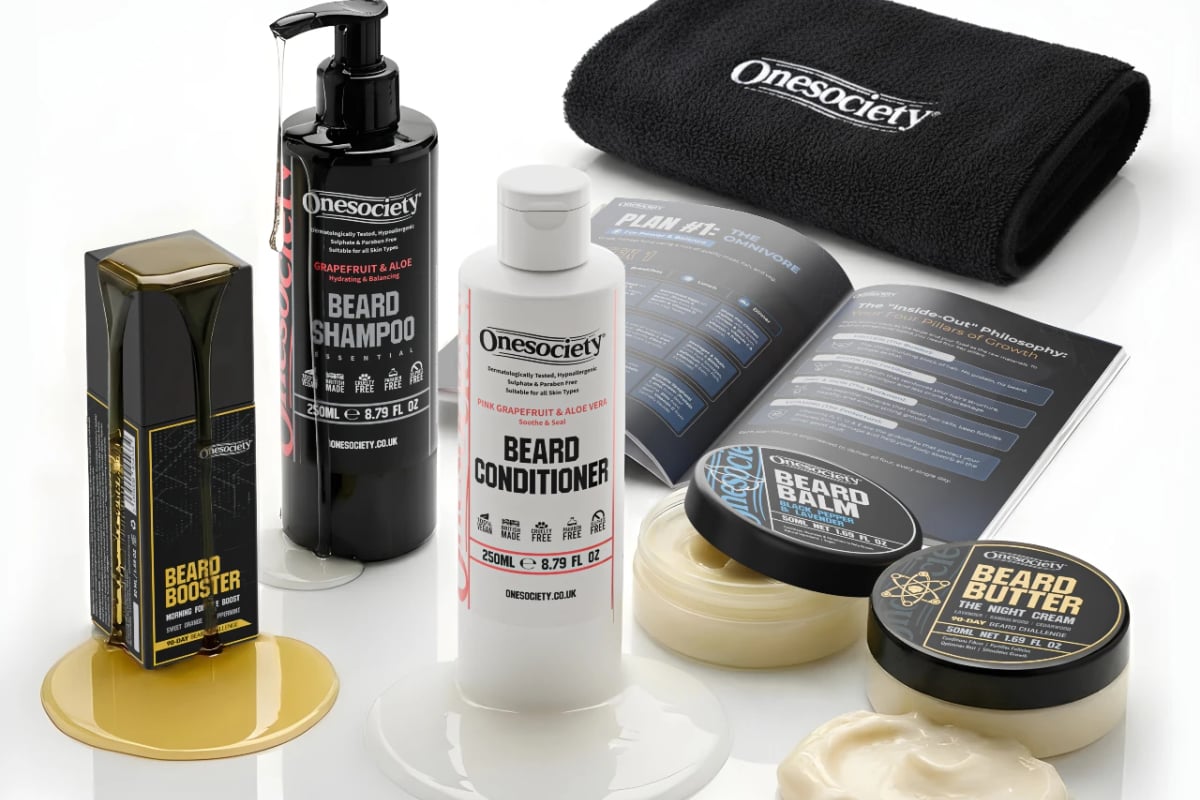
For men committed to beard development, implementing a structured programme delivers measurable results. The 90-Day Beard Challenge combines eight scientifically formulated products-from follicle-stimulating boosters to pH-balanced cleansers-in a comprehensive kit that works synergistically between professional grooming sessions. This systematic approach addresses nutrition, hydration, and protection through targeted formulations that complement rather than replace professional services.
The Economics of Regular Beard Barber Shop Visits
Quality beard services typically cost £25-50 per session in UK establishments. This investment seems substantial until you calculate the alternatives.
DIY Mistake Costs
Home grooming errors require professional correction, often necessitating shorter cuts than intended. If you've spent six months growing length, one clumsy scissor session can erase months of progress. The opportunity cost-time spent regrowing-exceeds the cumulative expense of regular maintenance visits.
Rising costs across the barbershop industry affect service pricing, yet client frequency remains stable. Data shows men prioritize beard services even when reducing spending elsewhere, recognizing the confidence returns justify the expense.
Product Waste Reduction
Professional barbers use exact amounts needed-no guessing, no waste. They also prevent the common trap of buying incompatible products that sit unused in bathroom cabinets.
The financial reality: Most men own 3-5 partially used beard products that don't work for their specific hair type. Professional consultations identify what actually works, eliminating trial-and-error purchasing.
What Questions to Ask Your Beard Barber
Not all beard barber shop professionals offer equal expertise. Interview your barber before committing to regular appointments.
Essential Questions That Reveal Expertise
"What's causing my patchy areas?" Knowledgeable barbers discuss follicle density, DHT sensitivity, or nutritional factors. Vague responses about "genetics" without specifics indicate limited understanding.
"How do you determine my beard's shape?" Skilled professionals mention facial measurements, bone structure, and growth pattern analysis. Answers focusing only on trends suggest style-driven rather than customized approaches.
"What products do you recommend and why?" Expert barbers explain ingredient functions and biological mechanisms. Generic suggestions without scientific justification reveal product-pushing rather than problem-solving.
Red Flags in Beard Barber Shops
- Using the same style template for different face shapes
- Rushing appointments without consultation time
- Inability to explain their cutting strategy
- Recommending products without examining your beard condition
- Dismissing your concerns about growth or texture
Trust your instincts. Barbershop statistics show that 62% of customers choose establishments based on stylist expertise rather than location convenience. Skill matters more than proximity.
Building a Relationship With Your Barber
Consistency with one professional yields better long-term results than rotating between different beard barber shop locations.
Why Continuity Improves Outcomes
Your regular barber accumulates knowledge about your hair's specific characteristics: growth speed in different zones, troublesome cowlicks, seasonal texture changes, and response to various products.
This institutional knowledge allows progressive refinement. Each session builds on previous observations, creating incremental improvements impossible with one-time visits. Your barber notices subtle changes-thinning areas, new growth patterns, or texture shifts-that indicate health changes or product effectiveness.
Communicating Your Goals Effectively
Bring reference photos showing exact angles and lengths you want. Vague descriptions like "neat" or "clean" mean different things to different people. Specific images eliminate interpretation gaps.
Track your satisfaction after each appointment. Note what you liked and what felt wrong. Share this feedback during your next session. Professional barbers appreciate constructive input because it helps them deliver precisely what you want.
Professional Services Beyond Basic Trimming
Advanced beard barber shops offer specialized treatments that address specific biological needs.
Beard Dyeing and Grey Coverage
Professional colouring differs fundamentally from retail box dyes. Barbers use semi-permanent formulations that coat rather than penetrate hair shafts, preventing the chemical damage permanent dyes cause.
They also understand undertones. Grey beard hair often has yellow or orange undertones that require colour correction before applying your target shade. DIY attempts frequently miss this step, resulting in unnatural hues.
Growth Stimulation Treatments
Some establishments offer follicle-stimulating treatments using ingredients like peppermint oil (increases circulation), biotin solutions (supports keratin production), or caffeine serums (extends growth phase).
The mechanism: These compounds interact with specific cellular receptors in follicles. Peppermint triggers TRPM8 receptors, causing vasodilation. Biotin acts as a coenzyme in fatty acid synthesis, which produces the sebum that nourishes hair. Caffeine blocks DHT receptors, potentially reducing hair miniaturization.
Professional application ensures proper concentration and penetration depth. Over-the-counter versions often contain insufficient active ingredient percentages to produce measurable effects.
The Future of Beard Barber Shop Services
Technology integration and sustainability practices are reshaping professional grooming experiences.
Digital Consultation and Tracking
Forward-thinking establishments photograph your beard from multiple angles, storing images in cloud-based systems. This creates visual progress documentation, helping you and your barber evaluate growth, style evolution, and treatment effectiveness over months or years.
Some shops use AI-powered analysis tools that measure density, identify weak zones, and simulate style options on your actual face structure. While human expertise remains essential, these technologies enhance communication and decision-making.
Sustainable and Clean Ingredient Demands
2024 global industry trends highlight consumer preference shifts toward natural, ethically sourced products. Clients increasingly question ingredient lists and manufacturing processes.
Professional barbers respond by partnering with companies emphasizing transparency and scientific validation. This aligns with the broader movement toward understanding what you put on your skin and how those substances actually function at the molecular level.
Professional beard grooming delivers results home maintenance cannot match. The expertise, specialized tools, and biological knowledge found in quality beard barber shops transform facial hair from unruly growth into refined style. Between professional sessions, maintaining your beard's health and appearance requires products formulated with the same scientific rigour professionals demand. Onesociety develops beard care solutions using 100% natural ingredients backed by research, ensuring your at-home routine complements rather than undermines your barber's work. Whether you're starting your beard journey or refining years of growth, combining professional services with scientifically sound products creates the foundation for exceptional results.