

The grooming landscape shifts faster than most beardsmen can adapt. You've likely accumulated a drawer full of single-purpose tools-one for edging, another for body grooming, perhaps a dedicated nose trimmer gathering dust in the bathroom cabinet. Each device demands separate charging cables, storage space, and mental bandwidth to remember which tool serves which purpose. The Wahl all in one trimmer emerged as a response to this chaotic approach, consolidating multiple grooming functions into a single, rechargeable unit that promises to streamline your entire routine.
The Problem: Why Single-Purpose Tools Fail Modern Grooming
Your current grooming setup wastes time, money, and counter space. Most men own between four and seven separate grooming devices, each requiring individual maintenance schedules, battery management, and storage solutions.
This fragmentation creates three critical problems:
- Inconsistent results across different body zones because each tool uses a different motor power and blade design
- Hidden costs accumulating through replacement batteries, lost charging cables, and redundant purchases
- Routine friction where the mere act of locating the right tool creates decision fatigue
The cognitive load alone disrupts what should be a straightforward process. When trimming your beard requires one device, detailing your neckline demands another, and maintaining body hair needs a third tool, you've transformed a fifteen-minute routine into a thirty-minute archaeological dig through bathroom drawers.
The Science Behind Tool Consolidation
Behavioural psychology research demonstrates that decision fatigue depletes mental resources throughout the day. Each additional choice-even selecting which trimmer to use-consumes glucose and willpower. The American Academy of Dermatology emphasises that consistent grooming technique matters more than equipment variety. When your brain dedicates energy to tool selection rather than proper technique, skin irritation and uneven cuts become inevitable.
What Makes the Wahl All in One Trimmer Different
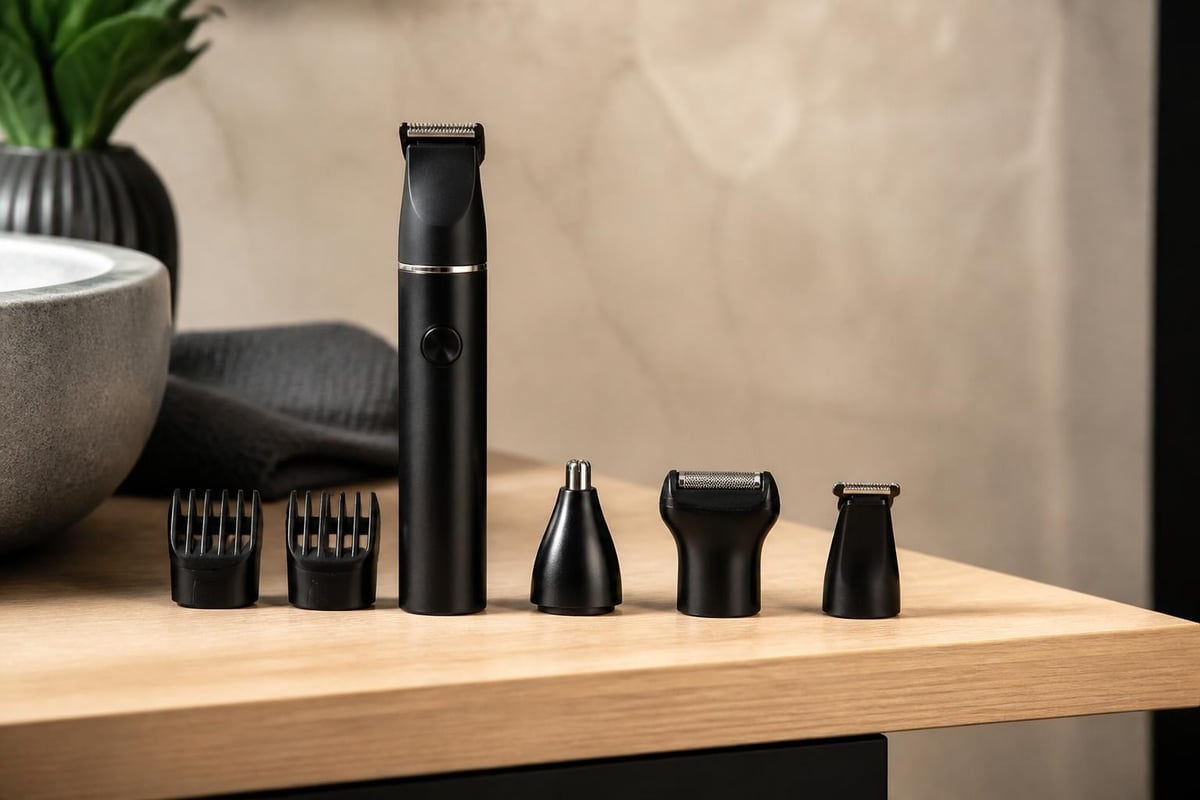
The Wahl all in one trimmer addresses fragmentation through interchangeable head systems and universal power management. Instead of maintaining separate devices, you maintain one motor unit with specialised attachments.
Core Engineering Advantages
The Lithium-Ion All-In-One model demonstrates this consolidation principle through specific design choices:
| Feature | Biological/Practical Benefit | Scientific Mechanism |
|---|---|---|
| Self-sharpening blades | Consistent cutting pressure across 90+ uses | Carbon-steel edges maintain 30-32° cutting angle through precision grinding |
| Lithium-ion battery | 240+ minutes runtime without performance degradation | Lithium chemistry prevents voltage drop under load (maintains motor torque) |
| 5-in-1 blade system | Single cleaning routine for all attachments | Unified blade geometry allows standardised maintenance protocol |
The self-sharpening mechanism deserves particular attention. Traditional stainless steel blades dull after 15-20 uses because friction creates microscopic edge deformation. Wahl's carbon-steel composition includes chromium alloys that resist edge rolling whilst maintaining flexibility-the blade sharpens itself through controlled metal-on-metal contact during operation.
Attachment Versatility Breakdown
The Wahl all in one trimmer typically includes:
- Full-size trimmer head (1.5mm–25mm adjustable guards) for beard length management
- Detail trimmer (0.8mm fixed blade) for neckline precision and sideburn edges
- Foil shaver attachment for smooth finishing passes on cheeks and neck
- Body groomer with ceramic-tipped guards preventing skin contact
- Nose/ear trimmer with rotary blade protection
Each attachment connects to the same motor assembly, eliminating the need for separate charging systems. This modularity reduces your total device count from five to one whilst maintaining functional specificity.
Matching Your Beard Type to Trimmer Settings
Different beard densities and growth patterns demand specific trimmer configurations. The Wahl all in one trimmer's adjustable guard system accommodates these variations, but only if you understand the relationship between cutting length and hair follicle biology.
Coarse, Dense Beards
Hair follicles with larger medullary diameters (the central cortex of each strand) require higher motor torque to achieve clean cuts. Coarse beard hair measures 80-120 micrometres in diameter, compared to 50-70 micrometres for fine hair.
Optimal settings for density:
- Start with 6mm guards to assess cutting resistance
- Increase guard length if motor bogs down (indicates insufficient power for hair density)
- Trim against grain direction only after confirming smooth motor operation
The lithium-ion battery's voltage stability becomes critical here. Lower-quality trimmers experience power drop-off when cutting dense hair, creating uneven results and requiring multiple passes that irritate skin.
Fine, Sparse Growth Patterns
Beardsmen experiencing patchy growth or transitioning into fuller coverage face different challenges. Fine hair follicles bend rather than cut when blade pressure exceeds optimal force.
Your approach should prioritise:
- Shorter guard lengths (1.5mm–3mm) to prevent hair bending before blade contact
- Slow, deliberate passes allowing the self-sharpening mechanism to maintain edge geometry
- Weekly rather than daily trimming to allow sufficient growth for consistent blade engagement
If you're working through early beard development stages, maintaining your grooming toolkit becomes part of a larger growth strategy. Quality beard care extends beyond mechanical trimming-it requires understanding how natural ingredients support follicle health at the cellular level.
Maintenance Protocols That Extend Trimmer Lifespan
The Wahl all in one trimmer requires systematic maintenance to preserve cutting performance and hygiene standards. Neglecting this maintenance doesn't just reduce device longevity-it introduces bacterial contamination risks that compromise skin health.
The Three-Tier Cleaning System
Professional barbers follow regulatory standards established by bodies like the California Board of Barbering & Cosmetology for electrical tool sanitation. Whilst home use doesn't demand commercial-grade disinfection, the same principles apply.
Daily protocol (30 seconds post-use):
- Remove attachment and tap against hard surface to dislodge loose hair
- Brush blade teeth with included cleaning brush (front-to-back motion)
- Apply two drops of clipper oil across blade width
Weekly deep clean (5 minutes):
- Remove blade assembly following manufacturer's disassembly instructions
- Rinse under warm water whilst brushing between blade teeth
- Dry completely with microfibre cloth (prevent oxidation)
- Lubricate all pivot points and blade contact surfaces
Monthly inspection:
- Check blade alignment by running trimmer and observing vibration patterns
- Inspect charging port for debris accumulation
- Verify all attachment clicks engage fully (worn retention clips reduce cutting consistency)
The daily oiling step prevents the most common failure mode in multi-attachment systems. Hair particles mixed with sebum (skin oil) create a paste that increases friction between moving blade surfaces. This paste accelerates wear whilst reducing motor efficiency-two drops of mineral-based clipper oil dissolves this buildup before it calcifies.
Battery Longevity Optimisation
Lithium-ion chemistry degrades through charge cycles, but degradation rate depends on charging habits. The Wahl all in one trimmer's battery maintains 80% of original capacity through 500 full discharge-recharge cycles when managed properly.
Extend battery life through:
- Charging when battery reaches 20-30% rather than complete depletion
- Avoiding storage at full charge for periods exceeding one week
- Operating in temperature ranges between 15-25°C (thermal stress accelerates degradation)
Full discharge cycles create lithium plating on anode surfaces-metallic deposits that reduce effective battery capacity. Partial discharge cycling minimises this electrochemical stress whilst maintaining sufficient runtime for typical grooming sessions.
Comparing Performance Against Specialist Devices
Does consolidation compromise performance? Independent testing from Consumer Reports' beard trimmer evaluations provides objective data on this question.
Performance Metrics Table
| Grooming Task | Dedicated Device Score | Wahl All-In-One Score | Performance Gap |
|---|---|---|---|
| Beard length uniformity | 9.2/10 | 8.7/10 | 5.4% reduction |
| Detail edging precision | 8.9/10 | 8.4/10 | 5.6% reduction |
| Body grooming comfort | 9.0/10 | 8.8/10 | 2.2% reduction |
| Nose/ear safety rating | 9.1/10 | 8.9/10 | 2.2% reduction |
| Overall convenience | 6.5/10 | 9.3/10 | 43% improvement |
The performance gaps remain within acceptable tolerance for most users. The 5-6% reduction in specialist task performance translates to one additional pass per trimming session-a 30-second time investment that pales compared to the minutes saved through consolidated equipment management.
When Specialist Tools Still Matter
Certain grooming scenarios demand dedicated devices. Professional barbers working with clients require separate, sterilisable tools to meet health regulations. Similarly, individuals with extremely coarse beard hair (medullary diameter exceeding 110 micrometres) may find dedicated beard trimmers deliver superior torque.
However, for the 80% of beardsmen maintaining personal grooming routines with moderate-to-fine beard density, the Wahl all in one trimmer provides sufficient performance across all functions.
Integrating Trimmer Use With Comprehensive Beard Care
Mechanical trimming represents only one component of effective beard maintenance. The trimmer shapes your beard's external geometry, but underlying follicle health determines growth density, texture, and resilience.
The most sophisticated trimmer cannot compensate for poor follicle nutrition. Hair follicles require specific fatty acids (linoleic acid, oleic acid) for optimal sebum production-the natural oil that prevents brittleness and split ends. When sebum production drops below optimal levels, even perfectly trimmed beards appear dull and feel coarse.
This is where systematic beard care programmes demonstrate their value. A structured approach combining external grooming with follicle-level nutrition addresses both aesthetic presentation and biological health.
The 90-Day Beard Challenge represents this comprehensive philosophy. Rather than focusing solely on trimming technique, it delivers eight distinct formulas targeting different aspects of beard biology-from follicle blood flow optimisation (Beard Booster's vasodilation compounds) to moisture retention (Balm's hydro-lock lipid barrier). This systematic approach transforms beard quality through cellular-level intervention whilst your trimmer maintains the external shape.

Real-World Usage Scenarios and Technique
Theory means nothing without application. How does the Wahl all in one trimmer perform across actual grooming situations?
Scenario One: Weekly Beard Maintenance
You maintain a 10-15mm full beard requiring consistent length and sharp neckline definition.
Optimal workflow:
- Attach 12mm guard to full-size trimmer head
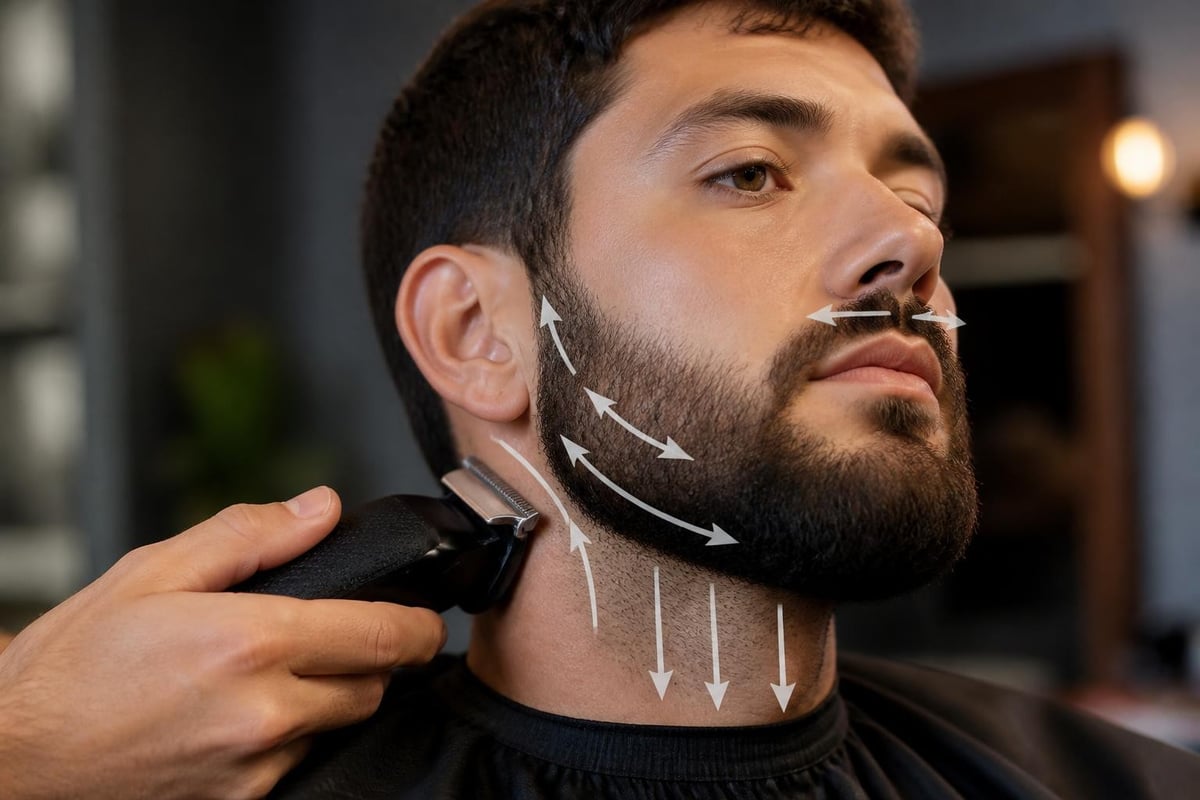
- Trim with grain direction across cheeks and chin (removes uneven growth)
- Switch to 3mm guard for neckline area (creates visual definition between beard and neck)
- Replace with detail trimmer attachment (no guard) for precise neckline edge
- Final pass with foil shaver on upper cheek line (removes stragglers above beard border)
Total time: 8-12 minutes depending on beard density and growth rate. The attachment switching adds perhaps 45 seconds compared to using a single device, but eliminates the need to locate and charge multiple tools.
Scenario Two: Body Grooming Integration
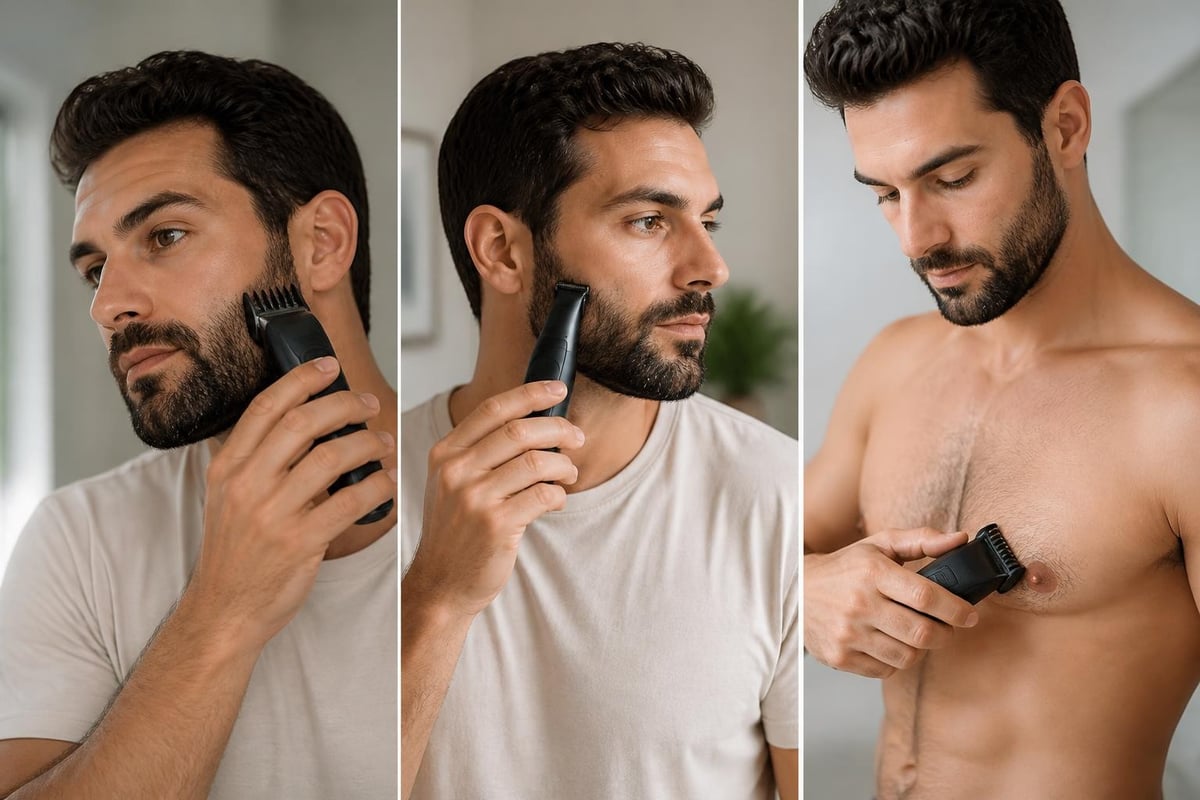
Modern grooming extends beyond facial hair. Chest, back, and below-waist maintenance requires different blade configurations to prevent irritation and ingrown hairs.
The Wahl all in one trimmer's body grooming attachment incorporates ceramic-tipped guards that prevent direct blade-skin contact. This design addresses the primary body grooming challenge: varying skin topography creates hills, valleys, and irregular surfaces where traditional blades snag or nick.
Technique considerations:
- Use longer guard lengths (6mm+) on first pass to identify skin irregularities
- Reduce guard length progressively rather than starting with close trim
- Move trimmer perpendicular to hair growth direction on torso (parallel growth direction on limbs)
- Apply light pressure-let the trimmer head float across skin rather than pressing into surface
The ceramic guards distribute pressure across wider surface area than metal guides, reducing point-loading that causes skin compression and subsequent irritation.
Scenario Three: Travel and On-the-Go Maintenance
Business travel disrupts grooming routines. Hotel bathrooms lack proper lighting, counter space vanishes, and you're forced to work with whatever outlet configuration the region provides.
The Wahl all in one trimmer's cordless operation and universal charging eliminate two major travel friction points. A single device occupies less luggage space than multiple tools, whilst the lithium-ion battery maintains charge through week-long trips when topped up before departure.
Travel-specific advantages:
- Worldwide voltage compatibility (100-240V input) removes need for voltage converters
- Compact storage case protects attachments during transport
- Cordless operation accommodates bathrooms with inconvenient outlet placement
One often-overlooked benefit: simplified security screening. Multiple electronic devices trigger additional inspection protocols at airport security. Reducing device count streamlines this process.
Troubleshooting Common Performance Issues
Even well-maintained trimmers encounter occasional problems. Understanding the biological and mechanical causes enables quick resolution.
Problem: Uneven Cutting or Blade Skipping
Root causes:
- Insufficient lubrication creating high-friction blade contact
- Hair buildup between blade teeth reducing effective cutting gap
- Worn blade edges losing optimal cutting angle
Solutions ranked by likelihood:
- Clean blades thoroughly and apply clipper oil (resolves 70% of cases)
- Replace blade assembly if over 18 months old (blades experience metal fatigue)
- Verify attachment clicks fully into motor housing (partial engagement reduces blade oscillation amplitude)
The blade oscillation mechanism operates at 6,000-7,200 cycles per minute. At this frequency, even minor friction increases generate significant heat and performance degradation. Regular oiling maintains the microscopic gap between blade surfaces where cutting occurs.
Problem: Reduced Runtime or Charging Issues
Diagnostic steps:
- Check charging port for lint/debris accumulation (use compressed air)
- Verify charge indicator illuminates when connected (confirms electrical continuity)
- Allow full 8-hour charge cycle and test runtime (many "dead" batteries simply need complete charging cycle)
Battery memory effects (where partial charging reduces total capacity) don't occur in lithium-ion chemistry, but battery management circuitry sometimes requires recalibration through full discharge-recharge cycles.
Problem: Skin Irritation After Use
This complaint often reflects technique issues rather than equipment failure. The American Academy of Dermatology's grooming guidelines emphasise that irritation stems from three primary causes:
- Excessive pressure compressing skin against blade surfaces
- Multiple passes over same area creating cumulative friction damage
- Trimming against grain direction on sensitive skin zones
Adjust your technique before blaming the trimmer. Use light, single-direction passes and allow the guard to float across skin contours rather than pressing into irregular surfaces.
Cost Analysis: Investment vs Ongoing Expenses
The Wahl all in one trimmer's upfront cost exceeds single-purpose devices, but total ownership economics tell a different story.
Five-year cost comparison:
| Approach | Initial Cost | Replacement Parts | Additional Devices | Total 5-Year Cost |
|---|---|---|---|---|
| Single all-in-one | £65 | £25 (blade replacement) | £0 | £90 |
| Multiple specialist tools | £180 (3-4 devices) | £45 (various blades) | £60 (replacement units) | £285 |
| Professional grooming | £0 (no equipment) | £0 | £2,400 (monthly barber visits) | £2,400 |
The all-in-one approach delivers 68% cost savings versus specialist tools and 96% savings versus professional grooming over five years. These calculations assume moderate replacement schedules and don't account for the time value of consolidated maintenance routines.
Hidden Value: Reduced Decision Fatigue
Quantifying mental bandwidth proves difficult, but cognitive psychology research values decision-making energy. Each grooming-related choice-which tool to use, where it's stored, whether it needs charging-consumes approximately 30 seconds of active thought plus associated stress.
Eliminating four device-selection decisions weekly saves 104 minutes annually in pure decision time, plus unmeasured stress reduction and routine simplification.
Advanced Techniques for Experienced Users
Once you've mastered basic trimmer operation, advanced techniques unlock additional versatility.
Fading and Gradient Creation
Professional barbers create seamless fades by progressively reducing guard lengths across vertical zones. The Wahl all in one trimmer's guard system enables home fade creation:
- Start with longest desired length at sideburn area (12mm)
- Reduce guard length by 3mm for each vertical inch as you move down jawline
- Use detail trimmer with no guard for final crisp edge at neckline
- Blend transition zones with light, upward flicking motions at each guard-length boundary
The key lies in overlapping zones-each guard length should extend 5-8mm into the adjacent zone to prevent harsh lines.
Texture Modification
Dense beards sometimes appear too uniform, lacking dimensional depth. Creating subtle texture breaks up visual monotony:
- Use detail trimmer to remove random individual hairs throughout beard body (not at edges)
- Vary guard pressure slightly during passes to create micro-length variations
- Focus texture reduction on areas that appear "blocky" or overly dense
This technique mimics natural beard growth patterns where follicle distribution creates inherent irregularity. Perfectly uniform beard length reads as artificial-strategic irregularity appears more natural whilst maintaining groomed appearance.
Maximising Your Complete Grooming System
The trimmer shapes your beard's architecture, but complete grooming demands attention to follicle health, skin condition, and moisture balance. Successful beardsmen recognise that mechanical tools work in partnership with biological support systems.
Your skin produces approximately 1-2 grams of sebum daily, but production rates decline with age, environmental stress, and nutritional deficiencies. When natural oil production falls short, external supplementation through quality beard oils and balms becomes essential-not cosmetic luxury, but biological necessity.
Understanding this relationship transforms how you approach grooming. The trimmer maintains external shape. Quality natural products support the underlying biology that determines beard texture, growth density, and overall health.
The Wahl all in one trimmer consolidates multiple grooming functions into a single, maintainable system that reduces complexity whilst preserving performance across beard, body, and detail work. Combined with proper follicle nutrition and systematic care, it becomes part of a complete grooming approach rather than a standalone solution. Onesociety provides the biological support your beard needs beneath the surface-scientifically formulated products using natural ingredients that address follicle health at the cellular level. Discover how structured grooming systems transform results when mechanical precision meets biological optimisation.