

Your beard deserves more than leftover scalp shampoo. The facial hair on your face grows from follicles surrounded by delicate skin, producing sebum at different rates than your scalp. Using the wrong cleanser strips essential oils, leaving your beard brittle and your skin irritated. That's why understanding what makes a top rated beard shampoo effective isn't just about brand names-it's about biochemistry.
Why Your Regular Shampoo Destroys Your Beard
The pH of scalp hair shampoo typically ranges between 5.5 and 7. Your facial skin, however, maintains a more acidic pH of 4.7 to 5.75. When you wash your beard with products formulated for scalp hair, you're disrupting the acid mantle-the protective barrier that prevents bacterial growth and moisture loss.
Sodium lauryl sulphate (SLS) and similar harsh surfactants in conventional shampoos create that satisfying lather, but they achieve it by aggressively stripping lipids. Your sebaceous glands produce sebum specifically calibrated to coat and protect beard hair. Remove too much, and you trigger a compensatory cycle: your skin overproduces oil, leading to greasiness, then you wash more frequently, exacerbating the problem.
The result? Dry, wiry facial hair that resembles steel wool rather than the soft, manageable beard you're aiming for.
The Surfactant Problem
Traditional shampoos rely on anionic surfactants that excel at removing oil-too well. According to research on beard care fundamentals, beard-specific formulations use gentler alternatives like decyl glucoside or coco-betaine.
These amphoteric and non-ionic surfactants clean without decimating your natural oil barrier. They work by reducing surface tension, allowing water to lift dirt and debris without the aggressive degreasing action that leaves facial hair damaged.
What Actually Qualifies as Top Rated Beard Shampoo
Rating a beard cleanser requires examining three distinct performance categories: cleansing efficacy, hydration retention, and scalp health maintenance. Each category relies on specific active ingredients with measurable biological functions.
Cleansing Efficacy Without Damage
The top rated beard shampoo formulations balance dirt removal with oil preservation. Look for these functional ingredients:
- Decyl glucoside: A glucose-derived surfactant that maintains pH balance whilst removing particulates
- Coco-betaine: Derived from coconut oil, reduces irritation and enhances foam without stripping
- Castile soap base: Saponified vegetable oils provide gentle cleansing with natural glycerin production
Hydration and Protein Integration
Beard hair contains three layers: the cuticle (outer protective scales), cortex (structural proteins), and medulla (core). Effective formulations address all three.
| Ingredient | Biological Function | Target Layer |
|---|---|---|
| Hydrolysed wheat protein | Penetrates cortex to strengthen keratin bonds | Cortex |
| Argan oil | Fatty acids seal cuticle, reduce moisture loss | Cuticle |
| Aloe vera extract | Polysaccharides retain water molecules | All layers |
| Shea butter | Oleic acid reduces inflammation, softens hair | Cuticle + skin |
Your beard grows approximately 0.4mm per day. Each strand emerges from a follicle surrounded by sebaceous glands. When these glands function optimally, they coat new growth with protective sebum. Harsh cleansers disrupt this process; quality formulations support it.
Natural Ingredients That Actually Perform
"Natural" has become marketing shorthand, often meaningless. The top rated beard shampoo products use botanicals with documented biological activity-not just pleasant scents.
Tea tree oil contains terpinen-4-ol, which demonstrates antimicrobial properties at concentrations of 5-10%. This matters because beard hair traps bacteria, dead skin cells, and environmental pollutants. The compound disrupts bacterial cell membranes without the harsh action of synthetic antibacterials.
Comparing beard shampoo to regular shampoo reveals significant formulation differences. Beard-specific products typically include:
- Jojoba oil: Mimics sebum chemistry (both are liquid wax esters), fooling your skin into balanced production
- Eucalyptus extract: 1,8-cineole improves blood circulation to follicles, supporting growth
- Peppermint oil: Menthol increases dermal blood flow by 40% within 30 minutes of application
The Protein Question
Many top rated beard shampoo formulations include hydrolysed proteins-keratin, silk, or wheat. These aren't cosmetic additions. Protein molecules between 1,000 and 10,000 Daltons penetrate the hair cortex, temporarily filling gaps in the keratin structure. This reduces porosity (the hair's ability to absorb and lose moisture rapidly) and increases tensile strength.
However, excessive protein leads to stiffness. The optimal formulation balances protein with humectants (glycerin, panthenol) and emollients (plant butters, oils).
The pH-Balanced Mandate
This deserves its own section because pH determines everything else. Your skin produces an acid mantle-a slightly acidic secretion of sebum and sweat-that maintains pH around 4.7 to 5.5. This acidity prevents bacterial colonisation and fungal growth.
Alkaline products (pH 7+) swell the hair shaft, lifting cuticle scales. This creates a rough texture and makes hair vulnerable to damage. Research into the best formulations consistently identifies pH-balanced products as superior performers.
Testing pH at Home
You can verify claims with pH test strips:
- Mix a small amount of shampoo with distilled water (1:10 ratio)
- Dip the test strip for 2-3 seconds
- Compare the colour to the chart
Target range: 4.7 to 5.5. Anything above 6 requires scepticism about "beard-specific" claims.
Frequency: The Overlooked Variable
Even the top rated beard shampoo becomes counterproductive with excessive use. Your sebaceous glands produce sebum on a predictable cycle. Disrupt it too frequently, and you trigger the overproduction cycle mentioned earlier.
Recommended washing schedule based on beard length:
- Short beards (1-2cm): Every 2-3 days
- Medium beards (3-6cm): Every 3-4 days
- Long beards (7cm+): Every 4-5 days
Environmental factors modify this baseline. Urban environments with high pollution, intensive exercise that produces sweat, or occupations involving dust or chemicals may require more frequent cleansing.
Between washes, use lukewarm water alone to rinse debris. This removes particulates without stripping oils.
What Professional Barbers Actually Recommend
Recent evaluations from grooming experts highlight specific performance criteria that matter in real-world use. Professional barbers assess products on:
- Rinse-out time: Residue leads to irritation and attracts dirt
- Slip during application: Allows fingers to detangle without pulling
- Post-wash texture: Should feel clean but not squeaky (squeaky indicates stripped oils)
- Scent longevity: Natural essential oils provide 2-4 hours; synthetic fragrances persist longer but may irritate
The Professional Application Method
Most people apply shampoo incorrectly, reducing effectiveness regardless of formulation quality.
- Rinse beard thoroughly with lukewarm water (30-35°C) for 60 seconds
- Dispense product (volume: almond-sized for short beards, walnut-sized for long)
- Emulsify between palms before applying
- Work through beard using fingertips, reaching the skin beneath
- Massage for 60-90 seconds to activate surfactants
- Rinse for twice as long as you think necessary (minimum 90 seconds)
Cold water closes cuticles in the final rinse, enhancing shine.
The Science Behind Complete Beard Care Systems
A top rated beard shampoo functions as one component in a physiological system. Your beard care routine should address three biological needs: cleansing, hydration, and protection.
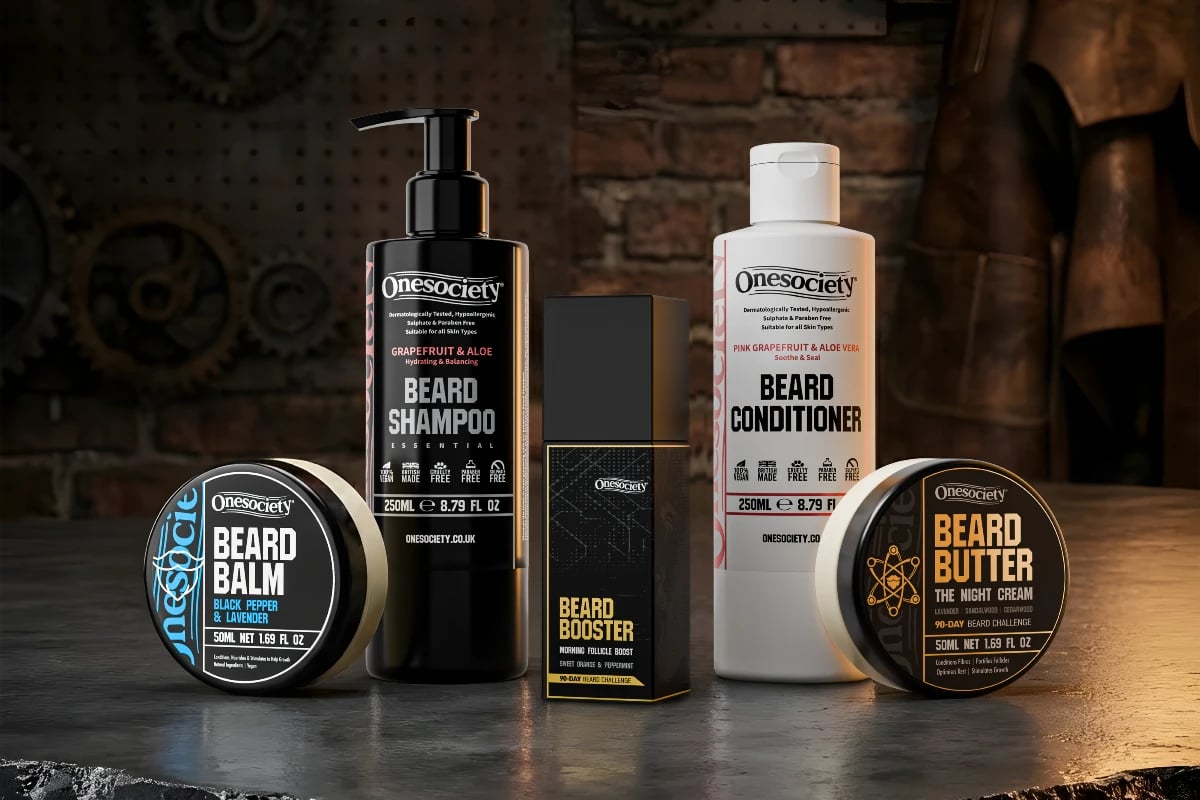
The 90-Day Beard Challenge exemplifies this comprehensive approach. Rather than relying on a single product, it coordinates pH-balanced cleansing with follicle stimulation (Beard Booster increases blood flow through natural vasodilators), overnight repair (Beard Butter delivers fatty acids during your skin's circadian repair phase), and environmental protection (Hydro-Lock Balm creates a breathable barrier against pollutants).
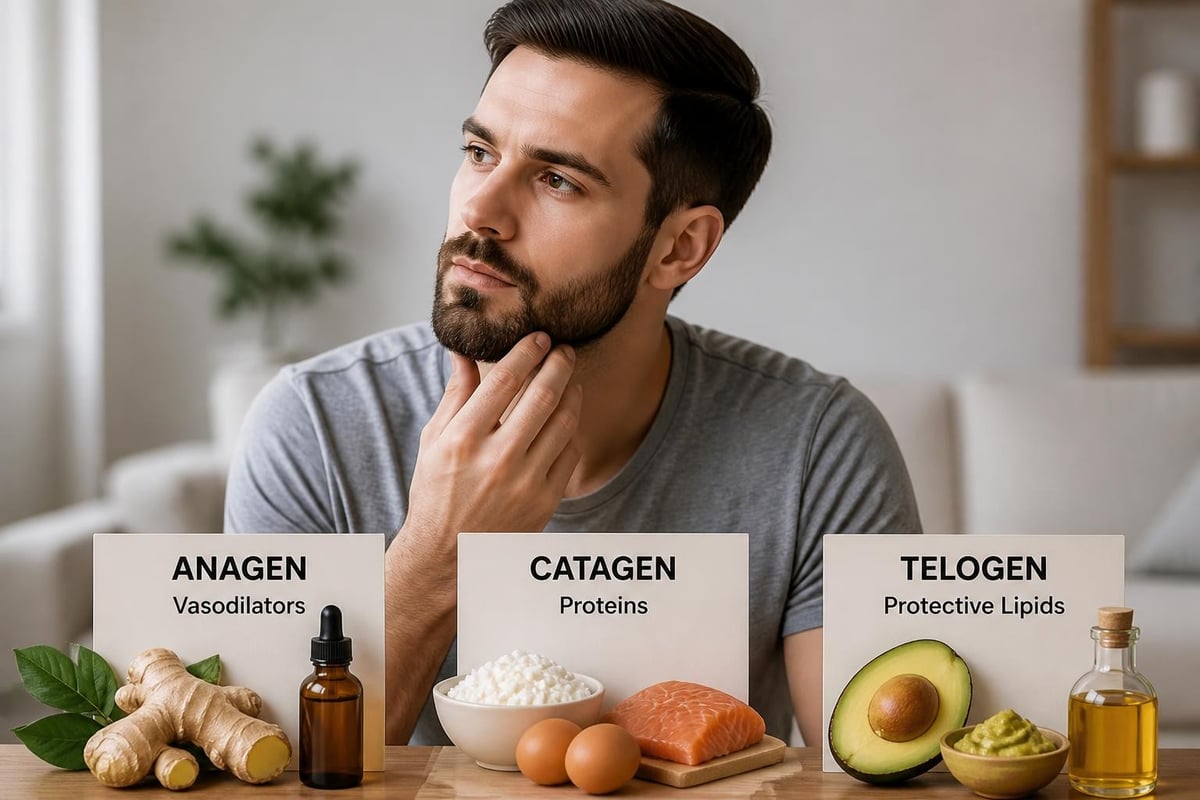
This isn't marketing-it's applied physiology. Your beard grows in cycles: anagen (active growth, 2-6 years), catagen (transition, 2-3 weeks), and telogen (rest, 2-3 months). Supporting each phase requires different biochemical interventions.
Identifying Marketing Nonsense vs. Real Benefits
The beard care industry generates £200+ million annually in the UK alone. This attracts questionable marketing. Here's how to separate evidence from advertising:
Red flags indicating low-quality products:
- Claims of "instant growth" (hair growth cycle operates on months, not minutes)
- Proprietary blends without ingredient disclosure (impossible to verify safety or efficacy)
- Synthetic dyes (serve zero functional purpose in a rinse-off product)
- Parabens as primary preservatives (effective but unnecessary given natural alternatives)
Green flags indicating quality formulations:
- INCI (International Nomenclature of Cosmetic Ingredients) listing in descending concentration order
- pH clearly stated (ideally 4.7-5.5)
- Natural preservative systems (e.g., leuconostoc/radish root ferment, rosemary extract)
- Clinical studies referenced (even if conducted by the manufacturer)
Understanding what differentiates quality products helps you evaluate claims critically. Look for explanations of mechanism, not just promises of results.
Complementary Products That Enhance Shampoo Performance
A top rated beard shampoo works synergistically with other products in your routine. Understanding these interactions maximises each product's effectiveness.
Conditioners and Their Cationic Chemistry
After shampooing, your beard hair carries a slight negative charge. Conditioners contain cationic (positively charged) quaternary ammonium compounds that neutralise this charge, smoothing cuticles and reducing static.
Key conditioning ingredients:
- Behentrimonium methosulfate: Conditions without coating, allows beard to move naturally
- Cetyl alcohol: Fatty alcohol that softens without greasiness
- Panthenol (pro-vitamin B5): Penetrates hair shaft, increases diameter by 10-15%
Oils: Timing Matters
Apply beard growth oil to damp (not wet) beard hair. Water molecules penetrating the cortex during washing create space. Applying oil whilst hair retains 30-40% moisture traps hydration inside the shaft.
This explains why "beard feels dry after washing" complaints often stem from application timing, not product quality.
The 2026 Formulation Trends
Current top rated beard shampoo development focuses on three innovations:
- Prebiotic complexes: Alpha-glucan oligosaccharide feeds beneficial skin bacteria, strengthening the microbiome barrier
- Biomimetic peptides: Laboratory-synthesised chains that replicate growth factors naturally present in young skin
- Fermented botanicals: Lactobacillus fermentation breaks plant compounds into smaller, more bioavailable molecules
Recent professional evaluations note that fermented ingredients show enhanced penetration and reduced allergic response compared to standard extracts.
Hard Water: The Performance Destroyer
Even the top rated beard shampoo struggles in hard water. Calcium and magnesium ions bind with surfactants, reducing their cleaning ability and leaving mineral deposits on hair.
Solutions for hard water areas:
| Approach | Mechanism | Effectiveness |
|---|---|---|
| Chelating shampoo | EDTA binds minerals before they reach hair | High |
| Shower filter | Ion exchange removes minerals from water | Very high |
| Apple cider vinegar rinse | Acetic acid dissolves mineral deposits | Moderate |
| Distilled water final rinse | No minerals present to deposit | High |
Check your water hardness online using your postcode. Anything above 200mg/L calcium carbonate requires mitigation strategies.
Seasonal Adjustments to Your Routine
Your skin's sebum production varies with temperature and humidity. This affects how frequently you need to use even the top rated beard shampoo.
Winter (low humidity, indoor heating):
- Reduce washing frequency by one day
- Increase humectant-rich products (glycerin, hyaluronic acid)
- Consider adding facial oil beneath beard balm
Summer (high humidity, increased sweating):
- May require additional mid-week rinse
- Lighter oils (jojoba, argan) instead of butters
- Ensure complete drying to prevent fungal growth
The Conditioner Debate
Some experts argue that proper beard grooming requires separate conditioning. Others claim quality shampoos provide sufficient treatment.
The truth depends on beard length and texture. Beards exceeding 5cm benefit from dedicated conditioning because surfactants-even gentle ones-remove some protective coating. Shorter beards typically receive adequate hydration from quality shampoo alone, especially when followed by beard oil application.
Coarse, curly beard types almost always benefit from conditioning. The elliptical shape of curly hair creates more cuticle overlap, requiring additional smoothing agents.
Ingredient Concentration: Why It Matters More Than Presence
Marketing emphasises ingredient inclusion: "Contains argan oil!" But concentration determines effectiveness. Argan oil listed as the 15th ingredient in a 20-component formula contributes negligible benefit.
How to read ingredient lists strategically:
- First five ingredients constitute 70-90% of formulation
- Ingredients below 1% appear in any order after those above 1%
- Preservatives typically appear last (usually under 1%)
A top rated beard shampoo lists functional ingredients (oils, proteins, botanical extracts) in the first half of its INCI list, not buried at the end.
The Cost-Effectiveness Calculation
Premium beard shampoos cost £12-25 per 100ml. Regular shampoo averages £2-4. Is the 6x price premium justified?
Consider concentration and dilution. Quality beard formulations require less product per wash-typically 30-40% less than conventional shampoos due to superior surfactant efficiency. A 100ml bottle lasting 10-12 weeks becomes cost-competitive with cheaper alternatives used more liberally.
Factor in reduced need for leave-in products. When your cleanser preserves natural oils effectively, you need less supplemental beard oil or balm. The system cost matters more than individual product price.
Testing Products Systematically
Evaluating whether a new top rated beard shampoo works for your specific beard requires controlled testing:
- Baseline week: Document current beard texture, shine, manageability (even photograph for objective comparison)
- Single variable change: Introduce new shampoo whilst maintaining all other products constant
- 14-day minimum trial: Sebaceous glands require two weeks to adjust to new cleansing frequency/chemistry
- Specific metrics: Track dryness, tangling, skin irritation, scent persistence
Many people abandon effective products prematurely, judging performance after 2-3 uses. Your skin's adaptation period requires patience.
The Role of Technique Over Product
Even the top rated beard shampoo fails when applied incorrectly. Water temperature, massage duration, and rinse thoroughness impact results as significantly as formulation.
Critical technique elements:
- Water temperature: 30-35°C opens cuticles without damaging skin barrier
- Massage pattern: Circular motions from skin outward, not scrubbing laterally
- Distribution: Every region receives equal product contact time
- Rinse angle: Downward with beard growth pattern to encourage cuticle closure
Professional grooming standards emphasise technique as the foundation that allows quality products to perform optimally.
Building Your Personal Formula
The biochemistry varies between individuals. Sebum production rates, follicle density, hair porosity, and skin sensitivity create unique requirements. The truly top rated beard shampoo for you might differ from published recommendations.
Self-assessment framework:
- Determine your Fitzpatrick skin type (I-VI scale affects sebum production)
- Assess beard porosity (spray water, observe absorption rate)
- Identify primary concern (dryness, oiliness, irritation, growth)
- Match these factors to ingredient profiles
This systematic approach beats random product experimentation and wasted money on unsuitable formulations.
Selecting a top rated beard shampoo requires understanding the biochemistry beneath marketing claims-pH balance, surfactant types, and ingredient concentrations that actually affect your facial hair and skin. When you match formulation science to your specific beard characteristics and apply products with proper technique, you transform grooming from guesswork into predictable results. Onesociety develops pH-balanced, naturally-derived formulations engineered for this exact purpose, combining cleansing efficacy with follicle support through ingredients selected for their documented biological activity rather than marketing appeal.