

Your beard trimmer has started pulling hair instead of cutting cleanly. The blades feel rough, the motor sounds strained, and your once-smooth grooming routine has become a frustrating ordeal. You've invested in quality grooming tools, yet they're failing when you need them most. The culprit isn't a faulty device-it's neglected maintenance. Without proper lubrication, metal blades deteriorate rapidly, creating friction that damages both the tool and your skin. The solution lies in a simple yet scientifically crucial practice: using hair trimmer oil to maintain peak performance and extend your device's lifespan.
Why Your Trimmer Needs Regular Lubrication
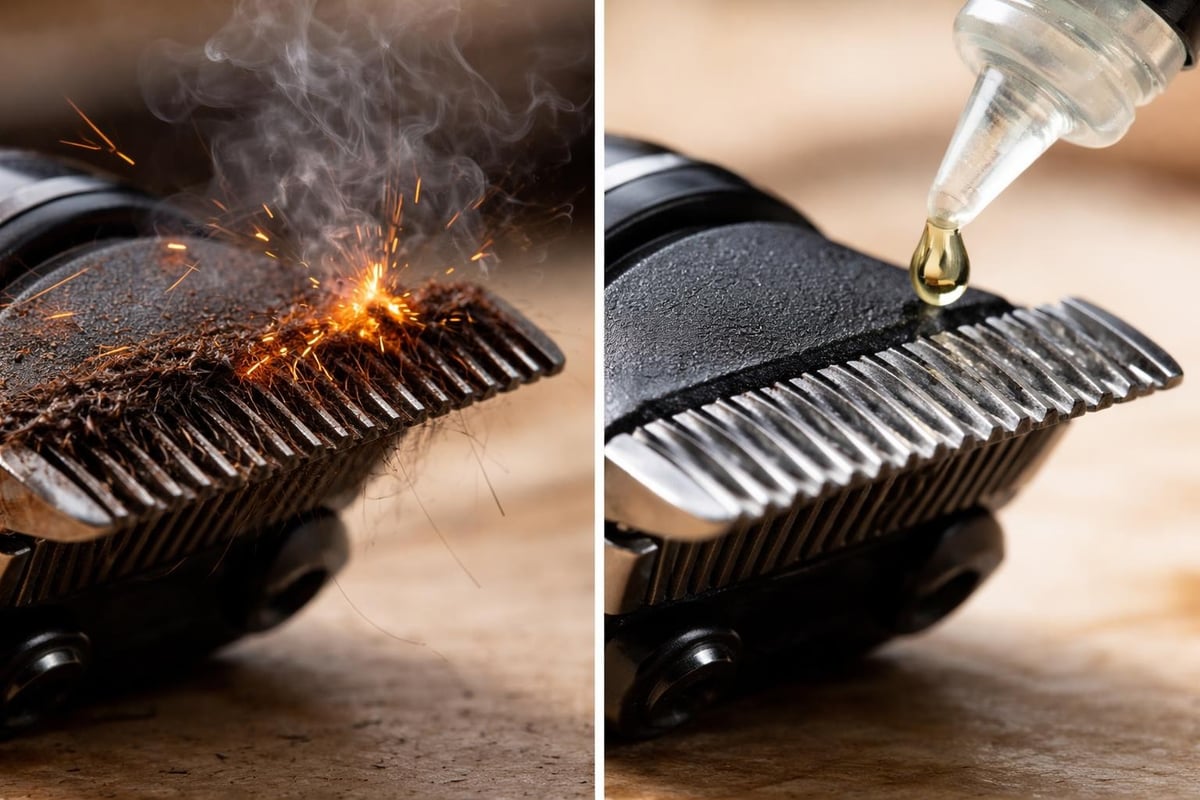
Metal blades moving at high speeds generate significant friction. This mechanical stress causes three specific problems that degrade performance.
Friction increases heat production. When unlubricated metal surfaces slide against each other thousands of times per minute, molecular bonds resist movement, converting kinetic energy into thermal energy. This heat weakens the temper of steel blades, making them brittle and prone to dulling. Wahl's maintenance experts emphasise that regular oiling after each use prevents this heat build-up, maintaining the metallurgical integrity of cutting edges.
Oxidation attacks exposed metal. Hair trimmer oil creates a hydrophobic barrier between blade surfaces and moisture in the air. Without this protective film, oxygen molecules react with iron atoms in steel, forming iron oxide-rust. This chemical process isn't merely cosmetic; rust particles create rough surfaces that catch and pull hair rather than cutting it cleanly.
The Science Behind Blade Degradation
When blades lack proper lubrication, microscopic irregularities develop on cutting surfaces through a process called adhesive wear. As metal surfaces contact each other under pressure, atoms at the interface can bond momentarily before being torn away. This creates micro-pits and peaks that gradually roughen the blade edge.
Here's what happens at different stages of neglect:
| Timeline | Physical Change | Performance Impact |
|---|---|---|
| After 1 trim | Micro-debris accumulation | Slight resistance increase |
| After 5 trims | Surface oxidation begins | Noticeable pulling sensation |
| After 10 trims | Visible corrosion spots | Uneven cutting, motor strain |
| After 20 trims | Significant blade dulling | Device may overheat or fail |
Choosing the Right Lubricant for Your Blades
Not all oils serve the same purpose. Hair trimmer oil differs fundamentally from household lubricants in viscosity and composition.
Viscosity determines effectiveness. Trimmer blades require low-viscosity oils (typically 10-15 cSt at 40°C) that flow readily into tight tolerances between moving parts. Standard motor oils or 3-in-1 household lubricants are too thick, creating drag that strains motors. Conversely, very thin oils like WD-40 evaporate rapidly and provide insufficient lasting protection. Proper trimmer-specific oils maintain consistent film thickness across operating temperatures.
Mineral vs. synthetic formulations. Mineral-based hair trimmer oil derives from refined petroleum, offering excellent metal protection at economical prices. Synthetic alternatives provide superior thermal stability and oxidation resistance, though at higher cost. For most users, mineral-based formulations deliver adequate performance when applied regularly.
What to Avoid in Blade Maintenance
These common substitutes damage rather than protect your trimmer:
- Cooking oils: Break down under heat, becoming sticky residue that attracts dirt
- Baby oil: Contains additives that gum up precision mechanisms
- Hair styling products: Leave waxy deposits that clog blade teeth
- General lubricants: Wrong viscosity causes motor strain or inadequate protection
The molecular structure matters. Grooming-specific oils contain additives that prevent oxidation whilst maintaining fluidity across temperature ranges your device experiences during operation.
Proper Application Technique for Maximum Protection
Knowing when and how to apply hair trimmer oil transforms tool longevity. The process takes less than two minutes but delivers months of improved performance.
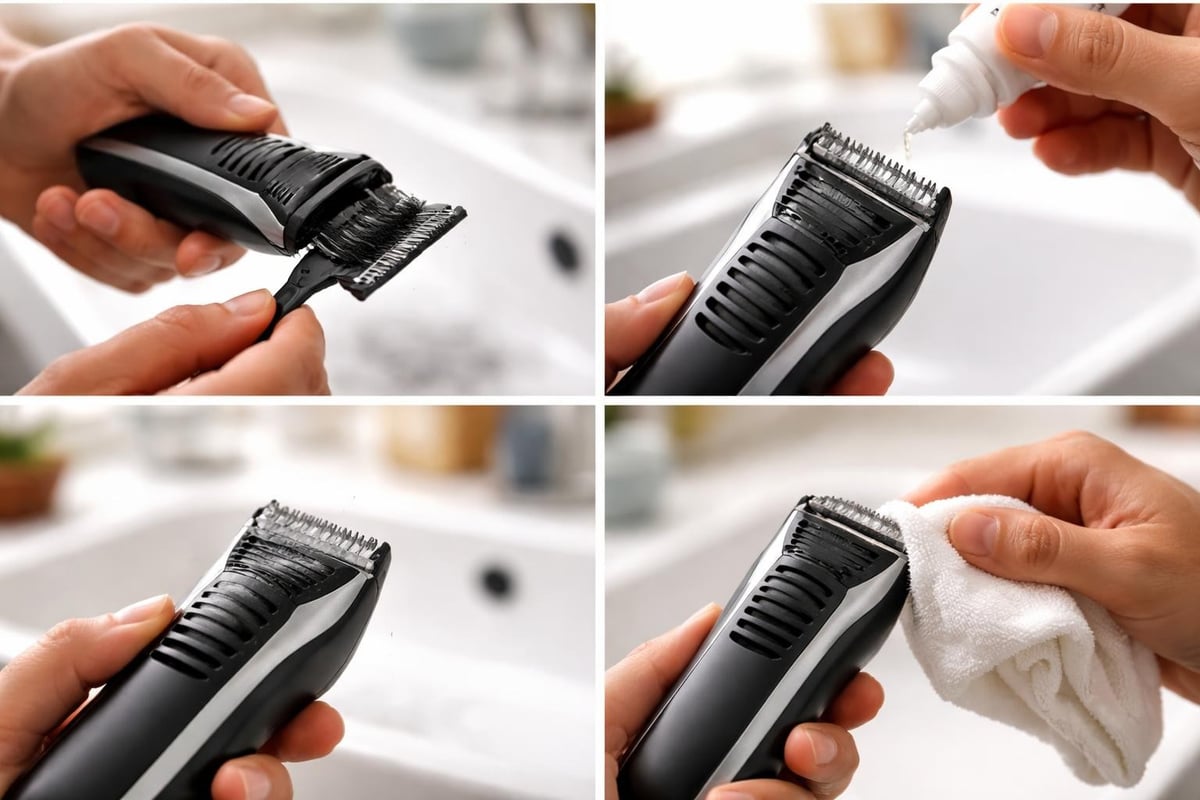
Pre-application preparation. Remove loose hair clippings with the brush included with your trimmer. This mechanical cleaning exposes blade surfaces so oil can reach metal rather than coating debris. For deeper cleaning, follow manufacturer guidelines for safe blade removal and washing.
Step-by-Step Lubrication Process
- Position the trimmer with blades facing upward at a slight angle
- Apply 2-3 drops across the blade width-left edge, centre, right edge
- Run the trimmer for 10-15 seconds to distribute oil throughout the mechanism
- Wipe excess oil with a clean cloth to prevent drips during storage
The running step is critical. Oil doesn't simply sit on surfaces; motor vibration and blade movement pump it into microscopic gaps where metal contacts metal. This creates the protective film that prevents wear. Just as professional barbers maintain their tools through systematic care, your home routine should follow this disciplined approach.
Application frequency. After every significant use, apply hair trimmer oil. If you trim weekly, oil weekly. Daily users should lubricate daily. This isn't excessive-it's preventative maintenance that costs pennies per application whilst preventing hundred-pound replacement costs.
The Hidden Costs of Neglected Maintenance
Skipping lubrication seems inconsequential until you calculate the actual financial and practical impact. Let's examine what delayed maintenance truly costs.
Premature blade replacement. Quality replacement blades cost £15-40. With proper oiling, blades maintain cutting efficiency for 2-3 years. Without it, you'll replace them annually or more frequently. That's £60-120 wasted over a trimmer's typical lifespan simply from preventable wear.
Motor strain and device failure. When blades bind from inadequate lubrication, motors work harder to maintain speed. This electrical overcurrent generates excess heat in motor windings, degrading insulation and shortening component life. Men's Health grooming experts note that motor failure often traces back to blade friction rather than inherent quality issues.
Comparing Maintenance Approaches
| Maintenance Level | Annual Oil Cost | Blade Life | Device Life | 5-Year Total Cost |
|---|---|---|---|---|
| Proper (after each use) | £8 | 3 years | 5+ years | £48 |
| Occasional (monthly) | £3 | 18 months | 3 years | £115 |
| Neglected (never) | £0 | 8 months | 18 months | £220+ |
The maths reveals an uncomfortable truth: attempting to save £8 annually costs you £172 over five years through accelerated replacements. This doesn't account for the frustration of poor performance or emergency purchases when devices fail before important events.
Integrating Blade Care Into Your Grooming Routine
Successful maintenance requires systems, not intentions. Build hair trimmer oil application into existing habits for consistent results.
Link to established routines. If you trim after showering, keep oil in the bathroom cabinet next to your trimmer. The visual proximity creates a mental trigger: trim → oil → store. This context-dependent memory works more reliably than generic reminders to "maintain tools regularly."
Create a grooming station. Designate a specific drawer or shelf for all grooming products, placing oil beside your trimmer rather than in separate storage. Physical proximity reduces friction in your maintenance workflow. When oiling requires searching through cabinets, you'll skip it. When the bottle sits next to the trimmer, you'll use it.
Monthly Deep Maintenance Checklist
Beyond routine oiling, perform these tasks monthly:
- Blade alignment check: Ensure teeth mesh properly without gaps
- Housing inspection: Look for crack or damage that could expose mechanisms
- Cord examination: Check for fraying or exposed wires (corded models)
- Deep clean: Remove blades for thorough cleaning and complete re-lubrication
This comprehensive approach mirrors how professional grooming experts care for tools, treating maintenance as an investment rather than a chore. The same philosophy that drives science-backed beard care applies to tool longevity-consistent, informed actions compound into significant results.
Understanding Oil Chemistry and Performance
The composition of hair trimmer oil determines how effectively it protects your blades. Understanding basic chemistry helps you evaluate product quality.
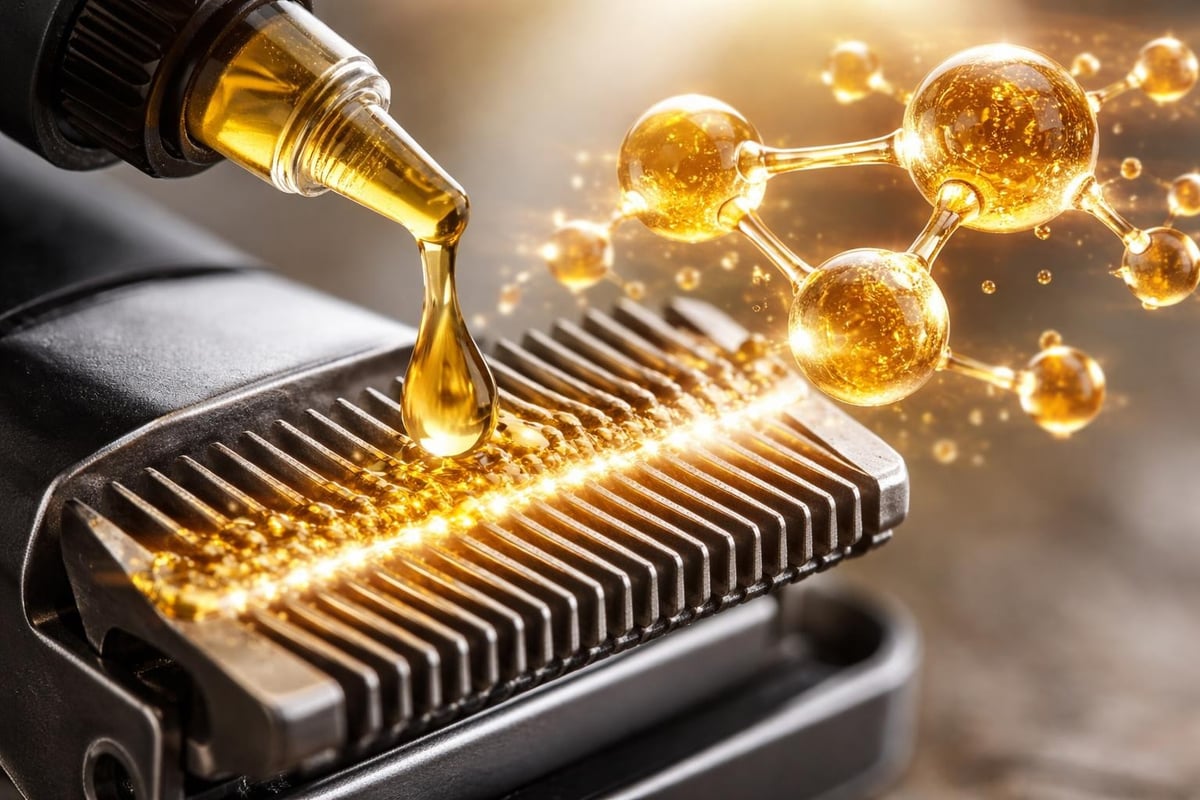
Base oil molecular structure. Trimmer oils use paraffinic or naphthenic base stocks. Paraffinic oils have straight-chain hydrocarbon molecules that provide excellent oxidation stability-they resist breaking down when exposed to air and heat. Naphthenic oils feature ring-structured molecules that maintain fluidity at lower temperatures but oxidise more readily. Most quality formulations use paraffinic bases for superior longevity.
Anti-oxidant additives. Modern hair trimmer oil contains phenolic or aminic compounds that interrupt the oxidation chain reaction. When oxygen attacks base oil molecules, these additives sacrifice themselves, preventing the formation of sludge and varnish. This chemistry extends both the oil's effective life and the protection it offers your blades.
Temperature Performance Characteristics
Grooming tools experience temperature variations during operation and storage. Quality oils maintain protective properties across these ranges:
- Pour point: -10°C to -20°C (remains fluid in cold storage)
- Flash point: 180°C+ (won't vaporise during extended use)
- Operating range: 0°C to 80°C (maintains film strength at typical temperatures)
When you power on a trimmer that's been stored in a cold bathroom, low-quality oil may have thickened, providing inadequate initial lubrication. This momentary metal-on-metal contact accelerates wear. Premium formulations flow immediately, protecting from the first revolution.
Troubleshooting Common Blade Issues
Even with regular oiling, specific problems may emerge. Identifying root causes enables targeted solutions rather than wasteful replacements.
Blades pull or catch hair. This indicates dull edges or misalignment. First, verify you're using appropriate hair trimmer oil-incorrect lubricants can actually dull blades through chemical interaction. Second, check blade tension. Most trimmers allow adjustment; excessive pressure accelerates dulling whilst insufficient pressure causes incomplete cutting.
Unusual noise during operation. A high-pitched whine suggests inadequate lubrication reaching internal components. Apply oil more generously and run the device for 30 seconds. If noise persists, internal bearings may require professional service. A grinding sound indicates severe wear or debris lodged between blades-immediate shutdown prevents further damage.
Diagnostic Decision Tree
When performance degrades, follow this sequence:
- Clean thoroughly and apply fresh oil → Problem resolved = maintenance issue
- Check blade alignment per manufacturer specs → Problem resolved = adjustment needed
- Inspect for damage (chips, bends, rust) → Damage present = blade replacement required
- Test with different oil → Problem resolved = incompatible lubricant
- Consult manufacturer → None of above work = mechanical failure
This systematic approach prevents spending money on new blades when proper hair trimmer oil application would solve the issue. Professional maintenance guides emphasise diagnosis before replacement, saving both money and functional tools from premature disposal.
The Environmental Impact of Proper Maintenance
Extending tool lifespan through regular oiling delivers environmental benefits beyond personal cost savings. Manufacturing new trimmers requires significant resources and energy.
Raw material extraction. Each trimmer contains steel (mined iron ore), copper (from copper ore), plastic (petroleum-derived), and rare earth elements for motors. Mining and refining these materials consumes energy whilst disturbing ecosystems. A trimmer lasting five years instead of two reduces this environmental burden by 60%.
Electronic waste reduction. UK households discard approximately 1.45 million tonnes of electrical waste annually. Small appliances like trimmers contribute significantly to this stream. When hair trimmer oil maintenance extends device life from 18 months to five years, it prevents two additional units from entering waste streams. Multiply this across millions of users, and the impact becomes substantial.
Sustainable Grooming Practices
Maintenance aligns with broader sustainable living principles:
- Repair over replace: Oiling costs £1.50 annually versus £50-150 for new trimmers
- Resource efficiency: Maximises utility from embodied energy in existing tools
- Reduced packaging: Less frequent purchases mean less cardboard, plastic, foam waste
- Lower carbon footprint: Manufacturing and shipping new devices generates significant emissions
This philosophy extends beyond tools to grooming products themselves. Choosing natural, sustainably sourced ingredients in beard care products demonstrates the same values as maintaining tools properly-both recognise that quality and longevity trump disposability.
Professional vs. Consumer-Grade Oils
Barbershops and salons use professional-grade lubricants whilst consumers typically purchase retail products. Understanding these differences helps you make informed choices.
Purity and consistency. Professional hair trimmer oil undergoes more rigorous quality control. Pharmaceutical-grade mineral oils contain fewer impurities that could leave deposits or accelerate oxidation. This matters for tools running hours daily; home trimmers used weekly tolerate slightly lower purity without issues.
Packaging and delivery systems. Professional products often feature precision applicators that deliver exact amounts without waste. Consumer packaging prioritises shelf appeal over functionality. However, a simple dropper bottle provides adequate control for home use-you're paying for product quality, not elaborate dispensers.
Cost-Benefit Analysis
| Product Type | Price per 100ml | Expected Life (weekly use) | Cost per Month | Key Benefits |
|---|---|---|---|---|
| Professional | £12-18 | 18-24 months | £0.60-0.75 | Highest purity, consistent performance |
| Consumer premium | £6-10 | 12-15 months | £0.45-0.65 | Excellent value, wide availability |
| Consumer standard | £3-5 | 8-10 months | £0.35-0.50 | Adequate protection, economical |
For most home users, premium consumer-grade hair trimmer oil delivers optimal value. You gain most professional benefits without paying for bulk packaging or commercial-grade applicators. Just as natural beard oils outperform synthetic alternatives through superior ingredient quality, investing in better blade oil pays dividends through extended tool life.
Beyond Basic Lubrication: Advanced Blade Care
Once you've mastered routine oiling, advanced techniques further optimise performance and longevity.
Ultrasonic cleaning. Professional barbers use ultrasonic cleaners that vibrate at 40,000 Hz, creating microscopic bubbles that dislodge embedded debris from blade teeth. Home ultrasonic units cost £20-40 and remove buildup that manual cleaning misses. After ultrasonic cleaning, apply hair trimmer oil immediately-completely clean metal oxidises rapidly without protection.
Blade alignment optimisation. Factory settings provide adequate cutting, but fine-tuning alignment can enhance performance. Place a sheet of paper between blades and tighten adjustment screws until you feel slight resistance when moving the paper. This zero-clearance setting maximises cutting efficiency whilst preventing blade collision.
Storage Practices That Preserve Blades
How you store your trimmer between uses affects blade condition:
- Upright position: Prevents oil pooling on one side, ensuring even distribution
- Blade guard: Protects edges from accidental impacts that create microscopic damage
- Climate control: Avoid bathroom storage where humidity accelerates oxidation
- Post-use oiling: Apply lubricant after cleaning, not before next use-fresh oil protects better during storage
These practices cost nothing but deliver measurable improvements. A trimmer stored properly with fresh hair trimmer oil maintains like-new performance far longer than one tossed in a drawer after use.
The Economics of DIY Maintenance
Calculating true costs reveals how maintenance generates financial returns that compound over time.
Initial investment: Quality hair trimmer oil costs £6-10 for a bottle providing 12-18 months of regular use. Add a cleaning brush (often included with trimmers) and occasional replacement blades (£20-30 every 2-3 years with proper care).
Avoided expenses: Without maintenance, expect to replace your trimmer every 18-24 months at £50-150 each. Proper care extends this to 5-7 years, eliminating 2-3 replacement purchases. That's £100-450 saved.
Ten-Year Financial Projection
Comparing maintenance versus replacement approaches over a decade:
Maintained trimmer pathway:
- Initial trimmer: £100
- Oil (10 years): £50
- Replacement blades (2 sets): £50
- Total: £200
Replacement pathway:
- 5 trimmers at £100 each: £500
- No maintenance costs: £0
- Total: £500
The £300 difference finances other grooming investments or simply stays in your pocket. This calculation assumes mid-range trimmers; premium models amplify savings further.
Integrating Blade Care With Beard Maintenance
Your grooming routine encompasses both the tools you use and the facial hair you maintain. Coordinating these elements creates synergy.
Tool performance affects grooming outcomes. Dull, poorly maintained trimmer blades pull hair, causing follicle irritation that manifests as redness and ingrown hairs. This mechanical damage creates inflammation-the opposite of the anti-inflammatory benefits you seek from science-backed beard products. Sharp, well-oiled blades cut cleanly, minimising skin stress.
Complementary maintenance schedules. If you oil your beard three times weekly and trim once weekly, incorporate blade oiling into the same routine. This mental linking-"I maintain both my beard and my tools"-builds consistent habits. The discipline that drives 90-day transformation challenges applies equally to tool care.
Creating a Comprehensive Grooming Protocol
Design your routine to address all maintenance dimensions:
Weekly tasks:
- Trim beard to desired length
- Clean and oil trimmer blades immediately after use
- Apply beard oil or balm
- Assess skin condition for irritation
Monthly tasks:
- Deep clean trimmer (blade removal and thorough washing)
- Examine blades for wear or damage
- Evaluate beard health and adjust products if needed
- Review and restock supplies (hair trimmer oil, beard products, etc.)
This systematic approach transforms grooming from random acts into a purposeful routine. Just as natural ingredients in premium beard care deliver consistent results through regular application, tool maintenance compounds into significant longevity.
Common Myths About Trimmer Maintenance
Misconceptions about hair trimmer oil and blade care persist despite evidence to the contrary. Let's address the most prevalent myths.
Myth: "Oiling makes blades greasy and messy." Reality: Properly applied oil distributes throughout the mechanism, leaving only a thin protective film. Excess wiped away after running the device prevents any greasiness. The issue arises from over-application, not the practice itself.
Myth: "New trimmers don't need maintenance for months." Reality: Blades begin oxidising immediately upon air exposure. Manufacturers apply temporary protective coatings that dissipate after several uses. Maintenance guides recommend oiling after the first use to establish protection before factory coating degrades.
Myth: "Any oil works as long as it lubricates." Reality: Viscosity, oxidation stability, and additive packages matter enormously. Inappropriate oils create problems ranging from motor strain to accelerated corrosion. Hair trimmer oil formulations address specific engineering requirements of high-speed cutting tools.
The Truth About Blade Sharpness
Many users believe oiling somehow sharpens dull blades. This misunderstands the mechanical reality. Hair trimmer oil reduces friction that accelerates dulling, effectively preserving sharpness longer. However, it doesn't restore edges worn through use.
Think of it as preventative versus corrective action. Regular lubrication prevents the wear that necessitates sharpening or replacement. Once blades dull significantly, professional sharpening or replacement becomes necessary regardless of subsequent oiling. This distinction matters for setting realistic expectations about maintenance outcomes.
Selecting Quality Products for Long-Term Success
Not all hair trimmer oil delivers equal performance. Identifying quality products ensures your maintenance efforts achieve intended results.
Read ingredient lists. Look for "mineral oil" or "white mineral oil" as primary ingredients. Avoid products listing vegetable oils, fragrances, or numerous unpronounceable additives-these signal formulations designed for marketing appeal rather than functional performance.
Verify temperature specifications. Quality products list operating temperature ranges. If this information isn't available, the manufacturer hasn't engineered the product for specific performance parameters-a red flag for critical applications.
Consider manufacturer reputation. Companies specialising in grooming tools understand lubrication requirements better than generic brands. Trusted manufacturers stake their reputation on product performance, whereas unknown brands risk nothing with substandard formulations.
Red Flags in Product Selection
Avoid hair trimmer oil exhibiting these warning signs:
- Vague marketing claims ("professional strength" without specifications)
- Extreme low pricing (quality base stocks and additives cost money)
- Multi-purpose positioning ("also works on scissors, sewing machines, and door hinges")
- Absence of safety data (legitimate products provide proper labelling)
Premium pricing doesn't guarantee quality, but rock-bottom prices virtually ensure compromised formulations. The sweet spot sits in the mid-range-products priced competitively whilst maintaining ingredient quality and performance standards.
Maintaining your grooming tools through regular application of hair trimmer oil transforms a mundane task into a strategic investment that delivers years of reliable performance whilst saving hundreds of pounds in replacement costs. The same science-first philosophy that makes natural ingredients superior in beard care proves equally valid in tool maintenance-understanding the "why" behind practices ensures consistent execution and optimal results. Whether you're embarking on a 90-day beard transformation or simply maintaining your daily grooming routine, Onesociety provides the natural, research-backed products that complement properly maintained tools for comprehensive grooming excellence.