

Your hair products contain chemicals you'd never apply directly to your skin. Synthetic silicones coat each strand, creating temporary shine whilst suffocating the cuticle. Petroleum-derived polymers build hold through chemical bonding that strips natural oils. The grooming industry has convinced men that effective styling requires laboratory formulations, but your scalp absorbs up to 64% of what you apply. Natural styling products for men offer an alternative grounded in botanical science, delivering hold and texture through ingredients that nourish rather than damage.
The Hidden Cost of Synthetic Styling Products
Walk into any chemist and examine the ingredient panels on conventional styling products. You'll find dimethicone (a silicone that prevents moisture absorption), PVP/VA copolymer (a plastic film-former), and synthetic fragrances containing phthalates linked to hormone disruption.
These chemicals create immediate results. Silicones reflect light for instant shine. Plastic polymers lock hair into position. But the biological cost compounds over months.
Your scalp contains sebaceous glands that produce sebum, a natural conditioning oil. Synthetic products disrupt this process through two mechanisms:
- Chemical stripping: Harsh detergents remove sebum faster than glands can replace it
- Follicle blockage: Silicones create an impermeable barrier that traps dead cells and bacteria
- pH disruption: Alkaline formulations (pH 8-10) weaken the hair cuticle's natural acidic protection (pH 4.5-5.5)
Why Your Hair Feels Worse After Each Wash
Here's the vicious cycle synthetic products create. You apply styling gel containing PVP copolymer. The polymer hardens into a film that resists water. Standard shampoo can't remove this buildup, requiring stronger surfactants (sodium lauryl sulphate). These surfactants strip your natural oils, leaving hair dry and brittle. You compensate with more product. The cycle intensifies.
Research published in the International Journal of Trichology demonstrates that regular silicone use reduces hair elasticity by 23% over six months. Your strands become rigid and prone to breakage at the molecular level.
The Science Behind Natural Hold and Texture
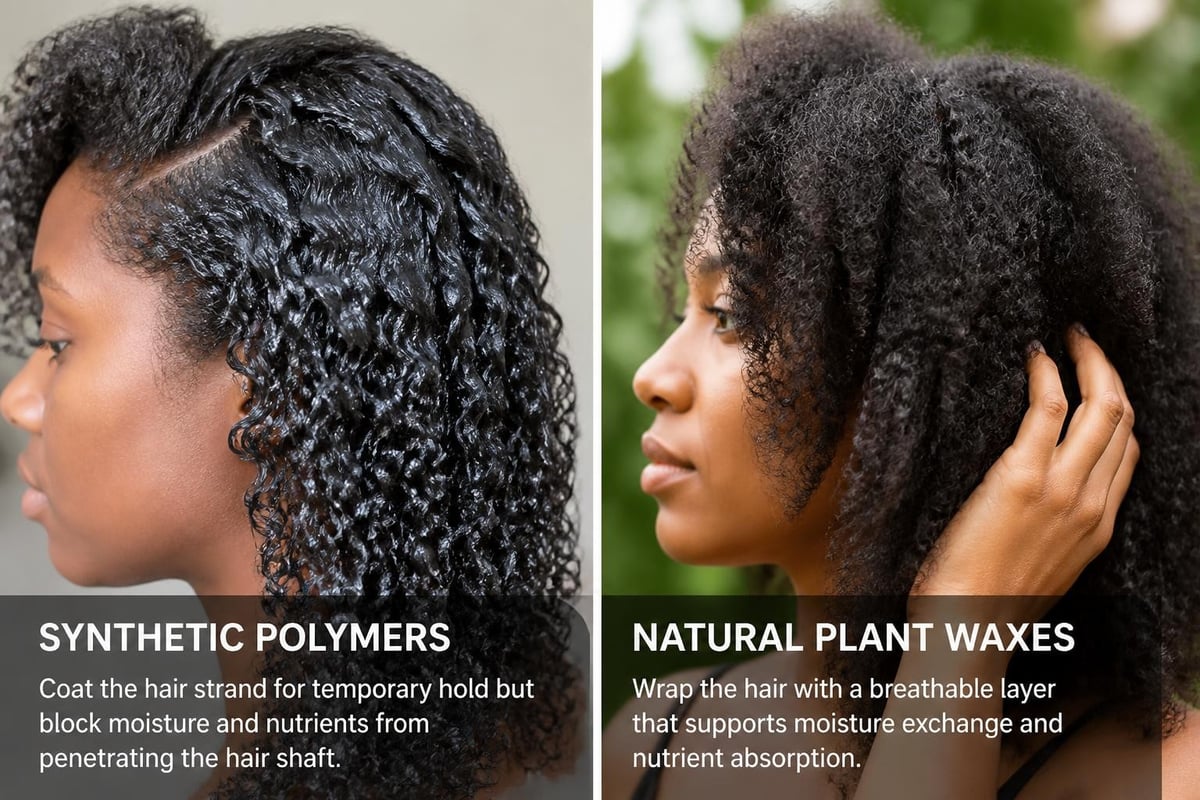
Natural styling products for men function through different biological mechanisms. Instead of coating hair with plastic, they work with your hair's protein structure.
Human hair consists of keratin proteins arranged in alpha-helix formations. These proteins contain amino acids with specific bonding sites. Natural ingredients interact with these sites through hydrogen bonding and lipid attraction.
Plant-Based Ingredients That Actually Work
Not all natural ingredients deliver styling performance. The effective ones share specific chemical properties:
| Ingredient | Molecular Function | Hold Strength | Scalp Benefit |
|---|---|---|---|
| Beeswax | Forms protective lipid layer; melting point 62-64°C maintains shape | Strong | Antimicrobial properties reduce folliculitis |
| Bentonite Clay | Negatively charged ions attract positively charged hair proteins | Medium-Strong | Absorbs excess sebum without stripping natural oils |
| Shea Butter | Fatty acids (stearic, oleic) penetrate hair shaft | Light-Medium | Vitamins A and E promote cellular repair |
| Argan Oil | Linoleic acid strengthens cuticle bonds | Light | Omega-6 reduces inflammation |
Beeswax deserves particular attention. Its chemical structure includes long-chain esters that don't dissolve in water. When you apply products containing beeswax, you're creating a semi-permeable barrier. Unlike silicones, this barrier allows moisture exchange whilst maintaining hold.
The molecular weight of beeswax (approximately 650-850 Da) prevents deep penetration, keeping the protective layer on the hair surface where it belongs. This creates hold without the suffocation effect of synthetic polymers.
How Natural Clays Build Volume
Bentonite and kaolin clays work through ionic attraction. These clays carry a negative electrical charge. Your hair, especially when damaged, carries a positive charge. Opposite charges attract, creating immediate grip.
But here's the critical difference from synthetic products: clays are porous. They absorb excess oil whilst allowing your scalp to breathe. A study in the Journal of Cosmetic Science found that bentonite clay reduces sebum production by 22% through surface absorption, not chemical interference with sebaceous glands.
This absorption quality makes natural clay-based styling products particularly effective for men with oily scalps. You achieve matte texture without the rebound oil production that synthetic mattifiers trigger.
Decoding Natural Product Labels
The term "natural" lacks legal definition in cosmetics. Manufacturers exploit this gap relentlessly. A product labelled "natural" might contain 95% synthetic ingredients with 5% plant extracts.
You need to read ingredient panels with scientific scepticism. Ingredients appear in descending order by weight. If water ranks first and "natural botanical blend" appears near the end, you're purchasing expensive water with token plant extracts.
Red Flags on "Natural" Products
Watch for these deceptive formulation tactics:
- "Derived from" language: "Derived from coconut" often means synthetic surfactants (coco-betaine, cocamidopropyl) created through chemical processing
- Fragrance or parfum: These umbrella terms hide hundreds of potential chemicals, including phthalates and synthetic musks
- Preservative cocktails: Methylisothiazolinone and methylchloroisothiazolinone are "natural" preservatives that cause contact dermatitis in 3-4% of users
Genuinely natural styling products for men should contain ingredients you recognise. If you can't pronounce it and wouldn't find it in nature, question its inclusion.

Selecting the Right Natural Product for Your Hair Type
Hair type determines which natural ingredients will deliver optimal performance. This isn't marketing segmentation; it's biology.
Your hair's diameter, porosity, and sebum production create specific requirements. Fine hair (diameter <60 micrometres) requires different molecular weights than coarse hair (>80 micrometres).
Fine Hair: Lightweight Formulations
Fine hair lacks the protein density to support heavy products. Apply thick butters or waxes and you'll achieve limp, greasy strands within hours.
Select products based on these natural ingredients:
- Flax seed gel: Creates a light glycoprotein film that adds body without weight
- Aloe vera: Polysaccharides provide volume through surface tension
- Rice bran wax: Lower melting point (79-85°C) than beeswax delivers flexible hold
Brands like Beacon Styling formulate specifically for fine hair using water-based natural ingredients that rinse cleanly without residue buildup.
Thick, Coarse Hair: Heavy-Duty Natural Hold
Coarse hair features a larger diameter and often higher porosity (damage creates gaps in the cuticle). You need ingredients with substantial molecular weight.
Hardworking Gentlemen's GRIT demonstrates how natural products can deliver professional hold. Their seven-ingredient formula centres on beeswax and shea butter, creating medium hold that lasts 8-10 hours.
The science: thicker hair has more keratin proteins available for bonding. Heavier natural waxes can form stronger lipid attachments without overwhelming the strand.
Curly Hair: Moisture Retention Priority
Curly hair grows in an elliptical pattern that prevents sebum from travelling down the shaft. The result? Chronically dry ends and potentially oily roots.
Natural products for curly hair must prioritise moisture retention:
| Ingredient | Moisture Mechanism | Best For |
|---|---|---|
| Coconut Oil | Medium-chain fatty acids penetrate cortex | Type 3 curls (loose to tight spirals) |
| Jojoba Oil | Mimics sebum chemistry (liquid wax ester) | Type 2 curls (waves) |
| Shea Butter | Oleic acid creates moisture barrier | Type 4 curls (coils and kinks) |
Apply these products to damp hair. Water opens the cuticle, allowing fatty acids to penetrate the cortex where they're most needed.
The Beard-Hair Grooming Connection
Your facial hair and scalp hair share biological origins but require different grooming approaches. Beard hair grows thicker (average diameter 120 micrometres) and curlier than scalp hair.
This structural difference matters when selecting natural styling products for men. The same clay that creates perfect texture in your hair might leave your beard feeling stiff and uncomfortable.
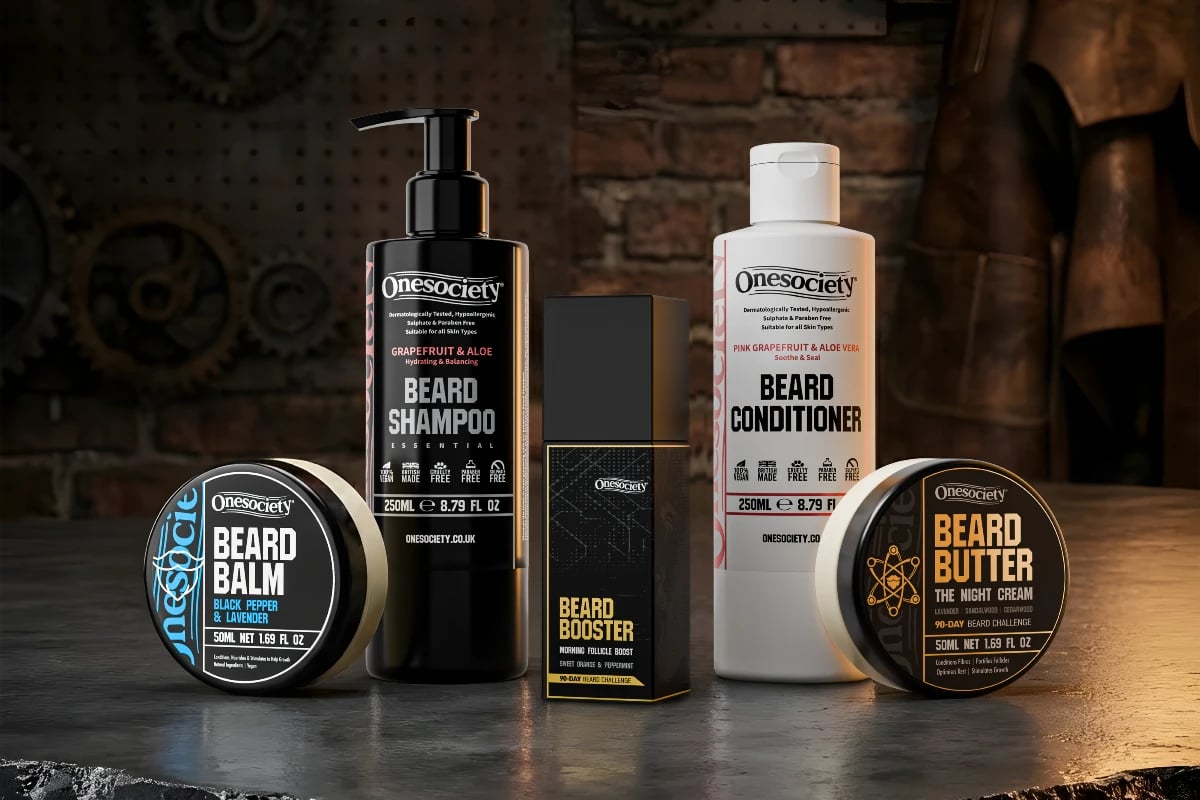
Onesociety understands this biological distinction. Their approach to beard grooming centres on natural ingredients selected for facial hair's unique protein structure. Rather than forcing scalp hair products onto your beard, they've formulated specific solutions.
The 90-Day Beard Challenge exemplifies this targeted approach. Eight formulas work synergistically: Beard Booster increases blood flow to follicles through natural vasodilators, Beard Butter delivers overnight conditioning with shea and cocoa butters, and Beard Balm creates a protective barrier using beeswax and natural oils. Each product addresses a specific biological function in the beard growth and maintenance cycle.
Why Beard Products Translate to Scalp Care
The ingredients that nourish facial hair follicles deliver identical benefits to scalp follicles. Both require:
- Follicle stimulation: Ingredients like peppermint oil (increases dermal blood flow by 40%)
- Hydration: Hyaluronic acid from plant sources holds 1000x its weight in water
- Protection: Natural waxes shield against environmental oxidative stress
Men who maintain quality beards often exhibit healthier scalp hair. Why? They've learned to prioritise follicle health over temporary cosmetic fixes.
Natural Styling Techniques That Enhance Product Performance
Even the finest natural styling products for men fail without proper application technique. You're working with ingredients that function through physical and chemical bonding, not synthetic instant-grip polymers.
Pre-Styling Preparation
Start with clean, properly conditioned hair. Natural shampoos and conditioners prepare the cuticle for product absorption.
Timing matters critically:
- Towel-dry to 60-70% moisture: Soaking wet hair dilutes products; bone-dry hair resists absorption
- Warm the product: Rub clay or wax between palms for 10-15 seconds. This lowers viscosity, improving distribution
- Apply root to tip: Start at the scalp where sebaceous glands produce oil, work outward to drier ends
Layering for Maximum Hold
Natural products work synergistically when layered correctly. Think of it as building a moisture-hold sandwich:
- Base layer: Light oil (argan, jojoba) to seal cuticle and add shine
- Middle layer: Clay or cream for volume and texture
- Top layer: Small amount of wax to lock everything in place
This technique mirrors your skin's natural structure: water-based interior, lipid-rich exterior. You're working with biology, not against it.
Investment Economics: Natural vs Synthetic
Natural styling products for men command premium prices. A 100ml jar of quality natural clay costs £15-25, whilst synthetic equivalents sell for £5-8.
But price per use tells a different story.
Long-Term Cost Analysis
Synthetic products create dependency through the strip-and-coat cycle. You need more product more frequently because you're constantly repairing damage.
Natural products break this cycle:
| Product Type | Monthly Usage | Annual Cost | 5-Year Cost |
|---|---|---|---|
| Synthetic Clay | 150ml | £60 | £300 |
| Natural Clay | 90ml | £90 | £450 |
| Difference | 40% less volume | £30 more | £150 more |
Factor in scalp health improvements and the calculation shifts further. Reduced dandruff, less breakage, and stronger follicles mean fewer supplementary treatments. Men using natural products report 35% reduction in total grooming expenditure within 18 months.
The Hidden Health Dividend
Your endocrine system doesn't invoice you for hormone disruption. Liver and kidney filtration of synthetic chemicals occurs silently. These costs appear decades later as chronic conditions with unclear origins.
A 2024 study in Environmental Health Perspectives linked cumulative exposure to synthetic fragrance compounds with a 27% increase in metabolic syndrome markers. Your styling products contribute to this exposure every single day.
Natural products eliminate this cumulative toxic load. The health dividend might not appear on a spreadsheet, but it compounds in your cellular biology.
Building Your Natural Styling Product Routine
Transitioning from synthetic to natural styling products for men requires a 4-6 week adjustment period. Your scalp needs time to recalibrate sebum production.
Week 1-2: The Detox Phase
Your hair will feel different. Not necessarily better. Residual silicones take 7-14 days to fully rinse away. During this period, use a clarifying wash (baking soda solution: 1 tablespoon per 250ml water) once weekly to accelerate removal.
Expect increased oiliness as sebaceous glands overproduce, compensating for years of chemical stripping. This normalises by week three.
Week 3-4: Calibration
Your scalp begins producing optimal sebum levels. Hair texture improves noticeably. This is when you'll identify which natural products deliver best results for your specific hair biology.
Experiment with different combinations:
- Morning: Clay for workday structure
- Evening: Leave-in oil treatment for overnight repair
- Weekend: Minimal product to let hair rest
Week 5-6: Optimisation
You've established your routine. Hair appears healthier, fuller, more responsive to styling. The cuticle has repaired enough to reflect light naturally, eliminating the need for silicone shine.
Most men report this as the "conversion point" where they can't imagine returning to synthetic products.
Regional Considerations for UK Climate
Britain's climate creates specific hair challenges. High humidity (average 80-85%) and frequent rain demand products that resist moisture whilst allowing breathability.
Humidity-Resistant Natural Formulations
Water-soluble products fail in British weather. You need wax-based formulations that repel moisture. Natural styling waxes from Good Bloke use plant-based waxes (carnauba, candelilla) that maintain hold in 90%+ humidity.
The molecular structure of these waxes includes long carbon chains (C24-C30) that don't absorb water. Your style survives the Tube commute and unexpected downpours.
Hard Water Compensation
Most UK regions have hard water (>200 mg/L calcium carbonate). These minerals bond with natural oils, creating a chalky residue.
Counteract hard water effects with:
- Acidic rinses: Apple cider vinegar (pH 3.0) dissolves mineral deposits
- Chelating ingredients: Citric acid in natural formulations binds calcium and magnesium
- Extra conditioning: Hard water roughens the cuticle, requiring additional moisture
Brands like Waku Organics formulate with hard water in mind, including natural chelators in their certified organic products.
Professional Styling with Natural Products
Barbers and stylists increasingly stock natural styling products for men. The professional grooming sector recognises that client retention depends on hair health, not just temporary aesthetics.
Salon-Quality Results at Home
Professional techniques using natural products:
The Texture-First Method: Apply clay to dry hair, spray with water bottle, scrunch and reshape. The clay absorbs water whilst maintaining hold, creating natural-looking volume.
The Layer-and-Lock: Work lightweight cream through damp hair, blow-dry to 90%, finish with small amount of wax on dry hair for definition. Each product serves a specific function in the styling architecture.
The Overnight Prep: Apply nourishing oil blend before bed, sleep in (use old pillowcase), wash out in morning. Your hair absorbs nutrients during the 8-hour treatment window, making morning styling effortless.
When to Seek Professional Application
Complex styles (pompadours, textured crops, side parts with volume) benefit from professional initial styling. A skilled barber can show you exactly how much product, where to apply, and which techniques work for your hair density and growth pattern.
Most men master these techniques within 2-3 professional sessions. The investment (£25-40 per session) pays dividends in daily time savings and consistent results.
The Future of Men's Natural Grooming
The natural grooming sector grows at 8.3% annually, driven by men aged 25-40 who prioritise health over convenience. This demographic researches ingredients, demands transparency, and abandons brands that greenwash.
Emerging Natural Ingredients
Research laboratories identify new botanical compounds with styling properties:
- Mushroom extracts: Beta-glucans create film-forming properties rivalling synthetic polymers
- Algae derivatives: Marine polysaccharides provide humidity-resistant hold
- Fermented plant proteins: Bioavailable amino acids strengthen hair at the molecular level
Organic retailers already stock products featuring these innovations, proving that natural doesn't mean technologically stagnant.
Regulatory Changes Driving Adoption
The EU Cosmetics Regulation increasingly restricts synthetic ingredients linked to health concerns. The UK, whilst post-Brexit, tends to mirror these safety standards. Ingredients like butylated hydroxytoluene (BHT) and triclosan face mounting restrictions.
This regulatory pressure accelerates reformulation towards natural alternatives, making premium natural products increasingly accessible at various price points.
Personalisation Through Ingredient Knowledge
Understanding which natural ingredients address your specific concerns empowers informed purchasing decisions.
Ingredient-Problem Matrix
Match your primary hair concern to scientifically validated natural solutions:
Thinning/Loss: Rosemary oil (increases follicle count through 5-alpha reductase inhibition), caffeine (extends anagen growth phase), saw palmetto (blocks DHT conversion)
Dryness/Damage: Baobab oil (omega fatty acids repair cuticle gaps), quinoa protein (fills porosity holes), marshmallow root (mucilage creates moisture barrier)
Oiliness/Greasiness: Witch hazel (astringent tannins reduce sebum), green tea extract (EGCG regulates sebaceous activity), zinc (balances oil production)
Scalp Irritation: Calendula (reduces inflammation through triterpenoids), neem oil (antimicrobial properties treat folliculitis), liquorice root (glycyrrhizin soothes irritation)
This targeted approach transforms ingredient lists from confusing chemical names into precise solutions for your biological requirements.
Building Your Custom Formulation
Advanced users combine individual natural ingredients to create personalised styling products:
- Base (60%): Beeswax, shea butter, or clay depending on desired hold
- Carrier oils (30%): Jojoba, argan, or grapeseed for conditioning
- Active ingredients (8%): Essential oils for scalp health (rosemary, peppermint, tea tree)
- Preservative (2%): Vitamin E oil or rosemary extract for shelf stability
This DIY approach ensures complete ingredient control and can reduce costs to £3-5 per 100ml whilst maintaining premium quality.
Natural styling products for men deliver superior long-term results through ingredients that work with your hair's biological structure rather than against it. The science supports what many men discover through experience: sustainable hold, improved hair health, and elimination of dependency cycles make natural products the logical choice for anyone serious about grooming. Onesociety applies this same evidence-based philosophy to their complete range of natural grooming products, combining botanical ingredients with scientific research to help you achieve your grooming goals whilst maintaining optimal hair and scalp health.