

Good mens beard care comes down to five habits: wash gently, condition the hair and skin, seal in moisture with oil or balm, comb daily and trim on a schedule. Do those consistently and a patchy, itchy, brittle beard turns into a soft, full one. Skip them and you get flakes, tangles and skin that fights you at every step.
Most beard trouble starts underneath. The hair is only as healthy as the skin it grows from, so this guide starts there and works outwards to products, tools and a routine you can follow every day.
What does a beard actually need to stay healthy?
A beard needs clean skin, steady moisture and gentle handling, because the hair grows from skin that dries out, gets oily and gets irritated just like the skin on your cheeks.
Think of it as a small garden. The follicles sit in the dermis, and sebum from the glands around them coats each hair to keep it flexible. Wash too hard and you strip that sebum, which leaves hair brittle and skin tight. Wash too rarely and dead skin, oil and dirt pile up, which feeds itch and flaking.
That tug-of-war explains why so many beards feel like a battle in the first few weeks. The itch is rarely a sign that growing a beard doesn't suit you. Short, sharp hairs poke back into drying skin, and skin without moisture reacts. Give it the right inputs and the reaction settles.
If the itch is the problem you're fighting right now, Onesociety's piece on why your beard itches goes deeper on the causes.
How do you wash a beard properly?
Wash your face and beard daily with a gentle cleanser rather than bar soap, as the American Academy of Dermatology advises.
Harsh cleansers can strip the protective oils from skin and hair, leaving the cuticle rough. A gentle beard cleanser cleans without that stripping effect.
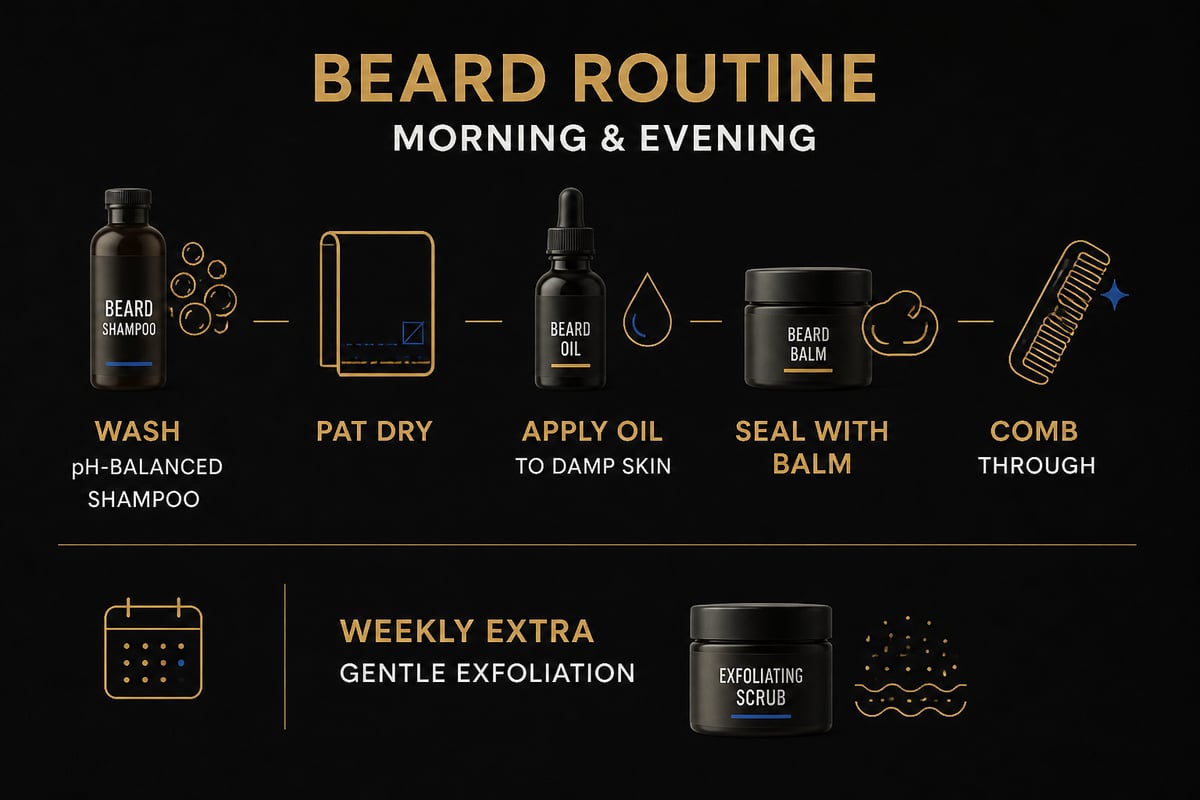
Here is a simple wash method:
- Wet the beard with warm (not hot) water.
- Work a coin-sized amount of beard shampoo into your palms.
- Massage it through the hair and down to the skin for around 30 seconds.
- Rinse until the water runs clear.
- Pat dry with a towel instead of rubbing, which roughens the hair.
Not everyone needs a daily lather. If your skin runs dry, alternate shampoo days with a plain warm-water rinse. Onesociety explains the trade-offs in its post on whether to wash your beard daily.
Which should you use: beard oil, balm or butter?
Use oil for moisture at the skin, balm for hold and protection, and butter for deep overnight conditioning, and most men end up using two of the three.
The differences come down to what each one is made of:
- Beard oil is a blend of carrier oils such as jojoba and argan. Carrier oils such as jojoba and argan help replace the moisture that dry skin and hair lose. Oil is the light option for daily use.
- Beard balm combines oils with butters and a little wax, which coats the hair to lock in moisture and give light control over strays.
- Beard butter is richer and creamier than balm, with a higher butter content. It suits dry, coarse or longer beards that need more recovery.
The American Academy of Dermatology suggests matching the product to your skin: beard oil for normal-to-dry skin, beard conditioner for acne-prone skin, and a fragrance-free, non-comedogenic moisturiser for sensitive skin. That is a sensible starting filter before you worry about scent or brand.
For a closer comparison, Onesociety has separate breakdowns of beard oil versus beard butter and beard balm versus beard oil.
Which skin and beard type goes with which product?
| Your situation | Start with | Why |
|---|---|---|
| Dry skin, short to medium beard | Beard oil | Carrier oils replace lost sebum |
| Coarse, unruly or long beard | Balm or butter | Butters soften, wax adds hold |
| Oily or acne-prone skin | Conditioner, lighter oil | Less residue sitting on pores |
| Sensitive skin | Fragrance-free moisturiser | Fewer potential irritants |
When and how do you apply beard oil?
Apply beard oil straight after washing, while the skin is still damp, as the AAD recommends.
The AAD makes the same point about moisturising immediately after washing, while the skin is still damp, and working the product through the beard to the skin. Oil helps trap the moisture already in the skin.
Use this order:
- Towel-dry lightly so the skin stays slightly damp.
- Warm 3 to 5 drops between your palms (more for a longer beard).
- Press your palms to the skin first, then stroke through the hair, root to tip.
- Comb through to spread the product evenly.
Too much oil makes a beard look heavy and attracts dust, so start light and add a drop at a time. Onesociety's walkthrough on how to use beard oil covers quantities by beard length.
Why does the itch and flaking happen, and how do you fix it?
Itch and flakes usually come from dry skin, built-up oil and dead skin cells, or a yeast reaction on the skin, and each cause has a different fix.
Dry skin responds to moisture and gentler washing. Beard dandruff needs more. The AAD advises gentle daily brushing before washing and a dandruff shampoo with 2% zinc pyrithione, 1% ketoconazole or 1% selenium sulfide at least once a week. WebMD's guide to beard dandruff offers further detail on treatment options.
If flaking and redness persist after a few weeks of consistent care, see a GP or pharmacist rather than guessing.
Ingrown hairs are the other common irritant, especially on tight-curled hair. The AAD recommends that if you're prone to them during the stubble stage, gently exfoliate once or twice a week and moisturise afterwards.
How do you grow a fuller beard without wasting months?
Fuller growth depends on controllable factors such as skin condition, patience through the awkward weeks, and keeping hairs from breaking.
Genetics sets your density and growth pattern, and no product rewrites that. What care can do is keep the follicle environment healthy and stop the hairs you do grow from snapping off. Dry, brittle hair breaks, and a beard that breaks at the same rate it grows never seems to gain length.
A few habits protect the gains:
- Resist trimming patchy areas in the first four weeks. Hair grows in at different speeds, and gaps often fill.
- Moisturise the skin underneath from day one.
- Look after your general health: sleep, protein and hydration all feed hair production.
- Use broad-spectrum SPF 30 or higher during the stubble phase, as the AAD advises, because exposed skin burns before the hair covers it.
This is where a structured programme helps men who will stick to a daily routine. Onesociety's 90-Day Beard Challenge packs eight formulas into one box: a Beard Booster for follicle stimulation, Beard Butter for nightly recovery, a Beard Balm as a protective shield, and a pH-balanced Beard Shampoo, among others. Dry skin and breaking hairs can stall a patchy beard, and a consistent wash, condition and seal routine addresses both. The formulas are made with natural ingredients and validated by CPSR chemists, with a 90-day money-back guarantee for growth. Buy the 90-Day Beard Challenge here.
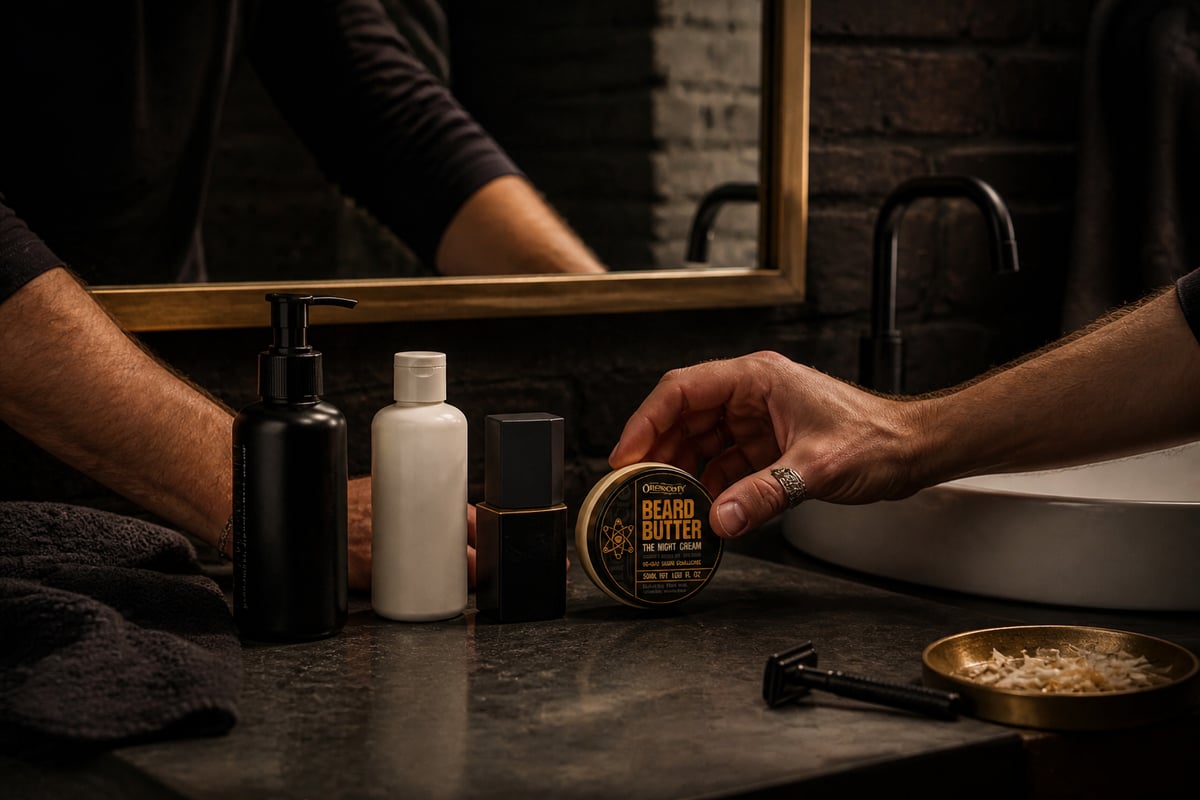
Onesociety also stocks its range on Amazon if you prefer to order there.
Which tools do you need: combs, brushes and trimmers?
A good comb, a soft brush and a pair of sharp trimming scissors cover almost every beard, and clippers only matter if you shape a short beard often.
The AAD notes you should comb facial hair while it is wet to detangle and style it, and a comb can also help separate hairs when trimming with scissors. Combs with smooth, polished teeth tend to snag less than cheap moulded plastic.
- Comb: use daily after oil or balm to spread product and train direction.
- Boar-bristle brush: spreads natural oils from root to tip and lifts loose flakes.
- Scissors: for stray hairs and length control. Onesociety compares options in its guide to beard trimming scissors.
- Clippers: for even length on the cheeks. See best beard clippers.
If you shave your neckline or cheek lines, replace razor blades every 5 to 7 shaves, per the AAD. Dull blades drag, and dragging causes razor burn.
How often should you trim, and how do you shape a beard?
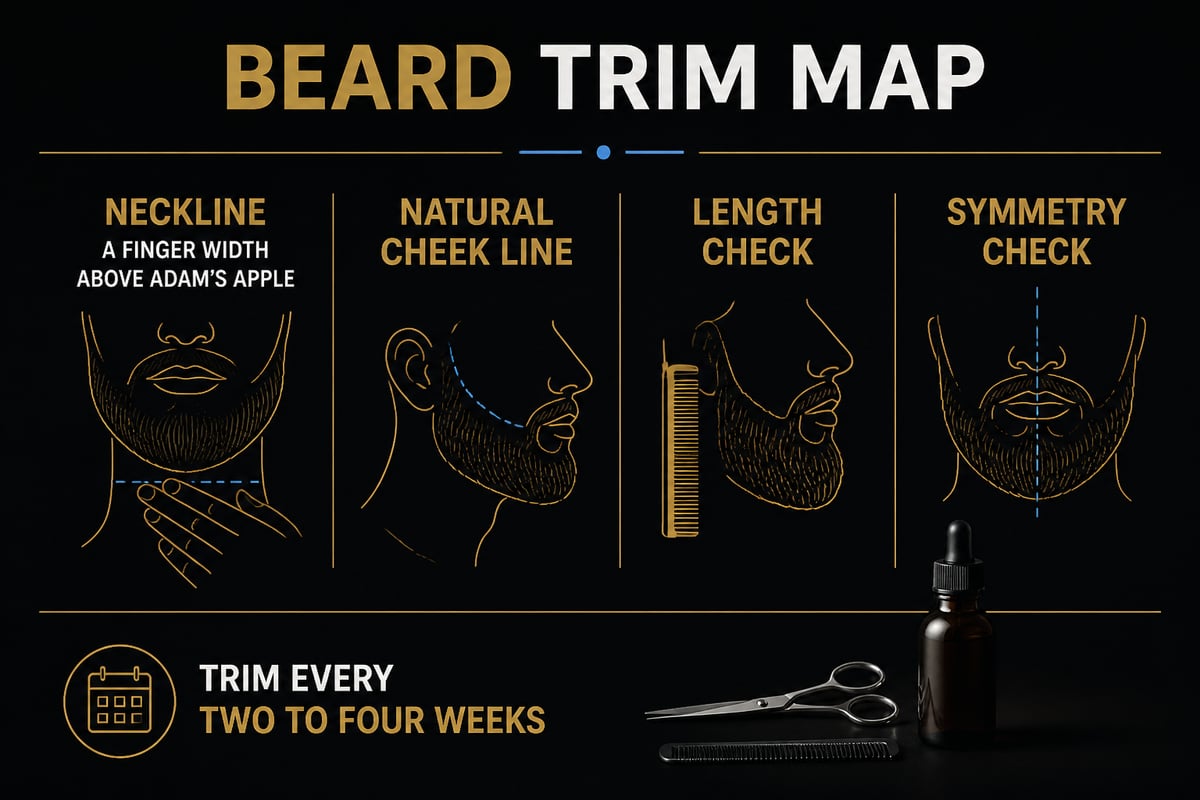
Trim every two to four weeks to keep the shape clean, and never cut more than you can see, because hair only goes one way.
Trimming does not make hair grow thicker, but it removes split ends and keeps the outline tidy. Always trim a dry, combed beard, since wet hair stretches and springs back shorter than you planned.
Follow this order:
- Comb the beard downwards and trim any hairs that extend past the comb.
- Set your neckline roughly one finger width above the Adam's apple.
- Define the cheek line naturally, following your growth rather than a ruler.
- Check symmetry in good light before you stop.
Face shape matters for the final result, and Onesociety's piece on men's beard cuts covers styles that suit different jawlines. If you wear a goatee or shorter style, the facial hair styling guide is a useful companion.
What does a simple weekly mens beard care routine look like?
A workable mens beard care routine takes under five minutes a day and adds one or two short extras each week.
Every morning:
- Rinse or wash with a gentle beard shampoo.
- Pat dry, then apply oil to damp skin.
- Add balm if you want hold, then comb through.
Every evening:
- Brush or comb out the day's debris.
- Apply a little butter or oil so the hair recovers overnight.
Once or twice a week:
- Gently exfoliate the skin beneath if you're prone to ingrowns.
- Use a medicated shampoo if you're managing dandruff.
Every two to four weeks:
- Trim and tidy the outline.
Consistency beats complexity. Men who see results usually pick a short routine and repeat it daily for weeks.
How do you keep a beard looking good over the long term?
Keep a beard looking good by adjusting your routine with the seasons, protecting it from heat and wind, and refreshing your products before they go off.
Winter heating and cold wind can dry out skin, so a richer balm may help. Summer sweat calls for lighter oil and more frequent rinsing. Rinse after a swim and re-oil afterwards.
Cut back on harsh habits too. Very hot showers, aggressive towel-drying and heat-styling all roughen the cuticle. A rough cuticle can make a beard look dull and frizzy.
Finally, treat your products as part of the routine rather than a one-off purchase. Oils oxidise and balms lose their feel over time, so check the label for use-by guidance and replace anything that smells off.
Your next step is simple: tonight, wash your beard with a gentle cleanser, apply oil to damp skin and comb it through, then repeat for the next seven days to see how your skin responds. If you want the whole sequence in one box, the 90-Day Beard Challenge from Onesociety combines natural, science-backed formulas with a 90-day money-back guarantee for growth. Commit to the routine for three months and take up the 90-Day Beard Challenge to put your beard to the test.