

You've stared at your patchy beard in the mirror for the last time. You've scrolled through countless Instagram profiles of blokes sporting full, magnificent beards whilst yours refuses to fill in. The frustration is real, and you're not alone. Millions of men worldwide search for solutions to transform their facial hair from disappointing wisps into a proper beard. The facial hair growth product market has exploded in recent years, but here's the uncomfortable truth: most products deliver empty promises wrapped in sleek packaging. Understanding which ingredients actually stimulate follicle activity and which are merely marketing hype separates men who achieve genuine results from those who waste money on ineffective formulas.
The Biology Behind Facial Hair Growth
Your beard growth depends on three critical factors working in harmony. Genetics determine your maximum potential, hormones (particularly testosterone and dihydrotestosterone) activate follicles, and blood circulation delivers essential nutrients to those follicles. Without addressing all three, no facial hair growth product will deliver transformative results.
How Hair Follicles Actually Function
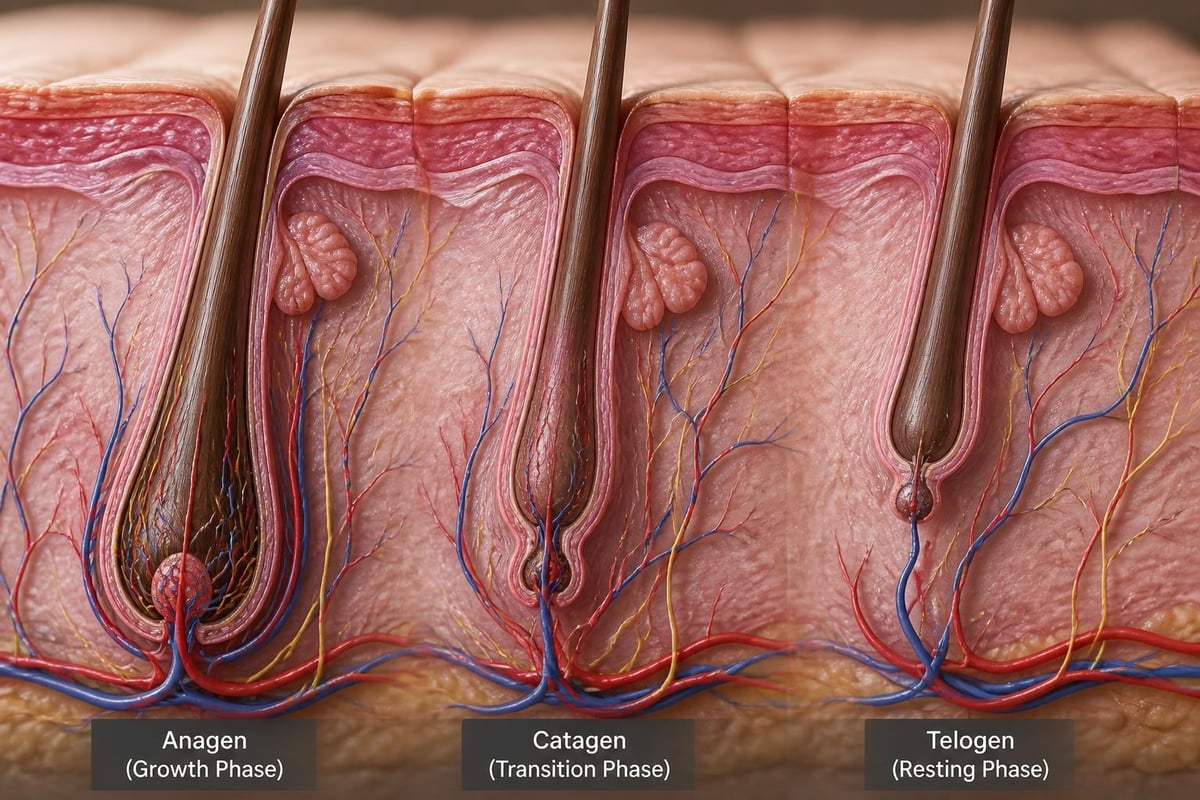
Each beard hair emerges from a follicle, a complex biological structure beneath your skin's surface. These follicles cycle through distinct phases: anagen (active growth), catagen (transition), and telogen (resting). A proper facial hair growth product targets the anagen phase, extending its duration whilst simultaneously awakening dormant follicles trapped in telogen.
The role of testosterone in facial hair development cannot be overstated. Your body converts testosterone into DHT through the 5-alpha-reductase enzyme. DHT then binds to androgen receptors in facial hair follicles, triggering keratinocyte proliferation-the cellular process that builds each hair strand.
Blood flow matters just as much as hormones. Nutrient-rich blood carries oxygen, vitamins, and minerals directly to follicle cells. Poor circulation starves follicles, regardless of your testosterone levels.
Active Ingredients That Actually Work
Not all facial hair growth product formulations deserve your trust. Scientific research identifies specific compounds that demonstrably impact follicle behaviour.
Biotin: The Keratin Builder
Biotin (vitamin B7) serves as a cofactor in fatty acid synthesis and amino acid metabolism. Your body uses these processes to manufacture keratin, the structural protein comprising 95% of each hair strand. Research on biotin for beard growth indicates supplementation benefits men with existing biotin deficiency, though evidence for supplementation in biotin-sufficient individuals remains limited.
Effective daily dosage ranges between 2.5-5 mg. Below this threshold, you won't saturate the metabolic pathways necessary for optimal keratin production.
Natural Oils: The Delivery System
Carrier oils don't directly stimulate growth, but they solve a critical problem: ingredient penetration. Without proper absorption, active compounds remain on your skin's surface, never reaching follicle cells.
Jojoba oil mimics sebum's molecular structure, allowing deeper penetration through skin layers. Argan oil contains tocopherols (vitamin E compounds) that reduce oxidative stress around follicles. Castor oil for beard growth has gained popularity due to ricinoleic acid, which may increase prostaglandin production-compounds that regulate inflammation and potentially influence hair follicle cycling.
| Oil Type | Active Compound | Primary Function | Absorption Rate |
|---|---|---|---|
| Jojoba | Wax Esters | Sebum Mimicry | High |
| Argan | Tocopherols | Antioxidant Protection | Medium |
| Castor | Ricinoleic Acid | Prostaglandin Stimulation | Low-Medium |
| Sweet Almond | Oleic Acid | Moisture Retention | High |
Peptides: The Cellular Messengers
Research-grade peptides represent the cutting edge of facial hair growth product development. These short chains of amino acids act as signalling molecules, instructing follicle cells to increase activity. Companies like Data Peptides manufacture laboratory-grade peptides that researchers use to study hair growth mechanisms, though such research compounds are intended solely for scientific investigation, not consumer use.
Commercial facial hair growth products incorporate peptides like copper peptide GHK-Cu, which stimulates collagen synthesis and increases blood vessel formation around follicles. The peptide signals fibroblasts to produce more extracellular matrix proteins, creating a supportive environment for hair growth.
What Doesn't Work (Despite Marketing Claims)
The facial hair growth product industry thrives on misleading promises. Let's examine formulations that fail to deliver scientifically justifiable results.
Beard Growth Vitamins Without Bioavailability
Swallowing generic "beard vitamins" wastes money unless you have documented nutrient deficiencies. Your body absorbs only what it needs, excreting excess water-soluble vitamins through urine. Without absorption enhancers or proper dosage timing, these supplements provide expensive urine, nothing more.
Fragrance-Heavy Balms
Many products prioritise scent over function. Synthetic fragrances occupy formulation space that should contain active ingredients. Worse, these compounds can trigger inflammation, disrupting the follicle environment you're trying to optimise.
Products Without Concentration Transparency
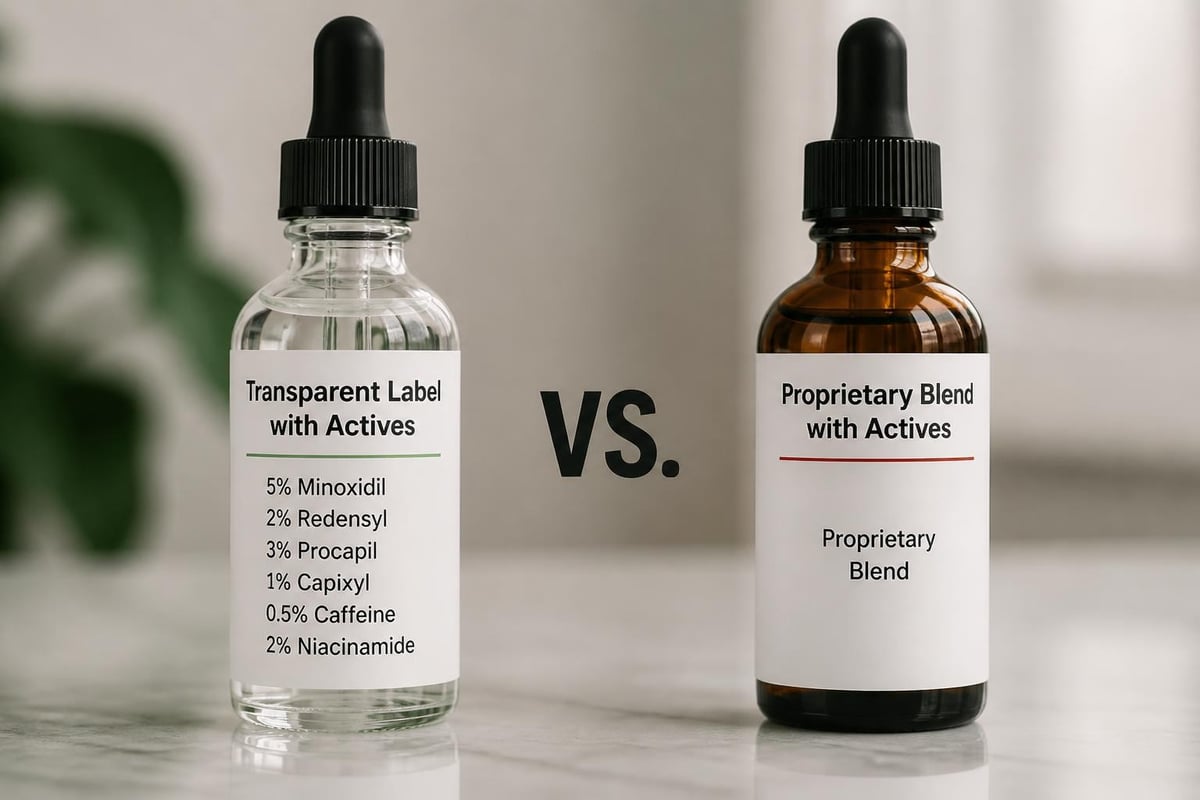
When a facial hair growth product lists "proprietary blend" without specific ingredient concentrations, walk away. You cannot verify whether the formula contains therapeutic dosages or homeopathic traces. Effective products disclose exact percentages because science demands replicability.
Advanced Application Methods
Selecting quality ingredients represents only half the battle. Application technique determines whether those compounds reach follicle cells or sit uselessly on your skin's surface.
Microneedling: Opening Absorption Pathways
Derma rollers for beard growth create micro-channels through the stratum corneum (your skin's outermost layer). These temporary channels increase transdermal absorption by up to 200%. The process also triggers your body's wound-healing response, releasing growth factors that may stimulate follicle activity.
Application protocol:
- Sanitise your derma roller with 70% isopropyl alcohol
- Roll vertically, horizontally, and diagonally across target areas (10 passes each direction)
- Apply your facial hair growth product immediately whilst channels remain open
- Limit sessions to twice weekly to prevent excessive inflammation
Needle depth matters. For facial hair applications, 0.25-0.5mm rollers provide optimal results without significant discomfort or downtime.
The Pharmaceutical Approach
Minoxidil for beard growth represents the most researched off-label facial hair growth product. Originally developed for hypertension, minoxidil's hair growth properties emerged as an unexpected side effect. The compound acts as a potassium channel opener, widening blood vessels and increasing nutrient delivery to follicles. It also extends the anagen growth phase directly.
The FDA's regulatory stance on hair growth products provides important context. Minoxidil remains the only topical ingredient with FDA approval for promoting hair growth, though that approval specifically targets scalp hair, not facial hair.
Clinical studies demonstrate 5% minoxidil solution produces superior results compared to 2% formulations. Application requires consistency-twice daily for minimum 6-12 months-before judging efficacy.
Natural Versus Synthetic: The False Dichotomy
The facial hair growth product debate often frames natural ingredients against synthetic alternatives as morally opposed camps. This oversimplification misses the point entirely.
What "Natural" Actually Means
Plant-derived compounds aren't inherently safer or more effective than lab-synthesised molecules. Castor oil contains ricinoleic acid-a specific molecule with defined properties. Whether you extract it from castor beans or synthesise it in a laboratory, the molecule remains identical. Your follicle cells cannot distinguish between "natural" and "synthetic" sources.
That said, natural ingredient formulations offer practical advantages. Whole plant extracts contain complementary compounds that may enhance primary active ingredients through synergistic effects. When sourced responsibly, natural ingredients minimise environmental impact compared to petrochemical-derived alternatives.
The Onesociety Approach to Natural Formulation
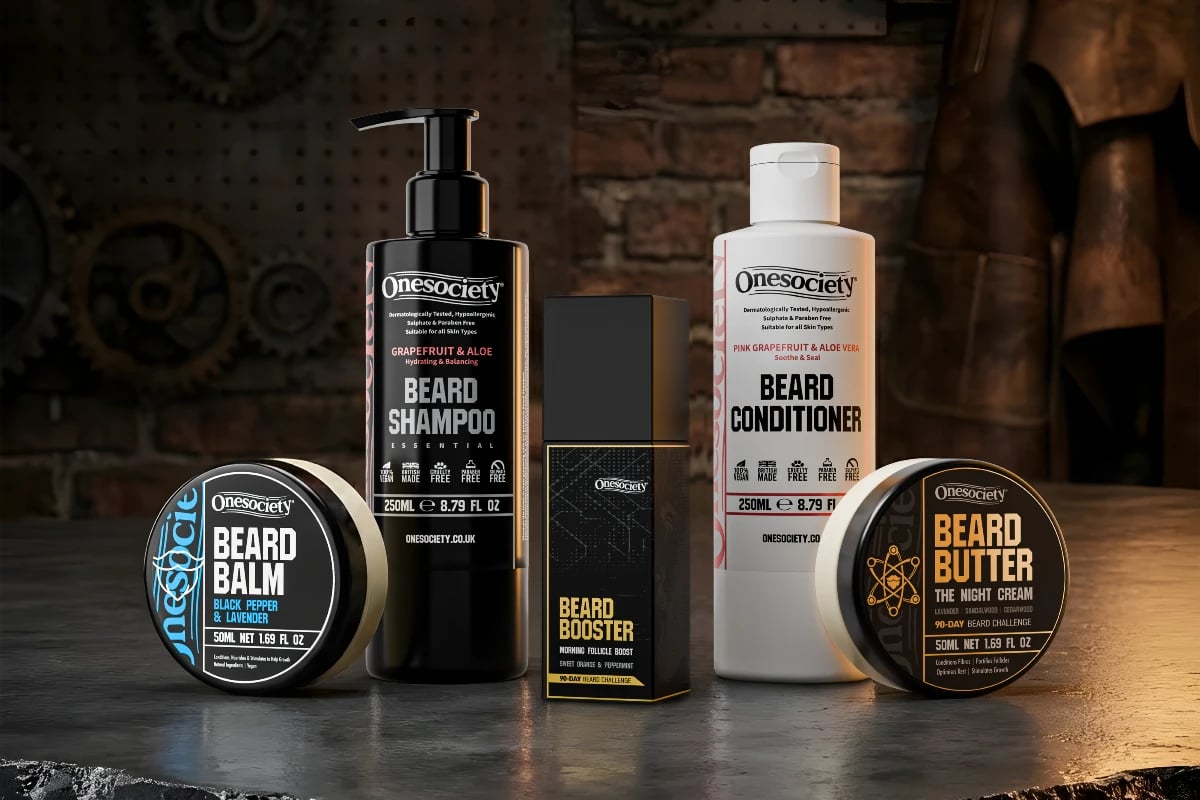
Understanding what makes a good beard requires recognising that quality ingredients-whether natural or synthetic-must work in harmony. Companies like Onesociety prioritise 100% natural ingredient sourcing whilst maintaining scientific rigour about concentration and bioavailability.
Their formulations combine traditional botanical extracts with modern understanding of follicle biology. This approach respects both ancestral grooming wisdom and contemporary research findings.
Building Your Facial Hair Growth Protocol
Effective beard development requires systematic application, not random product experimentation. Your protocol should address the three growth factors we identified earlier: genetics (which you cannot change), hormones (which you can optimise), and blood circulation (which you can directly improve).
The 90-Day Transformation Timeline
Facial hair growth operates on predictable biological timelines. Individual hair strands grow approximately 0.27mm per day. Complete follicle cycling from telogen to full anagen takes 8-12 weeks minimum. This explains why reputable facial hair growth product programmes emphasise 90-day commitment periods.
The 90-Day Beard Challenge structures a comprehensive approach around this biological reality. The programme combines multiple product types-follicle activators, nightly recovery treatments, protective balms, and pH-balanced cleansers-into a cohesive system. Each formula targets specific aspects of the growth cycle.
Daily Application Sequence
Morning routine:
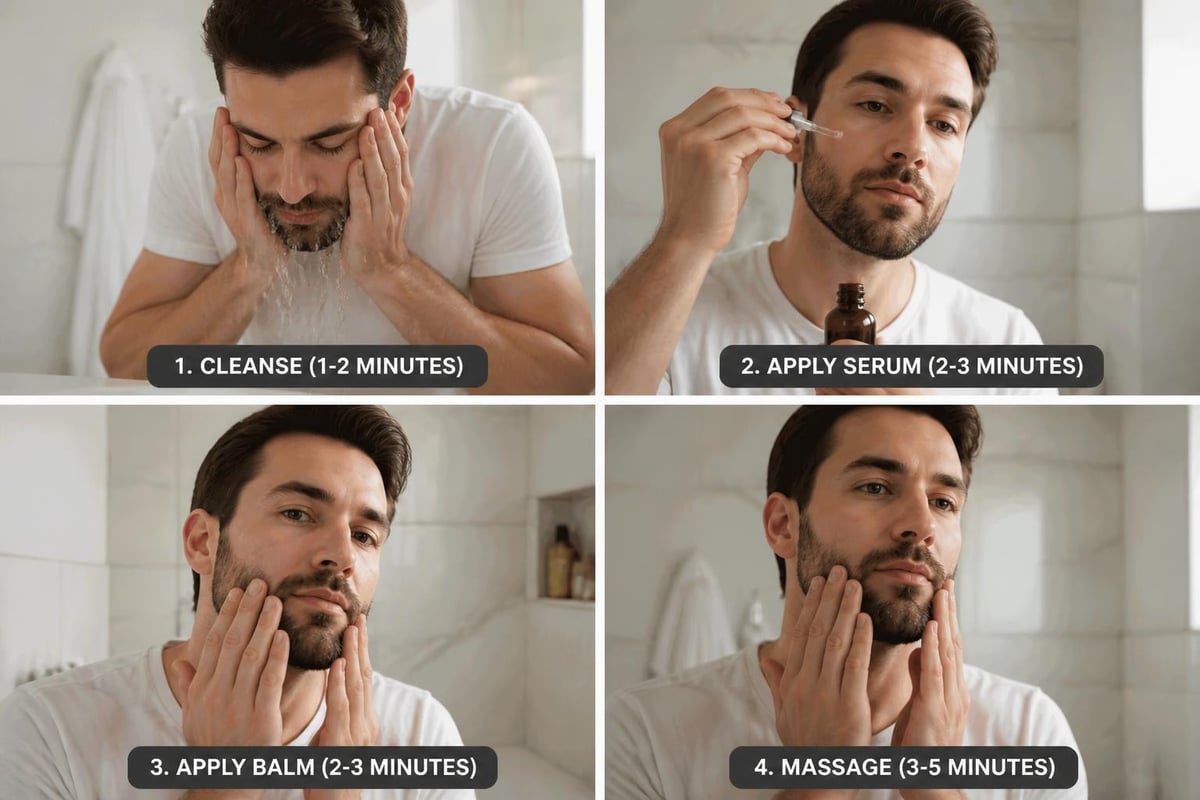
- Cleanse face with lukewarm water (hot water strips protective sebum)
- Apply growth serum to damp skin (water increases absorption)
- Lock in moisture with protective balm after serum absorption (5-10 minutes)
- Brush beard to distribute products and stimulate blood flow
Evening routine:
- Wash with pH-balanced beard shampoo (2-3 times weekly maximum)
- Apply nourishing beard butter to slightly damp facial hair
- Massage for 3-5 minutes using circular motions (mechanical stimulation increases circulation)
- Optional: Use derma roller before product application (twice weekly maximum)
Consistency trumps product quality. A moderate facial hair growth product used daily outperforms premium formulations applied sporadically.
Lifestyle Factors That Amplify Product Effectiveness
Even the most scientifically advanced facial hair growth product cannot overcome poor lifestyle choices. Your daily habits create the internal environment where follicles either thrive or struggle.
Sleep: The Forgotten Growth Factor
Growth hormone secretion peaks during deep sleep stages. This hormone doesn't directly grow beard hair, but it supports protein synthesis-the process your body uses to manufacture new keratin. Research into beard health and maintenance emphasises the relationship between sleep quality and hair follicle cycling.
Target 7-9 hours nightly. Prioritise sleep consistency (same bedtime/wake time) over total duration variations.
Nutritional Foundations
Your body cannot synthesise hair proteins from nothing. Adequate protein intake (1.6-2.2g per kilogram bodyweight) provides amino acid building blocks for keratin production. Zinc supports 5-alpha-reductase function (the enzyme converting testosterone to DHT). Vitamin D receptors exist in hair follicles, suggesting this nutrient plays regulatory roles.
Essential nutrients for beard growth:
- Protein: Keratin synthesis substrate (chicken, fish, eggs, legumes)
- Zinc: Enzyme cofactor for DHT production (oysters, beef, pumpkin seeds)
- Vitamin D: Follicle cycling regulation (fatty fish, fortified dairy, sunlight exposure)
- Iron: Oxygen transport to follicles (red meat, spinach, lentils)
- Omega-3 fatty acids: Anti-inflammatory support (salmon, walnuts, flaxseed)
Whole food sources provide superior bioavailability compared to isolated supplements. Your digestive system evolved to extract nutrients from complex food matrices, not synthetic pills.
Stress Management
Chronic cortisol elevation (the primary stress hormone) disrupts hormonal balance and redirects resources away from "non-essential" processes like beard growth. Your body prioritises survival over aesthetics during perceived threats.
Evidence-based stress reduction:
- Resistance training (increases testosterone whilst reducing cortisol)
- Meditation (documented cortisol reduction in 20+ minute daily sessions)
- Time in nature (attention restoration theory supports stress reduction)
- Social connection (oxytocin release counteracts stress response)
Understanding Genetic Limitations
This section addresses uncomfortable truths. Why some men can't grow full beards ultimately traces back to genetic programming you cannot override. Your DNA determines androgen receptor density in facial hair follicles. No facial hair growth product can create receptors that don't exist.
Realistic Expectations
Men with low androgen receptor density in facial regions won't achieve full beards regardless of product quality or application diligence. Your maximum potential is coded in your genome. However, most men never reach their genetic ceiling because lifestyle factors and poor product selection limit expression.
The goal: maximise YOUR genetic potential, not replicate someone else's beard. Comparison steals joy and creates unrealistic benchmarks.
When to Consider Medical Consultation
Sudden beard thinning or patchy loss after years of normal growth warrants medical evaluation. These symptoms may indicate:
- Alopecia areata (autoimmune condition)
- Hormonal imbalances (thyroid dysfunction, low testosterone)
- Nutritional deficiencies (severe protein or micronutrient inadequacy)
- Stress-related telogen effluvium
A proper diagnosis guides appropriate intervention. Understanding facial hair growth factors helps distinguish normal variation from pathological conditions requiring medical attention.
The Role of Advanced Research
Cutting-edge facial hair modelling provides insights into growth patterns and structures. Novel methods for capturing facial hair strand reconstruction advance our understanding of individual hair behaviour. Similarly, generative models for hair geometry like GroomGen contribute to predicting how different interventions might influence growth patterns.
Whilst these remain research tools rather than consumer products, they demonstrate the sophistication of modern facial hair science. Companies developing premium facial hair growth product formulations increasingly reference this academic work to justify ingredient selection and concentration decisions.
Combining Products for Synergistic Effects
Individual ingredients work more powerfully when combined strategically. This principle explains why comprehensive systems outperform single-product approaches.
Complementary Formulation Strategy
Morning activators should differ from evening recovery treatments. Daytime products protect against environmental stressors (UV radiation, pollution, oxidative damage) whilst maintaining follicle stimulation. Night-time formulations focus on repair, nourishment, and growth factor delivery without protection concerns.
Proper beard washing and conditioning creates the foundation for other products to work effectively. Cleansing removes sebum buildup, dead skin cells, and product residue that block absorption. However, over-washing strips protective oils, creating inflammation that counteracts growth products.
The balance: cleanse 2-3 times weekly maximum with pH-balanced formulas specifically designed for facial hair. Daily water rinsing suffices between wash days.
Avoiding Ingredient Conflicts
Some combinations reduce effectiveness or trigger adverse reactions:
| Combination to Avoid | Reason | Alternative Approach |
|---|---|---|
| Minoxidil + Retinoids | Excessive irritation | Alternate days |
| Multiple Exfoliants | Over-stripping | Choose single method |
| Oil-Based + Water-Based Serums | Absorption interference | Apply water-based first, oil second |
| Alcohol-Heavy Products + Drying Treatments | Extreme dehydration | Select one or reduce frequency |
Measuring Progress Objectively
Subjective assessment deceives. Your daily mirror observations cannot detect the gradual changes occurring over 12 weeks. Objective measurement prevents premature programme abandonment.
Photography Protocol
Standard conditions for comparison photos:
- Same lighting (natural morning light works best)
- Same angle (straight-on, 45-degree left, 45-degree right, profile)
- Same distance (arm's length or tripod at fixed distance)
- Same facial expression (neutral, no smile to avoid hair distortion)
- Weekly intervals (every Sunday morning, for example)
Side-by-side comparisons after 30, 60, and 90 days reveal progress invisible to daily observation.
Growth Metrics That Matter
- Coverage density: Percentage of target area with visible hair
- Hair diameter: Thickness of individual strands (requires micrometer or comparison to reference)
- Growth rate: Weekly length increase on marked reference hairs
- Texture quality: Softness, manageability, shine (subjective but trackable)
Track two primary metrics maximum. Excessive measurement creates analysis paralysis.
Premium Versus Budget Products
Price doesn't guarantee efficacy, but formulation quality correlates with cost. Understanding this relationship helps you invest wisely.
What Justifies Premium Pricing
Higher-priced facial hair growth products should offer:
- Concentration transparency: Exact active ingredient percentages
- Research backing: Published studies on specific formulation (not just individual ingredients)
- Bioavailability enhancement: Delivery systems that increase absorption
- Purity standards: Third-party testing for contaminants and concentration verification
- Sustainable sourcing: Ethical ingredient procurement (matters for long-term availability)
Companies like Pure Peptide demonstrate how quality control and purity testing justify premium positioning. Their advanced purification methods and stringent quality standards ensure consistent potency, though their products target different applications than consumer facial hair growth formulations.
Budget-Friendly Effectiveness
Cost-effective options exist without sacrificing results:
- Focus on single-ingredient products (biotin supplements, pure carrier oils)
- Purchase larger quantities (reduces per-application cost)
- Prioritise one or two evidence-based actives over comprehensive blends
- DIY formulations using researched recipes (requires careful measurement and sterile technique)
Best practices for beard grooming often emphasise that consistent application of simple, effective formulations beats sporadic use of expensive products.
The Future of Facial Hair Growth Science
Innovation continues reshaping what's possible. Emerging technologies will revolutionise facial hair growth product development within the next 5-10 years.
Personalised Formulation
Genetic testing could soon identify your specific androgen receptor variants, allowing customised ingredient selection. Rather than generic formulations, you'd receive a facial hair growth product optimised for your receptor density, hormone levels, and nutrient metabolism genetics.
Topical Hormone Alternatives
Research into selective androgen receptor modulators (SARMs) may produce compounds that activate facial hair follicle receptors without systemic hormonal effects. This would allow targeted stimulation without influencing testosterone levels throughout your body.
Microbiome Modulation
Your skin hosts millions of bacteria that influence inflammation, nutrient production, and follicle environment. Future facial hair growth products may include prebiotics or probiotics designed to optimise this microbial community for hair growth support.
Transforming patchy facial hair into a full, healthy beard requires understanding the science behind follicle function, selecting evidence-based active ingredients, and committing to consistent application over biological timelines. The facial hair growth product market contains both scientifically valid solutions and marketing-driven disappointments-your success depends on distinguishing between them. If you're ready to maximise your genetic beard potential using formulations backed by research and natural ingredients, Onesociety offers comprehensive grooming systems designed specifically for men committed to genuine transformation rather than empty promises.