

A beard expert grows a fuller beard by following a daily routine: wash, condition, moisturise, brush and trim on a schedule, then give the follicles around 12 weeks to show real results. Patchy growth, itch and flaky skin usually trace back to skin neglect rather than bad genes, and the fixes are simple once you understand the biology behind them.
Here is the uncomfortable bit. Most men quit at week three. The stubble phase itches, the shape looks uneven, and the mirror says "give up". Yet that awkward fortnight decides whether you end up with a beard you are proud of or a razor back in your hand. This guide gives you the plan, the science and the skin care to get through it.
How Long Does It Take to Grow a Beard?
Most men need about 12 weeks to grow a short, full beard, though your genetics set the pace. A 2026 grooming guide from Harry's puts facial hair growth at roughly 0.47 mm per day, based on a study of three men, and it cautions that this is a guide, not a guarantee. The same guide suggests that many men can grow a short full beard in about 12 weeks.
That is where the "3 month beard rule" comes from: leave your beard alone for three months before you judge it or shape it. Why? Because hair grows in uneven cycles. Some follicles sit in a resting phase while their neighbours sprint ahead, so a patch that looks empty at week four often fills in by week twelve. Trim too early and you cut the slow starters before they catch up.
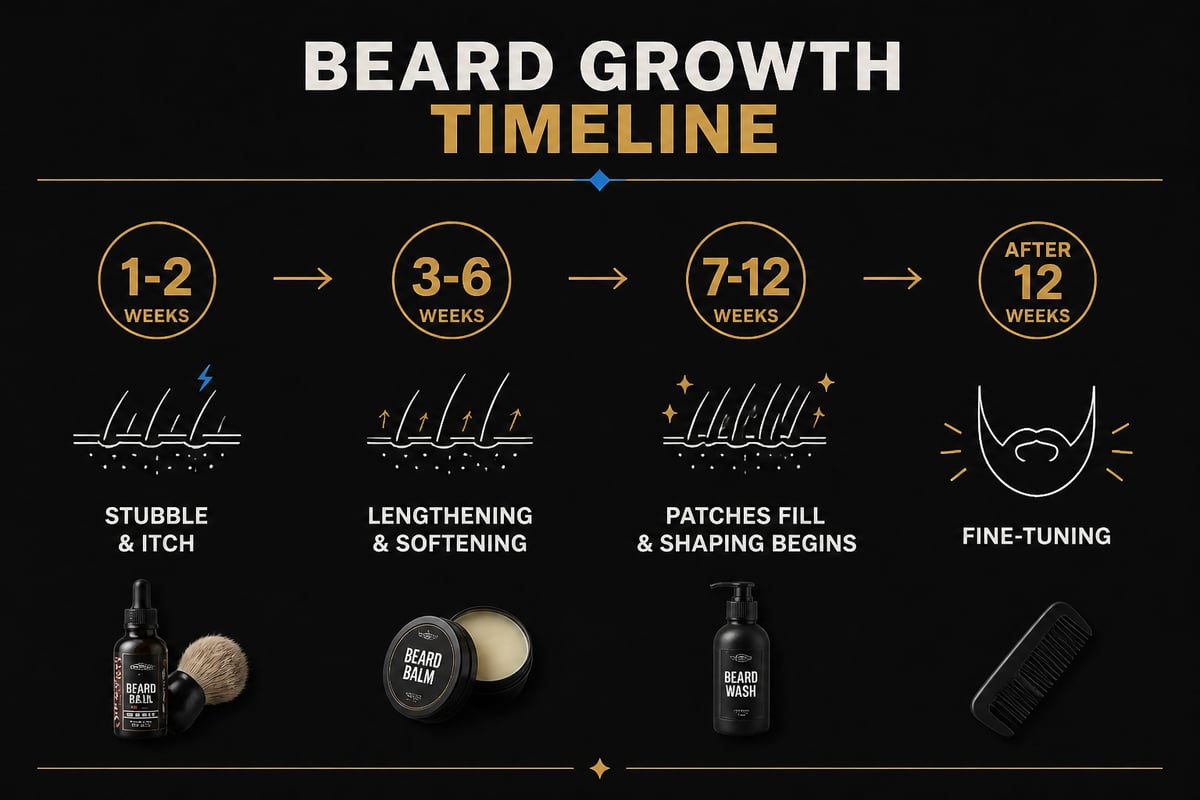
Here is what to expect:
- Weeks 1 to 2: Stubble, itch and tight skin. This is often the hardest stretch.
- Weeks 3 to 6: Hair lengthens, softens and starts to show where it grows thickest.
- Weeks 7 to 12: Patches narrow, the cheek line becomes clear and you can start shaping.
- Beyond week 12: Fine-tune the length, the neckline and the style.
What a Beard Expert Does Differently Every Day
A beard expert treats the skin under the beard as the real crop, because healthy follicles produce thicker, stronger hair. The daily routine takes five minutes and has four parts.
Wash. Use a dedicated beard shampoo two to three times a week. Face wash strips the natural oils (sebum) that keep hair flexible, and dry hair snaps and splits. A pH-balanced shampoo cleans without stripping.
Brush. The American Academy of Dermatology recommends gently brushing a beard daily before washing your face to lift flakes when you are managing beard dandruff. Brushing also spreads sebum from root to tip, so the hair gets its own conditioning.
Moisturise. Skin under a beard dries out because hair traps heat and wicks moisture away. Apply a light oil or butter while the beard is still slightly damp so the product seals water in.
Protect. During the stubble phase, the AAD advises a moisturiser with SPF 30 or higher for a healthy-looking beard. Thin stubble offers limited sun cover, and UV damage can weaken skin and follicles alike.
Skip one step for a week and you will feel it. The beard turns coarse, the skin tightens and the itch returns.
Why Does My Beard Itch, Flake and Grow Patchy?
Itch and flakes often come from the same root problem: dry, irritated skin that can leave follicles under stress. The cause is rarely mysterious. Short hairs poke back into the skin, sebum production drops under harsh cleansers, and dead skin cells pile up under the hair with nowhere to go.
Agitation sets in fast. You scratch, which inflames the skin. Inflamed skin flakes more. Flakes clog pores, and clogged pores can trap hairs, which breeds ingrown hairs and spots. The Cleveland Clinic's advice on an itchy beard covers cleansing and razor hygiene for exactly this loop, and Yale Medicine explains how facial hair links to ingrown hairs, acne and beard dandruff.
Patchiness has its own causes. Hormones, genetics and age all shape where follicles sit. Skin health still matters, though, and a routine that cleans, nourishes and gently stimulates the skin supports the best conditions for the hair you have.
The Science Behind Beard Products That Work
Beard products work when each ingredient has a biological job, so check what an ingredient does before you buy it. Four product types cover almost every need.
Beard oil. Carrier oils such as jojoba mimic sebum closely, so the skin absorbs them and softens the hair shaft without leaving a greasy film. A good oil reduces the dry, wiry feel and calms itch. You can browse Onesociety's beard oil range in scents from pine to bay rum.
Beard butter. Shea butter is rich in moisturising fats, which help lock in moisture. That makes a butter a good nightly product for a dry, itchy jawline.
Beard balm. Balms add beeswax or similar waxes to a butter base. The wax forms a thin protective film that holds moisture in and tames flyaways, which is why a beard balm suits longer beards that need hold as well as care.
Beard shampoo. A pH-balanced formula cleans without disturbing the skin's slightly acidic surface, so the natural barrier stays intact and flaking drops.
Beard growth products deserve a straight look. No topical product rewrites your genetics. What a well-built formula can do is keep skin healthy and help remove the clogging and dryness that can hold hair back. A beard booster works on that principle, pairing ingredients that support the skin with a massage.
Which Product Solves It? The 90-Day Beard Challenge
If you want one product that covers the whole routine, the 90-Day Beard Challenge fits the problem this guide describes. It packs eight formulas into one box, including the Beard Booster for follicle support, Beard Butter for nightly care, Beard Balm as a protective shield and a pH-balanced Beard Shampoo as the reset step.
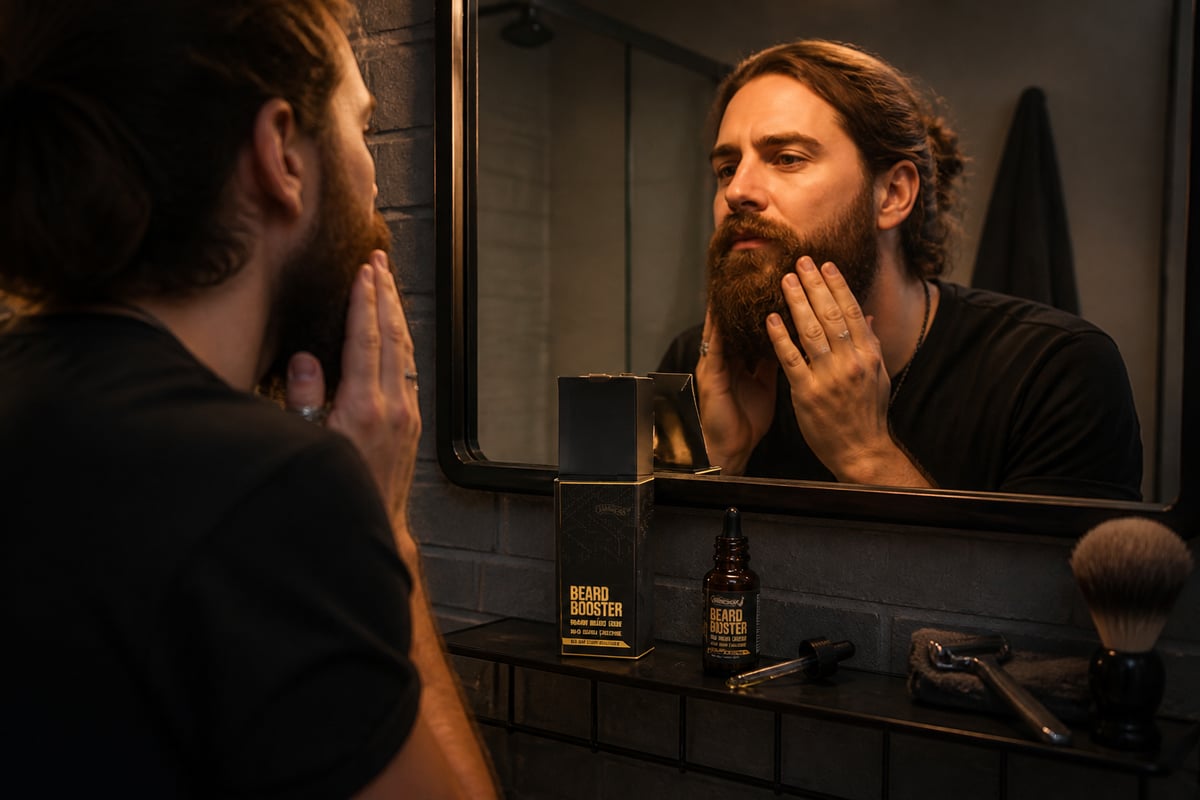
Why does a bundle beat buying one product? Because the problems stack. Dry skin, clogged follicles and brittle hair feed each other, so fixing one in isolation leaves the other two dragging you back. A full system hits all three at once, and the 90-day window matches the roughly 12 weeks a beard needs to show real change.
Onesociety formulates its products with natural ingredients. The challenge also comes with a money-back guarantee, and the brand reports over 20,000 happy customers. One Google-verified review reads, "Beard felt amazing after first wash." The routine does demand daily effort, so it suits men ready to commit, not men hunting for a shortcut.
Buy the 90-Day Beard Challenge now or browse the full beard collection to pick individual products. You can also find the brand on the OneSociety Amazon store.
How Should You Shape and Trim Your Beard?
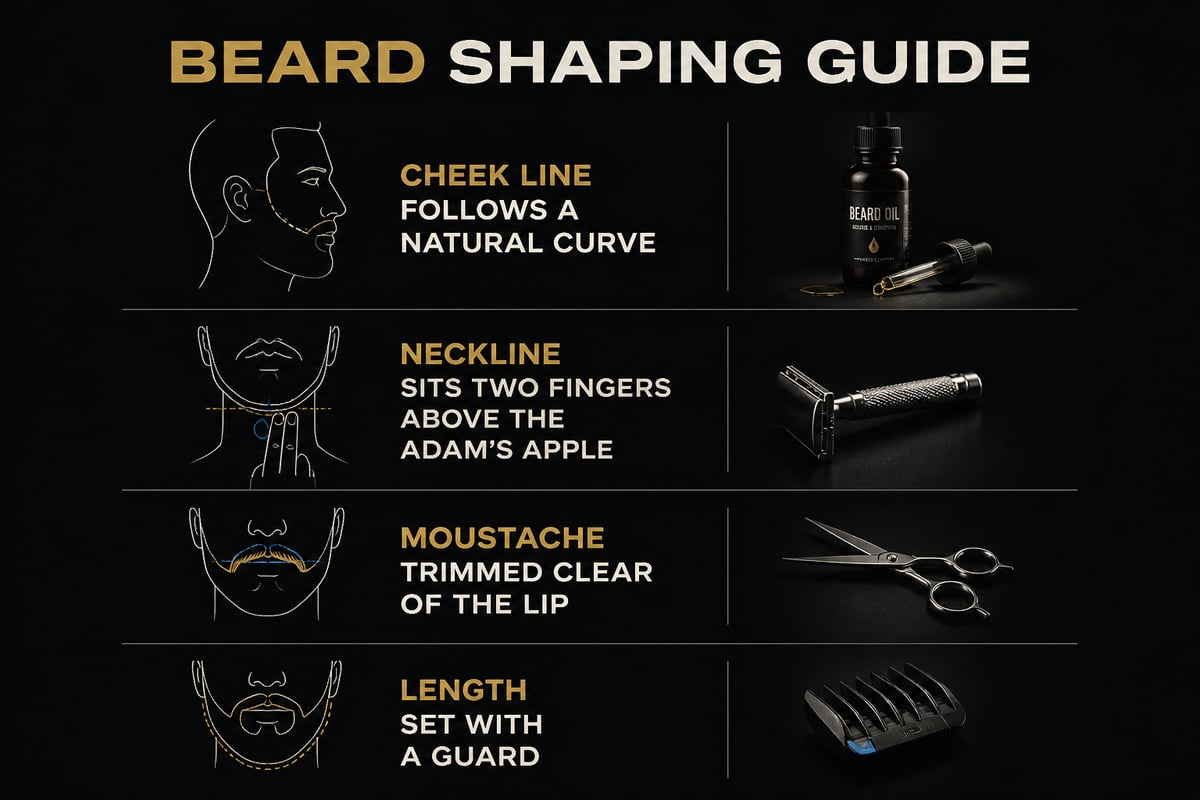
Shape a beard by defining three lines and then letting the hair do the rest: the cheek line, the neckline and the moustache edge. Do this after the first 12 weeks, not before.
- Cheek line. Keep it natural. Follow the curve from your sideburn towards the corner of your mouth and trim only the strays above it.
- Neckline. Place two fingers above your Adam's apple and draw an imaginary curve from that point up behind each ear. Shave everything below it.
- Moustache. Trim hair that overhangs the lip so you can eat and drink without a mess.
- Length. Use a guard on your trimmer and work against the direction of growth to catch uneven hairs, then check each side in the mirror.
Longer styles reward a little extra hold. A moustache wax gives stray hairs structure so a shaped moustache survives the working day. Keep trimming scissors sharp and clean, and trim dry hair, because wet hair stretches and tricks you into cutting too short.
How Much Should a Beard Trim Cost?
A professional beard trim varies in price depending on the city and the salon, so check with your local barber for current rates. A barber who specialises in facial hair (often called a barber or beard stylist) will shape the lines, tidy the neckline and sometimes finish with a hot towel.
A barber visit pays off at two moments: when you first shape a new beard, and when you want to reset the lines before an event. Between visits, you can maintain the shape yourself with a trimmer and the three-line method above. Barbers around the world, such as TLH Barbers in Tallahassee, build their reputations on precise beard shaping, which shows how much a clean outline changes the whole look.

Should You Shave? Razor Rules That Protect Your Skin
If you shave your neckline or cheek line, use technique that limits damage, because a close shave is the main cause of razor bumps and ingrown hairs. The Mayo Clinic explains how shaving too close can cause skin problems, including inflamed bumps.
Follow these rules:
- Soften first. The AAD recommends a warm compress for five minutes, or shaving at the end of a shower, to soften hairs and help reduce razor bumps.
- Prep properly. Let pre-shave gel sit for about 30 seconds and shaving cream for 2 to 3 minutes before you shave, as the AAD advises for ingrown-hair prevention.
- Go with the grain. Shave in the direction your hair grows. Going against it cuts the hair below skin level, and it can curl back in.
- Change blades often. Replace razor blades every 5 to 7 shaves, according to the AAD, to help reduce irritation.
Are Beards Out of Style in 2026?
No. Beards remain a common part of men's grooming, and styles have shifted towards fuller, healthier-looking growth rather than razor-sharp, heavily sculpted lines. The look that dates fastest is the beard that looks neglected, with dry, frizzy hair and flaky skin. A well-kept beard of any length reads as deliberate.
That matters for your routine, because condition beats style. A short beard on healthy skin looks better than a long one that is brittle and dull. Pair a conditioning product with your scent of choice, such as a bay rum beard oil or a pine balm, and you cover both the care and the finish.
FAQ
What is a beard stylist called?
A professional who shapes and trims beards is usually called a barber, and some specialise further as beard stylists or beard barbers. Look for one who shows beard work in their portfolio, because shaping facial hair takes different skills from cutting head hair.
What is the 3 month beard rule?
The 3 month beard rule says to leave your beard untouched for about 12 weeks before you shape it or judge the result. Follicles grow in uneven cycles, so patches that look empty early on often fill in as slower hairs catch up.
How often should I wash my beard?
Wash your beard with a dedicated beard shampoo two to three times a week. Washing more often strips the natural oils that keep hair soft and skin comfortable, which can bring back dryness and itch.
Take one step today: brush your beard, wash it with a gentle beard shampoo and moisturise while it is still damp, then repeat it every day for 12 weeks. If you want every part of that routine in one box, join the 90-Day Beard Challenge from Onesociety and accept the challenge to build the beard you have been putting off.