

Every morning, men worldwide face the same frustrating challenge: their mustache either looks unruly and unkempt or gets butchered by imprecise electric trimmers that leave patches, create uneven lengths, and destroy the carefully cultivated shape they've worked months to develop. Quality scissors for mustache grooming represent the difference between a distinguished, well-maintained upper lip and a haphazard mess that undermines your entire facial aesthetic. The biological reality? Your mustache hair grows at different rates across zones (the philtrum grows slower than the outer sections due to varying follicle density), requiring precision cutting that only manual scissors can deliver through controlled, follicle-specific trimming.
The Problem: Why Electric Trimmers Destroy Mustache Architecture
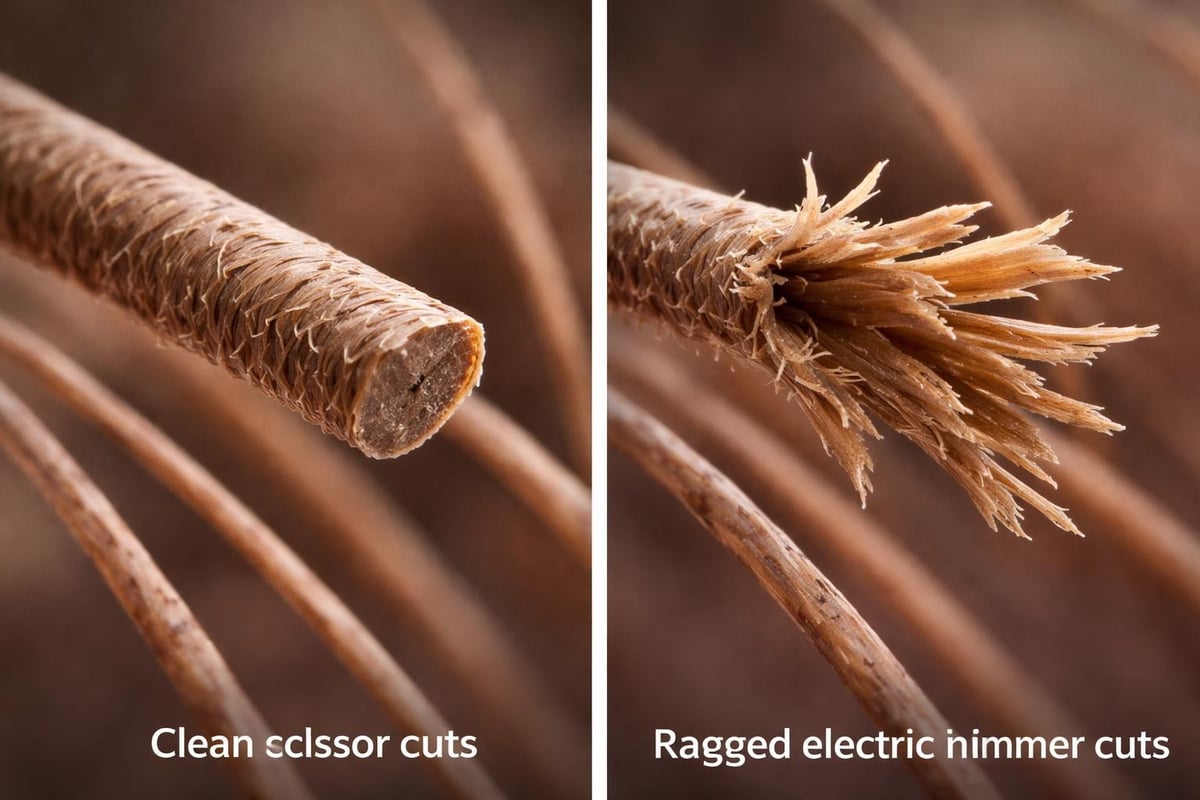
Your mustache possesses unique hair architecture that electric devices cannot accommodate. The hair shaft diameter in mustache follicles measures approximately 70-100 micrometres, thicker than scalp hair but with irregular growth patterns influenced by androgen receptor density in the upper lip dermis. Electric trimmers use oscillating blades that vibrate at 7,000-14,000 strokes per minute, creating micro-tears in the hair cuticle rather than clean cuts.
These micro-tears expose the hair cortex to environmental oxidative stress, leading to split ends, frizzing, and weakened structural integrity. The keratin protein chains that give mustache hair its strength become compromised when cut with vibrating blades rather than sharp, stationary scissors that slice through the hair shaft in one clean motion.
The Follicle Density Challenge
Your upper lip contains approximately 400-600 terminal hair follicles per square centimetre, the highest concentration on your face. Each follicle operates on its own anagen (growth) cycle, lasting 4-14 weeks before entering catagen (transition) and telogen (rest) phases. This asynchronous growth means your mustache never grows uniformly.
Electric trimmers apply the same guard length across all zones, ignoring this biological reality. They remove hair based on mechanical settings rather than visual assessment of individual hair positioning. High-quality mustache scissors enable follicle-by-follicle precision, allowing you to address growth variations that create the illusion of an uneven mustache even when overall length remains consistent.
The result? Patchy appearance, loss of defined shape, and constant frustration as you attempt to correct trimmer mistakes with increasingly shorter cuts that eventually ruin months of growth.
The Agitation: Hidden Costs of Imprecise Mustache Cutting
Beyond aesthetic disappointment, poor cutting technique triggers biological responses that sabotage your grooming goals. When vibrating trimmer blades create jagged cuts, they increase the hair shaft's surface area exposure. This expanded exposure accelerates moisture loss through the hair cuticle, reducing the natural sebum coating that protects against environmental damage.
The dehydration cascade begins:
- Compromised cuticle structure allows moisture to escape from the cortex
- Reduced moisture content increases brittleness by 40-60%
- Brittle hairs break more easily during styling, washing, and sleeping
- Broken hairs create the appearance of thinning even when follicles remain active
Your mustache appears sparse not because follicles stopped producing hair, but because existing hairs snap mid-shaft before reaching their full growth potential.
The Skin Inflammation Factor
Trimmer vibration transmits mechanical stress directly to the follicle epithelium (the cellular lining surrounding the hair root). This repetitive stress triggers inflammatory mediator release, specifically prostaglandin D2, which research demonstrates inhibits hair follicle cycling and can push active follicles into premature telogen phase.
The inflammation manifests as:
| Symptom | Biological Cause | Duration |
|---|---|---|
| Redness | Histamine release from mast cells | 2-6 hours |
| Itching | Nerve ending irritation | 12-24 hours |
| Folliculitis | Bacterial colonisation of damaged follicles | 3-7 days |
| Ingrown hairs | Altered growth angle from inflammation | 1-3 weeks |
This inflammatory response doesn't just cause discomfort. It actively undermines your grooming routine by creating conditions that discourage consistent maintenance. You skip trimming sessions because your skin feels irritated, leading to overgrowth, then overcompensate with aggressive cutting that perpetuates the cycle.
The financial cost compounds over time. Replacing broken electric trimmers, purchasing soothing creams for irritated skin, and investing in products to address split ends create an expensive dependency that professional scissors eliminate entirely.
The Solution: Precision Engineering of Scissors for Mustache Excellence
Professional-grade scissors for mustache grooming function through simple mechanical advantage that respects hair biology. The cutting mechanism relies on two bevelled blades meeting at a precise angle (typically 30-45 degrees) to create shearing force that slices cleanly through keratin protein structures without tearing.
The biomechanical advantage breaks down as follows:
- Blade geometry: The bevel angle determines cutting efficiency. Sharper angles (30 degrees) slice through thick mustache hair with minimal force application
- Tension adjustment: The pivot screw controls blade contact pressure, ensuring consistent cutting force across the entire blade length
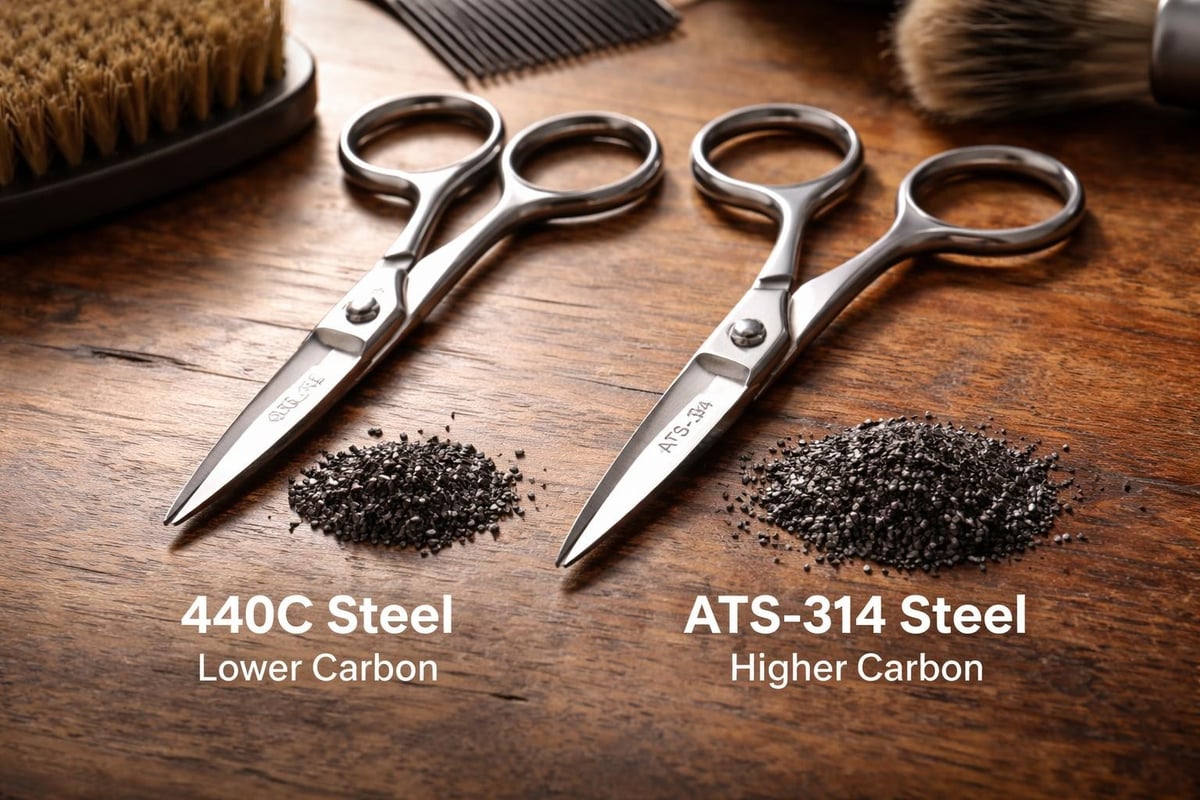
- Edge retention: High-carbon stainless steel (440C or Japanese ATS-314) maintains sharpness through multiple cutting sessions without degrading
Surgical-grade scissors incorporate these features to deliver professional-level results at home, eliminating the need for frequent barber visits whilst maintaining superior control over your mustache architecture.
Material Science: Why Blade Composition Matters
The steel alloy used in scissors for mustache trimming directly impacts cutting performance through hardness ratings and edge geometry. Carbon content determines hardness (measured on the Rockwell C scale), with optimal mustache scissors rating between HRC 55-60. This hardness range provides sufficient strength to resist blade deformation whilst allowing periodic sharpening to maintain cutting edges.
Steel composition comparison:
| Alloy Type | Carbon % | Hardness | Edge Retention | Corrosion Resistance |
|---|---|---|---|---|
| 440C Stainless | 0.95-1.20 | HRC 58-60 | Excellent | Very Good |
| ATS-314 | 1.40 | HRC 60-62 | Superior | Excellent |
| 420 Stainless | 0.15-0.40 | HRC 50-52 | Poor | Good |
Inferior scissors manufactured from 420 stainless steel lack sufficient carbon content to maintain sharp edges, requiring replacement every 3-6 months. Premium alloys maintain cutting performance for years with proper maintenance, representing superior long-term value despite higher initial investment.
Cutting Technique: The Biological Approach
Proper scissor technique aligns with mustache growth biology to enhance appearance whilst minimising damage. The fundamental principle involves cutting with the natural growth direction rather than against it, which reduces tension on follicle anchoring structures within the dermis.
Step-by-step precision cutting:
- Wash and dry your mustache completely (wet cutting creates compression that leads to over-trimming)
- Comb hair downward to identify true length variations
- Position curved-tip scissors at a 45-degree angle to your lip line
- Make small, controlled cuts (2-3mm maximum per snip) working from outer edges toward the philtrum
- Reassess symmetry after each section before proceeding
This methodical approach prevents the common mistake of reactive cutting, where you notice one longer hair and impulsively trim surrounding hairs to match, creating progressive shortening that destroys your desired length.
The curved blade design particularly benefits mustache grooming because it follows the natural contour of your upper lip. Straight scissors require uncomfortable wrist angles that compromise precision, whilst curved blades maintain consistent contact angles throughout the cutting motion.
Advanced Maintenance: Preserving Scissor Performance
Scissors for mustache grooming require specific maintenance protocols to preserve cutting efficiency. The primary enemy of blade sharpness is oxidation from moisture exposure and protein residue from cut hair shafts. After each use, wipe blades with 70% isopropyl alcohol to remove sebum, dead skin cells, and hair fragments that accumulate along cutting edges.
Lubrication prevents friction-induced wear at the pivot point. Apply one drop of mineral oil to the screw mechanism monthly, working the blades through full opening and closing motions to distribute lubricant evenly. Avoid petroleum-based oils that attract dust and create sticky residue.
Sharpening Science: When and How
Blade sharpness degrades through micro-chipping (small fractures in the cutting edge) rather than uniform dulling. You'll notice increased cutting resistance and hear a different sound when blades close (dull scissors produce a scraping noise versus the clean "snick" of sharp edges).
Professional sharpening services use diamond-coated honing wheels set at the original bevel angle to restore edges. Attempting home sharpening without proper angle guides typically damages blade geometry, creating edges that fold rather than cut. The investment in professional sharpening (£10-15 annually) outweighs replacement costs for quality scissors.
Specialised grooming scissors from established manufacturers often include lifetime sharpening services, adding substantial value to initial purchase prices.
Integration with Comprehensive Beard Care
Precise mustache trimming represents one component of facial hair excellence. The health of your mustache fundamentally depends on follicle nourishment from beneath the skin surface. Sebaceous glands attached to each follicle produce sebum (a mixture of triglycerides, fatty acids, and wax esters) that coats emerging hair shafts, providing natural moisture and protection.
Harsh washing with alkaline soaps (pH 9-11) strips this protective sebum layer, leaving hair vulnerable to environmental damage. The solution involves pH-balanced cleansing followed by targeted nutrient application that penetrates the hair shaft to strengthen internal protein structures.
Maintaining a well-groomed mustache whilst supporting the underlying beard care routine creates synergistic benefits. Products formulated with specific active ingredients address both immediate aesthetic concerns and long-term follicle health through evidence-based mechanisms.
Essential active ingredients and their functions:
- Jojoba oil: Chemically similar to sebum, it penetrates the hair shaft to deliver moisture without surface greasiness. Its fatty acid profile (eicosenoic acid, oleic acid) reduces inflammation in surrounding skin tissue
- Argan oil: Contains high concentrations of vitamin E (tocopherols) that function as antioxidants, protecting hair proteins from oxidative damage caused by UV exposure and pollution
- Shea butter: Rich in stearic acid and oleic acid, these fatty acids form a protective barrier on the hair surface whilst reducing inflammatory responses in the follicle environment
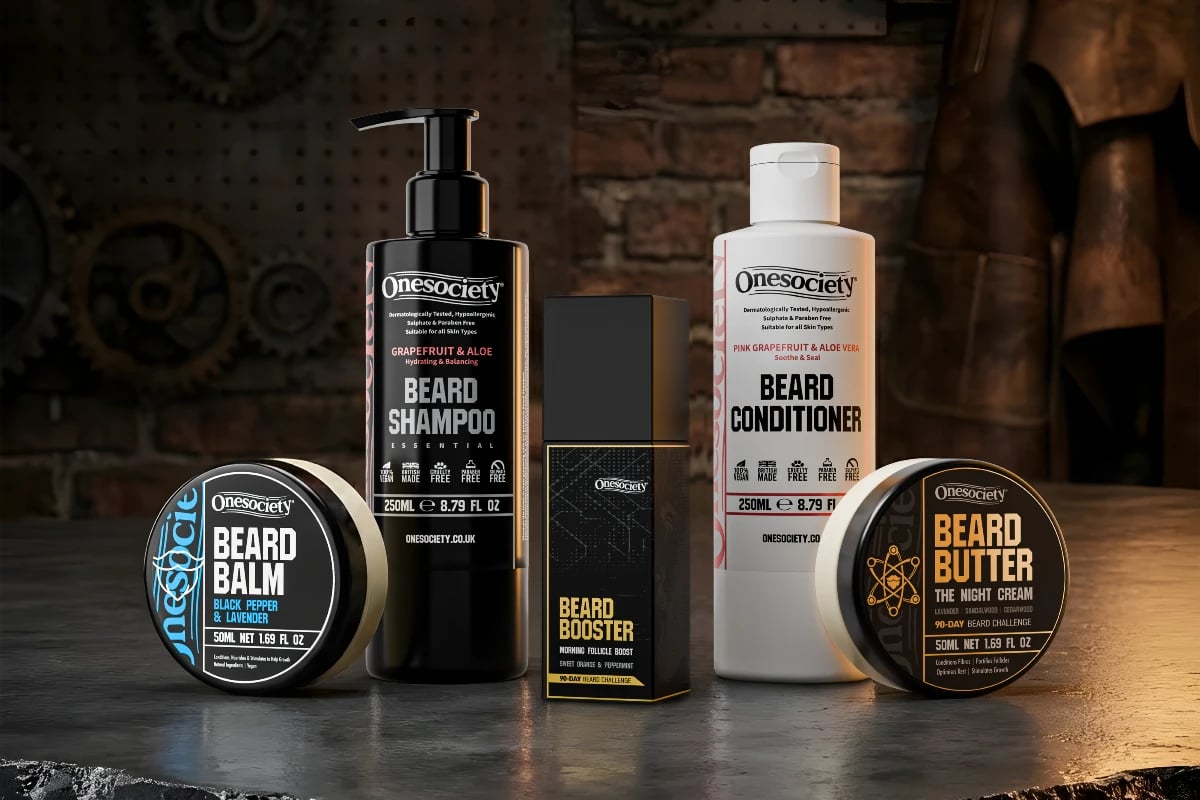
The 90-Day Beard Challenge specifically addresses the complete grooming spectrum through formulations that combine these scientifically validated ingredients in optimal concentrations. The programme recognises that superior mustache aesthetics emerge from consistent nutrient delivery paired with precision trimming techniques using proper tools.
Styling Precision After Cutting
Once you've achieved your desired length with scissors for mustache trimming, styling products provide hold whilst nourishing hair throughout the day. The challenge involves selecting products that deliver hold without causing stiffness or flaking (caused by low-quality synthetic polymers).
Natural waxes (beeswax, candelilla wax) provide medium hold through their physical properties. At room temperature, these waxes remain semi-solid, coating hair shafts with a pliable layer that allows repositioning throughout the day. When warmed between fingers, they become more workable for initial application.
The molecular structure of natural waxes includes long-chain fatty acids and esters that don't evaporate like synthetic styling agents. This chemical stability means your mustache maintains its shaped position from morning application through evening, eliminating the need for repeated touch-ups that characterise inferior products.
Choosing Your Scissors: Evidence-Based Selection Criteria
The market offers hundreds of scissors for mustache options across price ranges from £5 to £150. This variation reflects genuine quality differences in materials, manufacturing precision, and design optimisation for facial hair grooming versus general-purpose cutting.
Essential features for effective mustache scissors:
- Length: 4-5 inches total length (blade plus handles) provides optimal control for facial work
- Blade length: 1.5-2 inches allows precise cutting without obscuring your view
- Handle design: Offset handles reduce hand fatigue during extended grooming sessions
- Tip style: Rounded or curved tips prevent accidental skin punctures
- Weight: 25-40 grams balances stability with manoeuvrability
Avoid scissors marketed as "multipurpose" or "craft scissors" repurposed for grooming. These lack the blade geometry optimised for cutting keratin protein structures, delivering inconsistent results that compromise your mustache appearance.
Professional grooming sets often bundle scissors with specialised combs featuring fine-tooth spacing (1-2mm between teeth) designed specifically for mustache manipulation during cutting. The comb lifts hair away from skin, creating a guide that prevents over-trimming whilst ensuring even length distribution.
The Testing Protocol
Before committing to expensive scissors, test basic functionality through simple assessments. Hold the scissors in your dominant hand and open/close them twenty times. Quality scissors operate smoothly throughout the full range of motion without sticking, requiring excessive force, or producing grinding sensations.
The blades should meet evenly along their entire length from pivot point to tips. Hold scissors up to light whilst slowly closing them-you shouldn't see light gaps between blades at any point. Gaps indicate poor manufacturing tolerances that create inconsistent cutting performance.
Finally, test cutting resistance using a single strand of cotton thread. Sharp, properly aligned blades slice through thread cleanly with minimal closing pressure. If you need to "chew" through the thread or it slips between blades without cutting, the scissors lack sufficient sharpness for effective grooming.
Beyond the Cut: Complete Mustache Ecosystem
Precision trimming with quality scissors for mustache grooming solves the mechanical challenge of length control and shape maintenance. However, truly distinguished facial hair requires addressing the complete biological ecosystem surrounding follicle health, hair shaft integrity, and skin condition.
The skin beneath your mustache experiences unique challenges. It receives less airflow than exposed facial areas, creating conditions that favour bacterial colonisation (particularly Staphylococcus epidermidis and Propionibacterium species). These bacteria feed on sebum and dead skin cells, producing waste products that irritate the epidermis.
Regular cleansing with pH-balanced formulations (pH 5.5-6.5) removes bacterial food sources whilst preserving the skin's acid mantle, the thin protective layer of sebum and amino acids that inhibits pathogenic bacterial growth. The beard wash collection specifically targets this requirement through gentle surfactants that cleanse without disrupting skin barrier function.
The Hydration-Retention Balance
After cleansing and trimming, your mustache hair requires moisture replenishment. The challenge involves distinguishing between hydration (adding water content) and moisture retention (preventing water loss). Many grooming products focus exclusively on the former whilst ignoring the latter, creating temporary softness that disappears within hours.
Effective moisture retention requires occlusive ingredients that form a breathable barrier on the hair surface. These barriers slow transepidermal water loss (TEWL) without completely sealing the hair shaft, which would prevent natural sebum distribution and create greasy appearance.
Occlusive ingredient comparison:
| Ingredient | Molecular Weight | Barrier Function | Absorption Speed | Feel |
|---|---|---|---|---|
| Shea Butter | Mixed fatty acids | Moderate-High | Slow | Rich |
| Jojoba Oil | 390-430 Da | Moderate | Medium | Light |
| Argan Oil | 650-900 Da | Moderate | Medium-Fast | Silky |
Combining these ingredients in specific ratios creates synergistic effects where total moisture retention exceeds the sum of individual contributions. This formulation science separates professional-grade grooming products from commodity alternatives that rely on single-ingredient approaches.
Long-Term Strategy: Building Mustache Excellence
Your relationship with scissors for mustache grooming extends beyond individual cutting sessions. Consistent technique paired with regular maintenance schedules trains your mustache to grow in desired directions whilst establishing muscle memory for efficient trimming.
Weekly maintenance schedule:
- Day 1-2: Trim stray hairs and maintain shape edges
- Day 3-4: Deep cleansing to remove product buildup and environmental particles
- Day 5-6: Conditioning treatment to strengthen hair shaft protein structures
- Day 7: Comprehensive trim to maintain overall length and symmetry
This structured approach prevents the reactive grooming that creates frustration. Rather than waiting until your mustache looks unruly, then over-correcting with aggressive trimming, you maintain consistent appearance through small, regular interventions.
The psychological benefit proves equally valuable. Regular grooming rituals establish confidence in your appearance, reducing anxiety about professional situations or social events where facial hair presentation matters. You know your mustache looks controlled and intentional rather than neglected or chaotic.
Precision mustache grooming begins with understanding hair biology and selecting tools that respect keratin structures through clean cutting rather than tearing vibration. Quality scissors for mustache trimming deliver this precision whilst enabling the control necessary for maintaining shape across irregular growth patterns. When you pair proper cutting technique with science-backed grooming products, you create conditions where your mustache achieves its full aesthetic and health potential. Onesociety provides the complete ecosystem of natural, research-validated products that transform facial hair from acceptable to exceptional, supporting your grooming goals through formulations designed around biological function rather than marketing claims.