

Your moustache speaks before you do. It frames your face, communicates your style, and reveals how seriously you take grooming. Yet most men treat their facial hair as an afterthought, running fingers through it or using whatever plastic comb they find in a drawer. The result? Uneven growth, split ends, irritated skin, and a dishevelled appearance that undermines your entire look. A dedicated moustache comb changes everything.
The Hidden Problem Destroying Your Moustache
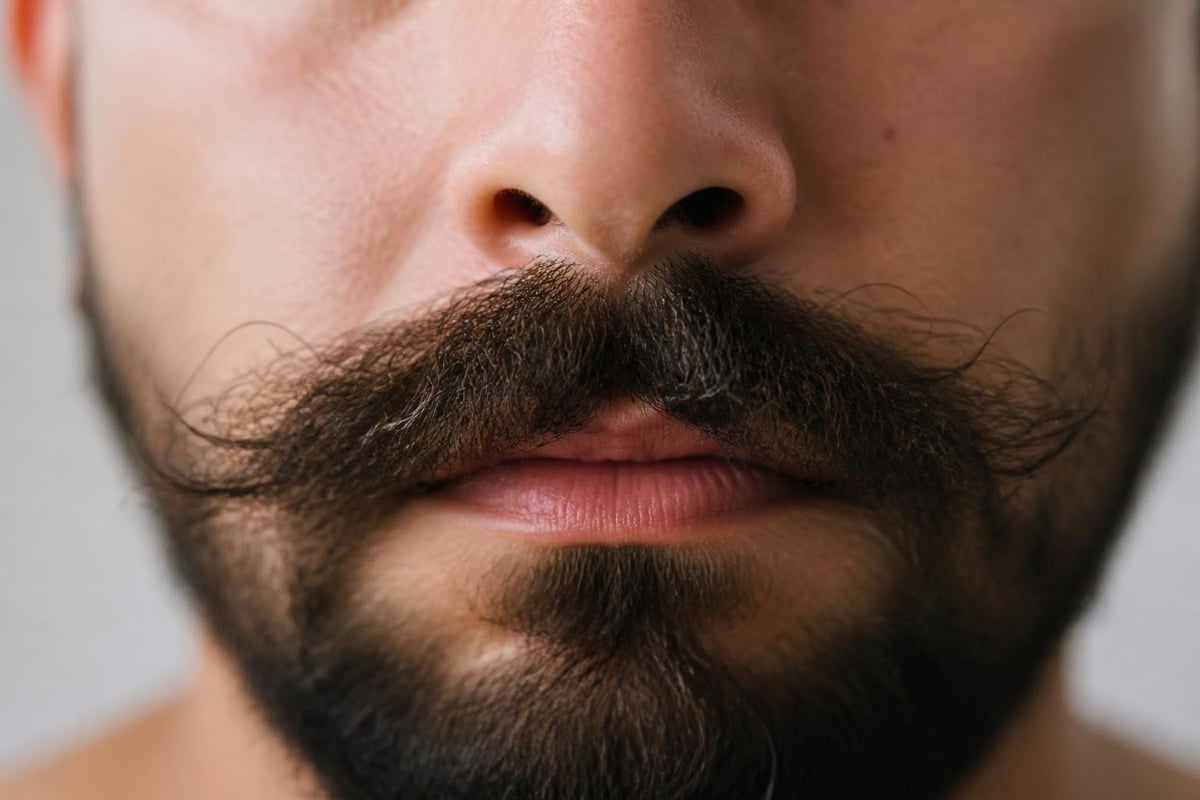
Every day without proper grooming tools creates invisible damage. Coarse facial hair tangles easily, trapping dirt, food particles, and dead skin cells. When you ignore these tangles, they create knots that pull at follicles, causing inflammation at the root level. This inflammation restricts blood flow to hair follicles, starving them of the nutrients they need for healthy growth.
The issue compounds when you attempt to fix the problem with the wrong tools. Wide-toothed plastic combs snap hair shafts. Fine-toothed combs designed for scalp hair create static electricity that makes facial hair frizzy and unmanageable. Meanwhile, bacteria accumulate in the gaps between teeth, transferring directly to your skin with each pass.
Why Your Current Approach Fails
Consider what happens during a typical morning routine. You splash water on your face, perhaps apply some beard oil, then drag whatever comb is nearby through damp facial hair. This sequence violates three fundamental principles of facial hair care:
- Wet hair stretches up to 30% more than dry hair, making it vulnerable to breakage
- Random comb materials generate static, which disrupts the hair cuticle
- Improper tooth spacing either misses tangles or tears through them
The American Academy of Dermatology emphasises proper grooming technique as essential for maintaining healthy skin beneath facial hair. Without the right tools, you're fighting a losing battle against ingrown hairs, folliculitis, and patchy growth patterns.
Material Science: What Your Moustache Comb Should Be Made From
Not all combs perform equally. The material determines durability, performance, and long-term effects on hair health. Understanding the science behind each option helps you make informed decisions.
| Material | Static Generation | Durability | Environmental Impact | Cost |
|---|---|---|---|---|
| Cellulose Acetate | Minimal | 5-7 years | Biodegradable | £15-40 |
| Wood (Pear, Sandalwood) | None | 3-5 years | Renewable | £10-25 |
| Horn (Ox, Buffalo) | None | Lifetime | Sustainable byproduct | £30-80 |
| Plastic (Polypropylene) | High | 1-2 years | Non-biodegradable | £2-8 |
| Metal (Stainless Steel) | High | Lifetime | Recyclable | £12-30 |
Cellulose Acetate: The Premium Standard
Cellulose acetate combs represent the gold standard for moustache grooming. Derived from plant cellulose, this material combines the smooth glide of natural materials with modern manufacturing precision. The production process involves extruding cellulose fibres into sheets, then cutting and hand-polishing each comb to create seamless, rounded teeth.
Why does this matter? Sharp edges on cheap plastic combs create microscopic tears in the hair cuticle. These tears allow moisture to escape, leading to brittle, dry facial hair. Acetate's smooth surface prevents this damage whilst distributing natural oils evenly from root to tip.
The material also offers flexibility without brittleness. When you encounter a stubborn tangle, acetate teeth bend slightly rather than snapping the hair or breaking themselves. Research on bioplastic materials confirms that cellulose acetate maintains structural integrity across temperature variations, making it reliable in both cold winter air and warm, humid bathrooms.
Natural Alternatives: Wood and Horn
Wood combs carved from pear, sandalwood, or beech offer zero static and a pleasant tactile experience. The porous nature of wood absorbs minimal amounts of grooming products, which gradually conditions the comb itself. Each pass through your moustache picks up trace amounts of natural sebum, creating a tool that becomes more effective over time.
Horn combs, crafted from ethically sourced ox or buffalo horn, represent traditional craftsmanship at its finest. No two combs share identical grain patterns. Horn's keratin composition mirrors that of human hair, creating natural compatibility that reduces friction and prevents splitting.
Tooth Spacing: The Technical Specification That Matters Most
A moustache comb's effectiveness hinges on tooth spacing. Too wide, and you miss fine hairs. Too narrow, and you create painful tugging. The optimal spacing depends on your facial hair's texture and length.
Fine Teeth (0.5-1.0mm spacing)
Ideal for:
- Short moustaches (under 1cm)
- Fine or straight facial hair
- Detailed styling work
- Training new growth direction
Fine teeth catch every hair, making them essential for precision work around the philtrum and corners of the mouth. They excel at distributing lightweight products like serums but struggle with thick, coarse hair or longer styles.
Medium Teeth (1.0-2.0mm spacing)
The versatile middle ground that suits most moustache styles. Medium spacing handles:
- Medium-length growth (1-3cm)
- Mixed texture (some coarse, some fine)
- Daily detangling
- Product distribution
This spacing appears in dual-sided combs, paired with either fine or wide teeth on the opposite edge.
Wide Teeth (2.0-3.5mm spacing)
Reserved for:
- Long, handlebar styles
- Very coarse or curly facial hair
- Detangling after washing
- Working through thick balms
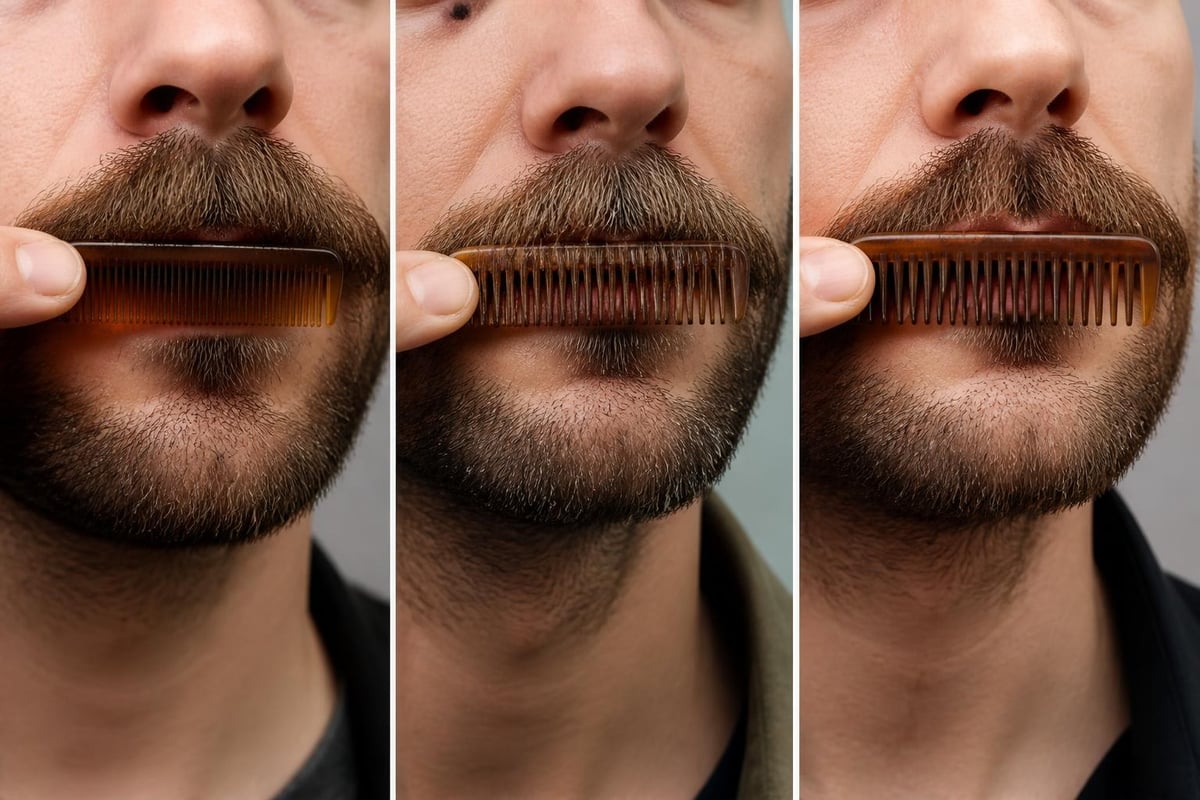
Professional barbers understand that comb selection depends on specific use cases. The same moustache might require three different combs: wide teeth for post-shower detangling, medium for daily maintenance, and fine for pre-event styling.
The Proper Technique: How to Actually Use Your Moustache Comb
Owning quality tools means nothing without proper technique. Historical records show that Victorian gentlemen devoted considerable attention to facial hair maintenance, understanding that systematic grooming created superior results.
Morning Routine Protocol
Step 1: Prepare the canvas
Wash your moustache with lukewarm water to remove overnight accumulation. Pat dry with a clean towel until damp, not dripping. Never comb soaking wet facial hair.
Step 2: Apply conditioning treatment
Work a small amount of beard oil or balm between your palms. The fatty acids in quality products like shea butter penetrate the hair shaft, reducing friction during combing. Shea butter's oleic and stearic acids coat each hair, creating a protective barrier that prevents moisture loss whilst reducing inflammation in the underlying skin.
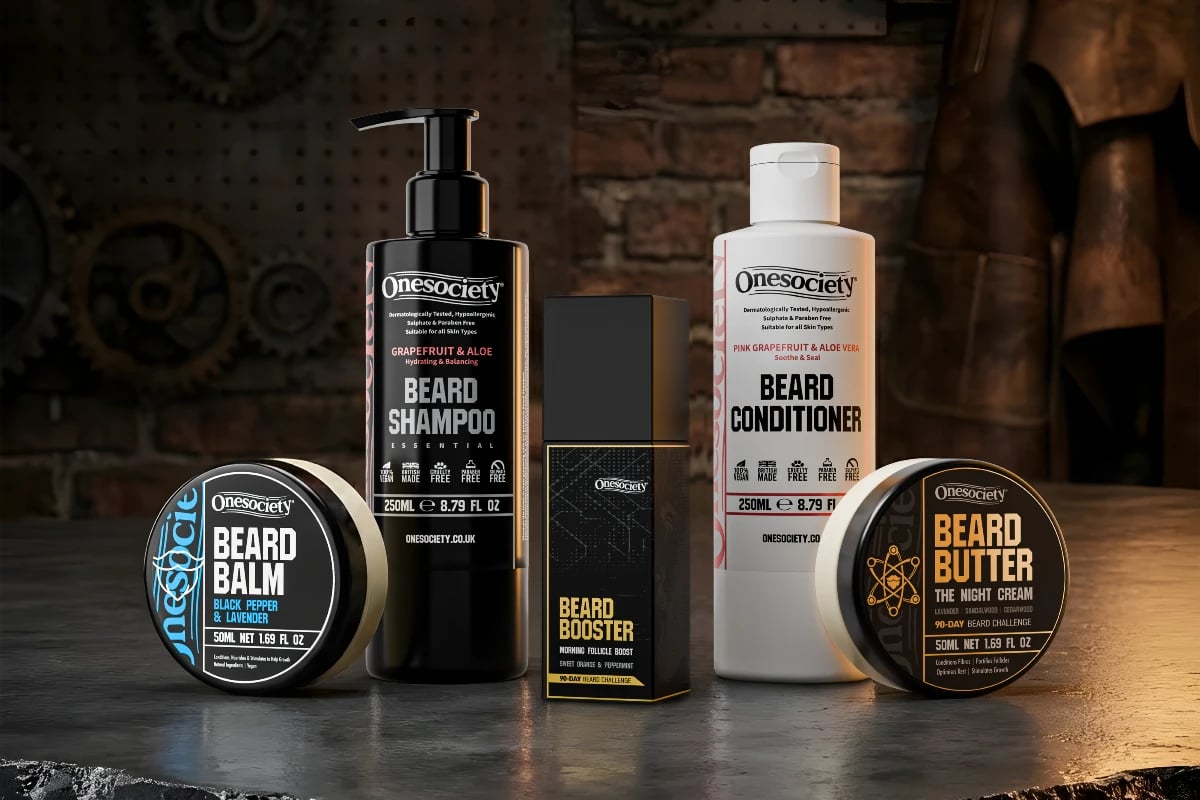
For those committed to transforming their facial hair, the 90-Day Beard Challenge provides a complete system designed around this principle. The kit includes follicle-igniting Beard Booster to improve blood flow at the root level, combined with Beard Butter for nightly recovery and the Hydro-Lock Balm that creates a protective shield during combing. This systematic approach addresses grooming from multiple angles, ensuring your moustache receives consistent, science-backed care.
Step 3: Directional combing sequence
- Start at the centre, beneath your nose
- Comb outward toward each corner of your mouth
- Use gentle, short strokes rather than long sweeps
- Work from root to tip, following natural growth direction
- Flip the comb and work upward from bottom to top
Step 4: Shape and set
Once detangled, use the fine-toothed side for shaping. This final pass aligns every hair, creating a polished appearance. For handlebar or styled moustaches, apply additional wax and comb into position whilst the product remains pliable.
Evening Maintenance
Night-time grooming prevents tomorrow's tangles. Brush out accumulated debris, apply conditioning balm, then comb through once to distribute product. This simple routine keeps follicles healthy and hair hydrated.
Style-Specific Combing Strategies
Different moustache styles require adapted techniques. Understanding these nuances separates amateur grooming from professional results.
The Chevron: Classic and Low-Maintenance
This thick, straight style covers the upper lip. Comb straight down from the nose, using medium teeth to maintain fullness. Avoid over-combing, which thins the appearance. Two passes daily suffice.
The Handlebar: Precision Engineering
Achieving symmetrical curves demands patience and the right tools. After applying firm-hold wax, use fine teeth to separate and train hairs outward. Work in small sections, twisting the ends between thumb and forefinger before setting with the comb's edge. Victorian gentlemen used specialised moustache guards to protect their styled facial hair whilst eating and drinking, demonstrating their dedication to maintaining these elaborate shapes.
The Walrus: Controlled Chaos
Long, bushy walrus moustaches require wide-toothed combs to prevent breakage. Comb outward and slightly downward, embracing natural volume rather than fighting it. Focus on removing tangles without flattening the style's characteristic fullness.
The Pencil: Detail-Oriented Precision
Thin, defined pencil moustaches demand fine-toothed precision. Comb upward to remove stray hairs, then downward to create a sharp lower edge. Daily trimming maintains the narrow silhouette.
Maintenance and Hygiene: Extending Your Comb's Lifespan
Even premium combs fail without proper care. Bacteria, product residue, and accumulated oils degrade performance and transfer to your face.
Weekly Cleaning Protocol
- Fill a bowl with warm water and gentle soap
- Submerge the comb for 5-10 minutes
- Use a soft brush to clean between teeth
- Rinse thoroughly under running water
- Pat dry and leave in open air overnight
Never use hot water on wooden or horn combs, as it causes warping. Acetate handles heat better but still benefits from gentle treatment.
Monthly Deep Clean
- Prepare a solution of 1 part white vinegar to 3 parts water
- Soak comb for 15 minutes to dissolve product buildup
- Scrub with an old toothbrush
- Rinse completely
- Apply a drop of conditioning oil to wooden combs
Storage Best Practices
Keep your moustache comb in a dry, ventilated space. Leather pouches provide protection whilst allowing airflow. Avoid bathroom drawers where humidity promotes bacterial growth. Many professionals keep one comb at home and a travel comb in a protective case for consistency on the road.
Identifying Quality: What to Look for When Purchasing
The market floods with low-quality options marketed as premium tools. Knowing quality indicators protects your investment.
Visual Inspection Checklist
- Seamless construction: No visible glue lines or joints
- Smooth teeth: Run your finger across tips-they should feel rounded, not sharp
- Uniform spacing: Measure gaps between teeth with a ruler
- Balanced weight: Quality materials have substantial heft without excess
- Clean finish: No rough patches, burrs, or discolouration
Performance Testing
Before committing to a purchase, perform these quick tests if possible:
- Flex test: Gently bend the comb. It should flex slightly then return to shape
- Static test: Comb through dry hair. Excessive flyaways indicate static generation
- Snag test: Pull slowly through a small section. Quality combs glide without catching
Price Reality Check
Authentic quality costs more. Expect to pay:
- £15-25 for entry-level acetate or wood
- £25-40 for premium acetate or exotic woods
- £40-80 for hand-polished horn or artisan-crafted pieces
Anything substantially cheaper likely cuts corners on materials or manufacturing precision. For men serious about personal care and grooming, investing in proper tools delivers returns through improved appearance and reduced hair damage.
Pairing Your Comb with Complementary Grooming Products
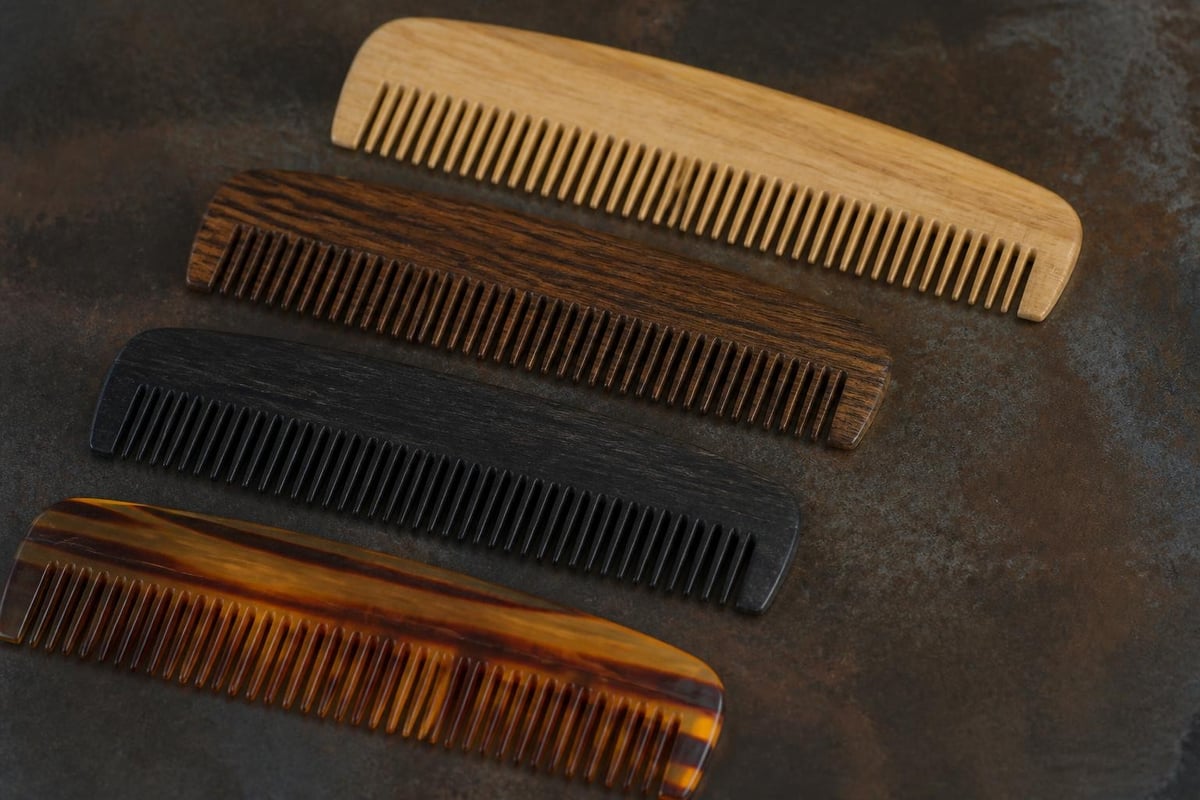
A moustache comb works best within a complete grooming system. The right products enhance the comb's effectiveness whilst protecting hair health.
The Foundation Layer: Oils and Serums
Light oils containing jojoba, argan, or grapeseed penetrate quickly, providing lubrication for combing without weighing down facial hair. Apply before using your comb to reduce friction. The vitamin E in quality oils acts as an antioxidant, protecting follicles from environmental damage whilst the comb distributes these benefits evenly.
The Styling Layer: Balms and Waxes
Medium-hold balms combine butters and beeswax for flexible hold. Comb these through damp facial hair to lock in moisture and create subtle shape. Firm-hold waxes require heat activation-warm between palms, apply sparingly, then comb into position before the wax sets.
The Treatment Layer: Conditioners and Boosters
Weekly deep conditioning treatments repair damage accumulated from environmental exposure. Some formulas include biotin and keratin proteins that temporarily fill gaps in damaged hair shafts. Combing these treatments through ensures penetration to every hair.
Common Mistakes That Sabotage Your Results
Even with quality tools, poor habits undermine progress. Recognising these errors helps you course-correct quickly.
Over-Combing Syndrome
Enthusiastic groomers often comb excessively, believing more equals better. Reality says otherwise. Each pass through your moustache strips away small amounts of natural oil. Five to six strokes per section suffices for most styles. More than that weakens hair structure and irritates underlying skin.
Wrong-Direction Combing
Always comb in the direction of natural growth. Fighting your facial hair's natural pattern causes breakage and creates an unkempt appearance as hairs rebel against forced positioning. Observe how your moustache grows for a week, noting any swirls or directional changes, then work with these patterns.
Neglecting the Comb Itself
A dirty comb spreads yesterday's problems across today's grooming session. The residue accumulated between teeth harbours bacteria that cause folliculitis and skin irritation. Regular cleaning isn't optional-it's fundamental to the entire process.
Ignoring Tooth Spacing
Using fine teeth on thick, coarse hair creates painful pulling and unnecessary breakage. Match tooth spacing to your specific facial hair texture and length. When in doubt, start wider and work toward finer spacing as you detangle.
Integration with Trimming and Shaping
Your moustache comb partners with scissors and trimmers to maintain precise shapes. The comb serves as both preparation tool and guide.
Pre-Trim Preparation
Before trimming, comb your moustache thoroughly to reveal its true length and shape. Wet or product-laden hair appears longer than it actually is. Dry, combed facial hair shows you exactly what needs trimming.
The Comb-Over-Finger Technique
For length reduction without destroying shape:
- Comb section straight
- Hold between index and middle finger
- Slide fingers to desired length
- Trim hair protruding beyond fingers
- Repeat across entire moustache
This method ensures even results and prevents the dreaded over-trim that requires weeks to correct.
Edge Definition
Use the comb's spine (the solid back edge) as a straight edge when defining your moustache's upper or lower boundaries. Place the spine where you want the edge, then carefully trim along it. This creates professional-looking lines that electric trimmers alone cannot achieve.
Environmental Considerations and Sustainable Choices
Modern grooming extends beyond personal appearance into environmental responsibility. Your choice of moustache comb reflects values as well as style preferences.
Material Lifecycle Comparison
Plastic combs might cost less initially, but their environmental burden extends decades. Most end up in landfills where they persist for centuries. Cellulose acetate, whilst requiring industrial processing, biodegrades within several years when exposed to microbial action in appropriate conditions.
Wooden combs source from renewable forests when properly certified. Look for FSC (Forest Stewardship Council) certification ensuring responsible harvesting practices. Horn combs represent upcycling of materials otherwise discarded from food production, though ethical sourcing verification remains important.
Longevity Equals Sustainability
The most sustainable comb is the one you keep using for years. A £35 acetate comb lasting seven years costs £5 annually. Five plastic combs at £3 each over the same period total £15 whilst generating substantially more waste. Calculate cost-per-use rather than upfront price to identify true value.
Building Your Complete Moustache Grooming Kit
A single comb rarely suffices for comprehensive facial hair care. Building a focused collection addresses different needs without unnecessary duplication.
The Essential Three-Comb System
Daily driver (Medium teeth, acetate): Handles 80% of grooming tasks. Keeps this comb in your bathroom for morning and evening maintenance.
Detangling specialist (Wide teeth, wood or horn): Reserved for post-shower work when hair is most vulnerable. The natural material prevents static whilst wide spacing navigates through damp, swollen hair shafts.
Precision finisher (Fine teeth, acetate or horn): Brings out for special occasions or detailed styling. Creates sharp lines and catches every stray hair.
Supporting Tools
- Boar bristle brush for distributing oils
- Small grooming scissors for spot corrections
- Leather pouch or wooden box for storage
- Dedicated cleaning brush for comb maintenance
Travel Considerations
Invest in a compact travel comb with protective case. Airport security and hotel bathrooms present unique challenges. A metal comb might set off detectors, whilst wooden combs risk damage in luggage. Acetate offers durability in a travel-friendly format.
Mastering your moustache requires the right tools and proper technique. A quality moustache comb transforms daily grooming from a chore into an effective maintenance ritual that protects your investment in facial hair growth. Whether you're cultivating a classic chevron or an elaborate handlebar, the principles remain consistent: choose appropriate materials, match tooth spacing to your hair texture, and maintain regular cleaning habits. Onesociety supports your grooming journey with scientifically formulated products designed to work in harmony with proper combing techniques, helping you achieve the healthy, well-maintained facial hair you've been working toward.