

Your beard feels coarse, looks dull, and the skin underneath screams for relief. This isn't just about aesthetics-dry facial hair breaks easily, follicles weaken, and inflammation sets in. The solution lies in understanding how moisturising beard oil works at a cellular level to reverse these problems and restore your beard's health.
The Problem: Why Your Beard Desperately Needs Moisture
Facial hair differs fundamentally from scalp hair. Each beard strand grows from a follicle surrounded by sebaceous glands that produce sebum, your skin's natural oil. Here's the catch: as your beard grows longer, these glands can't produce enough sebum to coat every hair shaft from root to tip.
What happens next?
- Your beard hair becomes porous and absorbs moisture from the air, then loses it just as quickly
- The cuticle layer (the outer protective sheath) lifts and splinters
- Underlying skin dehydrates, triggering inflammation and flaking
- Follicles receive inadequate nourishment, slowing growth and weakening new hairs
The typical beard loses approximately 20-30% of its moisture content daily through evaporation alone. Without intervention, this cycle accelerates damage. Dead skin cells accumulate, causing what many call "beardruff"-a visible sign of severe dehydration beneath your facial hair.
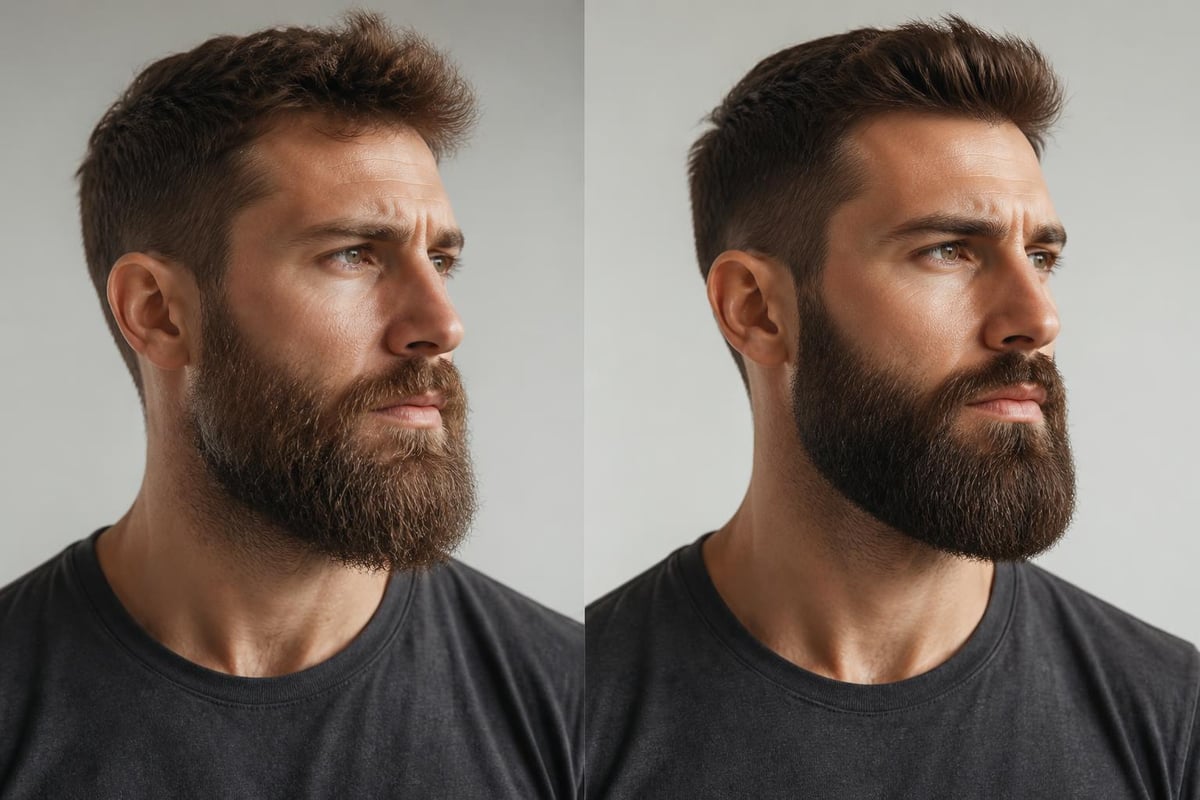
The Dehydration Spiral
Stripped of moisture, your beard hair's protein structure degrades. Keratin bonds weaken, creating microscopic fractures along each shaft. This manifests as:
- Brittleness: Hair snaps when combed or styled
- Frizz: Lifted cuticles catch on each other, creating tangles
- Dullness: Light scatters off damaged surfaces instead of reflecting smoothly
- Split ends: Compromised tips fray and split vertically
Simultaneously, your skin suffers. The epidermis beneath your beard contains fewer moisture-retaining lipids than exposed facial skin. When deprived of hydration, it triggers an inflammatory response-releasing histamines that cause that maddening itch every beardsman knows too well.
The Agitation: What Ignoring Moisture Does to Your Beard
Let's examine the cascade of problems that intensify when you neglect proper beard hydration. Research shows beard oil addresses multiple skin and hair issues by targeting the root causes of dryness.
Accelerated Follicle Damage
Each hair follicle requires specific nutrients and moisture to function optimally. When you ignore hydration:
- Blood flow to follicles decreases by up to 40%
- Cell turnover slows, leaving follicles clogged with dead keratinocytes
- Sebaceous glands overcompensate, producing excess sebum that mixes with debris
- Bacterial colonization increases, causing folliculitis
| Hydration Status | Follicle Health | Growth Rate | Breakage Risk |
|---|---|---|---|
| Well-moisturised | Optimal blood flow | 0.4mm/day | 15% |
| Mildly dry | Reduced circulation | 0.3mm/day | 35% |
| Severely dehydrated | Inflamed follicles | 0.2mm/day | 65% |
The statistics reveal a direct correlation between moisture levels and beard performance. Dehydrated facial hair doesn't just look worse-it fundamentally underperforms at every biological level.
The Psychological Toll
Beyond physical symptoms, a neglected beard impacts your confidence. You touch your face constantly, feeling roughness where there should be softness. Social interactions become self-conscious moments rather than confident exchanges.
Professional settings amplify this discomfort. A patchy, unkempt beard signals poor attention to detail-unfair perhaps, but perception matters in careers and relationships. Studies in social psychology confirm that well-groomed facial hair correlates with perceived trustworthiness and competence.
Understanding Moisturising Beard Oil: The Science Behind Hydration
Moisturising beard oil functions through a dual-action mechanism: it delivers hydration whilst creating a protective barrier that prevents moisture loss. The best ingredients for beard oil work synergistically to achieve these goals.
Carrier Oils: The Hydration Workhorses
Carrier oils form the foundation of any quality moisturising beard oil. These aren't random selections-each oil contains specific fatty acid profiles that interact with hair and skin at a molecular level.
Jojoba oil mimics human sebum almost perfectly. Its chemical structure (a wax ester rather than a triglyceride) allows it to penetrate the hair shaft without leaving residue. The oleic acid content-approximately 10%-binds to keratin proteins, strengthening weakened bonds whilst delivering moisture deep into the cortex.
Argan oil contains 42% oleic acid and 36% linoleic acid. This combination addresses two critical needs: oleic acid softens and conditions, whilst linoleic acid reduces inflammation in the epidermis. The vitamin E content (620mg per litre) acts as an antioxidant, protecting follicles from oxidative stress that accelerates ageing.
Sweet almond oil delivers primarily oleic acid (65%) with added vitamins A and D. These fat-soluble vitamins penetrate sebaceous glands, supporting their natural oil production rather than replacing it. This distinction matters-you're not just coating the surface; you're supporting the skin's inherent moisturising mechanisms.
How Absorption Actually Works
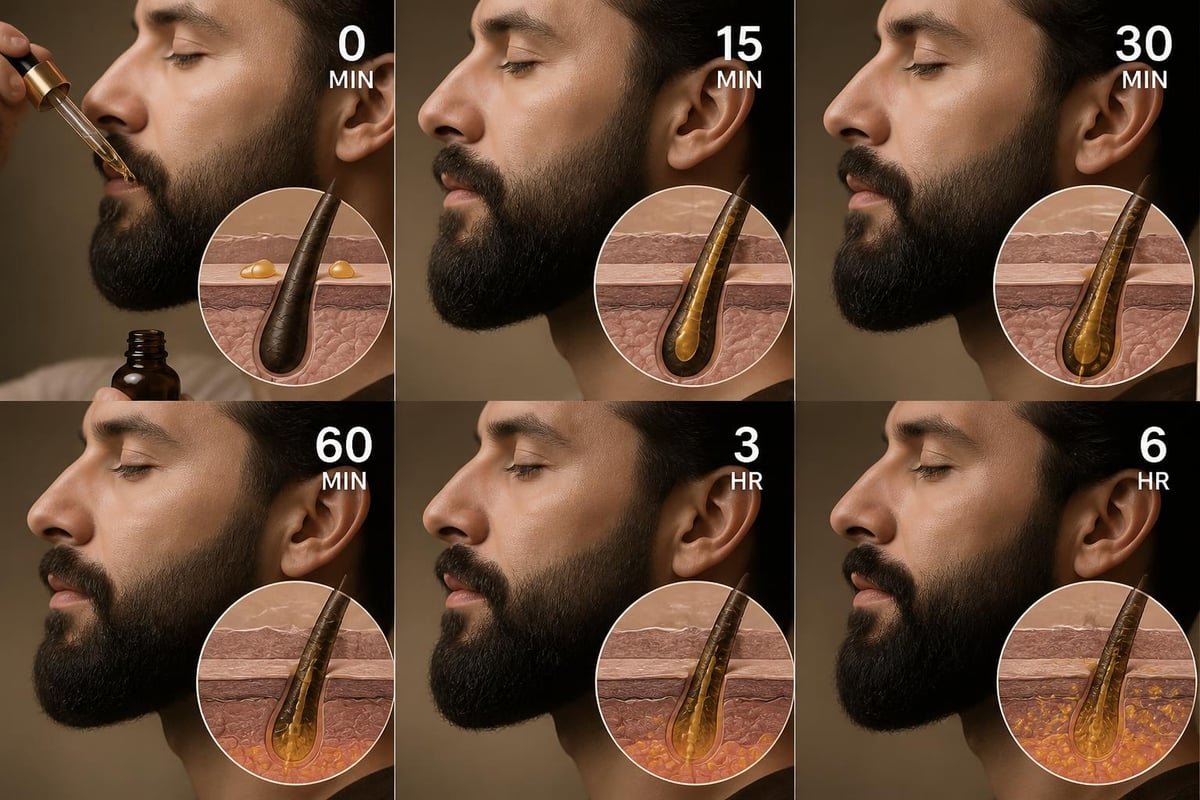
When you apply moisturising beard oil, several processes occur simultaneously:
- Surface spreading: Oil distributes across the cuticle layer within 30 seconds
- Cuticle penetration: Smaller molecules slip between cuticle scales (2-5 minutes)
- Cortex infiltration: Fatty acids reach the hair's protein core (15-30 minutes)
- Skin absorption: Dermis accepts moisture and nutrients (30-60 minutes)
The molecular weight of carrier oils determines penetration depth. Jojoba (molecular weight ~600) penetrates faster than castor oil (molecular weight ~930). This explains why beard oil formulations matter significantly for achieving optimal results.
Essential Oils: Targeted Problem-Solving
Beyond carrier oils, essential oils address specific concerns through their biochemical properties:
- Tea tree oil (terpinen-4-ol concentration: 40%) kills Malassezia fungi responsible for dandruff whilst reducing inflammation
- Cedarwood oil increases scalp circulation by up to 25%, delivering more nutrients to follicles
- Lavender oil (linalool and linalyl acetate) soothes irritated skin by modulating pain receptors
These aren't aromatherapy gimmicks-they're active pharmaceutical-grade compounds with documented biological effects.
Application Techniques That Maximise Moisture Retention
Knowing what moisturising beard oil does means nothing without proper application. The method determines whether you achieve superficial coating or deep cellular hydration.
The Optimal Application Protocol
Step 1: Timing Matters Apply moisturising beard oil to a slightly damp beard-ideally post-shower. Water molecules open hair cuticles, creating channels for oil penetration. The beard should be 70-80% dry; excess water prevents oil absorption, whilst bone-dry hair resists penetration.
Step 2: Quantity Calibration Beard length dictates volume requirements:
- Short beard (1-2 inches): 3-4 drops
- Medium beard (2-4 inches): 5-7 drops
- Long beard (4+ inches): 8-12 drops
Excess oil sits on the surface, attracting dust and looking greasy. Insufficient oil leaves sections untreated, creating uneven texture.
Step 3: Palm Emulsification Rub oil between palms for 15-20 seconds. Body heat reduces viscosity, allowing smoother distribution. This step activates volatile compounds in essential oils, maximising their absorption rate.
Step 4: Deep Distribution Work fingers through your beard from root to tip, ensuring every strand receives coating. Don't just slick the surface-separate sections and massage oil into the underlayer. The skin beneath your beard needs equal attention.
Step 5: Combing for Penetration Use a wide-tooth comb immediately after application. This serves three purposes: removes tangles without breakage, distributes oil evenly, and gently exfoliates skin, preventing ingrown hairs.
Common Application Mistakes
| Mistake | Consequence | Correction |
|---|---|---|
| Applying to wet beard | Oil slides off without penetrating | Pat beard 70-80% dry first |
| Using too much product | Greasy appearance, wasted oil | Follow length-based guidelines |
| Skipping skin underneath | Continued dryness and itch | Massage into skin deliberately |
| Once-daily application only | Insufficient hydration in dry climates | Apply twice daily if needed |
For those exploring top beard growth products, consistent moisturising beard oil application creates the foundation for optimal follicle performance.
Ingredient Deep-Dive: What Actually Moisturises Your Beard
Not all moisturising beard oils deliver equal results. The ingredient list tells you everything about product efficacy. Here's how to decode what actually works.
The Fatty Acid Profile
Fatty acids determine moisture retention capacity. Three types dominate quality formulations:
Saturated fatty acids (palmitic acid, stearic acid) create occlusive barriers that lock moisture inside hair shafts. They're heavier molecules that coat rather than penetrate, ideal for extremely dry beards in harsh climates.
Monounsaturated fatty acids (oleic acid, palmitoleic acid) balance penetration with protection. They slip between cuticle scales whilst providing moderate surface protection. Most carrier oils contain 40-70% monounsaturated fats for this reason.
Polyunsaturated fatty acids (linoleic acid, linolenic acid) penetrate deepest due to smaller molecular size. They're essential for addressing inflammation and supporting skin barrier function. However, they oxidize faster, requiring antioxidant protection.
Natural Vitamins and Antioxidants
Vitamin E (tocopherol) serves dual roles in moisturising beard oil. First, it prevents the oil itself from going rancid by neutralizing free radicals. Second, it protects hair follicles from environmental oxidative stress-pollution, UV radiation, cigarette smoke-that depletes moisture and damages keratin.
Vitamin A (retinol in some formulations) accelerates cell turnover in follicles, clearing blockages that prevent proper sebum secretion. This helps your skin's natural moisturising system function optimally.
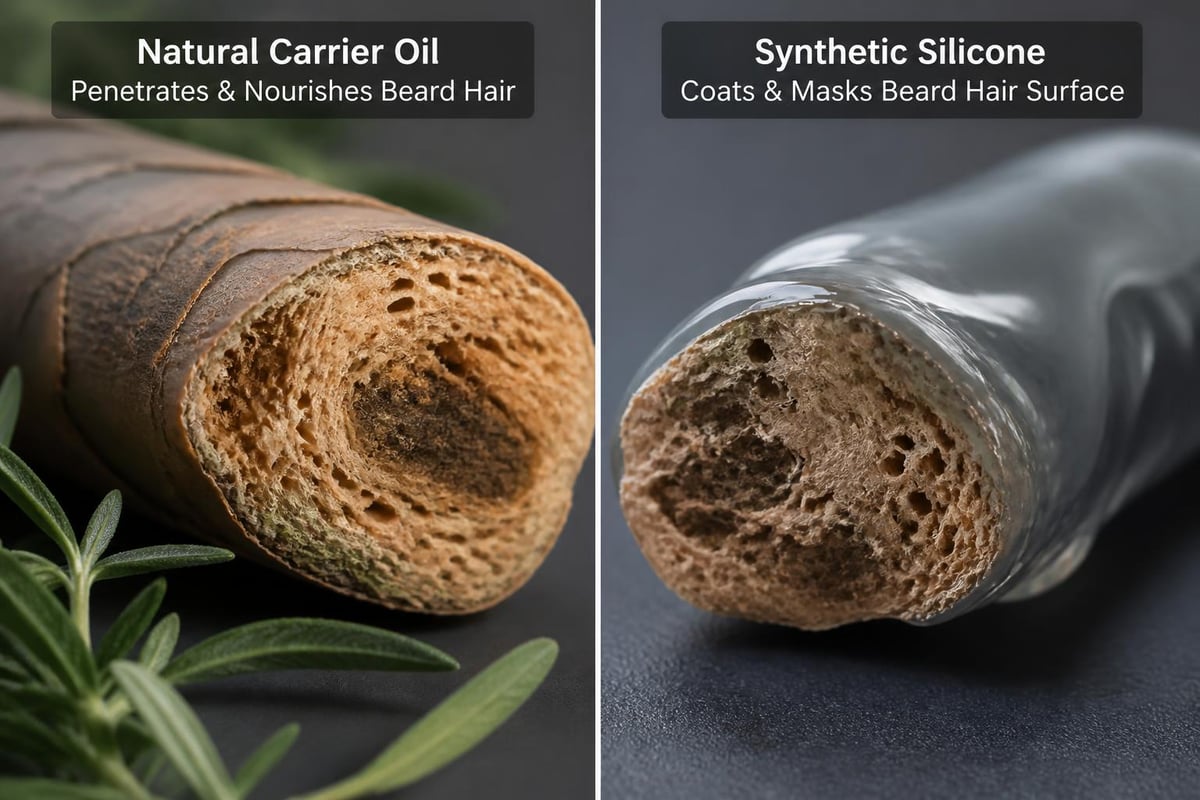
Avoiding Synthetic Moisture Traps
Many commercial products claim moisturising properties whilst containing ingredients that actually dehydrate:
- Silicones (dimethicone, cyclomethicone) create the illusion of softness by coating hair, but prevent moisture from penetrating
- Mineral oils sit on the surface indefinitely without absorbing, clogging follicles
- Synthetic fragrances often contain alcohol bases that strip natural oils
Quality moisturising beard oil contains exclusively natural ingredients because synthetic substitutes fundamentally misunderstand how hair and skin absorb moisture. Understanding male grooming principles helps you distinguish between marketing claims and biological reality.
Beyond Basic Moisture: Additional Benefits You'll Notice
Moisturising beard oil delivers benefits that extend well beyond simple hydration. Understanding these secondary effects helps you maximise your grooming investment.
Itch Elimination Through Inflammation Control
That unbearable beard itch stems from two sources: dry skin flaking and inflammatory responses to irritation. Beard oil prevents itchiness and dandruff by addressing both simultaneously.
When skin lacks moisture, it produces excess keratinocytes (dead skin cells) as a protective measure. These accumulate beneath your beard, triggering itch receptors. Moisturising beard oil hydrates the epidermis, normalizing cell production.
Simultaneously, anti-inflammatory compounds in quality oils-particularly oleic acid and essential oils like chamomile-reduce prostaglandin synthesis. Prostaglandins signal pain and itch; reducing them eliminates the sensation at its biochemical source.
Styling Hold and Manageability
Properly moisturised beard hair behaves fundamentally differently than dry, brittle strands. The cuticle layer lies flat when hydrated, creating smooth surfaces that glide past each other rather than catching and tangling.
This translates to:
- 30-50% reduction in styling time
- Dramatically decreased breakage during combing
- Natural sheen that reflects light uniformly
- Hold retention for shaped styles without stiffness
For those who also use beard balm for heavier styling, moisturising beard oil creates the foundation that allows balm to distribute evenly without clumping.
Scent Layering for Confidence
Beyond functional benefits, quality moisturising beard oil delivers subtle fragrance that enhances rather than overwhelms. Natural essential oils provide depth-woody notes from cedarwood, fresh citrus from bergamot, subtle spice from clove.
This matters psychologically. Studies in olfactory psychology demonstrate that pleasant personal scent correlates with increased confidence and positive social perception. Your beard becomes an asset in every interaction rather than a source of self-consciousness.
Long-Term Growth Enhancement
Whilst moisturising beard oil isn't primarily a growth product, consistent use creates conditions where follicles perform optimally. Hydrated skin supports robust blood flow. Nourished follicles produce thicker, healthier hair shafts that resist breakage.
Over months of consistent application, you'll notice:
- Reduced patchy appearance as weak follicles strengthen
- Increased terminal hair ratio (thick hairs vs fine vellus hairs)
- Faster length retention due to eliminated breakage
- Fuller overall density from improved follicle health
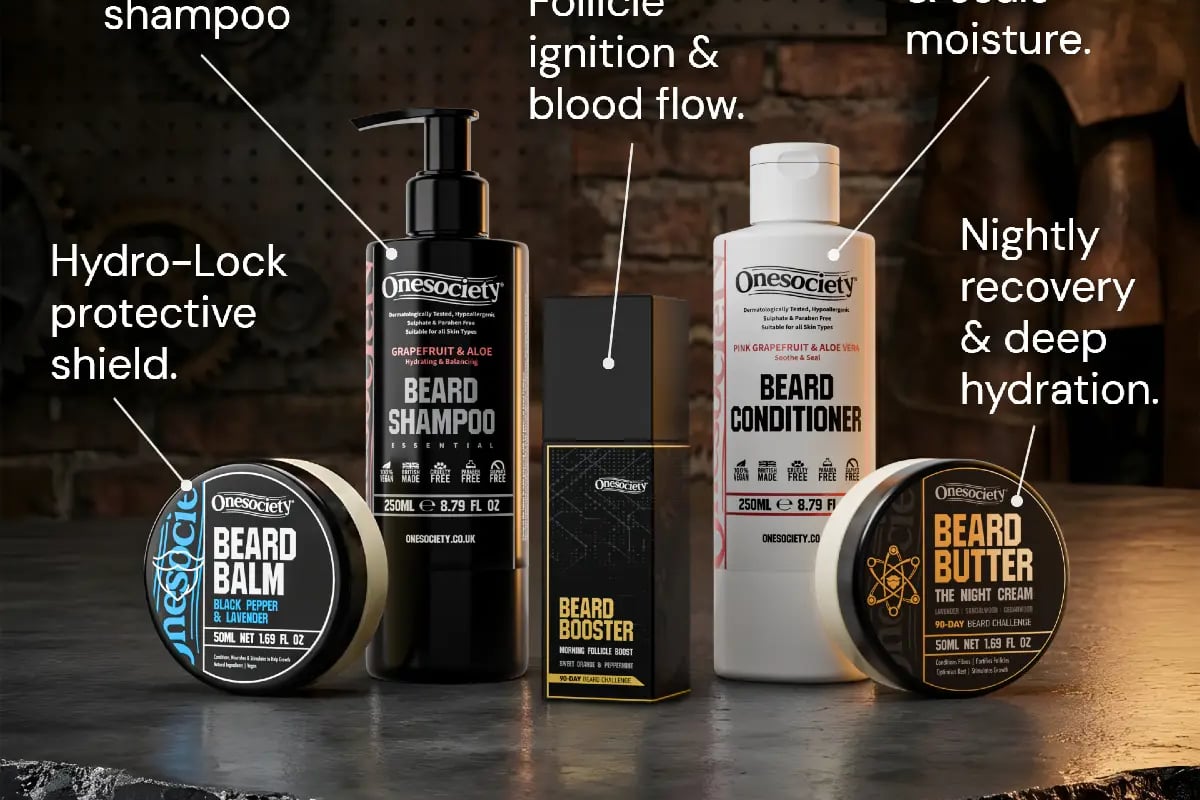
For men serious about achieving their best beard, understanding these compounding benefits becomes crucial. The 90-Day Beard Challenge combines multiple scientifically-formulated products-including premium moisturising beard oil-to create optimal conditions for transformation. This comprehensive approach addresses hydration, nutrition, and follicle stimulation simultaneously, delivering results that single products can't match.
Selecting Your Moisturising Beard Oil: Quality Markers
Walking into a shop or browsing online reveals hundreds of beard oil options. How do you identify genuinely effective moisturising beard oil versus marketing hype?
Ingredient Transparency
Quality brands list every ingredient with concentrations. If you see "proprietary blend" without specifics, walk away. You're entitled to know exactly what you're applying to your face.
Look for these markers:
- First three ingredients should be carrier oils (jojoba, argan, sweet almond)
- Essential oils listed by botanical name (Melaleuca alternifolia for tea tree, not just "tea tree")
- No ingredient lists over 15 items (excessive ingredients suggest synthetic fillers)
- Organic certification where possible (reduces pesticide exposure)
Extraction and Processing Methods
How oils are extracted determines nutrient retention. Cold-pressed oils maintain vitamin and fatty acid integrity. Heat processing degrades beneficial compounds, creating oxidized molecules that actually damage hair.
Premium moisturising beard oil specifies "cold-pressed" or "unrefined" on labels. Refined oils undergo chemical processing with hexane solvents-these traces remain and accumulate in your tissues over time.
Container and Preservation
Quality oils come in dark glass bottles (amber or cobalt blue). Light exposure degrades polyunsaturated fats and vitamins within weeks. Plastic containers leach phthalates and BPA into oil formulations.
The dropper or pump mechanism matters too. Excessive air exposure oxidizes oils faster. Look for designs that minimize air contact during dispensing.
Price-to-Quality Correlation
Genuinely effective moisturising beard oil costs more because quality ingredients carry higher prices. A 30ml bottle under £8 likely contains cheap mineral oil bases or synthetic fragrances masking inferior carrier oils.
Expect to invest £15-£30 for premium 30ml formulations. This translates to approximately 50-80p per application-negligible compared to the damage cheap products inflict on your beard's health.
Addressing Special Circumstances and Beard Challenges
Different environments and beard types require tailored moisturising approaches. One-size-fits-all recommendations fail because individual variables dramatically affect hydration needs.
Climate Adaptation Strategies
Cold, dry winters strip moisture aggressively. Indoor heating further dehydrates both air and skin. In these conditions:
- Double your moisturising beard oil application frequency (morning and evening)
- Choose heavier oil blends with higher saturated fat content
- Layer beard butter over oil for additional occlusive protection
- Use a humidifier in your bedroom (target 40-50% humidity)
Hot, humid summers create different challenges. Excess moisture in the air prevents oil absorption whilst promoting fungal growth. Adjust by:
- Reducing application volume by 30-40%
- Selecting lighter oils (jojoba, grapeseed) over heavier options (castor, avocado)
- Adding tea tree essential oil for antifungal properties
- Washing your beard more frequently to prevent sebum accumulation
Coarse vs Fine Beard Hair
Coarse beard hair features thicker cortex layers with tighter protein bonds. This density resists moisture penetration. If you have wire-like facial hair:
- Apply moisturising beard oil to damp (not just towel-dried) beard for better penetration
- Extend the palm-warming step to 30 seconds, increasing oil fluidity
- Consider heat assistance (blow dryer on low whilst applying) to open cuticles further
- Focus on oils with smaller molecular weights (jojoba, argan) that penetrate easier
Fine beard hair absorbs moisture readily but loses it just as quickly. Thin hair shafts lack protective cortex thickness. If your beard feels soft but looks sparse:
- Use moderate oil amounts (less is more with fine hair)
- Choose balanced formulations that don't weigh down hair
- Apply predominantly to skin rather than hair length
- Avoid heavy oils (castor) that flatten fine strands
Sensitive Skin Considerations
Some men experience reactions to common beard oil ingredients. Beard care benefits must balance with skin tolerance to avoid counterproductive inflammation.
Patch test any new moisturising beard oil on your inner wrist 24 hours before facial application. Common allergens include:
- Nut oils (almond, walnut) for those with tree nut allergies
- Essential oils at concentrations above 2% (cause contact dermatitis)
- Botanical extracts like lavender or chamomile in sensitive individuals
If you react to commercial formulations, consider making your own beard oil using hypoallergenic bases like fractionated coconut oil or safflower oil with minimal essential oil content.
Integration with Comprehensive Beard Care
Moisturising beard oil works optimally within a complete grooming system. Isolated product use delivers partial results; strategic combination multiplies effectiveness.
The Washing-Conditioning-Moisturising Sequence
Step 1: Cleansing Foundation Use a pH-balanced beard shampoo 2-3 times weekly. Regular hair shampoos (pH 5.5-6.5) strip facial skin's natural acid mantle (pH 4.5-5.5). Beard shampoo formulated for facial skin maintains proper pH whilst removing debris and excess sebum that block moisturising beard oil absorption.
Step 2: Conditioning Preparation Beard conditioner deposits proteins and moisture that prime hair for oil acceptance. Leave conditioner in for 2-3 minutes minimum-this allows cationic surfactants to bond with negatively charged damaged areas on hair shafts, smoothing cuticles.
Step 3: Moisturising Lock-In Apply moisturising beard oil to your 70-80% dry, conditioned beard. The conditioning step has already opened cuticles and deposited initial moisture; oil seals this in and adds its own hydration layer.
Timing Your Product Applications
| Time of Day | Product | Purpose | Duration |
|---|---|---|---|
| Morning | Moisturising beard oil | Hydration + protection | Lasts 8-12 hours |
| Midday (if needed) | Light oil touch-up | Refresh moisture | Lasts 4-6 hours |
| Evening | Beard butter or balm | Deep overnight conditioning | 8-hour treatment |
| 2-3x weekly | Beard shampoo | Remove buildup | 2-3 minutes |
This rotation ensures constant moisture availability whilst preventing product buildup that blocks follicles.
Seasonal Rotation Strategy
Your beard's moisture needs fluctuate throughout the year. Adapt your moisturising beard oil selection seasonally:
Autumn transition (September-November): Gradually increase oil viscosity as humidity drops. Introduce heavier carrier oils into your blend progressively rather than switching abruptly.
Winter maintenance (December-February): Peak dryness demands maximum moisture retention. Layer products strategically-oil first for penetration, balm second for occlusion.
Spring adjustment (March-May): Reduce product volume as natural humidity increases. Watch for signs of over-moisturising (greasy appearance, flat hair).
Summer lightness (June-August): Switch to minimum-weight formulations. Focus application on skin rather than hair length to prevent heavy, limp appearance.
Measuring Success: What Improvement Looks Like
How do you know if your moisturising beard oil regimen works? Objective markers reveal progress beyond subjective "feels better" assessments.
Visual Indicators of Proper Hydration
Week 1-2: Reduced flaking becomes immediately apparent. Beardruff decreases by 60-70% as skin hydration normalizes. Itch sensation drops significantly.
Week 3-4: Beard texture softens noticeably. The coarse, wiry feel transforms into pliable hair that moves naturally. Shine increases as cuticles lie flat and reflect light uniformly.
Week 5-8: Tangles and knots decrease dramatically-40-50% reduction in combing resistance. Breakage during styling approaches zero as hair strength improves.
Week 9-12: Fuller appearance emerges not from new growth but from eliminated breakage. You're retaining length that previously snapped off. Patchiness reduces as weak follicles strengthen and produce terminal hairs.
Tactile Progress Markers
Run your fingers through your beard weekly. Properly moisturised facial hair should feel:
- Smooth with minimal resistance
- Flexible rather than brittle
- Cool to the touch (indicating moisture retention)
- Dense without feeling stiff or crunchy
If your beard still feels rough or catches on your fingers, you're either using insufficient product, applying incorrectly, or your formulation lacks adequate penetrating oils.
Skin Health Benchmarks
The skin beneath your beard reveals hydration status clearly:
- No visible flaking when you part your beard and examine skin
- Even skin tone without red inflammation patches
- Comfortable sensation throughout the day (no persistent itch)
- Normal sebum production (slight natural oiliness, not excessive or absent)
These markers confirm you've achieved optimal moisture balance-neither dehydrated nor over-saturated.
Moisturising beard oil transforms dry, damaged facial hair into a healthy, manageable beard through scientifically-backed hydration and nourishment. The key lies in selecting quality natural ingredients, applying correctly, and maintaining consistency. If you're ready to experience genuine transformation backed by research and natural formulations, Onesociety offers premium beard care products designed specifically for men who demand results, not empty promises.