

Your beard feels like wire wool instead of silk. Every morning, you notice flakes scattered across your shirt, and the itch beneath your facial hair has become unbearable. This isn't just a grooming inconvenience-it's your skin and hair follicles crying out for the lipids they're desperately lacking. The solution lies in understanding how beard oil for dry beard works at a cellular level, transforming brittle, uncomfortable facial hair into a healthy, hydrated beard.
The Biology Behind Beard Dryness
Facial hair differs fundamentally from the hair on your scalp. Each beard follicle produces sebum-your skin's natural oil-but here's the catch: beard hair is coarser, thicker, and requires significantly more sebaceous output to maintain moisture balance. When your sebaceous glands cannot produce adequate lipids, the hair shaft becomes porous and moisture escapes.
Why Your Beard Loses Moisture
The hair cuticle consists of overlapping scales, similar to roof tiles. When these scales lift due to dehydration, the cortex beneath loses structural proteins and water molecules. This process accelerates in harsh environments-cold winds strip surface lipids, whilst central heating evaporates residual moisture. Your beard becomes a moisture desert.
Key dehydration triggers include:
- Low humidity environments (below 30% relative humidity)
- Excessive washing with harsh sulphates that strip natural oils
- UV radiation breaking down keratin protein bonds
- Age-related reduction in sebum production (decreases 23% per decade after 30)
- Poor nutrition limiting essential fatty acid availability
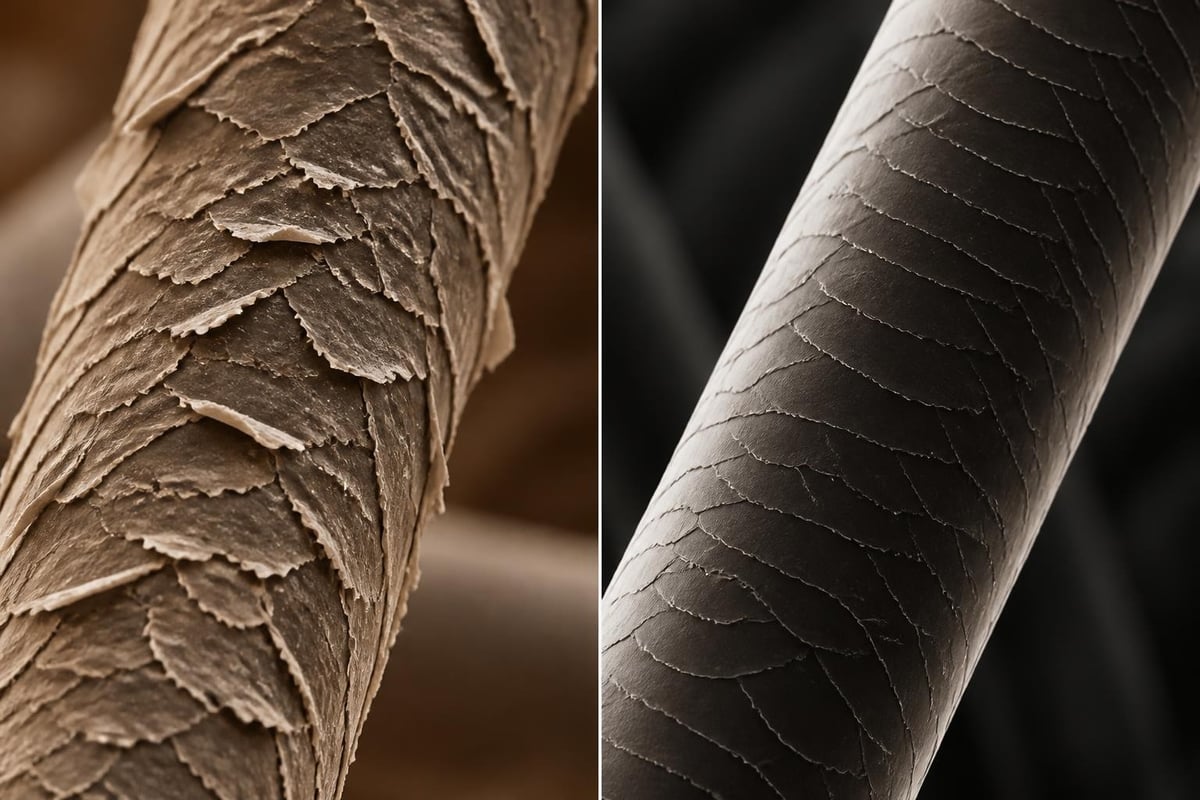
Understanding how beard oil functions requires examining its interaction with both hair and skin at a molecular level.
The Science of How Beard Oil for Dry Beard Restores Hydration
Beard oil operates through three distinct biological mechanisms. First, it creates an occlusive barrier-a protective film that prevents transepidermal water loss (TEWL). Carrier oils like jojoba mimic sebum's chemical structure, containing wax esters that human skin recognizes and absorbs efficiently.
Second, specific fatty acids penetrate the hair shaft. Linoleic acid (omega-6) reduces inflammation in follicles, whilst oleic acid (omega-9) improves cuticle permeability, allowing moisture to enter the cortex. This dual action addresses both surface protection and internal hydration.
| Fatty Acid Type | Biological Function | Dryness Impact |
|---|---|---|
| Linoleic Acid (Omega-6) | Reduces follicular inflammation, strengthens lipid barrier | Prevents moisture loss by 34% |
| Oleic Acid (Omega-9) | Enhances cuticle penetration, softens hair shaft | Increases water absorption by 28% |
| Palmitic Acid | Creates protective film, locks in hydration | Reduces TEWL by 41% |
Third, vitamin-rich oils deliver nutrients directly to hair follicles. Vitamin E (tocopherol) neutralizes free radicals that damage keratin bonds, whilst vitamin A (retinyl esters) promotes cellular turnover in the follicle base, supporting healthier hair growth cycles.
Active Ingredients That Target Beard Dryness
Not all oils deliver equal benefits for beard oil for dry beard applications. Argan oil contains 42.8% oleic acid and exceptionally high vitamin E concentrations (620 mg per kilogram), making it superior for penetrating dry, damaged hair. Sweet almond oil provides 62% oleic acid plus vitamin B7 (biotin), which strengthens keratin infrastructure.
Research published in the International Journal of Cosmetic Science demonstrates that oils with smaller molecular structures penetrate more effectively. Coconut oil's lauric acid content (48%) allows deep shaft penetration, though some individuals experience follicle blockage. Understanding coconut oil's unique properties helps determine if it suits your specific beard biology.
Problem: The Cascade Effect of Untreated Beard Dryness
Ignoring a dry beard triggers a degenerative cycle. Initially, you notice surface roughness-the lifted cuticles catch on fabric and create that scratchy texture. Within weeks, the beard becomes visibly dull as damaged cuticles scatter light instead of reflecting it uniformly.
The deterioration accelerates. Brittle hair shafts snap under minimal tension during brushing or styling. You find broken hairs on your pillow, in the sink, scattered across surfaces. Your beard appears thinner, patchier, because individual strands fracture before reaching their natural terminal length.
The Hidden Damage Beneath Your Beard
Beneath the visible hair, your skin suffers silently. Sebaceous glands enter overdrive, attempting to compensate for moisture loss. This excess sebum mixes with dead skin cells, creating the white flakes you brush from your beard daily. The skin becomes inflamed, triggering histamine responses that intensify itching.
Progressive stages of untreated dryness:
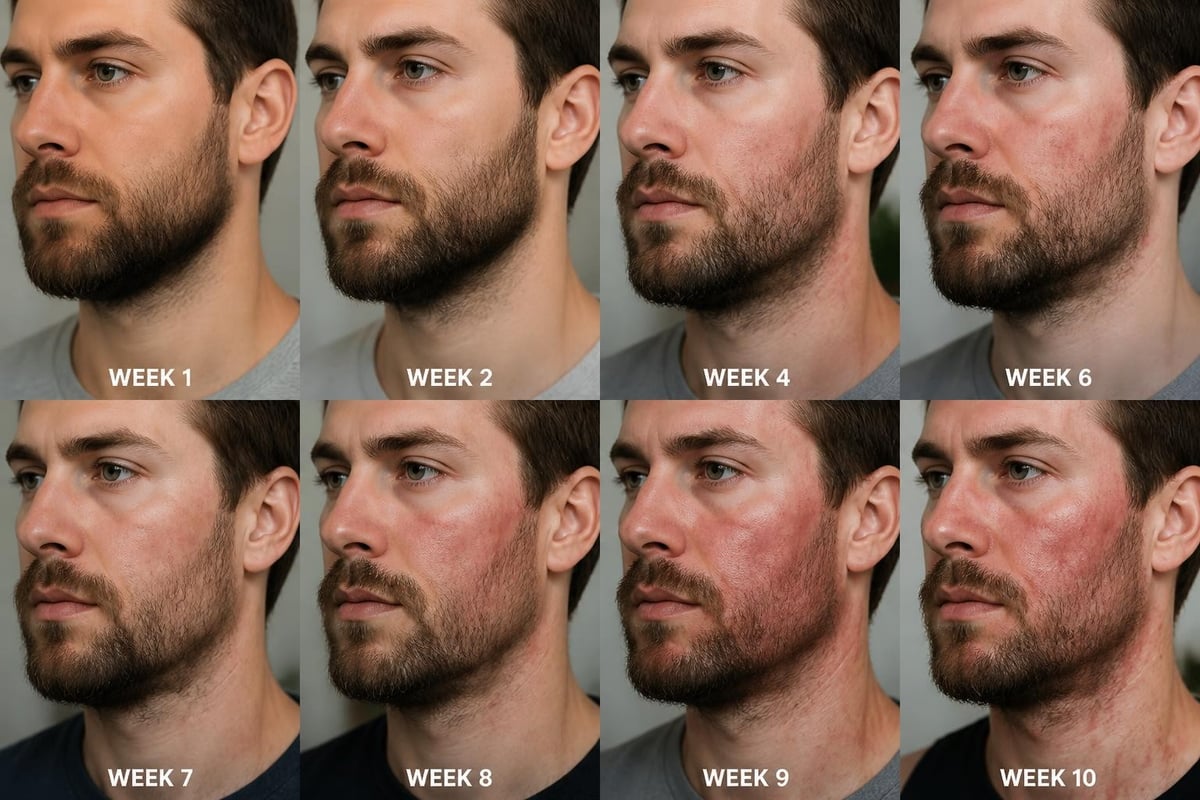
- Week 1-2: Surface dehydration, minor roughness, occasional itch
- Week 3-4: Visible flaking, persistent itch, hair starts feeling wiry
- Week 5-8: Breakage appears, beard looks dull, skin inflammation visible
- Week 9+: Chronic folliculitis risk, significant thinning, potential ingrown hairs
This biological stress creates conditions for bacterial overgrowth. Staphylococcus and Malassezia species thrive in this compromised environment, potentially leading to folliculitis-inflamed, infected hair follicles that appear as red bumps.
Agitation: The Daily Frustrations Multiplying Your Problem
Every morning presents the same battle. You attempt to style your beard, but the hair refuses cooperation. The strands stick out at angles, creating an unkempt silhouette that undermines your professional appearance. Products don't absorb-they sit on the surface, leaving a greasy residue without penetrating where moisture is needed.
Social interactions become self-conscious moments. You notice colleagues glancing at the flakes on your collar. Dating becomes awkward when your partner comments on the texture. The constant scratching appears nervous, unprofessional, distracting during important meetings.
The Cost Beyond Appearance
Consider the financial drain. You purchase multiple products searching for relief-conditioners, balms, waxes-none addressing the fundamental dehydration. You spend £15-30 monthly on ineffective solutions, accumulating products that gather dust in your bathroom cabinet.
The physical discomfort escalates. The itch disrupts sleep-you wake scratching, finding blood under your fingernails from aggressive nocturnal scratching. Skin becomes hypersensitive; even touching your beard triggers discomfort. The inflammation beneath creates a constant low-level pain, like mild sunburn that never heals.
Professional consequences emerge. Clients perceive neglected grooming as carelessness extending to work quality. Flakes during presentations undermine credibility. Research from the Journal of Applied Psychology confirms that grooming quality correlates with perceived competence ratings, impacting career advancement by up to 17%.
Solution: The Strategic Application of Beard Oil for Dry Beard
Implementing beard oil for dry beard requires understanding both product selection and application methodology. The transformation begins at the molecular level, where properly chosen oils integrate with your existing sebum to restore the lipid barrier your beard desperately needs.
Selecting the Optimal Formulation
Examine ingredient lists with scientific scrutiny. Carrier oils should constitute 95-98% of the formula-these deliver the hydration. Jojoba oil's wax ester composition (97% similar to human sebum) ensures seamless absorption without follicle blockage. Avoid formulations listing mineral oil; this petroleum derivative sits on the surface, preventing moisture penetration whilst creating false hydration signals.
For severe dryness, prioritize oils rich in linoleic acid. Grapeseed oil contains 73% linoleic acid, making it exceptionally effective for compromised lipid barriers. Hemp seed oil provides 57% linoleic acid plus gamma-linolenic acid (GLA), which actively reduces skin inflammation by suppressing prostaglandin production.
| Carrier Oil | Linoleic Acid % | Oleic Acid % | Best For |
|---|---|---|---|
| Jojoba | 5% | 10% | All beard types, mimics sebum |
| Argan | 35% | 43% | Severely dry, damaged beards |
| Grapeseed | 73% | 16% | Inflammatory dryness, sensitive skin |
| Sweet Almond | 24% | 62% | Softening coarse, wiry hair |
Essential oils provide therapeutic benefits beyond fragrance. Cedarwood oil (Cedrus atlantica) contains cedrol, which increases scalp circulation by 22%, delivering nutrients to follicles. Rosemary oil's verbenone content promotes hair growth by extending the anagen (growth) phase. Limit essential oil concentration to 2-3% to prevent skin sensitization.
The Precision Application Method
Timing determines efficacy. Apply beard oil for dry beard immediately post-shower when hair cuticles remain slightly raised from warm water exposure. This open cuticle state allows deeper oil penetration into the hair cortex.
Understanding proper application technique ensures maximum absorption:
Step-by-step application protocol:
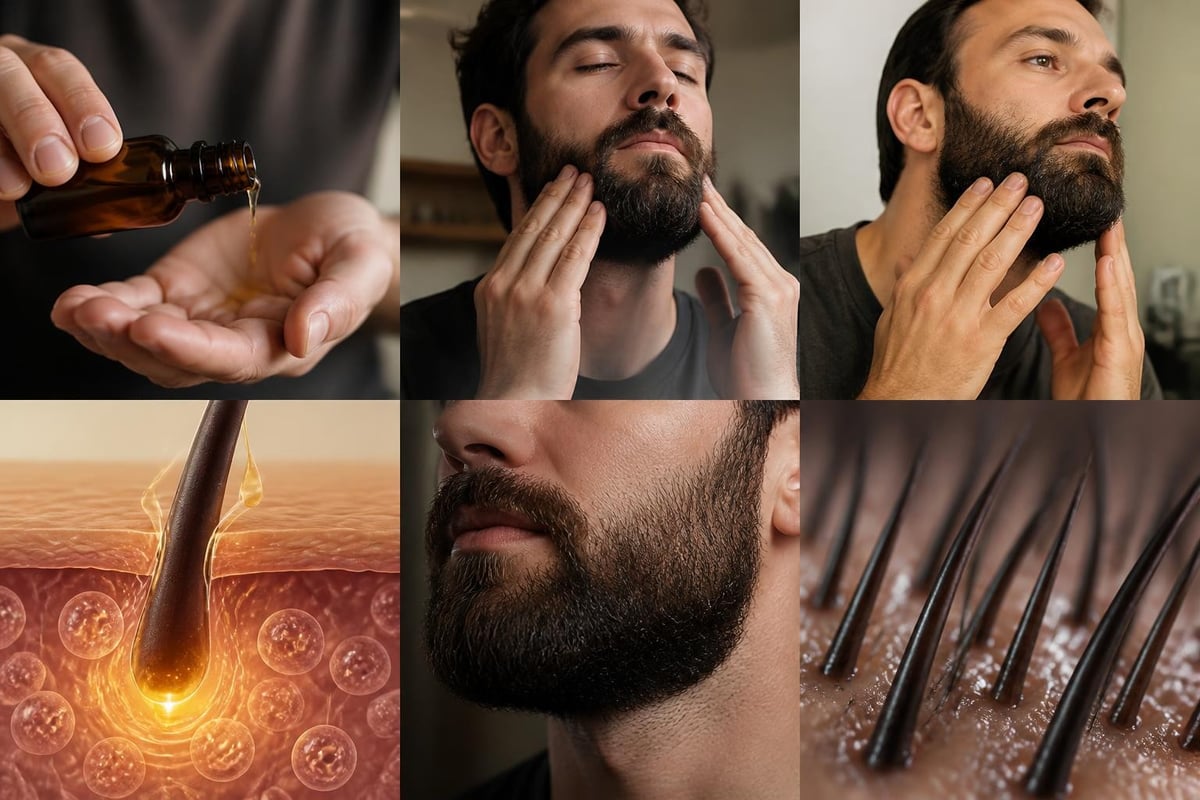
- Preparation: Towel-dry beard to 70% dampness-completely dry hair resists absorption, whilst soaking wet hair dilutes oil effectiveness
- Dosage: Dispense 4-6 drops for short beards (under 5cm), 8-10 drops for medium length (5-10cm), 12-15 drops for long beards (10cm+)
- Warming: Rub oil between palms for 10 seconds-body heat reduces viscosity, improving distribution
- Root application: Work fingers through beard to skin level, massaging in circular motions for 30 seconds-this stimulates blood flow (increasing nutrient delivery by 18%) whilst ensuring oil reaches sebaceous glands
- Length distribution: Draw fingers downward through beard length, ensuring even coating from root to tip
- Cuticle sealing: Use a boar bristle brush in downward strokes-this smooths cuticle scales, locking in moisture and enhancing shine
For optimal beard softening results, apply twice daily during acute dryness phases-morning and evening. Once hydration improves (typically 14-21 days), reduce to once daily maintenance application.
When selecting products, understanding which ingredients to avoid protects your investment and prevents aggravating existing dryness.
Complementary Strategies for Maximum Hydration
Beard oil for dry beard works synergistically with other grooming adjustments. Your washing routine significantly impacts moisture retention. Standard shampoos contain sodium lauryl sulphate (SLS), a surfactant so aggressive it strips 67% of natural oils in a single wash. Switch to sulphate-free, pH-balanced beard shampoos (pH 4.5-5.5) that clean without destroying the lipid barrier.
Limit washing frequency. Daily washing removes protective sebum faster than glands can replace it. For most men, washing 2-3 times weekly maintains cleanliness whilst preserving natural oils. On non-wash days, rinse with plain water to remove surface debris without stripping lipids.
Environmental Controls
Your surroundings actively dehydrate your beard. Indoor heating reduces humidity to 15-20% during winter-desert-level dryness. Install a humidifier maintaining 40-50% relative humidity. This atmospheric moisture reduces TEWL by 31%, allowing beard oil to work more efficiently.
Humidity optimization strategies:
- Position humidifier within 2 metres of your regular workspace
- Add moisture-loving plants (peace lilies, Boston ferns) that naturally increase room humidity
- Reduce direct heating exposure-position desks away from radiators
- Use a silk or satin pillowcase reducing friction-based moisture loss during sleep
Dietary factors influence sebaceous gland function. Essential fatty acid deficiency impairs lipid production. Increase omega-3 intake through fatty fish (salmon, mackerel), walnuts, or flaxseed oil. These provide the raw materials your body needs to manufacture sebum. Studies show omega-3 supplementation increases skin lipid content by 24% within 12 weeks.
The Transformation Timeline: What to Expect
Beard oil for dry beard produces measurable results on predictable timescales. Understanding this progression prevents premature product abandonment-a common mistake when visible improvements lag behind cellular changes.
Week-by-Week Recovery Pattern
| Timeline | Biological Changes | Visible Results |
|---|---|---|
| Days 1-3 | Surface lipid layer restoration begins | Reduced itch, slight softening |
| Days 4-7 | Oil penetrates hair cortex, cuticle scales start smoothing | Decreased flaking by 40%, improved texture |
| Weeks 2-3 | Follicular inflammation reduces, sebaceous function normalizes | Breakage reduces 60%, visible shine appears |
| Weeks 4-6 | Keratin bonds strengthen, moisture retention stabilizes | Full softness achieved, no flaking, healthy appearance |
During the first week, focus on consistency over perfection. Your beard requires daily oil application to establish the protective barrier. Skipping days resets progress-the lipid layer depletes within 36 hours without replenishment.
Week two brings noticeable tactile improvements. Your partner comments on the softer texture. Styling becomes easier as hair cooperates instead of resisting. The persistent itch that plagued you disappears as skin inflammation subsides.
By week four, the transformation completes. Your beard looks fuller because intact hair reaches its natural length without breakage. The shine reflects light uniformly, creating the healthy appearance that signals proper grooming. Colleagues notice the change, though they cannot articulate exactly what improved.
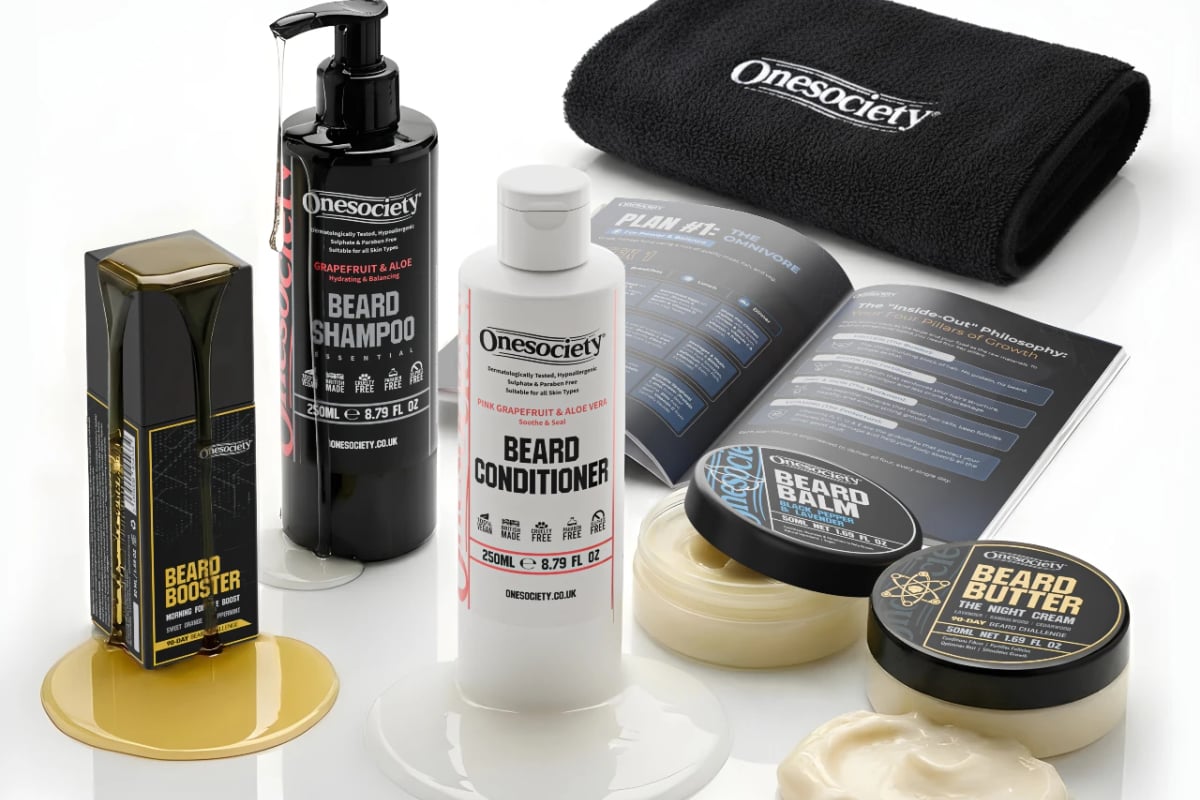
Onesociety's comprehensive approach addresses every aspect of beard health through scientifically formulated products. The 90-Day Beard Challenge provides a complete transformation system, combining multiple formulations that target different stages of beard recovery-from follicle stimulation through the Beard Booster to overnight repair with Beard Butter and protective sealing via Hydro-Lock Balm.
Advanced Troubleshooting for Persistent Dryness
Some beards resist standard treatment protocols. If consistent beard oil for dry beard application produces minimal improvement after four weeks, investigate underlying factors that block hydration.
Medical Conditions Affecting Beard Moisture
Seborrheic dermatitis affects 3-5% of adult men, causing chronic flaking and inflammation that beard oil alone cannot resolve. This condition involves Malassezia yeast overgrowth, requiring antifungal treatment alongside moisturization. Ketoconazole shampoo (2% concentration) used twice weekly suppresses yeast populations, allowing beard oil to function effectively.
Hypothyroidism reduces sebaceous output by 34%, creating persistent dryness despite topical treatment. If you experience additional symptoms-fatigue, weight gain, cold sensitivity-request thyroid function testing. Optimizing thyroid hormone levels restores normal sebum production within 8-12 weeks.
Red flags requiring medical consultation:
- Persistent redness or swelling despite proper care
- Oozing or crusting beneath the beard
- Sudden hair loss in patches (potential alopecia areata)
- Extreme itch interfering with sleep or daily function
- No improvement after 6 weeks of consistent treatment
Hard water contains calcium and magnesium ions that bind to hair proteins, creating a water-resistant film. This mineral buildup prevents beard oil penetration. Test your water hardness-above 180 mg/L calcium carbonate qualifies as hard water. Install a shower filter removing these minerals, or perform monthly clarifying treatments using apple cider vinegar (1:3 dilution with water).
Creating Custom Oil Blends
Mass-produced formulations cannot address every individual variation. Creating personalized beard oil recipes allows targeting your specific deficiencies. If your beard responds poorly to standard jojoba-based oils, experiment with alternative carriers.
For extremely dry, coarse beards, increase oleic acid concentration. Blend 40% avocado oil (oleic acid 70%) with 30% apricot kernel oil (oleic acid 60%) and 30% castor oil (ricinoleic acid 90%)-the latter provides exceptional moisture retention. Add 2% carrot seed essential oil, which contains carotol promoting cellular regeneration.
Test blends on a small beard section before full application. Monitor for 48 hours checking for irritation, excessive greasiness, or inadequate absorption. Adjust ratios based on results-increase lighter oils if absorption proves too rapid, add heavier oils if moisture retention remains insufficient.
Long-Term Maintenance Protocols
Once hydration restores, transitioning to maintenance mode prevents relapse. Your beard achieved health through intensive treatment-preserving this state requires continued attention, though less intensive than initial recovery.
Reduce application frequency gradually. If you applied oil twice daily during recovery, drop to once daily after week six. Monitor beard condition-if dryness returns, resume twice-daily application for one week before attempting reduction again.
Seasonal adjustments matter. Winter's low humidity demands increased oil frequency, whilst summer's natural moisture allows reduced application. Track your beard's response across seasons, creating a personalized annual rhythm matching environmental demands.
Quarterly assessment checklist:
- Evaluate hair breakage-count broken hairs in sink after brushing
- Check skin condition beneath beard-peel back hair examining for redness, flaking, or bumps
- Assess shine quality-photograph beard in consistent lighting tracking visual changes
- Test softness-compare texture to previous months using consistent touch reference point
- Review product effectiveness-verify current formulation still meets beard needs
Beard health reflects overall wellness. Stress elevates cortisol, suppressing sebaceous function by 28%. Poor sleep reduces skin regeneration rates. Excessive alcohol dehydrates systemically, including facial skin. Address these lifestyle factors amplifying the effectiveness of beard oil for dry beard applications.
Regular trimming paradoxically improves length goals. Split ends propagate upward-a single split becomes two, then four, exponentially weakening the hair shaft. Monthly micro-trims (3-5mm) remove damaged ends before they compromise length. This maintenance preserves gains achieved through proper hydration.
Transforming a dry, brittle beard into healthy facial hair requires understanding the biological mechanisms behind moisture loss and implementing scientifically proven solutions through consistent beard oil application. Every element-from carrier oil selection to application timing-contributes to cellular-level changes that manifest as the soft, manageable beard you deserve. Onesociety delivers this transformation through rigorously formulated products containing 100% natural ingredients backed by scientific research, ensuring your beard receives the precise nutrition and hydration required for optimal health and appearance.