

You've invested time growing your beard, but the scratching, flaking, and wiry texture make you question whether it's worth the effort. Your skin feels tight beneath the hair, your partner complains about the roughness, and no matter how much you trim or comb, your beard looks lacklustre. This frustration drives many men to search for solutions, and arlos beard oil often appears in those searches. But what exactly makes any beard oil effective, and does the science support the claims? Let's examine the biological mechanisms at work and what you should demand from any grooming product.
The Problem: Why Your Beard Feels Like Steel Wool
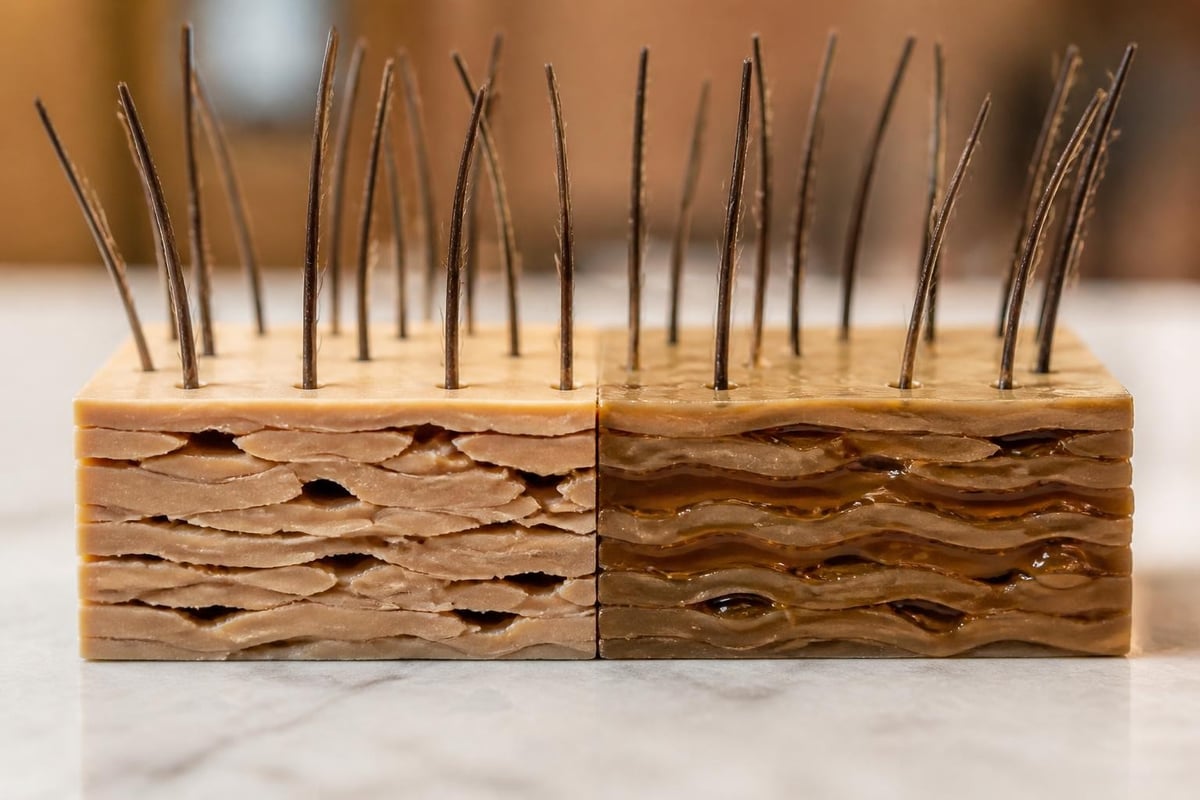
Your facial hair differs structurally from scalp hair. Each beard follicle produces thicker, coarser strands with more irregular cuticle patterns. This texture creates multiple problems:
Moisture Loss
- Beard hair cuticles don't lie flat, creating gaps where water escapes
- Sebum (your skin's natural oil) can't travel down coarse shafts efficiently
- The skin beneath becomes dehydrated, triggering inflammation
Physical Damage
- Coarse hair tangles more readily, causing breakage at the follicle
- Environmental pollutants accumulate in irregular cuticle patterns
- Daily friction from clothing and movement weakens the hair structure
The discomfort intensifies as your beard grows longer. That initial "awkward phase" at 2-4 weeks? The itching stems from newly emerging hair piercing through skin at sharp angles whilst your sebaceous glands struggle to keep pace with increased oil demands. By week six, without intervention, you're dealing with beard dandruff (seborrhoeic dermatitis), split ends, and a texture that repels rather than attracts.
Understanding Beard Oil Formulation Chemistry
When evaluating arlos beard oil or any competitor, you need to understand what makes these products function. Peer-reviewed research on beard oil formulations reveals that effectiveness hinges on two component categories: carrier oils and essential oils.
Carrier Oils: The Scientific Foundation
Carrier oils constitute 95-99% of any quality beard oil. These lipid-rich substances perform specific biological functions:
| Carrier Oil | Primary Fatty Acid | Specific Benefit | Absorption Rate |
|---|---|---|---|
| Jojoba | Eicosenoic acid (68%) | Mimics natural sebum, regulates oil production | Medium (2-3 hours) |
| Argan | Oleic acid (45%) | Vitamin E delivery, reduces inflammation | Fast (1-2 hours) |
| Sweet Almond | Linoleic acid (25%) | Strengthens hair protein bonds | Medium-Fast (2 hours) |
| Coconut (fractionated) | Caprylic acid (60%) | Penetrates hair shaft, prevents protein loss | Very Fast (1 hour) |
Research on plant-based cosmetic oils demonstrates that these carrier oils don't just coat your beard. Their molecular structure allows penetration into the hair cortex, where they:
- Fill gaps in the cuticle layer, creating smoothness
- Bind to keratin proteins, reinforcing structural integrity
- Create a hydrophobic barrier that locks moisture inside the hair shaft
- Deliver fat-soluble vitamins (A, D, E, K) directly to follicle cells
The chemistry matters. Jojoba oil's composition mirrors human sebum so closely that your skin recognises it as "self," reducing the inflammatory response that causes itching. When you see arlos beard oil or any product listing jojoba, you're looking at this biomimetic property at work.
Essential Oils: Function Beyond Fragrance
Essential oils serve dual purposes in beard formulations. Yes, they provide scent, but their volatile compounds also interact with your skin's biology:
- Tea Tree Oil (melaleuca alternifolia): Terpinen-4-ol reduces bacterial colonisation that triggers beard dandruff
- Cedarwood (cedrus atlantica): Sesquiterpenes improve blood circulation to follicles
- Peppermint (mentha piperita): Menthol stimulates cold receptors, creating a vasodilation response that temporarily increases nutrient delivery
However, these same compounds create fragrance sensitivity risks. Essential oils contain dozens of allergens, and new EU regulations now mandate disclosure of 26 specific fragrance allergens in leave-on products. If arlos beard oil or your current product doesn't list these potential sensitizers, that's a transparency red flag.
What Beard Oil Actually Does (And Doesn't Do)
Let's separate marketing claims from biological reality. When you apply arlos beard oil or any alternative, here's what happens at the molecular level:
Proven Effects:
- Occlusion: Oil creates a barrier reducing transepidermal water loss by 20-30%
- Lubrication: Reduces friction coefficient between hairs, preventing tangles
- Cuticle smoothing: Fills gaps in damaged cuticle layers, increasing light reflection (shine)
- Anti-inflammatory action: Certain fatty acids (gamma-linolenic, oleic) downregulate inflammatory cytokines
Unsupported Claims:
- Accelerated growth: Clinical trials show only topical minoxidil demonstrates statistically significant growth enhancement
- Follicle activation: No beard oil ingredient penetrates deep enough to influence dermal papilla cells
- Permanent texture change: Effects last only whilst oil is present; discontinued use returns hair to baseline
The American Academy of Dermatology's guidance on beard care confirms this: beard oils condition existing hair and soothe skin, but they don't alter growth rate or density. Understanding this distinction prevents disappointment and helps you set realistic expectations.
Evaluating Arlos Beard Oil Against Quality Standards
When assessing arlos beard oil specifically, apply these evidence-based criteria:
Ingredient Transparency
Quality manufacturers disclose:
- Exact carrier oils (not just "blend of oils")
- Essential oil concentrations (2-5% is standard; higher increases sensitivity risk)
- Preservatives if any (though pure oils don't require them)
- CIR safety assessments for each ingredient
Formulation Rationale
Look for scientific justification. Why those specific oils? For example, beard care products often combine fast-absorbing oils (argan) with slow-release occlusives (jojoba) to provide immediate relief plus sustained hydration. Random ingredient selection suggests marketing rather than formulation expertise.
Manufacturing Standards
- Extraction method: Cold-pressed oils retain more beneficial compounds than heat-extracted versions
- Storage: Dark glass bottles prevent oxidation of fatty acids
- Batch testing: Heavy metal screening, microbial testing, potency verification
Realistic Claims
Trustworthy brands acknowledge limitations. If arlos beard oil or any product promises "thicker beard in 30 days," that's biologically implausible. Growth occurs at follicle level, influenced by genetics and hormones, not topical conditioning.
The Solution: What Actually Transforms Your Beard
Rather than gambling on trendy products with unverified claims, focus on building a comprehensive beard care routine based on proven mechanisms.
Daily Hydration Protocol
Morning Application:
- Cleanse with a pH-balanced beard wash that removes sebum without stripping protective oils
- Pat dry (don't rub aggressively)
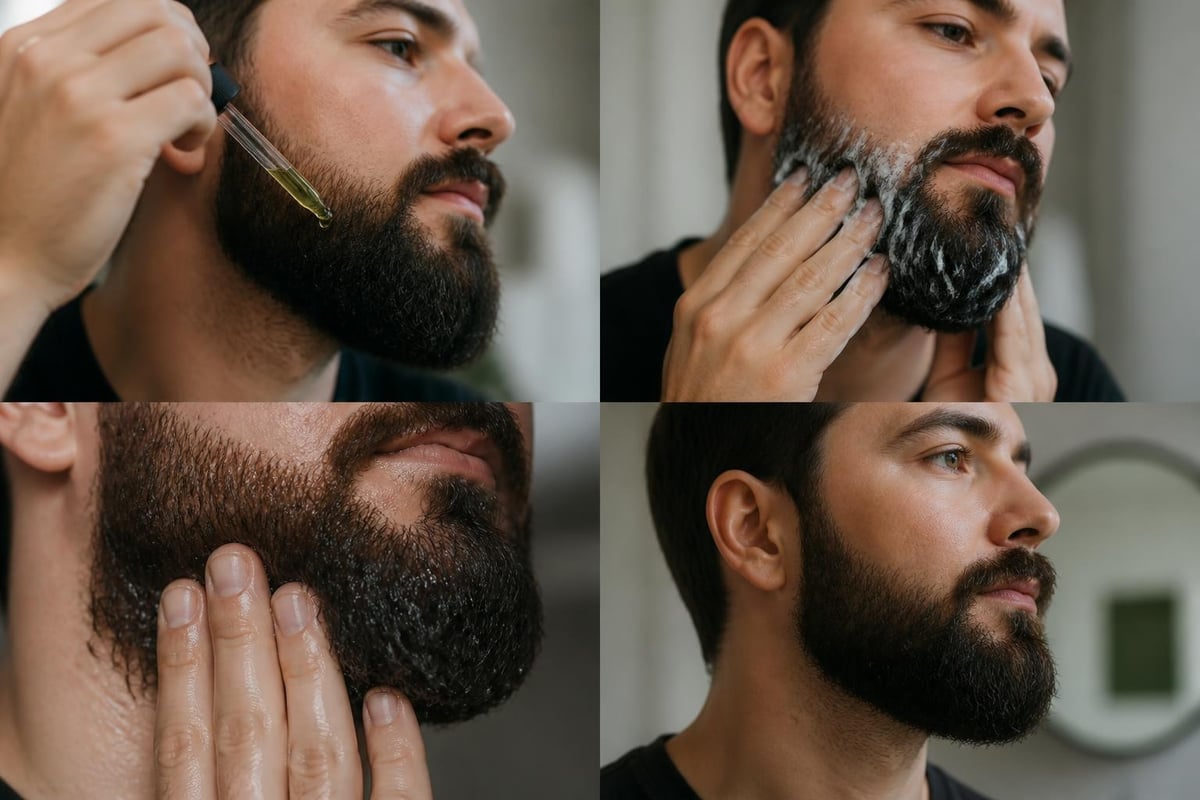
- Apply 4-6 drops of carrier-oil-rich beard oil to damp beard
- Distribute with boar bristle brush to coat each hair shaft
Evening Maintenance:
- Rinse beard with lukewarm water
- Apply slightly more oil (6-8 drops) for overnight conditioning
- Massage into skin beneath beard to stimulate microcirculation
The "damp beard" detail matters scientifically. Water molecules bind to oil molecules through emulsification, creating a delivery system that carries fatty acids deeper into the hair cortex than applying to completely dry hair.
Weekly Deep Conditioning
- Hot towel treatment: Warm, damp towel wrapped around beard for 5 minutes opens cuticles
- Intensive oil application: Double your normal amount whilst cuticles are expanded
- Brush-through: Work oil from roots to tips systematically
- 30-minute absorption period: Allow maximum penetration before rinsing
Product Layering Strategy
For optimal results, many men layer products based on molecular weight:
- Lightest application first: Beard oil penetrates hair shaft
- Medium weight second: Beard conditioner seals cuticle
- Heaviest last: Beard balm provides hold and environmental protection
This sequence ensures each product can perform its specific function without competing for absorption.
Natural Ingredients That Deliver Measurable Results
If you're committed to finding an alternative to arlos beard oil that prioritises natural, scientifically-validated ingredients, examine these specific compounds:
Baobab Oil
- Contains 33% linoleic acid, which strengthens hair's lipid barrier
- Vitamin C content (three times that of oranges) supports collagen synthesis around follicles
- Non-comedogenic rating of 2/5 prevents pore blockage
Hemp Seed Oil
- Omega-6 to omega-3 ratio (3:1) mirrors skin's natural composition
- Gamma-linolenic acid reduces inflammatory prostaglandin production
- Studies show 20% reduction in skin dryness after 4 weeks' use
Sea Buckthorn Oil
- Rare omega-7 (palmitoleic acid) promotes tissue regeneration
- 190 bioactive compounds including carotenoids that protect against UV damage
- Clinical trials demonstrate improved skin elasticity measurements
The key? These aren't marketing buzzwords. Each ingredient has peer-reviewed research demonstrating specific biological mechanisms. When formulated properly, they address the root causes of beard problems rather than masking symptoms.
Building Your Complete Beard Transformation System
Individual products like arlos beard oil provide one piece of the puzzle. But transforming a patchy, uncomfortable beard into a healthy, impressive one requires a systematic approach addressing multiple biological factors simultaneously.
The Science-Backed Transformation Framework:
Phase 1: Follicle Optimisation (Days 1-30)
Focus on creating the ideal environment for healthy hair production:
- Nutrition: Biotin (5,000 mcg daily) supports keratin synthesis
- Circulation: Derma-rolling (0.5mm needles) triggers growth factor release
- Cleansing: Remove DHT buildup that miniaturizes follicles
Phase 2: Structural Strengthening (Days 31-60)
Target existing hair integrity and appearance:
- Protein treatment: Keratin-rich products temporarily fill damaged areas
- Oil application: Consistent carrier oil use reduces breakage by 40%
- Protection: UV filters and antioxidants prevent environmental degradation
Phase 3: Maintenance & Refinement (Days 61-90)
Lock in gains and establish sustainable habits:
- Routine automation: Morning and evening rituals become unconscious
- Product optimisation: Fine-tune formulations based on seasonal changes
- Style development: Learn shaping and styling techniques
This systematic approach explains why comprehensive programmes outperform single products. You're not just applying oil; you're orchestrating multiple biological processes simultaneously.
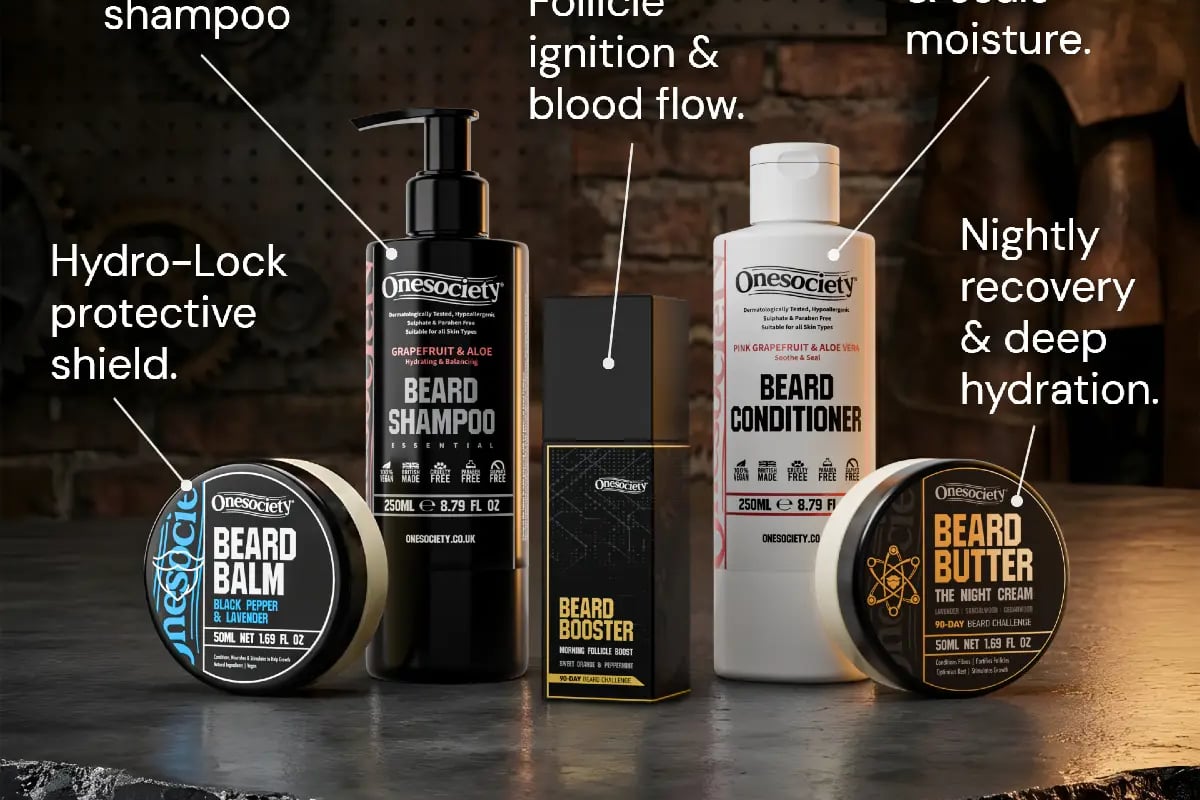
Onesociety's 90-Day Beard Challenge packages this entire framework into one complete system. You receive eight specialised formulations-each targeting a specific biological mechanism-from the Beard Booster that increases follicular blood flow to the Hydro-Lock Balm that creates a protective barrier against moisture loss. Every product contains natural, research-backed ingredients working synergistically rather than competing with each other.
Ingredient Safety: What You Must Know
Before applying arlos beard oil or any grooming product to your face daily, understand potential risks. Your facial skin contains more nerve endings and thinner epidermis than most body areas, making it particularly reactive.
Common Sensitizers in Beard Oils
The fragrance allergy research identifies these frequent culprits:
- Limonene: Oxidizes rapidly, creating allergenic compounds
- Linalool: Found in lavender and coriander oils; 7% of population shows sensitivity
- Eugenol: Present in clove oil; can cause contact dermatitis in 2-3% of users
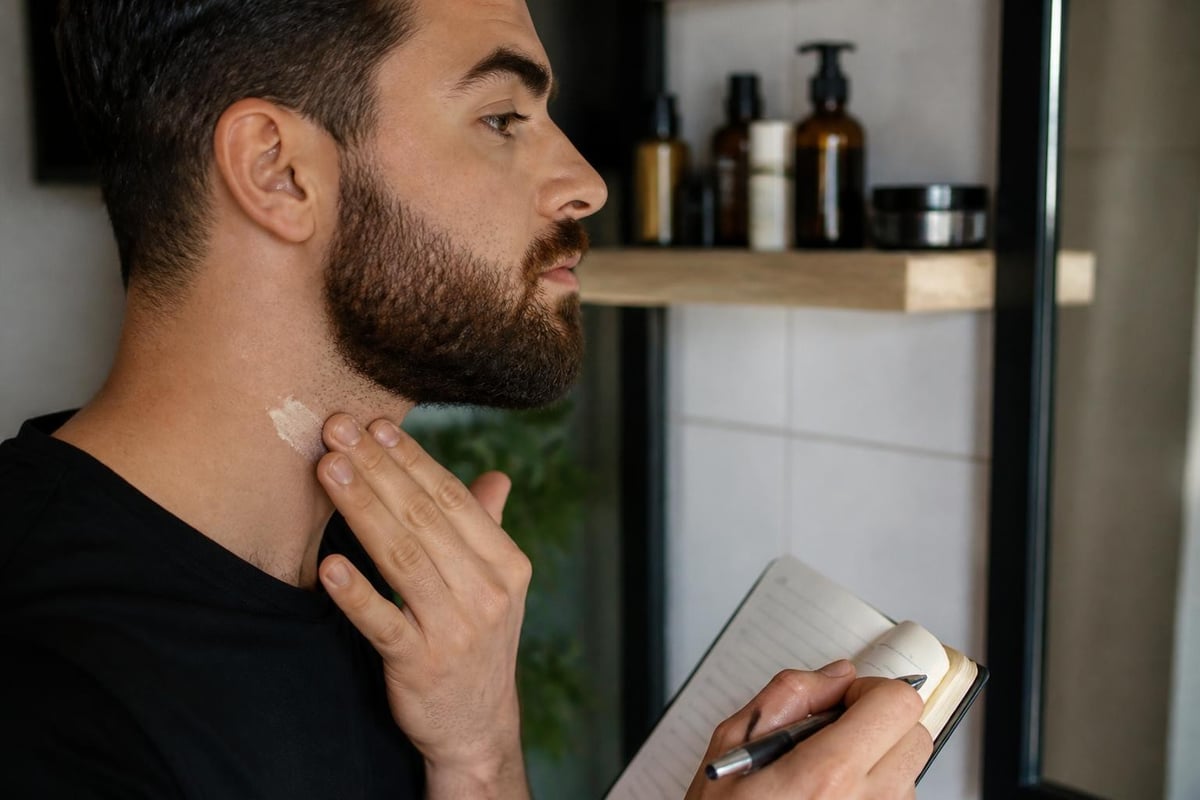
Even natural ingredients trigger reactions. "Natural" doesn't equal "safe for everyone." Always patch test new products: apply small amount to inner elbow, wait 24 hours, check for redness or itching.
Preservative Considerations
Pure oils don't require preservatives because bacteria can't grow in lipid-only environments. If arlos beard oil or any product lists parabens, phenoxyethanol, or other preservatives, it contains water. That's not inherently problematic, but it changes the product category from "pure oil" to "emulsion," altering absorption properties.
Price vs. Value: The Economics of Beard Care
Arlos beard oil pricing deserves scrutiny through a cost-per-use lens rather than just sticker price. A typical 30ml bottle costs £15-25 and lasts approximately:
- Short beard (1-2 inches): 8-10 weeks (3 drops daily)
- Medium beard (3-4 inches): 5-6 weeks (5 drops daily)
- Long beard (5+ inches): 3-4 weeks (8 drops daily)
This calculates to £0.50-£1.20 per day. Compare that to:
| Product Type | Cost Per Day | Active Benefit Duration |
|---|---|---|
| Single beard oil | £0.50-£1.20 | 4-6 hours |
| Complete system | £2.50-£3.50 | 24 hours |
| Salon treatments | £8-£15 | 48-72 hours |
The maths reveals that comprehensive systems-whilst appearing expensive initially-deliver better cost-per-benefit ratios. You're paying for continuous action rather than temporary relief.
What Professional Barbers Actually Recommend
Speaking with professional barbers who work with hundreds of beards yearly reveals patterns. They rarely recommend single products. Instead, they advocate for customised routines based on three beard archetypes:
Type 1: Oily, Thick, Fast-Growing
- Lighter oils (argan, grapeseed)
- More frequent washing (every 2-3 days)
- Less product volume per application
Type 2: Dry, Coarse, Slow-Growing
- Heavier oils (castor, avocado)
- Minimal washing (once weekly)
- Increased product volume plus overnight treatments
Type 3: Combination (oily skin, dry beard)
- Dual approach: astringent on skin, rich oil on hair lengths
- Strategic application (avoid root zone)
- Balancing products that regulate sebum production
If arlos beard oil works brilliantly for your colleague but fails for you, beard type mismatch likely explains the discrepancy. Personalisation matters more than brand loyalty.
The Growth Question: Separating Fact from Fiction
Many men try arlos beard oil hoping to fill patches or accelerate growth. The biological reality: no topical oil stimulates hair follicle stem cells. Growth occurs deep in the dermis, controlled by:
- Androgens: Testosterone and DHT bind to follicle receptors
- Genetics: Your DNA determines follicle density and growth cycle length
- Age: Follicle sensitivity to androgens increases until age 30-35, then plateaus
Clinical research on facial hair enhancement shows only minoxidil (3-5% concentration) produces statistically significant increases in hair count and thickness. The mechanism? Minoxidil's sulphate metabolite opens potassium channels in follicle cells, extending the growth phase.
Beard oils can't replicate this action. What they can do:
- Make existing hair appear fuller through improved texture
- Reduce breakage that creates the illusion of slow growth
- Optimize follicle health so genetic potential isn't hampered by inflammation
This distinction prevents unrealistic expectations. If you have patchy growth from genetics, oil won't fix it. But if you have adequate follicles producing weak, breaking hair, proper conditioning transforms the appearance dramatically.
Building Your Personalised Beard Protocol
Rather than asking "Should I buy arlos beard oil?" ask "What does my specific beard need?" Then construct a protocol addressing those requirements:
Assessment Checklist
Measure These Factors:
- Beard length (inches from chin)
- Growth pattern (even vs. patchy)
- Hair texture (fine, medium, coarse)
- Skin condition beneath (oily, dry, sensitive)
- Current problems (itching, dandruff, split ends, dullness)
Protocol Design
- Cleansing frequency: Oily skin = every 2-3 days; dry skin = once weekly
- Product weight: Fine hair = light oils; coarse hair = heavy butters
- Application timing: Active lifestyle = morning only; sedentary = twice daily
- Seasonal adjustment: Winter = increase moisture; summer = decrease weight
This personalised approach delivers better results than blindly following product marketing. You're addressing your biology, not someone else's.
Why Natural Ingredients Matter More Than Ever
The men's grooming industry increasingly relies on synthetic silicones, petroleum derivatives, and synthetic fragrances. These ingredients create immediate cosmetic effects but potentially disrupt skin barrier function long-term.
Natural vs. Synthetic: The Science
Natural carrier oils contain:
- Multiple fatty acids working synergistically
- Fat-soluble vitamins with antioxidant properties
- Phytosterols that reduce inflammation
- Naturally occurring preservatives (vitamin E)
Synthetic alternatives offer:
- Single-compound effects
- Longer shelf life
- Lower cost
- Potential endocrine disruption (some synthetic musks)
When evaluating arlos beard oil or competitors, examine ingredient lists critically. Products from dedicated natural grooming specialists typically provide fuller disclosure and avoid problematic synthetics entirely.
The commitment to 100% natural formulations isn't just marketing. It's recognition that your skin absorbs roughly 60% of what you apply topically. Over months and years, those ingredients accumulate. Choosing natural options reduces your total chemical burden whilst delivering equivalent or superior conditioning results.
Red Flags: When to Avoid Any Beard Oil
Not every product deserves your money, regardless of branding. Watch for these warning signs:
Formulation Red Flags:
- "Proprietary blend" without specific oil disclosure
- Essential oil percentage exceeding 5%
- Mineral oil as primary ingredient
- Fragrance listed without specifying source
- No batch number or expiration date
Marketing Red Flags:
- "Miraculous growth in days"
- Before/after photos showing different lighting/angles
- Celebrity endorsements without ingredient discussion
- "Scientifically proven" without citing actual studies
- Aggressive scarcity tactics ("Only 3 left!")
These signs indicate either poor formulation knowledge or intentionally misleading marketing. Either way, your beard deserves better.
Quality beard care requires understanding the science behind conditioning, realistic expectations about what topical products can achieve, and commitment to comprehensive routines that address multiple biological factors. Whilst arlos beard oil may offer benefits, optimal results come from systematic approaches combining cleansing, conditioning, nutrition, and protection. Onesociety builds these evidence-based principles into every product, ensuring you receive formulations backed by research rather than hype. Explore their complete collection of natural beard care solutions designed to transform your grooming routine from guesswork into science.