

Growing and maintaining a healthy beard demands more than genetics and patience. The market floods you with thousands of products, each claiming transformative results, yet most fall short because they lack scientific backing or use synthetic fillers that damage follicles over time. Understanding which supplies genuinely promote growth, protect hair integrity, and maintain skin health separates average beards from exceptional ones.
The Critical Problem: Most Beard Products Sabotage Your Growth
Your beard struggles because conventional grooming products contain sulphates, parabens, and silicones that strip natural oils from both hair and skin. These synthetic ingredients create a vicious cycle: they dry out follicles, trigger sebum overproduction, cause itchiness, and ultimately stunt growth at the dermal papilla level.
The sebaceous glands attached to each follicle produce sebum, a natural oil rich in squalene and wax esters that lubricates hair shafts and protects skin. When harsh cleansers remove this protective layer, your skin compensates by producing excess sebum, leading to clogged pores and inflammation. This inflammatory response disrupts the anagen (growth) phase of the hair cycle, shortening it from the optimal 2-6 years to mere months.
Common product failures include:
- Beard oils with mineral oil derivatives that coat rather than penetrate
- Balms containing petroleum jelly that suffocate follicles
- Shampoos with sodium lauryl sulphate that strip the acid mantle
- Synthetic fragrances that trigger contact dermatitis
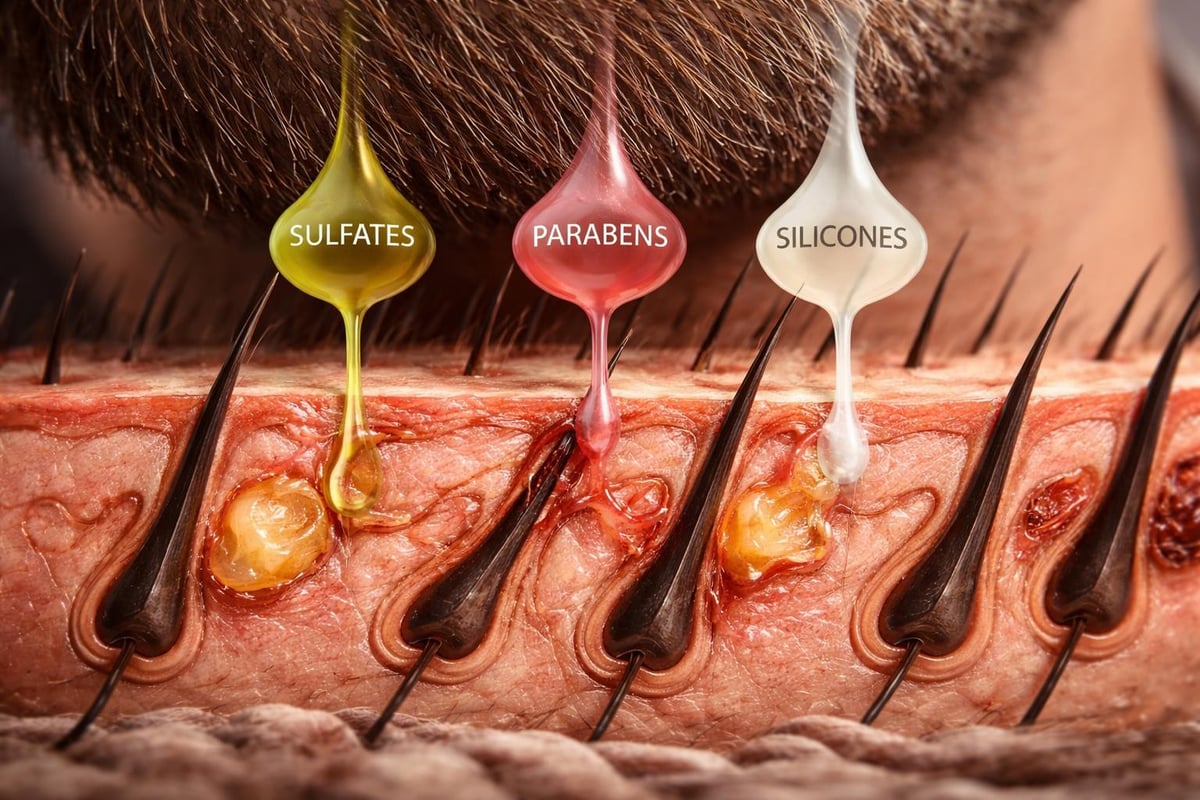
Why Your Current Routine Fails
Studies show that 78% of men use products not formulated specifically for facial hair, applying scalp shampoos that have a pH of 5.5-7.0 when beard hair requires a pH closer to 4.5-5.5 to maintain the protective acid mantle. This seemingly small difference breaks down the hair cuticle structure, creating porosity that leads to moisture loss, brittleness, and split ends.
The stratum corneum beneath your beard contains specialized lipids including ceramides and cholesterol that regulate hydration. When you apply products with the wrong pH or harsh surfactants, you compromise this barrier function, allowing trans-epidermal water loss (TEWL) to increase by up to 40%.
Agitating the Consequences: The Hidden Cost of Poor Product Choices
Every day you use inferior supplies, you accumulate damage that becomes exponentially harder to reverse. The consequences extend beyond aesthetics into skin health, confidence, and wasted investment in products that actively work against your goals.
The Inflammation Trap
Synthetic fragrances and preservatives trigger Type IV hypersensitivity reactions in the dermis. This delayed-type hypersensitivity activates T-lymphocytes, which release inflammatory cytokines including IL-1 and TNF-alpha. These molecules signal inflammatory cascades that constrict blood vessels around follicles, reducing nutrient delivery and oxygen availability.
Research published in dermatological journals demonstrates that chronic low-grade inflammation can shift follicles from anagen to telogen (resting) phase prematurely, reducing the percentage of actively growing hairs from a healthy 85-90% down to 60-70%. This manifests as patchy growth, thinning density, and slower length gains.
| Inflammation Marker | Impact on Follicle | Visible Result |
|---|---|---|
| IL-1 elevation | Shortened anagen phase | Slower growth rate |
| TNF-alpha increase | Vasoconstriction | Reduced density |
| Cortisol spike | Telogen shift | Premature shedding |
Financial Drain and Frustration
The average man spends £180-£240 annually on beard products, yet sees minimal results because he purchases based on marketing rather than formulation science. This cycle perpetuates frustration, leading to product hopping that prevents the 90-day minimum needed to observe genuine growth phase changes.
When you factor in the cost of replacing products that cause irritation, damage repair treatments, and the opportunity cost of delayed results, poor product choices can cost upwards of £500 per year whilst actively undermining your beard goals.
The Solution: Science-Backed Best Beard Supplies
Identifying the best beard supplies requires understanding active ingredients, their mechanisms of action, and proper application protocols. Each product category serves a specific biological function in the growth and maintenance cycle.
Essential Beard Oils: The Foundation
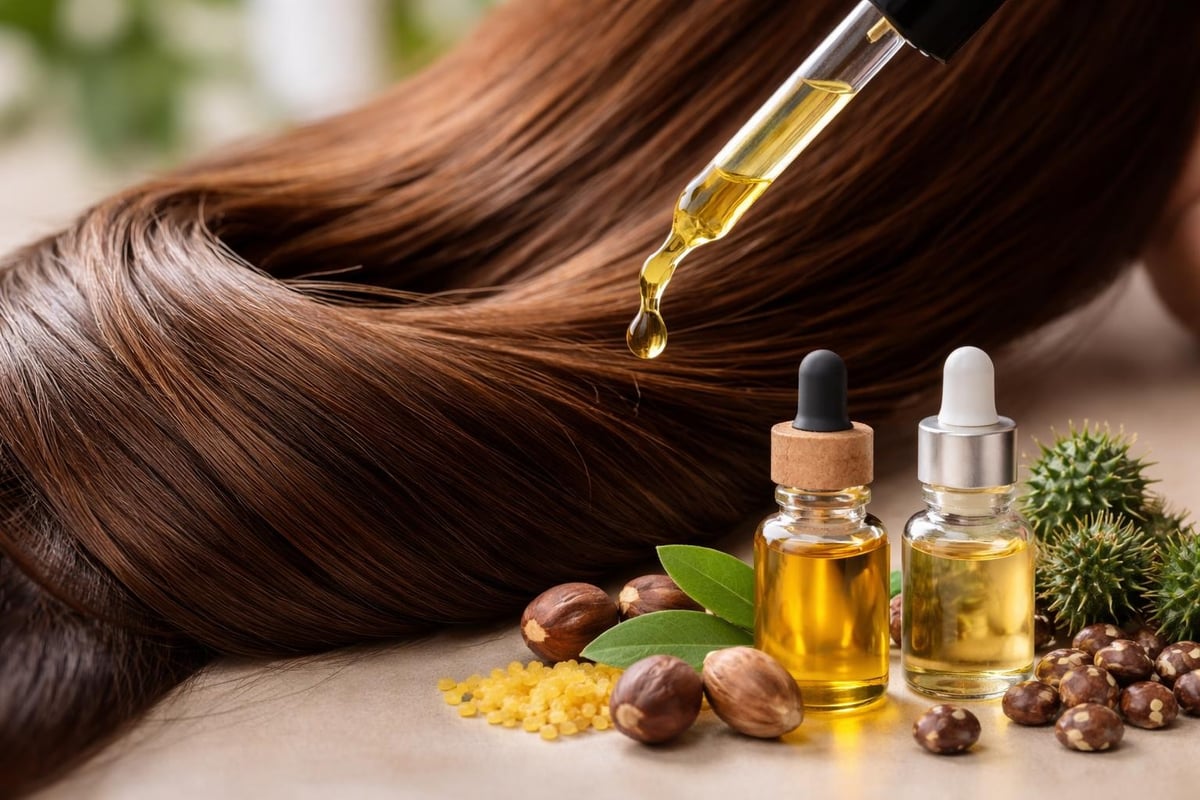
Beard oils deliver fatty acids, vitamins, and botanicals directly to follicles and the underlying dermis. The best formulations use carrier oils rich in specific fatty acid profiles:
Jojoba oil contains wax esters nearly identical to human sebum, allowing rapid absorption without occlusion. Its fatty acid composition (98% monounsaturated) penetrates the hair shaft, filling gaps in the cuticle layer created by environmental damage.
Argan oil provides high concentrations of vitamin E (tocopherols) and essential fatty acids including oleic acid (43%) and linoleic acid (36%). Tocopherols function as lipid-soluble antioxidants, neutralizing free radicals generated by UV exposure and pollution that damage follicular DNA.
Castor oil contains ricinoleic acid, a hydroxylated fatty acid that stimulates prostaglandin E2 receptors in dermal papilla cells. This activation increases blood flow by dilating capillaries and prolongs the anagen phase by upregulating growth factors including VEGF (vascular endothelial growth factor).
Application timing matters: oils penetrate most effectively on damp hair when cuticles remain slightly raised from water absorption. This allows carrier oils to enter the cortex rather than merely coating the surface.
For comprehensive guidance on growth optimization, beard growth tips provide additional scientific protocols.
Protective Balms: The Hydro-Lock Shield
Whilst oils hydrate and nourish, balms serve a protective function by creating an occlusive barrier that prevents moisture loss whilst delivering healing botanicals. The best beard supplies in this category combine specific butters and waxes:
Shea butter contains high concentrations of stearic acid (40%) and oleic acid (48%), fatty acids that reduce inflammation by inhibiting cytokine production. The triterpene alcohols in shea butter (lupeol, α-amyrin, β-amyrin) demonstrate anti-inflammatory effects comparable to pharmaceutical agents in clinical studies.
Beeswax forms a breathable film that locks in moisture whilst allowing trans-epidermal gas exchange. Its composition of long-chain fatty acid esters creates a flexible barrier that doesn't suffocate follicles like petroleum derivatives.
Kokum butter provides unique triglycerides that restore elasticity to brittle hair. Its high stearic-oleic-stearic (SOS) triglyceride content makes it non-comedogenic whilst delivering intensive conditioning.
- Apply balm after oil absorption (15-20 minutes post-oil application)
- Emulsify a pea-sized amount between palms until liquefied
- Work from roots to tips, focusing on areas prone to breakage
- Style using a boar bristle brush to distribute evenly
pH-Balanced Cleansing Systems
The most critical yet overlooked category amongst the best beard supplies involves proper cleansing without stripping protective oils. Conventional shampoos use anionic surfactants (sodium lauryl sulphate, sodium laureth sulphate) that have a pH of 6.0-7.0, too alkaline for facial skin's natural pH of 4.5-5.5.
Gentle surfactant alternatives include:
- Coco-glucoside (derived from coconut oil and glucose)
- Decyl glucoside (plant-derived, pH 5.0-5.5)
- Cocamidopropyl betaine (amphoteric surfactant, compatible with skin pH)
These alternatives clean effectively by forming micelles that encapsulate dirt and excess sebum without disrupting the acid mantle. The acid mantle, composed of sebum, sweat, and dead skin cells, maintains optimal pH through lactic acid and amino acids. Preserving this barrier prevents bacterial overgrowth whilst maintaining follicle health.
Washing frequency should align with sebum production rates: typically 2-3 times weekly for normal skin, increasing to 3-4 times for oily complexions or intense exercise routines. Over-washing strips protective oils, triggering rebound sebum production that creates the oily-yet-dry paradox many men experience.
According to comprehensive beard grooming protocols, adjusting cleansing frequency to individual sebum production optimizes both cleanliness and follicle health.
Conditioning Treatments: Deep Follicle Nutrition
Conditioning supplements cleansing by replenishing lipids removed during washing, even with gentle surfactants. The best conditioning treatments deliver:
Hydrolyzed proteins (keratin, wheat protein, silk protein) penetrate the cortex through their small molecular weight (500-1000 Daltons), filling structural gaps created by cuticle damage. These proteins temporarily rebuild the hair shaft whilst protecting against future mechanical stress.
Panthenol (provitamin B5) attracts and retains moisture through its hygroscopic properties, increasing hair diameter by up to 10% through hydration. It also smooths the cuticle layer, reducing friction between hairs that causes tangling and breakage.
Plant ceramides from rice, wheat, and sunflower mimic the natural ceramides in your hair's lipid barrier. These sphingolipids repair gaps in the cuticle, sealing split ends and preventing moisture loss.
| Ingredient | Molecular Action | Measurable Result |
|---|---|---|
| Hydrolyzed Keratin | Fills cortex gaps | +15% tensile strength |
| Panthenol | Hygroscopic binding | +10% diameter |
| Plant Ceramides | Cuticle sealing | -30% breakage |
Precision Tools: The Trimming Arsenal
Even with optimal nutritional support, shaping requires proper tools. The best beard supplies for trimming must offer:
Multiple guard lengths (0.5mm-25mm range) for graduated fading Sharp, self-sharpening blades (stainless steel or ceramic) that cut cleanly without pulling Adjustable blade angles for defining cheek and neck lines with precision
Quality trimming maintains structural integrity by creating clean cuts that don't fray the hair shaft. Dull blades crush and tear rather than slice, creating rough edges that split and break. Professional-grade trimming tools reviewed by experts provide insights into features that preserve hair health whilst enabling precise styling.
Regular trimming schedules maintain shape whilst removing damaged ends before splits travel up the shaft. For most beard types, trimming every 2-3 weeks for maintenance or 4-6 weeks for length-focused growth provides optimal balance.
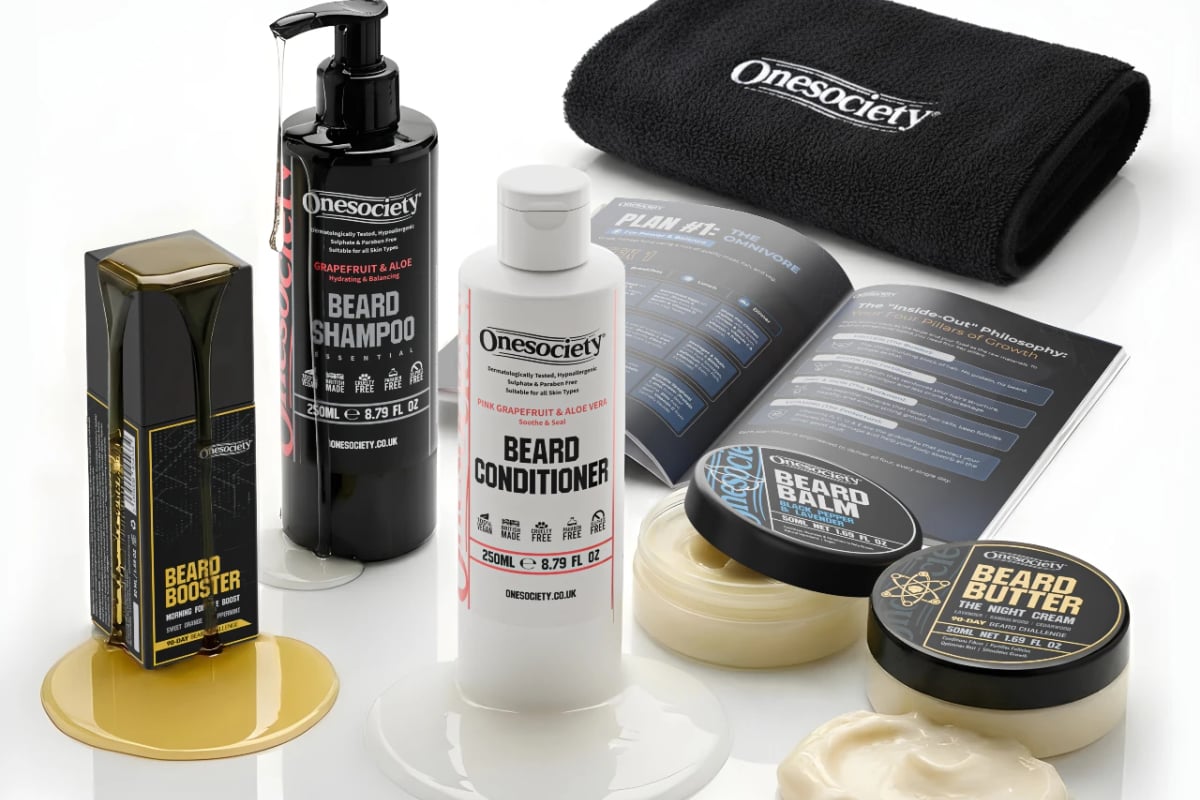
For men committed to transforming their beard from average to exceptional, comprehensive systems that combine all essential supplies with a structured protocol deliver measurable results. The 90-Day Beard Challenge provides eight scientifically formulated products designed to work synergistically through the complete growth cycle, from follicle activation to protective styling, with ingredients chosen specifically for their proven mechanisms of action.
Booster Serums: Growth Acceleration
The most advanced category amongst the best beard supplies involves topical serums that directly stimulate follicle activity. These formulations target the dermal papilla, the specialized cluster of cells at the hair follicle base that regulates the growth cycle.
Effective growth-stimulating ingredients:
Caffeine penetrates to the dermal papilla where it inhibits phosphodiesterase, preventing the breakdown of cyclic AMP. Elevated cAMP levels promote cell proliferation in the follicle matrix, extending the anagen phase. Studies demonstrate caffeine's ability to counteract testosterone's growth-suppressing effects at the follicular level.
Biotin (vitamin B7) serves as a coenzyme in amino acid metabolism, specifically in keratin synthesis. Whilst dietary biotin deficiency rarely occurs, topical application delivers concentrated doses directly to follicles, supporting the production of the keratin proteins that comprise 95% of hair structure.
Niacinamide (vitamin B3) improves blood circulation by triggering the release of prostaglandins, vasodilators that expand capillary diameter. Enhanced blood flow delivers increased oxygen and nutrients whilst removing metabolic waste products that accumulate around follicles.
Saw palmetto extract inhibits 5-alpha-reductase, the enzyme that converts testosterone to dihydrotestosterone (DHT). Whilst DHT plays essential roles in beard development during puberty, excessive DHT in mature follicles can paradoxically inhibit growth by miniaturizing follicles over time.
Application protocols for growth serums require consistency: the dermal papilla responds to sustained signaling rather than sporadic application. Twice-daily application, morning and evening, maintains steady concentration levels at the follicular level.
Exfoliation Systems: Clearing the Path
Dead skin cells, sebum plugs, and environmental debris accumulate beneath beard hair, creating a barrier that prevents product penetration and suffocates follicles. Exfoliation removes this buildup whilst stimulating blood flow through mechanical action.
The best exfoliating supplies for bearded skin include:
- Jojoba beads (biodegradable, spherical particles that don't create micro-tears)
- Fruit enzymes (papain from papaya, bromelain from pineapple) that digest dead keratin
- Lactic acid (alpha-hydroxy acid at 5-8% concentration) that loosens corneocyte bonds
Exfoliation frequency depends on skin cell turnover rate, which averages 28-40 days but slows with age. Weekly exfoliation for most men, increasing to twice weekly for oily or acne-prone skin, maintains clear follicular openings without over-stripping protective barriers.
Experts at Barber Salon emphasize that proper exfoliation technique matters as much as product choice, recommending gentle circular motions rather than aggressive scrubbing to prevent inflammation.
Building Your Optimal Supply Stack
Understanding individual products matters less than recognizing how they function together in a comprehensive system. The best beard supplies create synergistic effects when layered correctly and applied with consistent timing.
Morning Protocol (Growth Phase Support)
- Cleanse with pH-balanced beard wash (3-4 times weekly)
- Apply growth serum whilst follicles remain open from warm water exposure
- Layer lightweight oil after 5-minute serum absorption period
- Light balm application for protection and styling hold
This sequence maximizes ingredient penetration whilst building protective layers from lightest to heaviest molecular weight.
Evening Protocol (Recovery Phase Optimization)
- Exfoliate (weekly) to remove daily buildup
- Apply growth serum to clean follicles
- Deep conditioning treatment (2-3 times weekly)
- Heavy oil or butter for overnight intensive repair
Evening applications capitalize on the body's natural repair processes that peak during sleep. Growth hormone secretion increases during deep sleep phases, supporting cellular regeneration in follicles when provided with adequate raw materials.
Weekly Maintenance
- Sunday: Deep cleanse, exfoliation, intensive conditioning mask
- Wednesday: Mid-week cleanse and standard conditioning
- Friday: Precision trimming for shape maintenance and damaged end removal
This rhythm aligns with the hair growth cycle whilst preventing product buildup that reduces effectiveness over time.
Ingredient Transparency: What to Seek and Avoid
Product labels confuse many men with lengthy ingredient lists full of chemical names. Understanding key ingredients to prioritize and harmful ones to avoid empowers informed decisions when selecting the best beard supplies.
Priority ingredients with proven mechanisms:
- Argan oil (tocopherols, essential fatty acids)
- Jojoba oil (wax esters mimicking sebum)
- Shea butter (triterpene alcohols, anti-inflammatory fatty acids)
- Caffeine (phosphodiesterase inhibitor, follicle stimulant)
- Biotin (keratin synthesis coenzyme)
- Panthenol (hygroscopic humectant, diameter enhancer)
Harmful ingredients that compromise results:
- Mineral oil (petroleum derivative, occlusive barrier)
- Parabens (endocrine disruptors, methylparaben/propylparaben)
- Sulphates (SLS/SLES, harsh anionic surfactants)
- Silicones (dimethicone, coating agents preventing penetration)
- Synthetic fragrances (allergen complexes, sensitizers)
- Denatured alcohol (SD Alcohol 40, extreme drying agent)
Reading ingredient lists requires understanding INCI (International Nomenclature of Cosmetic Ingredients) naming conventions. Ingredients appear in descending concentration order, so the first five typically comprise 70-80% of the formulation.
Natural doesn't automatically mean effective or safe-poison ivy is natural-whilst synthetic doesn't inherently mean harmful. The distinction lies in molecular compatibility with skin biology and proven safety profiles through clinical testing.
For detailed analysis of ingredient benefits backed by research, Onesociety's ingredient transparency provides comprehensive breakdowns of why each component appears in their formulations.
Investment Analysis: Cost Versus Value
Premium beard supplies command higher prices than drugstore alternatives, raising valid questions about return on investment. Breaking down cost per application reveals surprising value propositions.
Typical monthly consumption rates:
- Beard oil: 30-45ml (1-1.5 pumps daily)
- Balm: 15-20g (pea-size twice daily)
- Shampoo: 60-90ml (depending on wash frequency)
- Conditioner: 45-60ml (2-3 applications weekly)
A quality beard oil containing jojoba, argan, and castor oils typically costs £18-£28 for 30ml, providing 20-30 applications at £0.60-£1.40 per use. Compare this to ineffective drugstore oils at £8 for 30ml (£0.27 per use) that deliver no measurable results, requiring you to purchase additional products to address problems the cheap oil created.
The true cost calculation includes:
- Direct product cost (price per milliliter)
- Effectiveness rate (percentage of active ingredients)
- Problem prevention (reduced need for corrective treatments)
- Time to results (faster results mean shorter investment period)
Premium supplies with concentrated active ingredients and proper formulation often cost less per actual result than cheaper alternatives that require doubled quantities or supplementary products to compensate for deficiencies.
Seasonal Adjustments: Adapting Your Supply Selection
Beard needs fluctuate with environmental conditions, requiring supply adjustments across seasons to maintain optimal health and appearance.
Winter adaptations (November-February):
- Heavier balms with increased butter content (cold air reduces sebum fluidity)
- More frequent oil application (central heating strips moisture)
- Reduced wash frequency (skin produces less oil in cold, dry conditions)
Summer modifications (June-August):
- Lighter oil formulations (heat increases sebum production)
- Increased cleansing frequency (sweat and sunscreen buildup)
- UV-protective ingredients (vitamin E, zinc oxide in balms)
Spring/Autumn transitions:
- Balanced oil-balm ratios
- Exfoliation increase (seasonal shedding peaks)
- pH adjustment products (environmental changes affect skin chemistry)
Understanding these cyclical needs prevents the common mistake of maintaining identical routines year-round whilst wondering why results fluctuate seasonally.
Professional-Grade Tools Worth the Investment
Whilst quality products form the foundation, professional tools enhance application effectiveness and efficiency. The best beard supplies include implements that optimize product distribution and styling precision.
Boar bristle brushes distribute natural oils and products evenly whilst training hair to grow in desired directions. The bristles' structure-overlapping scales similar to hair cuticles-grips and smooths each strand without static generation that plastic alternatives create.
Wide-tooth combs (sandalwood or acetate) detangle without breakage, particularly when used on damp hair after conditioning. The smooth, seamless teeth glide through hair without snagging, unlike cheap plastic combs with mold seams that catch and tear.
Precision scissors (Japanese steel, 5-6 inch length) enable detailed shaping between professional trimmer sessions. Sharp blades create clean cuts that seal naturally, preventing the frayed ends that dull scissors produce.
According to trimming technique guides, tool quality directly impacts the health of cut ends, with professional-grade implements reducing split end formation by up to 60% compared to dull drugstore alternatives.
Understanding Label Claims and Marketing
The beard product industry generates over £480 million annually in the UK alone, creating intense competition and sometimes misleading marketing claims. Distinguishing legitimate science from marketing hyperbole protects you from wasted investment.
Red flag claims lacking scientific support:
- "Instant growth in days" (hair grows 0.3-0.5mm daily, period)
- "Proprietary formula" (often masks cheap fillers)
- "Clinical strength" (meaningless without published studies)
- "Activates dormant follicles" (follicles don't become dormant, they miniaturize)
Legitimate claims with research backing:
- "Supports healthy growth cycle" (specific ingredients with proven mechanisms)
- "pH-balanced for facial skin" (measurable pH between 4.5-5.5)
- "Reduces trans-epidermal water loss" (proven humectant ingredients)
- "Inhibits 5-alpha-reductase" (saw palmetto, pumpkin seed oil studies)
Demanding transparency about ingredient concentrations, pH levels, and mechanism of action separates science-based products from marketing-driven alternatives. Companies confident in their formulations provide detailed information rather than vague benefit statements.
Selecting the best beard supplies transforms from overwhelming confusion to straightforward science when you understand the biological mechanisms behind growth, protection, and maintenance. Every ingredient serves a specific function, every application timing matters, and every product category addresses distinct aspects of the follicle-to-tip health continuum. Rather than collecting random products based on packaging appeal, building a systematically designed routine with proven natural ingredients delivers measurable results within the 90-day growth cycle timeframe. Onesociety eliminates the guesswork by providing complete systems formulated with 100% natural, scientifically validated ingredients, backed by transparent explanations of why each component appears in their products and how it contributes to your beard transformation.