

Your beard refuses to cooperate. Stray hairs jut out at awkward angles, your moustache droops into your mouth, and that carefully cultivated shape disappears by lunchtime. You've tried oils and balms, but neither offers the sculpting power you need for all-day control. This frustration leads many to discover beeswax beard wax, a natural styling solution that delivers both hold and nourishment through scientifically proven mechanisms.
The Scientific Foundation of Beeswax in Grooming
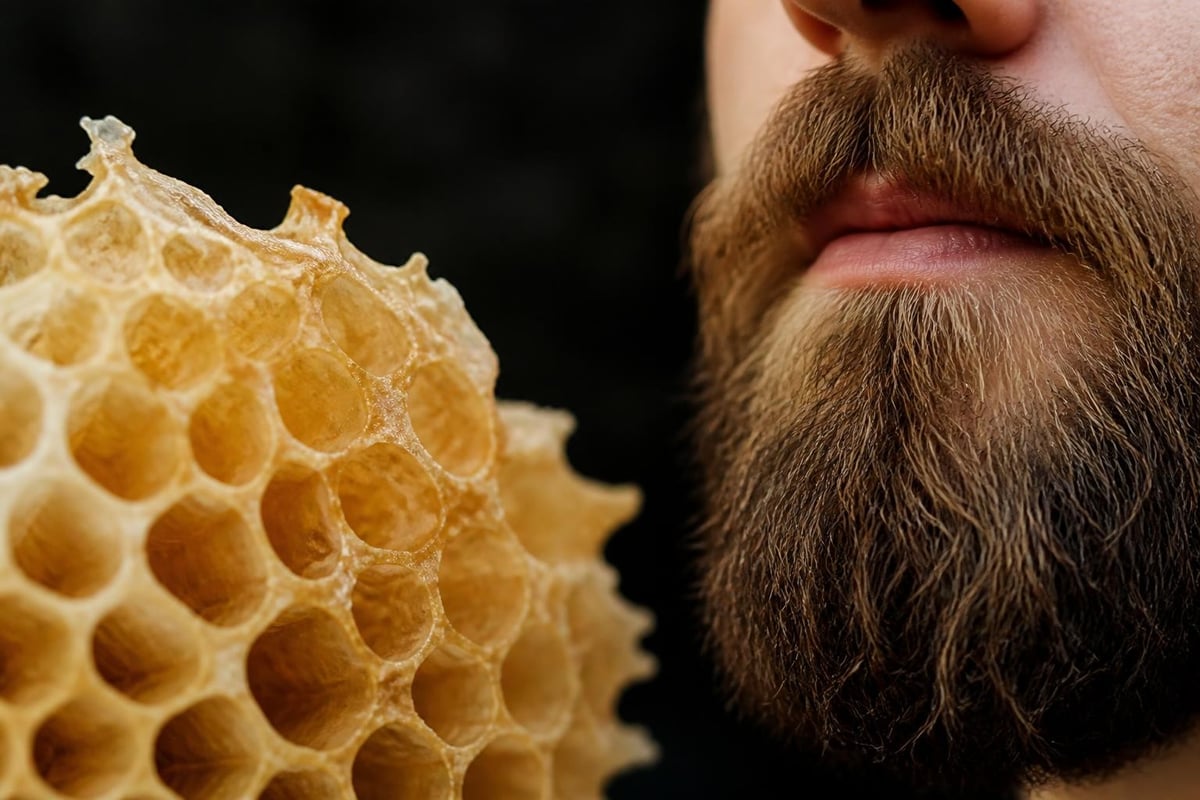
Beeswax contains approximately 284 different compounds, but its grooming power stems primarily from long-chain fatty acids and esters. These molecules create a semi-occlusive barrier on hair shafts, preventing moisture loss whilst maintaining breathability.
Molecular Structure and Hair Interaction
The chemical composition of beeswax includes palmitate, oleate, and hydroxypalmitate esters. When warmed between your palms, these compounds soften to a malleable consistency, allowing even distribution through beard hair. As the wax cools, it solidifies around each strand, creating structural support without the brittleness of synthetic polymers.
Key active components:
- Monoesters (35%): Primary hold mechanism
- Hydrocarbons (14%): Moisture sealing
- Free fatty acids (12%): Conditioning properties
- Diesters (8%): Flexibility retention
Research published by Healthline demonstrates how beeswax creates a protective coating that reduces breakage whilst maintaining natural hair movement. Unlike petroleum-based waxes, beeswax allows follicles to breathe, preventing the clogged pores that lead to ingrown hairs and irritation.
Problem: Why Your Beard Won't Hold Its Shape
Your facial hair grows in multiple directions, creating a chaotic pattern that defies conventional styling. Coarse beard hair has a different keratin structure than scalp hair, featuring more disulfide bonds that create natural curl and resistance to manipulation.
The Biology of Unruly Beards
Beard hair follicles emerge at varied angles from your facial skin. This multi-directional growth, combined with natural sebum production that varies across different facial zones, creates inconsistent texture. Your chin produces more oil than your cheeks, leading to some areas that appear greasy whilst others remain dry and brittle.
Without proper styling products, gravity and environmental factors constantly work against your desired shape. Wind, humidity, and simple movement throughout your day gradually undo any styling attempts made with lighter products like oils alone.
Agitation: The Cost of Inadequate Styling Products
You apply beard oil each morning, expecting it to tame flyaways and maintain shape. Within two hours, those rogue hairs have returned, and your carefully styled moustache has lost its curl. The oil provides moisture but offers zero structural support.
Standard balms deliver slightly better results, yet they still lack the holding power needed for aggressive styling. Your beard appears greasy rather than groomed, and you find yourself constantly touching and adjusting throughout meetings, meals, and social interactions.
The Financial and Time Investment Wasted
Consider the cumulative cost of products that underperform. You purchase oil, then balm, then butter, each promising the solution you need. Your bathroom cabinet becomes a graveyard of half-used containers, representing not just wasted money but wasted time experimenting with formulations that fail to deliver.
The psychological impact compounds this frustration. Your beard should project confidence and careful grooming, yet it broadcasts the opposite message. Professional settings demand polished appearances, and an unkempt beard undermines your credibility regardless of your competence.
| Product Type | Hold Duration | Styling Power | Moisture Retention |
|---|---|---|---|
| Beard Oil | 1-2 hours | Minimal | High |
| Light Balm | 3-4 hours | Low-Medium | High |
| Beeswax Wax | 8-12 hours | High | Medium-High |
| Synthetic Wax | 10-14 hours | Very High | Low |
Solution: How Beeswax Beard Wax Delivers Control
Beeswax beard wax solves the hold problem through a dual-action mechanism. The wax creates immediate structural support whilst simultaneously conditioning hair through its natural fatty acid content. This combination addresses both styling and health concerns in one application.
Application Science and Technique
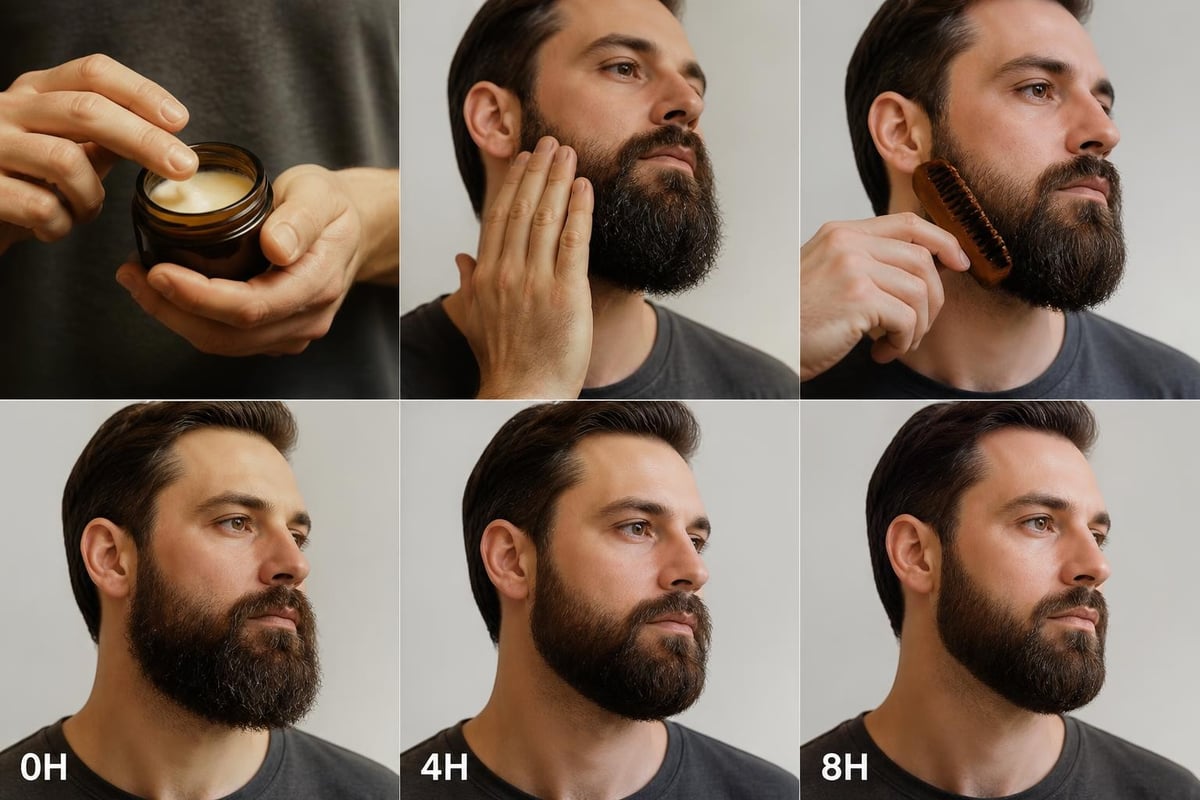
Warm a small amount (approximately pea-sized) between your palms until it reaches liquid consistency. This thermal activation is crucial because it allows the ester chains to separate and prepare for hair shaft adhesion. Apply to damp beard hair, working from roots to tips, ensuring even distribution across all growth zones.
The wax bonds with hair keratin proteins through van der Waals forces, creating temporary molecular bridges that hold hair in position. Unlike chemical bonding, these forces allow repositioning and maintain hair flexibility. Your beard holds its shape whilst still moving naturally with facial expressions.
Step-by-step application process:
- Cleanse beard with pH-balanced shampoo to remove sebum buildup
- Towel dry until damp (not soaking or completely dry)
- Warm wax between palms for 15-20 seconds
- Apply from roots outward, ensuring follicle-level coverage
- Shape using comb or fingers whilst wax remains pliable
- Allow 5 minutes for complete setting
Those exploring DIY beard balm formulations discover that beeswax concentration determines hold strength. Formulas containing 20-30% beeswax provide medium hold suitable for daily styling, whilst 40-50% concentrations deliver aggressive hold for moustache waxing and extreme shaping.
Beeswax Concentration and Hold Strength
The percentage of beeswax in your styling product directly correlates with hold power and texture. Understanding this relationship enables you to select or create formulations matched to your specific styling needs.
Formulation Chemistry
Low concentration waxes (10-20% beeswax) blend easily and provide subtle hold with maximum conditioning. These work well for shorter beards requiring minimal shaping but maximum moisture retention. Mid-range formulations (25-35% beeswax) balance hold and nourishment, offering 6-8 hours of styling power whilst maintaining beard health.
High concentration products (40-50% beeswax) deliver professional-grade hold suitable for competitions, photography, or extreme weather conditions. These formulations require more warming effort during application but provide unmatched structural support.
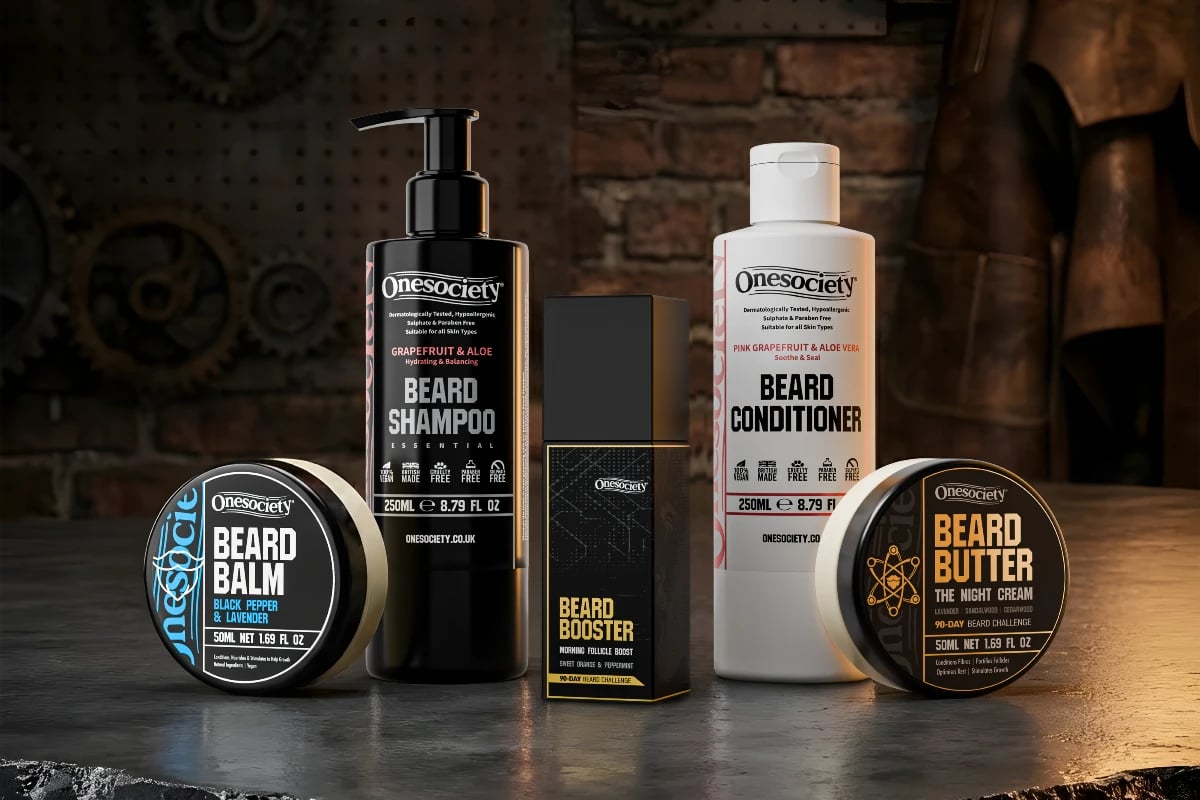
For those committed to transforming their beard from unruly to refined, dedicated programmes offer comprehensive solutions. The 90-Day Beard Challenge combines multiple formulations engineered for progressive improvement, including balms that utilise beeswax's protective properties alongside growth-stimulating ingredients.
| Concentration | Hold Duration | Best For | Conditioning Level |
|---|---|---|---|
| 10-20% | 3-5 hours | Short beards, natural look | Maximum |
| 25-35% | 6-8 hours | Medium beards, styled shape | High |
| 40-50% | 10-12 hours | Long beards, moustache curls | Medium |
| 50%+ | 12-16 hours | Competition styling | Low-Medium |
Natural Ingredients That Enhance Beeswax Performance
Pure beeswax beard wax rarely consists of beeswax alone. Complementary ingredients enhance its performance whilst addressing specific beard health concerns through targeted biological mechanisms.
Carrier Oils and Their Functions
Jojoba oil's molecular structure closely mimics human sebum, allowing deep penetration into hair shafts. Its omega-6 and omega-9 fatty acids reduce inflammation at follicle sites whilst preventing protein loss from the hair cortex. When combined with beeswax, jojoba prevents the drying effect that pure wax might create.
Argan oil delivers vitamin E and antioxidants that neutralise free radicals generated by UV exposure and pollution. These compounds protect the disulfide bonds that give beard hair its structure, preventing the brittleness that leads to breakage. The oil's triterpenes also demonstrate anti-inflammatory properties that soothe skin beneath your beard.
Those researching beard balm formulations with beeswax discover that shea butter adds crucial fatty acids that penetrate the hair cuticle, improving elasticity and reducing split ends. Its lupeol content provides additional anti-inflammatory benefits, addressing the skin irritation common in beard growth zones.
Butter Components for Texture
Cocoa butter's saturated fats create a rich texture that improves wax spreadability whilst adding its own conditioning properties. Its polyphenols function as antioxidants, protecting both hair and skin from oxidative stress. When melted with beeswax, cocoa butter creates a creamier consistency that's easier to distribute evenly.
Mango butter offers a softer texture than cocoa butter, making it ideal for those who find pure beeswax too stiff. Hemp and mango butter combinations create nourishing formulations that maintain hold whilst delivering omega fatty acids directly to hair follicles.
Comparing Beeswax to Synthetic Alternatives
Petroleum-derived waxes and synthetic polymers dominate mainstream styling products, but they function through fundamentally different mechanisms than beeswax beard wax. Understanding these differences helps you make informed choices about what contacts your facial hair and skin.
Chemical Composition and Skin Health
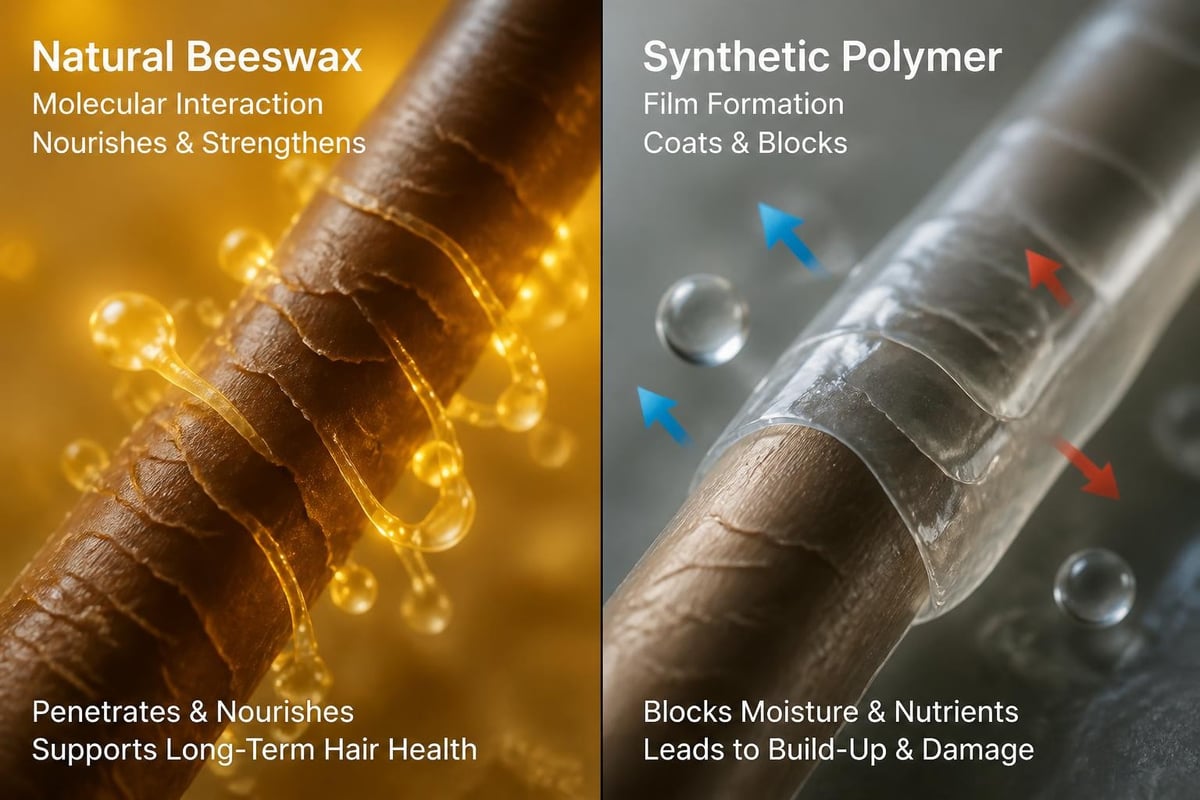
Synthetic waxes like microcrystalline wax and PVP copolymers create superior hold through chemical bonding and film formation. However, these compounds form occlusive barriers that prevent moisture exchange, leading to follicle dehydration over time. Your skin's natural repair mechanisms rely on oxygen and moisture circulation, both of which synthetic films disrupt.
Beeswax's semi-occlusive nature allows transepidermal water loss regulation without complete blockage. Studies show natural waxes maintain 60-70% of skin's normal moisture exchange rates, compared to synthetic alternatives that can reduce exchange by 85-90%.
Comparative analysis:
- Beeswax: Biodegradable, non-comedogenic, hypoallergenic, supports natural oils
- Microcrystalline Wax: Petroleum-derived, potential pore-clogging, stronger hold, environmental concerns
- PVP Polymers: Synthetic film-formers, maximum hold, require harsh cleansers for removal, potential buildup
The comprehensive guide to beard wax advantages and disadvantages reveals that whilst synthetic options offer marginally better immediate hold, their long-term impact on beard health and environmental sustainability raises significant concerns.
DIY Formulation: Creating Custom Beeswax Wax
Manufacturing your own beeswax beard wax grants complete control over ingredients, concentration, and scent profile. This approach also proves economically advantageous, with raw materials costing significantly less than commercial products.
Essential Equipment and Ingredients
You need a double boiler setup (or heat-safe bowl over simmering water), digital scale for precise measurements, small tins or containers for storage, and quality ingredients. Source pharmaceutical-grade beeswax pellets for consistent melting and purity. Avoid beeswax sourced from unknown apiaries, as pesticide contamination can transfer to your final product.
Basic medium-hold recipe:
- 30g beeswax pellets (yellow or white)
- 40g jojoba oil
- 20g shea butter
- 10g cocoa butter
- 10 drops essential oil (optional, for scent)
Melt beeswax and butters together over low heat, stirring constantly to ensure even temperature distribution. Remove from heat and add jojoba oil, stirring vigorously to emulsify. Add essential oils only after temperature drops below 60°C to preserve their therapeutic compounds. Pour into containers and allow 24 hours for complete solidification.
Those following detailed DIY beeswax recipes discover that small batch production allows experimentation with different oil ratios to match your beard's specific needs. Oily skin benefits from reduced jojoba content, whilst dry skin requires increased butter percentages.
Troubleshooting Common Formulation Issues
Grainy texture indicates beeswax cooled too quickly or contains impurities. Reheat and cool slowly, stirring periodically during solidification. Excessive softness suggests insufficient beeswax concentration; increase by 5g increments until desired consistency achieved. Products that remain too hard require additional carrier oil; add 5ml at a time.
Seasonal Adaptation and Climate Considerations
Beeswax's melting point of approximately 62-64°C means environmental temperature significantly affects its performance. Summer heat can soften your wax prematurely, whilst winter cold may require extended warming before application.
Temperature-Based Formulation Adjustments
Hot climates (above 25°C) benefit from increased beeswax concentration to compensate for ambient softening. Boost your standard formula by 10-15% beeswax content during summer months. Consider adding carnauba wax (melting point 82-86°C) in 5-10% concentration for extreme heat resistance.
Cold environments (below 10°C) require reduced beeswax content for easier application. Your standard formula may become unworkably stiff in winter, necessitating a 10% reduction in wax content and corresponding increase in liquid oils. Store products in slightly warmer areas to maintain workable consistency.
Climate-specific recommendations:
- Tropical/Hot: 40-45% beeswax, minimal liquid oils, consider carnauba addition
- Temperate: 30-35% beeswax, balanced oil-to-butter ratio
- Cold/Arctic: 20-25% beeswax, increased jojoba/argan content
- Variable: Maintain multiple formulations for seasonal rotation
Understanding moustache wax variations reveals how hold requirements differ based on hair length, thickness, and environmental exposure. Longer facial hair requires stronger formulations regardless of climate.
Application Timing and Product Layering
Beeswax beard wax performs optimally when applied as part of a structured grooming routine. The sequence of products and timing between applications directly impacts final results.
Multi-Product Synergy
Start with cleansing to remove accumulated sebum, dead skin cells, and previous product residue. Clean hair accepts styling products more effectively because nothing blocks penetration pathways. Apply lightweight beard oil to damp hair first, allowing 2-3 minutes for absorption.
The oil creates a moisture foundation that prevents wax from over-drying your beard. Think of oil as the hydration layer and beeswax beard wax as the protective styling shell. This two-step approach delivers both health benefits and aesthetic control.
Layer sequence matters because product molecular weight determines absorption order. Light oils penetrate first, followed by medium-weight butters, with wax forming the final external barrier. Reversing this sequence prevents proper absorption and wastes product.
Those exploring quality beard oils discover that pre-wax oil application reduces the amount of wax needed for equivalent hold, making both products last longer whilst improving overall beard texture.
Timing Between Application Steps
Allow 3-5 minutes between oil application and wax application. This interval lets carrier oils penetrate the hair cortex and reach follicle roots. Applying wax too quickly seals oil on hair surfaces rather than allowing deep absorption.
For styled beards requiring precise shaping, apply wax to slightly damp hair rather than bone-dry strands. Residual water helps distribute wax more evenly and provides additional setting time before complete drying. Completely dry hair requires more product for equivalent coverage.
Removal and Beard Health Maintenance
Proper wax removal prevents buildup that clogs follicles and causes inflammation. Beeswax's lipophilic nature means it bonds with oils more readily than water, requiring specific cleansing approaches.
Effective Cleansing Protocols
Standard water-based shampoos struggle to remove beeswax completely. The wax's hydrophobic properties repel water molecules, allowing residue to accumulate over multiple applications. This buildup creates the appearance of dull, lifeless facial hair and can trigger folliculitis.
Use oil-based pre-cleanse treatments to break down wax deposits. Massage jojoba or coconut oil into your beard, allowing 5 minutes for wax dissolution. Follow with a surfactant-based beard shampoo that emulsifies oils for water removal. The two-step process ensures complete cleaning without harsh detergents that strip natural protective oils.
Cleansing frequency guidelines:
- Daily wax users: Deep cleanse every 2-3 days
- Occasional wax users: Deep cleanse weekly
- Competition/high-hold wax: Deep cleanse after each use
- Sensitive skin: Use gentler surfactants, increase interval between deep cleanses
Research into beard balm ingredients shows that whilst beeswax provides excellent styling capabilities, proper removal maintains the scalp and facial skin health essential for continued growth.
Hold Duration and Reapplication Strategy
Beeswax beard wax typically maintains styling integrity for 8-12 hours under normal conditions. However, physical activity, humidity, and natural sebum production affect longevity.
Factors Affecting Hold Longevity
Exercise increases facial temperature and perspiration, both of which soften beeswax prematurely. If your routine includes midday workouts, consider applying a lighter morning formula and carrying travel-sized wax for post-exercise reapplication.
Humidity levels above 70% introduce moisture that can penetrate wax barriers, reducing hold effectiveness. High-humidity environments benefit from increased beeswax concentration and potential carnauba wax additions for enhanced water resistance.
Natural sebum production varies individually. Some men produce minimal facial oil, allowing wax to maintain hold throughout entire days. Others generate sufficient sebum to break down wax bonds within 6-8 hours. Track your personal patterns to determine optimal reapplication timing.
| Activity Level | Expected Hold | Reapplication Need | Formula Adjustment |
|---|---|---|---|
| Sedentary/Office | 10-12 hours | Rarely | Standard formula |
| Moderate Activity | 6-8 hours | Occasional | +5% beeswax |
| High Activity/Gym | 4-6 hours | Frequently | +10% beeswax, add carnauba |
| Outdoor/Humid | 5-7 hours | As needed | Maximum concentration |
Scent Profiles and Essential Oil Integration
Unscented beeswax beard wax carries a mild honey aroma from natural wax composition. Many users prefer adding essential oils for both fragrance and additional therapeutic benefits.
Essential Oil Selection and Dosage
Cedarwood essential oil delivers a woody, masculine scent whilst providing sebum regulation properties. Its sesquiterpenes demonstrate antimicrobial activity that reduces beard-related acne. Use 8-10 drops per 100g wax base.
Peppermint oil creates a cooling sensation through menthol activation of skin receptors, whilst increasing blood flow to follicles. This vasodilation potentially supports nutrient delivery for healthier growth. Limit to 5-6 drops per 100g due to potency.
Sandalwood oil offers a sophisticated scent profile with alpha-santalol compounds that reduce inflammation and irritation common in beard growth zones. Its expense makes it premium addition; 6-8 drops per 100g suffices.
Scent combination suggestions:
- Woodsy blend: 6 drops cedarwood, 4 drops sandalwood
- Fresh blend: 5 drops peppermint, 5 drops eucalyptus
- Spicy blend: 6 drops clove, 4 drops cinnamon (caution: potential irritant)
- Citrus blend: 7 drops sweet orange, 3 drops bergamot
Those investigating beard wax benefits discover that essential oils transform functional styling products into sensory experiences that enhance grooming routines beyond mere aesthetics.
Professional Styling Techniques
Achieving competition-level styling with beeswax beard wax requires specific techniques beyond basic application. Professional barbers employ methods that maximise hold whilst maintaining natural appearance.
Advanced Shaping Methods
Section beard into manageable zones: chin, jawline, cheeks, moustache. Apply wax to each section individually, ensuring complete saturation from roots to tips. Use a boar bristle brush to distribute product evenly whilst training hair in desired directions.
For moustache curls, warm additional wax between fingertips and apply directly to moustache ends. Twist hair sections whilst wax remains pliable, holding shape for 30 seconds to establish curl memory. Mustache wax recipes categorised by hold strength reveal that extreme styling requires 50%+ beeswax concentrations.
Create defined edges using a comb dipped in wax. Run the wax-coated comb along beard perimeter to establish sharp boundaries. This technique works particularly well for cheek lines and neck boundaries.
Competition-Grade Preparations
Beard competitions demand maximum hold and precise shaping. Prepare by deep cleansing 24 hours before the event, allowing natural oils to partially replenish. Apply primer oil the night before to establish moisture foundation.
On competition day, use high-concentration wax (45-50% beeswax) combined with strategic blow-drying. Apply wax to damp beard, then use a hairdryer on cool setting whilst shaping. The controlled heat softens wax for manipulation, whilst cool air sets it rapidly.
Finish with hairspray specifically formulated for facial hair. This adds an additional polymer layer that reinforces beeswax structure. Avoid standard hairsprays containing harsh alcohols that dry skin beneath your beard.
Storage and Product Longevity
Proper storage extends beeswax beard wax shelf life and maintains consistent performance. Natural products lack synthetic preservatives, making storage conditions crucial.
Optimal Storage Conditions
Store wax in opaque containers away from direct sunlight. UV radiation degrades natural oils and can cause wax to separate. Amber glass or metal tins provide superior protection compared to clear plastic.
Maintain storage temperature between 15-25°C. Extreme heat causes ingredient separation, whilst excessive cold makes products difficult to use. Bathroom cabinets work well if your bathroom doesn't experience high humidity fluctuations.
Shelf life expectations:
- Pure beeswax formulations: 18-24 months
- Formulations with fresh oils: 12-18 months
- Products with essential oils: 12-15 months
- DIY products without preservatives: 6-12 months
Check for rancidity indicators including off-odours, colour changes, or texture separation. Natural oils oxidise over time, particularly omega-3 rich varieties. Adding vitamin E oil (alpha-tocopherol) at 0.5-1% concentration extends shelf life by neutralising free radicals.
Beeswax beard wax delivers scientifically proven styling hold through natural mechanisms that support rather than compromise beard health. Its fatty acid composition creates flexible structure whilst maintaining the moisture balance essential for long-term growth and appearance. Whether you purchase commercial formulations or create custom blends, understanding the chemistry behind beeswax empowers better grooming decisions. Onesociety combines these natural principles with research-backed formulations designed to transform your beard from unruly to refined, offering complete grooming systems that address every aspect of facial hair health and styling.