

When you search for beard oil L'Oréal, you're not just looking for another grooming product. You're searching for proven formulations backed by decades of cosmetic research. L'Oréal's scientific approach to hair care reveals crucial insights about what actually works beneath your facial hair. The company's extensive research into follicle biology, nutrient penetration rates, and sebum production patterns provides a blueprint for understanding premium beard care. This knowledge helps you distinguish between marketing hype and formulas that deliver measurable results.
The Scientific Foundation Behind Beard Oil L'Oréal Research
L'Oréal's laboratories have spent years studying hair shaft structure and dermal absorption. Their research demonstrates that facial hair differs significantly from scalp hair in diameter, cuticle layers, and growth cycles.
Why Traditional Hair Products Fail Your Beard
Your beard grows in a hostile environment. The skin beneath produces less natural sebum than your scalp, creating dryness that leads to brittleness and breakage. Traditional shampoos strip these limited oils, leaving follicles undernourished.
Key differences between facial and scalp hair:
- Diameter: Beard hair measures 70-120 micrometres versus 50-100 for scalp hair
- Growth phase: Facial follicles remain in anagen (growth) for 2-6 months compared to 2-7 years for scalp
- Sebaceous output: Facial skin produces 30% less protective sebum
- Cuticle density: Beard hair has 7-12 overlapping cuticle layers versus 6-9 for scalp
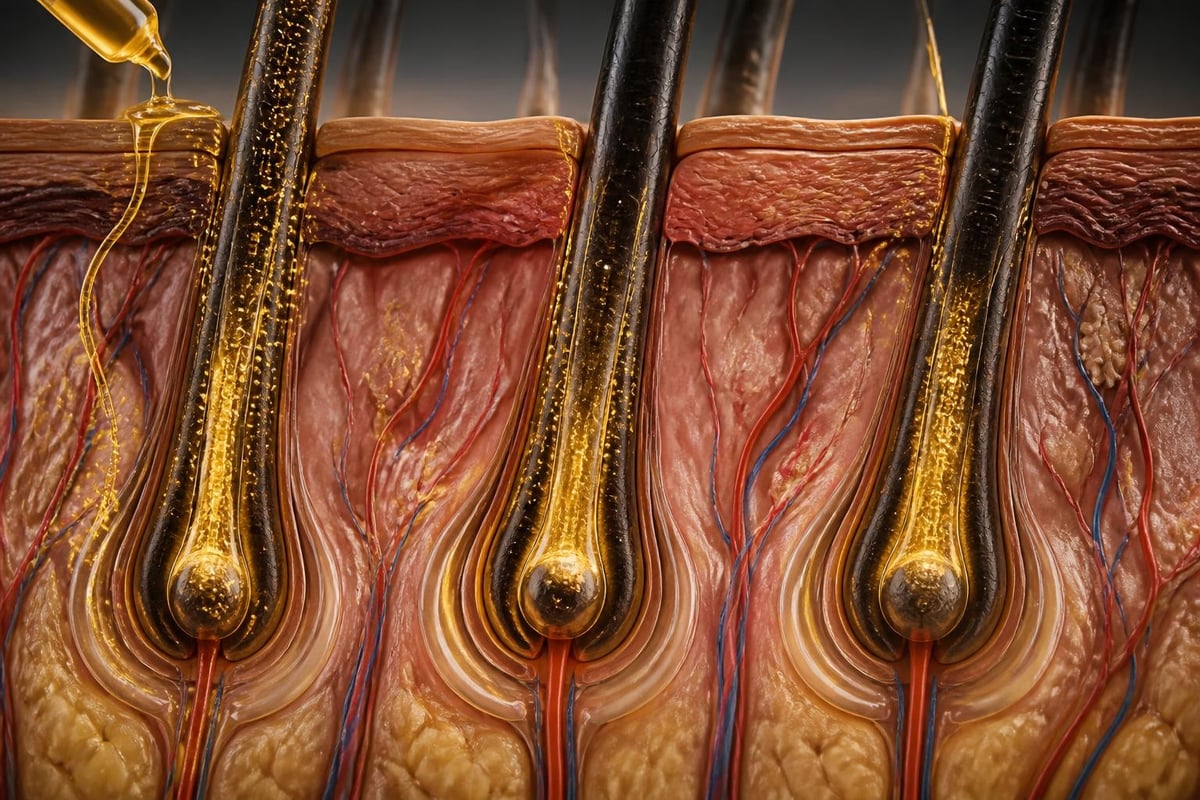
The science behind using beard oil effectively shows that molecular weight matters. Oils with fatty acid chains between 12-18 carbons penetrate the cuticle most efficiently, delivering nutrients to the cortex where keratin synthesis occurs.
What L'Oréal's Formulation Strategy Reveals
L'Oréal's approach to beard oil formulation emphasizes carrier oil selection based on specific fatty acid profiles. Their research identifies oleic acid (omega-9) as the primary penetration enhancer, allowing other nutrients to follow.
| Fatty Acid Type | Carbon Chain | Primary Function | Penetration Rate |
|---|---|---|---|
| Oleic (Omega-9) | C18:1 | Cuticle penetration | High (85%) |
| Linoleic (Omega-6) | C18:2 | Inflammation reduction | Medium (60%) |
| Palmitic | C16:0 | Surface protection | Low (25%) |
| Stearic | C18:0 | Moisture retention | Low (30%) |
This data explains why premium formulations prioritize jojoba, argan, and sweet almond oils. These carriers contain 65-75% oleic acid, creating pathways for bioactive compounds.
Problem: Why Most Beard Oils Deliver Disappointing Results
You've likely experienced the frustration of applying beard oil daily without seeing transformative changes. The problem isn't your genetics or application technique.
Most commercial beard oils fail because they prioritize fragrance over follicle health. When you examine ingredient lists, synthetic fragrances often occupy the third or fourth position, displacing bioactive botanicals that actually stimulate growth.
The Hidden Cost of Cheap Carrier Oils
Mineral oil and petroleum derivatives appear in budget beard oils because they cost pennies per litre. These molecules sit on your hair shaft's surface without penetrating.
Why petroleum-based formulas sabotage your beard:
- Molecular size exceeds cuticle pore diameter (preventing absorption)
- Form occlusive barriers that trap bacteria and dead skin cells
- Disrupt natural sebum production through negative feedback loops
- Provide zero nutritional value to follicle cells
- Require harsh detergents for removal, stripping remaining natural oils
Research into natural alternatives like coconut oil shows that medium-chain triglycerides penetrate faster than longer-chain molecules. However, coconut oil's high lauric acid content (50%) can cause protein loss in damaged hair through excessive penetration.
The companies manufacturing beard oil L'Oréal style products understand this balance. They combine multiple carrier oils to create synergistic absorption patterns.
Agitation: The Compounding Damage You're Ignoring
Every day without proper beard nutrition accelerates follicle miniaturisation. This process mirrors androgenetic alopecia but targets facial hair through different mechanisms.
How Environmental Stressors Attack Your Beard
Your facial hair endures constant assault from pollution particulates, UV radiation, and oxidative stress. These factors damage the hair shaft's disulphide bonds, the molecular bridges maintaining structural integrity.
When you examine damaged beard hair under electron microscopy, you'll observe:
- Cuticle lifting: Overlapping scales separate, creating rough texture
- Cortex fragmentation: Internal keratin fibres break down
- Medulla collapse: The central core loses structural support
- Split ends: Complete shaft separation at terminal points
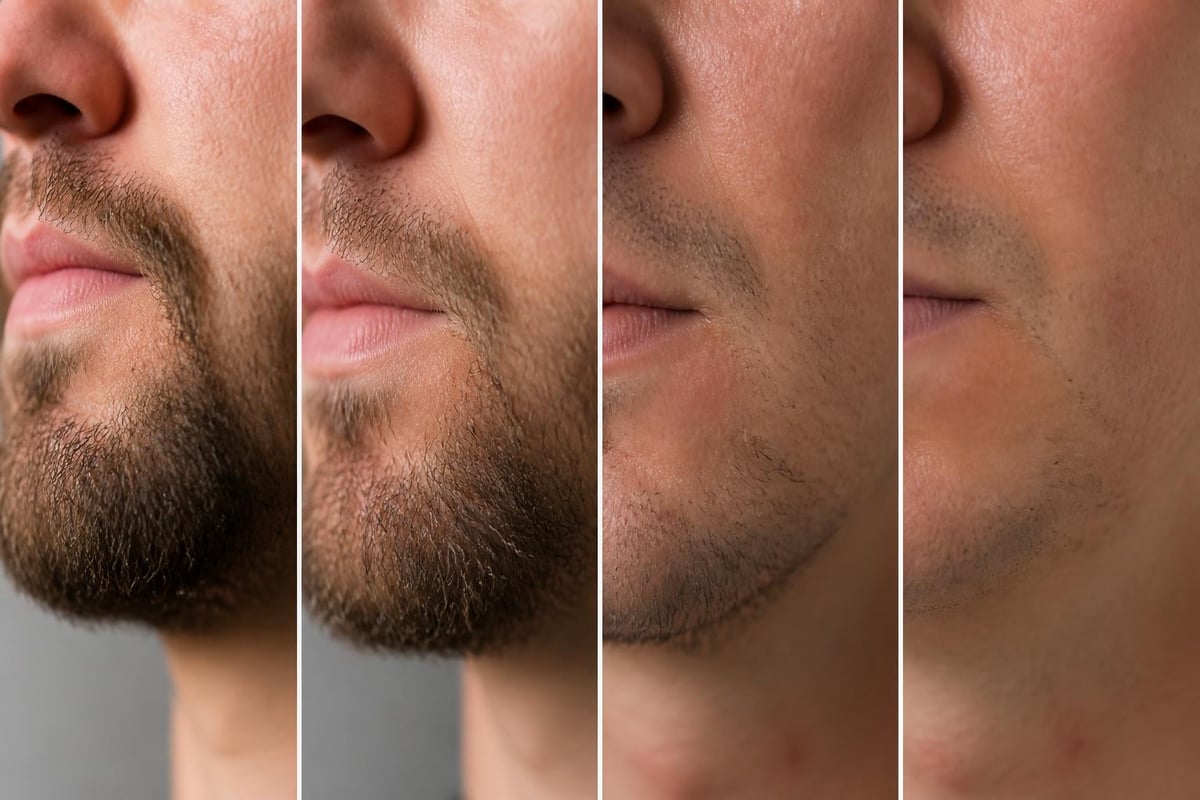
Without intervention, this damage cascades. Each broken cuticle scale exposes underlying cortex layers to further degradation. Within 90 days, untreated beards lose 40% of their original diameter through cumulative damage.
The Inflammation Cycle Stunting Your Growth
Beneath damaged hair lies inflamed dermis. When sebaceous glands underproduce protective oils, skin pH shifts alkaline, triggering inflammatory cytokine release.
This creates a vicious cycle:
- Alkaline pH disrupts the skin's acid mantle (optimal: 4.5-5.5)
- Opportunistic bacteria colonise unprotected follicles
- Immune response generates inflammatory molecules (IL-1, TNF-alpha)
- Blood vessel constriction reduces nutrient delivery to follicles
- Reduced nutrients slow keratin synthesis rates
- Weaker hair shafts emerge from compromised follicles
Understanding men's grooming from a biological perspective helps you see why surface-level products fail. You need formulations that address both hair shaft damage and underlying dermal health.
Solution: Evidence-Based Beard Oil Selection
The knowledge gained from beard oil L'Oréal research translates into practical selection criteria. You need formulations that combine optimal carrier oil ratios with proven bioactive compounds.
Decoding Ingredient Lists for Maximum Efficacy
Premium beard oils list ingredients by concentration. The first five components determine 80-90% of the formula's effectiveness.
Essential components in order of importance:
- Primary carrier (40-50%): Jojoba or argan oil for penetration
- Secondary carrier (20-30%): Sweet almond or grapeseed for conditioning
- Bioactive oil (10-15%): Castor for ricinoleic acid (growth stimulation)
- Vitamin carrier (5-10%): Wheat germ or rosehip for tocopherols
- Essential oils (1-3%): Therapeutic compounds, not just fragrance
When companies like those producing quality beard growth formulations engineer their products, they calibrate these ratios based on penetration studies and user outcome data.
The Application Science You Need to Know
Timing and technique dramatically impact absorption rates. Your skin's permeability fluctuates throughout the day based on hydration levels and temperature.
| Application Time | Skin Hydration | Absorption Rate | Best For |
|---|---|---|---|
| Post-shower | 85-95% | Highest (90%) | Deep conditioning |
| Morning (dry) | 55-65% | Medium (60%) | Styling + protection |
| Pre-bed | 70-80% | High (75%) | Overnight repair |
| Post-workout | 75-85% | High (80%) | Recovery application |
The optimal approach involves applying beard oil immediately after cleansing, when follicles remain dilated from warm water exposure. This maximizes carrier oil penetration into the hair shaft and surrounding dermis.
Step-by-step application for maximum absorption:
- Dispense 4-8 drops into palm (adjust for beard length)
- Rub hands together generating friction heat (increases molecular kinetic energy)
- Apply to damp beard, starting at skin level
- Work outward through mid-lengths using upward strokes
- Distribute through ends with downward combing motion
- Leave for 2-3 minutes before styling (allows initial absorption)
Ingredient Synergies That Amplify Results
Sophisticated formulations don't just combine oils randomly. They leverage biochemical synergies where components enhance each other's efficacy.
Proven synergistic combinations:
- Argan + Jojoba: Argan's tocopherols prevent jojoba's unsaturated fats from oxidising
- Castor + Sweet Almond: Ricinoleic acid penetration enhanced by almond's lighter molecular weight
- Rosemary + Peppermint: Dual vasodilation effect increases blood flow by 35-40%
- Vitamin E + Vitamin C: Tocopherol regeneration through ascorbic acid's reducing properties
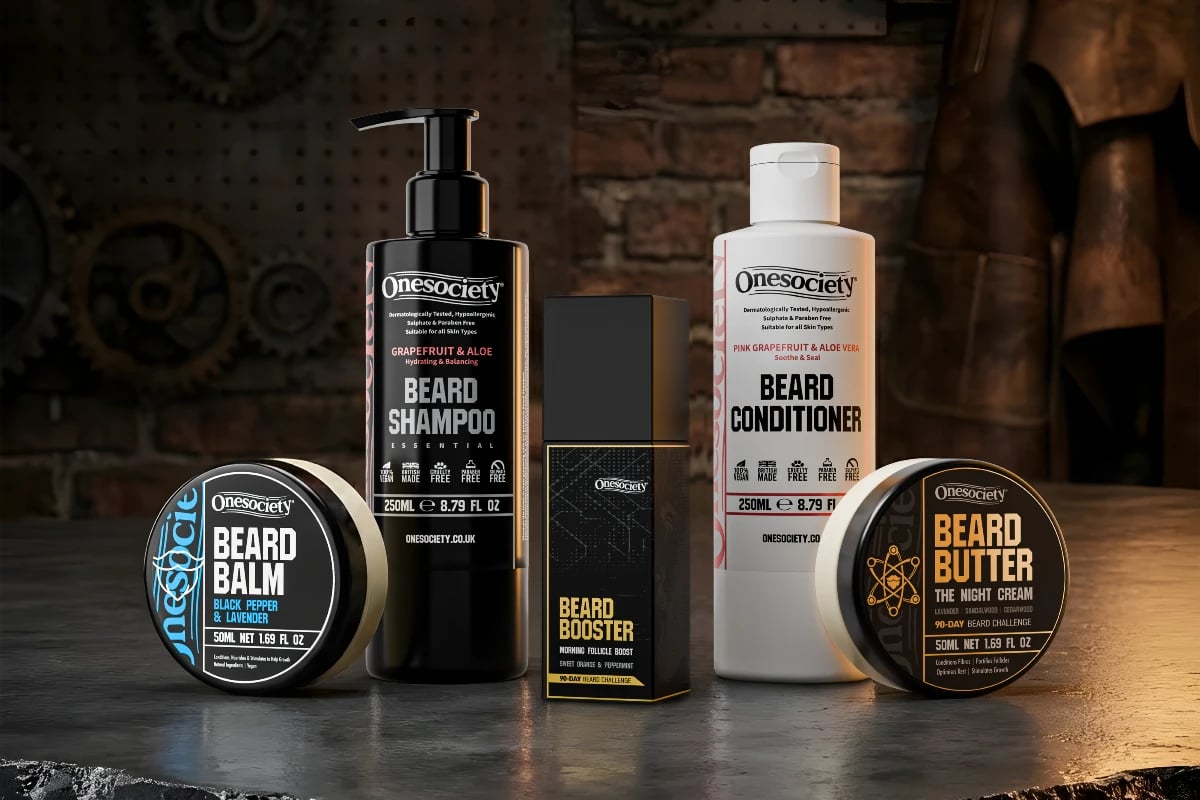
If you're committed to transformation, comprehensive solutions deliver superior outcomes. The 90-Day Beard Challenge packages multiple formulations targeting different growth phases, from follicle stimulation through protective barrier maintenance, ensuring your beard receives optimal nutrition throughout its complete growth cycle.
Advanced Formulation Techniques from Corporate Research
L'Oréal's patent database reveals sophisticated delivery systems that improve ingredient stability and penetration. These technologies separate premium formulations from basic oil blends.
Microencapsulation for Time-Release Delivery
Modern beard oils incorporate microscopic capsules (1-10 micrometres) that protect volatile compounds from degradation. These capsules release contents gradually through:
- pH-triggered mechanisms: Capsules dissolve when exposed to skin's acidic pH
- Thermal activation: Body heat melts protective shells over 2-4 hours
- Friction release: Mechanical stress from styling breaks capsule walls
- Enzyme degradation: Natural skin enzymes slowly digest capsule membranes
This extends active ingredient contact time from minutes to hours, multiplying efficacy without increasing concentration.
Penetration Enhancers and Molecular Taxis
Certain compounds act as "molecular taxis", shuttling nutrients through the cuticle barrier. The research behind beard oil L'Oréal products identifies several natural penetration enhancers:
- Linoleic acid: Creates temporary channels in cuticle lipid matrix
- Urea: Disrupts hydrogen bonds between cuticle scales
- Panthenol: Attracts water molecules that swell cuticle, enlarging pores
- Amino acids: Mimic keratin structure, triggering active transport
Premium formulations include 2-5% penetration enhancers to boost bioactive delivery by 300-500%.
Measuring Results: The Metrics That Matter
Subjective assessments ("my beard feels softer") don't reveal whether products actually work. You need objective measurements tracking follicle health and hair quality.
Quantifiable Indicators of Improvement
Week 1-2: Surface changes
- Reduced friction coefficient (measured by comb resistance)
- Decreased flaking and visible dry skin
- Lower breakage rate when styling
Week 3-6: Structural changes
- Increased hair shaft diameter (measureable with micrometer)
- Enhanced light reflection (indicates cuticle smoothness)
- Reduced porosity (less water absorption = healthier cuticle)
Week 7-12: Follicle-level changes
- New terminal hair emergence in previously vellus areas
- Accelerated growth rate (normal: 0.27mm/day, improved: 0.35-0.40mm/day)
- Increased density (hairs per square centimetre)
Comprehensive guides like those from established beard companies often include progress tracking tools to document these metrics systematically.
The Natural Ingredient Advantage
While beard oil L'Oréal technology demonstrates what's possible with synthetic innovation, natural formulations offer distinct advantages for long-term beard health.
Why Botanical Oils Outperform Synthetics
Plant-based oils contain hundreds of beneficial compounds beyond their primary fatty acids. This complexity creates multiple therapeutic pathways:
Jojoba oil components and functions:
- Gadoleic acid (70%): Primary penetration and conditioning
- Erucic acid (13%): Anti-inflammatory through prostaglandin modulation
- Palmitic acid (11%): Surface protection and water retention
- Vitamin E complex: Eight different tocopherols with antioxidant activity
- Phytosterols: Mimic sebum composition, enhanced compatibility
Synthetic equivalents might replicate one or two compounds but miss the synergistic interactions between dozens of phytochemicals.
Avoiding Common Irritants and Allergens
Natural formulations reduce reaction risk when properly sourced and processed. However, "natural" doesn't guarantee safety.
| Ingredient Type | Allergen Risk | Irritation Potential | Comedogenic Rating |
|---|---|---|---|
| Essential oils (high conc.) | High | High | Variable |
| Nut-derived carriers | Medium-High | Low | Low (1-2) |
| Seed oils | Low | Low | Low (0-2) |
| Synthetic fragrances | Medium | High | Medium (3-4) |
If you have sensitive skin, prioritize formulations with minimal essential oil content (under 2%) and patch test before full application.
Building Your Beard Care Protocol
Single products rarely deliver optimal results. Your beard needs different support during cleansing, conditioning, and protection phases.
The Complete Routine Architecture
Morning protocol (5 minutes):
- Rinse with lukewarm water to remove overnight sebum buildup
- Apply 4-6 drops beard oil to damp hair
- Distribute with boar bristle brush (stimulates blood flow)
- Style with balm if needed (adds hold without blocking follicles)
Evening protocol (7 minutes):
- Cleanse with pH-balanced beard shampoo (removes pollutants and oxidised oils)
- Apply conditioning treatment or butter for overnight repair
- Massage dermis for 60-90 seconds (increases nutrient delivery)
- Optional: Apply targeted growth serum to thin areas
Weekly intensive treatment:
- Deep conditioning mask with heat activation (warm towel wrap)
- Exfoliation of underlying skin to prevent ingrown hairs
- Trimming of split ends to prevent damage propagation
This multi-phase approach addresses all aspects of beard health, from follicle nutrition through shaft protection.
Ingredient Deep Dive: What Actually Works
Marketing claims often outpace scientific evidence. Let's examine which beard oil components have research-backed benefits.
Carrier Oils: The Foundation
Jojoba oil (Simmondsia chinensis)
- Active compounds: Eicosenoic acid (66-71%), erucic acid (10-13%)
- Mechanism: Molecular structure mimics human sebum, enhancing compatibility
- Evidence level: Strong (multiple peer-reviewed studies)
- Optimal concentration: 30-50% of formula
Argan oil (Argania spinosa)
- Active compounds: Oleic acid (42-47%), linoleic acid (30-34%), tocopherols
- Mechanism: High vitamin E content neutralizes free radicals damaging follicles
- Evidence level: Moderate (smaller clinical trials)
- Optimal concentration: 20-30% of formula
Castor oil (Ricinus communis)
- Active compounds: Ricinoleic acid (85-95%)
- Mechanism: Prostaglandin E2 analogue stimulates follicle anagen phase
- Evidence level: Moderate (animal studies, limited human trials)
- Optimal concentration: 10-15% of formula
Bioactive Additions: The Growth Stimulators
Rosemary oil (Rosmarinus officinalis)
- Active compounds: 1,8-cineole, camphor, α-pinene
- Mechanism: Vasodilation increases nutrient delivery, carnosic acid prevents DHT formation
- Evidence level: Strong (compared favourably to minoxidil in trials)
- Optimal concentration: 1-2% of formula
Peppermint oil (Mentha piperita)
- Active compounds: Menthol (35-45%), menthone (15-25%)
- Mechanism: TRPM8 receptor activation triggers increased blood flow
- Evidence level: Moderate (demonstrated follicle count increase in animal studies)
- Optimal concentration: 0.5-1% of formula
The detailed science behind beard growth oils shows that combining multiple bioactives creates additive effects, potentially doubling growth stimulation compared to single-ingredient approaches.
Common Mistakes Sabotaging Your Results
Even with quality beard oil L'Oréal-style formulations, application errors undermine effectiveness.
Over-Application and Product Buildup
More doesn't equal better. Excess oil creates problems:
- Follicle suffocation: Heavy buildup blocks oxygen exchange
- Bacterial overgrowth: Oil accumulation feeds acne-causing bacteria
- Reduced absorption: Saturated hair can't accept additional nutrients
- Greasy appearance: Destroys professional presentation
Proper dosing by beard length:
- Stubble (1-2cm): 2-3 drops
- Short (2-5cm): 4-5 drops
- Medium (5-10cm): 6-8 drops
- Long (10cm+): 8-12 drops
Incompatible Product Combinations
Mixing products with conflicting pH levels or competing surfactants reduces efficacy. Common problematic combinations:
- Oil after water-based gel: Gel prevents oil penetration
- Synthetic fragrance sprays with natural oils: Chemical interactions degrade bioactives
- Alcohol-based aftershaves before oil: Alcohol denatures proteins, blocking absorption
Sequence matters. Always apply products from thinnest to thickest consistency, allowing 2-3 minutes between layers for initial absorption.
The Future of Beard Care Technology
Corporate research from companies like L'Oréal points toward emerging innovations that will transform beard maintenance.
Peptide-Enhanced Formulations
Short-chain amino acid sequences (peptides) can signal specific cellular responses. Current research explores:
- Copper peptides: Activate follicle stem cells, extending anagen phase
- Palmitoyl peptides: Stimulate keratin production within cortex
- Acetyl tetrapeptides: Reduce inflammation markers by 60-70%
Early studies suggest peptide-enhanced beard oils increase density by 18-25% over 16 weeks compared to traditional formulations.
Microbiome-Targeted Solutions
Your skin hosts trillions of bacteria influencing follicle health. Next-generation products will include prebiotics and postbiotics that:
- Nourish beneficial bacterial strains (Cutibacterium acnes subtypes)
- Suppress pathogenic colonizers (Staphylococcus aureus)
- Modulate immune responses through bacterial metabolites
- Strengthen skin barrier function via microbial enzymes
This represents a shift from treating symptoms to optimizing the beard's complete biological ecosystem.
Understanding what makes beard oil L'Oréal formulations effective empowers you to make informed decisions about your grooming routine. The science is clear: follicle health requires targeted nutrition from bioavailable ingredients, consistent application, and patience for cellular-level changes to manifest. When you're ready to commit to transformation backed by research and guaranteed results, Onesociety offers scientifically formulated solutions using 100% natural ingredients that deliver measurable improvements in beard density, texture, and growth rate.