

You've been growing your beard for months, yet patchy spots persist. You scroll through social media, watching blokes with thick, full beards whilst your facial hair remains frustratingly sparse. The market floods you with countless products, each promising rapid transformation. Yet here's the uncomfortable truth: most men waste money on formulations that lack genuine scientific support.
The question isn't whether beard growth cream exists. It's whether any formulation can genuinely stimulate follicle activity and produce measurable results. In 2026, scientific research has provided clearer answers than ever before, separating effective solutions from marketing hype.
The Biology Behind Facial Hair Growth
Your beard grows through a complex biological process governed by androgens, primarily testosterone and dihydrotestosterone (DHT). These hormones bind to androgen receptors within dermal papilla cells at the base of each follicle. This binding triggers a cascade of cellular signals that activate keratinocyte proliferation, the process that produces hair shaft proteins.
The growth cycle operates in three distinct phases:
- Anagen (growth phase): Follicles actively produce hair shafts for 2-6 years
- Catagen (transition phase): Growth halts as the follicle shrinks over 2-3 weeks
- Telogen (resting phase): Hair remains dormant for 2-4 months before shedding
Beard growth cream aims to extend the anagen phase whilst increasing the diameter of individual hair shafts. However, this requires specific mechanisms of action.
What Determines Beard Density
Genetics dictates the number of follicles you possess and their sensitivity to androgens. You cannot create new follicles through topical application. Yet you can optimize the performance of existing follicles by addressing three critical factors:
Blood circulation to follicles determines nutrient delivery. Increased microcirculation means more oxygen, vitamins, and minerals reach the dermal papilla cells that orchestrate hair production.
Inflammation disrupts the growth cycle. Chronic inflammation from harsh cleansers or environmental irritants can push follicles prematurely into the catagen phase, shortening growth periods.
Moisture retention in both hair shafts and surrounding skin prevents breakage. Dry, brittle facial hair snaps before reaching its full genetic potential, creating the illusion of slower growth.
Do Beard Growth Creams Actually Work?
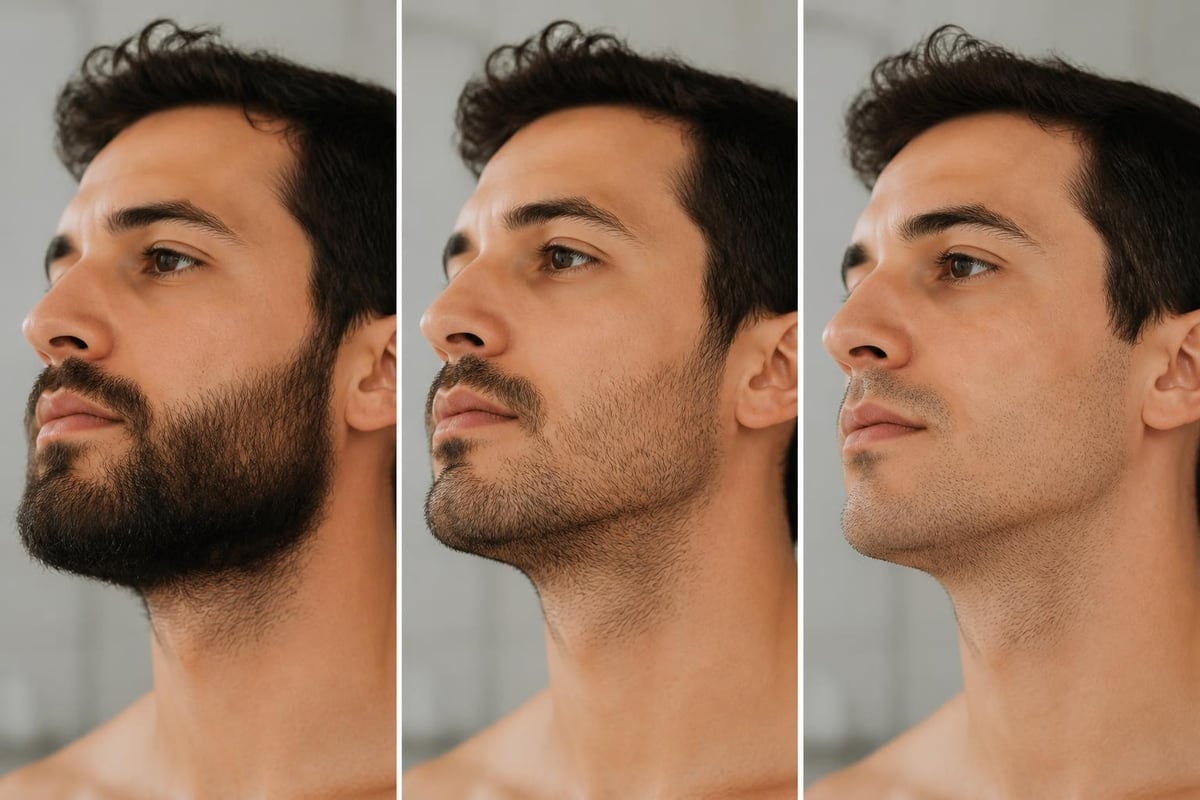
The effectiveness of beard growth products remains contested in scientific literature. Most formulations on shelves lack clinical trials demonstrating measurable increases in hair density or growth rate. However, specific active ingredients have shown promise in peer-reviewed studies.
A randomized, double-masked, placebo-controlled study evaluated 3% minoxidil lotion for beard enhancement. Results demonstrated statistically significant improvements in hair count and thickness after 16 weeks of twice-daily application. The mechanism operates through vasodilation, increasing blood flow to follicles whilst prolonging the anagen phase.
Yet minoxidil presents challenges. Application requires consistent, indefinite use. Discontinuation results in gradual return to baseline density within months. Side effects can include skin irritation, unwanted hair growth in adjacent areas, and initial shedding as dormant follicles synchronize their growth cycles.
The Cosmetic Versus Growth Distinction
Beard thickeners work through two separate mechanisms: cosmetic coating and genuine growth stimulation. Understanding this distinction prevents disappointment.
| Approach | Mechanism | Duration | Evidence Level |
|---|---|---|---|
| Cosmetic Thickeners | Coat hair shafts with proteins/polymers | Temporary (until washing) | High (immediate visual effect) |
| Growth Stimulants | Increase follicle activity | Permanent (with continued use) | Variable (ingredient-dependent) |
| Moisturizers | Reduce breakage, improve appearance | Ongoing (requires maintenance) | Moderate (supports growth indirectly) |
Cosmetic products containing keratin proteins, collagen, or film-forming polymers temporarily swell hair shafts, creating visual fullness. These wash out completely, requiring daily reapplication. Whilst effective for immediate appearance enhancement, they don't address underlying growth limitations.
Growth-stimulating formulations containing vasodilators, peptides, or growth factors attempt to modify follicle behavior at a cellular level. Results manifest slowly over weeks or months, requiring patience and consistent application.
Key Ingredients That Support Beard Development
The efficacy of any beard growth cream depends entirely on its active ingredients and their concentrations. Natural compounds offer benefits without the side effect profile of pharmaceutical options, though their mechanisms differ significantly.
Biotin and B-Complex Vitamins
Biotin (vitamin B7) functions as a coenzyme in fatty acid synthesis and amino acid metabolism. Hair shafts consist primarily of keratin, a structural protein requiring these metabolic pathways for production. Beard growth supplements often include biotin, though topical application faces absorption challenges.
The stratum corneum, your skin's outermost layer, evolved to prevent substance penetration. Biotin molecules struggle to traverse this barrier in sufficient concentrations to influence follicle activity. Oral supplementation proves more effective for addressing deficiencies, though excess biotin provides no additional benefit if dietary intake already meets requirements.
Peptides and Growth Factors
Copper peptides stimulate collagen production and angiogenesis (new blood vessel formation). By increasing microcirculation around follicles, these compounds enhance nutrient delivery without pharmaceutical side effects. Studies on scalp hair demonstrate improved thickness and density with consistent application over 12-24 weeks.
Epidermal growth factor (EGF) and fibroblast growth factor (FGF) signal keratinocytes to proliferate more rapidly. These proteins naturally decline with age, contributing to reduced hair growth rates in older men. Topical application attempts to supplement endogenous production, though molecular size limits penetration depth.
Natural Oils and Moisturizing Compounds
Understanding how beard growth creams work requires recognizing the role of carrier ingredients. Whilst oils don't directly stimulate follicles, they create optimal conditions for growth by addressing inflammation and moisture barriers.
Jojoba oil mimics sebum, your skin's natural moisturizer. Its fatty acid profile closely matches human sebaceous secretions, allowing deep penetration without pore blockage. This prevents the dry skin and beard itch that disrupts growth cycles.
Argan oil delivers high concentrations of vitamin E (tocopherol) and phenolic compounds. These antioxidants neutralize free radicals from UV exposure and pollution that damage follicle cells and trigger inflammatory responses.
Castor oil contains ricinoleic acid, an omega-9 fatty acid with anti-inflammatory properties. Though claims of hair growth stimulation lack robust evidence, its ability to reduce inflammation and coat hair shafts prevents breakage whilst improving visual density.
The Hydration-Growth Connection
Dry facial hair snaps easily, creating split ends that travel up the shaft. This breakage occurs faster than root growth, resulting in zero net length gain despite active follicles. Proper hydration addresses this mechanical limitation.
Using a dedicated beard face wash prevents the over-stripping that regular soap causes. Harsh surfactants remove protective sebum, leaving both skin and hair dehydrated. pH-balanced formulations designed specifically for facial hair preserve natural moisture whilst removing dirt and debris.
The cuticle layer of each hair shaft consists of overlapping scales. When hydrated, these scales lie flat, creating smooth, light-reflecting surfaces. Dehydration causes scales to lift, creating rough, dull-appearing hair that tangles easily. This mechanical stress increases breakage rates significantly.

Building an Evidence-Based Growth Routine
Achieving a good beard requires a systematic approach combining multiple interventions. No single product delivers transformation alone. Instead, layering complementary formulations addresses different growth limitations simultaneously.
Morning Application Protocol
- Cleanse with lukewarm water to open pores without stripping oils
- Pat dry rather than rubbing to prevent mechanical damage
- Apply growth serum containing active ingredients (peptides, minoxidil, or natural vasodilators) to slightly damp skin
- Massage thoroughly for 2-3 minutes to increase circulation and enhance absorption
- Seal with balm after serum absorption (15-20 minutes) to lock in moisture
The massage step proves crucial. Manual stimulation increases blood flow independent of active ingredients, whilst improving product penetration through temporary disruption of the stratum corneum barrier.
Evening Recovery Routine
Night-time represents optimal application timing for heavier formulations. Your body conducts cellular repair primarily during sleep, including keratinocyte proliferation in active follicles.
- Apply beard butter or intensive moisturizer after evening cleansing
- Choose formulations with time-release properties for sustained overnight delivery
- Avoid petroleum-based products that occlude pores and trigger folliculitis
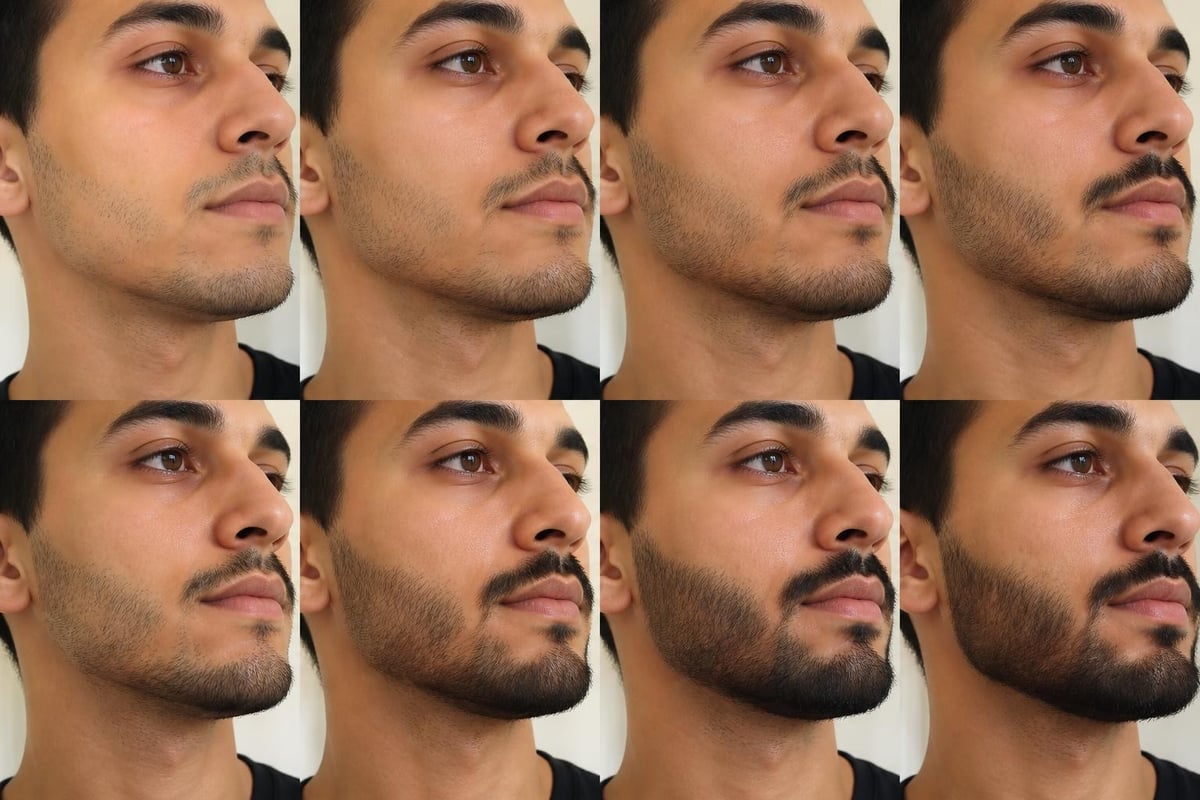
Consistency matters more than product cost. Daily application for minimum 8-12 weeks allows accurate assessment of results. Photographing your beard weekly under identical lighting conditions provides objective progress tracking that mirrors can't capture.
What About Oral Supplements?
Beard growth supplement effectiveness depends entirely on addressing existing nutritional deficiencies. If your diet provides adequate vitamins, minerals, and amino acids, additional supplementation offers zero benefit for hair growth.
Blood tests can identify specific deficiencies in iron, zinc, vitamin D, or B vitamins that limit keratin production. Correcting these deficiencies may improve growth rates, though supplementation beyond sufficiency provides no additional gains.
Beware supplements claiming to "boost testosterone" or "increase DHT." Most contain herbs like fenugreek or ashwagandha that lack robust clinical evidence for hormonal modulation. Even if they did raise androgen levels, the health risks of unsupervised hormone manipulation far outweigh potential beard benefits.
The Complete Growth System Approach
Optimal results emerge from comprehensive systems rather than isolated products. Understanding hair growth for facial hair requires addressing multiple factors simultaneously: circulation, hydration, nutrition, and protection.
A scientifically-designed regimen combines cleansing, treatment, and protection phases. Each product serves a distinct purpose within the growth cycle.
Consider formulations that layer complementary mechanisms:
- Booster serums with vasodilators increase blood flow to follicles
- Recovery treatments with peptides and antioxidants reduce inflammation
- Protective balms prevent environmental damage and mechanical breakage
- Cleansing systems maintain optimal pH without stripping natural oils
This multi-product approach mirrors professional facial hair growth product systems used in clinical settings. The 90-Day Beard Challenge exemplifies this comprehensive methodology, providing eight distinct formulations that work synergistically throughout the growth cycle. From follicle-igniting boosters to hydro-lock protective balms, each component addresses specific biological requirements for optimal growth.
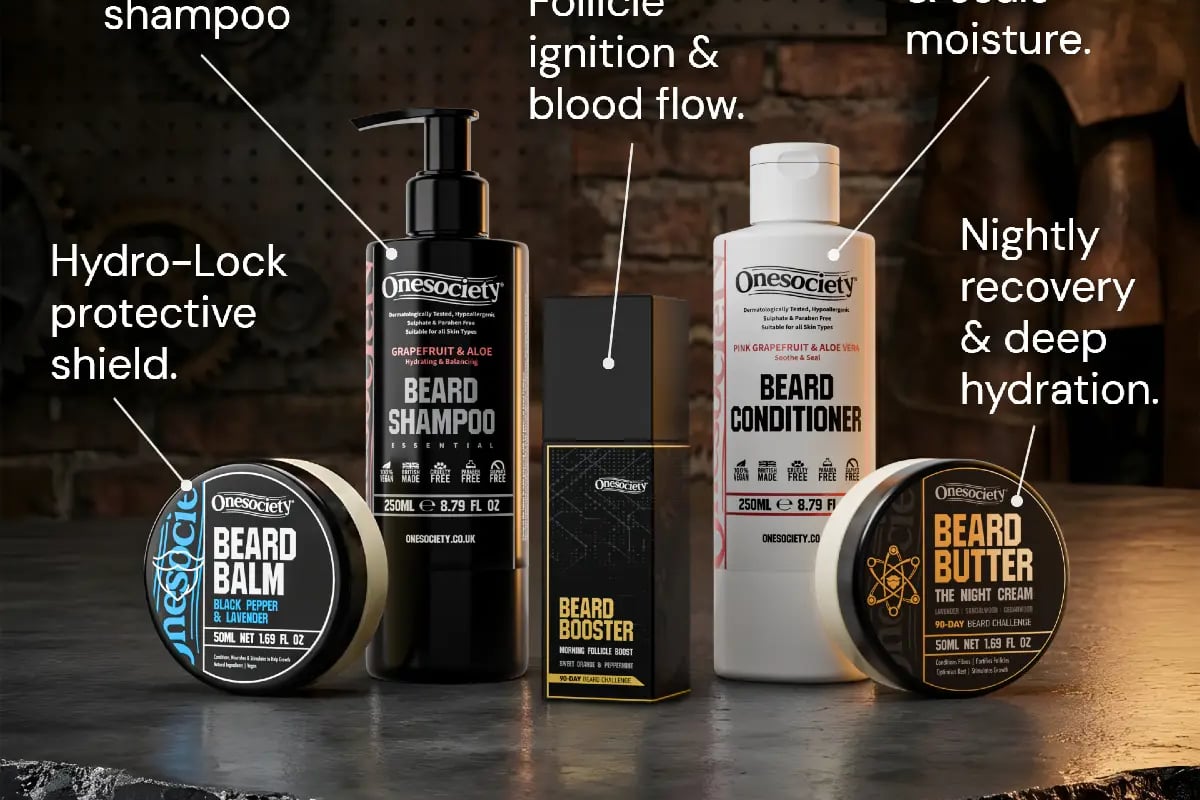
| Product Type | Primary Function | Active Mechanism | Application Timing |
|---|---|---|---|
| Beard Booster | Follicle activation | Vasodilation, nutrient delivery | Morning (on damp skin) |
| Beard Butter | Deep hydration | Moisture retention, cuticle repair | Evening (before bed) |
| Beard Balm | Protection | Environmental barrier, shine | Morning (after serum absorption) |
| Beard Shampoo | Cleansing | pH-balanced debris removal | 2-3 times weekly |
Realistic Expectations and Timeline
The beard growth industry perpetuates unrealistic timelines to drive sales. Understanding genuine growth rates prevents frustration and abandoned routines.
Terminal beard length, the maximum your genetics allow, varies dramatically between individuals. Some men achieve 15-20cm length within months, whilst others plateau at 5-8cm regardless of time or products used.
Average growth rate: 0.3-0.5mm daily, or approximately 1.25cm monthly. Products cannot exceed this biological ceiling. Claims of "3x faster growth" lack scientific plausibility.
Density improvements: Genuine increases in hair count require minimum 12-16 weeks of consistent application. Initial shedding often occurs as dormant follicles synchronize, making beards appear thinner before improvement manifests.
Optimal length for assessment: Growth progress becomes visually apparent only after reaching 2.5-5cm length. Shorter beards hide underlying density changes, whilst longer beards reveal true thickness improvements.
Patience proves essential. The men achieving the most impressive transformations maintain consistent routines for 6-12 months, not weeks. They photograph progress, adjust based on results, and resist the urge to abandon effective protocols prematurely.
Common Mistakes That Sabotage Growth
Even high-quality beard growth cream fails when application errors undermine efficacy. Avoid these frequent pitfalls:
Over-washing strips protective sebum faster than sebaceous glands can replenish it. Daily shampooing creates perpetual dryness, increasing breakage rates. Limit washing to 2-3 times weekly unless working in particularly dirty environments.
Applying to wet beards dilutes active ingredients below effective concentrations. Products designed for damp skin require only slight moisture, not dripping wet hair. Excess water prevents proper absorption.
Inconsistent application disrupts the cumulative effects that drive results. Missing multiple days weekly resets progress, extending the timeline to visible improvements indefinitely.
Heat damage from blow dryers on high settings degrades keratin bonds within hair shafts. If styling with heat, use low settings and heat protectant products. Air drying preserves structural integrity.
Ignoring underlying health issues like chronic stress, poor sleep, or nutritional deficiencies. No topical product overcomes systematic health problems that disrupt normal follicle function.
When to Consider Professional Intervention
Some beard growth limitations require approaches beyond topical formulations. Recognizing these situations prevents wasted time and money on products that cannot address the underlying issue.
Alopecia areata presents as circular bald patches with completely smooth skin. This autoimmune condition attacks hair follicles, requiring medical intervention rather than cosmetic products. Dermatologists may prescribe corticosteroid injections or immunotherapy.
Hormonal imbalances from thyroid dysfunction, pituitary disorders, or testosterone deficiency manifest through abnormal hair patterns. Blood tests identify these conditions, which require medical treatment to restore normal function.
Scarring from injuries or burns destroys follicles permanently. No cream regenerates follicles lost to scar tissue formation. Hair transplantation represents the only solution for these areas.
Consulting a dermatologist or trichologist provides accurate diagnosis when beard growth concerns persist despite proper care routines. These specialists can differentiate between normal genetic variation and treatable medical conditions.
The Natural Ingredients Advantage
Synthetic compounds like minoxidil deliver measurable results but carry side effect profiles that concern many men. Natural formulations offer gentler approaches with lower risk of adverse reactions, though typically producing more modest improvements over longer timelines.
Caffeine penetrates follicles to counteract the effects of DHT, the androgen that can miniaturize follicles in genetically susceptible individuals. Studies on scalp hair demonstrate improved thickness with consistent use over 6 months.
Saw palmetto extract inhibits 5-alpha reductase, the enzyme converting testosterone to DHT. This mechanism mirrors finasteride, a pharmaceutical hair loss treatment, though at much weaker potency with correspondingly lower efficacy and risk.
Rosemary oil demonstrated comparable effectiveness to 2% minoxidil in a 2015 study on scalp hair. Its mechanism involves increased circulation and anti-inflammatory effects. However, the study's small size and single trial status warrant cautious interpretation.
Peppermint oil showed improved hair growth in mouse models through increased follicle depth and number. Human trials remain limited, though its vasodilating properties and cooling sensation make it popular in formulations.
Natural ingredients excel at supporting overall beard health through moisturization, inflammation reduction, and antioxidant protection. They create optimal growth conditions rather than forcing follicles into extended growth phases through pharmaceutical mechanisms.
Monitoring Progress Effectively
Subjective assessment ("my beard looks thicker") fails to capture genuine changes. Implementing objective measurement protocols reveals whether your routine delivers results worth continuing.
Weekly photography under consistent lighting, angle, and distance provides visual documentation. Use the same location, time of day, and camera settings. Side profiles capture density better than front-facing shots.
Caliper measurements at standardized locations (cheek, chin, jaw) track actual thickness changes. Record measurements weekly in a spreadsheet, then calculate monthly averages to smooth daily fluctuations.
Hair count assessments within a 1cm² template placed on the same cheek location weekly quantifies density improvements. This tedious process provides the most accurate growth tracking.
Most men notice genuine improvements around weeks 8-12, though individual response varies based on genetics, age, and baseline beard quality. Products requiring less than 6 weeks to "work" likely provide only cosmetic coating rather than biological growth stimulation.
If zero progress appears after 16 weeks of consistent application, reassess your approach. Either the formulation lacks effective active ingredients, application technique needs correction, or underlying factors (health, genetics) limit your response potential.
Integrating Lifestyle Factors
Topical products represent only one variable in the beard growth equation. Optimizing internal factors amplifies external treatments.
Sleep quality directly influences growth hormone secretion, which peaks during deep sleep stages. Aim for 7-9 hours nightly in a cool, dark environment. Chronic sleep deprivation suppresses cellular repair processes, including keratinocyte proliferation.
Protein intake provides amino acids for keratin synthesis. Facial hair requires significant protein allocation, particularly during rapid growth phases. Target 1.6-2.0g protein per kilogram bodyweight daily, emphasizing complete protein sources containing all essential amino acids.
Stress management reduces cortisol, a hormone that disrupts normal hair cycling when chronically elevated. Meditation, exercise, and adequate recovery time prevent stress-induced telogen effluvium (excessive shedding).
Hydration status affects blood viscosity and nutrient transport. Dehydration impairs circulation to follicles, limiting growth regardless of topical product quality. Consume 3-4 litres of water daily, adjusting for activity level and climate.
These foundational health practices cost nothing yet deliver benefits extending far beyond beard growth. Men who optimize sleep, nutrition, and stress management whilst using quality topical formulations achieve superior results compared to those relying on products alone.
Achieving your genetic beard potential requires understanding the science behind follicle activation, choosing formulations with proven active ingredients, and maintaining consistent application over months rather than weeks. Most men waste money on ineffective products because they lack knowledge of what genuinely stimulates growth versus what merely coats existing hair for temporary visual improvements. When you're ready to commit to a comprehensive, scientifically-backed approach that addresses every aspect of beard development, Onesociety provides the complete toolkit with 100% natural ingredients and research-driven formulations designed for measurable transformation.