

A Ufree beard trimmer is a budget-friendly, cordless grooming tool sold mainly through Amazon and the brand's own site, and it suits men who want a simple way to tidy a beard at home. It will shape your edges and keep length even. It will not grow a fuller beard or repair skin that a poor trimming routine has already irritated.
That distinction matters. Plenty of men buy a trimmer, lose patience with patchy growth, then blame the tool. Others trim hard, develop a red, itchy jawline and wonder why their beard looks worse after grooming than before. This guide shows you what to look for in a model, how to use it without damaging skin, and what to do around the trimmer to protect the beard you are trying to build.
What Should You Look For in a Ufree Beard Trimmer?
Look at five things: blade material, adjustable length settings, battery life, water resistance and how comfortable the grip feels in a wet hand. Everything else is packaging.
Here is a quick way to judge any model before you add it to your basket:
- Blade material: Stainless steel or ceramic blades hold an edge longer. Dull heads pull hair rather than cut it, and Yale Medicine notes that dull electric razor heads, as well as blades that do not contour to the face, can increase the risk of shaving irritation.
- Length settings: A dial or a set of guide combs lets you step down gradually. Look for a range that covers stubble through to a full beard.
- Battery and charging: USB charging is easier to live with than a proprietary dock, especially if you travel around Europe.
- Water resistance: A washable head makes cleaning far quicker, and a clean head cuts better.
- Weight and grip: A trimmer that slips in your hand will leave a wonky neckline.
Think of it as buying a pair of scissors for your face. A sharp, steady tool does the job with one pass. A cheap, blunt one forces you to go over the same patch repeatedly, and your skin pays for every extra pass.
Is a Ufree Hair Clipper Good Enough for a Full Beard?
For light to medium beards, a Ufree hair clipper does a respectable job, but dense, coarse beards expose the limits of any budget motor. Motor torque decides whether the blade glides through thick hair or snags on it.
Be realistic about what you are paying for. Entry-level cordless trimmers generally trade raw power for portability. If your beard is short and tidy, that trade works in your favour. If you are growing out a thick beard and need to thin the bulk, you may find yourself pausing as the motor labours.
Ask yourself one question before buying: am I maintaining a beard, or am I building one? If you are still in the growth phase, you need a trimmer for edges and the neckline only. Leave the length alone. Men who reach for the trimmer every week during growth often cut off the very hair they spent a month earning.
For a wider look at what separates a good trimmer from a forgettable one, our guide to the best beard trimmer breaks down the features that matter across price points.
What Is the Difference Between a Hair Trimmer and a Beard Trimmer?
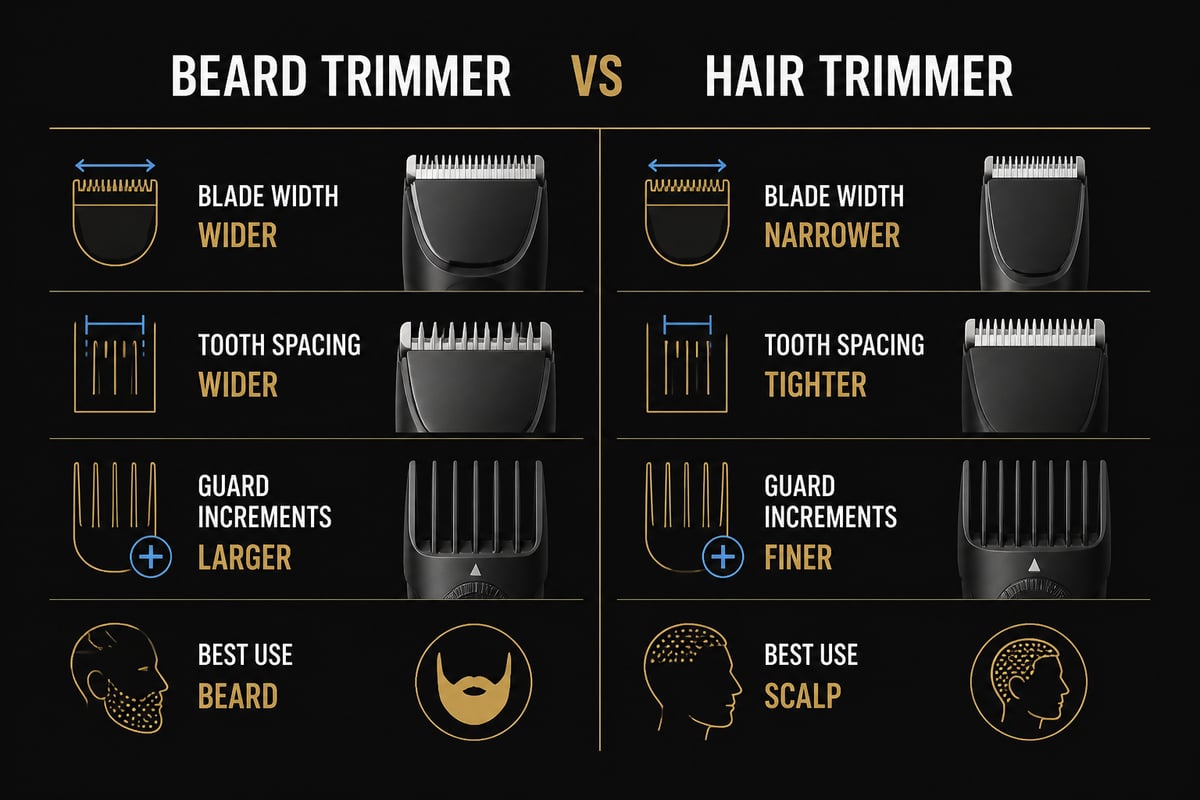
A beard trimmer is built for coarse facial hair and fine detail work, while a hair trimmer is built for the longer, softer hair on your head. The difference comes down to blade width, tooth spacing and guard design.
Facial hair is thicker per strand than scalp hair and grows in several directions at once, especially around the chin and throat. A beard trimmer usually has a narrower blade, closer-set teeth and shorter guard increments, often in 0.5 mm or 1 mm steps. That lets you take off a tiny amount at a time. A hair trimmer typically has a wider head and bigger jumps between settings, which makes it clumsy around the moustache and cheekbones.
You can use a hair trimmer on a beard in a pinch. You will struggle to get a clean neckline with it, though, and the larger head makes it easy to take off too much in a single pass. If you want to compare dedicated options, see our rundown of the beard trimmer for men that suit different beard types.
How Do You Trim a Beard Without Irritating Your Skin?
Prepare the skin first, trim with the grain, and keep your blade clean. Most irritation starts with dry skin, a dull head or an aggressive against-the-grain pass.
The problem is simple to spot. You finish a trim, and your cheeks sting, your neck looks blotchy and the itch starts by the evening. Leave that cycle running and the skin barrier weakens, flaking starts and the beard grows through inflamed follicles rather than healthy ones. Growth slows, and the beard looks thinner than it truly is.
Follow this sequence to break the cycle:
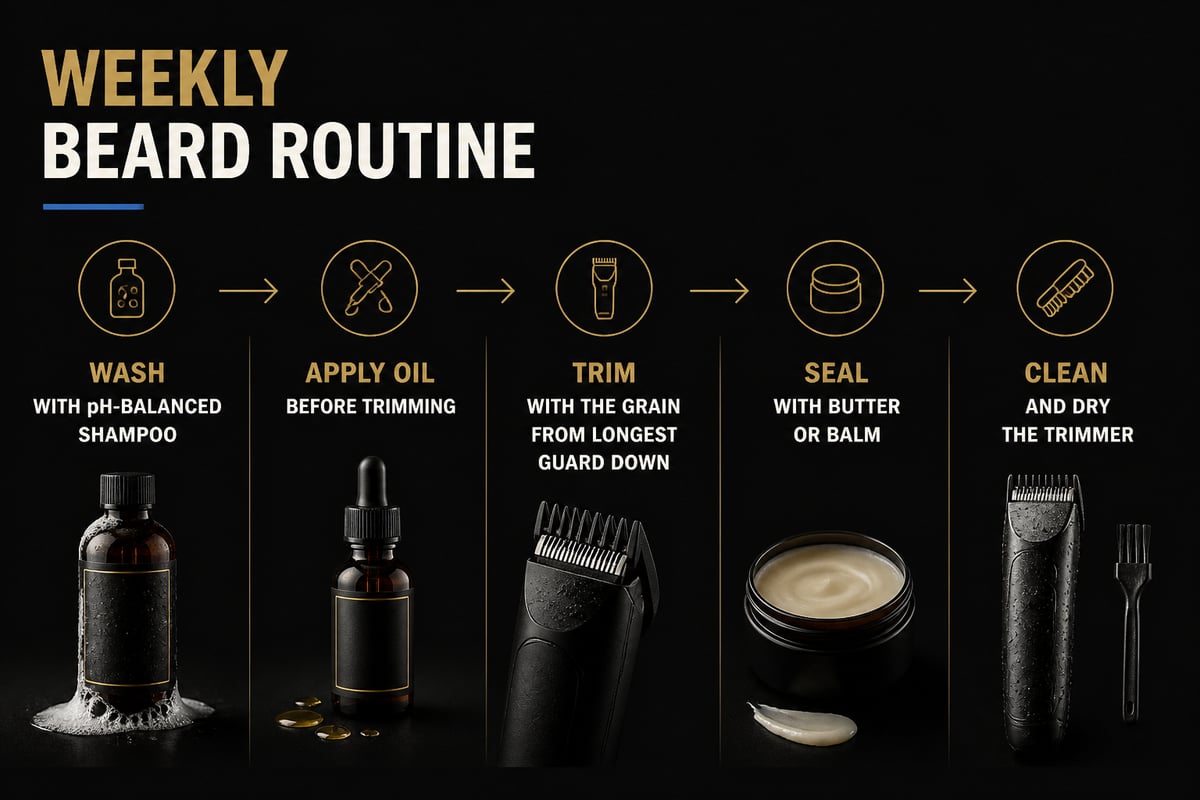
- Wash and soften. Warm water and a pH-balanced beard shampoo lift oil and debris so the blade glides.
- Apply a lubricant. The American Academy of Dermatology recommends applying shaving oil, cream or gel before trimming to help prevent irritated skin.
- Start long, then go shorter. Begin with the longest guard and work down, so you never overshoot.
- Follow the grain. The AAD advises shaving in the direction hair grows to help prevent razor bumps and burns. The same logic applies to trimming close to the skin.
- Use scissors for length. The AAD also notes that longer facial hair can be trimmed with scissors, which gives you more control over bulk than a motor does.
- Moisturise afterwards. Seal the skin so it recovers overnight.
If an itchy jawline already plagues you, the Cleveland Clinic covers causes and care for an itchy beard, including skin cleansing, moisturising and shaving hygiene.
How Do You Keep Your Trimmer Blades Sharp and Clean?
Rinse, dry and oil the head after every use. A trimmer you neglect will tug at hair, spread bacteria across your face and wear out faster.
Hair clippings, skin cells and product residue pack into the gaps between teeth. That buildup dulls the cutting edge and creates a damp, warm spot where bacteria thrive. The AAD recommends rinsing a razor after each swipe and storing it in a dry area so it dries completely between uses. The principle carries over to any blade you press against your face.
Your care routine should look like this:
- After each trim: Tap out loose hair, rinse the head under warm water if the model is washable, and dry it fully.
- Weekly: Add a drop of clipper oil across the teeth to cut friction and slow rust.
- Store it dry: Keep it away from a steamy shower shelf.
- Replace on time: The AAD recommends replacing or discarding blade razors after 5 to 7 shaves to minimise irritation. A trimmer head lasts longer than a disposable razor blade, but the lesson holds: when it pulls instead of cuts, replace it.
Which Brands Make the Best Beard Trimmers?
No single company makes the best beard trimmer for every man, because the right choice depends on your beard density, budget and how often you groom. Established names such as Philips and Panasonic dominate the mid and premium range, while lower-cost brands like Ufree compete on price and simplicity.
If you want to weigh a Ufree beard trimmer against better-known options, these side-by-side reads help:
- Our look at Philips beard trimmers covers the premium end.
- The Panasonic beard trimmers guide covers durable Japanese engineering.
- For more variety, browse electric beard trimmers as a category.
Price buys you motor strength, blade quality and warranty length. If you groom twice a week and your beard sits under 3 cm, a budget model can serve you well. If you maintain a dense, longer beard daily, the extra spend on a sturdier motor repays itself.
Why Does Your Beard Still Look Patchy After Trimming?
Patchiness usually comes from skin that is dry, inflamed or undernourished, not from the trimmer. A tool shapes hair that already exists. It cannot change how well your follicles perform.
Here is the problem in plain terms. Follicles sit in skin, and skin needs blood flow, hydration and a calm barrier to support growth. Strip that skin with hot water, harsh soap and repeated close passes, and you create dryness and micro-inflammation. Agitate it daily and the follicles spend their energy repairing damage rather than producing dense hair. You trim more to hide the gaps, which irritates the skin further. The loop tightens.
The fix targets the skin, not the blade. A routine that cleanses gently, hydrates deeply and protects the barrier gives follicles the conditions they need. Moisturisers rich in fatty ingredients can help support the skin's barrier and keep it comfortable. That barrier repair matters because inflamed skin sheds hair faster and itches enough to make you scratch the beard apart.
Onesociety built the 90-Day Beard Challenge around exactly this logic. The kit packs eight high-performance formulas into one box, including a Beard Booster, a Beard Butter for hydration, a Hydro-Lock Beard Balm and a pH-balanced Beard Shampoo. Onesociety also offers a full refund guarantee on the challenge, and it has served over 20,000 happy customers. If your trimmer keeps exposing sparse patches, buy the 90-Day Beard Challenge here and give your skin the routine it needs.
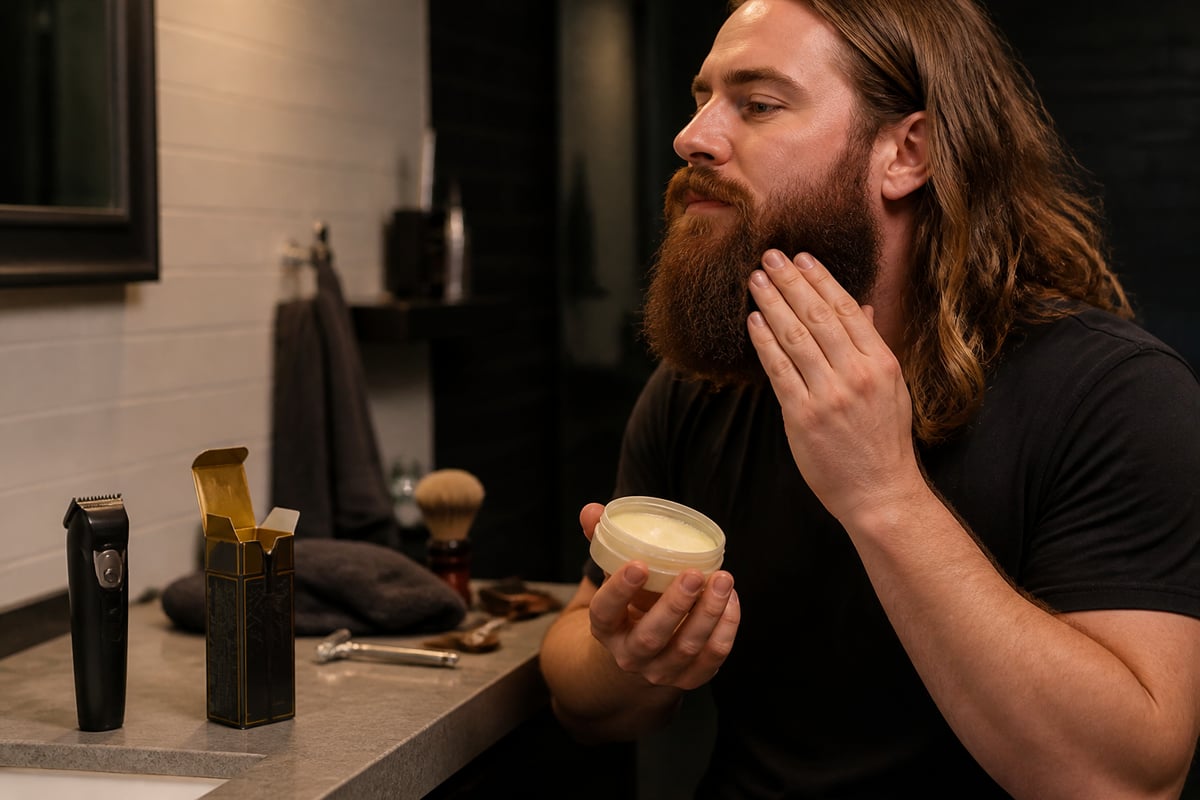
Customers on Google describe the result in simple terms, with one reviewer saying their beard "felt amazing after first wash".
How Often Should You Trim While Growing a Beard?
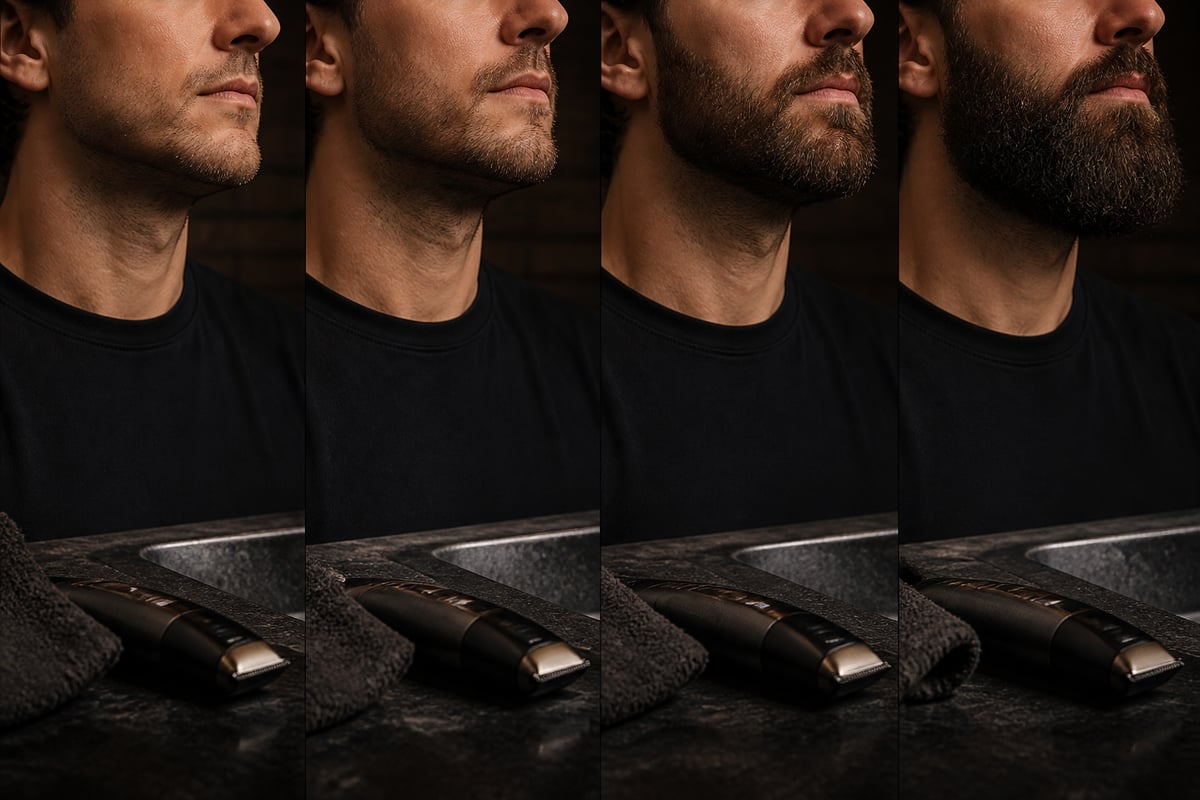
Trim your neckline and cheek line every one to two weeks, and leave the main length untouched until the beard fills in. Growth takes time, and over-trimming resets your progress.
Beard hair grows in cycles, and different follicles sit in different phases at any moment, so a beard often looks patchy early on and fuller later as slower follicles catch up. If you cut length too early, you remove hair that is still pushing through and judge the result on incomplete evidence.
A simple schedule keeps you on track:
| Stage | Trim frequency | What to cut |
|---|---|---|
| Weeks 1 to 4 | Once every two weeks | Neckline only |
| Weeks 5 to 8 | Every one to two weeks | Neckline and cheek line |
| Weeks 9 to 12 | Weekly | Edges, plus stray long hairs with scissors |
| Maintenance | Every one to two weeks | Shape and length as you prefer |
Pair each trim with a routine that supports the skin.
FAQ
Is a Ufree beard trimmer waterproof?
Water resistance varies by model, so check the product listing for the specific rating before you rinse the head. Many trimmers allow the blade head to go under a tap but not the whole body. Always dry the unit fully afterwards.
Can I use a beard trimmer on my head?
Yes, a beard trimmer works on short scalp hair, but the narrow head makes the job slow on larger areas. It suits tidying the hairline and the nape of the neck. For a full cut, a wider hair clipper saves time.
Does trimming make a beard grow faster or thicker?
No. Trimming removes hair above the skin and does not change follicle activity beneath it. A beard looks thicker after a trim because uneven, wispy ends disappear and the shape looks denser.
Before you buy anything else, check your trimmer head for built-up residue and replace it if it tugs, then pair every trim with a gentle cleanse and a moisturiser. If you want your skin and follicles working in your favour, the 90-Day Beard Challenge gives you a complete daily routine backed by a 90-day money-back guarantee for growth, so you can Accept Challenge and see what a properly cared-for beard can do over three months. Onesociety formulates its products with 100% natural ingredients for everyday use.