

You're standing in front of the mirror, admiring your carefully grown beard, when you notice something unsettling. White specks scattered across your dark shirt. You brush your hand through your facial hair, and a small snowstorm appears. Those annoying white particles aren't just embarrassing-they're beard flakes, and they signal that something fundamental has gone wrong with your skin's natural balance. What causes this frustrating condition, and more importantly, how do you eliminate it using science-backed solutions?
Understanding the Biology Behind Beard Flakes
Beard flakes manifest when your skin beneath facial hair undergoes excessive shedding. This accelerated cell turnover stems from either seborrheic dermatitis or simple dehydration of the stratum corneum (your skin's outermost layer).
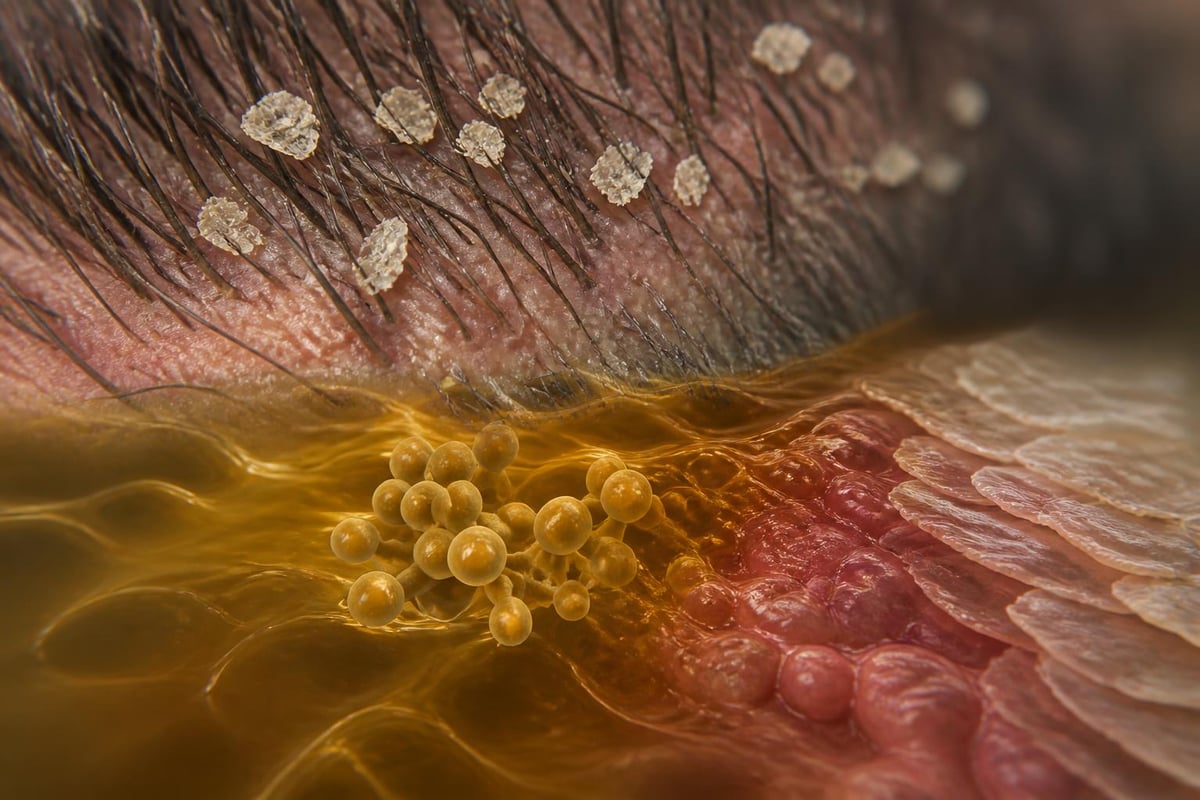
The Malassezia globosa fungus plays a central role in this process. This naturally occurring yeast feeds on sebum-the oil your sebaceous glands produce. When Malassezia breaks down these lipids, it generates oleic acid as a byproduct. Approximately 50% of people experience an inflammatory response to oleic acid, triggering rapid skin cell production. Your body attempts to shed these excess cells, creating the visible flakes you observe.
The Seborrheic Dermatitis Connection
Seborrheic dermatitis affects roughly 3-5% of the general population, with higher rates among beard growers. Why? The answer lies in environmental conditions.
Your beard creates a warm, humid microclimate against your face. This environment provides ideal breeding conditions for Malassezia proliferation. The fungus thrives in areas with high sebaceous gland density-exactly where your facial hair grows thickest.
Key triggers that accelerate beard flakes include:
- Cold, dry weather that strips moisture from the stratum corneum
- Harsh cleansers containing sodium lauryl sulphate that disrupt the lipid barrier
- Irregular washing routines that allow sebum and dead cells to accumulate
- Stress-induced hormonal changes that increase sebum production
- Dietary deficiencies in omega-3 fatty acids and B vitamins
The Dry Skin Factor: Xerosis Barbae
Not all beard flakes originate from fungal activity. Simple dehydration-technically termed xerosis-creates identical symptoms through a different mechanism.
Your skin's moisture barrier relies on three components: natural moisturising factors (NMFs), ceramides, and sebum. When environmental conditions or harsh products compromise this barrier, transepidermal water loss accelerates. The stratum corneum becomes brittle and fragments, producing flakes.
Winter months exacerbate this condition dramatically. Heating systems reduce indoor humidity to 10-20%, whilst outdoor temperatures force blood vessels to constrict, reducing nutrient delivery to skin cells. Environmental factors significantly impact skin hydration levels, making seasonal adjustments essential.
| Seborrheic Dermatitis Flakes | Dry Skin Flakes |
|---|---|
| Yellowish, oily appearance | White, dry appearance |
| Accompanied by redness, itching | Minimal inflammation |
| Larger, sticky particles | Fine, powder-like particles |
| Worsens with irregular washing | Worsens with over-washing |
Scientific Treatment Protocol for Beard Flakes
Eliminating beard flakes requires a systematic approach targeting both symptoms and root causes. The protocol differs based on whether fungal overgrowth or dehydration drives your condition.
Antifungal Intervention Strategy
When Malassezia overgrowth causes your flakes, you need ingredients that disrupt fungal cell membranes whilst supporting skin barrier repair.
Ketoconazole stands as the gold-standard antifungal agent. This imidazole compound inhibits ergosterol synthesis-a critical component of fungal cell walls. Research demonstrates ketoconazole's effectiveness in reducing Malassezia populations within 2-4 weeks of consistent application.
Zinc pyrithione offers an alternative mechanism. This coordination complex reduces fungal ATP production, essentially starving Malassezia organisms. It simultaneously decreases inflammatory cytokines, addressing both the infection and your body's response.
Application protocol:
- Wet your beard thoroughly with warm water to open follicles
- Apply antifungal shampoo, massaging directly onto skin beneath facial hair
- Leave product in contact with skin for 3-5 minutes (critical for active ingredient absorption)
- Rinse completely, ensuring no residue remains
- Pat dry-never rub vigorously, which damages the stratum corneum
Hydration and Barrier Repair Approach
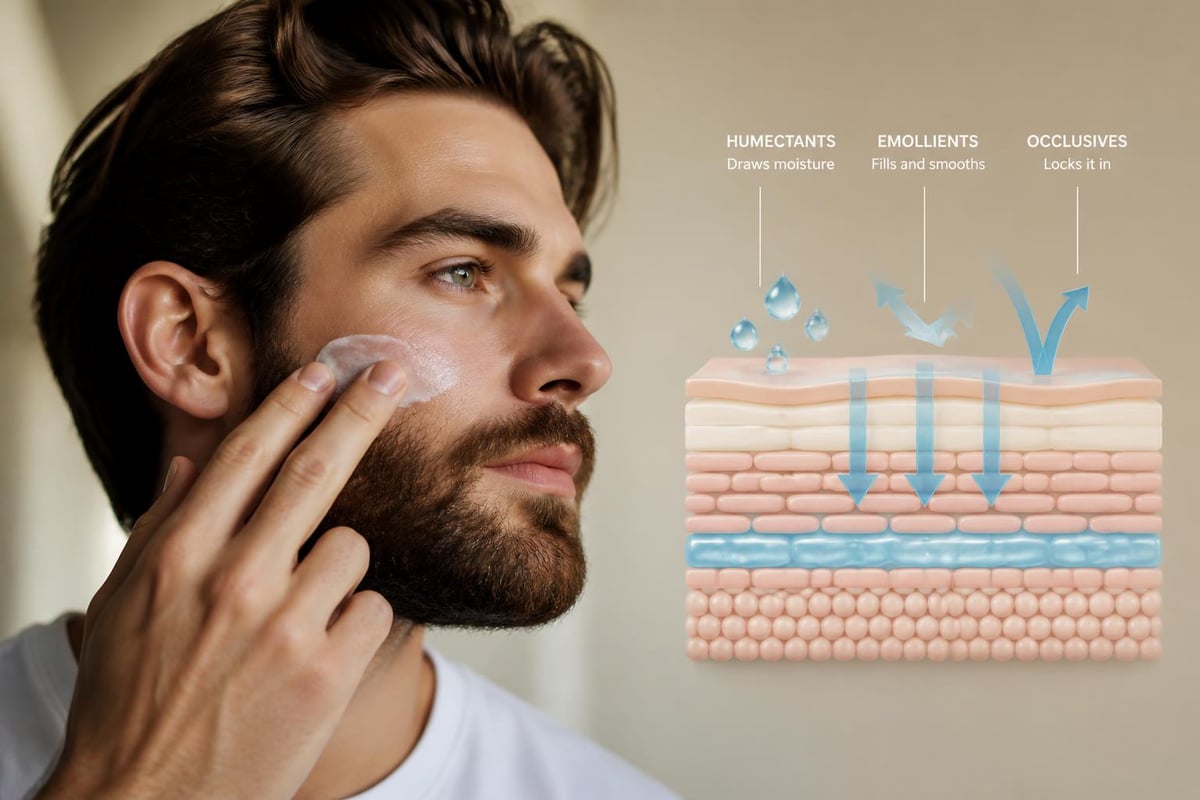
For flakes stemming from dehydration, you must rebuild your skin's moisture barrier using occlusive and humectant ingredients.
Humectants like glycerine and hyaluronic acid draw water from the dermis into the stratum corneum. These molecules bind water through hydrogen bonding, increasing hydration by up to 300%. However, humectants alone prove insufficient-you need occlusives to prevent transepidermal water loss.
Shea butter provides superior occlusive properties through its high concentration of stearic and oleic acids. These fatty acids form a semi-permeable barrier that allows oxygen exchange whilst preventing water evaporation. Clinical studies show shea butter increases stratum corneum hydration by 67% after four weeks of consistent application.
If you're dealing with persistent dryness and struggling with common beard struggles, understanding your specific skin type helps target treatment effectively.
Natural Ingredient Solutions: The Scientific Evidence
Synthetic treatments work efficiently, but natural alternatives offer comparable results without potential side effects. The key lies in selecting ingredients with documented bioactive compounds.
Tea Tree Oil: Nature's Antifungal Arsenal
Melaleuca alternifolia (tea tree) oil contains terpinen-4-ol as its primary active constituent. This monoterpene disrupts fungal cell membrane integrity through direct lipophilic interaction. Studies demonstrate tea tree oil achieves 60% reduction in Malassezia populations when used at 5% concentration.
The compound also exhibits anti-inflammatory properties by suppressing tumour necrosis factor-alpha and interleukin-1 beta production. This dual action addresses both fungal overgrowth and the inflammatory response that accelerates cell turnover.
Jojoba Oil: Biomimetic Sebum Replacement
Chemically, jojoba oil isn't an oil-it's a liquid wax ester nearly identical to human sebum. This structural similarity allows jojoba to integrate seamlessly into your skin's lipid matrix.
When you apply jojoba to beard skin, your sebaceous glands receive feedback suggesting adequate sebum production. This triggers downregulation of sebogenesis, reducing the substrate available for Malassezia feeding. Simultaneously, jojoba's wax esters fill gaps in your stratum corneum, decreasing transepidermal water loss by 42%.
Argan Oil: Fatty Acid Profile Optimisation
Argania spinosa kernel oil delivers an optimal 2:1 ratio of oleic to linoleic acid. Linoleic acid proves particularly crucial-it's the precursor to ceramides, the primary lipid component maintaining barrier integrity.
Research indicates that individuals with barrier dysfunction show 50% lower linoleic acid concentrations in their stratum corneum. Topical argan oil supplementation restores these levels, strengthening the barrier and reducing flake formation.
Comparison of natural oils for beard flake treatment:
| Oil Type | Primary Active | Mechanism | Application Frequency |
|---|---|---|---|
| Tea Tree | Terpinen-4-ol | Antifungal, anti-inflammatory | 2-3 times weekly |
| Jojoba | Wax esters | Sebum regulation, barrier repair | Daily |
| Argan | Linoleic acid | Ceramide synthesis | Daily |
| Coconut | Lauric acid | Antimicrobial, occlusive | 3-4 times weekly |
Developing Your Beard Flake Elimination Routine
Consistency drives results. Sporadic treatment allows Malassezia populations to rebound or permits barrier dysfunction to recur.
Morning Protocol
Start your day by cleansing with a pH-balanced formulation. Your skin's natural pH sits at 4.5-5.5-this slightly acidic environment inhibits pathogenic organism growth whilst supporting beneficial microflora. Alkaline cleansers (pH 7-9) disrupt this balance, creating conditions that favour Malassezia proliferation.
A quality beard wash with nourishing ingredients maintains this critical pH balance whilst removing accumulated sebum and dead cells. Look for formulations containing coconut-derived surfactants, which cleanse effectively without stripping essential lipids.
After cleansing, apply a lightweight beard oil whilst your facial hair remains slightly damp. This timing maximises absorption-water molecules create temporary channels through the stratum corneum, allowing oil penetration to deeper epidermal layers.
Evening Restoration Protocol
Night-time provides optimal conditions for barrier repair. Your skin's permeability increases by 300% during sleep, and cellular regeneration peaks between midnight and 4:00 AM.
- Cleanse again if you've accumulated environmental pollutants or sweat
- Exfoliate twice weekly using gentle mechanical or enzymatic methods
- Apply a heavier, occlusive-rich balm to lock in moisture
- Consider using a humidifier to maintain bedroom humidity at 40-50%
Understanding proper men's grooming routines ensures you're addressing all aspects of skin health, not just isolated symptoms.
Advanced Intervention: The 90-Day Transformation
Reversing chronic beard flakes requires more than sporadic product application. You need a comprehensive system that addresses multiple causative factors simultaneously.
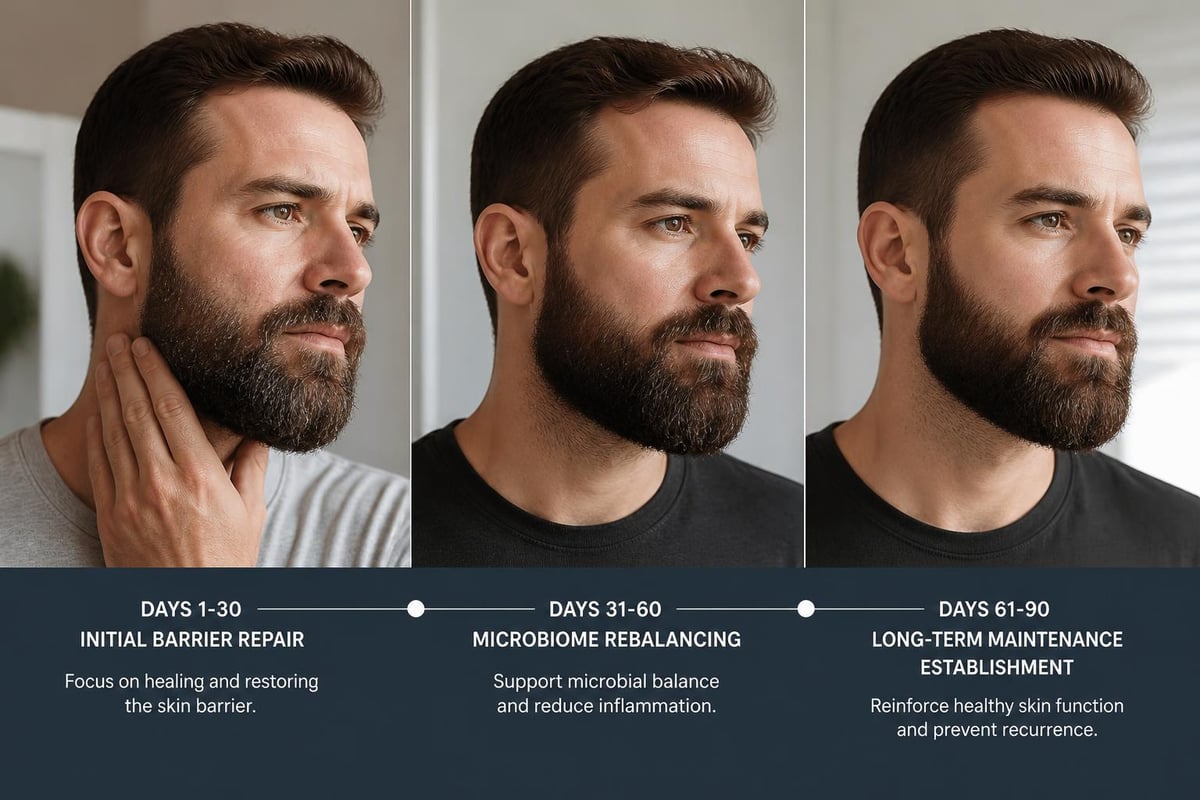
The 90-day timeline isn't arbitrary-it reflects your skin's complete renewal cycle. Your epidermis regenerates entirely every 28-42 days, meaning three months ensures two complete cell turnover cycles. This duration allows you to rebuild your moisture barrier, rebalance your microbiome, and establish sustainable maintenance habits.
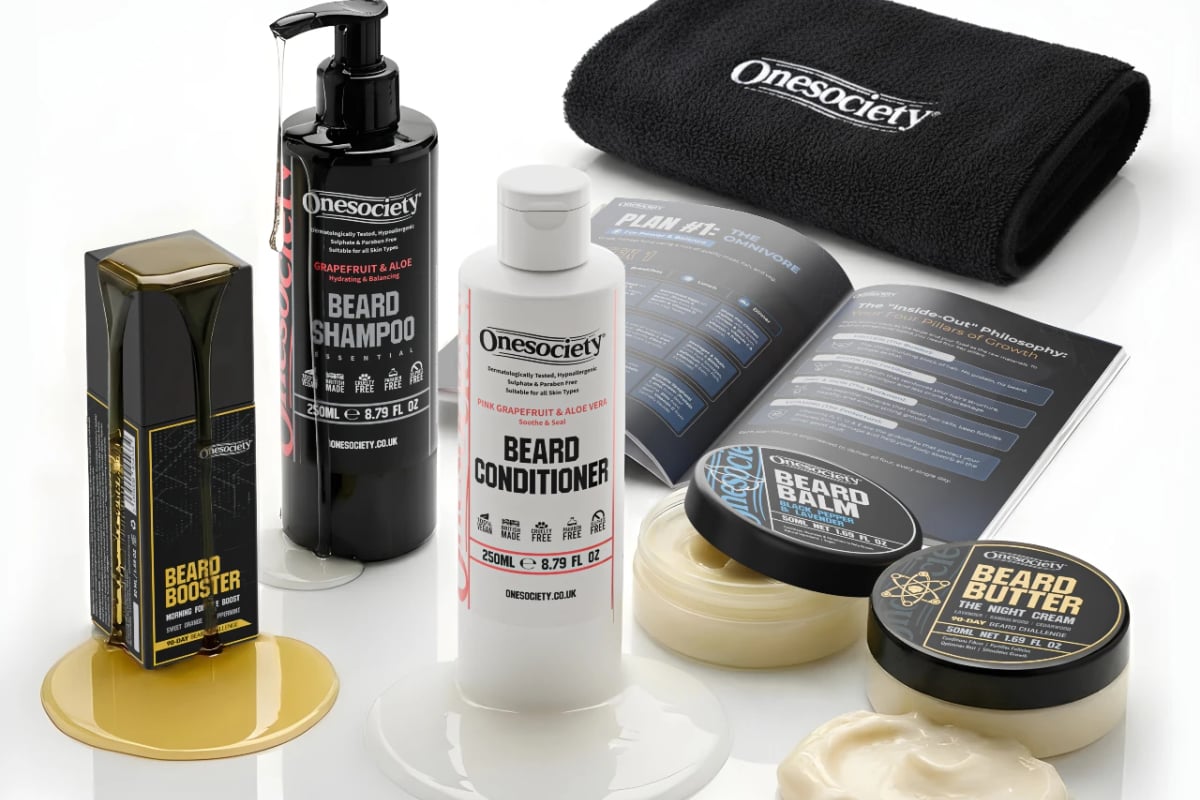
A complete beard care system combines multiple formulations, each targeting specific aspects of skin health. The 90-Day Beard Challenge provides eight scientifically formulated products working synergistically: follicle stimulation, deep hydration, protective barriers, and pH-balanced cleansing all integrated into a single protocol.
Dietary Factors Influencing Beard Flakes
Your skin reflects internal health. Nutritional deficiencies manifest as compromised barrier function and increased inflammatory responses.
Essential Fatty Acid Requirements
Omega-3 fatty acids-specifically EPA and DHA-reduce inflammatory cytokine production by up to 70%. These polyunsaturated fats compete with omega-6 fatty acids for incorporation into cell membranes. When omega-3s predominate, your cells produce anti-inflammatory prostaglandins instead of pro-inflammatory variants.
Aim for 2-3 grammes of combined EPA/DHA daily. Fatty fish (salmon, mackerel, sardines) provide the most bioavailable sources. Plant-based alternatives like flaxseed contain ALA, which requires enzymatic conversion to EPA/DHA-a process with only 5-10% efficiency.
B-Vitamin Complex for Cellular Turnover
B vitamins function as enzymatic cofactors in hundreds of metabolic processes. Biotin (B7) specifically supports keratinocyte proliferation and lipid synthesis. Deficiency disrupts normal cell maturation, creating parakeratotic cells that shed as flakes.
Niacin (B3) improves barrier function by increasing ceramide and free fatty acid synthesis. Studies demonstrate 2% topical niacinamide reduces transepidermal water loss by 24% whilst increasing stratum corneum hydration by 34%.
Daily nutritional targets for optimal skin health:
- Omega-3 fatty acids: 2-3 grammes (EPA/DHA combined)
- Biotin: 30-35 microgrammes
- Niacin: 16 milligrammes
- Zinc: 11 milligrammes
- Vitamin E: 15 milligrammes
- Selenium: 55 microgrammes
Common Mistakes That Perpetuate Beard Flakes
Understanding what to avoid proves equally important as knowing correct practices. Many well-intentioned beard growers unknowingly sabotage their treatment efforts.
Over-Washing Strips Essential Lipids
Cleansing removes dirt, dead cells, and excess sebum-all beneficial. However, excessive washing depletes ceramides and natural moisturising factors from your stratum corneum. This creates a paradox: you wash to reduce flakes, but over-washing generates more flakes through barrier disruption.
Scientific analysis shows optimal washing frequency varies based on sebum production rates. Most men achieve best results washing every 2-3 days, with daily water rinses between full cleanses.
Using Scalp Products on Facial Skin
Your facial skin differs dramatically from your scalp. It contains 5-10 times more sebaceous glands, shows increased sensitivity to irritants, and maintains a different pH profile. Scalp shampoos formulated for hair-not skin-often contain harsh surfactants and high pH levels unsuitable for facial application.
Products specifically designed for beard care account for these differences, using gentler cleansing agents and skin-appropriate pH formulation.
Ignoring Brush and Comb Hygiene
Your grooming tools accumulate dead skin cells, sebum, and potentially pathogenic microorganisms. Using contaminated brushes reintroduces these elements to freshly cleansed skin, perpetuating the cycle of inflammation and flaking.
Clean your beard brush weekly using warm water and mild soap. Natural boar bristle brushes require particular attention-their porous structure harbours bacteria more readily than synthetic alternatives.
Environmental Management Strategies
Your surroundings significantly impact skin hydration and barrier integrity. Controlling environmental factors reduces treatment resistance.
Winter heating systems, air conditioning, and low outdoor humidity all accelerate transepidermal water loss. Combat these effects through strategic environmental modifications:
- Position a humidifier in your bedroom to maintain 40-50% relative humidity
- Reduce shower temperature to lukewarm (not hot, which strips lipids)
- Apply occlusive products before outdoor exposure in cold weather
- Use a beard balm with protective properties when facing wind or low humidity
UV radiation also compromises barrier function through oxidative stress. Even during winter months, UVA rays penetrate clouds and windows, generating free radicals that damage lipid membranes and DNA. Consider products containing natural UV protectants like raspberry seed oil (SPF 28-50) for outdoor activities.
Distinguishing Beard Flakes from Other Conditions
Not all white particles signal simple beard flakes. Several conditions produce similar symptoms requiring different treatment approaches.
Psoriasis vs Seborrheic Dermatitis
Psoriasis creates thick, silvery scales with well-defined borders. The underlying skin appears red and inflamed, often extending beyond the beard area onto the cheeks, ears, or scalp. This autoimmune condition results from T-cell activation triggering excessive keratinocyte proliferation.
Seborrheic dermatitis produces yellowish, greasy flakes with less defined borders. The condition typically remains confined to areas with high sebaceous gland density.
Contact Dermatitis from Product Sensitivity
Allergic reactions to beard care products can mimic flaking conditions. Common allergens include fragrances, preservatives (particularly methylisothiazolinone), and essential oils (despite their natural origin).
If flaking began after introducing a new product, discontinue use for two weeks. If symptoms resolve, you've identified the culprit. Reintroduce products individually to isolate the specific allergen.
Beard flakes stem from either fungal overgrowth or barrier dysfunction, both treatable through targeted, science-backed interventions. By understanding the biological mechanisms driving flake formation-whether Malassezia proliferation or compromised moisture barriers-you can select ingredients and protocols that address root causes rather than masking symptoms. Onesociety provides comprehensive beard care solutions formulated with 100% natural ingredients validated by scientific research, helping you achieve the healthy, flake-free beard you deserve through their systematically designed products and proven 90-day transformation protocol.