

Your moustache deserves more than a rushed pass with dull scissors or a borrowed beard trimmer. A dedicated moustache trimming kit transforms what many consider a tedious chore into a precise ritual that defines your face and projects confidence. Whether you've cultivated a classic chevron or prefer a refined handlebar, the right tools make the difference between a distinguished look and a dishevelled mess that undermines your professional presence.
Why Your Current Trimming Approach Isn't Working
Most men discover their grooming problems too late-typically during an important meeting when they catch their reflection and notice uneven edges, stray hairs curling over the lip line, or patchy areas that scream neglect. You've probably grabbed kitchen scissors or used a full-sized beard trimmer without proper guards, resulting in over-trimmed sections that take weeks to recover.
Here's what happens when you skip proper tools:
- Scissors designed for paper crush hair follicles, causing split ends and fraying
- Full-sized trimmers lack precision for the delicate upper lip area
- Generic combs pull and tear rather than guide hair smoothly
- Unsterilised tools introduce bacteria that trigger beard-related skin conditions including folliculitis
The skin beneath your moustache remains thinner and more sensitive than most facial areas. When you use inappropriate tools, you create micro-abrasions that lead to ingrown hairs, redness, and irritation. Dermatologists consistently warn that improper facial hair care triggers inflammation that compromises both appearance and skin health.
The Hidden Cost of Poor Grooming Equipment
Beyond the immediate aesthetic problems, inadequate trimming creates a cascade of issues. Hair grows unevenly when follicles sustain damage from blunt cutting implements. Your moustache develops stubborn cowlicks and unmanageable texture. Natural oils can't distribute properly through damaged hair, leading to dryness that makes styling impossible.
Anatomy of a Complete Moustache Trimming Kit
A professional-grade moustache trimming kit contains specific components that work together, not random grooming items thrown into a bag. Understanding each element's purpose allows you to evaluate products critically and avoid marketing gimmicks that waste money.
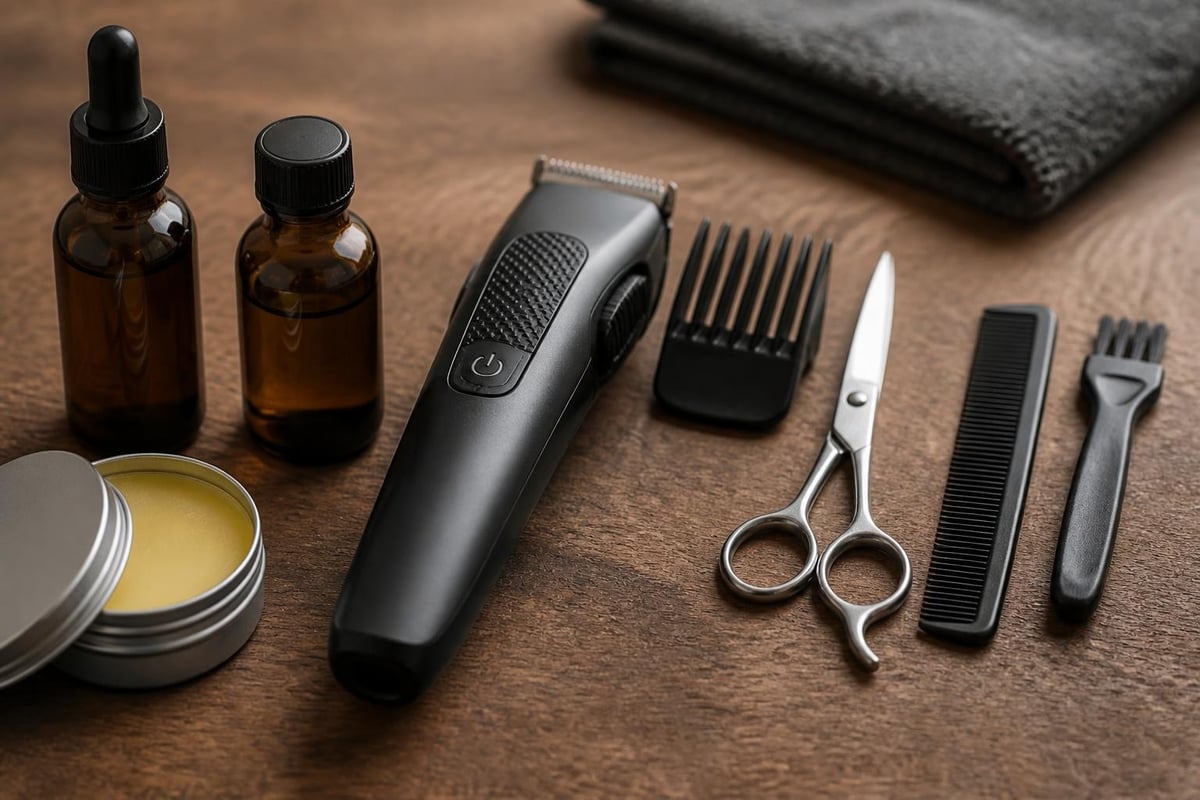
Essential Cutting Tools
Precision trimmer specifications:
| Feature | Professional Standard | Why It Matters |
|---|---|---|
| Blade width | 20-25mm | Matches moustache width for controlled passes |
| Guard range | 0.5-5mm | Allows gradual length adjustment without over-cutting |
| Motor type | Rotary or magnetic | Reduces vibration that causes uneven cuts |
| Battery life | 60+ minutes | Completes multiple sessions without mid-trim charging |
Your trimmer must include guards specifically designed for moustache work. Full beard guards prove too wide for precision around the philtrum and lip line. Consumer Reports testing demonstrates that blade quality directly correlates with cut consistency-cheap stainless steel dulls within months, whilst surgical-grade materials maintain sharpness through years of weekly use.
Dedicated scissors serve different purposes:
- Curved blades follow the natural lip contour
- Straight edges create sharp lines at moustache boundaries
- Thinning shears reduce bulk without shortening length
The scissors must feature micro-serrated inner edges that grip individual hairs rather than pushing them away. This design detail, often overlooked in budget kits, prevents the frustrating experience of chasing hairs that slide away from the blades.
Combs and Guides That Actually Function
Fine-tooth combs do more than detangle. They lift hair to uniform height, ensuring your trimmer cuts evenly. The teeth spacing matters enormously-0.5mm gaps suit fine hair, whilst 1mm works for coarse, thick moustaches. Materials matter too: carbon fibre resists static that makes hair fly away, and acetate withstands repeated cleaning with approved disinfectants without degrading.
Selecting Your Moustache Trimming Kit: Scientific Criteria
Walk into any grooming shop and you'll face dozens of kits claiming superiority. Marketing copy rarely reveals the technical specifications that determine real performance. Apply these evidence-based criteria to separate functional tools from expensive disappointments.
Blade Technology and Cutting Mechanics
Self-sharpening blades use angular geometry-typically 30-45 degrees-that causes opposing edges to hone each other during operation. This design extends blade life by years compared to fixed-angle alternatives. The blade material determines longevity: titanium-coated stainless steel resists corrosion from moisture and natural oils, whilst ceramic maintains sharpness longer but shatters if dropped.
Motor power measured in RPM (rotations per minute) influences cutting efficiency. Professional-grade trimmers operate at 6,000-7,000 RPM, providing enough torque to cut through thick, coarse hair without pulling or stalling. Lower-powered units tug at hair follicles, triggering the inflammation response that causes redness and soreness.
Ergonomic Design Reduces User Error
Your hand position changes throughout a trimming session as you address different angles and sections. A proper moustache trimming kit includes a body that fits securely in multiple grips. Rubberised surfaces prevent slipping when hands are damp. Weight distribution affects control-top-heavy trimmers wobble during fine detail work, whilst balanced designs allow steady, deliberate movements.
Evaluate these handling characteristics:
- Can you rotate the trimmer 180 degrees without repositioning your grip?
- Do indicator lights remain visible from all angles?
- Does the power button require deliberate pressure to prevent accidental activation?
- Can you access and adjust guards with one hand?
Mastering the Trimming Technique
Owning quality tools means nothing if your technique introduces errors. Professional barbers follow systematic approaches that account for hair growth patterns, facial anatomy, and visual balance. You can replicate these methods at home once you understand the underlying principles.
Pre-Trim Preparation Protocol
Washing your moustache before trimming serves multiple purposes beyond cleanliness. Water temporarily swells the hair shaft by approximately 30%, making it easier to cut cleanly. Natural oils and styling products coat the hair surface, causing blades to slide rather than cut. A gentle cleanse removes these barriers whilst maintaining moisture levels that prevent brittle breakage.
Step-by-step preparation:
- Rinse with lukewarm (not hot) water to open follicles without causing skin irritation
- Apply a small amount of natural cleanser formulated for facial hair
- Massage for 30 seconds to distribute through all layers
- Rinse thoroughly-residue causes uneven trimming
- Pat semi-dry with a clean towel, leaving hair slightly damp
The Onesociety approach emphasises natural preparation that enhances hair condition whilst setting up optimal cutting conditions. Their scientifically-formulated cleansers contain ingredients that strengthen hair structure rather than stripping protective oils.
Executing the Trim: Direction and Depth
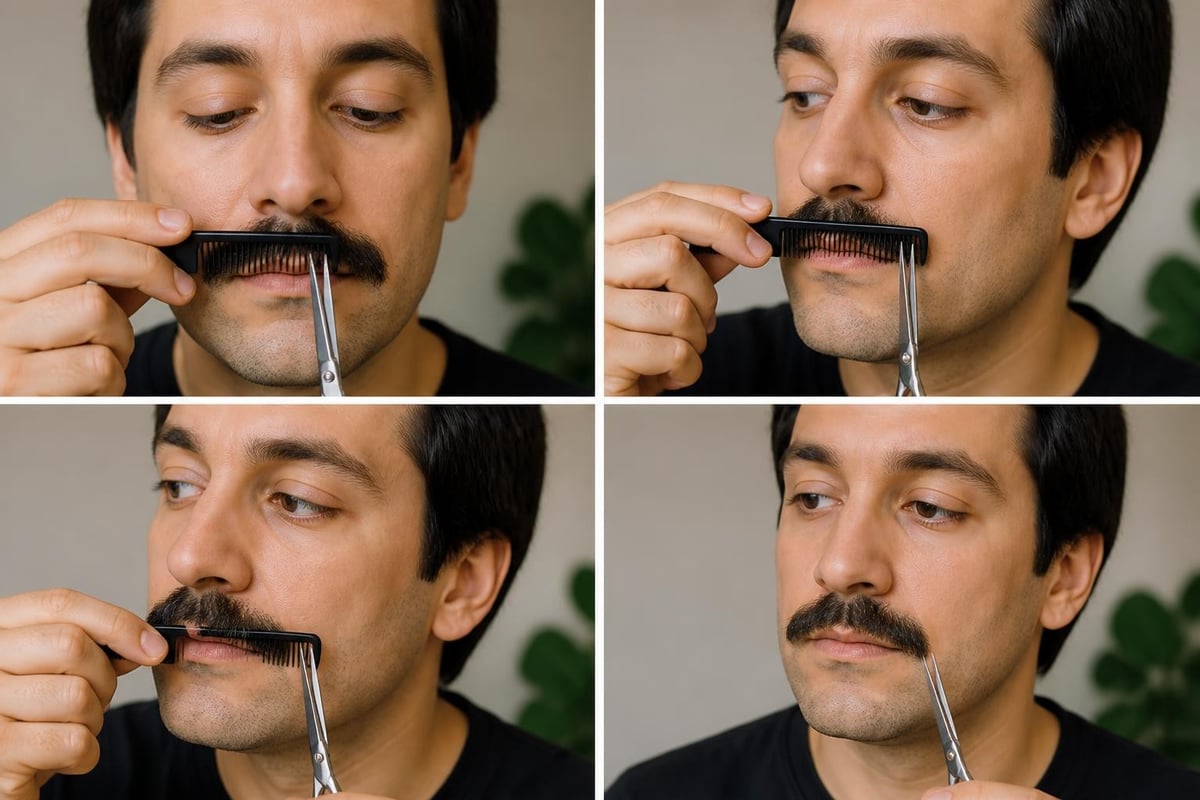
Always trim in the direction of hair growth during your first pass. This approach reduces follicle stress and prevents the ingrown hairs that plague men who trim against the grain. Start at the centre point directly beneath your nose, working outward toward the corners in small, controlled movements. The comb should precede your trimmer by 2-3mm, lifting hair to consistent height.
| Trimming Zone | Guard Length | Direction | Common Mistakes |
|---|---|---|---|
| Centre (philtrum) | Shortest setting | Straight down | Removing too much, creating gap |
| Mid-section | Medium setting | Follow natural angle | Uneven sides from poor lighting |
| Corners | Longest setting | Slightly downward | Over-rounding the edges |
| Upper border | No guard (scissors) | Against growth | Creating harsh, unnatural line |
Your second pass addresses stragglers and refines the shape. Switch to scissors for detail work along the lip line-this area requires precision that trimmers can't provide. Hold scissors parallel to your lip, cutting individual hairs that extend beyond your desired line.
Maintenance and Hygiene Standards
Professional barbers face strict sanitation requirements defined by health departments because contaminated tools spread infection rapidly. DC Health regulations detail sterilisation protocols that eliminate bacteria, fungi, and viruses. Whilst you're trimming only your own moustache, maintaining similar standards prevents skin conditions and extends tool life.
Cleaning Protocol After Each Use
Hair fragments and dead skin cells accumulate in trimmer mechanisms, creating environments where bacteria thrive. Staphylococcus and other common pathogens multiply in this debris, transferring to your skin during subsequent use. The cleaning process takes under five minutes but prevents complications that require medical intervention.
Immediate post-trim cleaning:
- Remove guards and tap firmly to dislodge trapped hairs
- Use the included brush to sweep debris from between blade teeth
- Rinse detachable blades under running water (check manufacturer's waterproof rating first)
- Apply one drop of clipper oil to maintain blade alignment
- Wipe body with alcohol-based disinfectant wipe
Your scissors require different care. Rinse under warm water to remove hair and product residue. Dry thoroughly-water spots indicate areas where corrosion will develop. Store in a protective case rather than loose in a drawer where blades can chip or dull against hard surfaces.
Long-Term Storage Considerations
Humidity causes metal components to oxidise. Store your moustache trimming kit in a cool, dry location away from bathroom moisture. Silica gel packets absorb ambient humidity in storage cases. Check battery charge monthly even when not in use-lithium-ion batteries degrade faster when stored fully depleted.
Integrating Your Kit with Complete Grooming Routines
A moustache trimming kit addresses shape and length, but comprehensive facial hair care requires products that nourish hair and underlying skin. The trimming process removes protective natural oils and exposes follicles to environmental stress. Without proper conditioning, your moustache becomes brittle, develops split ends, and loses its natural sheen.
Onesociety's 90-Day Beard Challenge provides a systematic approach to facial hair health that complements precision trimming. The kit includes scientifically formulated products that address specific biological needs-follicle stimulation through improved blood flow, deep hydration that penetrates the hair shaft, and protective barriers that lock in moisture.
The Beard Booster contains ingredients that dilate blood vessels, increasing nutrient delivery to hair follicles. This biological mechanism supports faster recovery after trimming whilst promoting consistent growth that reduces patchiness. Clinical research demonstrates that improved follicular blood flow correlates with stronger, more resilient hair that resists damage from environmental stressors.

Post-Trim Conditioning Sequence
Immediately after trimming, your hair cuticles remain slightly open from the cutting action. This temporary state allows conditioning products to penetrate deeply. Apply a small amount of natural beard oil, distributing through the entire moustache using your fingertips. The fatty acids in quality oils-particularly those from jojoba and argan sources-bond with the hair's protein structure, filling microscopic gaps that cause frizz and tangling.
Why specific ingredients matter:
- Jojoba oil mimics sebum: Your skin recognises its molecular structure, allowing absorption without clogging pores
- Vitamin E provides antioxidant protection: Neutralises free radicals that damage follicles and cause premature greying
- Essential fatty acids reduce inflammation: The linoleic acid in natural oils calms irritation from trimming
Avoid products containing silicones or mineral oils. These petroleum derivatives coat hair superficially without providing genuine nourishment. They create temporary shine whilst preventing moisture penetration, ultimately leading to drier, more damaged hair that requires increasingly aggressive conditioning.
Common Problems and Evidence-Based Solutions
Even with quality tools and proper technique, you'll encounter challenges that threaten your moustache's appearance. Understanding the biological mechanisms behind these issues allows you to address root causes rather than symptoms.
Uneven Growth and Patchy Sections
Hair follicles cycle through growth phases independently. Your moustache contains follicles in anagen (active growth), catagen (transition), and telogen (resting) phases simultaneously. This natural variation creates the appearance of patchiness, particularly noticeable after trimming when length differences become obvious.
You can't force follicles to synchronise, but you can optimise conditions that support healthy cycling. Adequate protein intake provides the keratin building blocks for hair synthesis. Biotin supplementation shows modest benefits in clinical trials, though effects vary based on individual deficiency status. Harvard Health notes that whilst you can't dramatically alter genetic hair growth patterns, you can ensure nutritional factors don't limit follicle performance.
Irritation and Folliculitis
Redness, small bumps, and itching after trimming indicate follicular inflammation. When you cut hair, you create sharp edges that can curl back into skin as regrowth occurs. Bacteria enter these micro-wounds, triggering immune responses that manifest as pustules and soreness.
Prevention strategies backed by dermatological research:
- Trim when hair is slightly damp, not soaking wet (swollen hair cuts differently, causing problems during drying)
- Replace trimmer blades every 6-12 months regardless of visible wear
- Apply antibacterial aftershave or witch hazel to disinfect micro-abrasions
- Exfoliate the moustache area twice weekly to prevent dead skin buildup
Dandruff and Flaking
Seborrheic dermatitis affects facial hair regions frequently, causing the embarrassing flakes that accumulate in your moustache. The condition results from Malassezia yeast overgrowth, triggered by excess sebum production and dead skin cell accumulation. Your moustache creates a warm, moist environment where this organism thrives.
Treatment requires antifungal agents-tea tree oil demonstrates efficacy in clinical studies, whilst zinc pyrithione and ketoconazole provide pharmaceutical options for severe cases. Daily gentle cleansing removes the dead cells that feed yeast populations. Avoid harsh detergents that strip all oils; this paradoxically increases sebum production as your skin attempts to compensate.
Advanced Styling Techniques
Once you've mastered basic maintenance with your moustache trimming kit, you can explore styling approaches that showcase your facial structure. Different moustache styles suit different face shapes and personal aesthetics, but all require the same fundamental technique precision.
Creating Definition and Structure
Natural moustaches grow in relatively uniform directions, but styling introduces deliberate variation that creates visual interest. Training your moustache requires consistent daily effort-hair "remembers" positions when you repeatedly guide it whilst applying light-hold products.
Style categories and their technical requirements:
- Chevron: Requires even length across entire moustache with defined lower border along upper lip
- Handlebar: Needs long corners that you shape with wax, demanding months of growth patience
- Pencil: Thin profile requiring aggressive trimming above and below a narrow central strip
- Walrus: Full, bushy appearance that covers upper lip, needing length but not precision shaping
Natural balms and waxes provide hold through beeswax content-this substance melts at body temperature, allowing you to mould hair, then solidifies to maintain position. Synthetic polymers in conventional styling products create stiffer hold but accumulate residue that dulls appearance and requires harsh removal methods.
Symmetry Correction Methods
Perfect facial symmetry doesn't exist. Your philtrum may angle slightly, or one side of your moustache may grow thicker than the other. Trimming can minimise these natural variations through strategic length management. Trim the thicker side slightly shorter to reduce visual weight. Create sharper angles on the thinner side to add definition that suggests fullness.
Stand directly in front of your mirror with eyes level to the reflection. Mark the centre point of your nose and philtrum with a washable pencil. This reference helps you evaluate symmetry objectively rather than relying on perception, which your brain automatically adjusts.
Tool Upgrades and When to Invest
Your first moustache trimming kit serves as a learning platform. As your skills develop and your moustache establishes its character, you'll identify specific limitations in entry-level equipment. Strategic upgrades address these constraints without falling into the trap of accumulating redundant tools.
Performance Indicators That Signal Upgrade Needs
Pay attention to these warning signs that your current kit no longer meets your requirements:
- Trimming sessions take progressively longer as you compensate for dull blades
- You discover stray hairs hours after grooming that you missed during trimming
- Battery life decreases noticeably, requiring mid-session charging
- Skin irritation increases despite maintaining proper technique
- Guards crack or fail to attach securely
Professional-grade equipment costs significantly more but lasts substantially longer when properly maintained. Calculate cost-per-use rather than initial price. A £150 trimmer that functions flawlessly for five years costs less per session than a £40 unit that fails after eighteen months.
Speciality Tools for Specific Challenges
Some moustache characteristics demand specialised solutions. Extremely coarse hair benefits from T-blade trimmers designed for dense, wiry growth. Fine, straight hair requires gentler cutting action that prevents over-trimming from aggressive blades. Sensitive skin responds better to hypoallergenic blade coatings that reduce friction and heat generation.
Consider visiting a professional barber quarterly for expert facial hair assessment. They identify growth patterns and structural challenges that you might miss in daily observation. Their recommendations for tool selection and technique adjustment prove invaluable for optimising your routine.
Your moustache trimming kit represents the foundation of distinguished facial hair, but tools alone won't transform your appearance. Combining precision equipment with scientifically-formulated conditioning products creates the synergy that elevates routine maintenance into comprehensive grooming. Whether you're cultivating your first moustache or refining decades of growth, Onesociety provides the natural, research-backed products that complement your trimming efforts and support optimal facial hair health. Start your transformation with their complete grooming systems designed specifically for men who refuse to compromise on quality or results.