

Choosing the right men beard razor transforms your grooming routine from a daily chore into a precision ritual. Whether you're sculpting a sharp jawline, maintaining a full beard, or experimenting with new styles, the razor you select directly impacts your skin health, beard quality, and overall confidence. With dozens of options flooding the market in 2026, understanding what actually works for your facial hair type becomes essential to achieving consistent results without irritation or patchy growth.
The Hidden Problem Behind Poor Razor Choices
Most blokes grab the first men beard razor they spot in the shop, expecting professional results from budget tools. This approach creates a cascade of issues that damage both your skin barrier and beard follicles.
Why Generic Razors Sabotage Your Beard Growth
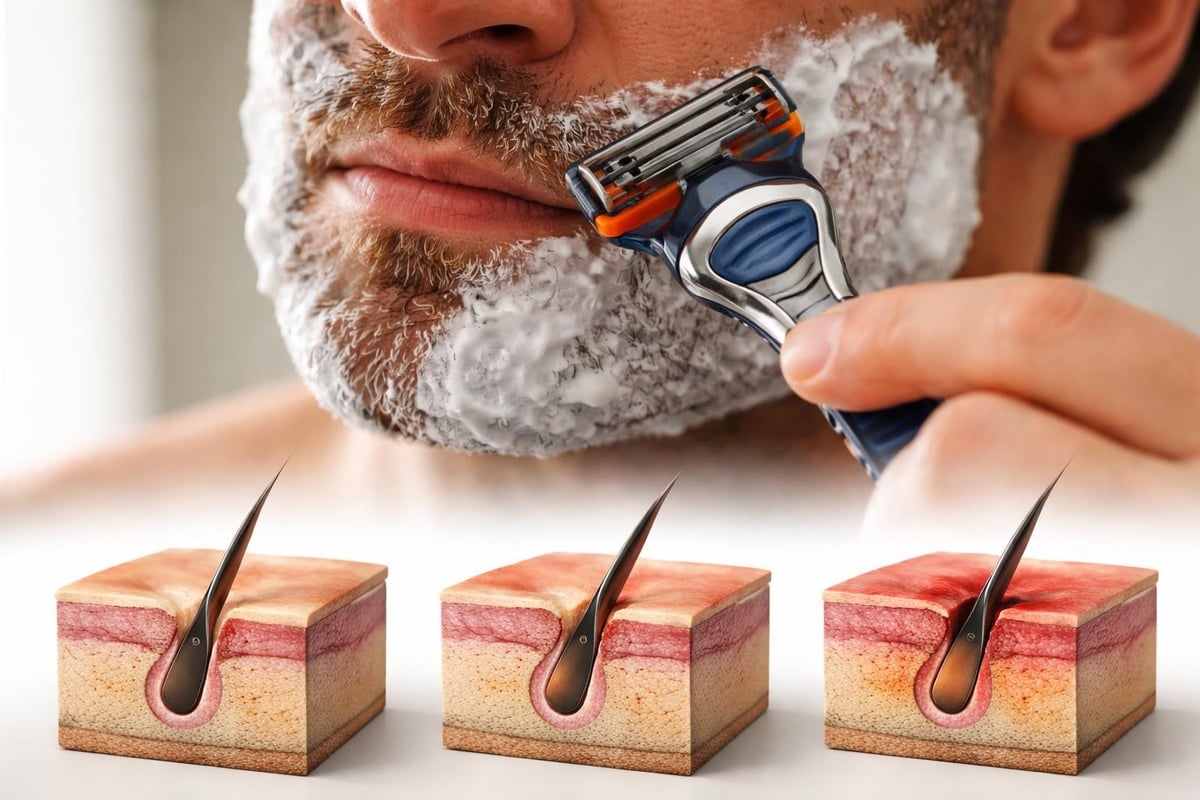
Your facial hair grows in multiple directions with varying thickness across different zones. A standard razor treats all areas identically, creating uneven pressure distribution that traumatises follicles. This mechanical stress triggers inflammatory responses in the dermis layer, where blood vessels supply nutrients to each hair shaft.
When inflammation persists, your body diverts resources from follicle nourishment to tissue repair. The result? Weaker regrowth, increased ingrown hairs, and persistent razor burn that compounds with each shave.
The three primary damage mechanisms include:
- Follicle traction: Dull blades pull hairs before cutting, stressing the root bulb
- Epidermal stripping: Aggressive passes remove protective skin oils and beneficial bacteria
- Microtear accumulation: Invisible cuts become entry points for infection and irritation
Understanding how different grooming tools impact beard health helps you select razors that complement rather than compromise your facial hair ecosystem.
Electric vs Manual: The Science Behind Each Approach
The men beard razor debate centres on two distinct technologies, each with specific biochemical impacts on your skin and hair structure.
Electric Razors and Oscillating Blade Technology
Electric models use rapidly vibrating blades that capture hairs through perforated foils or rotating heads. This mechanism reduces direct skin contact, minimising the stratum corneum disruption that manual razors cause.
The oscillation frequency (typically 10,000-15,000 cycles per minute) creates a shearing action rather than a slicing motion. This preserves the hair shaft's structural integrity whilst reducing the tugging force on follicles by approximately 40% compared to manual alternatives.
| Feature | Electric Razor | Manual Razor |
|---|---|---|
| Skin Contact | Indirect (foil barrier) | Direct blade exposure |
| Follicle Stress | Low to moderate | Moderate to high |
| Learning Curve | Minimal | Requires technique |
| Precision Level | Moderate | Excellent |
| Maintenance | Regular cleaning + replacement heads | Blade replacement only |
When evaluating the best electric razors and beard trimmers, consider your skin's sebum production rate. Oilier skin types benefit from electric models that don't strip natural lipids as aggressively.
Manual Razors and the Hydrodynamic Effect
Manual razors rely on sharp steel edges gliding across moistened skin. The shaving cream or oil creates a hydrodynamic layer that reduces friction coefficient from roughly 0.8 (dry) to 0.2 (properly lubricated).
This lubrication performs three critical functions:
- Hydration swelling: Water penetration softens the keratin protein matrix in each hair shaft
- Blade flotation: The cream layer maintains consistent blade angle without direct pressure
- Debris suspension: Cut hairs remain suspended in foam rather than clogging blade gaps
The BIC Flex 5 Trim & Shave exemplifies hybrid design, combining manual precision with integrated trimming capabilities for versatile styling.
Matching Your Razor to Your Beard Density
Beard thickness varies significantly based on androgen receptor sensitivity and ethnic background. Your men beard razor must accommodate your specific follicle density to prevent accumulation trauma.
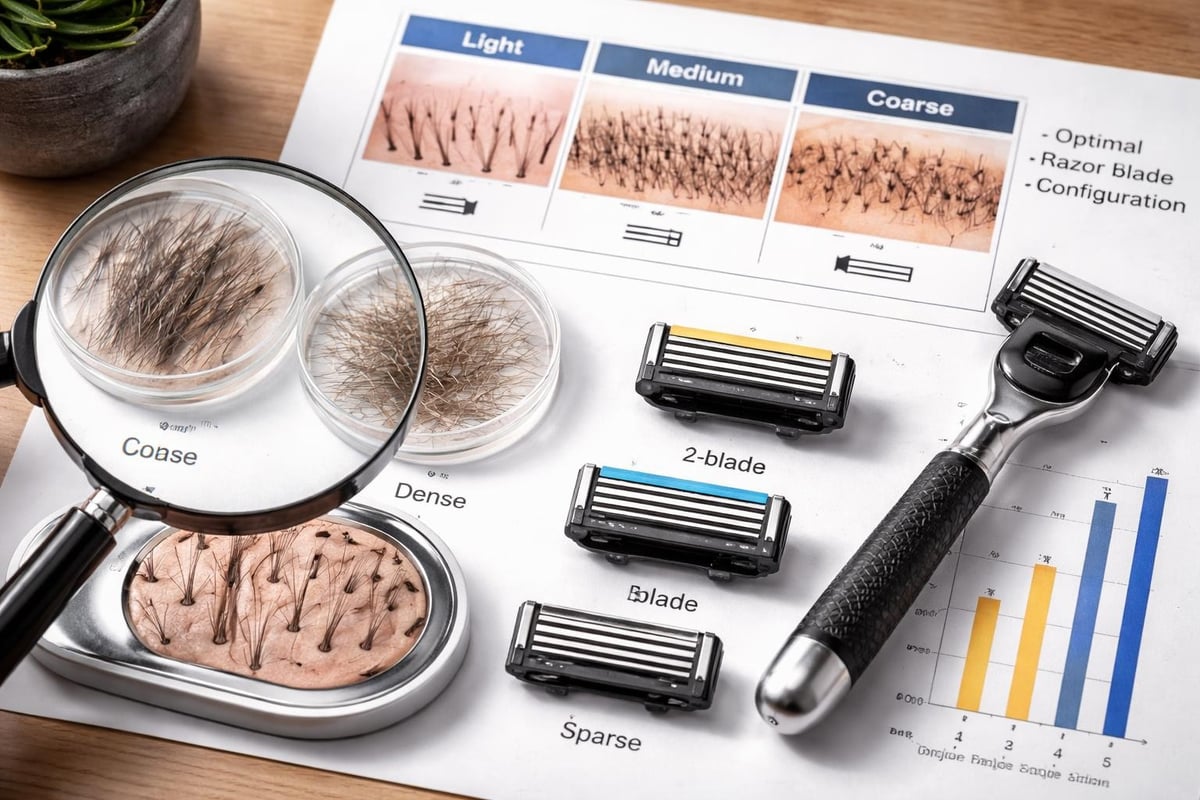
Coarse Beard Characteristics
If your facial hair resembles wire more than fluff, each strand contains a higher concentration of disulphide bonds in its cortex layer. These molecular bridges create rigidity that requires sharper cutting edges.
Coarse beards demand razors with:
- Multi-blade cartridges (4-5 blades minimum) to distribute cutting force
- Wider blade spacing to prevent clogging between passes
- Aggressive cutting angles (typically 20-25 degrees from skin surface)
The Philips OneBlade 360 offers adjustable blade positioning that adapts to varying hair stiffness across your face.
Fine to Medium Beard Profiles
Finer facial hair contains fewer disulphide bonds, making strands more flexible but also more prone to bending rather than cutting. This texture requires razors that capture and stabilise hairs before the cutting stroke.
Your optimal specification includes:
- Single or dual-blade systems to prevent over-cutting
- Closer blade spacing for better hair capture
- Moderate cutting angles (15-20 degrees)
The Pre-Shave Ritual That Transforms Results
No men beard razor performs optimally without proper preparation. The conditioning phase determines whether you achieve a smooth finish or create a battlefield of irritation.
Thermal Follicle Opening
Hot water exposure (40-45°C for 2-3 minutes) triggers vasodilation in facial capillaries, increasing blood flow to follicles by 30-40%. This warmth also softens the sebaceous gland output, making natural oils more pliable.
The thermal preparation sequence:
- Apply hot towel compress for 90 seconds
- Massage beard growth zones in circular motions
- Apply pre-shave oil containing jojoba or argan carriers
- Allow 60 seconds for oil penetration before lathering
Combining quality beard care products with proper technique creates an environment where your razor glides rather than drags.
The pH Balance Factor
Your skin's acid mantle sits at approximately 5.5 pH, creating an inhospitable environment for pathogenic bacteria. Traditional shaving creams often spike pH to 8-9, temporarily disrupting this protective barrier.
Select pre-shave products with pH levels between 5.0-6.0 to maintain barrier integrity throughout the shaving process. This prevents the post-shave tightness that signals compromised skin function.
Hybrid Razors: The 2026 Innovation Wave
Recent technological advances have blurred the lines between electric and manual men beard razor categories, creating hybrid tools that leverage both approaches.
Trimmer-Razor Combinations
These dual-function devices feature detachable heads that switch between precision trimming (for beard shaping) and close shaving (for clean areas). The versatility eliminates the need for multiple tools whilst maintaining specialised performance.
The Manscaped Chairman Pro Shaver demonstrates how premium hybrids integrate skin-sensing technology that adjusts blade pressure based on real-time feedback from micro-sensors.
Heated Blade Technology
Thermal razor heads maintain consistent temperatures between 43-48°C during use, replicating the hot towel effect throughout your shave. This continuous warmth keeps follicles relaxed and pores open, reducing the resistance each blade stroke encounters.
The thermodynamic benefit stems from reduced viscosity in sebum and improved flexibility in keratin structures at elevated temperatures. Your hairs essentially become easier to cut when warm.
Blade Metallurgy and Longevity Science
Not all razor blades share identical composition. The steel alloy, coating technology, and edge geometry dramatically influence both performance and lifespan.
Cutting Edge Coatings
Modern men beard razor blades feature multiple coating layers applied through physical vapour deposition. Common materials include:
| Coating Material | Primary Benefit | Typical Lifespan Extension |
|---|---|---|
| Platinum | Corrosion resistance | +40% |
| Diamond-like carbon | Reduced friction | +60% |
| Chromium | Edge hardness | +30% |
| Polymer glide strips | Lubrication delivery | N/A (comfort feature) |
These coatings reduce the adhesive friction between blade and hair, preserving edge sharpness through more shaving cycles. When comparing different razor blade types, coating quality often matters more than base steel composition.
Edge Deterioration Patterns
Blade dullness occurs through three mechanisms: edge rounding, microchipping, and corrosion. Each shave removes approximately 1-2 microns from the cutting edge through abrasive wear against beard hairs.
For coarse beards, expect manual blade lifespan of 5-7 shaves. Medium beard density extends this to 8-12 shaves. Fine facial hair may permit 12-15 uses before performance degradation becomes noticeable.
Sensitive Skin Strategies
Approximately 40% of men experience some degree of razor sensitivity, characterised by post-shave redness, bumps, or burning sensations. Your men beard razor selection must account for this reactivity.
The Single-Blade Advantage
Counter-intuitively, fewer blades often produce less irritation for sensitive skin types. Multi-blade cartridges create a "lift and cut" effect where initial blades pull hairs upward whilst subsequent blades slice below skin level.
This creates a shortened hair shaft that retracts beneath the epidermis surface, increasing ingrown hair probability by 200-300%. Single-blade razors cut at skin level, preventing this problematic retraction.
The King C. Gillette Neck Razor specifically addresses the delicate neck region where sensitivity peaks due to thinner skin and multidirectional hair growth.
Anti-Inflammatory Pre-Treatment
Before reaching for your men beard razor, apply products containing:
- Allantoin: Accelerates cell regeneration in the basal layer
- Bisabolol: Reduces prostaglandin production (inflammation mediators)
- Colloidal oatmeal: Creates a protective beta-glucan layer on skin surface
These compounds prime your skin's defensive mechanisms, reducing inflammatory cascade initiation when micro-trauma occurs during shaving.
Post-Shave Recovery Protocol
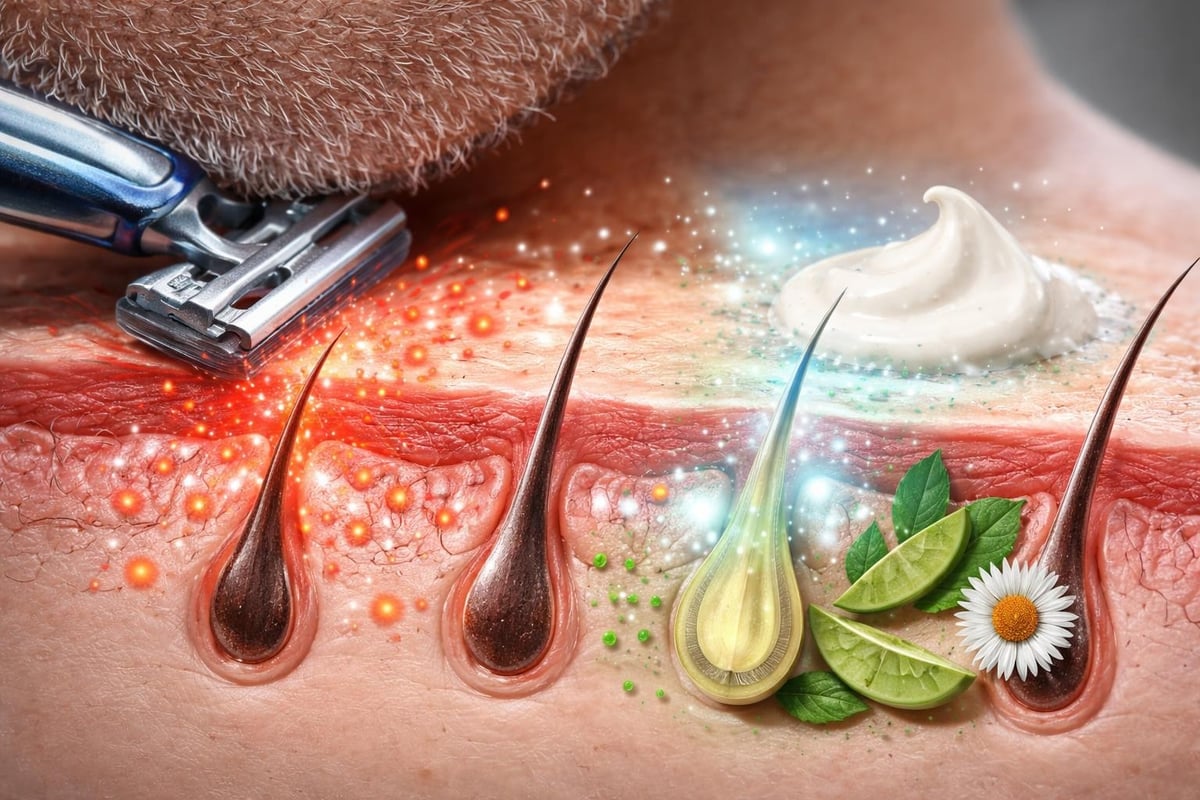
What you apply after using your men beard razor determines whether follicles recover stronger or become progressively weaker. The 15-minute window following your shave represents peak absorption opportunity.
Barrier Repair Ingredients
Your freshly shaved skin has temporarily compromised lipid barriers with increased transepidermal water loss (TEWL). Immediate application of occlusive agents prevents dehydration whilst delivering active ingredients.
Priority compounds for post-shave application:
- Ceramides (types 1, 3, and 6-II): Reconstruct intercellular lipid matrix
- Niacinamide: Stimulates ceramide synthesis and reduces inflammation
- Panthenol: Converts to pantothenic acid, accelerating epithelial repair
- Hyaluronic acid: Binds 1000x its weight in water, maintaining hydration gradient
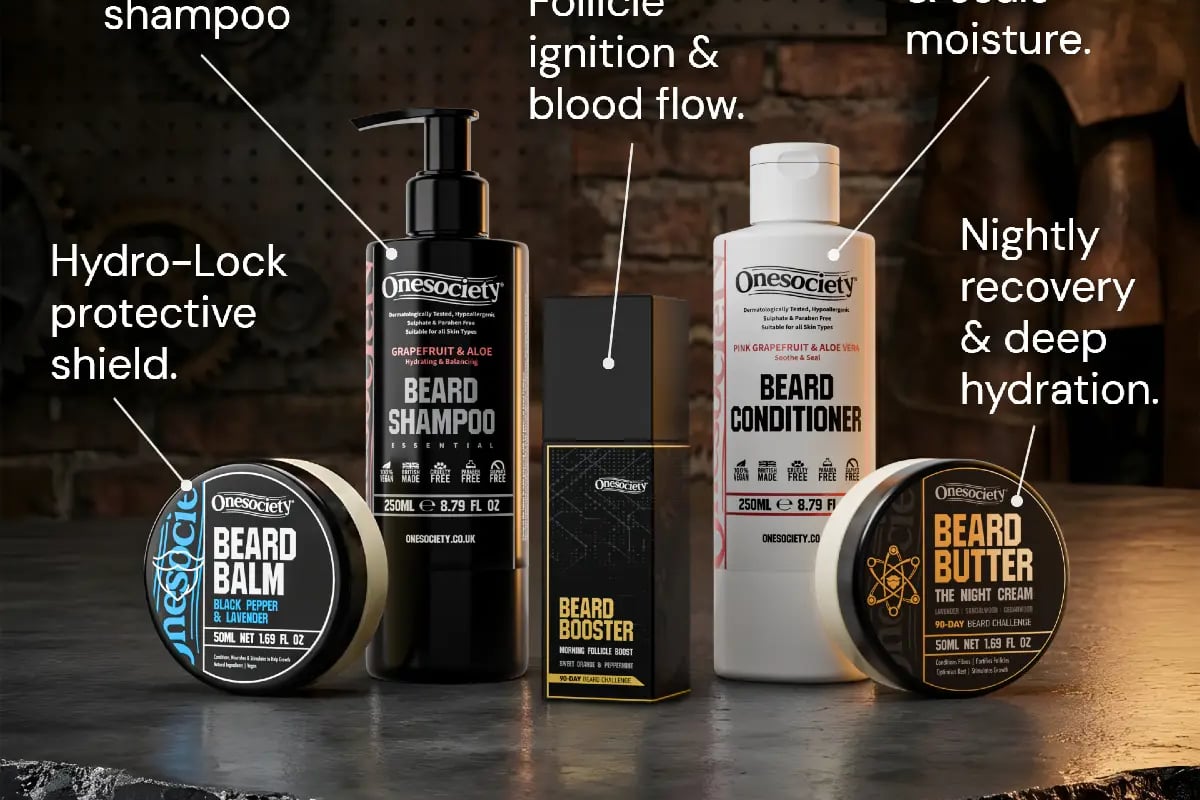
When you invest in comprehensive grooming systems like the 90-Day Beard Challenge, you're equipping your beard with scientifically formulated aftercare that addresses these specific recovery needs. The challenge combines follicle-stimulating ingredients with barrier-repair technology, creating an environment where your beard thrives rather than merely survives daily shaving stress.
The Cooling Controversy
Traditional aftershaves contain high alcohol concentrations (40-60%) that create an immediate cooling sensation through rapid evaporation. This feels refreshing but strips remaining natural oils and disrupts pH balance.
Modern formulations replace alcohol with menthol or eucalyptus derivatives that activate TRPM8 cold receptors without desiccating effects. These provide the psychological satisfaction of coolness whilst supporting rather than sabotaging skin recovery.
Maintenance Rituals That Extend Razor Performance
Your men beard razor requires consistent care to maintain cutting efficiency and prevent bacterial colonisation that causes folliculitis.
Cleaning Protocols by Razor Type
Electric razors accumulate dead skin cells, sebum, and cut hairs within foil perforations. Weekly disassembly and ultrasonic cleaning removes biofilm formation that harbours Staphylococcus epidermidis and Propionibacterium acnes.
Manual razors need rinsing under hot water (60-65°C) after each stroke to prevent hair accumulation between blades. Monthly soaking in 70% isopropyl alcohol (15 minutes) dissolves lipid deposits and neutralises bacterial populations.
Storage Environment Impact
Humidity and temperature fluctuations accelerate blade corrosion through oxidation reactions. Storing your razor in shower environments exposes blades to sustained moisture and temperature swings that degrade protective coatings.
Optimal storage conditions include:
- Dry environment (below 60% relative humidity)
- Stable temperature (18-22°C)
- Vertical orientation (allowing water drainage from blade assembly)
- Protected from direct contact with other metal objects
Travel Considerations and TSA Compliance
When selecting a men beard razor for travel, regulatory restrictions and performance consistency become additional variables.
Cartridge Razors for Air Travel
Aviation security permits cartridge-based manual razors in carry-on luggage, whilst prohibiting loose safety razor blades. This makes cartridge systems the practical choice for frequent travellers who refuse to compromise grooming standards.
Opt for razors with protective blade covers that prevent damage during baggage handling. The additional bulk trades convenience for maintained blade geometry.
Battery Restrictions on Electric Models
Lithium-ion batteries in electric razors must comply with IATA regulations limiting capacity to 100 watt-hours for carry-on items. Most men beard razor models fall well below this threshold (typically 3-5 watt-hours), but verify specifications before international travel.
Consider dual-voltage models (100-240V) that function across global electrical standards without requiring bulky transformers.
Building Your Complete Grooming System
The men beard razor represents just one component in an integrated approach to facial hair excellence. Synchronising your tools with complementary products creates exponential rather than additive results.
The Synergy Between Razors and Conditioning Products
Even the sharpest razor struggles against dehydrated, brittle facial hair. Regular conditioning with scientifically formulated beard products improves hair shaft flexibility by 35-40%, reducing the mechanical force required during shaving.
This decreased resistance translates to:
- Longer blade lifespan (fewer edge microchips per shave)
- Reduced skin traction (less epidermal layer removal)
- Improved glide smoothness (decreased friction coefficient)
When you condition consistently, your razor becomes more effective whilst causing less trauma. The relationship resembles properly inflated tyres improving vehicle efficiency.
Blade Selection Based on Conditioning Level
Well-conditioned beards permit sharper blade angles and closer cutting approaches. Neglected facial hair requires more conservative razor settings to prevent excessive pulling and breakage.
Match your men beard razor aggressiveness to your conditioning regimen:
| Conditioning Frequency | Recommended Blade Count | Optimal Cutting Angle |
|---|---|---|
| Daily | 4-5 blades | 22-25 degrees |
| 3-4 times weekly | 3-4 blades | 18-22 degrees |
| Weekly or less | 1-2 blades | 15-18 degrees |
This calibration ensures your equipment matches your beard's current condition rather than fighting against it.
Seasonal Adjustments for Optimal Performance
Your facial hair responds to environmental changes throughout the year, requiring corresponding modifications to your men beard razor approach.
Winter Shaving Challenges
Cold air reduces sebaceous gland activity, decreasing natural lubrication by 25-30%. Indoor heating further dehydrates skin, creating a hostile environment for comfortable shaving.
Winter protocol modifications:
- Extend pre-shave preparation to 4-5 minutes
- Increase oil application volume by 50%
- Reduce blade pressure through lighter razor grip
- Switch to richer, cream-based products over gel formulations
Summer Heat and Humidity Factors
Elevated temperatures stimulate sebum production, creating oilier skin conditions that affect razor glide characteristics. Increased perspiration introduces salt crystals that accelerate blade corrosion.
Adapt your technique by using lighter pre-shave products that won't compound oiliness, and rinse your razor more frequently between strokes to clear accumulated debris.
Investment Hierarchy: Where to Allocate Your Budget
When building your grooming arsenal, strategic spending on your men beard razor yields disproportionate returns compared to other categories.
The 40-30-30 Budget Distribution
Allocate your grooming budget using this evidence-based framework:
- 40% on razor and blade replacements: Quality cutting tools deliver consistent results
- 30% on conditioning and pre-shave products: These multiply razor effectiveness
- 30% on post-shave recovery and styling: Support and maintain results
This distribution prioritises the tools that directly contact your skin and beard, where quality differences manifest most dramatically in daily outcomes.
Cost-Per-Shave Analysis
Premium men beard razor systems appear expensive at initial purchase but often deliver superior cost efficiency over 12-month periods. Calculate actual value using this formula:
Cost-per-shave = (Initial razor cost + annual blade costs) ÷ annual shave frequency
A £120 electric razor lasting five years with £30 annual maintenance (260 shaves/year) costs £0.35 per shave. A £15 manual razor with £8 monthly cartridge replacements (same frequency) costs £0.42 per shave whilst delivering potentially superior precision.
When exploring expert buying guides for beard shavers, focus on long-term value rather than initial price points.
Professional Techniques for Self-Application
Barber-quality results at home require understanding the geometric principles that professionals apply instinctively through repetition.
The Three-Pass Method
This systematic approach progressively achieves closer shaves whilst minimising cumulative trauma:
Pass 1 (With grain): Remove 60-70% of beard length following natural growth direction. This establishes the foundation whilst causing minimal follicle stress.
Pass 2 (Across grain): Address remaining hair at perpendicular angles to growth patterns. This reduces length by additional 20-25% without the aggressive opposition of against-grain passes.
Pass 3 (Against grain - optional): Only for special occasions requiring maximum smoothness. Reserve this approach for non-daily shaving to prevent cumulative irritation.
Each pass should use fresh lather application. Never re-shave over dried skin, as this increases friction coefficient by 300-400%.
Beard Mapping for Precision
Your facial hair grows in distinct zones with unique directional patterns. Mapping these regions allows you to adjust your men beard razor angle and pressure accordingly.
Common growth pattern zones include:
- Upper cheek: Downward growth requiring downward strokes
- Jaw line: Horizontal growth demanding horizontal blade movement
- Neck: Highly variable, often growing upward requiring upward initial passes
- Under chin: Convergent growth from both sides requiring centre-outward strokes
Photograph your face after 2-3 days of growth to identify your specific patterns. Reference these images until the movements become automatic muscle memory.
Troubleshooting Common Shaving Problems
Even with optimal equipment, technique variations and individual physiology create occasional challenges with your men beard razor routine.
Persistent Razor Burn Solutions
When redness and burning persist beyond 30 minutes post-shave, three factors typically interact: excessive pressure, insufficient lubrication, or compromised skin barrier.
Diagnostic protocol:
- Reduce grip pressure until razor barely touches skin (blade weight provides sufficient cutting force)
- Double pre-shave oil quantity and extend absorption time to 90 seconds
- Pause shaving for 48 hours whilst applying barrier-repair serums twice daily
If symptoms continue after implementing all three interventions, your blade angle likely exceeds your skin's tolerance threshold. Switch to a less aggressive razor head design.
Ingrown Hair Prevention
Ingrown hairs develop when severed hair shafts curve back into surrounding skin rather than emerging through follicle openings. This occurs more frequently with curly beard patterns and after multi-blade razor use.
Prevention strategies include:
- Switching to single-blade razors that cut at skin level
- Exfoliating 24 hours before shaving to clear follicle openings
- Applying glycolic acid (5-8% concentration) post-shave to prevent keratin buildup
- Avoiding against-grain passes in prone areas (typically neck and jawline)
For existing ingrown hairs, resist the urge to extract manually. Apply warm compresses (10 minutes, twice daily) whilst treating with salicylic acid to dissolve the keratin plug naturally.
Selecting and maintaining the right men beard razor transforms your daily grooming from irritating obligation into precise self-care ritual. By understanding the science behind blade technology, skin preparation, and recovery protocols, you create conditions where your beard thrives whilst your skin remains healthy and comfortable. Onesociety supports this journey with scientifically formulated products that work synergistically with your razor choice, providing the nourishment and protection your beard needs to reach its full potential through consistent, intelligent grooming practices.