

The modern man's approach to facial grooming has evolved dramatically, shifting from basic shaving to comprehensive skincare that addresses the unique challenges of male facial hair and skin biology. A well-curated male facial grooming kit isn't just about looking presentable-it's about maintaining skin health beneath your beard, preventing irritation, and creating a sustainable routine that actually works with your body's natural processes. Whether you're cultivating a full beard or maintaining clean-shaven skin, understanding which tools and formulations belong in your arsenal makes the difference between frustration and confidence.
The Foundation: Understanding Male Facial Skin Biology
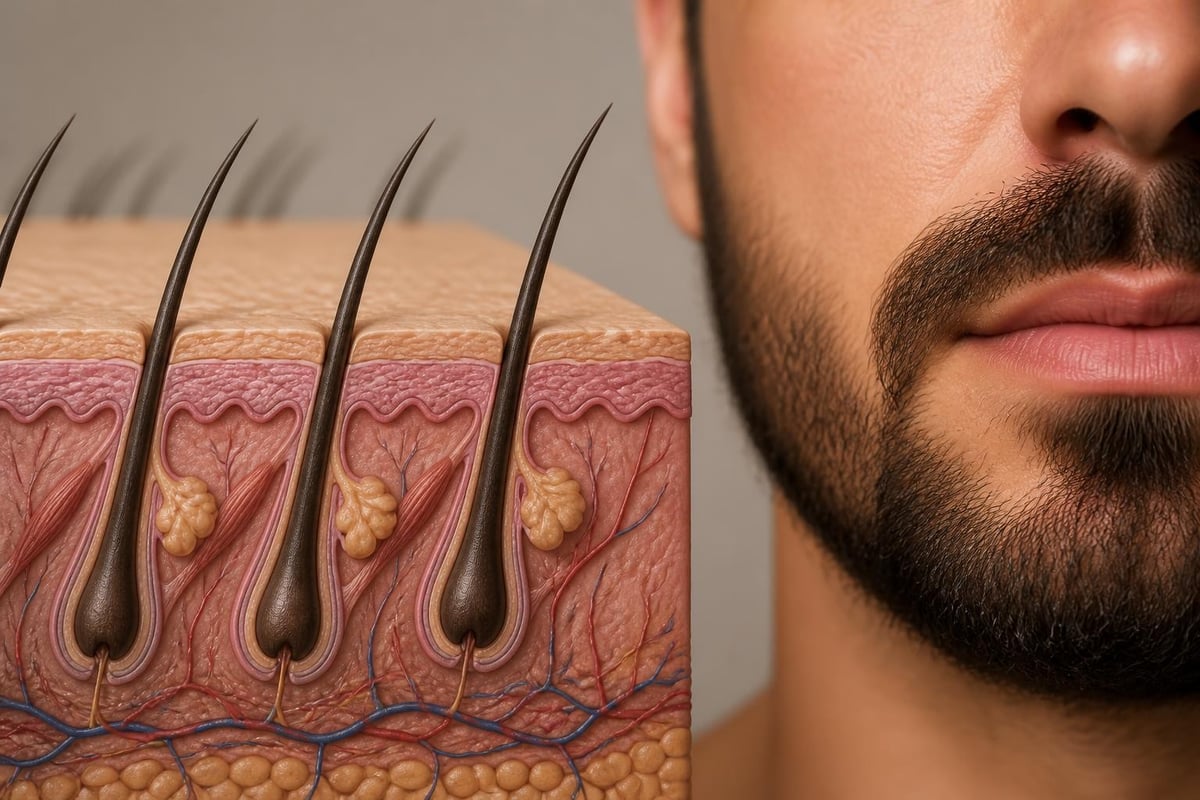
Male facial skin differs fundamentally from female skin in ways that demand specific grooming approaches. Testosterone drives increased sebum production, creating oilier skin that's more prone to enlarged pores and acne. Simultaneously, male skin runs approximately 25% thicker due to collagen density, which changes how products penetrate and how facial hair emerges through the epidermis.
These biological realities mean your male facial grooming kit must address three simultaneous challenges: managing oil production, supporting the skin barrier beneath facial hair, and preventing ingrown hairs or folliculitis. Skincare regimens for men require formulations that penetrate thicker skin whilst respecting the delicate balance around hair follicles.
Why Generic Grooming Fails
Common mistakes that undermine results:
- Using body soap on facial hair (strips natural oils, causes brittleness)
- Applying heavy moisturisers that clog beard follicles
- Skipping conditioner (leaves beard coarse and skin dehydrated)
- Inconsistent application (disrupts the follicle growth cycle)
The American Academy of Dermatology emphasises that proper skin care for men starts with understanding pH balance and ingredient penetration-factors that become even more critical when facial hair creates a barrier between products and skin.
Essential Hardware: Tools That Actually Matter
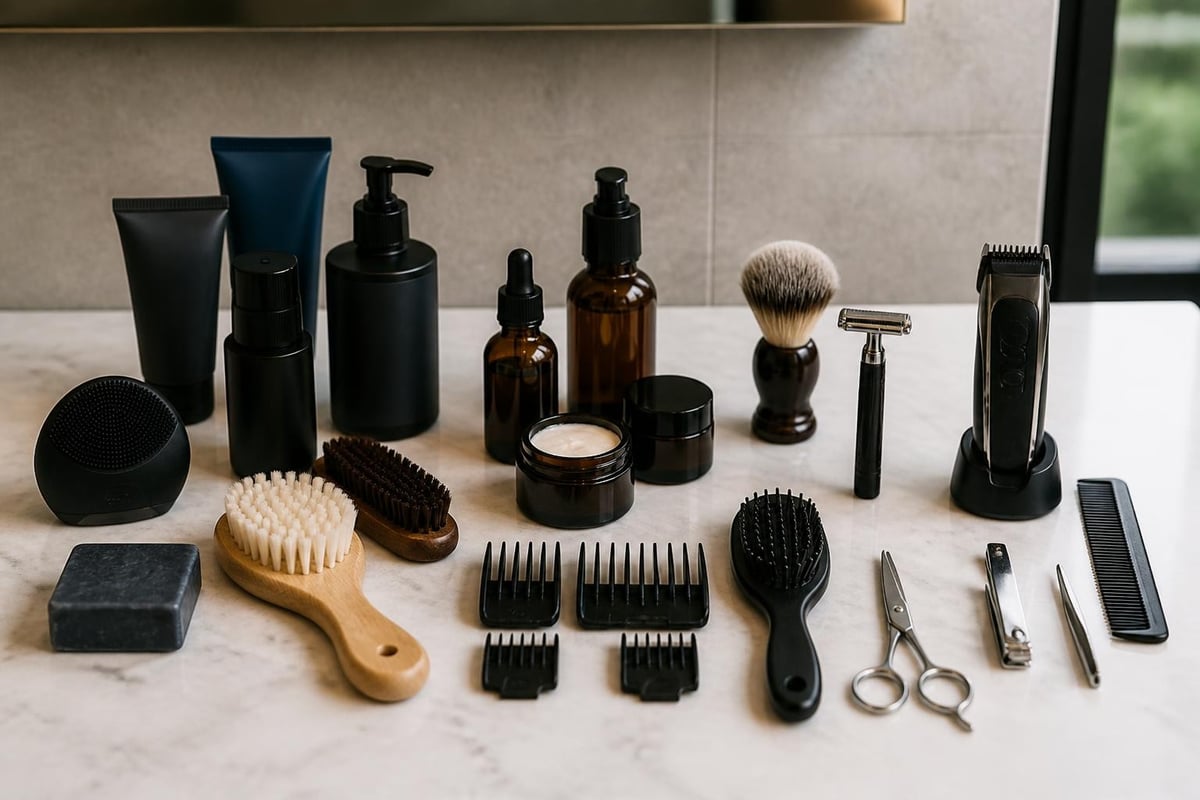
A functional male facial grooming kit begins with precision tools designed for durability and skin safety. Your hardware selection determines whether you maintain control or create damage.
Trimming and Shaping Equipment
| Tool Type | Key Feature | Why It Matters |
|---|---|---|
| Adjustable trimmer | 0.5mm to 10mm guards | Prevents skin nicks whilst allowing style flexibility |
| Precision detailer | T-blade design | Creates sharp cheek and neck lines without irritation |
| Scissors | Rounded tips, 4-5 inch length | Manual control for moustache and stray hairs |
| Comb set | Wide and fine tooth options | Detangles before trimming, prevents pulling |
Expert recommendations on beard trimmers highlight that blade material significantly impacts results-stainless steel or titanium-coated blades maintain sharpness longer and reduce friction-induced irritation. Battery life becomes critical for consistent guard length; voltage drop during use creates uneven cutting that ruins symmetry.
When selecting trimmers, specialists advise choosing waterproof models with multiple attachment options. This versatility allows you to maintain both facial hair and body hair with a single device, which matters for those exploring body trimmer options as part of comprehensive grooming.
The Razor Question: Safety vs Cartridge
Research comparing razor types reveals surprising findings. A multispectral study on razor design demonstrated that safety razors produce significantly less post-shave erythema (skin redness) than multi-blade cartridge systems. The single-blade approach reduces repeated passes over the same area, limiting inflammation at the follicle level.
Razor selection criteria:
- Blade exposure angle (affects cutting depth)
- Handle weight distribution (controls pressure)
- Head pivot capability (follows facial contours)
- Material composition (prevents rust and bacterial colonisation)
For your male facial grooming kit, investing in a quality safety razor with replaceable blades offers both economic and dermatological advantages over disposable cartridge systems that encourage excessive pressure.
Formulation Essentials: The Chemistry of Effective Grooming
Hardware addresses physical maintenance, but formulations deliver the biological support that transforms facial hair from wiry to manageable and skin from irritated to resilient.
Cleansing: The pH Balance Imperative
Standard soaps operate at pH 9-10, which strips the skin's natural acid mantle (pH 4.5-5.5) and disrupts the microbiome that protects against pathogenic bacteria. A proper beard shampoo formulated to pH 5-6 cleanses without compromising barrier function.
Active cleansing ingredients that work:
- Cocamidopropyl betaine: Amphoteric surfactant that removes oils whilst maintaining moisture
- Tea tree oil: Antimicrobial terpenes (terpinen-4-ol) prevent folliculitis
- Aloe vera: Polysaccharides that soothe inflammation post-cleanse
The guide to beard conditioning explains how conditioners work differently than oils-they deposit cationic polymers onto the negatively charged hair shaft, reducing static and improving combability through electrostatic interaction.
Oil Formulations: Carrier and Essential Synergy
Beard oils serve dual functions: they moisturise the underlying skin (preventing the itch that accompanies growth) and coat the hair shaft with fatty acids that improve texture and shine. The ratio of carrier to essential oils determines both efficacy and safety.
| Carrier Oil | Primary Fatty Acid | Skin Benefit |
|---|---|---|
| Jojoba | Eicosenoic acid (mimics sebum) | Non-comedogenic hydration |
| Argan | Linoleic acid (omega-6) | Anti-inflammatory, reduces redness |
| Sweet almond | Oleic acid (omega-9) | Deep penetration, softens coarse hair |
| Grapeseed | Linoleic acid (high ratio) | Light texture, suitable for oily skin |
Understanding what makes quality beard oil requires examining the science behind ingredient selection. For instance, coconut oil in beard formulations provides lauric acid, a medium-chain fatty acid with proven antimicrobial properties that prevent bacterial colonisation of follicles.
Essential oils contribute more than fragrance-they deliver therapeutic terpenes and phenols. Eucalyptus oil contains 1,8-cineole, which improves circulation to hair follicles. Cedarwood provides cedrol, which dermatological research links to reduced hair loss through anti-inflammatory pathways.
Balms and Butters: Occlusive Protection
Whilst oils absorb into skin and hair, balms create a protective barrier that locks moisture in and environmental stressors out. The physics of occlusion explains why balms work: they form a semi-permeable layer that slows trans-epidermal water loss (TEWL) without suffocating pores.
Key balm components and their functions:
- Beeswax: Creates structure and hold (melting point 62-64°C means it remains solid at body temperature)
- Shea butter: High concentration of stearic and oleic acids provides deep conditioning
- Cocoa butter: Phytosterols support skin barrier repair
- Vitamin E: Tocopherol acts as antioxidant, preventing rancidity of carrier oils
The molecular weight of these ingredients matters. Shea butter's fatty acid profile (primarily C18 chains) penetrates the hair cuticle, whilst beeswax's longer carbon chains (C24-C36) remain on the surface, providing hold and weather protection.
Building Your Complete Male Facial Grooming Kit
Assembling an effective kit requires matching products to your specific beard type, skin sensitivity, and grooming goals. A systematic approach prevents redundancy and ensures each product serves a distinct biological function.
The Starter Configuration
For those beginning their grooming journey, start with these four essentials:
- pH-balanced beard shampoo (2-3 times weekly use)
- Conditioning oil blend (daily application post-shower)
- Styling balm (for hold and weather protection)
- Precision trimmer with guards (maintenance every 4-7 days)
This foundation addresses cleansing, hydration, styling, and shaping-the four pillars of comprehensive beard care. As your beard develops and your routine matures, you'll identify specific needs that warrant additional products.
The Advanced Arsenal
Experienced groomers often expand their male facial grooming kit with targeted solutions:
Growth enhancement products:
- Follicle-stimulating serums containing caffeine or biotin
- Exfoliating treatments that prevent ingrown hairs
- Night-time recovery butters with enhanced moisturisation
Beard oil formulations designed to promote growth typically include ingredients like castor oil, which contains ricinoleic acid-a compound that improves circulation to follicles and supports the anagen (growth) phase of the hair cycle.
Specialised care items:
- Boar bristle brushes (distribute oils, train hair direction)
- Microfibre towels (reduce friction-induced frizz)
- Heated beard straighteners (for coarse, curly beards)
The dermatologist's perspective on beard brushes confirms that natural bristle brushes effectively distribute sebum from roots to tips whilst providing gentle exfoliation to the underlying skin-a dual benefit synthetic brushes cannot replicate.
The Science of Routine: When and How to Apply
Product efficacy depends heavily on application timing and technique. Your skin's permeability changes throughout the day due to circadian rhythm, and facial hair behaves differently when wet versus dry.
Morning Protocol
Optimal sequence for daily maintenance:
- Rinse face with lukewarm water (opens pores, softens hair)
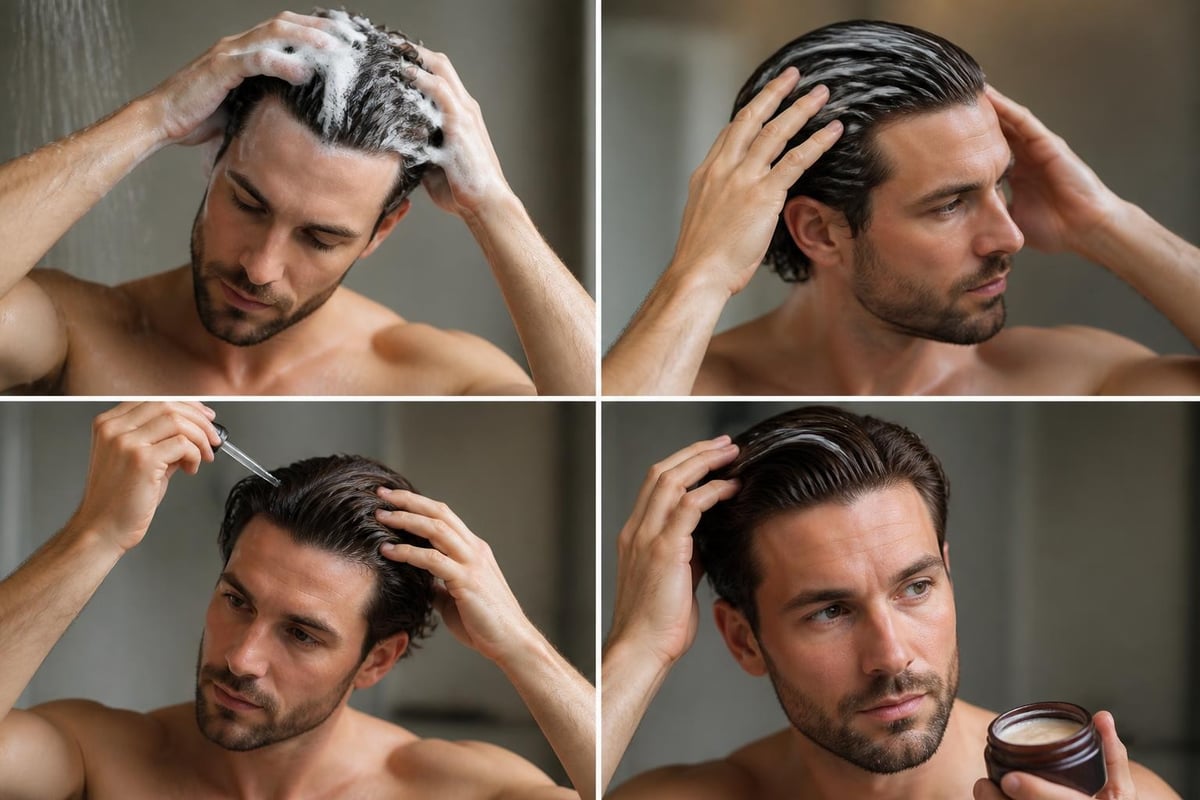
- Apply 3-4 drops of beard oil to damp hair (water aids penetration)
- Comb through from root to tip (distributes product, detangles)
- Apply small amount of balm to palms, emulsify with friction
- Work balm into beard, shape, and style
The dampness factor proves critical. Water temporarily swells the hair shaft's cuticle layer, creating channels for oil penetration. Once hair dries, the cuticle closes, trapping the conditioning agents inside-a mechanical advantage lost if you apply to completely dry hair.
Evening Recovery
Night-time offers an opportunity for intensive conditioning without styling concerns:
- Deep clean with beard shampoo (removes daily accumulation)
- Apply conditioning treatment or butter (heavier formulations acceptable)
- Use specialised beard towel to pat dry (prevents breakage)
- Optional: apply growth-promoting serum to skin beneath beard
This two-phase approach-light maintenance morning, intensive recovery evening-mirrors the body's natural repair cycle. Cell regeneration peaks during sleep, making night application of active ingredients more effective for follicle health.
Weekly Deep Treatment
Reserve one session per week for comprehensive care:
- Pre-shampoo oil treatment: Coat beard in carrier oil blend, leave 15-20 minutes
- Thorough cleansing: Use beard shampoo with scalp massage technique
- Conditioning: Apply leave-in conditioner, focus on ends
- Exfoliation: Gently scrub skin beneath beard with specialised face flannel
- Intensive moisture: Apply recovery butter or balm
This weekly ritual addresses the accumulation of dead skin cells beneath facial hair-the primary cause of beardruff and persistent itch that undermines grooming efforts.
Addressing Common Male Grooming Challenges
Even with quality products, specific problems require targeted solutions. Understanding the biological mechanism behind each issue enables effective intervention.
Problem: Persistent Beard Itch
The agitation: Itching typically intensifies around week 2-3 of growth when new hairs curl back and irritate follicles. Scratching creates micro-abrasions that invite bacterial infection, perpetuating the cycle.
The solution: The itch stems from two causes-dry skin beneath the beard and sharp, cut hair ends. Address both by increasing oil application frequency (twice daily) and using scissors rather than trimmers for length maintenance. Scissors create bevelled ends rather than blunt cuts, reducing skin penetration.
Dermatologist recommendations for healthy beards stress that conditioning the skin beneath facial hair proves just as important as treating the hair itself. Your male facial grooming kit must include formulations light enough to reach skin through dense growth.
Problem: Patchy Growth or Slow Development
The agitation: Uneven follicle distribution or stunted growth creates visible gaps that undermine beard aesthetics. Genetic factors determine follicle density, but environmental and nutritional factors influence activation.
The solution: Whilst you cannot create follicles that don't exist, you can optimise existing follicle function. Products containing caffeine (stimulates circulation), biotin (supports keratin synthesis), and peppermint oil (activates cold receptors, improving blood flow) create conditions for maximum growth potential.
For those committed to transformation, comprehensive systems that combine multiple growth-supporting formulations over extended periods yield the most dramatic results. The 90-Day Beard Challenge packages follicle-activating boosters, hydrating balms, and protective conditioners into a scientifically sequenced protocol designed to maximise growth over a full follicle cycle. This systematic approach addresses growth from multiple angles-stimulating dormant follicles, supporting active growth phases, and protecting emerging hair from environmental damage.
Problem: Coarse, Unmanageable Texture
The agitation: Facial hair grows coarser than scalp hair due to different follicle structure and higher levels of keratin cross-linking. This creates wire-like texture that resists styling and feels uncomfortable.
The solution: Texture modification requires consistent conditioning that deposits lubricating compounds onto the hair shaft. Quality beard butters containing high concentrations of shea and cocoa butter physically coat each hair, reducing friction between strands whilst adding weight that controls flyaways.
Heat application temporarily disrupts hydrogen bonds in keratin, allowing reshape. Use a heated brush or straightener on low setting (below 180°C) after applying protective oil to avoid thermal damage.
Problem: Skin Irritation and Redness
The agitation: Inflammation beneath the beard manifests as redness, bumps, or folliculitis. This often results from trapped bacteria, harsh products, or mechanical irritation from grooming tools.
The solution: Switch to products with anti-inflammatory botanicals. Aloe vera's polysaccharides reduce cytokine production (the signalling molecules that trigger inflammation). Calendula extract contains flavonoids that inhibit inflammatory pathways. Hemp-derived ingredients provide cannabinoids that interact with skin's endocannabinoid system, modulating immune response.
Natural moisturisers formulated for sensitive skin deliver hydration without comedogenic oils that clog pores. For facial application beneath beards, seek formulations with molecular weights small enough to penetrate through hair coverage.
Ingredient Intelligence: What to Seek and Avoid
Your male facial grooming kit's effectiveness hinges on ingredient quality and concentration. Marketing claims mean nothing without understanding the active compounds and their mechanisms.
Natural vs Synthetic: The Real Distinction
The natural versus synthetic debate misses the point-efficacy depends on molecular structure, not origin. That said, naturally derived ingredients often provide complex mixtures of complementary compounds that synthetic single-molecule alternatives cannot replicate.
Beneficial natural actives and their functions:
| Ingredient | Active Compound | Biological Action | Concentration Needed |
|---|---|---|---|
| Jojoba oil | Wax esters | Mimics sebum, non-comedogenic | 30-60% of formula |
| Tea tree oil | Terpinen-4-ol | Antimicrobial, anti-inflammatory | 1-5% (higher causes irritation) |
| Argan oil | Vitamin E, squalene | Antioxidant, moisture retention | 20-40% of formula |
| Peppermint oil | Menthol | Vasodilation, follicle stimulation | 0.5-2% (tingles at higher %) |
Avoid ingredients that create short-term cosmetic effects whilst damaging long-term hair and skin health:
- Silicones (dimethicone, cyclomethicone): Create artificial shine but prevent moisture penetration
- Drying alcohols (isopropyl, denatured): Strip natural oils, cause brittleness
- Synthetic fragrances: Common allergens with no therapeutic benefit
- Mineral oil: Occlusive without nutritive value, may clog pores
Exploring natural beard oils reveals that cold-pressed, unrefined carrier oils retain the full spectrum of beneficial fatty acids, vitamins, and antioxidants destroyed by heat processing and chemical refinement.
Storage and Maintenance: Protecting Your Investment
Quality grooming products require proper storage to maintain efficacy. Oxidation, light exposure, and contamination degrade active ingredients, reducing performance over time.
Optimal Storage Conditions
Product-specific requirements:
- Oils: Dark glass bottles, cool temperature (15-20°C), airtight seals
- Balms: Room temperature, avoid heat above 25°C (causes separation)
- Tools: Clean after each use, oil blades monthly, store in dry environment
- Shampoos/conditioners: Pump dispensers prevent water contamination
Essential oils, particularly citrus-based ones, oxidise rapidly when exposed to light and air. This oxidation creates peroxides that irritate skin. Your male facial grooming kit should feature products in opaque or amber glass containers rather than clear plastic.
Tool Hygiene Protocol
Bacterial colonisation of brushes and combs transfers microorganisms directly to hair follicles, causing infections and inflammation. Proper cleaning techniques recommend weekly washing of all beard-contact tools:
- Remove hair buildup with comb or brush
- Soak in warm water with mild shampoo for 10 minutes
- Rinse thoroughly under running water
- Air dry completely before storage
For trimmers, remove guards and brush out accumulated hair after each use. Apply clipper oil to blades monthly to prevent rust and maintain smooth operation. This maintenance extends tool lifespan whilst preventing introduction of contaminants into your grooming routine.
Personalising Your Kit: Matching Products to Your Profile
No universal male facial grooming kit exists-your ideal configuration depends on hair texture, skin type, lifestyle, and aesthetic goals. Systematic assessment reveals which products deliver maximum impact.
Skin Type Considerations
Your underlying skin type determines which formulations work synergistically with your biology versus creating problems:
Oily skin: Choose lightweight carrier oils (grapeseed, jojoba), avoid heavy butters, use mattifying balms
Dry skin: Emphasise rich butters, high-oleic acid oils (argan, sweet almond), intensive overnight treatments
Sensitive skin: Fragrance-free formulations, anti-inflammatory botanicals (aloe, calendula, chamomile), patch test new products
Combination skin: Zone-specific application-lighter products on oily areas (typically forehead, nose), richer formulations on dry patches
Beard Length and Style Dictate Needs
Short beard (1-10mm):
- Focus on skin health beneath hair
- Light oil application sufficient
- Precision trimming tools critical
- Exfoliation prevents ingrown hairs
Medium beard (10-30mm):
- Balanced oil and balm use
- Combing essential for detangling
- Shape maintenance every 3-5 days
- Conditioning products prevent wireiness
Long beard (30mm+):
- Intensive conditioning protocols
- Balm necessary for control
- Boar bristle brush distributes natural oils
- Regular trimming of split ends
Climate and Environment Factors
Your geographical location and daily environment significantly impact which products your male facial grooming kit requires:
Humid climates: Lighter formulations, focus on cleansing, antimicrobial ingredients prevent fungal growth
Dry climates: Heavy moisturisers, increase application frequency, humectants (glycerin, hyaluronic acid) draw moisture
Urban pollution: Antioxidant-rich products, thorough cleansing, protective balms create barrier
Outdoor/athletic: Sweat-resistant formulations, frequent washing, quick-absorbing oils
The Investment: Cost Versus Value Analysis
Building a comprehensive male facial grooming kit requires financial investment, but understanding cost-per-use and long-term benefits reveals the true value proposition.
Initial Setup Costs
| Category | Budget Option | Premium Option | Expected Lifespan |
|---|---|---|---|
| Trimmer | £30-50 | £80-150 | 3-5 years |
| Razor + blades | £15-25 | £40-80 | Razor: lifetime, blades: 3-6 months |
| Beard oil (30ml) | £8-12 | £18-30 | 1-2 months |
| Balm (60ml) | £10-15 | £20-35 | 2-4 months |
| Shampoo (200ml) | £8-12 | £15-25 | 2-3 months |
| Brush/comb set | £10-15 | £25-45 | 2+ years |
Initial outlay ranges from £80-150 for budget configurations to £200-400 for premium setups. However, the ongoing costs (replacement products) determine long-term investment requirements.
Calculating True Value
Cheap products that require double application or need replacement twice as often ultimately cost more than concentrated, effective formulations. Consider cost-per-application rather than bottle price:
A £30 premium oil lasting 2 months with 4-drop daily application = £0.50 per day
A £12 budget oil requiring 8 drops daily and lasting 1 month = £0.40 per day
The premium option delivers superior ingredients, better absorption, and more pleasant experience for minimal cost difference. Factor in the reduced skin irritation, improved appearance, and time saved through effective products, and premium formulations demonstrate clear value advantage.
Building an effective male facial grooming kit transforms from overwhelming to straightforward when you understand the biology behind beard growth, skin health, and product chemistry. The right combination of precision tools and scientifically formulated treatments creates visible improvements within weeks whilst supporting long-term follicle health. Onesociety specialises in evidence-based grooming solutions crafted from 100% natural ingredients, offering everything from individual products to comprehensive transformation systems designed to optimise your beard's potential. Start your grooming evolution today with formulations that respect both your skin's biology and your commitment to results.