

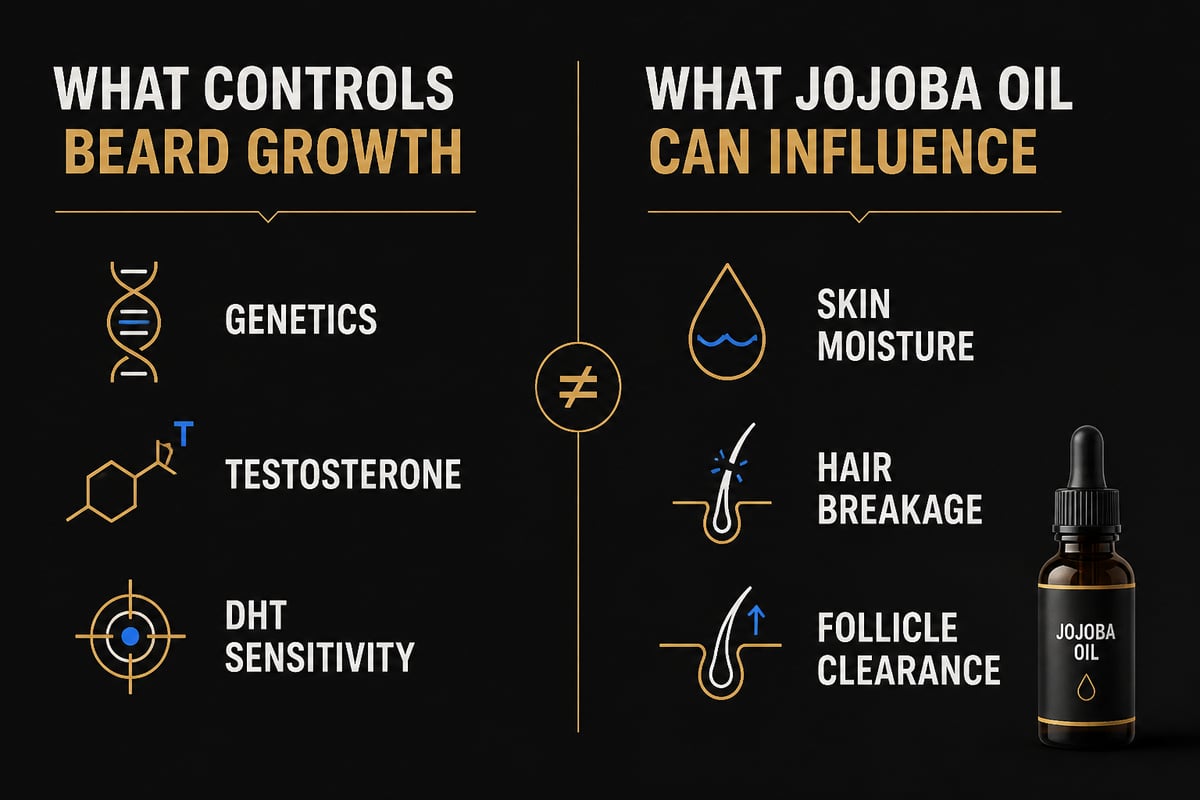
Jojoba oil does not make your beard hair grow faster, but it does create the conditions for a fuller beard by moisturising the skin, cutting breakage and keeping follicles clear. No clinical trial has shown that jojoba oil switches on dormant follicles, so treat it as a care product that protects the growth you already have, not a growth drug.
That distinction matters if you are staring at a patchy jawline and hoping a bottle of golden liquid will fill it in. Genes and hormones set where hair grows. What you control is how much of that hair survives long enough to be seen. This guide separates the science from the sales pitch, then gives you a routine you can start tonight.
What is jojoba oil, and why does it suit a beard?
Jojoba oil is a liquid wax pressed from the seeds of the jojoba shrub, and its structure closely resembles sebum, the natural oil your skin produces.
Strictly speaking, it is not an oil at all. It is a mixture of long-chain wax esters, which is why it stays stable on the shelf and absorbs without leaving a heavy film. Your skin reads it as familiar. That similarity is the whole reason beard makers favour it as a base.
Jojoba is widely used in cosmetics, and its everyday use is generally considered well tolerated. Neither safety source claims jojoba grows hair. Suitability for cosmetic use is a different claim.
Does jojoba oil really make a beard grow?
No, jojoba oil does not stimulate new beard growth directly, because beard density depends on testosterone, its conversion to dihydrotestosterone (DHT), and how sensitive your follicles are to DHT. All three are set largely by genetics.
So where does the "growth" reputation come from? Three honest mechanisms:
- Less breakage. Dry, brittle hairs snap at the tip. A beard that loses a millimetre a day to snapping looks stalled even while the follicle keeps producing. Wax esters coat the hair shaft and cut that friction.
- A healthier skin environment. Flaky, inflamed skin is a poor home for a follicle. Moisturised, calm skin lets hair emerge cleanly.
- Cleaner follicle openings. Because jojoba mimics sebum, skin that receives it tends to produce less compensatory oil, which helps keep pores from clogging.
Think of it like watering a garden. Water does not change the seeds you planted, but without it, nothing thrives. If you want the wider picture on oils and growth, Onesociety's piece on beard oil for growth covers what a good formula should contain.
How does jojoba oil support beard health?
Jojoba oil supports beard health by sealing moisture into skin and hair, softening the hair shaft, and reducing the dryness that triggers itch, flaking and breakage.
Here is the problem most bearded men know. The first weeks of growth itch. The skin tightens, the hairs poke back into it, and scratching makes it worse. Left alone, that irritation turns into flaking, redness and a beard that feels like wire wool. Nobody sticks with a beard that torments them, and plenty of men shave at the six-week mark for exactly that reason.
The solution works on the biology. Jojoba's wax esters form a light occlusive layer that slows water loss from the skin, and the hair shaft, which is made of keratin, bends more easily when it holds moisture. Flexible hair resists snapping. Hydrated skin stops sending the tight, itchy signals that make you scratch.
The American Academy of Dermatology recommends beard oil for normal-to-dry skin, beard conditioner for acne-prone skin, and a gentle moisturiser for sensitive skin. That guidance is useful because it tells you to match the product to your skin, not to chase one hero ingredient.
Does jojoba oil stop itching?
Jojoba oil often reduces itching caused by dryness, because it replaces lost moisture and softens the hair tips that scratch the skin. It will not fix itching caused by an infection, folliculitis or a skin condition such as seborrhoeic dermatitis, which need a doctor's advice.
What are the disadvantages of jojoba oil for beards?
The main disadvantages are a small risk of allergic reaction, a cost higher than basic carrier oils, and the fact that it cannot deliver the density claims some sellers attach to it.
Be honest with yourself about these limits:
- Allergy and irritation. Jojoba is well tolerated, but any plant-derived product can trigger a reaction in some skin. Patch test on your inner forearm for 24 hours before you commit.
- Pure oil is not a full routine. On its own, jojoba conditions but does not cleanse, exfoliate or protect from sun.
- Overuse backfires. Too much oil sits on the surface, attracts dust and leaves the beard looking limp.
- Quality varies. Cold-pressed, unrefined jojoba is the version worth buying. Cheap blends can be diluted with cheaper fillers.
None of these are deal-breakers. They are reasons to use it sensibly, in small amounts, as one part of a system.
How does jojoba compare with other beard oils?
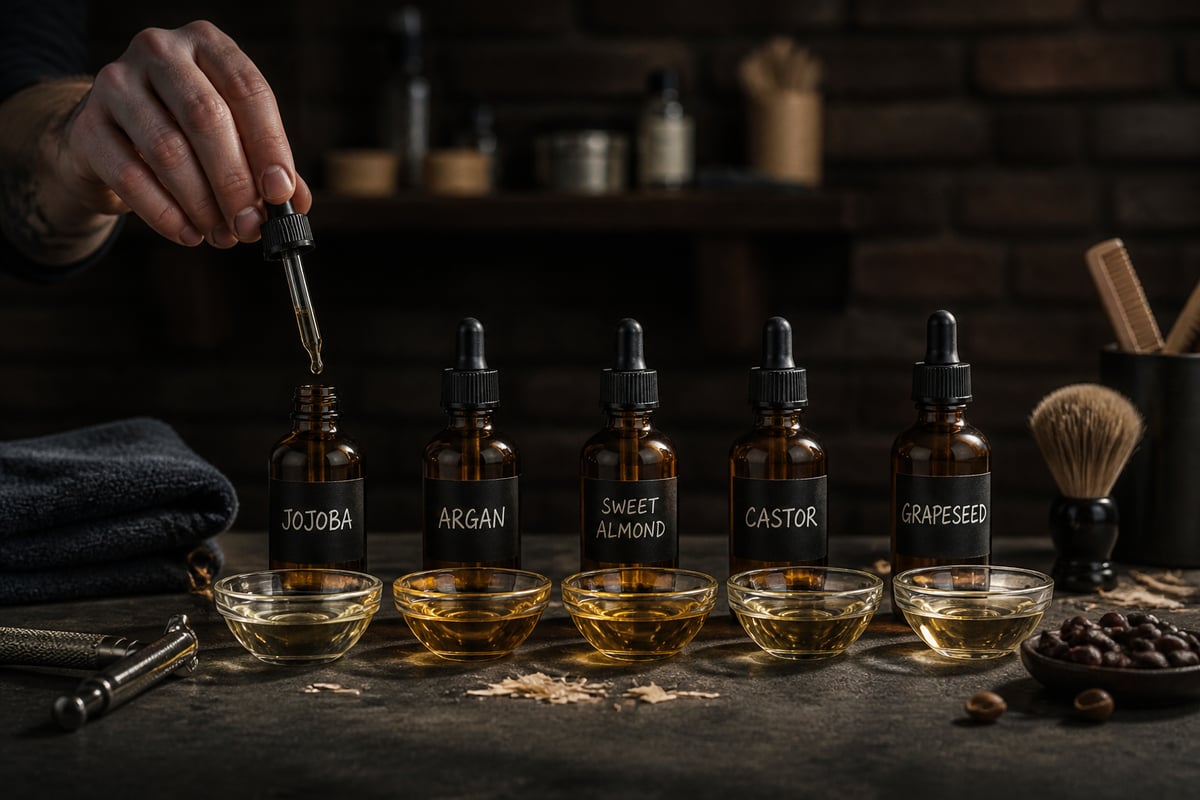
Jojoba is lighter and longer-lasting than most carrier oils, while heavier oils such as argan or castor offer different strengths, so the best choice depends on your skin and beard type.
| Oil | Texture | Main strength | Watch out for |
|---|---|---|---|
| Jojoba | Light, fast-absorbing | Mimics sebum, rarely clogs | Higher price |
| Argan | Medium | Vitamin E, softening | Can feel richer on fine hair |
| Castor | Thick, sticky | Strong conditioning | Heavy, clumps easily |
| Coconut | Solid at room temperature | Cheap, widely available | Can clog pores in some men |
Can I mix jojoba and argan oil?
Jojoba and argan oil can be combined, and many beard formulas already blend them. Jojoba brings the light, sebum-like base while argan adds vitamin E and extra softness, so a blend suits coarser beards that need more conditioning without a greasy finish.
For a deeper look at how jojoba sits inside a finished product, read Onesociety's guide to jojoba oil for beard.
How do you use jojoba oil for beard growth?
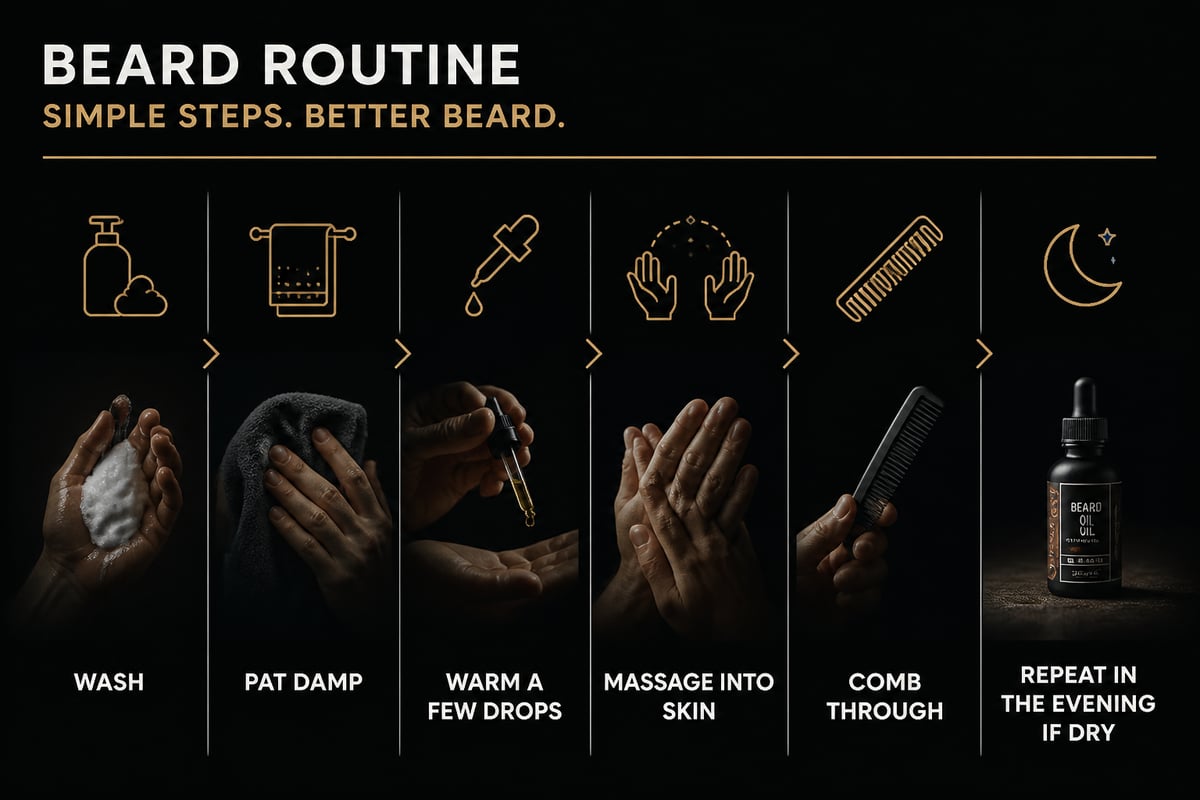
Apply a few drops of jojoba oil to a damp, freshly washed beard once or twice a day, working it through to the skin first and then along the length of the hair.
Follow this routine:
- Wash gently. The AAD advises washing the face and beard daily to remove dirt, oil, germs and dead skin cells.
- Pat dry until damp. Oil locks in moisture, so apply it while the hair still holds some water.
- Warm 3 to 5 drops in your palms. A short beard needs three; a long one may need six or seven.
- Massage into the skin. Use your fingertips in small circles for 30 seconds. This spreads oil to the follicle openings and wakes up the surface circulation.
- Comb through. A wide-toothed comb carries the oil to the tips and untangles knots without snapping hairs.
- Repeat in the evening if your beard feels dry.
Two extra habits help. During the stubble phase, the AAD suggests a moisturiser with SPF 30 or higher, and gentle exfoliation 1 to 2 times per week if you are prone to ingrown hairs. Both protect the skin your beard grows from.
Can I leave jojoba oil in my beard overnight?
Yes, you can leave jojoba oil in overnight, since it absorbs well and rarely clogs pores. Use a slightly larger amount if your skin is very dry, and expect to wash it out the next morning so residue does not build up.
How long does it take to see results?
Expect softer skin and less itch within one to two weeks, and visibly fewer broken hairs after four to six weeks of consistent use.
Beard hair grows slowly, so real progress takes time whatever you apply. This is where the popular "3-month rule" comes from, and it is worth answering directly.
What is the beard 3 month rule?
The beard 3 month rule says you should leave a beard completely untouched for three months before judging it or shaping it. Patchy areas often fill in as slower follicles catch up, and early itch and uneven length fade, so trimming too soon can make you quit on a beard that was still developing.
Use those three months to build the routine, not to wait idly. Washing, oiling and combing daily gives the beard its best chance of reaching full length unbroken.
When does jojoba oil alone stop being enough?
Jojoba oil alone stops being enough once your beard needs more than moisture, such as targeted follicle support, deep overnight recovery, a pH-balanced wash and a protective finish.
Oil can soften hair and ease itch, yet bare patches may remain because follicle density is set largely by genetics. Filling those gaps needs a broader approach: consistent washing, conditioning, nutrition and patience.
That is the problem the 90-Day Beard Challenge was built around. The kit packs eight formulas into one routine, including a Beard Booster for follicle support and blood flow, a Beard Butter for nightly recovery and deep hydration, a Hydro-Lock Beard Balm that shields hair from moisture loss, and a pH-balanced Beard Shampoo that cleans without stripping. Each step covers a gap that oil alone leaves open. Onesociety formulas use natural ingredients and are validated by CPSR chemists. The beard products are non-greasy and clear pores. The programme also carries a 90-day money-back guarantee for growth, so you can test the whole routine without gambling on a single bottle.
Not sure which step to start with? Onesociety's guide to the best beard products for growth explains how oils, balms and washes fit together.
Who should avoid jojoba oil, and when should you see a doctor?
Anyone with a known jojoba allergy should avoid it, and anyone with persistent redness, pus, scaling or sudden hair loss should see a doctor before adding any product.
Stop using the oil if you notice a rash, stinging or swelling. Patchy loss in smooth, round areas can signal alopecia barbae, an autoimmune condition that oil will not treat. A GP or dermatologist can examine the skin, run tests and advise on prescription options. Oil is a care product, so do not use it to cover a medical problem.
What mistakes should you avoid with jojoba oil for beard growth?
The most common mistakes are using too much, applying to a dry beard, expecting overnight results and skipping the cleansing and conditioning that make oil work.
- Drowning the beard. More drops do not mean more growth. Start with three and add only if the hair still feels dry.
- Oiling dirty skin. Oil on top of dead skin and grime traps the problem. Wash first.
- Quitting at week three. The first visible changes arrive around week four to six.
- Buying diluted oil. Check that the label lists jojoba as the main ingredient, not a footnote.
- Ignoring diet and sleep. Follicles need protein, iron, zinc and rest. Oil cannot replace them.
For a related ingredient that works alongside oils, see Onesociety's piece on biotin for beard growth.
FAQ
How often should I apply jojoba oil to my beard?
Apply it once or twice a day to a clean, slightly damp beard. Once in the morning suits most men; add an evening application if your beard feels rough or the skin feels tight.
Does jojoba oil clog pores under the beard?
Jojoba oil is generally considered unlikely to clog pores, because its wax esters closely resemble your skin's own sebum. If you are very acne-prone, use only a few drops and consider the AAD's advice to choose a beard conditioner instead.
Is jojoba oil better than minoxidil for beard growth?
No. Minoxidil is a medicine studied for hair regrowth, while jojoba oil is a moisturising care product with no evidence of stimulating new follicles. Speak to a doctor or pharmacist before using minoxidil on your face.
Tonight, wash your beard, pat it damp and work a few drops of jojoba oil through to the skin, then repeat daily for six weeks and judge the difference. If you want every step covered, from follicle support to overnight recovery, the 90-Day Beard Challenge bundles eight natural formulas into one routine, backed by a money-back guarantee for growth. Onesociety lets you accept the challenge and put the whole system to the test with the risk on their side.