

Walking into the grooming aisle presents a dilemma that confuses even seasoned beard enthusiasts: should you reach for a dedicated beard cleanser or just use your regular face wash on your facial hair? The "beard wash face wash" debate isn't merely marketing hype. Your facial skin beneath the beard and the hair itself have fundamentally different structures, pH requirements, and care needs. Using the wrong product can trigger dryness, irritation, or even compromise your beard's growth potential. This comprehensive guide examines the science behind both product categories, helping you make informed decisions about your grooming routine.
The Fundamental Differences Between Beard Hair and Facial Skin
Problem: Most people assume facial hair and scalp hair are identical, leading them to apply the same products indiscriminately.
Your beard hair differs structurally from the hair on your head. Facial hair grows thicker, coarser, and with a distinct curl pattern that creates unique challenges. The American Academy of Dermatology explains that beard hair emerges from follicles surrounded by sebaceous glands producing protective oils at different rates than scalp follicles.
Agitation: When you apply regular shampoo or harsh face wash to your beard, you strip these essential oils. This disruption causes:
- Brittle, wire-like facial hair that resists styling
- Increased itchiness and "beardruff" (beard dandruff)
- Skin irritation beneath the hair follicles
- Slower growth rates due to follicle stress
The pH Factor in Beard Wash Face Wash Products
The skin's acid mantle maintains a pH between 4.5 and 5.5. Research published in PMC demonstrates that cleansers with pH levels above 6.0 disrupt the skin barrier, altering the microbiome and increasing trans-epidermal water loss.
Traditional face washes often formulate for facial skin's specific pH requirements. Beard washes, conversely, must balance two competing needs: cleansing coarse hair whilst protecting the delicate skin beneath.
| Product Type | Typical pH Range | Primary Target | Common Surfactants |
|---|---|---|---|
| Face Wash | 5.0-6.5 | Facial skin, light oils | Glycerin, salicylic acid |
| Beard Wash | 4.5-5.5 | Coarse hair, sebum | Natural saponins, mild cleansers |
| Regular Shampoo | 6.0-7.0 | Scalp hair, heavy oils | Sulphates, strong detergents |
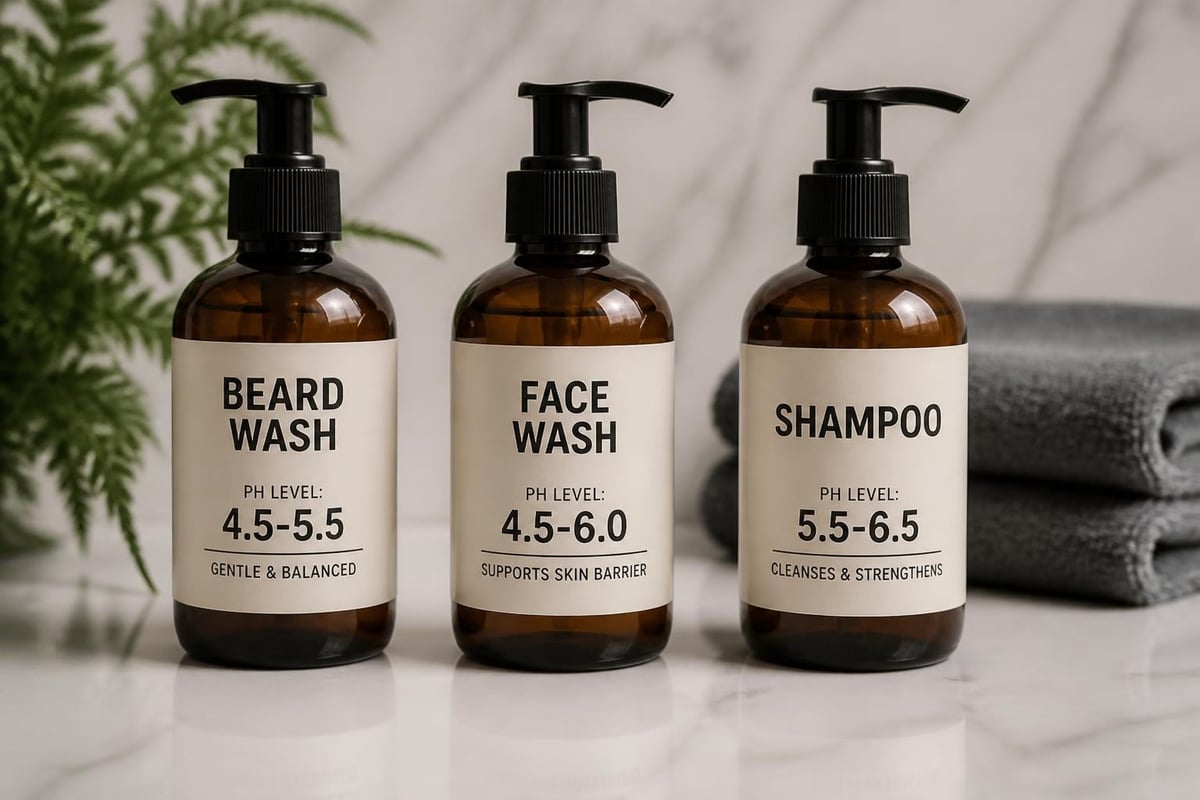
Solution: Choose products formulated specifically for the dual challenge of facial hair care. Quality beard washes contain mild surfactants derived from coconut oil or other plant sources that cleanse without stripping natural protective oils.
Why Standard Face Wash Fails Your Beard
Problem: Your morning face wash routine seems efficient-one product for your entire face, including the bearded areas. Yet your facial hair feels rough, and the skin underneath itches persistently.
Face washes target concerns like acne, oiliness, or anti-ageing. They contain active ingredients such as salicylic acid, benzoyl peroxide, or retinoids. According to Harvard Health Publishing, these formulations focus on skin cell turnover and oil control rather than hair shaft conditioning.
Agitation: When you apply these actives to bearded areas:
- Salicylic acid penetrates hair follicles but dries out the hair shaft
- Benzoyl peroxide bleaches beard pigment over time
- Retinoids increase photosensitivity in exposed facial hair
- Strong surfactants create tangling and matting
The ingredients that brighten your complexion simultaneously damage your beard's structural proteins. Your facial hair contains keratin chains held together by disulphide bonds. Harsh cleansers weaken these bonds, leading to split ends and breakage.
What Happens When You Use Only Beard Wash
Can beard wash replace your face wash entirely? Not quite. Beard-specific cleansers formulate with conditioning agents like shea butter, jojoba oil, or argan oil. These ingredients soften coarse hair but may leave facial skin feeling heavy or potentially clog pores if you're acne-prone.
The dual-product approach works best for most individuals:
- Morning: Gentle face wash on clean-shaven areas
- Evening: Beard wash on facial hair zones
- 2-3 times weekly: Deep cleanse with beard wash
The Science Behind Effective Beard Cleansing
Problem: Your beard feels greasy by midday, yet washing it more frequently makes it dry and brittle.
A 2023 comprehensive review in PubMed examined beard anatomy and care recommendations. The study confirmed that facial hair requires specific washing frequencies based on length, density, and individual sebum production rates.
Agitation: Over-washing strips protective sebum faster than your glands can replenish it. Under-washing allows:
- Dead skin cell accumulation
- Bacterial overgrowth leading to folliculitis
- Odour-causing microbe proliferation
- Reduced product absorption
The Ideal Beard Wash Face Wash Routine
Your beard's length dictates washing frequency. Short stubble (1-2 weeks growth) tolerates daily washing because sebum distributes quickly over shorter hair shafts. Medium to long beards (1-3 months) require less frequent cleansing-typically 2-3 times weekly-to maintain oil balance.
Morning routine for bearded individuals:
- Rinse face with lukewarm water
- Apply gentle face wash to clean-shaven areas only
- Rinse thoroughly
- Pat dry with clean towel
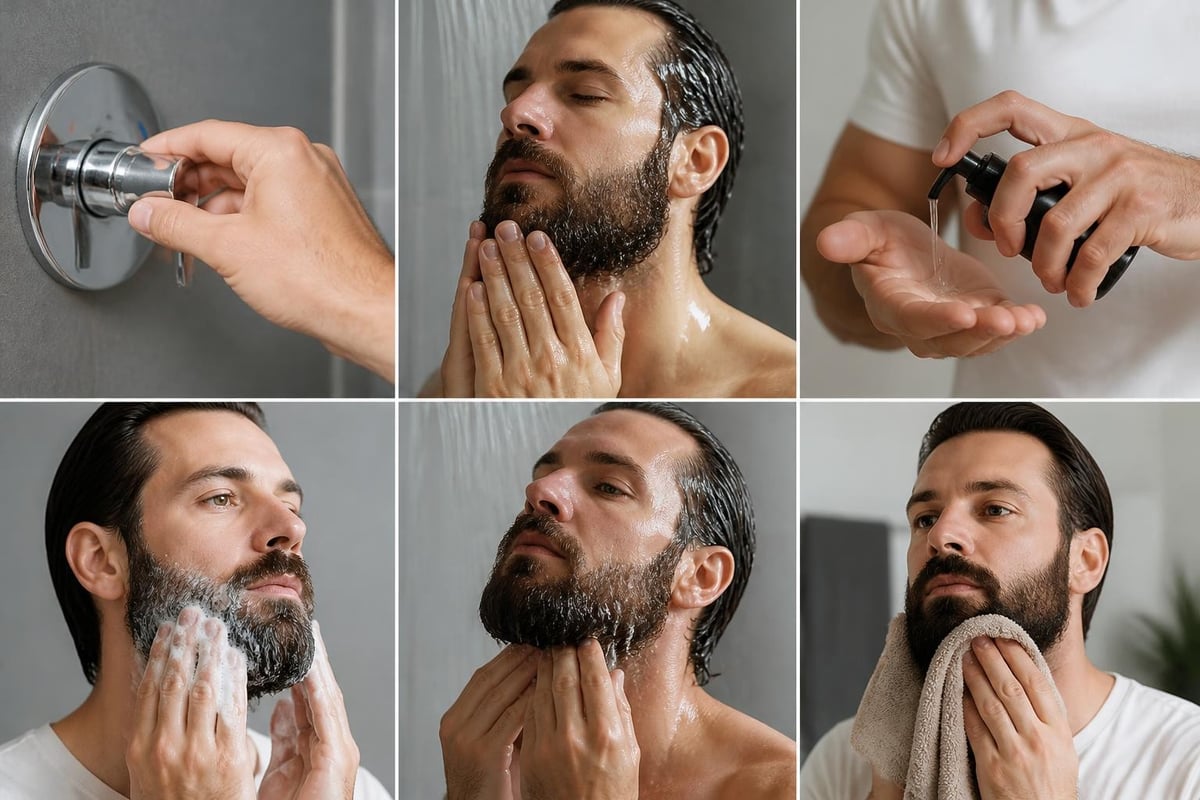
Evening beard wash routine:
- Wet beard completely with warm water
- Dispense beard wash into palm (amount varies by beard length)
- Work product from roots to tips using fingertips
- Massage into skin beneath the beard for 30-60 seconds
- Rinse thoroughly until water runs clear
- Gently squeeze excess water (never rub vigorously)
- Apply beard oil or balm to damp hair
Ingredient Analysis: What to Seek and Avoid
Problem: Product labels contain dozens of ingredients with complex chemical names. How do you identify beneficial components versus harmful additives?
Agitation: Many conventional products contain sulphates (sodium lauryl sulphate, sodium laureth sulphate) that create satisfying lather but cause significant damage. These surfactants:
- Strip natural oils excessively
- Disrupt skin pH balance
- Cause protein denaturation in hair shafts
- Trigger contact dermatitis in sensitive individuals
Beneficial Ingredients in Quality Beard Wash Face Wash Products
| Ingredient | Function | Benefit |
|---|---|---|
| Coconut-derived surfactants | Gentle cleansing | Removes dirt without stripping oils |
| Aloe vera extract | Hydration | Soothes skin, reduces inflammation |
| Tea tree oil | Antimicrobial | Controls bacteria, prevents folliculitis |
| Jojoba oil | Conditioning | Mimics natural sebum structure |
| Shea butter | Emollient | Softens coarse hair, strengthens shaft |
| Vitamin E | Antioxidant | Protects against oxidative stress |
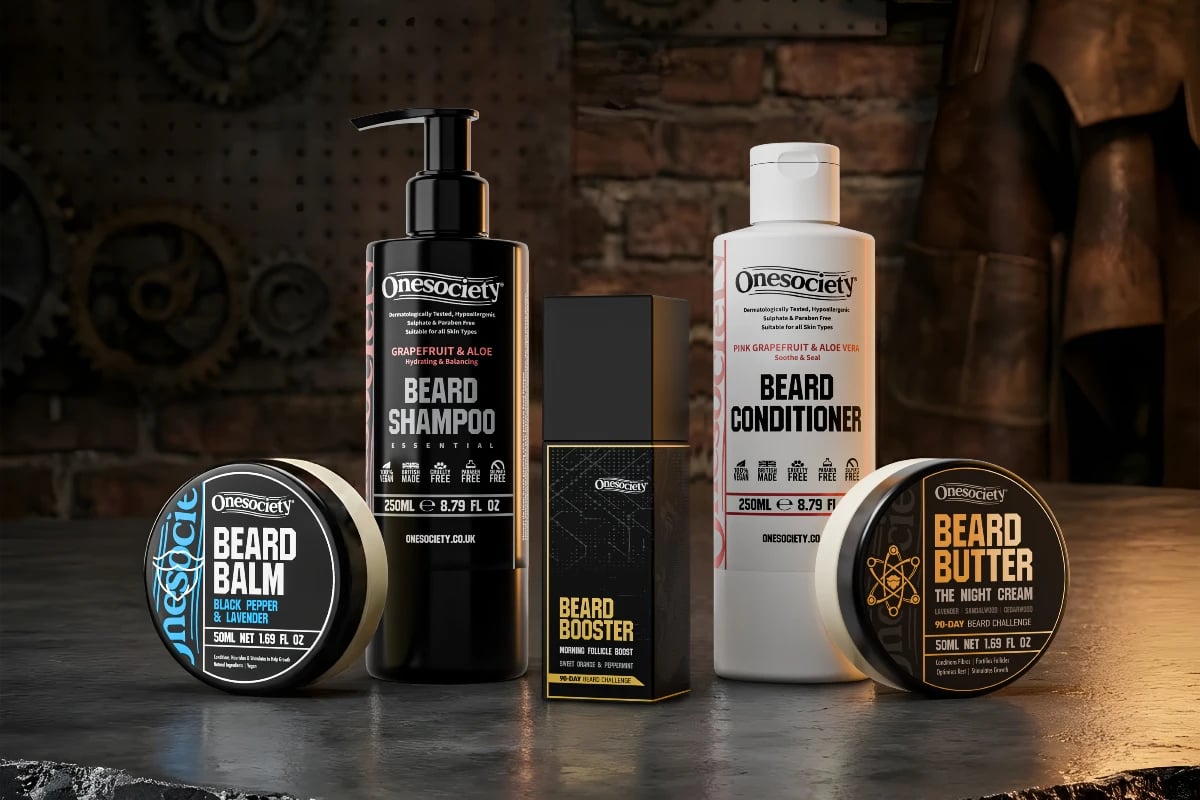
Solution: The Onesociety approach demonstrates how natural ingredients deliver results. Their beard care range eliminates sulphates, parabens, and synthetic fragrances, instead relying on plant-derived actives backed by research.
For those committed to transformative results, the 90-Day Beard Challenge provides a complete system including pH-balanced beard shampoo formulated specifically for facial hair's unique needs. This comprehensive kit addresses cleansing, conditioning, and growth optimisation through scientifically selected natural ingredients.
Common Mistakes in the Beard Wash Face Wash Debate
Problem: Even with quality products, improper technique undermines results.
Temperature Troubles
Hot water feels invigorating but damages both facial skin and beard hair. Temperatures above 38°C (100°F) strip protective oils aggressively and weaken hair cuticles. The AAD's face-washing guidance recommends lukewarm water for all facial cleansing.
Agitation: Scalding showers create a vicious cycle:
- Hot water opens cuticles and strips oils
- Skin overcompensates by producing excess sebum
- You wash more frequently to combat oiliness
- Increased washing further damages the skin barrier
- Irritation and sensitivity intensify
The Scrubbing Myth
Vigorous scrubbing doesn't improve cleansing effectiveness. Harsh mechanical action:
- Causes micro-tears in facial skin
- Tangles beard hair, leading to breakage
- Irritates follicles, triggering inflammation
- Disrupts the skin's protective barrier
Solution: Use gentle, circular motions with fingertip pads. Allow the product's chemistry to do the work rather than relying on physical force.
Tailoring Your Approach to Beard Length and Skin Type
Problem: Generic advice fails because individual factors vary dramatically.
Your skin type, beard characteristics, and environmental conditions all influence the optimal beard wash face wash strategy.
Short Beard (1-4 Weeks Growth)
- Frequency: Daily cleansing acceptable
- Product choice: Lighter beard wash or gentle face wash
- Key concern: Preventing ingrown hairs and irritation
During early growth stages, you can use quality face wash on the entire face if the product contains mild surfactants. Look for formulations free from harsh actives that might irritate emerging follicles.
Medium Beard (1-3 Months Growth)
- Frequency: 3-4 times weekly with beard wash
- Product choice: Dedicated beard cleanser with conditioning agents
- Key concern: Managing the awkward phase and maintaining softness
This length marks the transition point where dedicated beard products become essential. Your face wash no longer reaches the skin adequately, and beard-specific formulations deliver better results.
Long Beard (3+ Months Growth)
- Frequency: 2-3 times weekly with beard wash
- Product choice: Moisturising beard cleanser, potentially co-washing
- Key concern: Preventing dryness whilst maintaining cleanliness
Extended beard lengths require minimal washing frequency. Some enthusiasts adopt "co-washing" (using conditioner only) between proper washes to maintain moisture whilst removing light debris.

The Co-Washing Alternative
Problem: Traditional cleansing methods leave your long beard feeling dry despite using quality products.
Co-washing originated in the curly hair community, where frequent shampooing causes excessive dryness. The technique uses cleansing conditioners-products containing mild surfactants blended with conditioning agents.
Agitation: Long beards share characteristics with curly hair:
- Sebum struggles to travel down coarse, curved hair shafts
- Ends remain perpetually dry whilst roots get oily
- Traditional cleansing exacerbates moisture imbalance
How Co-Washing Works for Beards
Cleansing conditioners contain quaternary ammonium compounds that provide mild cleansing action whilst depositing conditioning agents. This approach:
- Removes daily grime and light oils
- Deposits moisturising ingredients simultaneously
- Maintains the acid mantle's optimal pH
- Preserves natural protective oils
Solution: Alternate between proper beard washes and co-washing sessions. Use dedicated beard wash 1-2 times weekly for deep cleansing, then co-wash on other days when you need refreshing without stripping.
Environmental Factors Affecting Your Beard Wash Face Wash Routine
Problem: Your beard care routine worked perfectly until you moved cities or seasons changed dramatically.
Hard Water Challenges
Mineral-rich water creates stubborn residue on facial hair. Calcium and magnesium ions bind with surfactants, reducing cleansing effectiveness and leaving deposits that:
- Create dull, lacklustre appearance
- Increase tangles and knots
- Prevent product absorption
- Trigger scalp irritation
Solution: Install a shower filter or use chelating treatments monthly. Apple cider vinegar rinses (diluted 1:4 with water) remove mineral buildup effectively.
Climate Considerations
| Climate Type | Primary Challenge | Routine Adjustment |
|---|---|---|
| Cold/Dry | Moisture loss, static | Reduce wash frequency, increase conditioning |
| Hot/Humid | Excess oil, bacterial growth | Maintain regular washing, lighter products |
| Polluted Urban | Particulate buildup | More frequent cleansing, antioxidant products |
| Coastal/Salty | Salt residue, dryness | Rinse daily, deep condition weekly |
Building Your Personalised Routine
Problem: Conflicting advice leaves you uncertain about which approach suits your specific situation.
Agitation: Following generic routines leads to:
- Wasted money on unsuitable products
- Frustration when results don't match expectations
- Potential damage from incompatible product combinations
Solution: Construct your routine systematically:
Step 1: Assess Your Baseline
- Beard length: Short/medium/long
- Skin type: Oily/combination/dry/sensitive
- Water hardness: Soft/moderate/hard
- Climate: Cold/temperate/hot, dry/humid
Step 2: Select Core Products
Choose one dedicated beard wash and one face wash. Test each for 2-3 weeks before adding additional products. Quality matters more than quantity. Explore the Onesociety blog for detailed guidance on selecting formulations matched to your needs.
Step 3: Establish Frequency
Start conservatively with less frequent washing. You can always increase frequency if needed, but recovering from over-washing takes weeks.
Step 4: Monitor and Adjust
Track these indicators:
- Skin comfort (tightness, itching, irritation)
- Beard texture (softness, manageability)
- Appearance (shine, colour vibrancy)
- Growth quality (thickness, fill patterns)
Adjust your routine every 2-3 weeks based on these observations rather than making daily changes.
The Future of Beard Wash Face Wash Technology
Innovation in grooming science continues advancing. Emerging technologies in 2026 include:
Microbiome-Friendly Formulations
Products designed to preserve beneficial skin bacteria whilst removing harmful microbes. These formulations use selective antimicrobials that target problem-causing species without disrupting the entire microbial ecosystem.
pH-Adaptive Cleansers
Smart surfactants that adjust their cleansing strength based on the substrate's pH. These ingredients cleanse oil-heavy areas more aggressively whilst treating dry zones gently-all within a single product.
Bioactive Peptides
Short amino acid chains that signal follicles to optimize growth cycles. Unlike harsh stimulants, peptides work with your body's natural processes to enhance beard density and growth rate.
Making the Switch: Transition Strategies
Problem: You've used regular shampoo or face wash on your beard for years. Switching products suddenly causes unexpected issues.
Agitation: Your scalp and facial skin have adapted to your current routine. Abrupt changes trigger:
- Temporary increased oiliness (rebound sebum production)
- Adjustment period discomfort
- Initial product buildup or dryness
Solution: Transition gradually over 2-3 weeks:
Week 1: Alternate between old and new products Week 2: Use new products primarily, old products occasionally Week 3: Switch completely to new routine
This gradual approach allows your skin's sebaceous glands to recalibrate oil production rates without dramatic swings.
Product Layering and Compatibility
Understanding how beard wash, face wash, and other grooming products interact prevents common problems.
Morning layering sequence:
- Face wash (clean-shaven areas)
- Beard oil or leave-in conditioner (damp beard)
- Facial moisturiser (avoiding bearded areas)
- Styling products (beard balm, moustache wax)
Evening sequence:
- Beard wash (2-3 times weekly)
- Beard conditioner (rinse-out type)
- Towel dry gently
- Beard butter or intensive treatment oil
Never apply facial moisturiser directly to beard hair. These products formulate for skin absorption and may clog facial hair or create greasy buildup.
The beard wash face wash distinction matters because facial hair and facial skin demand different care approaches. Understanding pH levels, ingredient selection, washing frequency, and proper technique transforms your grooming results from adequate to exceptional. Whether you're navigating early stubble or cultivating a lengthy beard, choosing formulations designed for your specific needs protects both hair health and skin integrity. Onesociety combines 100% natural ingredients with scientific research to deliver products that address these unique requirements, helping you achieve the healthy, well-maintained beard you've worked to grow.