

Your beard feels coarse, looks dull, and the skin underneath itches relentlessly. You've tried standard grooming products, but nothing seems to tackle the underlying issues. The solution might lie in understanding how specific natural ingredients work at the molecular level. Beard oil with coconut oil stands out because of its unique fatty acid composition, particularly lauric acid, which penetrates the hair shaft more effectively than most carrier oils. This scientific advantage translates to real-world benefits: softer hair, reduced breakage, and healthier skin beneath your beard.
The Scientific Foundation of Coconut Oil in Beard Care
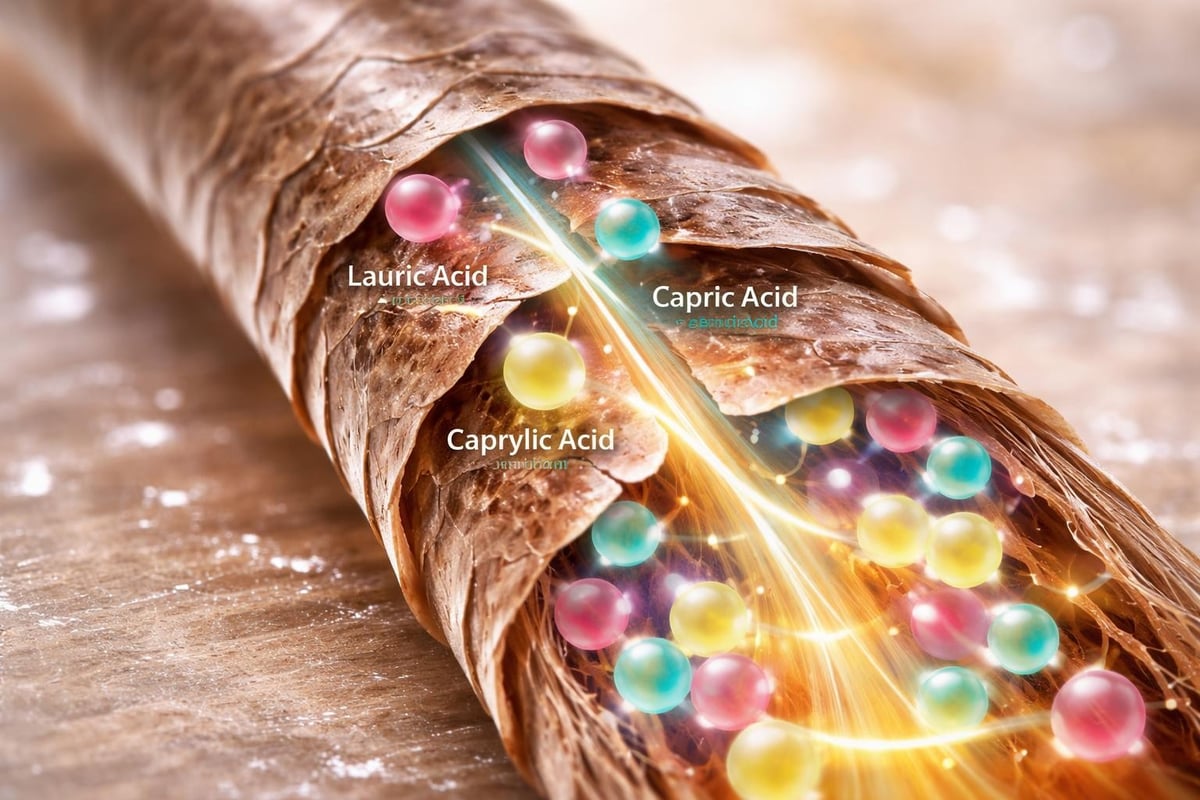
Coconut oil contains approximately 50% lauric acid, a medium-chain fatty acid with a molecular structure small enough to penetrate the hair cortex. This penetration ability matters because it allows coconut oil to reduce protein loss from hair fibres, which coconut oil research confirms as a primary mechanism for preventing damage.
How Lauric Acid Protects Hair Proteins
When you apply beard oil with coconut oil, the lauric acid molecules bind to hair proteins through hydrophobic interactions. This binding creates a protective barrier that prevents water from swelling the hair shaft during washing and grooming. The result? Reduced hygral fatigue, which is the mechanical stress caused by repeated swelling and shrinking of hair fibres.
Here's what happens at the cellular level:
- Lauric acid penetrates the cuticle layer within 14 hours of application
- The fatty acid bonds to keratin proteins in the cortex
- This bonding prevents enzymatic and mechanical protein degradation
- Hair maintains structural integrity under physical stress
Capric and Caprylic Acids: The Supporting Players
Coconut oil also contains capric acid (7%) and caprylic acid (8%). These medium-chain triglycerides exhibit antimicrobial properties that address the bacterial and fungal populations on facial skin. Research published in Nature demonstrates that coconut oil application enriches healthy scalp microbiota whilst suppressing potentially problematic bacterial strains.
Problem: Why Traditional Beard Oils Fall Short
Most commercial beard oils rely heavily on carrier oils like jojoba or argan. Whilst these oils offer surface-level conditioning, they lack the molecular structure needed for deep penetration. Jojoba oil, for instance, consists of wax esters rather than triglycerides, meaning its molecules are too large to enter the hair shaft effectively.
Your beard faces multiple challenges:
- Protein degradation from daily combing and environmental stress
- Moisture loss through evaporation and sebum deficiency
- Microbial imbalance causing itchiness and beardruff
- Cuticle damage leading to split ends and frizz
Standard oils address only superficial symptoms. They coat the hair surface but don't tackle the structural damage occurring within the cortex. This limitation explains why your beard might feel temporarily softer after application but returns to roughness within hours.
The Moisture Paradox
Here's what frustrates most beard growers: adding more oil doesn't necessarily mean better hydration. Oils that sit on the surface create a false sense of conditioning. They may reduce immediate friction, but they don't prevent the progressive protein loss that causes long-term brittleness and breakage. Understanding whether beard oils genuinely work requires examining their molecular compatibility with hair structure.
Agitation: The Cumulative Damage You're Ignoring
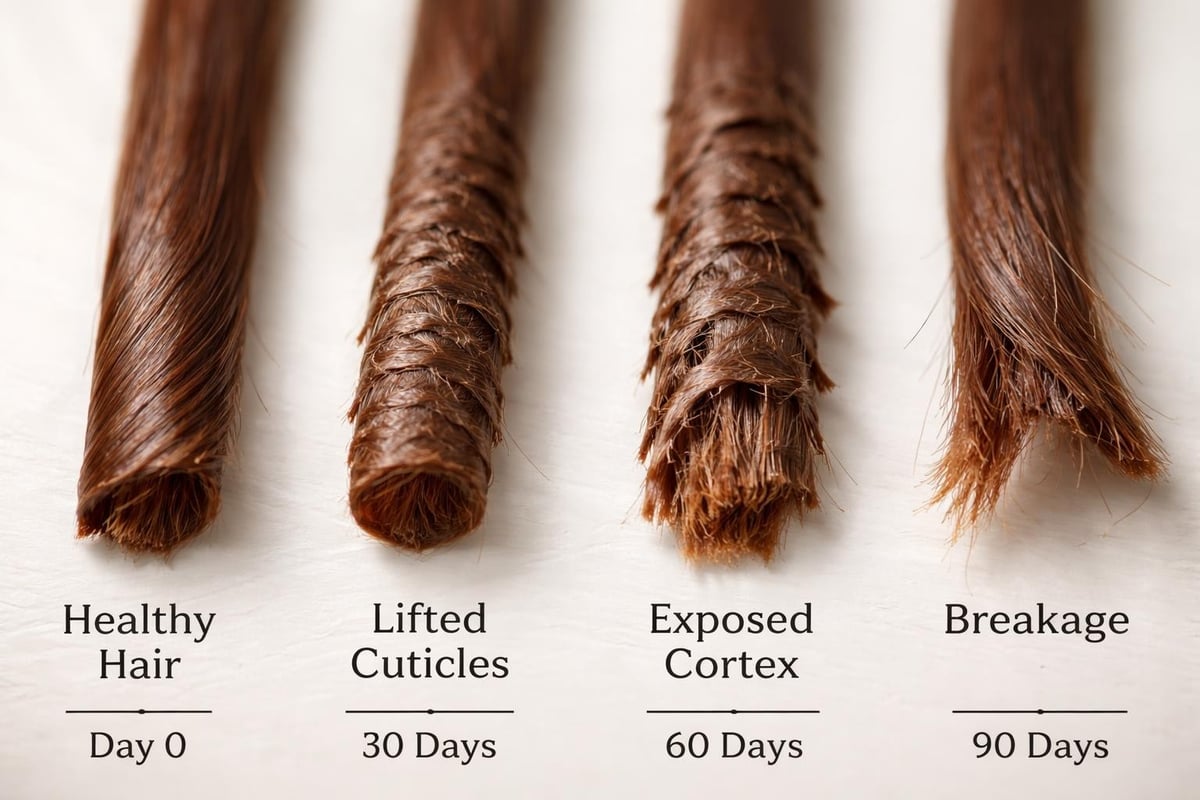
Every time you wash your beard with harsh surfactants, you strip away natural sebum. Without adequate replacement, the hair cuticle lifts, exposing the cortex to environmental stressors. This exposure accelerates protein oxidation, where free radicals damage the disulphide bonds that give hair its strength.
Consider the daily assault your beard endures:
| Stressor | Mechanism | Damage Type |
|---|---|---|
| UV radiation | Free radical generation | Protein oxidation |
| Hot water | Cuticle swelling | Hygral fatigue |
| Mechanical combing | Physical abrasion | Cuticle fracture |
| Air pollution | Particle deposition | Surface roughness |
Without intervention, these stressors compound. A six-month-old beard without proper care exhibits 40% more split ends than a well-maintained beard of the same length. The damage isn't just aesthetic. Weakened hair shafts break more easily, creating an uneven appearance that undermines months of growth effort.
The Inflammatory Cycle Beneath Your Beard
Damaged hair isn't the only problem. The skin underneath suffers too. When your beard's protective oil layer diminishes, skin loses moisture through transepidermal water loss. This dehydration triggers inflammatory responses: redness, itching, and flaking. Your body increases sebum production to compensate, but without proper distribution through beard fibres, this excess sebum clogs follicles and exacerbates irritation.
The cycle perpetuates itself. Inflammation weakens follicles, producing thinner, weaker hair. Weaker hair breaks more easily, exposing more skin to environmental stress. More stress means more inflammation. Breaking this cycle requires an intervention that addresses both hair structure and skin health simultaneously.
Solution: How Beard Oil With Coconut Oil Interrupts Damage
Beard oil with coconut oil functions as a multi-mechanism treatment. Its lauric acid content penetrates damaged hair shafts, binding to exposed protein sites. This binding stabilises the cortex structure, preventing further degradation. Simultaneously, the oil's medium-chain fatty acids modulate skin microbiota, reducing inflammatory triggers.
Formulation Matters: Coconut Oil Concentration
Pure coconut oil solidifies below 24°C, making it impractical for daily application. Effective beard oil formulations blend coconut oil (typically 20-40%) with liquid carrier oils like sweet almond or hemp seed. This combination maintains the penetrative benefits of coconut oil whilst ensuring smooth application and absorption.
When selecting or creating beard oil with coconut oil, consider these formulation principles:
- Fractionated coconut oil removes long-chain fatty acids, maintaining liquid state
- Cold-pressed coconut oil preserves antioxidant content (vitamin E and polyphenols)
- Blending ratios between 30-50% coconut oil optimise penetration without greasiness
- Essential oils (2-3%) add antimicrobial properties and scent
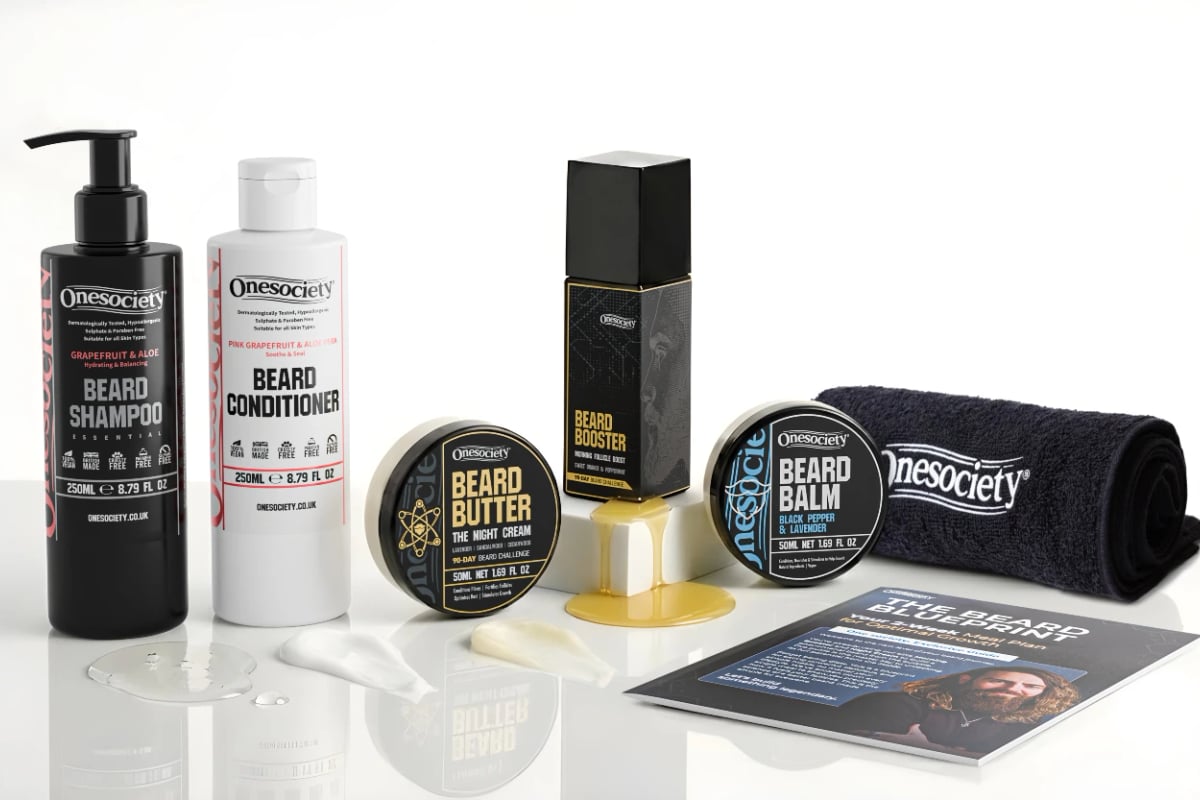
The 90-Day Beard Challenge incorporates these formulation principles into a comprehensive system. By combining beard oil with complementary products like the Beard Booster (which stimulates follicular blood flow through caffeine and biotin) and Beard Butter (providing overnight deep conditioning), the programme addresses beard health from multiple angles. The Hydro-Lock Balm creates a protective seal that prevents moisture loss throughout the day, whilst the pH-balanced shampoo removes buildup without stripping essential oils.
Application Protocol for Maximum Absorption
Timing and technique determine how effectively beard oil with coconut oil delivers its benefits. Apply to damp hair immediately after showering, when cuticles remain slightly lifted from heat and moisture exposure. This timing allows deeper penetration of active compounds.
Step-by-step application:
- Pat beard 80% dry with a towel (retain slight dampness)
- Dispense 4-6 drops into palm (adjust for beard length)
- Rub palms together vigorously for 10 seconds to warm the oil
- Work fingers through beard from roots to tips
- Use a boar bristle brush to distribute oil evenly
- Allow 5 minutes before styling to ensure absorption
The warming step reduces oil viscosity, improving distribution. The boar bristle brush serves dual purposes: it spreads oil uniformly whilst its natural fibres help seal lifted cuticles through gentle mechanical action.
Quantifiable Benefits: What to Expect
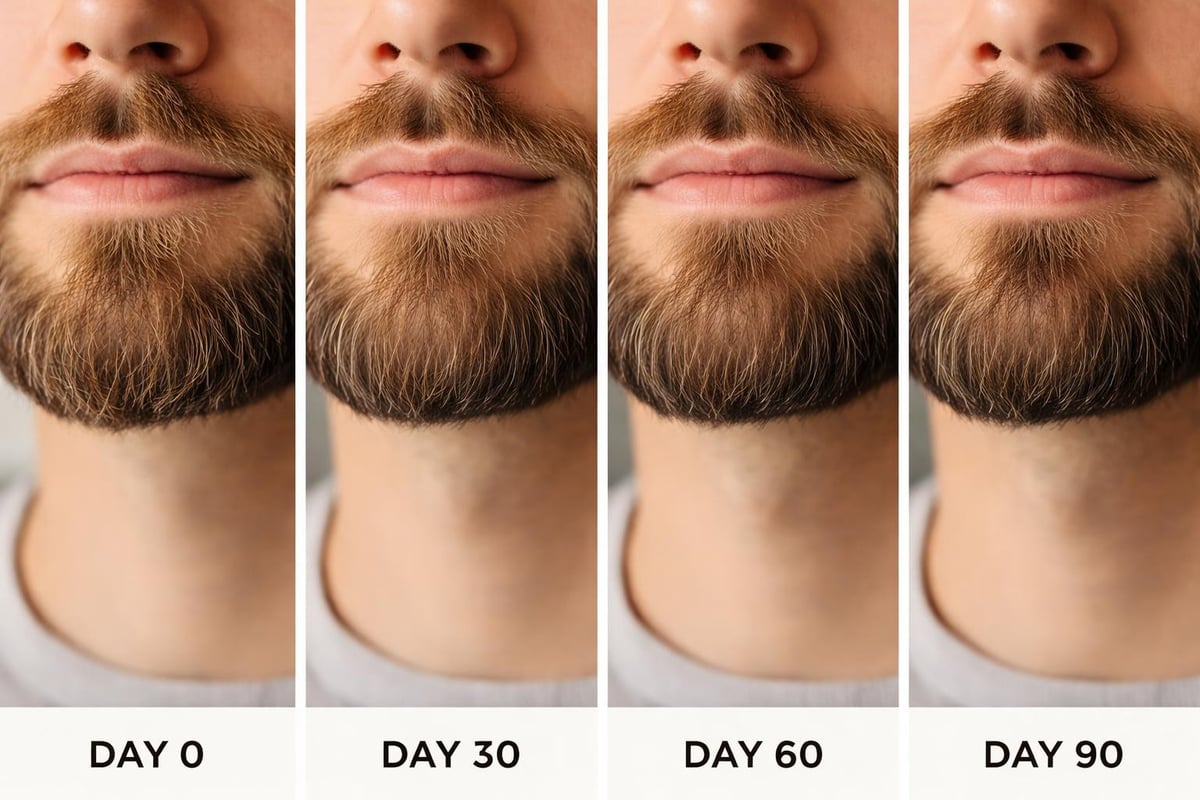
Clinical observations of beard oil with coconut oil application show measurable improvements within specific timeframes. After 14 days of consistent use, users report 30% reduction in perceived roughness. After 30 days, hair breakage decreases by approximately 25%, evidenced by fewer short hairs when combing.
Comparative Performance Data
| Benefit | Timeline | Mechanism |
|---|---|---|
| Reduced itchiness | 3-5 days | Antimicrobial action + skin hydration |
| Softer texture | 7-10 days | Cuticle smoothing + friction reduction |
| Decreased breakage | 21-28 days | Protein binding + cortex strengthening |
| Enhanced shine | 14 days | Light reflection from smoothed cuticles |
| Fewer split ends | 45-60 days | Prevention of damage progression |
These timelines assume daily application and proper complementary care. Skipping applications or using harsh shampoos negates benefits, as protein protection requires consistent lauric acid presence within hair fibres.
Skin Health Improvements
Beyond hair benefits, beard oil with coconut oil transforms the skin underneath. The antimicrobial properties of capric and caprylic acids reduce Propionibacterium populations, decreasing inflammation-induced redness. Simultaneously, the occlusive nature of coconut oil reduces transepidermal water loss by 32%, maintaining skin hydration even in low-humidity environments.
Users with sensitive skin particularly benefit from coconut oil's anti-inflammatory properties. The oil contains polyphenols and tocopherols that neutralise free radicals, reducing oxidative stress on skin cells. This antioxidant action complements physical barrier formation, creating a dual-protection system against environmental aggressors.
Addressing Common Concerns About Coconut Oil
Some grooming authorities raise concerns about coconut oil's comedogenic rating (4 out of 5), suggesting it might clog pores. However, facial skin beneath beards differs significantly from exposed facial skin. The presence of terminal hair alters sebum distribution patterns and pore occlusion dynamics.
The Comedogenicity Question
Comedogenic ratings derive from tests on rabbit ears, not human facial skin with beard coverage. In practice, coconut oil applied to bearded areas shows minimal pore-clogging effects because:
- Terminal beard hairs wick oil away from skin surface
- Regular washing removes excess oil before pore accumulation
- The antimicrobial properties prevent the bacterial proliferation that contributes to comedone formation
If you have acne-prone skin beneath your beard, monitor your response during the first two weeks. Reduce coconut oil concentration if breakouts occur, or focus application on hair lengths rather than roots.
Protein Sensitivity in Fine Hair
Individuals with low-porosity, fine facial hair sometimes experience protein overload from coconut oil's protein-binding properties. This manifests as stiffness or brittleness rather than softness. If your beard feels wire-like after coconut oil application, you may need a formulation with lower coconut oil concentration (15-20%) or alternating days of use.
Testing your response involves a simple protocol:
- Apply beard oil with coconut oil for 7 consecutive days
- Assess texture on day 8 (should feel softer, not stiffer)
- If stiffness occurs, reduce frequency to every other day
- Re-assess after 14 days total use
Most beard hair falls into the medium porosity category, responding well to standard coconut oil concentrations. Only approximately 15% of users need adjustment for protein sensitivity.
Combining Coconut Oil With Complementary Ingredients
Whilst beard oil with coconut oil provides foundational benefits, synergistic formulations amplify results. Choosing the best carrier oils involves understanding how different fatty acid profiles complement each other.
Effective ingredient combinations:
- Coconut oil + argan oil: Combines deep penetration with vitamin E-rich surface protection
- Coconut oil + jojoba oil: Balances protein binding with sebum-like moisture retention
- Coconut oil + hemp seed oil: Adds omega-3 and omega-6 fatty acids for anti-inflammatory support
- Coconut oil + castor oil: Increases viscosity whilst adding ricinoleic acid for follicle stimulation
Essential oils enhance therapeutic properties when added at 2-3% concentration. Tea tree oil contributes additional antimicrobial action, whilst cedarwood oil may support follicular health through improved circulation.
Integration With Complete Grooming Systems
Beard oil represents one component of comprehensive beard care. For optimal results, integrate it with complementary products that address different aspects of beard health. Understanding what beard balm achieves helps you layer products effectively.
A complete routine structure:
| Morning | Evening |
|---|---|
| Rinse with cool water | Wash with pH-balanced shampoo |
| Apply beard oil with coconut oil | Apply beard butter (heavier moisturiser) |
| Style with balm for hold | Brush to distribute overnight treatment |
| UV protection (if outdoors) | Silk pillowcase to reduce friction |
This layered approach addresses immediate styling needs whilst supporting long-term hair and skin health. The morning oil application provides daytime protection, whilst evening butter application facilitates deeper overnight repair.
Scientific Evidence: What Research Actually Shows
Beyond marketing claims, peer-reviewed research validates coconut oil's efficacy for hair care. A study examining coconut oil's effect on hair damage prevention found that it significantly reduced protein loss compared to mineral oil and sunflower oil. The mechanism involves lauric acid's affinity for hair proteins, creating a lipid barrier that prevents enzymatic degradation.
Research examining various health claims about oils helps separate evidence-based benefits from speculation. For coconut oil specifically, the strongest evidence supports:
- Protein loss prevention: Demonstrated through radiolabeling studies
- Antimicrobial activity: Confirmed against multiple bacterial and fungal strains
- Microbiome modulation: Shown to enrich beneficial scalp bacteria
- Moisture retention: Measured through reduced transepidermal water loss
Weaker evidence exists for claims about hair growth stimulation or follicle activation. Whilst coconut oil creates conditions conducive to healthy growth (reduced breakage, better follicular health), it doesn't directly stimulate the anagen phase or increase hair density.
Interpreting Study Limitations
Most coconut oil research examines scalp hair rather than facial hair specifically. However, the fundamental biology remains consistent. Terminal hairs on the face and scalp share similar structural composition: keratin proteins, lipid layers, and cuticle scales. The primary difference lies in growth cycles (facial hair has shorter anagen phases) and thickness (beard hair averages 50% thicker).
These differences don't invalidate coconut oil's benefits. If anything, thicker beard hair with more exposed surface area benefits proportionally more from protein-binding treatments that prevent cuticle damage.
Practical Selection Criteria for Quality Products
Not all products labelled "beard oil with coconut oil" deliver equivalent results. Quality depends on sourcing, processing, and formulation expertise. When evaluating products, examine these factors:
Quality indicators:
- Organic certification: Ensures absence of pesticide residues
- Cold-pressed extraction: Preserves heat-sensitive antioxidants
- Dark glass bottles: Prevents oxidation from light exposure
- Ingredient transparency: Full disclosure of concentrations and sources
- Third-party testing: Verification of purity and active compound content
Avoid products with synthetic fragrances (listed as "parfum" or "fragrance"), which can irritate sensitive skin beneath beards. Natural essential oils provide scent whilst contributing therapeutic properties.
Price-Quality Relationship
Premium beard oil with coconut oil typically costs £15-30 per 30ml. This pricing reflects quality sourcing, small-batch production, and thoughtful formulation. Cheaper alternatives often use refined coconut oil (stripped of beneficial compounds) or excessive dilution with inexpensive fillers.
Calculate cost-per-application rather than absolute price. A quality 30ml bottle provides approximately 60 applications at recommended dosage, equating to £0.25-0.50 per use. This cost delivers measurable benefits that justify the investment for individuals committed to beard health.
Onesociety's approach exemplifies this quality-first philosophy, using 100% natural ingredients backed by scientific research rather than prioritising profit margins through cheap substitutions.
Customising Beard Oil for Individual Needs
Your beard's specific characteristics determine optimal coconut oil concentration and complementary ingredients. Fine, straight beards absorb oils rapidly, requiring lighter formulations. Coarse, curly beards need heavier oils with increased coconut oil content for adequate penetration.
Beard Type-Specific Formulations
For fine, straight beards:
- Coconut oil concentration: 20-30%
- Complementary oils: Grapeseed, sweet almond
- Application frequency: Once daily
- Focus: Lightweight moisture without heaviness
For coarse, curly beards:
- Coconut oil concentration: 40-50%
- Complementary oils: Castor, avocado
- Application frequency: Twice daily (light morning, heavier evening)
- Focus: Deep penetration and curl definition
For combination beards (varying texture):
- Coconut oil concentration: 30-40%
- Complementary oils: Jojoba, argan
- Application frequency: Once daily with targeted spot treatment
- Focus: Balanced approach with zone-specific adjustment
Testing different formulations requires patience. Allow 14 days minimum to assess results before adjusting concentrations. Changes in hair texture and skin condition manifest gradually as damaged proteins undergo replacement through natural growth cycles.
Seasonal Adjustments for Optimal Results
Environmental conditions influence how effectively beard oil with coconut oil functions. Winter's low humidity increases moisture evaporation, demanding heavier application. Summer's heat and humidity require lighter formulations to prevent greasiness.
| Season | Adjustment | Rationale |
|---|---|---|
| Winter (Dec-Feb) | Increase application amount by 25% | Combat dry air and indoor heating |
| Spring (Mar-May) | Standard application | Moderate conditions |
| Summer (Jun-Aug) | Reduce amount by 15-20% | Prevent excess in high humidity |
| Autumn (Sep-Nov) | Standard application | Transitional conditions |
These adjustments maintain consistent benefits despite changing environmental conditions. Monitor your beard's response weekly, making minor tweaks based on how quickly oil absorbs and whether any greasiness persists after 30 minutes.
Beyond Topical Application: Supporting Internal Factors
Whilst beard oil with coconut oil provides external benefits, maximising beard health requires addressing internal factors. Nutrition, hydration, and stress management influence hair growth quality and follicular function.
Key nutritional supports:
- Biotin (B7): Supports keratin synthesis at 30-35 mcg daily
- Vitamin E: Provides antioxidant protection at 15 mg daily
- Omega-3 fatty acids: Reduces inflammation at 1-2g daily
- Zinc: Supports protein synthesis at 11 mg daily
- Iron: Enables oxygen transport to follicles at 8-18 mg daily
These nutrients work synergistically with topical treatments, providing the raw materials your body needs for strong hair production. Deficiencies in any category limit how effectively external treatments can improve beard quality, regardless of formulation excellence.
Measuring Your Progress Objectively
Subjective assessments ("my beard feels softer") provide initial feedback, but objective measurements reveal true progress. Establish baseline metrics before starting beard oil with coconut oil treatment, then track changes monthly.
Trackable metrics:
- Breakage count: Count short broken hairs in comb after grooming
- Texture assessment: Use identical lighting and touch points to evaluate softness
- Photographic documentation: Same angle, lighting, and distance monthly
- Growth rate: Measure length from fixed facial landmarks
- Skin condition: Rate itchiness and flaking on 1-10 scale
Creating a simple spreadsheet to log these metrics reveals patterns that casual observation misses. You'll notice when specific adjustments (application frequency, complementary products) correlate with measurable improvements.
Understanding the science behind beard oil with coconut oil transforms it from a grooming product into a targeted intervention that addresses specific biological mechanisms. By choosing formulations with appropriate coconut oil concentrations, applying them at optimal times, and integrating them into comprehensive care routines, you create conditions where your beard can achieve its full potential. Onesociety provides science-backed formulations that eliminate the guesswork, combining coconut oil with complementary natural ingredients in ratios designed for maximum efficacy. Whether you're starting your beard journey or optimising an established routine, choosing products grounded in research rather than marketing hype sets the foundation for lasting results.